Soldier Systems Tactical Tailor Categories EmailArchives Home

Archive for June, 2008

TAD Gear Bandoleer

Monday, June 30th, 2008

A few weeks ago we mentioned that Triple Aught Designs had begun to develop a line of niche load carrying solutions. They recently introduced the Bandoleer. Designed as a versatile, grab and go platform, the Bandoleer is as useful at work as it is at play. A friend sent us this photo of him using the Bandoleer during a recent fishing trip and he told us, “The fish never saw me coming”.

Bandoleer at Play

The Bandoleer can be configured for right or left handed carry and is quickly donned and an anti-sway strap keeps the Bandoleer stable during strenuous activity. Worn like a sash, the padded Cordura panels are lined with Coolmax for comfort and the shoulder pad features a no-slip surface to keep it where it belongs. Fully compatible with MOLLE pouches, the Bandoleer also accommodates the ever expanding range of specialized TAD pouches which utilize the 2TIBS attaching system. The Bandoleer is an excellent foundation for a Bug Out Kit, especially for mounted troops or Law Enforcement professionals who find themselves constantly in the confined space of a vehicle.
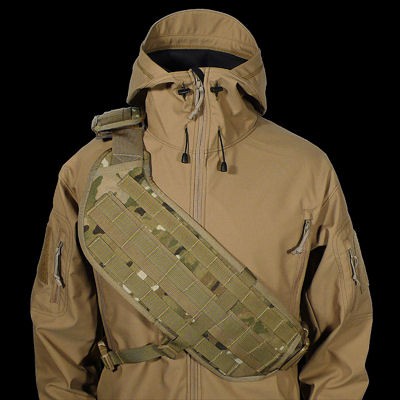
TAD Gear BandoleerBandoleer with Pouches and Holster

We have already seen similar versions from their competitors but this one is the original. The Bandoleer is available in Black, Foliage Green, and Multicam and can be purchased from TAD or authorized dealers.

Team Soldier Certified Gear – Update

Monday, June 30th, 2008

When we posted the recent article on the Army’s plan to test and certify commercial Soldier Systems items we inadvertently omitted this briefing. It contains some additional details and if you are interested in this subject we highly suggest your read it.

Off-Duty Part 2 – Pacsafe Travel Security

Sunday, June 29th, 2008

Pacsafe Logo

Most of our readers travel and many of them often find themselves in some pretty seedy locations. Theft of one’s property is always a concern. Continuing our weekly focus on off duty wear, this week’s feature introduces you to Pacsafe, a company who produces luggage with security of the contents in mind. No use having all of those Gucci suits and safari wear if they are going to be pilfered on the ride from the airport to the resort. We have known for years about their steel mesh bags designed to secure the contents of a pack but I recently received an education on Pacsafe’s security features and want to pass on what we learned to you.

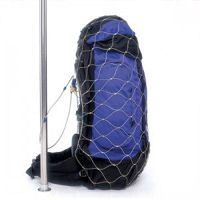
Ant-Theft Bag and Backpack Protector

Pacsafe engineers several unique features into their designs to help ensure the safety of your valuables.

eXomesh

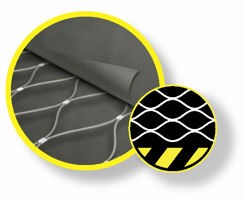
eXomesh® Slashguard panels
Pacsafe has developed slashproof panels by discretely hiding a layer of eXomesh® between two layers of fabric. These lightweight slashguards are placed in vulnerable sections of the bag, giving protection against a bag slasher’s knives and blades.

Slashproof Belts/Cables/Straps

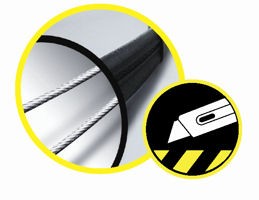
Slashproof belts/straps/cables
It only takes a split second to cut through a conventional belt or strap. Pacsafe belts and straps are embedded with slashproof, high-tensile stainless steel wire. All Pacsafe securing cables are made from heavy duty steel wire.

Snatchproof Security Clip

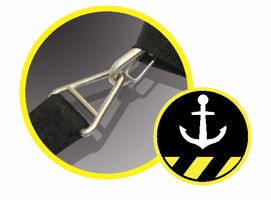
Snatchproof security clips/locks
In an instant, someone can take your bag without you knowing. That’s why Pacsafe has designed bags with snatchproof metal clips on slashproof belts, straps, cables or chains. These can be unfastened at one end allowing you to loop and anchor your bag to any secure fixture, such as the arm of your chair, bus seat or poolside lounger.

Snatchproof Lock

For extra security, Pacsafe has designed products which offer an additional snatchproof locking system. This system enables you to not only anchor your bag to a secure fixture but lock it safely there as well.

Tamperproof Zipper

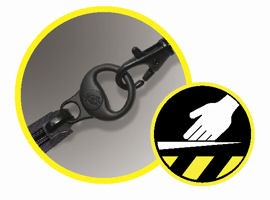
Tamperproof zippers/compartments
Subways, busy traffic intersections, and crowded markets are prime pickpocket locations. Pacsafe products have tamperproof solutions to thwart pickpockets, including zippers that lock closed or latch to a spring-loaded metal clip. Pacsafe bags with flap-covered compartments offer hidden safety hooks for extra security to keep prying hands out.

They have an entire line of luggage for everything from your laptop to a rucksack. For information on their entire line go to Pacsafe.

All graphics supplied by Pacsafe.

OTB Sneak Peak

Saturday, June 28th, 2008

OTB Footwear LLC

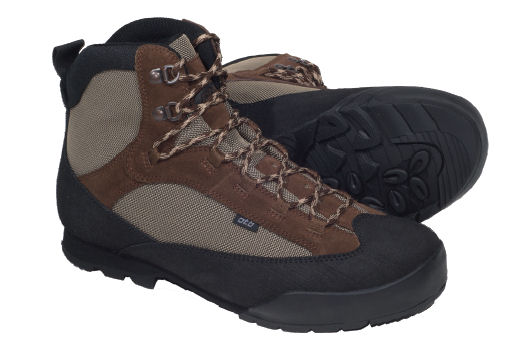
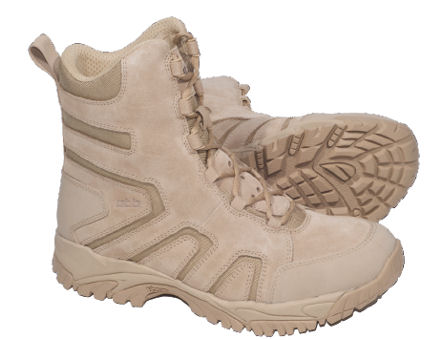
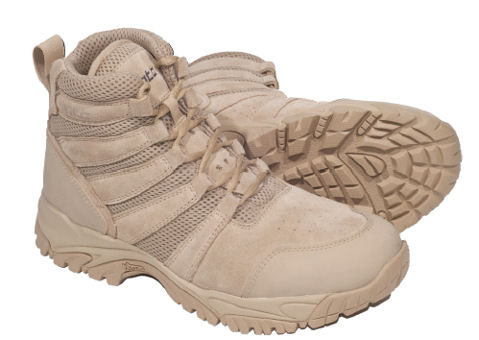
Not being a company that rests on its laurels, OTB Footwear LLC is at it again. Three new styles will be released this summer.

OTB Thor TC

The Thor TC was designed with feedback from the SOF community. It is available in Camel/Brown/Black as shown or in an all black configuration.

OTB Ferdelance

The Ferdelance is designed for use as a uniform boot for those that prefer the styling and comfort of OTB. It is available in Desert Tan as well as Black.

OTB Bushmaster

The Bushmaster is a rugged, mid height desert boot. It is also available in Desert Tan as well as Black.

Check out their current styles at OTB Boots.

Tron, Part II

Friday, June 27th, 2008

Apparently my post from last week on Tron has created quite a buzz. Some folks are “getting” it and can see the utility of the system.

For anyone what wants even more background data here is a great story from Air Force Research Laboratory: AFRL develops friend versus foe identification system.

The manufacturer is Lumitex.

Tron is available to qualified Government customers through GSA.

Issue Compression Sacks from Cascade Designs

Thursday, June 26th, 2008

Cascade Designs is no stranger to the Soldier Systems market. Several of their items have been type classified and are on issue including water purifiers and sleeping pads. This report highlights two of their latest offerings.

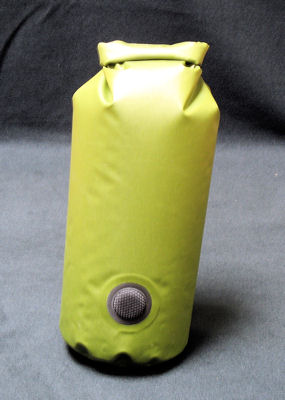
Cascade Designs MACS Waterproof Compression Bag

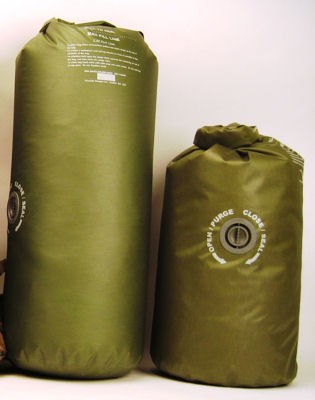
Marine Compression Stuff Sack (MACS Sack)

The MACS Sack features a new hands-free, one-way purge valve that offers increased compressibility and is flexible as well as flush to prevent snagging. It also boasts an improved roll-down closure for a watertight seal, and a heavy-duty round bottom that lasts long, maximizes storage capacity, and stands upright to make packing easier than ever. This bag is made of tough, lightweight nylon. Its great for use in a pack, or on its own to organize your gear.

Cascade Designs ILBE Waterproof Compression Bags

Marine Compression ILBE PackLiner

The Marine Corps ILBE Pack consists of a 4,500-cubic-inch Main ruck or pack, and a 1,500-cubic-inch Assault pack. Neither pack is water proof so the Marines sourced bag liners to provide waterproof storage in the pack. The Cascade Designs ILBE PackLiner has flush mounted purge valves to make the bags compression stuff sacks. These bags are tough enough to survive outside the pack, but are best employed as a PackLiner to give the Marine a submergible waterproof pack. The easy to use roll top closure has directions on sealing which insure the bags get closed properly each time.

The Assault bag liner, which is smaller, has an orange interior to function as a signal panel. In order to help make the bag “Marine proof”, the roll top closure has directions on sealing to help ensure the bags get closed properly each time.

Cascade Part Number Name NSN

02195 MACS Sack 8465-01-542-7688

02177 USMC ILBE Waterproof Main Pack Liner 8465-01-559-5404

02197 USMC ILBE Waterproof Assault Pack Liner 8465-01-560-6727

Arc’teryx Mossy Oak Bibs

Wednesday, June 25th, 2008

Mossy Oak Bibs

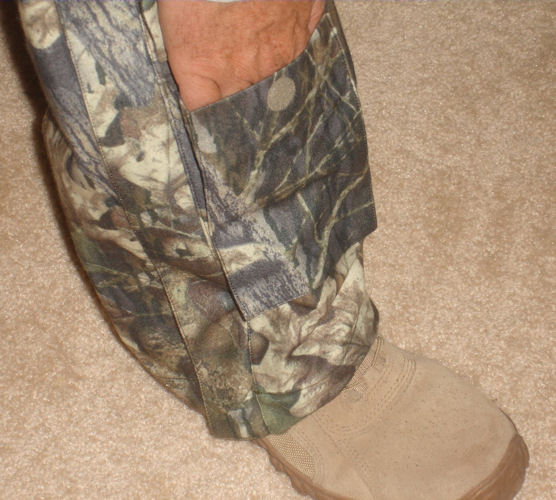
There are a lot of very well designed foul weather jackets on the market. Unfortunately, the same can’t be said for trousers. They tend to be ill-fitting or the pockets aren’t well suited to the mission. Oftentimes, the wearer suffers from a sagging waist or blown out seams. But Arc’teryx has come to the rescue. They worked with a small user community to develop a purpose built pair of trousers for wet and cold environments. Arc’teryx designers incorporated features into the design normally found in combat clothing. The bib’s anatomical styling was chosen so that the garment moves with the wearer as well as protect the wearer’s lower back from exposure in extreme weather. The elastic shoulder straps keep the waist up where it belongs, even when the pockets are stuffed with equipment. The bibs also feature two roomy sets of pockets on the front of the thighs and shins.

Arc’teryx Mossy Oak Bib Thigh PocketArc’teryx Mossy Oak Bib Shin Pocket

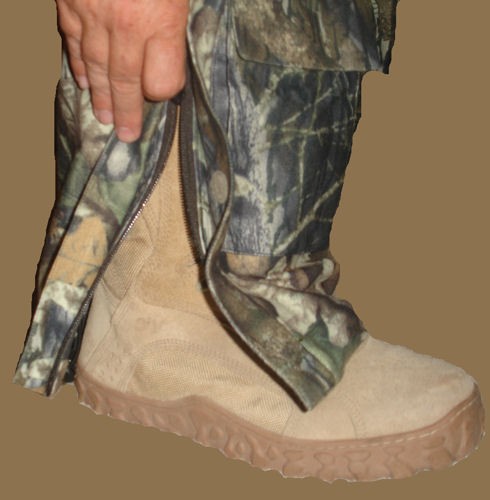
Even more unique than the design is the material. It is a brushed face Gore-tex fabric that reduces both the noise and shine usually associated with commercial waterproof breathable clothing making it more suitable for military applications. The non-standard Mossy Oak camo blends in well with many environments and the design also features side-zips for rapid donning and doffing as well as reinforced cuffs to protect the bib’s legs from abrasion.

Arc’teryx Mossy Oak Bib Side Zip

Arc’teryx currently has some remaining inventory from this program and is available until supplies run out. Get them before they are gone forever.

Qualified personnel can purchase them here

EOTAC Clothing Spy Photos

Tuesday, June 24th, 2008

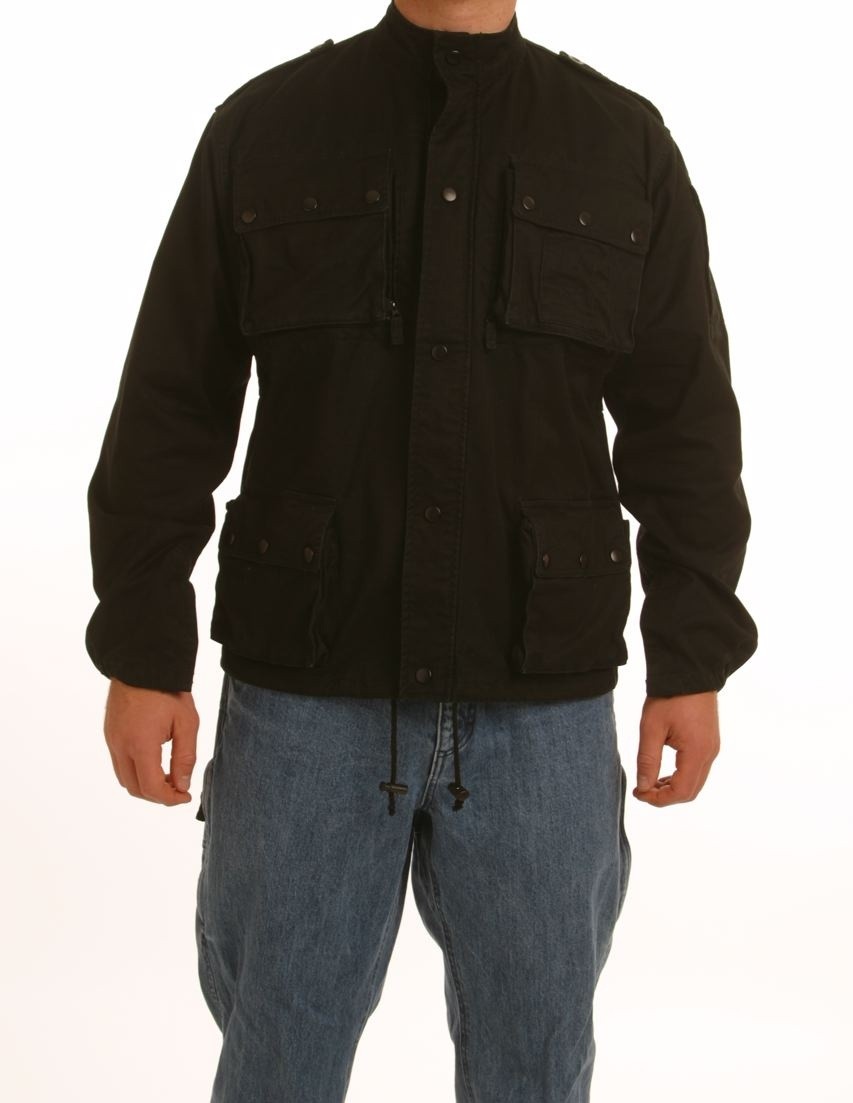
EOTAC Pants, Shirt, and Vest

I was just slipped some photos from a recent Elite Operator Tactical promotional shoot. These have not been released yet but it looks like EOTAC is poised to unleash their new line. I know a lot of people have been waiting to see this and we are all anxious to find out what they have come up with. If anyone has any first hand experience with the EOTAC line please contact me so we can get your impressions out to everyone. Based on the history of what happened and how EOTAC formed, this is the most anticipated releases this year.

EOTAC Trousers

Perhaps there are a few surprises in store for us. It appears from this photo that they also have tactical or concealable denim jeans in the works. I believe the black jacket is the Algerian that they were working on last year.

EOTAC Jeans

The new shirt looks roomy and just as professional whether untucked or tucked in.

EOTAC Shirt

MSA ACH – Accessory Rail Connector

Monday, June 23rd, 2008

ACH Accessory Rail Connector

The Accessory Rail Connector MSA has been showing since SHOT 06 is finally available. Designed by Ops-Core and licensed to MSA, the accessory rail provides a Mil-Std 1913 rail to the sides of the MICH or ACH helmet. In fact, they also will fit any of the TC series of helmets from MSA. They are very lightweight and extremely strong. The glass reinforced nylon rails come from the factory in black but are easily painted to any color. My helmet has had a set since last November and accepted tan Krylon without a hitch. Each set of rails comes with two accessory adapters.

New ACH Accessory Rail Connector

For a list of retailers contact Paraclete Armor.

Keep Those Tips Rolling In

Monday, June 23rd, 2008

Interested parties can contact Soldier Systems Blog at admin@soldiersystems.net

We welcome comments, tips, and guest articles.

Off Duty Wear – Pt 1, the Suit

Sunday, June 22nd, 2008

So you’ve retired from the military or Law Enforcement and are entering the wonderful world of work. For years you have gotten out of bed and known exactly which set of clothes to put on. Now, its completely up to you. So what do you do?

Over the next few weeks I will be publishing a series of articles on some great options to wear out of uniform. Whether its business or casual, we all need some alternatives to the uniform. Oftentimes we will gravitate toward outdoor clothing but today, I want to concentrate on helping you with a new form of camouflage; the suit. There are times you will need to blend.

This article was suggested to me when I left the military a few years ago. I hope you find it as informative as I do.

Courtesy of The Morning News.
Opinions
Men’s Fashion: Part 1, Suits
It’s the one thing every man should own: a suit. THE EDITORS salute the suit’s ability to withstand expiration, bask in its enduring appeal, and offer advice on what to look for when you’re off to buy your own. If only we could be there to say, “Suits you, sir!”

On Suits
Everyone wants to be Cary Grant. Even I want to be Cary Grant.
—Cary Grant

Without suits, men would have nothing. In the hierarchy of style, a good suit remains a man’s only trump card. Even in this sad age of casual-wear, the suit still carries an air of success, taste, and sophistication. It is designed to make you look better, to break boundaries between social classes, to make a small man tall with pinstripes or a fat man rich with soft wools. The suit looks good in restaurants, trains, dinner parties or Paris; in short, everywhere you want to be. It is, in its best forms, a complete outfit that will never fail you.

And that is exactly what it will do, if you treat it right. Unfortunately the majority of suits you see look awful. This isn’t necessary. Even if you work ten hours with your jacket on, being mindful of your clothing will keep you ready for cocktails after work. Too many men either don’t care or don’t know how to wear a suit, and, suitably, look like shit. This is worth avoiding.

To start us off, a few general rules should be observed when approaching a suit, and most apply to good dressing in general:
The suit, no matter the style, needs to fit your body, closely. This means all pieces should be cut and tailored appropriate to your form. Surprisingly, this doesn’t require a lot of money ($500 can, in fact, get you a good suit) but it does take an eye, and the strength to ignore any saccharine compliments from salesmen.
Trends have six-to-eighteen-month shelf lives. If you plan to retire your suit in this window, feel free to splurge. Otherwise, shop considerately.
Suits are made of wool or cotton, and their variations. Additional fabrics need not apply.
You are an interesting, confident, multi-hued man. Let others learn that from how you behave, not from the label on your jacket.
A suit jacket goes with suit pants, not with jeans or chinos. If you want a casual jacket, buy a sport-coat or a blazer. Stand-up comedians are regularly shot over this rule.
If you’re not comfortable—if you don’t feel the suit’s appropriate for you—the salesman’s looking out for his commission, not your style.
A modestly, well-dressed man has never failed to impress. Yes, never.
Assuming you’re not an investment banker, you don’t need ten suits; you only need four. This means you can be a discerning shopper and spend time accumulating, then keeping your suits in good condition (dry clean once a year, then more for spills; don’t you dare iron it yourself). Think of the process in terms of collecting, spending years searching for that one original-packaged Chewbacca.

The Fab Four
1. The Standard Blue: Great for business, lunches, New York Mayors, summer dinners, or casual parties. Can be worn with black or brown shoes, even white if you’re daring. Reflects well by a pool. Standard blue means navy, with no room for paler shades, even if you went to U.N.C.

2. The Classic Gray: Appropriate for everything and even makes a red-head look dandy. Grays also are the best with patterns, especially anything in the chevron family. Start with plain, move to window-pane. Even such, the gray is never controversial. It’s the Switzerland of suits.

3. The Basic Black: Our favorite and the perennial classic, it’s a fit at the Oscars or your sister’s wedding, the perfect compliment to a good white shirt, beloved by gangsters, designers, and undertakers (those jobs with the highest doses of fashion-conscious aptitudes; respectively, aggression, vanity, and wisdom). If you only own one suit, this is it. You can even be buried in it.

4. Any of the above, with pinstripes.

The Jacket
So. You’ve picked your color and you’re ready for the fit. First comes the jacket. Never was a suit bought for the pants and repeatedly worn afterwards. Pants are easily adjusted by a tailor, jackets can only have minor improvements. Think of true love: it must be close to just-right at first, with a slight thrill when you put it on, the coup de foudre as the French say.

First off: are you a single-breasted man or a double? While both styles can fit most body types, single-breasted jackets tend to flatter the slim while double-breasted jackets make the broad look mighty. This doesn’t imply being “skinny&” or “fat,” it’s simply about your tits; hence the term “breasted.” Choose the jacket style that you can best fill out—from there you’ll always look best. David Letterman, who can rarely be found not wearing a double-breasted jacket, skirts this rule by sitting behind a desk. Notice how uncomfortable he is during the monologue, fussing with his buttons while standing full-view before the camera.

To those opting for the single-breasted jacket, you’ll have to choose how many buttons you want. One? Hmm. Two? Excellent. And returning in popularity. Three? Certainly good, and was much sought-after in the recent past though it’s now reached near total market saturation. But, still classic, and hopefully always available.

Of course, jackets also come in four-, five-, and six-button styles, each with their own fifteen minutes of fame. Four-button jackets have been sported by everyone from The Beatles to Steve Harvey. Can you sport one? Of course! But no, not this season…

Last, the fit. Like we said before, close to the body, but no wrinkles when you button. Vents, double or single, are preferred to the vent-less jacket that, nine times out of ten, looks like a giant condom from behind. Shoulder pads should be avoided—you’re no linebacker—but a tailor will gouge you if you show up post-purchase and ask him to reduce the heft.

Finally, before we move onto trousers, there is one ticklish in-between: the vest. We can put this simply. If you’re ready to buy a vest, you’re either old enough to sport one or dangerously disillusioned. A good rule of thumb: Alfred Hitchcock looked great in vests. Young Jimmy Stewart looked out of his league. Pick your man.

The Trousers
You must now choose a trouser style. There have been, in the history of men’s trousers, a few trends that fucked with a good thing: bell-bottoms, bibs, clam-diggers, “cargo.” Unfortunately, all of these styles eventually found their way into suits.

Men, generally, will take any pants that come with a jacket. Being men, we want some control over how they look—“How they work,” thinks the man—but not too much. Hence, the cuffs-or-no-cuffs debate. Ask a man what he thinks of his pants and he’ll say, “Yeah, I had to go no-cuffs.” We won’t help you here except to say: cuffs are older, no-cuffs are not. Choose according to your image of yourself.

Next comes the pleats question: The only times pleats are wanted is in the single-pleat case, on a pair of wool pants. The case should be that the pants look crisp and well-folded, rather than puckered. How to tell the difference? Think of a pair of pants recently back from the dry cleaner. Remember the line down the middle of the leg. Does your new pleat-to-be look like that? If not, drop the hanger and run.

After cuffs and pleats, you need to worry about waist, swish, drape, belt-loops, ass-hugging, crotch-dangling, and whether or not you need a watch pocket. This is beyond our advice. Suffice to say, your ass is probably less than marble, though it shouldn’t be treated like a towel hook. Pants shouldn’t blow like a scarf in the breeze. The best way to judge a pair of pants is to ask yourself, “Would I wear these pants on a date without the jacket?” If so, they’re fine. If not, move on.

Finally, a salesman will often ask if you’d like to buy two pairs of pants for the suit. The idea is you can alternate pants with the jacket so they wear evenly over time, but since pants can be so easily ruined, you always have a back-up pair. This is similar to electronics store people trying to sell you insurance on an air conditioner; if you have the money, it’s not a bad idea, but it also isn’t necessary.

So now that you’ve picked out your suit, you have to know how to wear it. We’ll assume you know the basics of putting the thing on. (Yes, the jacket part goes on top.) And this brings us to buttoning. It is a historic dilemma, faced by every man. Here, for you, is our easy-to-remember rulebook:
Two-button jacket: Button the top button, only, ever. Button the bottom button and you’ll look like a stooge. That’s really all there is to it.
Three-button jacket: Button either the middle button alone or the top two. Important: the bottom button does not meet its hole. It will plead before a date, just when your stomach’s boiling, “Hey! Friend! Button me once, please. I’m sure we’ll look fine. Come on! Just once!” But you will not give in, you will be strong.

* * *

Now the suit’s on, and you’re ready to go. Comb your hair, have a cocktail, head out for the evening. Travel lightly when you go, meaning don’t bulge your pockets with a Bible-sized wallet. Your outside jacket pockets, in fact, should never be used unless your companion asks; at that moment chuck your pretensions and stuff them full. When you get home, brush down the suit, hang it evenly, and keep it in a bag. Wear it often, with pride, and don’t take shit for looking good. After all, no one can be Cary Grant, but everyone can try.

Oh yeah, another thing: Don’t roll up the jacket sleeves Miami-Vice style. We say this now, but then again, considering the fickle nature of fashion, don’t hold us to it.

—Published April 15, 2002
Copyright 2002, The Morning News
Link

Sling Bag, MOLLE’s Latest Addition

Saturday, June 21st, 2008

Sling Bag

I wanted to post this Army news release to show that the Army is on it. The item is entering production and will soon see issue. Please notice that this article is from December of last year. That is a pretty good turn around.

Sling Bag for Soldiers
Army News Service | December 27, 2007
NATICK, Mass. – Finding a way for Soldiers to accomplish their missions more easily is what lies behind the design of many products created by the Individual Equipment Lab at the U.S. Army Soldier Systems Center here.

“Part of our job is to spend time with Soldiers in the field and look at what they are doing, and see if there is a way we can improve how Soldiers carry their equipment,” said Richard Landry, equipment designer. When service members tour the SSC, their ideas and suggestions for individual equipment are considered to determine if they are practical.

Currently, the lab is working on a tactical sling bag, a project created by the SSC load-bearing team for the Product Manager Clothing and Individual Equipment group under the Program Executive Office Soldier.

“Soldiers use the MOLLE [modular lightweight load-carrying equipment] assault pack, which is like a daypack, and they love it,” Landry said. “But one of the problems is that they can’t sit in a vehicle while wearing it.” It is also difficult for the Soldier to access equipment inside the packs when it is on their back, he continued. And, during the time they have to stop to put on or take off their packs, they are left in a vulnerable position.

Landry said the sling bag could be slung over a Soldier’s back, out of the way. The bag could be rotated to the front if the Soldier needed to access equipment or get into a vehicle.

“We started by looking at civilian carrier bags,” he said. “We needed to find one that could be used not only inside a vehicle where they could reach items easily, but something that could be effective throughout their mission.”

The team from the Individual Equipment Lab looked at commercial bags, but couldn’t find one that met the necessary requirements. The current prototype created by the lab has about 700 cubic inches of space and is slung over one shoulder. It has MOLLE webbing on the front so the user can add various pouches from the MOLLE system. It also has a secondary security strap to ensure it stays in place with a pull-tab for quick separation when needed.

Sling Bag

He thinks the sling bag would be a valuable tool for medics. “This would essentially give medics a hands-free capability while ensuring their supplies are easily available,” Landry said. “Additionally, if the medic came under fire while treating a casualty, they wouldn’t have to worry about leaving supplies behind. They could always be attached to his body.

Although the sling bag has been roughly sized around the combat lifesaver kit, Landry and other service members already see plenty of additional uses. “This bag could be helpful for anyone who will be carrying small electronics,” he said. “…even laptops.” The Chaplain at SSC was also recently looking for something for the components of the resupply kit. “He thought the sling bag was a good fit,” Landry said.

From here, the idea will be to incorporate the sling bag into the MOLLE system as an accessory item. Landry concluded by saying, “The MOLLE system is constantly changing based on what we learn from Soldier feedback.”

Photos courtesy US Army, by Sarah Underhill, AMC, December 20, 2007

Canadian CTS News

Saturday, June 21st, 2008

The latest news from the Clothe The Soldier office is that the experimental CADPAT boot is out and a new smooth leather chocolate brown version is in. Aside from technical challenges facing the CADPAT boot project, the boots would have cost more as each Soldier would receive two colors of boots. The chocolate brown blends better with both the temperate-woodland and arid versions of CADPAT.

DPM – Camo Across the Pond

Friday, June 20th, 2008

British Soldier Systems industry sources have indicated that the MOD is poised to announce next week changes to the temperate and arid variants of the Disruptive Pattern Material camouflage. Testing of a digital version of the pattern has been halted and in its place both the arid and temperate styles will see a slight palette change in order to better accommodate scrub brush. Additionally, an entirely new variant of DPM is set to be unveiled that is intended exclusively for field equipment and is a compromise between the two current patterns.

EOTAC Operator hat

Friday, June 20th, 2008

EOTAC Operator Hat

OK, so you got a Surefire helmet light but you don’t wear your helmet everyday. EOTAC, the guys who used to be Backyard Outfitter and developed the Woolrich Elite line, came up with this unique Operator Hat at the request of those in the tactical firearms training community. The helmet light attaches to the hat’s brim by means of a polymer mount developed in conjunction with Tango Down, LLC. These will be available soon.

The one-size-fits-all Operator Hat is an all cotton low profile design and has the following features:

- No Button on Crown
- Pile Tape on Crown for Combat ID
- Sewn Eyelets in Each Crown Panel
- Low Profile Shape
- Adjustable Back Design
- Surefire Helmet Light Quick-Release Mount on Visor
- Removable American Flag Patch
- Water Repellent Cotton
- Colors: Khaki, Black, Olive

*Surefire is the registered trademark of Surefire, LLC. Helmet Light not included with Operator Hat.

Custom Metal Tags

Friday, June 20th, 2008

Have you ever needed to mark a bag or a box for deployment? One of the best ways is to attach an embossed metal tag to the item. Another great use for a “Dog Tag” is to record lock combinations and always wear the tag. Getting custom tags can be difficult because most veterans want something of the same quality as a set of the classic “Dog Tags” that they wore while in uniform. Considering that the ID tag hasn’t changed since WWII, there must be something to the design. One source for such tags is My Dog Tags. They produce military style tags with any message and have templates on their site for those who want the correct information for each service on their tags.

For more information contact My Dog Tag.

Team Soldier Certified Gear

Thursday, June 19th, 2008

PEO-Soldier mentioned this item at the APBI in May, but didn’t have any details on implementation. However, they have just made a formal announcement of the Team Soldier Certification program. The reasoning behind the program is sound. The point is to help Soldiers identify soldier systems items that meet certifications for issue. This will help both individual Soldiers as well as units to avoid purchasing substandard equipment. Certification has already been implemented for Protective Eyewear, FR Gloves, and the Family of Flashlights.

PEO Soldier is developing Authorized Products Lists (APLs) for certain types of gear. When an item is authorized, it is placed on the APL. The APLs are published on the PEO Website, furnished to the Army/Air Force Exchange Service (AAFES), and communicated to Army commands. Eventually every commercial item authorized for use by Soldiers will have this certification.

One VERY interesting piece of information on the program has surfaced. Vendors selling authorized items in commercial retail stores may use the logo on the item and in their advertising. The logo will be the way Soldiers can verify that the item is authorized. Vendors using the logo for commercial retail sale of authorized items will require a License and Royalty Agreement with the US Army. And as a warning to those who might counterfeit the new logo, the PEO-Soldier website says this, “PEO Soldier, working with Army Legal Services, will take action to ensure that only actual authorized items have the logo. A range and series of actions will be taken against any fraudulent use of the logo.”

Each item will be identified with a tag similar to this one.
Team Soldier Certified Gear Tag

Both the USMC and USAF have indicated that they will follow suit.

USMC Combat Desert Jacket

Wednesday, June 18th, 2008

USMC Combat Desert Jacket

If you have ever heard the term “scarce as hen’s teeth”, then you can aptly describe the Marine Corps issue Combat Desert Jacket. Designed by 180s, an innovator in the outdoor industry, and manufactured by Tennessee Apparel, the CDJ has seen limited fielding. The concept actually goes back to the early 90s when Raven Industries, the first full-scale contractor for ECWCS, developed prototypes of a lightweight Gore-tex 3-color desert shell for MARCORSYSCOM.

Naturally as the CDJ was designed specifically for desert operations, it is available only in Marine Desert Pattern Camouflage. Since the CDJ utilizes a complex print, the design’s strength has caused a bit of a technical challenge. As you can see from the photo, the sleeves are slightly discolored compared to the body. This is because the CDJ is made from various fabrics which are strategically placed in the design to provide diverse forms of protection and these fabrics all absorb dyes differently. For example, the lower back and shoulder area of the jacket are made from Freedom-Plus, a lightweight Gore-tex fabric in order to keep the wearer dry while the middle of the back, which requires more breathability when wearing a pack is made from a lined, knit fabric. The sleeves are crafted from a four way stretch material. Rather than pit zips, from the waist to the sleeve, along the entire length of the underarm, the CDJ features a stretchy wind resistant nylon material. Lined with coyote gridded fleece, it also features color matched waterproof zippers throughout. The pockets include handwarmer, chest, and sleeve as well as a rank tab. The sleeves are capped with a monkey paw design and the Marines hope to incorporate FR technology into the sleeves in future versions unless the winter FROG shirt is developed. The CDJ also has a roll up neck gaiter incorporated into the collar. To top it all off, the entire jacket is treated with silver to suppress the growth of odor causing fungus.

Combat Desert Jacket Improved Sleeve

*UPDATE: A reader has sent me an update and a new version is being issued. They have solved the shade issues on the sleeves and dropped the monkey cuffs.

Photo Courtesy Eric Chevalier

For those who need a CDJ, the early version with shade differences on the sleeve is available from AFMO.

Vickers Tactical Gloves

Tuesday, June 17th, 2008

Vicker Tactical Glove

About a year ago, the Larry Vickers signature glove line hit the market and made an instant splash but seemed to fall off just as quickly as it appeared. But the gloves didn’t go away, and during the lull have been in use by a variety of personnel. Some of the delay was due to the distributor, Backyard Outfitter cutting their ties with Woolrich and reforming as a new company; Elite Operator Tactical. EOTAC is back and ready to hit the market with an improved line of clothing and accessories for the armed professional.

Obviously, based on the name, the gloves were designed by Larry Vickers. Many of you probably already know LAV so he should need no introduction, but for those of you who don’t know Larry, he is a retired career Army Special Forces Soldier and noted firearms expert and tactical trainer. Check out his website at the link below to learn more about him.

A few things about these gloves really stick out. When LAV was designing the gloves he didn’t want to just be another version of the same old flight glove copies everyone else was making so he worked with a well known glove maker from the outdoor industry to incorporate the latest in hand wear technology. Naturally, they are fire retardant and utilize a 9 oz Nomex knit on the gauntlet as well as on the back of the fingers and hand. Additionally, they have an ergonomic design found in few tactical offerings. What is really great about these gloves is that in addition to standard sizes (XS-3XL), they also come in Cadet sizes for those with shorter fingers. Finally, they are available in both OD and Coyote.

Based on price point and features, you really need to check these out.

For more information contact Vickers Tactical.

Be on the lookout for more information on EOTAC’s new line.

Brace for It…

Monday, June 16th, 2008

Because here it comes. We’ve all seen prices skyrocketing. It seems that price hikes are impacting every facet of our lives from hamburgers to hot dogs and the Soldier Systems market isn’t any different. Several cause factors are resulting in an increase in manufacturing costs:


- The raw materials are made from petroleum products and their prices are on the rise

- Fuel surcharges on shipping of raw and finished goods

- The weak dollar

- The increase in the Federal Minimum Wage

One company has reported to me a 25% increase in materials costs. A technique to mitigate these rising costs is to stockpile materials but this is only a short-term solution if it is even possible in the first place. Tighter credit terms as well as material availability may not make this an option. Another point for manufacturers to consider is their designs. I recommend that they look at each design and eliminate excess material and processes as well as considering lower cost, alternative materials. Shipping costs will continue to rise so consolidating raw materials as well as finished goods into fewer shipments may help alleviate costs.

There is a little bit of light at the end of this tunnel. The weak dollar has made American products even more attractive to foreign buyers. Unfortunately, this phenomenon is mitigated to a slight degree by spiraling shipping costs. Additionally, as the cost of foreign products increase, the pricing edge they have long held over American made items will begin to diminish. I believe this factor will help US based manufacturers increase their domestic market share.

Make no mistake, tough times are ahead. Some companies may need to eliminate poor performing SKUs or reevaluate profit margins. Consumers will most likely avoid purchasing “nice-to-have” products and concentrate on more critical items. Military consumers will begin to rely more on issue items. Smaller manufacturers may want to consider tapping new ways to sell to the Government. I see room in the market for several small firms similar to the outdoor industry’s factory rep system that can interact with a network of vendors to facilitate micro purchases of Soldier Systems items for deployed units using contingency funds. While there are already companies doing this, including the prime vendors, someone with the right connections both within DoD down to the unit level as well as in industry could become very successful if they can control their overhead.

Those hit hardest by this high energy cost environment are companies providing equipment to the Government on firm fixed price contracts. This includes not only contracts with DSCP but also companies with products on GSA. While production costs climb, profit margins for these vendors will decrease. In some cases this will be disastrous as margins are usually tight to begin with in order to win solicitations.

Dual use companies, or companies that serve both Government as well as commercial clients will face little choice other than to raise the price point on their commercial products in order to recoup any losses they may face supporting Government firm fixed prices.

In addition to rising manufacturing costs there are two more factors that will affect the Soldier Systems industry.

- Tightening of the military budget

- Recent Soldier Systems items have been paid for primarily with supplemental dollars

Airplanes cost a lot more than boots and consequently get more attention from the military’s funding source; Congress. An aircraft manufacturer can afford a lobbyist and employ more people in a congressional district so naturally, when we are in a resource constrained environment, those items will get more emphasis. Except to the Infantryman who’s survival depends on his feet, boots just aren’t very sexy.

Although the military has done an outstanding job of improving the American Warrior’s personal equipment, it has been done with supplemental dollars and outside of the regular military budget. This means that when the supplementals go away, so do extra dollars for boots. Funding will eventually return to pre-war levels.

I do not believe that there is a single solution to these problems. Manufacturers and military outfitters will need to do a top to bottom evaluation of their operation and implement several solutions. If this environment lasts, and I believe it will, we will see a “culling of the herd”. Many companies who have prospered in the current environment may not be able to adapt.

BAE Corona – Back by Popular Demand

Sunday, June 15th, 2008

BAE authorized me to release the following information on the Corona system several weeks ago. Due to some administrative issues the information was removed for a short period of time. Since I posted some info on TRON yesterday, I have received several requests to repost what information I can on BAE’s exciting new CORONA system.

The CORONA System is an add-on accessory for ballistic helmets designed to integrate the many different mission-specific components that Special Operation Forces utilize on their helmets. The main system consists of four lightweight-reinforced, ballistically inert polymer parts that form the ‘corona’ around the helmet.

These user-configurable parts are the Front VAS Section, Rear-Section, a Left and Right Earcup-Section, and the elastomer SPINE. The Front and Rear sections can be utilized independently, simultaneously, or in conjunction with the Earcup sections. All of the components mount to any ACH or MICH ballistic shell via the suspension and NVG mounting holes already on the helmet and do not require any additional modifications.

The Front VAS Section provides a significantly more stable NVG mount than current designs and the configuration of the lightweight alloy interface plate accepts both Norotos as well as Wilcox NVG mounts. Also integrated are: NVG lanyards, name/blood-type/allergy plates, and LED light/accessory clips. The Rear-Section is designed to hold a counter-balance (such as an MBITR battery) or any other component the Operator chooses. All components are mounted to the system via elastomer T-Bone straps that are easy to attach and break-away under load to mitigate snag hazards (critical for airborne operations). The Earcup-Sections attach over the CORONA’s Front and Rear sections and have several innovative features: Goggle-Pivots, MIL-STD-1913 (Mini-Pic) Rail-Interface, Cable-Management, and Plug-In O2 Mask Receptacles. The shock-cord goggle interfaces are attached to the Operators goggles and pivot on the Earcup-Sections eliminating the strap around the helmet, Mini-Pic Rails can be attached to accept various rail-mounted COTS devices, and the Plug-In O2 Mask Receptacles allow the Operator to utilize his ballistic helmet for HALO/HAHO operations without the need for a separate jump-helmet. The SPINE is an elastomeric strap that fits over the top of the helmet and allows the Operator to mount various Strobes/Markers/Reflectors currently in use. Alternatively, the new TRON IR Combat-ID device hooks into the CORONA System in place of the SPINE section.

The CORONA System will be sold as a complete upgrade kit including all parts of the outer architecture. It will be available in Foliage Green, Desert Tan, and Flat Dark Earth to blend in with current kits. The system will be commercially available under the BAE Systems “ECLiPSE” brand and should go into production by the end of 2008.

AFRL’s TRON

Saturday, June 14th, 2008

TRON

My first exposure to TRON was at SOFIC in conjunction with BAE’s Corona system. Since then I have been doing some research on this revolutionary Combat ID system. I post the article from February of this year from Associated Press as a backgrounder.

Originally published by Associated Press February 20, 2008

DAYTON, Ohio – When Taliban forces attacked a police checkpoint in central Afghanistan under dark of night in late 2006, special-operations Master Sgt. Andrew Martin called in air support and then slapped a high-tech cloth-like device on his helmet for protection.

Fresh from labs at Wright-Patterson Air Force Base, the device transmitted light from a powerful light-emitting diode, or LED, that pulsed through a fiber optic bundle, giving off infrared signals visible to pilots wearing night-vision goggles.

“The pilots were able to very quickly pick it up,” recalled Martin, who has since retired from the Air Force. “What didn’t happen was additional questions from the pilots asking me my location.”

The new technology – called Target Recognition Operator Notification system – was designed to easily identify friendly forces and avoid casualties from friendly fire.

Martin liked the equipment so much he used it on about 35 missions over six months. He said it is better than strobe lights, which can be mistaken for machine-gun fire, or reflective tape, which is difficult to see from the air.

“U.S. forces have been dogged by the difficulty of finding each other in the fog of battle,” said Loren Thompson, a defense analyst with the Lexington Institute in Arlington, Va. “What this new innovation allows is easy identification of friendly forces without helping the enemy do the same thing.”

Brian Hunt, an engineer with the Air Force Research Lab, said he and his team were approached in 2004 and asked to develop such a system. Working with Lumitex Inc. of Strongsville, the effort was part of a rapid-reaction program where researchers were given up to $100,000 and one year to come up with a product.

“A lot of different units saw the need for something like this, to be able to clearly determine friend or foe,” Hunt said.

The group produced 108 prototypes in six months. Each unit costs about $100.

Built in to the nylon-like cloth is a circuit board and a battery pack. The woven nature of the cloth emits light in a controlled way, creating a uniform surface.

The system can run 200 hours on two double-A batteries and weighs less than three ounces. It can be worn on tactical vests, around an arm or mounted to a helmet.

“You can put it anywhere,” Hunt said. “It’s got Velcro on the back. It sticks to everything.”

The circuitry also allows the system to flash at different speeds. That enables pilots to identify different groups of friendly forces and see which group is under attack, which group is trying to circle the enemy, and who the reinforcements are, among other things.

Mike Sedillo, support contractor at the research lab, said he would like to see the system in the hands of all U.S. forces in the battlefield and become standard equipment in air-crew survival kits.

Sedillo said researchers are working to upgrade the system so it will transmit light in other parts of the spectrum, making it more difficult for enemy forces to detect with conventional night vision technology.

“Friendly fire incidents in general are declining, but in counterinsurgency or counter-terror warfare it’s much harder to sort out our people from the other side because there are no front lines,” Thompson said. “This invention is well-suited to a world in which all the old features of battlefield like secure areas and front lines are missing.”

Copyright AP 2008, Photo Copyright AP 2008

Dead On Tools

Friday, June 13th, 2008

Dead On Tools Annihilator

Touted as “the ultimate wrecking bar”, the Dead On Tools Annihilator, is quite simply…tough. This lightweight, multi-purpose demolition tool wasn’t intended for breaching operations but with these features, you’d be foolish not to try it:

1. Demolition hammer
2. Nail puller/tile ripper
3. Board straightener
4. Demolition axe
5. Multi-purpose wrench and nail puller
6. Chisel

A member at Usual Suspects Network forum also noted that the jaws on the business end can also be used to open “jammed” door knobs.

Although lightweight, it has taken plenty of abuse here. Additionally, its short enough to not get in the way.

Besides, it just looks cool.

Dead On Tools Annihilator

Get it at Dead On Tools or from Home Depot.

Arc’teryx Gen II Combat Jacket in Multicam (Egad!)

Thursday, June 12th, 2008

Arc’teryx Gen II Combat Jacket in Multicam

The market’s appetite for anything in Multicam is voracious but there hasn’t been much in the way of performance garments to satisfy the connoisseur’s sweet tooth. High end products are slowly trickling out and the next one to hit the street is the Multicam version of Arc’teryx’s Combat Jacket. Arc’teryx has built on their already successful Combat Jacket which received a design overhaul last season by offering it in Multicam. Unlike its big brother, the Bravo Jacket, the Combat Jacket features pit zips to enhance venting during intense physical activity and the cuffs feature die cut velcro stays. The jacket also has two hand warmer pockets and two sleeve pockets. Although not depicted in the photo the production version will have velcro on the sleeves like the current versions.

The Combat Jacket is made from Durastretch, a comfortable 4-way stretch woven fabric. To further enhance performance, the jacket has a durable DWR treated outer face to shed moisture.

The Combat Jacket is currently available in Crocodile and Black but the new Multicam version will be hitting retailers in July. Start looking soon because this one promises to sell out quickly.

Qualified personnel can purchase them here.

Tango Down Quick Detach Foregrip Hits Market

Wednesday, June 11th, 2008

Tango Down Foregrip

The new grip unveiled at SHOT Show is now hitting the market. It is molded from their proprietary bullet–proof heat and impact modified polymer, and features the new American Defense quick detach mechanism. The grip can adjust to any rail (MIL-STD or not) without tools. It mounts and detaches in a flash, and from what I saw at SHOT is rock solid. The grip features TD’s patented pressure switch pocket and water proof (to 66’) storage compartment and comes in 3 styles and 3 colors (black, flat dark earth and foliage green).

Tango Down ForegripTango Down Foregrip

For a great write up see the Military Morons review at Military Morons.