Soldier Systems
TYR Tactical
Categories About Us EmailArchives Home Tactical Fanboy Soldier Sytems Home

Posts Tagged ‘TMACS’

Gunfighter Moment – Pat McNamara

Saturday, March 9th, 2013

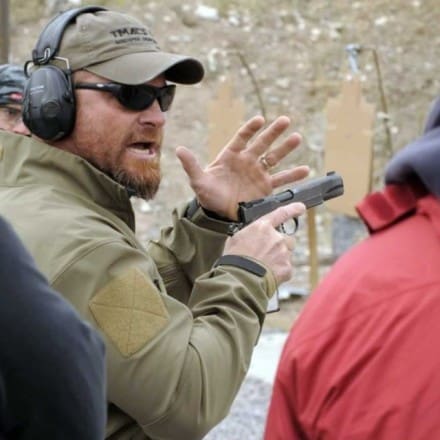
I am often asked for teaching tips. No magic elixir here. Working as a Selection and Training instructor in my former Unit was a gateway mechanism that lead me on the right path. Though my courses are ‘Train the Trainer’, there is only so much I can convey in a couple of days. One needs to be the right person who is going to say the right thing at the right time to the right person.

One needs the ability to understand how people learn at a primal level, how to manage time, work a line (this is an art form), understand the learning curve and how to extend it, work within a skill set disparity, develop a niche and a teaching style.

Keeping interests peaked and folks interested is important as is knowing when Not to say something. Sometimes, less is more. Too many of us are too eager to say too much. We can only process so much information.

Anyone can be a line instructor who runs mindless ‘Up Drills’, but a good teacher needs the ability to be flexible enough to veer from a rigid, lock-stepped POI but that takes creativity lots of curriculum.

I read an article lately where it was stated (paraphrasing) that all instructors teach the same thing. To some degree, this is true. If one is current and relevant, he is going to mirror, to some degree, what the next current and relevant guy is putting out. Delivery of the message however, will determine the palatability of what is to be consumed which will in turn, determine the effectiveness of the application.

Patrick McNamara
SGM, US Army (Ret)


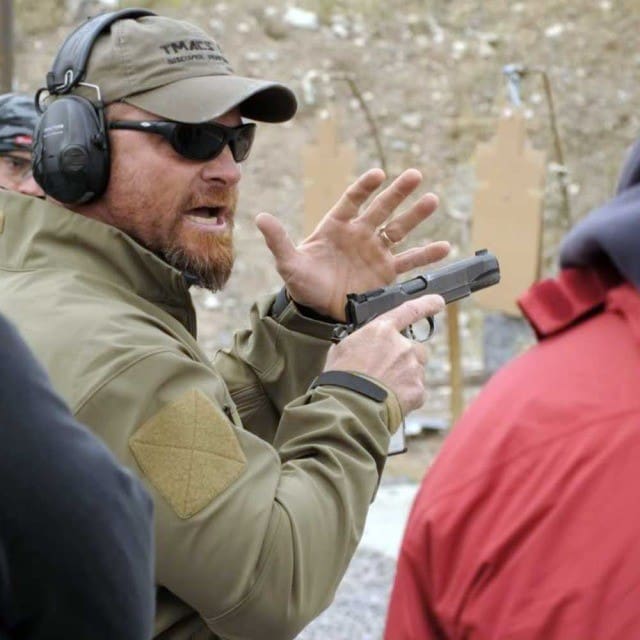
Patrick McNamara spent twenty-two years in the United States Army in a myriad of special operations units. When he worked in the premier special missions unit, he became an impeccable marksman, shooting with accurate, lethal results and tactical effectiveness. McNamara has trained tactical applications of shooting to people of all levels of marksmanship, from varsity level soldiers, and police officers who work the streets to civilians with little to no time behind the trigger.

His military experience quickly taught him that there is more to tactical marksmanship than merely squeezing the trigger. Utilizing his years of experience, McNamara developed a training methodology that is safe, effective and combat relevant and encourages a continuous thought process. This methodology teaches how to maintain safety at all times and choose targets that force accountability, as well as provides courses covering several categories, including individual, collective, on line and standards.

While serving as his Unit’s Marksmanship NCO, he developed his own marksmanship club with NRA, CMP, and USPSA affiliations. Mac ran monthly IPSC matches and ran semi annual military marksmanship championships to encourage marksmanship fundamentals and competitiveness throughout the Army.

He retired from the Army’s premier hostage rescue unit as a Sergeant Major and is the author of T.A.P.S. (Tactical Application of Practical Shooting).
tmacsinc.com

Gunfighter Moment is a weekly feature brought to you by Alias Training & Security Services. Each week Alias brings us a different Trainer and in turn they offer some words of wisdom.


Gunfighter Moment – Pat McNamara

Saturday, February 16th, 2013

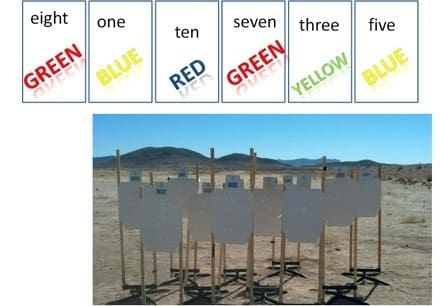
Perform the appropriate amount of correct repetitions on the range. The best performers on the globe, regardless of the skill, practice perfectly and if necessary, in slow motion to perfect their craft. There are certain aspects of gun handling and gun fighting that have to be performed at a subconscious level. We human beings are not multi-taskers. I hate to be the bearer of bad news, but we cannot perform two tasks at the same time at a conscious level. We can however, task switch, task stack or perform tasks subconsciously. We should be accessing the subconscious’ data bank during weapon’s manipulation, to include safety manipulation, magazine changes, and the fundamentals. We can therefore, at a conscious level, maintain situational awareness, forecast, predict, and plan

Patrick McNamara
SGM, US Army (Ret)


Patrick McNamara spent twenty-two years in the United States Army in a myriad of special operations units. When he worked in the premier special missions unit, he became an impeccable marksman, shooting with accurate, lethal results and tactical effectiveness. McNamara has trained tactical applications of shooting to people of all levels of marksmanship, from varsity level soldiers, and police officers who work the streets to civilians with little to no time behind the trigger.

His military experience quickly taught him that there is more to tactical marksmanship than merely squeezing the trigger. Utilizing his years of experience, McNamara developed a training methodology that is safe, effective and combat relevant and encourages a continuous thought process. This methodology teaches how to maintain safety at all times and choose targets that force accountability, as well as provides courses covering several categories, including individual, collective, on line and standards.

While serving as his Unit’s Marksmanship NCO, he developed his own marksmanship club with NRA, CMP, and USPSA affiliations. Mac ran monthly IPSC matches and ran semi annual military marksmanship championships to encourage marksmanship fundamentals and competitiveness throughout the Army.

He retired from the Army’s premier hostage rescue unit as a Sergeant Major and is the author of T.A.P.S. (Tactical Application of Practical Shooting).

tmacsinc.com

Gunfighter Moment is a weekly feature brought to you by Alias Training & Security Services. Each week Alias brings us a different Trainer and in turn they offer some words of wisdom.
Gunfighter Moment – Pat McNamara

Saturday, December 29th, 2012

This is a great ‘hot topic’ debate issue. I’ve been in the middle of this one several times as have you. I like to debunk myths and research gimmicks. Through discovery learning, much can be learned.

The question of whether a zeroed rifle equals a zeroed rifle is one that I ask in nearly every course I run.

“Is a rifle that is zeroed for one shooter, zeroed for another shooter?”

You may have a very strong opinion here. So do I. My opinion is backed up by empirical data. I have vetted this question by having shooters in every one of my courses check the data by firing someone else’s rifle,…after it is zeroed. The data is the same 100% of the time.

The problem is, and the reason for the ‘Gray Area’, is understanding when a rifle is zeroed. I’d say a rifle is zeroed when the shooter can achieve consistent center mass 10 round, sub two minute (or even three minute) groups at a SR-1 target from 100 yards. Fair? If the shooter is consistent, say…, is achieving a score in the high ‘nineties’ with each group, this is not accidental. Fair? The shooter is consistently applying the fundamentals. The shooter’s cheek stock weld, eye relief, firing hand position, cyclic rate of breathing and trigger control remains the same with each round fired and from group to group. If the shooter is achieving all of these, I am pretty sure that the rifle is zeroed. I am also pretty sure that if I apply the same fundamentals, I can achieve similar results with that shooter’s rifle. If the shooter is using a red dot sight, I will use the sight as intended. If the shooter is using iron sights or a chevron as seen through some ACOG sights, I will need to ask the shooter where his point of aim is.

Patrick McNamara
SGM, US Army (Ret)


Patrick McNamara spent twenty-two years in the United States Army in a myriad of special operations units. When he worked in the premier special missions unit, he became an impeccable marksman, shooting with accurate, lethal results and tactical effectiveness. McNamara has trained tactical applications of shooting to people of all levels of marksmanship, from varsity level soldiers, and police officers who work the streets to civilians with little to no time behind the trigger.

His military experience quickly taught him that there is more to tactical marksmanship than merely squeezing the trigger. Utilizing his years of experience, McNamara developed a training methodology that is safe, effective and combat relevant and encourages a continuous thought process. This methodology teaches how to maintain safety at all times and choose targets that force accountability, as well as provides courses covering several categories, including individual, collective, on line and standards.

While serving as his Unit’s Marksmanship NCO, he developed his own marksmanship club with NRA, CMP, and USPSA affiliations. Mac ran monthly IPSC matches and ran semi annual military marksmanship championships to encourage marksmanship fundamentals and competitiveness throughout the Army.

He retired from the Army’s premier hostage rescue unit as a Sergeant Major and is the author of T.A.P.S. (Tactical Application of Practical Shooting).

tmacsinc.com

Gunfighter Moment is a weekly feature brought to you by Alias Training & Security Services. Each week Alias brings us a different Trainer and in turn they offer some words of wisdom.
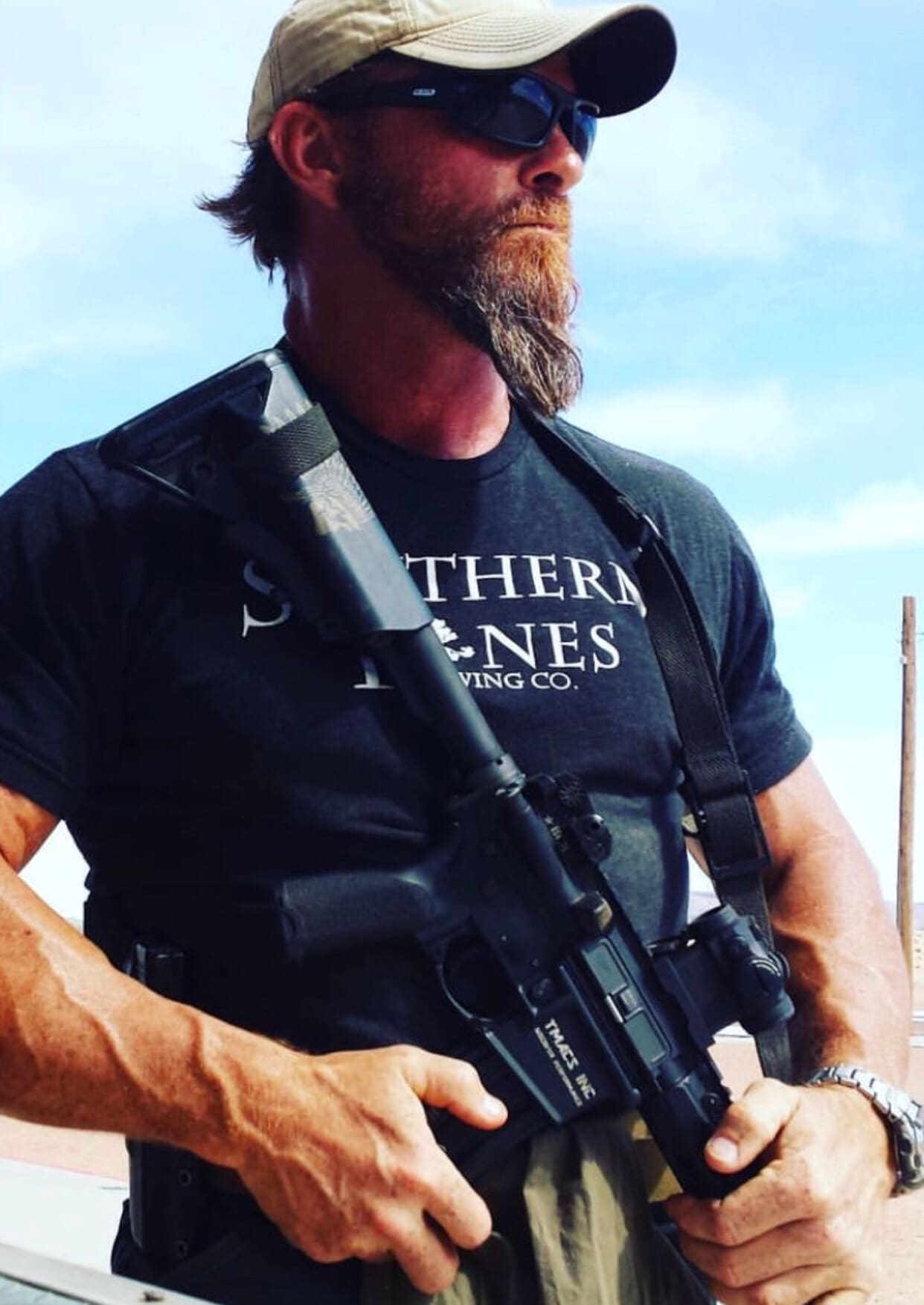
Gunfighter Moment – Pat McNamara

Saturday, December 1st, 2012

We sometimes neglect working on the fundamentals. These are the core skills around which everything rotates. It is sometimes necessary to lie flat on your belly and work basic rifle marksmanship (BRM). Refresh on the importance of building a position to achieve a natural point of aim. Understand that without a natural point of aim, there is muscular input and where there is muscular input there will be movement in the weapon when fired. This will have an adverse effect on the desired impact of the round fired.



When you work BRM, you appreciate external ballistics and the effects that wind, temperature, humidity, and angle have on desired impact.

You develop an understanding that this differs from one round to another depending on the make, grain, caliber, and type of round.

“Single shots should be practiced one round at a time. BRM forces us to concentrate on the fundamentals. These fundamentals should be engraved into our hard drives because as tactical gun handlers we must be able to perform certain skills intuitively.

There are facets that must be felt and performed at a subconscious level. i.e., loading, pre-combat check, safety manipulation, building a position, achieving a natural point of aim, sight alignment, trigger control, feeling the metal on metal imperfections in the trigger group, calling your shot, seeing how far the sight rises, seeing where the sight settles, following through, realigning the sights, and resetting the trigger. These must be practiced in near slow motion.

You must have a firm understanding of minute of angle and the accuracy of your rifle. You must know how your sights adjust. You should have a basic understanding of external ballistics to understand the possible adverse effects caused by winds, temperature, humidity, and angle.

BRM allows the shooter to establish a tempo or demeanor.”

Patrick McNamara
SGM, US Army (Ret)


Patrick McNamara spent twenty-two years in the United States Army in a myriad of special operations units. When he worked in the premier special missions unit, he became an impeccable marksman, shooting with accurate, lethal results and tactical effectiveness. McNamara has trained tactical applications of shooting to people of all levels of marksmanship, from varsity level soldiers, and police officers who work the streets to civilians with little to no time behind the trigger.

His military experience quickly taught him that there is more to tactical marksmanship than merely squeezing the trigger. Utilizing his years of experience, McNamara developed a training methodology that is safe, effective and combat relevant and encourages a continuous thought process. This methodology teaches how to maintain safety at all times and choose targets that force accountability, as well as provides courses covering several categories, including individual, collective, on line and standards.

While serving as his Unit’s Marksmanship NCO, he developed his own marksmanship club with NRA, CMP, and USPSA affiliations. Mac ran monthly IPSC matches and ran semi annual military marksmanship championships to encourage marksmanship fundamentals and competitiveness throughout the Army.

He retired from the Army’s premier hostage rescue unit as a Sergeant Major and is the author of T.A.P.S. (Tactical Application of Practical Shooting).

tmacsinc.com

Gunfighter Moment is a weekly feature brought to you by Alias Training & Security Services. Each week Alias brings us a different Trainer and in turn they offer some words of wisdom.