

Anduril’s launch of Eagle Eye during the recent AUSA Annual Meeting created quite a bit of discussion among those in the helmet industry as well as those who wear them. In response, we received this “State of the Industry” report from an inside who we will keep anonymous. The perspective is their’s and will hopefully serve to educate our readers.
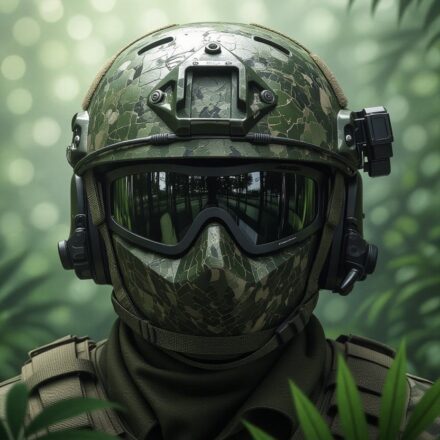
The recent reveal of Anduril’s Eagle Eye helmet system at AUSA 2025 sparked a lot discussion regarding helmets and where the industry is with regards to what the user wants. Anduril did not present any performance specifications for the helmet. All we know now is that they are in collaboration with Gentex to optimize the helmet. At first glance, the helmet looks very close to the head with a relatively thin shell. Comments have been made that is essentially comparable to an exotic car prototype being revealed at a car show to spark interest in that manufacturer. But what is the rest of the helmet industry doing? Are they in step with what users are expecting? Have they made any progress in terms of protection over the last ten years or is it more of the same. This article discusses those topics by branch of service and manufacturer.
United States Army
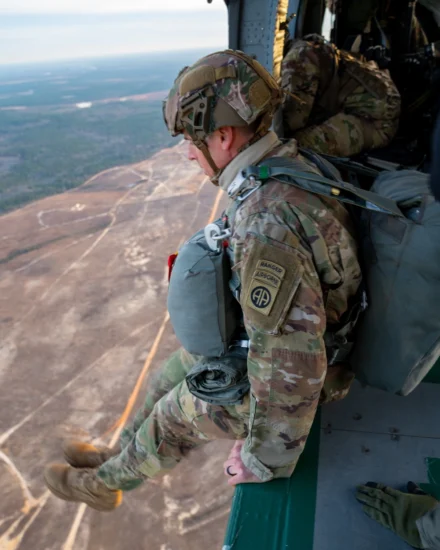
The United States Army Next Generation Integrated Head Protection System is probably one of the most criticized helmet programs in the industry. This program dates way back to 2012 when it was originally called the Soldier Protection System. At that point in time, the helmet consisted of a shell and a fairly large ballistic applique to stop the small arms threat that was relevant to the Army. This was a very big and very bulky helmet that was competed between Gentex and Ceradyne. Note that Ceradyne was ultimately purchased by Avon so this became an Avon program. Ceradyne won the SPS program with a unique shell and rail design. The rail was a custom Ceradyne design that did not have any accessories ready to connect to it, unlike the Gentex/Ops-Core rail which is now industry standard. Around 2018, the two key domestic polyethylene providers had a break through in performance which provided protection from the small arms threat WITHOUT the need for the ballistic applique. To the Army’s credit, they scrapped the SPS program and released the IHPS program which drove down the areal density shell requirements to give the soldier a lighter more comfortable helmet. This was followed up by the NG-IHPS program which is now the formal program of record for the Army with both Avon and Gentex producing helmets likely through 2027 and a plan to onboard LTC in the near future as a third supplier.
With regards to performance, the NG-IHPS helmet is actually very impressive and offers more ballistic protection then the ECH at a lower areal density. It is a huge leap forward in terms of the weight to protection ratio and this achievement consistently get lost under other criticisms. What draws criticism from the user community is the rail, which nothing other than an enormous mandible attaches to, the visor, which has to connect to the NVG bracket, and the comfort and lack of stability of the liner and the chinstraps which need two hands to adjust. The liner is considered to be outdated, featuring Team Wendy Zap pads, which have been around for over a decade and a D30 crown pad. The liner pad design is driven by a 14fps requirement, which is double the impact energy of the SOCOM 10fps requirement. This requires a thicker stiffer pad which is partially the reason the liner is so uncomfortable. Furthermore, there is growing sentiment that the Army needs a high cut version of this helmet system.
These concerns have not fallen on deaf ears. The Army has asked industry to provide new liners to increase comfort and is considering the 10fps requirement instead of 14fps. In addition, the Army has requested custom pads from industry for hot and cold weather pads. Furthermore, the Army has requested updated rail designs from both Avon and Gentex to allow for better integration of accessories such as flashlights, cameras etc.
At AUSA, Gentex pulled out all the stops and show cased what the NG-IHPS helmet could be with a new rail, new liner, new chinstrap, new visor, integrated communication headset through rail arms and even a version of the helmet featuring the Gentex RaiLink Power and Data System. Unfortunately, it was only shown to key customers like program managers.
Marine Corps
The Marine Corps recently competed the Integrated Helmet System between Galvion and Gentex with Galvion being down selected as the awardee. This of course has led to a protest from Gentex which is typical of the Galvion / Gentex rivalry, more on that later. The IHS helmet also features small arms threat protection but to a lesser degree than the NG-IHPS helmet. It also features a power and data system, which in this case may be the Galvion Cortex system after this winds its way through the protest process, which can take months and even years.
SOCOM
The Program Management for SOCOM has driven innovation in the head protection space, more than any other government organization, period. They were the first Government organization to full adopt a high cut polyethylene helmet with rails and continue to drive down weight and drive up performance using a five year cycle of competition for the Family of Tactical Headborne Systems. Gentex is the incumbent provider of this helmet, having beat out Galvion in 2019, which of course was followed by a Galvion protest. Gentex and Galvion have competed directly against each other on helmet programs and in court more than any other pair of companies in the industry. They have competed against each other for every major helmet program in North America and Europe. They recently went to court for violations of intellectual property with Gentex winning a decision that Galvion had indeed violated Gentex IP with their version of the helmet rail. Currently the two companies have both submitted helmet systems for the current FTHS competition which should be downselected to a winner in the first quarter of 2026. Both helmets systems are elite in terms of the weigh to performance ratio, offering 9mm protection at an areal density of roughly 1 pound per square foot.
Ironically, Team Wendy did not compete for FTHS in 2019 and has declined to compete for FTHS in 2025. Team Wendy is a division of AVON, and the AVON mantra of “simpler is stronger” may have cost them this opportunity as they were not willing to tool up the required four sizes of shells. Team Wendy only has two sizes of shells while Galvion has 5 and Gentex has 4.
SOCOM continues to pace the industry not only with the best helmet systems available but also technology upgrades such as Gentex’s RaiLink Power and Data rail system which has been purchased by the Army Special Missions Unit.
Overseas
The largest overseas program was competed in 2024 and awarded in 2025 by the NATO Support and Procurement Agency. Again, Galvion and Gentex were the two main competitors for this program and each company was awarded different tranches of the tender. Galvion has an inside edge on the rapidly growing European Helmet Market now that they are producing helmets in Poland while Gentex continues to produce helmets for Ground applications solely in the United States.
Anduril
This brings us back to the Eagle Eye Helmet System. Anduril took a “first principles” approach towards their new helmet design, rejecting industry knowledge to bring something lighter and higher performing to the market. This might make sense in a software context where the rules of physics are not constraints. Every branch of service has improved their ballistic protection to weight ration substantially over last ten years and in some cases reduced their weight burden by 50% while still offering the same levels of protection. Industry has provided these customers what they asked for and then some.
With regards to Visual Augmentation Systems, if you are lucky enough to use the L3 F-PANO or Elbit ENVG-B, you will experience the very best of what the VAS industry has to offer and it is incredible. The thermal outline mode is just one of the features that these production tubes offer now that will impress even the most jaded user and it is a real thing that L3 is selling now. This is one of the key difference between Eagle Eye and the current systems that it says it outperforms. L3 and Elbit just don’t feel the need to go on the Joe Rogan Experience to discuss their technical breakthroughs.
So then, who is the customer for Eagle Eye? It is not a program of record. Neither Army, USMC or SOCOM have asked for it and none of them are funding it. However, they are buying NG-IHPS, FTHS, F-Pano and ENVG-B because those programs have delivered on what the user community has asked for. And where the programs have fallen short (IHPS Liner for example) the program offices have reacted to improve their systems. The customer for Eagle Eye is the general public, and what’s for sale is shares in Anduril when and if they become publicly traded. Anduril is not creating a system to benefit the user, they are creating a system to draw interest in their company. Joe Rogan has never purchased or influenced a Government Program Acquisition. This is not intended to answer the mail for the user community but rather spark the interest of the general public.
I’d suggest that if you’re going to write an article like this, you take the time to research the business concept of disruptive innovation—what it is and how it transforms industries. Anduril’s entire mission is to develop disruptive technology and sell it on its own merits. It doesn’t operate like a traditional defence prime.
If you’re implying that the current process of military innovation is somehow superior, I’d encourage you to take a step back and look at the bigger picture. Major leaps in technology don’t come from incremental project gains or slow component upgrades built around outdated use-case requirements written years before a contract is even awarded.
If you’re in uniform and can’t support a company that self-invests, designs, and builds technology for warfighters as its founding principle—then, frankly, you’ve missed the point. Prototypes and concepts are meant to push boundaries; they’re not trying to sell “Eagle Eye” units that don’t meet requirements. The difference is that companies like Anduril don’t need to rely on questionable deals to move obsolete tech.
Your viewpoint is dated. Step aside, grandpa. Privately funded disruptive innovation is the future—get on board or get left behind.
You spoke of “major steps in technology” but we aren’t actually seeing that here. Anduril’s contribution to this concept is its AI and AR environments. It’s not hardware in this case.
Over the years, I’ve seen lots of conceptual designs from various helmet makers and design houses. Those who make decisions have seen them as well. They adopt promising technologies as they mature and leave others to the side which don’t enhance operations.
We aren’t seeing anything revolutionary here and much of it is available elsewhere, it’s just not in this form factor because of physics. Unless they’ve discovered a new armor material (and I know they haven’t or they’d be pushing it) this design isn’t going to protect the user from impact or ballistic threats. It’s going to have to change in order to do that.
If Anduril truly wants to get into the helmet market, it would be best served to buy a helmet company. This concept needs a lot of work and I’m unsure that Anduril currently has the needed expertise to fix it. They are decades behind the companies who actually innovate in this space.
‘Decades behind’ is only because current innovation in the industry moves at a snails pace, bounded by unimaginative concepts fed by ‘design requirements’ that are restricted primarily by financial and contractual obligations. When equipment lifespans are measured in decades the warfighter is already behind the eight ball, deviation from ‘the norm’ isn’t justification for detraction. It makes me sick to my stomach when we, as the end user, don’t champion ‘any’ company that pushes the boundaries of innovation in combat systems. If you have a problem with Anduril or other companies like them, then you are the problem.
There’s an old saying in the SOF community, “don’t confuse enthusiasm with capability.”
I’ll judge a new helmet when it actually exists. Until then, it’s just looks great because you want it to work great. I saw this same thing with NGSW. All of these people who never touched any of the guns pining away for this video game concept or that one. All the while, they weren’t practical.
Dan, your response is interesting but unfortunately not, as you accuse the author, of being timely or accurate.
One thing to remember is that “Disruptive Innovation” in the defense industry is or can be disruptive across the entire DOTMLPF spectrum. So adopting something radically new can have a much greater impact on the organization.
Another thing to consider is that one of the key lessons of the war in Ukraine that is being overlooked, is that Militaries do not have the luxury of waiting for “Disruptive Innovations” to mature.
Case in point the T-14 Armata. The T-14 is a ‘fourth generation tank’ and has become the new industry standard that other nations (including the US with the M1E3) are emulating. However, the T-14 has failed matriculate to the battlefield in Ukraine, largely because it is a “Disruptive Innovation” and Russian’s current DOTMLPF doesn’t support rapid adoption of this immature design. Put simply the industry base can’t produce T-14s as readily as T-90s or T-80s (in part because the T-14 was designed around a European engine) and because it is a radically different tank system it requires different training pipelines IOT be effectively utilized.
Drones on the other hand are a red herring when discussing “Disruptive Innovations”. Despite the media hype/propaganda drones do not provide new, novel, or unique capabilities. While they are uniquely cheap and abundant for the first time in history aerial and ground drones have in fact been in use militarily since WWI and WWII – (reference Ground Combat by Ben Connable).
This I think is the author’s point. Militaries can no long afford to ‘develop’ new and innovative solutions ala ‘Pentagon Wars’, rather they need to be able to purchase readily available improvements ala buying a new car. This is why the OMFV and the M10 Booker failed. This is in fact the logic behind the M1E3 (GDLS has stated the E3 is available to buy right now as is, and will be providing the US Army by summer of 2026).
In the same way the Eagle Eye system, while cool seeming (especially as an augmented reality replacement for the CVC) it represents an aspirational innovation that hasn’t matured to the point of being mass producible and readily available.
Brian S, if I’m understanding you correctly, you’re suggesting that because military procurement is painfully slow, we shouldn’t support disruptive technologies since they can’t be integrated fast enough to be deployed effectively today.
That’s a strange position to take. The issue isn’t with innovation itself, it’s with the system that struggles to absorb it.
Innovation exists on a spectrum, with incremental gains at one end and transformative breakthroughs at the other. The problem is that the defense sector has very few players operating at the far right-hand edge, which is why most genuine innovation on the battlefield comes from the private sector. In Ukraine, for example, it’s civilian technology adapted quickly and creatively that has driven much of the progress. Traditional procurement simply isn’t built to move that fast or to anticipate future needs.
Drones are a perfect example. They’ve been a known problem for over a decade, yet in 2025 we still lack scalable, effective countermeasures. That failure sits squarely with outdated procurement and planning processes, not with innovation itself.
Companies like Anduril prove what’s possible when innovation isn’t strangled by bureaucracy. In just eight years they’ve self-funded, developed and fielded operational systems that blend civilian technology with military application. They’re already delivering results and building for the future.
Meanwhile, in other areas such as helmets, what passes for “innovation” is a new rail mount, slightly better padding and minor ballistic improvements. Gentex’s core design hasn’t fundamentally changed since 2009. Sixteen years of stagnation isn’t something to defend.
You don’t need an F1 car to take your family to work, but you do need the F1 team to exist so their research filters down into the car you drive every day. That’s how progress happens.
We need companies like Anduril precisely because they push that edge and force the rest of the industry to move forward.
“Step aside grandpa” Apparently your mother didn’t teach you any manners
GG, I definitely understand the writers thoughts and I do agree with the majority of what they are saying. For the last few years, I have watched Anduril be awarded hundreds and hundreds of millions of dollars from our government, and the only thing I have ever witnessed operate is that drone helicopter thing… purely anecdotal, as I am just one dude and there’s no way for me to be everywhere all the time. That said, coming at it from an Air Force perspective, those operators at units I routinely interact with haven’t either (I work in industry and service Air Force programs).
Now, was I standing there watching the EagleEye thing at AUSA (with my mouth agape), yes I was, as were many. With all of the companies represented in the collaboration, it builds what seems to be instant credibility. The whole thing was truly impressive to see and understand, so long as what is represented was actually the final result.
The authors point is well taken, and like I said, I agree, but I will offer one devils advocate point. Just because the various helmet program managers or users aren’t asking for it, doesn’t mean they won’t. Sure, it could be an effort to drive attention to the company en route to an IPO. But, it could also be a window into what could be for the program managers and users… a “I didn’t know I needed it until I saw it” kind of thing. I believe a lot of “things” came about because someone was a visionary and bold enough (with enough money) to build it, and they would come. I am not saying Palmer Luckey is that guy, but he also could be. Time will tell.
Respectfully, this is a lot of the same rhetoric we hear when any new upstart shows up to disrupt an entrenched industry. The telegraph company said this about the Bell’s invention, Ford about Tesla, etc etc etc.
There will be failures along the way and who knows if Anduril will be able to deliver, but the difference between Anduril and the rest of the industry is that they’re actually trying large and unconventional movements forward. That does pay off (sometimes) in a big way.
Gentex is a great case study in flying under the radar as a monopoly. They’ve needed a taste of reality for a long time.
Firstly, great breakdown in the saga of helmet system contracts and programs over the past decade. A lot of great info.
However, I think you missed an obvious point in relation on Anduril. Anduril openly partnered with Gentex to provide the high cut shell. So absolutley no need to “buy a helmet company” when you have some partnered with you on the endeavor.
Moreover Eagle Eye is the only concept also offer a ballistic ear protection. No one else offers this. This allows the Army to “have its cake and eat it too” by adopting a high cut helmet for weight reduction (most soldiers will love it) but for those in the close combat force, they can simply add the ballistic ear protection to the Gentex rail in the same way we add on side plate to out plate carriers. More ballistic and hearing protection AND integrated comms, what’s not to like?
My best guess is that Anduril isn’t competing against “other helmet companies” or signaling to the public for an IPO, but instead they are signaling to congress and Army Acquisitions that IVAS 2.0 is possible, but this time as a fully integrated headborne system, not just a clunky goggles strapped to an existing helmet.
In the same way General Dynamics released their concept vehicles of Abrams-X, this is the product demonstrator for Andruil. It seems like Andruil is throwing down the proverbial gauntlet in terms of what a headborne system could be. Given Palmer Lucky’s invention of the Oculus goggle, it is something that he has significant experience with and has been able to successfully bring to market in the past.
Only time will tell what, if anything, comes from this but I bet every CEO in the headborne systems space sat up and took notice and are looking for ways to integrate their products into something ain to Eagle Eye.
https://www.anduril.com/hardware/eagleeye/
Side armor for Comms has been available for over ten years. Ops-Core invented this back in 2014 for European Customers. Hexonia quickly knocked of the Ops-Core helmet and side armor. If you google Ops-Core side armor you will see it for yourself.
Anduril is shaping up an IPO per Palmer Lucky: “We are definitely going to be a publicly traded company,” he told CNBC’s “Closing Bell: Overtime.” “We are running this company to be the shape of a publicly traded company.”
You’re talking about the Ops Core ballistic side wings/appliqué…we’re talking about comms headsets with ballistic shells and/or full cut helmets with integrated comms headsets (think aviation helmets).
These things are entirely different.
Also, regardless of whether Anduril goes public or not…I’m really not following how that’s relevant to the hardware. Tons of defense contractors are public.
If the argument is that Eagle Eye (as a system) is vaporware to make an IPO more lucrative, only time will tell…but given Anduril’s other contracts and successful systems…I’d say that’s a flat argument.
The Integrated Ballistic Helmet had comms ear cups made from KM2 Kevlar and that was in the early 1990s.
Gentex made a super low profile Coxswain helmet about 10 years ago. But once the customer specified what they wanted the comms to do other than protect hearing, the helmet geometry had to change because actual ANR comms headsets take up bulk. The customer went back to an high cut helmet with separate comms.
Everything looks nice and slim when it doesn’t have to actually function.
Those are great examples of how these concepts aren’t new or exclusive.
To be clear, I don’t care who makes it. It could be Gentex, Galvion, Avon, or Anduril…but the idea that in 2025 we don’t have a better option than “an ACH with ear plugs” or a FAST SF with effectively no side/over ear protection is unsatisfactory at the highest level.
There’s no reason why comms headsets can’t have a modern ballistic outer shell, nor is there any material or design reason why a full cut helmet can’t have integrated comms/ear pro.
With regard to the Gentex example and bulk, I can’t find a reference source, but sure, that would be a consideration, especially for a group coming from FASTs.
But do we really believe that a full cut ground helmet with integrated ear pro would be bulkier or larger than a full cut helmet (ACH/ECH/IHPS-NG) designed to fit over a standalone comms headset (Peltors, Liberators, Sordins)?
It’s not industry, they build to the requirement. Many organizations have some very specialized headborne systems. Much of it you aren’t seeing. It’s all based on what they are willing to pay for.
What everyone, including the military, forgets, is that the ballistic shell is really a semi-expendable item.
On the civilian protective equipment side, most manufacturers will not warranty any personal protective armor components past five years, and for good reason, because even routine use can cause the underlying materials to significantly degrade and possibly not perform to specifications for protection.
Even local governments, who largely have sovereign immunity shielding them from civil liability, will generally scrap personal armor and components at five years. While much of the military has non-destructive testing for plates, I am not aware of any similar head borne testing, outside of aviation.
My (long-winded) point is that helmets probably should not be used much more than five years without testing, which might cost more than replacing them. There should be ongoing rolling replacements for all PPE, which also allows a constant “refresh” of capabilities and protection as old armor gets scrapped and is replaced with newer, more advanced systems.
And it is far past time for a high-cut helmet with integrated ear pro to be the standard for ballistic protection.
I wish Anduril and everyone else great success, but everyone designing next generation helmets needs to understand that any head borne system needs to understand that the ultimate end user is not some key leader or battle staff; it is a 19 year old who is tired, dirty and hungry experiencing a somewhat miserable and dangerous existence. His helmet needs to be as light and comfortable as possible, then needs to meet established benchmarks for ballistic and impact protection and those things come BEFORE before we get into powered rails, augmented reality systems and other enablers. That blessed grunt at the tip of the proverbial spear shouldn’t have his helmet adding to his cycle of misery.
This coming from someone who has worn pretty most of the generations of helmets professionally and still does occasionally, starting with the M1 steel pot a long time ago to modern high-cut helmets with rails and enablers. If the helmet is heavy and uncomfortable, troops will dodge wearing it as much as they can get away with, regardless of the “transformational” nature of the data systems.
“Even local governments, who largely have sovereign immunity shielding them from civil liability, will generally scrap personal armor and components at five years. While much of the military has non-destructive testing for plates, I am not aware of any similar head borne testing, outside of aviation.”
Pretty sure the DoW does the five year rotation with plates/helmets. I had to swap out my plates before a deployment over ten years ago because they were past their expiration date.
Moreover, ballistic helmets for the DoW undergo ballistic testing of a portion of each lot produced by a manufacturer under government contract. It would be pretty disingenuous to call them “ballistic” helmets otherwise.
https://www.ncbi.nlm.nih.gov/books/NBK224913/
“And it is far past time for a high-cut helmet with integrated ear pro to be the standard for ballistic protection.”
My guess is the high cut hasn’t been a priority for fielding. The IHPS did not have requirements to be a high cut, as it was not planned to be comms enabled off the bat for all Soldiers. Integrated hearing protection (e.g Peltor COMTAC) provides some ballistic protection to offset the loss in coverage; But it comes at a significant cost. And up till recently no one with stars wanted to champion it.
Army Senior Leadership had been conditioned ever since the beginning of the GWOT when Soldiers were “turtling up” in Iraq/Afghanistan wearing every piece of ballistic kit they were issued, that removing ballistic coverage exposes Soldiers to more risk, which is accurate. However the tradeoff is you can’t move due to wearing all that crap, and it increases the thermal load on the Soldier as well. For example, Soldiers operating in a triple canopy jungle turtled up would have heat cats through the roof due to the body heat being trapped by their armor.
I imagine some of the above was conditioned into Army Senior Leaders by political leadership early in the GWOT when there was reports of Soldiers buying their own body armor because units were unable to issue it to them. Keep in mind as well, Congress controls the purse strings and may have made stipulations that the IHPS be a PASGT-style cut. Not saying that’s what happened, but it wouldn’t suprise me if it did.
Apart from that, you make some very good points about the weight/human factors.
Firstly, this was an excellent article and breakdown of “the “lay of the land”.
With regard to the criticism from the comments section, I think there is a middle ground.
The writer’s point, that the service branches and OEM’s have been incrementally improving performance is well taken, especially in light of the current suite of programs (ENVG-B as an example).
The writer’s point that Anduril’s Eagle Eye IS NOT a COTS item at this point is also well taken.
The comment’s section’s point, that sometimes the services and OEMs NEED an external push to allow for revolutionary technology, designs, or manufacturing processes is also well taken.
With regard to the current situation, SSD and this guest post accurately provide a balance between what Anduril wants to provide and what they have available now (more software, less hardware).
As far as the future, I can’t imagine Anduril is looking to partner with Gentex solely for a chinstrap, so I’d be willing to bet that we will see more in terms of ballistic performance and/or shell design in the future.
At the same time, I’ve long said that ballistic ear protection and/or integrated comms in a full cut helmet should be the standard across our services. That doesn’t need to be Anduril…it could be any helmet or ear pro OEM.
If the only helmet-related thing that comes from Eagle Eye is a move towards ballistic eat pro or a truly integrated comms helmet, even if it’s from an existing OEM, that would be a huge protective and communications advantage for the warfighter.
I’m looking forward to seeing what Anduril does, but also what the existing OEMs and the services do in the near future.
Program of records are too slow and cumbersome and our acquisition system is broken for the most part. So many billions wasted on R&D prototypes to later not turn into funded programs…our acquistion guys and the requirement folks are not setting up proper incentives.
Kudos to Anduril for putting up their OWN money without waiting for govt. contracts. You see a tech bro scammer; I see a patriotic American who’s trying to shake things up and get our military systems moving with more momentum.
Would recommend reading this article: https://www.defenseone.com/business/2025/10/cautious-optimism-some-defense-firms-lock-prototypes-drive-demand/409058/?oref=d1-homepage-river
Been supporting EOIR industry from USG and standard primes for almost 30 years. That said IMO Anduril’s (non traditional) VC backing coupled with tremendous passion and focus has enabled them to fail faster and not get as stuck in traditional acquisition cycle issues. They are by MC very large and have already disrupted many verticals. New norm. There are 5-10 others growing in similar fashion. IMO smart people figured out how to end around our countries biggest problem for getting cutting edge tech to our Soldiers, airmen, marines etc. They innovate at speed of capital not POM cycles. As they continue to grow they will have to partner properly and things will slow a bit, but the shift has happened! It was needed. As for Eagle Eye- both Rivet and Anduril (SMBC) have novel solutions and competition is a beautiful thing. To me it’s all about best sensors/ day& night with lowest latency coupled with most intuitive least obstructive situational awareness, and Ergonomics wins. IMO 3-5 years before mass Production….