SIG SAUER - Never Settle

AUSA 25 – 250th Anniversary Pistol by SIG SAUER

October 13th, 2025

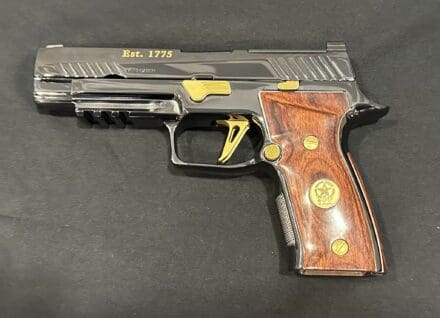
SIG SAUER has created a US Army 250th anniversary commemorative MHS pistol. This first article will be presented to the Army during this week’s AUSA meeting.

It features a black nickel finish and heritage walnut grips. This model will be available for sale to the public soon.

Gentex and Anduril Advance Partnership to Deliver AI-Driven EagleEye System

October 13th, 2025

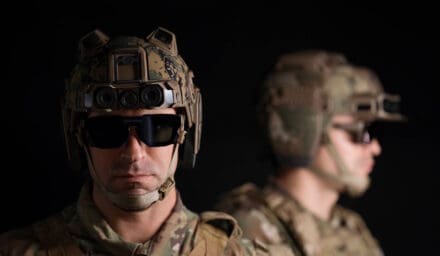
CARBONDALE, PA, October 13, 2025 – Gentex Corporation, a global leader in integrated helmet systems and communications solutions, is proud to announce the advancement of its partnership with Anduril Industries in the development of EagleEye, a next-generation, AI-enabled integrated family of warfighter systems designed to deliver mission command, enhanced situational awareness, and increased survivability directly into the warfighter’s headborne system.

EagleEye builds on the foundation laid by the U.S. Army’s Soldier Borne Mission Command (SBMC) program, through which Gentex provides advanced helmet and communications integration to support the Army’s mixed-reality command architecture. Representing the next evolution in headborne systems, EagleEye embeds command, control, and AI-driven situational awareness directly within the helmet platform, transforming the protective system into a fully networked node of mission command.

“The SBMC program established the framework for digital mission command by connecting the soldier to the tactical network,” said L.P. Frieder III, President & CEO, Gentex Corporation. “EagleEye expands on that vision by integrating command, control, and AI-driven situational awareness directly into the protective system. The platform is a natural extension of our mission to keep soldiers protected, connected, and fully mission-ready in today’s complex battlespace.”

With decades of experience designing and manufacturing trusted headborne systems for the U.S. Department of Defense and allied forces worldwide, Gentex delivers integrated helmet and communications solutions fielded across multiple U.S. Army and Air Force programs. These systems are engineered to integrate seamlessly with current and emerging platforms, including next-generation Army helmet families.

As part of the EagleEye program, Gentex will contribute the advanced head protection and communications architecture that forms the foundation for the system’s modular mixed-reality platform. The partnership merges Gentex’s expertise in integrated protection, communications, and optical technologies with Anduril’s advanced mission command software, heads-up display (HUD) technologies, and distributed sensing capabilities. Together, these capabilities transform the helmet into an intelligent node of the mission network, reducing weight and cognitive load while enhancing survivability and decision-making for the modern warfighter.

Gentex’s contributions to both SBMC and EagleEye underscore its central role in advancing fully integrated soldier systems. While SBMC established the digital and software backbone of mission command, EagleEye extends that ecosystem by embedding command and control (C2) capability and digital vision technologies directly into the warfighter’s protective gear, effectively bringing the network to the edge and empowering the individual operator.

Gentex will highlight its involvement in the EagleEye program and its broader soldier modernization initiatives during the 2025 Association of the United States Army (AUSA) Annual Meeting in Washington, D.C. Visit Gentex Corporation at Booth 8219.

2025 AUSA Annual Meeting & Exposition

October 13th, 2025

The federal government might be shut down, but AUSA’s annual meeting is in full swing.

DZYNE Expands Dronebuster Line with New Vehicle Kits at AUSA 2025

October 13th, 2025

Autonomous and Manual Kits deliver mobile, layered counter-drone defense, building on 2,500+ systems fielded in over 50 countries
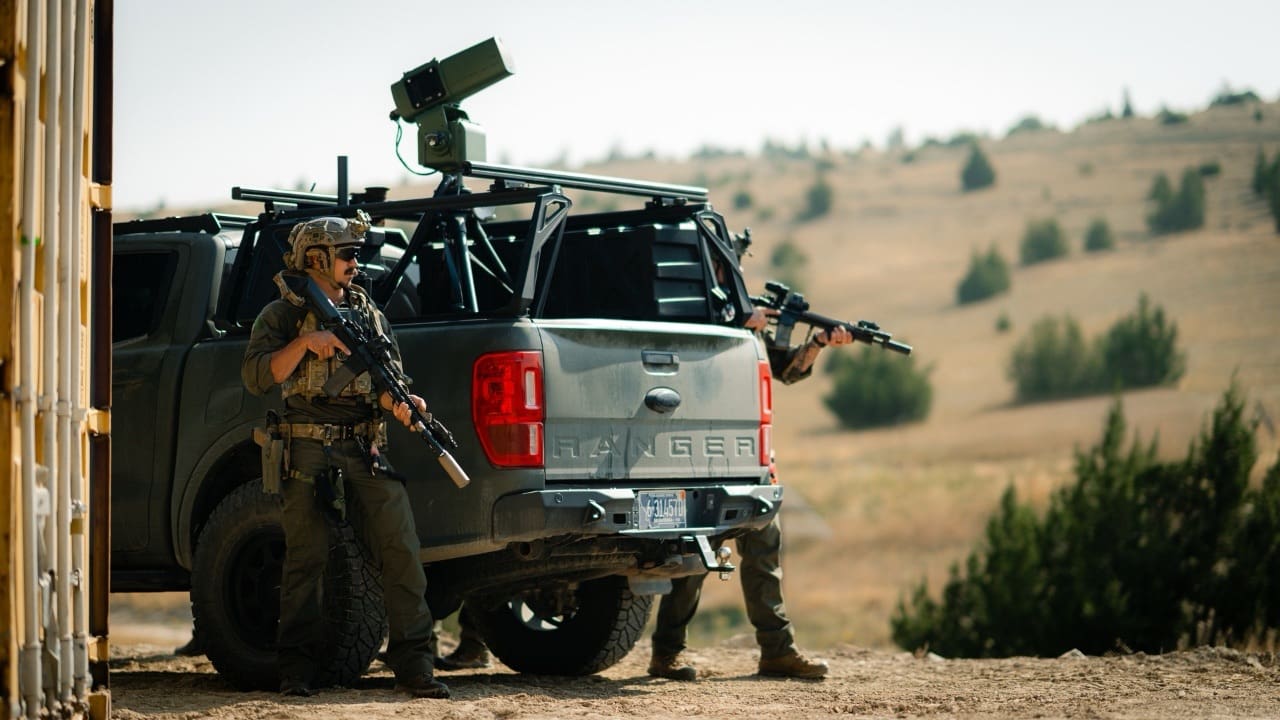

Figure 1 Dronebuster® Vehicle Kits by DZYNE shown with Autonomous Configuration mounted

Washington, D.C. – October 13, 2025 – DZYNE Technologies today unveiled its new Dronebuster® Vehicle Kits at the Association of the United States Army (AUSA) Annual Meeting in Washington, D.C. The expansion of the combat-proven Dronebuster® line brings mobile counter-UAS protection to vehicles, convoys, and infrastructure – extending capabilities already trusted by forces in over 50 countries, with more than 2,500 units fielded worldwide.
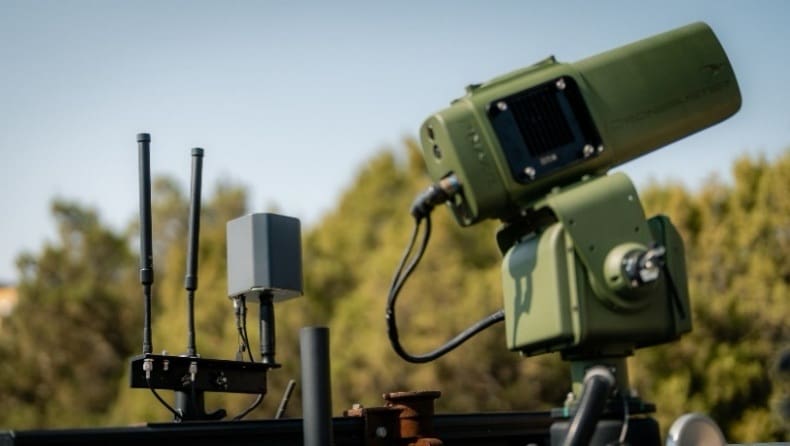

Figure 2 Dronebuster Vehicle Kit shown with Autonomous Configuration Mounted

“The Dronebuster® Vehicle Kits are the next step in our integrated family of Counter-UAS systems. They provide operators witha lightweight, affordable CUAS system that detects, tracks, identifies, and mitigates UAS threats. The optional networking capability to enable a broad-area, distributed defense solution that keep operators ahead of the threat,” said George Schwartz, EVP, Products at DZYNE. 

“This launch represents a milestone in DZYNE’s growth,” added Matthew McCue CEO of DZYNE. “We’ve doubled our workforce in Portland this year to meet demand and expandedour Counter-UAS product line – underscoring our role as a leading provider of layered defense solutions.”
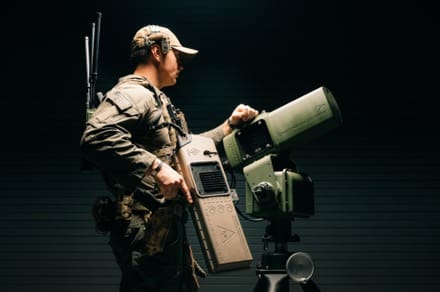

Figure 3 Dronebuster Vehicle Kits by DZYNE offered in (2) Configurations

Unlike traditional systems that are heavy, expensive, and slow to deploy, DZYNE’s Vehicle Kits deliver lighter weight, lower cost, readiness in minutes, and flexible autonomous or manual configurations. They can also integrate into mesh networks for scalable, layered defense across wide areas.

Two Configurations Available

DZYNE’s Dronebuster® Vehicle Kits in two powerful configurations designed to meet the evolving needs of mobile defense operations:

The Autonomous Dronebuster® Vehicle Kit delivers round-the-clock automated protection with minimal operator involvement. This system integrates the Dronebuster® 4 Fixed Site, mounted on a precision pan/tilt gimbal, with a fully integrated DTI System and an in-vehicle operator station equipped with TAK-enabled devices. Together, they provide continuous detection, tracking, and identification of UAS threats. Operators can manually select the target, cue the gimbal, and select the mitigation method or automate the kill chain. This is accomplished through a simple point-and-click interface, supported by AI/ML-driven identification technology and a continuously updated drone library. Scalable and adaptable, this configuration is ideal for securing convoys, bases, and critical infrastructure.

The Manual Dronebuster® Vehicle Kit offers maximum flexibility and rapid response capabilities for operators in the field. It features vehicle mounting hardware for seamless DTI System integration, an in-vehicle display providing TAK-enabled situational awareness, and a handheld Dronebuster® 4 for direct, on-the-spot engagement. This configuration ensures real-time drone alerts to operators on the move, delivering clear situational awareness and quick, decisive mitigation of hostile drones. Lightweight and cost-efficient, it is built for rapid deployment and dynamic mission environments.

Technology Backbone

The DTI System detects up to 30 drones simultaneously at 7+ km, differentiates drones and controllers, and assigns unique IDs for friend-or-foe recognition. It delivers spectrum-wide protection (400 MHz–6 GHz) with AI/ML-driven identification. Its passive, zero-emission design provides stealth and precision.

The Dronebuster® 4 Fixed Site, featured in the Autonomous Kit included spoofing and the powerful jamming capability across C2 channels and all GNSS constellations.

Availability

See the new systems at AUSA 2025, Booth 213, Hall A.

For more information on the Dronebuster® product line or to schedule a demo, please contact us at info@dzyne.com

Anduril’s EagleEye Puts Mission Command and AI Directly into the Warfighter’s Helmet

October 13th, 2025

Anduril today unveiled EagleEye, an independently researched and developed, modular, AI-powered family of systems that unifies command and control, digital vision, and survivability within a single, adaptive architecture.

EagleEye is a consequential step toward realizing Anduril’s vision of turning every warrior into a connected node on the battlefield. It consolidates mission planning, perception, and control of unmanned assets into a lightweight system that reduces weight and cognitive load while improving protection.

Anduril is already delivering the Army’s Soldier Borne Mission Command (SBMC) and Soldier Borne Mission Command–Architecture (SBMC-A) programs. Together, SBMC and SBMC-A form a mixed-reality platform that equips U.S. Army Soldiers with integrated situational awareness, mission planning, and training tools to improve decision-making and mobility. EagleEye builds on these advances, pairing mission command software with a heads-up display (HUD) and helmet-native hardware for balance, protection, and battlefield effectiveness.

“We don’t want to give service members a new tool—we’re giving them a new teammate,” said Palmer Luckey, Anduril’s founder. “The idea of an AI partner embedded in your display has been imagined for decades. EagleEye is the first time it’s real.”

Core Capabilities

Mission Planning

EagleEye enables mission command through a high-resolution, collaborative 3D sand table. Operators can rehearse missions, coordinate movements, and integrate live video feeds pinned to terrain. This creates a shared operational picture before and during the mission.

Enhanced Perception

The HUD enhances the operator’s view by overlaying digital information onto the real world, delivering vital contextual insights. EagleEye includes both an optically transparent daytime HUD and a digital night-vision HUD, each purpose-built for its environment. The system’s advanced approach to blue force tracking enables warfighters to know the precise location of teammates in world space, such as their exact position within a building or on a specific floor, rather than simply appearing as a dot on a 2D map. With Anduril’s Lattice network of distributed sensors, the system fuses real-time feeds from across the battlespace, allowing operators to detect and track threats even when terrain or structures block direct line of sight.

Heightened Survivability

EagleEye provides beyond-full-cut ballistic protection and blast wave mitigation in an ultralightweight shell designed for long wear. Rear- and flank-view sensors expand awareness without distraction. Spatial audio and radio frequency (RF) detection add layers of protection, alerting operators to hidden or immediate threats.

Edge Connectivity

EagleEye consolidates soldier networking and command tools into a body-worn system. Operators can task unmanned aerial vehicles (UAS), call for fires, and control robotic teammates while staying mobile. Lattice mesh networking ensures resilient command and control in denied, degraded, intermittent, or limited (DDIL) environments.

Designed with the Warfighter in Mind, for the Warfighter’s Demands

EagleEye is built from the ground up with ergonomic form factors modular add-ons, and a software-first architecture. Configurations include helmet, visor, and glasses variants. The system balances weight, reduces the bulk of traditional night vision goggles (NVGs), and keeps sensors aligned with the warfighter’s center of gravity. The totality of these attributes make EagleEye a standard-setting technology meant to perform to the requirements of military operations.

By partnering with commercial leaders such as Meta, OSI, Qualcomm Technologies, Inc., and Gentex Corporation, who have invested billions in augmented reality, rugged eyewear, compute, sensing, and ballistic helmets, Anduril brings proven technology directly into defense. This approach lowers cost, accelerates development, and ensures a path to continuous upgrade.
EagleEye equips dismounted operators with the ability to plan, fight, and survive while connected to every asset in the battlespace. As part of the Lattice ecosystem, EagleEye ensures persistent connectivity and control in any environment.

Oak Grove Technologies’ UxS Store Is Now Open

October 13th, 2025

Oak Grove Technologies’ new UxS Shopify storefront is open, featuring tactical drone equipment, Chimera kits, and mission-ready parts built for real-world operations.

Engineered by industry professionals for defense, security, and tactical applications, because reliability and performance aren’t optional.

Explore the full lineup: www.oakgrovex.com

US Marines and Sailors Train and Experiment with Emerging Drone Technology in Okinawa

October 13th, 2025

CAMP SCHWAB, OKINAWA, Japan —

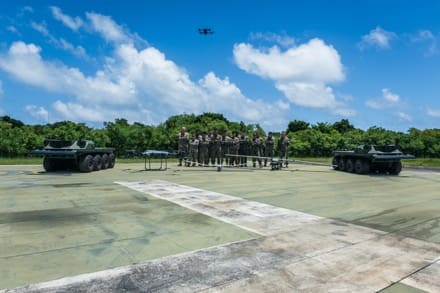
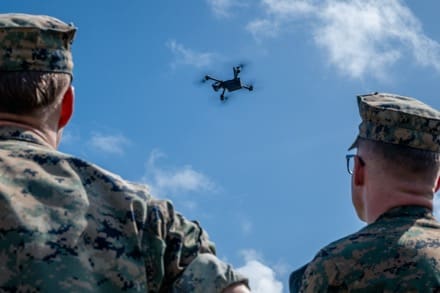
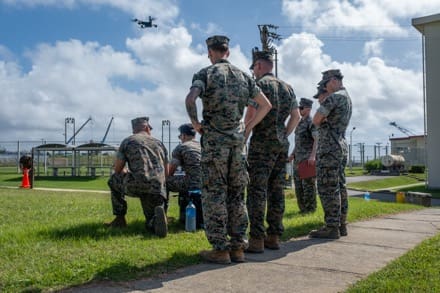
From Aug. 11 to 22, 2025, U.S. Marines and Sailors with 4th Marine Regiment, 3d Marine Division, trained with, integrated, and expanded their use of small unmanned aerial systems (sUAS). For the first time, Marines flew untethered sUAS over an Okinawa-based, Marine Corps installation.

This aligns directly with the Secretary of Defense’s drone modernization guidance, released July 10, 2025, which prioritizes training with autonomous capabilities, leaning into adaptability, and pursuing joint-force integration with these emerging technologies.

“The Marines and Sailors with 4th Marine Regiment are getting use to utilizing and innovating with technology that we haven’t used in the past,” said Capt. Wesley Pond, Regimental Assistant Air Officer, 4th Marine Regiment, 3d Marine Division and lead planner of the sUAS and autonomous, unmanned ground vehicle (A-UGV) training on Camp Schwab. “We are helping them to see new things, new ways to find an adversary and new ways of moving about the battlespace.”

The Marines and Sailors attended a course with the Skydio X2D sUAS to sustain their proficiency with the system. This in-depth training allowed some servicemembers to receive an additional Military Occupational Specialty as sUAS operators after they completed all the required training objectives. The Marines in the course were able to take their increased proficiency in sUAS employment back to their unit to better integrate the systems in future training evolutions.

“Marines of any rank are encouraged to participate in the courses in order to receive the qualifications to operate group one UAS,” said Pond. “This in total increases the Marine Corps’ combat effectiveness by having capable Marines, of any MOS, at the ready to operate drones in any situation.”

“We will continue to push the metaphorical football down the field and keep getting better. We are going to field the Marines with the weapons and the systems they need to enhance their lethality, to go confidently into the next battlespace and know they are walking into a fight that they are well prepared for.”

– said Capt. Wesley Pond, Regimental Assistant Air Officer, 4th Marine Regiment, 3d Marine Division and lead planner of the sUAS and autonomous, unmanned ground vehicle (A-UGV) training on Camp Schwab.

The Marines and Sailors with 4th Marine Regiment refined shared procedures for experimental methods of extracting an emergency casualty via the Mission Master. This A-UGV platform can assist with tactical transport, resupply, and casualty evacuation, reducing danger to dismounted troops across a wide range of missions, including high-risk situations.

“This is the first time our corpsmen in the 4th Marines Regimental Aid Station have had the opportunity to train with and use an autonomous system as a CASEVAC platform,” said U.S. Navy Senior Chief Hospital Corpsman David Long, senior enlisted leader, 4th Marines Regimental Aid Station.

In this training scenario, the Mission Master was used to carry wounded servicemembers out of harm’s way on the battlefield, enabling the Corpsmen to quickly and tactically bring the casualty behind friendly lines.

“This takes a huge load off the humans that would previously have to physically carry that casualty on a litter a long distance or we would have to use a large, loud tactical vehicle,” said Long. “It also allows us to provide treatment enroute to the casualty collection point for follow-on care. This capability has the potential to help us save lives and quickly return more Marines back to the fight.”

As the future of warfighting continues to evolve, 4th Marine Regiment continues to modernize as well.

“This training demonstrates the 4th Marine Regiment’s commitment to train as we fight and to compete with adversary capabilities now,” said U.S. Marine Corps Col. Richard Barclay, commanding officer, 4th Marine Regiment. “Training isn’t just about preparing for a future fight but maintaining a decisive edge in the current operating environment. What Capt. Pond, the 3d Marine Division, and Marine Corps Installations Pacific team have achieved is just the start of much more work to be done within the realms of sUAS and UGV training.”

Cpl Joaquin Carlos Dela Torre

3rd Marine Division

Nomad Releases Durawool NXT Base Layers

October 12th, 2025

Merino wool blended with nylon and spandex stays warm with soft stretch fit

CHARLESTON, SC. – Nomad Outdoor released its new base layer system, Durawool NXT.

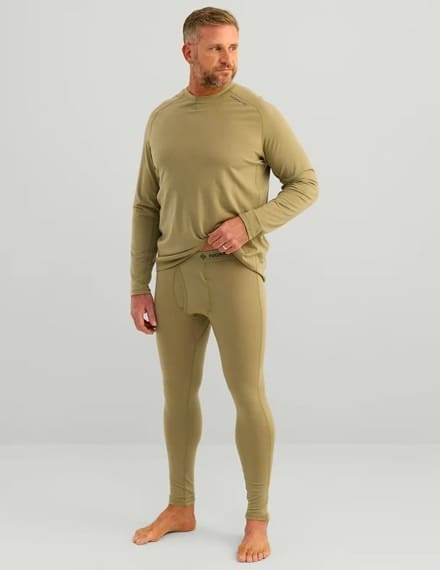
Made of a blend of 60% Merino wool, 36% Nylon and 4% spandex, Durawool NXT base layers give 4-way stretch and mobility for soft, warm comfort under hunting gear in full season chill and late-season cold.

Both upper and lower pieces of Durawool base layers are thermo-regulating for large temperature swings that can happen during fall and early winter hunts. The highly breathablematerial helps transport moisture away from your skin, to keep you dry even when on the move.

“A high-quality base layer is super important for your comfort in the field,” said Nomad Outdoor marketing director Mike Tussey. “Our Durawool NXT pairs perfectly with any of our in-field gear and helps you stay in the stand longer, for when the big bucks start moving.”

The long-sleeve Durawool NXT crew is gusseted under the arms for enhanced mobility. It comes in Overland Trek tan and retails for $90.

The Durawool NXT leggings are designed for a snug, comfortable fit under hunting clothes to keep you warm and dry.  Also available in Overland Trek, the leggings retail for $80.

To purchase Durawool NXT base layers, or learn more, visit www.NomadOutdoor.com.