XC3 Weaponlight

West Point’s Hypersonic Rocket Team Sets Record-Breaking Rocket Launch

May 2nd, 2025

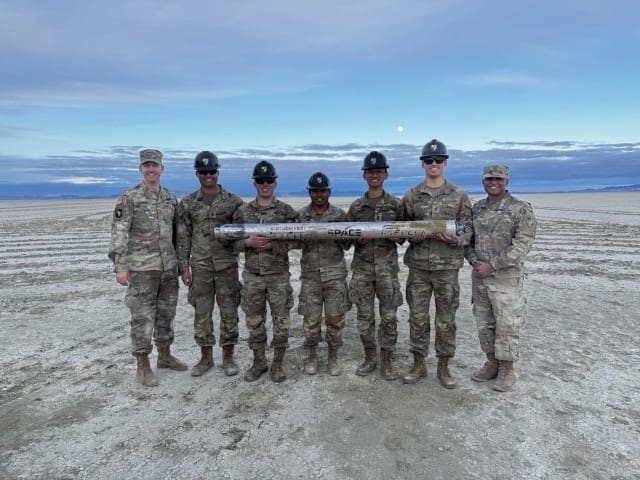
WEST POINT, N.Y. — On Jan. 11, 2025, a team of eight cadets and their advisors prepared their equipment on a cold morning in the remote desert of Black Rock Playa, Nevada. The team was about to face a challenge that would test both their engineering skills and their resilience: to break the Karman Line, the boundary of space, 100 kilometers above Earth. But this was not just a mission to reach space; it was a journey of innovation and determination – built on the teamwork of six years of cadets designing, testing, failing, and succeeding to do something that few people have ever accomplished. It was a test of what they had been taught, their ability to adapt, and the courage to push past their limits. In alignment with the Academy’s annual intellectual theme, “The Human and the Machine: Leadership on the Emerging Battlefield”, this mission highlighted the powerful intersection of human determination and technological advancement.

That day, the SPEAR Hypersonic Rocket Team successfully launched a two-stage hypersonic rocket to an astonishing 149.556 km—surpassing the amateur rocketry altitude record by 6 km and the Karman Line (100 km), the internationally recognized boundary of space!

The day before the launch, the team huddled together, surrounded by planning documents and scattered components, making last minute decisions that would shape the outcome. At the heart of their strategy was simplicity – every decision driven by efficiency. That mindset paid off.

The next morning, as the countdown reached zero, the rocket ignited. The team watched in tense anticipation as it soared through the atmosphere. Every calculation, every design choice led to this very moment. As the vehicle soared beyond the Karman Line, the mission’s success depended on one final challenge – recovery.

Hiking through the rocky terrain, the team could hear the crunch of the desert crust beneath their boots as they trudged up the mountain in search of the rocket. The air was cold, their bodies were tired, and the uncertainty of the outcome loomed.

“We had a track on the rocket during flight, but we didn’t know the condition of the system after descent. It was unclear whether we would be able to recover anything”, Major Kevin Zander, Advisor and Instructor, Department of Civil and Mechanical Engineering recalled. The team pushed deeper into the mountains following a GPS signal, ascending 1,500 feet to reach over 6,000 feet in total altitude.

As the team surveyed the landscape, a glint of sunlight reflected off metal caught their eyes – Cadet Barrett Connor (‘25) spotted the payload amidst the rocks. The moment was surreal.

“We didn’t want this to be a case where the telemetry data says we made it, but there’s no physical evidence”, Cadet Ida McLaughlin (‘25) explained. “Now we can hold in our hands a part of the vehicle that actually touched space”.

After six years of development and perseverance, the team has set new records by crossing the Karman Line with precision and confidence.

Colonel Aaron Hill, Deputy Head, Department of Civil and Mechanical Engineering, reflected “It would be an understatement to say I’m proud of this team! This successful launch upholds the long legacy of excellence at West Point and proves that our graduates are prepared to design and implement solutions in complex environments as trusted Army professionals.”

The success of their mission was a validation of the decisions made over years of planning, testing, and refining. Every step, every choice, led them to this moment.

The team returned to Black Rock Playa in April to launch again, testing new capabilities, and laying the groundwork to guide the 2026 team to even more success. SPEAR Hypersonic Rocket Team continued to push the boundaries of what is possible, ensuring that West Point cadets remain at the forefront of innovation and leadership.

Born from a cadet-driven initiative in 2018, the Space Engineering and Applied Research program found early support from mentors within the Department of Physics and Nuclear Engineering, the United States Army Space and Missile Defense Command, and the Department of Civil and Mechanical Engineering. The SPEAR Hypersonic Rocket Team is now one of the most ambitious undergraduate rocketry programs in the Nation and a critical part of the Space Community of Practice at West Point that is developing Army officers who are capable of leading in emerging space operations, hypersonics, and cutting-edge rocket technology.

This historic launch would not have been possible without the support of many dedicated individuals and organizations. A special thank you to DEVCOM AvMC, the Office of Naval Research, Pyramid Lake Fire Department, Bureau of Land Management Black Rock Field Office, Gerlach Community, and FAA Western Service Area. Their guidance, support, and resources played a crucial role in making this mission a success!

SPEAR Hypersonic Rocket Team is administered by the Center for Applied Research in the Department of Civil and Mechanical Engineering, with contributions across West Point including the Departments of Systems Engineering, Physics and Nuclear Engineering, Chemistry and Life Sciences, and Electrical Engineering and Computer Science.

This project is part of West Point’s 26th annual Projects Day Research Symposium that showcases more than 350 cadet-led research projects. Learn more about the Department of Civil and Mechanical Engineering at bit.ly/WP_CME and check out more project features at www.westpoint.edu/werx

By Jana Scardigno Marketing Specialist, Department of Civil and Mechanical Engineering
Letter to the Force: Army Transformation Initiative

May 2nd, 2025

Army Leaders,

Battlefields across the world are changing at a rapid pace. Autonomous systems are becoming more lethal and less expensive. Sensors and decoys are everywhere. Dual-use technologies are continuously evolving and outpacing our processes to defeat them. To maintain our edge on the battlefield, our Army will transform to a leaner, more lethal force by adapting how we fight, train, organize, and buy equipment.

Consistent with the Secretary of Defense directive dated 30 April 2025, the Army is implementing a comprehensive transformation strategy — the Army Transformation Initiative (ATI). This initiative will reexamine all requirements and eliminate unnecessary ones, ruthlessly prioritize fighting formations to directly contribute to lethality, and empower leaders at echelon to make hard calls to ensure resources align with strategic objectives. To achieve this, ATI comprises three lines of effort: deliver critical warfighting capabilities, optimize our force structure, and eliminate waste and obsolete programs.

Deliver Warfighting Capabilities. ATI builds upon our Transformation in Contact (TiC) effort, which prototypes organizational changes and integrates emerging technology into formations to innovate, learn, refine requirements, and develop solutions faster. We will introduce long-range missiles and modernized UAS into formations, field the M1E3 tank, develop the Future Long-Range Assault Aircraft, and close the C-sUAS capability gap. Command and control nodes will integrate Artificial Intelligence to accelerate decision-making and preserve the initiative. Agile funding, which shifts from program-centric to capability-based portfolios, will increase timely equipment fielding and accelerate innovation cycles. Adaptation is no longer an advantage — it’s a requirement for survival.

Optimize Force Structure. Our focus is on filling combat formations with Soldiers. Every role must sharpen the spear or be cut away. We are eliminating 1,000 staff positions at HQDA. To further optimize force structure, Army Futures Command and Training and Doctrine Command will merge into a single command that aligns force generation, force design, and force development under a single headquarters. Forces Command will transform into Western Hemisphere Command through the consolidation of Army North and Army South. Multi-Domain Task Forces will align with theater headquarters to operate under relevant authorities. We will trim general officer positions to streamline command structures and revise civilian talent management policies to prioritize performance.

We will also restructure Army Aviation by reducing one Aerial Cavalry Squadron per Combat Aviation Brigade (CAB) in the Active Component, and we will consolidate aviation sustainment requirements and increase operational readiness. We will convert all Infantry Brigade Combat Teams to Mobile Brigade Combat Teams to improve mobility and lethality in a leaner formation. We are trading weight for speed, and mass for decisive force.

Eliminate Waste and Obsolete Programs. We will cancel procurement of outdated crewed attack aircraft such as the AH-64D, excess ground vehicles like the HMMWV and JLTV, and obsolete UAVs like the Gray Eagle. We will also continue to cancel programs that deliver dated, late-to-need, overpriced, or difficult-to-maintain capabilities. Yesterday’s weapons will not win tomorrow’s wars.

This is a first step. We have already directed a second round of transformation efforts to be delivered in the coming months.

Leaders, we need you to drive change to ensure we stay lethal, ready, and continue to build cohesive teams that take care of our Soldiers and families. Our Army must transform now to a leaner, more lethal force by infusing technology, cutting obsolete systems, and reducing overhead to defeat any adversary on an ever-changing battlefield. Our continuous transformation is underpinned by strong, agile leaders who act on their initiative.

This We’ll Defend.

Dan Driscoll, Secretary of the Army

Randy A. George, General, United States Army, Chief of Staff

Letter to the Force

BCM Gunfighter History : Ukraine

May 1st, 2025

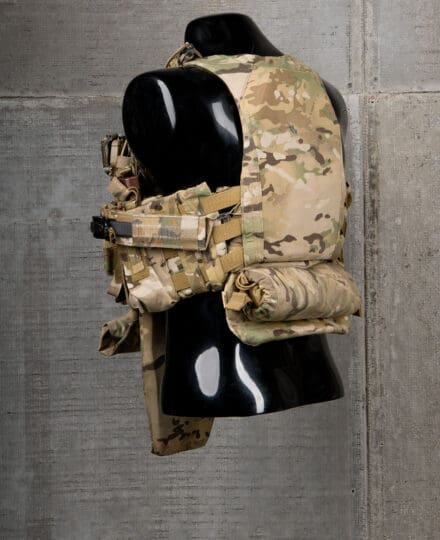
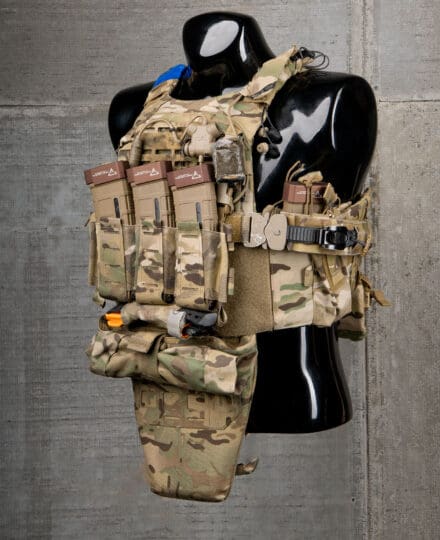
What started as providing security for humanitarian aid vehicles on their way to the front, my time in Ukraine has had many twists and turns. From training to “volunteer efforts”, I needed something with the flexibility to go from slick to full combat loads. Enter the Crye LVMBAV.

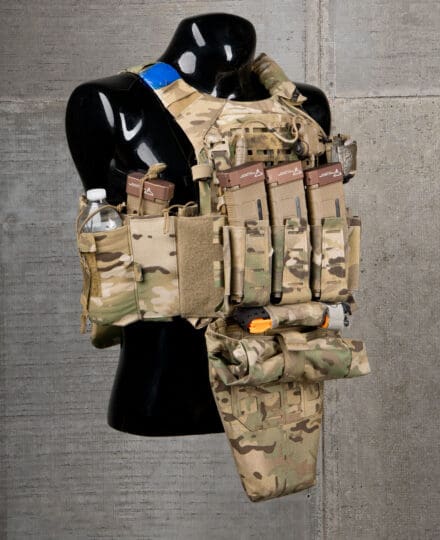
Light and packable, the MBAV is made of a 4 way stretch material that allows me to cinch the vest down to a minimal profile whether slick or jocked up. That minimal profile is essential for Ukraine and makes a huge difference when quickly getting in and out of vehicles/damaged buildings.

Plussing up an MBAV is as easy as attaching an AXL Advanced Adaptive Placard. I have three or four of these with unique set ups at any given time depending on where I am based. The placard hooks into/out off mounting interfaces on the MBAV so changing from one to another or going completely slick takes a matter of seconds.

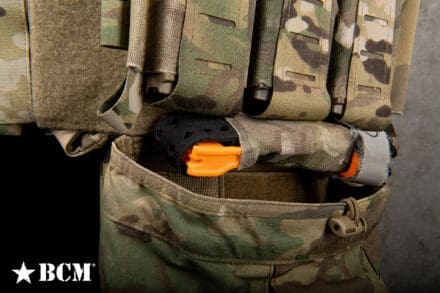
Centerline front, the Shaw Concepts 3-Magazine Elastic 556 Placard is the best fit for my day to day. The elastic cells reliably retains magazines, without flaps or bungie. When empty, the pouches completely collapse. Having an integral TQ holder and the ability to molle a large admin onto the front of the placard is also preferable to layering a number of Velcro backed pouches and adding unwanted bulk on the front of the vest.

Below the Shaw, I keep a groin protector and a Platatac ASAD. The Platatac is perfect for “overflow” items, like pick ups(items found or given) or empty magazines, etc. I sometimes run these on my belt but I’ve found it’s easier to stow/unstow this pouch when mounted up front over the groin protector.

The groin protector itself has Ukrainian made soft armor that is based off of the Russian GOST system as well as an upside down shooters cut Hesco L210 size small. No idea who makes it, but this particular groin protector and the Hesco plate are a perfect fit (not sure how many beers deep I was in the kit room when I figured it out but there you have it).

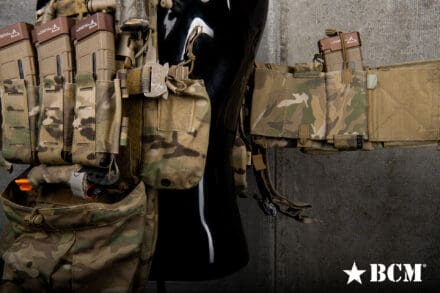
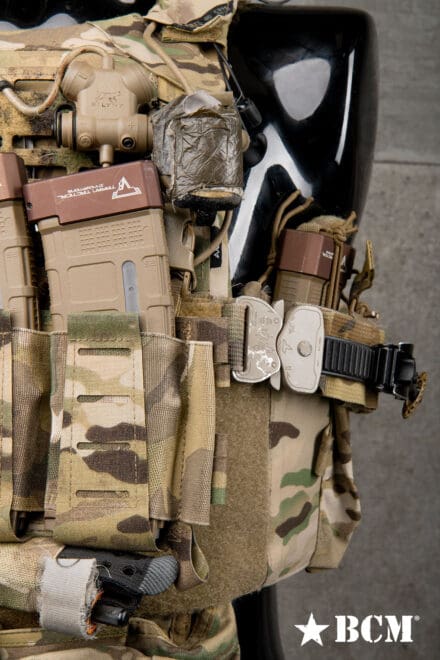
On the sides, I prefer a Crye Stretch Cummerbund. Even loaded up, I can run the sides tight to my body without sacrificing movement or breathing. I typically run a magazine and radio in the forward cells, and then a water bottle and magnet for shotguns or other tools in others.

If the Crye Stretch is not available, their JTAC cummerbund will do. While not as dynamic, the JTAC cummerbund supports a hard 6×6 plate and a 6×9 soft armor panel. While not always available, running PPE on the side is a must for work in contested areas.

On my left, I also run a Titan Retention system. A ratcheting system, the Titan can accommodate any number of different tool/weapons that you may come across. It’s also nice if I have to climb or work anything/anyone that requires both hands without having a rifle constantly getting hung up on the environment or other people.

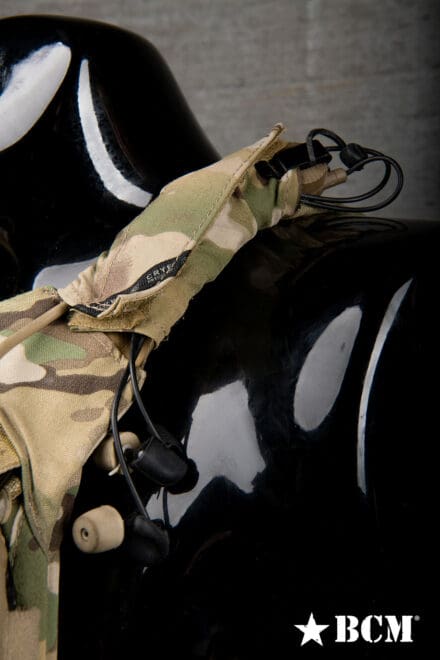
While “green” comms are not a constant, the Silynx Clarus PTT has been a winner over multiple trips. It supports easy control of dual comm systems without creating a tangle of cables and devices. The lapel clips also attach to the AXL placard seamlessly.

Finally, in back, I have a Ferro Concepts Roll 1 pouch. Wearing a plate carrier inside of a vehicle with no lower back support wears on you even after a short period of time so I was super happy when this was first announced. In the field, I cut out a portion of the Velcro interface used to attach it to the carrier so I can rip the entire IFAK off my back versus traditional method, which is difficult to access with gloves or cold hands.

Behind the Roll 1 is another Ukrainian made soft armor panel. The lower back is typically overlooked when considering armor so while it’s just soft armor, it’s better than nothing.

After three years, the LVMBAV has become my go to. It’s not the shiny new thing, but the design and materials work in ways many of the “latest and greatest” do not. Whether comfort, flexibility, or durability the LV MBAV is my standard and has a permanent spot in my kit bag.

Visit instagram.com/bravocompanyusa for more BCM content.

Palladyne AI and Red Cat Announce Successful Completion of Cross-Platform Collaborative Drone Flight

May 1st, 2025

New testing milestone leverages three autonomous heterogeneous drone platforms for the first time

SALT LAKE CITY–Palladyne AI Corp. (NASDAQ: PDYN and PDYNW) (“Palladyne AI”), a developer of artificial intelligence software for robotic platforms in the defense and commercial sectors, and Red Cat Holdings, Inc. (NASDAQ: RCAT) (“Red Cat”), a drone technology company integrating robotic hardware and software for military, government, and commercial operations, today announced a significant testing milestone in their ongoing collaboration—the completion of an autonomous, cross-platform collaborative flight involving three diverse heterogeneous drones.

During this most recent testing, which leveraged Red Cat’s Teal 2 and Black Widow drones and the Palladyne™ Pilot AI software, each platform operated using onboard edge computing and constrained communication protocols without reliance on centralized infrastructure to communicate. The system enabled real-time, distributed detection and tracking of multiple dynamic and static ground objects—including humans and vehicles—in different regions of interest, providing a single operator with comprehensive situational awareness. The two companies previously announced a successful two-drone flight operation in January 2025, and Palladyne AI announced a single-drone testing scenario in December 2024 to autonomously identify, prioritize, and track terrestrial targets.

“This new testing milestone represents significant progress in our joint mission with Red Cat to enable multi-drone interoperability and autonomous collaboration for the defense sector,” said Matt Vogt, Chief Revenue Officer, Palladyne AI. “We are proud to have successfully completed this three-drone flight and believe our joint, cross-platform, autonomous solution will be a game changer for U.S. military personnel and drone operators. With this major step forward, we are excited about what Palladyne Pilot will bring to our government and defense customers as well as to our target non-defense civil customer base.”

“Successfully expanding from single to three-drone operations reflects not only the reliability of our drones and Palladyne’s AI software, but also the capability of onboard systems to independently handle complex missions,” said Geoff Hitchcock, Chief Revenue Officer of Red Cat. “For warfighters, this provides greater situational awareness while requiring fewer operators in the field to manage multiple assets. This latest test is a meaningful step toward making multiple, collaborative autonomous systems more practical and effective in real-world defense scenarios.”

The Palladyne Pilot software is commercially available. For more information, please visit www.palladyneai.com/pilot.

MDM 25 – IXI Electronic Warfare

May 1st, 2025

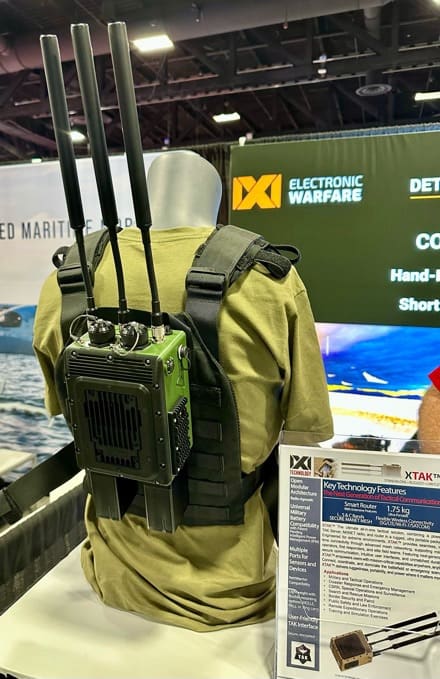
IXI Electronic Warfare exhibited their X-TAC Tactical Awareness Kit server.

The requirement was for a manportable TAK server and IXI EW delivered. Weighing 4.85 lbs with a single hot-swappable PRC-148 / 152 battery (3.85 lbs dry), the XTAK is 6.6″ x 5″ x 3.54″.

Powered by an Intel 17 / Jetson AGX Orin edge computing module, the system communicates in L, S and C Bands – 3X3 MIMO 6-10W, 2.4 GHz, 5 GHz, and 6 GHz and 5G Global Band (Dual SiM). Additionally, there are ports for Ethernet (1 WAN, 2 LAN), USB 3.0 (2), RS232 (1), and NETTWARRIOR.

From a power standpoint, they’ll accept everything from dirty shore power to MBITR batteries, to STUB, to BB-2590. In fact, with a BB-2590 you can expect up to 18 hours.

High Speed Gear Releases Dust Bag Insert for NVG Pouch

May 1st, 2025

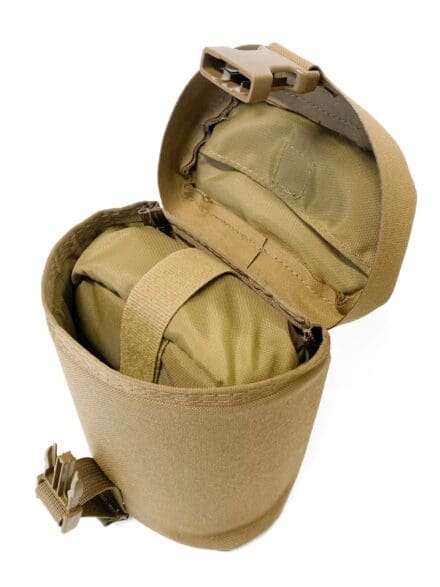
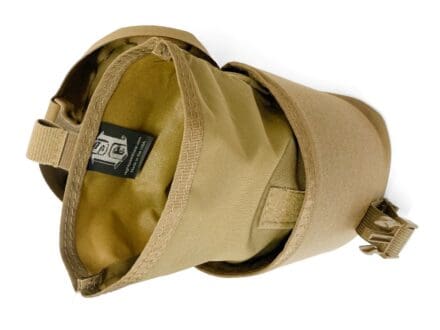
SWANSBORO, NC, May 1, 2025 – High Speed Gear®, a trusted brand in mission-critical tactical gear, is proud to announce a newly available enhancement to its popular NVG (Night Vision Goggle) Pouch: a dust bag insert specifically designed for protection in sandy and debris-filled environments.

This optional upgrade addresses a specific need among military personnel, law enforcement, and tactical professionals operating in desert, coastal, or high-particulate environments. Integrating the dust bag insert adds an extra layer of environmental protection for sensitive optics, helping ensure mission readiness and prolonging the service life of valuable night vision equipment.

“Our end users work in some of the world’s toughest environments,” said former Marine, Allison Mitchum, Vice President of Sales and Marketing at High Speed Gear. “After direct feedback from our warfighters, we developed and tested this dust bag insert to enhance the level of equipment protection in harsh desert environments where dust and debris tend to infiltrate everything. It’s a small addition with a significant impact on equipment longevity and operational efficiency. Plus, it’s one more way we’re responding to the needs of those on the front lines.”

The High Speed Gear NVG Pouch (NSN #: 6650017260532) is already recognized for its rugged construction, secure closure system, and streamlined design allowing for quick access and minimal bulk. The new dust bag insert enhances these features by offering added protection against fine particulate matter without sacrificing accessibility and ease of deployment.

The NVG Dust Pouch insert is available now with the NVG Pouch or as a standalone accessory. For more information or to place an order, visit www.highspeedgear.com/nvg-pouch or www.highspeedgear.com/nvg-pouch-dust-bag-cover.

In addition to the NVG Pouch and related accessories, High Speed Gear remains steadfast in its commitment to equipping warfighters with innovative, mission-ready solutions. The company is currently developing advanced drone pouch systems designed to accommodate a range of tech accessories utilized by United States Marines and U.S. Army Soldiers.

Contact Adam Garrison, Director – Government Business Development, at Adam.Garrison@highspeedgear.com.

MICROOLED Announces Partnership with Vortex Optics and Brand New US Headquarters

May 1st, 2025

DALLAS–MICROOLED Inc., the leading global supplier of AMOLED displays, is proud to announce their partnership with Vortex Optics to advance the development of high-performance weapon sights for optical sighting systems. This collaboration continues MICROOLED’s commitment to delivering elite display solutions that enhance optical accuracy, durability, and user experience in competitive and mission-critical environments.

MICROOLED’s state-of-the-art AMOLED technology offers unparalleled image clarity, extreme high contrast ratios, optimal energy efficiency, enhanced visibility and faster target acquisition – key attributes for situational awareness in the harshest battlefield environments. By integrating these displays, Vortex Optics aims to elevate the performance of its weapon sights, ensuring reliable and clear visuals. Next-generation scopes, along with other reconnaissance and surveillance optical systems, rely on innovative AMOLED technology to gain tactical edge. Beyond defense, AMOLED displays are also critical components to commercial optics for outdoor enthusiasts, smart eyewear for athletes, vision for sophisticated medical equipment and high-end professional cameras.



“We’re excited to support Vortex Optics with our AMOLED display technology, a critical element to optical sight systems,” said John Robinson, VP of MICROOLED Inc. “Our displays are designed to meet the rigorous demands of multiple applications. This strategic partnership reinforces our dedication to military technological advancements and continues to push the boundaries of what AMOLED displays can achieve.”

This collaboration aligns with MICROOLED’s vision to remain at the forefront of display technology innovation. Another testament is their brand new office in Dallas, TX, establishing a US presence, showcasing commitment to innovative partnerships and to meet the evolving needs of the optical sighting systems market. John Robinson also commented on the new US Headquarters, “This milestone positions us to better serve our clients and drive forward groundbreaking advancements in micro-display technology.”

Galvion Introduces CORTEX Smart Head System Integration Platform at SOF Week 2025

May 1st, 2025

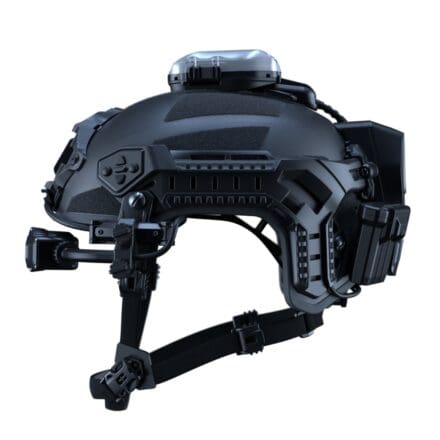
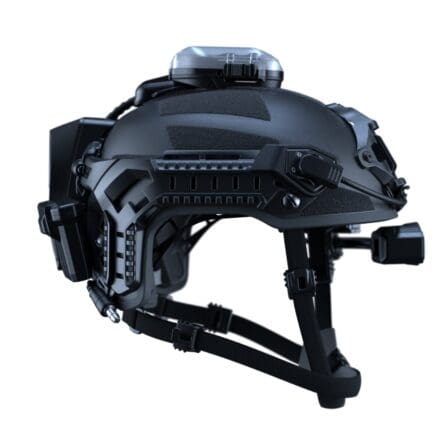
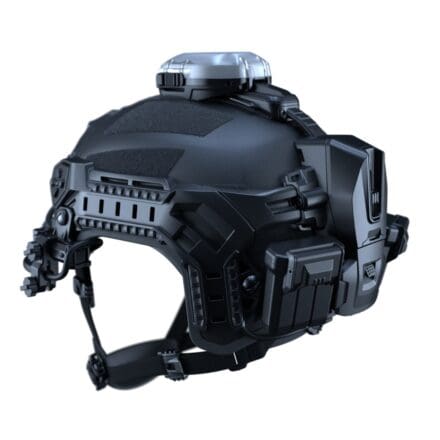
Galvion, a world leader in the design and manufacture of innovative head systems, power and data management solutions, and integrated soldier systems, is launching their CORTEX™ product category at SOF Week 2025. CORTEX is Galvion’s new category of advanced, intelligent headborne systems that deliver processing, power management and data connectivity, driving next-level Warfighter effectiveness on a digitally enabled battlefield. Combining Galvion’s expertise in hardware and software development and highlighting a foundational commitment to human-centered innovation, CORTEX systems feature intuitive design, intelligent integration and mission-adaptable configurations.

Designed to unify power, data and processing in a modular ecosystem, CORTEX enables real-time decision making at the edge, while maintaining compatibility with existing tactical gear and workflows. The CORTEX system on display at Galvion’s booth (#349) at SOF Week is integrated onto Galvion’s flagship Caiman® helmet and features a powerful compute module with internal battery and purpose-built android-based operating system; integrated accessory network for power & data; multiple system communication protocol options (USB, ISW, Bluetooth, Wi-Fi); optional battery module for untethered operations; sensor and emitter pod with open-source architecture for third party integration; low-profile auto-detecting VAS connection for HUDs and NVGs with software-enabled AR; built-in 4-key controller for tactile on-board navigation; as well as additional optional, adaptable capabilities. Using Galvion’s CORTEX system and proprietary AlertCentr™ application, the Warfighter can view critical ATAK data and operate key ATAK functions with a quick button press, eliminating the need to open the EUD, and enabling new levels of situational awareness.

CORTEX components are one-size fits all, with adjustable hardware to fit the full helmet size range and is available for Galvion’s Caiman® and Hellbender™ platforms, as well as select non-Galvion helmet systems. The demonstrated CORTEX system has been developed over multiple years with input and collaboration from Tier 1 customers. Customized versions of Galvion’s integrated systems featuring specifically tailored software and hardware integrations have been delivered to and trialled by undisclosed global customers.

Todd Stirtzinger, CEO at Galvion said: “We have collaborated with some of the world’s most elite teams to imagine the future of integrated head systems, and the launch of the CORTEX category marks an exciting milestone in our product and technology evolution. Galvion has been deconstructing and re-designing integrated headborne systems since we entered the market, and the CORTEX system that we are demonstrating here is really just the beginning.” Stirtzinger added:

“This shift from passive protection to next-generation survivable and lethal systems is a step change in capability and digital integration and requires new tools and fast learning. This is precisely why we invested millions of dollars in building our state-of-the-art Warfighter Lab, and it plays a huge part in helping us make the best design decisions for this new category of intelligent, integrated systems. SOF Week is a fantastic opportunity for us to introduce CORTEX to a wider audience and demonstrate how the Warfighter Lab supports these human-machine interface developments.”