Day Three of Rock’a Lock’a BANG! BANG! brought participants back to the former Nevada State Maximum Security Prison for another full day of hands-on training. With the event now firmly established inside the prison environment, the training continued to expand beyond traditional lock manipulation.
SPARROWS continued its focus on covert entry with impressioning, while Breaching instructors worked on mechanical techniques. Forensics was also brought into the mix, demonstrating how investigative techniques and technology can be adapted to the covert-entry community.
Forensics
The forensics class focused on how forensic tools and techniques can be applied to covert entry and intelligence gathering.
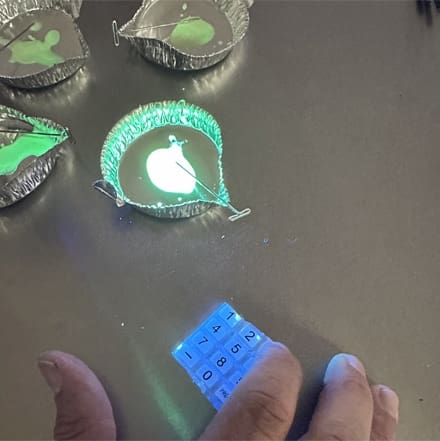
Understanding who has been inside an environment, what they have interacted with, and what evidence they may have left behind can provide valuable information. One of the more interesting demonstrations involved microdotting.
Special microdots were placed on a keypad and were designed to fluoresce under a specific wavelength of light when they had been touched. The demonstration showed how seemingly invisible indicators can be used to determine whether an object or area has been accessed.
It was another example of the broader approach Rock’a Lock’a BANG! BANG! takes to training: looking at familiar technology and techniques from an entirely different perspective.
SPARROWS Lock Picks — Impressioning
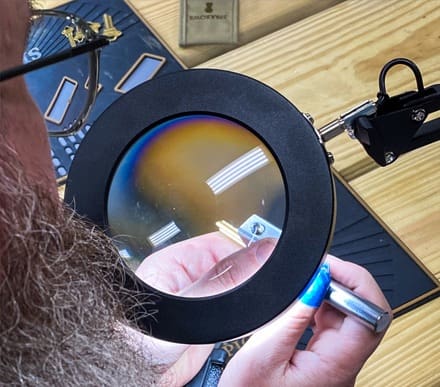
SPARROWS continued its lock-manipulation curriculum with impressioning, a technique used to create a working key by manipulating a blank key within the lock’s keyway.
The class provided participants with another opportunity to work directly with locks and understand the mechanics behind a technique that requires patience, observation, and precise manipulation.
As with the previous days, the emphasis remained firmly on hands-on learning rather than simply demonstrating the equipment.
Compliant Technologies was also on hand for a large demonstration after lunch. With more that twenty volunteers. Compliant Technologies gave an in depth talk on how their GLOVE technology works by impacting the nerves to gain compliance of those who are resisting. The GLOVE consists of two pads that can be activated when they touch the skin. The activation impacts the subjects nerves creating both a distraction and an interruption of coordinated muscle movement.
The number of participants speaks both to the attendees and to the technology that left no aparent lasting impact on any of the volunteer’s. It really needs to be seen to understand how quickly participants are able to compose themselves and walk away unharmed after experiencing the GLOVE.
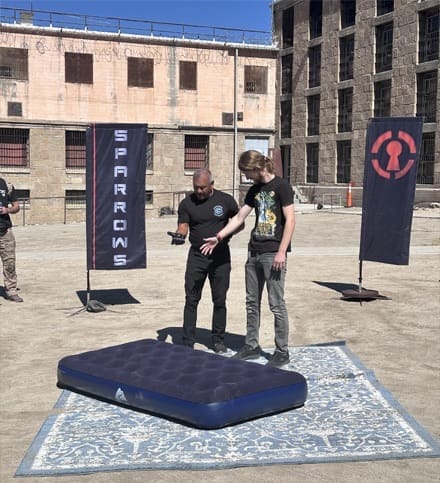
SPARROWS had their breaching tools on hand for demonstration and training.
As with all the instructors Thomas on breaching had an impressive background. Thomas was able to not only run through the tools but also describe the different scenarios that he has faced during his SWAT career.
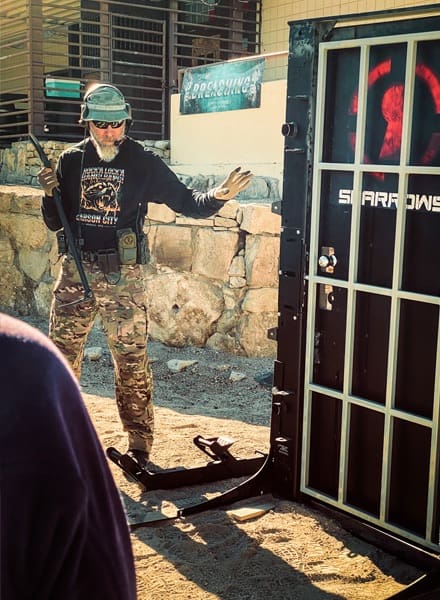
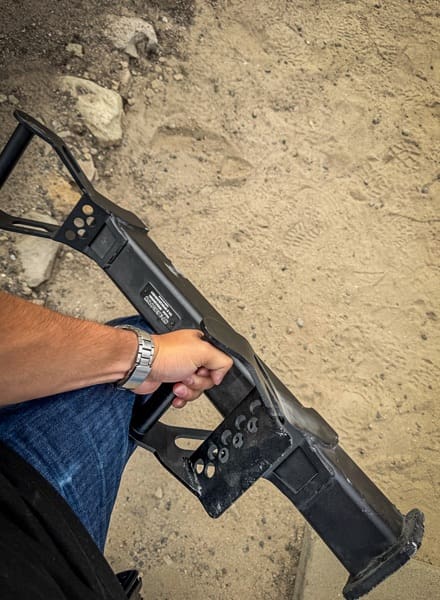
On hand were SPARROWS light and heavy RAMS and their small and large collapsing bolt cutters. Everything was tested out on their massive breaching door.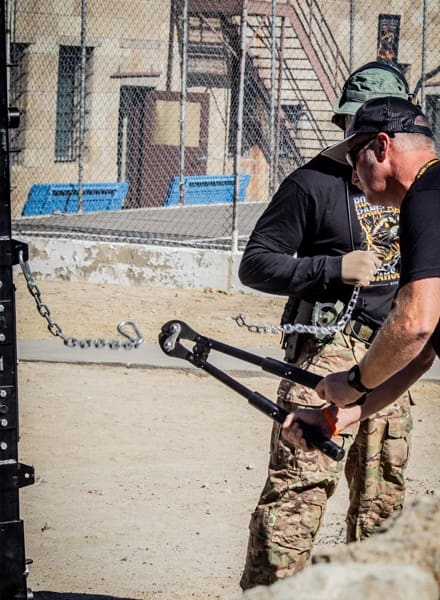
NIGHT THREE
As the daytime training concluded, Rock’a Lock’a BANG! BANG! transitioned into another evening of technical presentations and smaller breakout sessions.
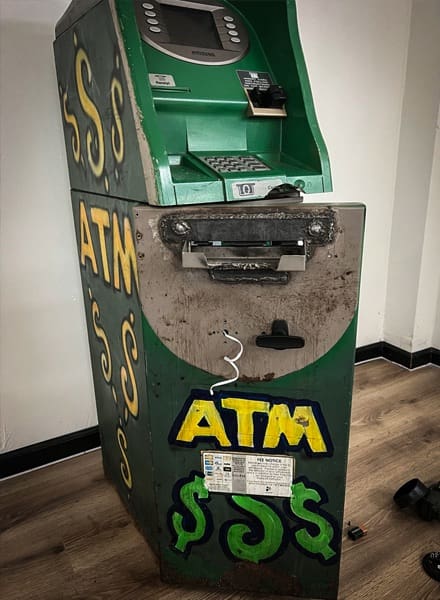
One of the highlights of the evening was a demonstration from Rapid Safe Entry and Manipulation, which provided both a technical explanation and live demonstration of a safe-cracking method known as side punching and Injection attacks for key pads.
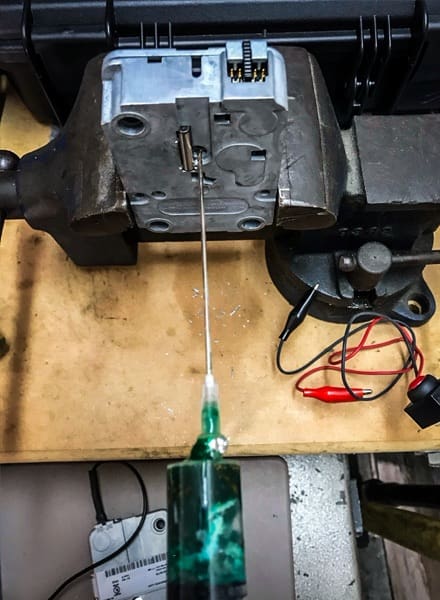
Both techniques provide an extremely rapid method of gaining entry to certain safes, demonstrating just how quickly a properly executed attack can defeat a security container.
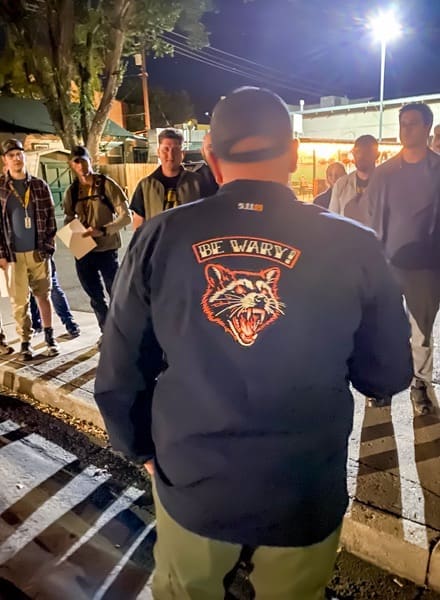
One break out group hit the local community with prepared bug out bags on a surveillance counter surveillance walk. Instructor’s were always easy to spot during the event in their custom 5.11 Jackets.
The evening demonstrations reinforced one of the defining characteristics of Rock’a Lock’a BANG! BANG!: participants aren’t simply being told about techniques and technology. They are being shown how they work, why they work, and how quickly established security measures can sometimes be defeated.
Day Four / Mission Day Report
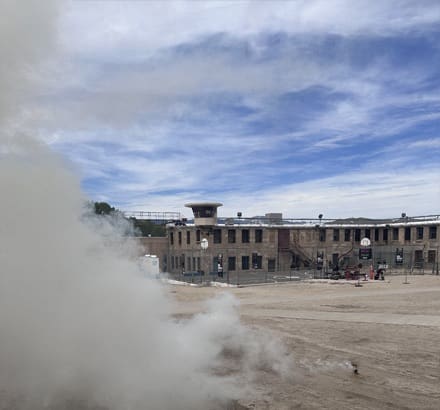
RLBB moved into its final phase with Mission Day, putting several days of training into a large-scale, force-on-force scenario inside the former Nevada State Maximum Security Prison.
The concept was simple. The execution was not.
Participants were divided into three large teams, with one team representing prison staff and the other two representing inmates. The scenario began with a riot in one wing of the facility, with several guards taken hostage. From there, teams were tasked with securing additional sections of the prison, locating hidden objectives, accessing locked gun cabinets and safes, manipulating locks, managing simulated casualties, and responding to an evolving series of problems throughout the facility.
If that was not enough one of the inmate teams (Team Chaos) could be negotiated with to join forces with either side thanks to each team having 3M Peltor ComTac VII head sets.
The result was a complex environment that forced participants to apply the skills developed over the previous several days.
The Mission Day also rolled out more technology as participants were put into SHOCK VESTS and a simulated gunfire box was used. The simulated gun box ran off meps gas resulting in realistic automatic gunfire.
Communications became particularly important as teams moved through the facility.
3M Peltor headsets allowed team members to communicate while operating in different areas of the prison. The communications capability was particularly useful as the scenario developed, allowing teams to operate independently while remaining connected to the larger group.
The prison environment also provided a realistic test of communications equipment. Concrete walls, multiple levels, confined spaces, and significant distances between team members created the type of environment where reliable communications become critical.
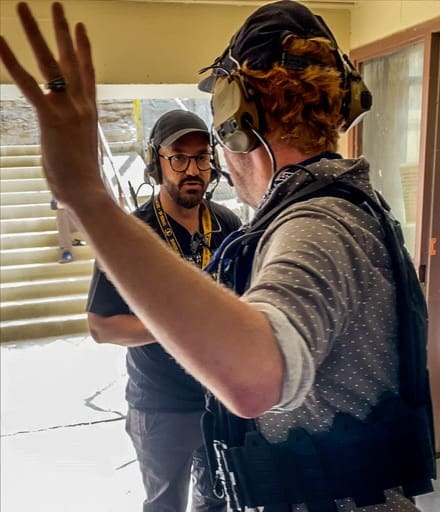
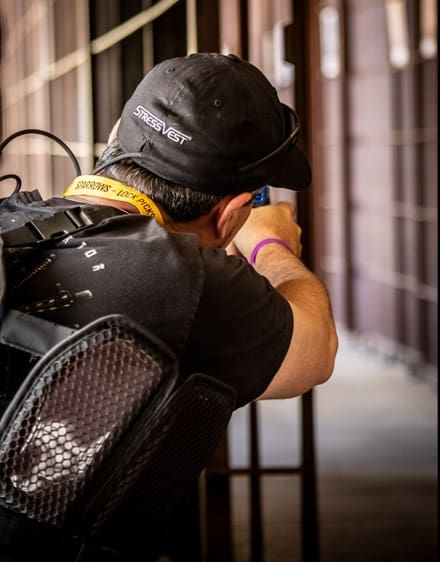
To add another level of realism, the event incorporated the STRESS VEST tactical training system.
The system introduces a physical consequence when a participant is struck by another player. Hits to the center mass or arm create a pain stimulus designed to produce an immediate reaction.
A center-mass hit can cause the participant to physically react, contort, or even take a knee. An arm hit produces a muscular response that can temporarily prevent the participant from effectively using that arm.
The effect is difficult to ignore.
Combined with a sound system capable of reproducing realistic firearms sounds, the STRESS VEST system added a significant “stress” component to the scenario. Participants did not need to keep track of whether they had been hit; they would physically react to the consequences.
The Final Test
Mission Day was an appropriate conclusion to several days of intensive training.
The event began with live-fire training and equipment evaluation on the SIG SAUER Range Day before moving into the prison environment for lock manipulation, surveillance, SERE, medical training, vehicle extraction, forensics, and other specialized courses.
Mission Day brought those individual disciplines together.
The result was less about demonstrating any single skill and more about determining whether participants could recognize when a particular skill or piece of equipment was required and then execute it under pressure. It also quickly identified skills that needs to be improved upon.
Closing Remarks
The closing remarks may have best summed up the Rock’a Lock’a BANG! BANG! experience.
Participants and sponsors were thanked for their involvement, while the underlying philosophy of the event was reinforced: RLBB is designed to be a chaos machine.
The concept is to surround participants with experienced instructors, capable equipment, and difficult problems, building a foundation that participants can continue to develop on their own.
The skills worked on during the event only improve through continued commitment and practice.
This is the start.
It doesn’t get easier. The problems just get harder.