Looking’ pretty good!
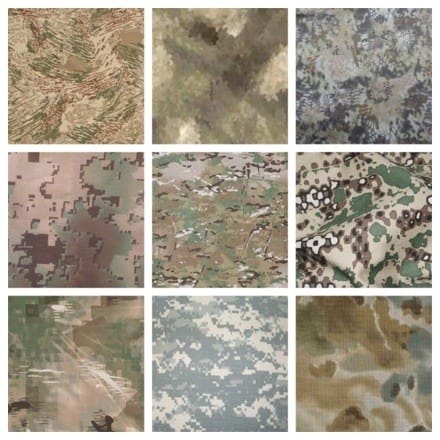
You literally cannot make this stuff up. Apparently, Illinois Freshman Congressman Rep. William L. Enyart (Dem), came up with a great idea. He read an article last month in the The Washington Post about the US military’s multitude of camouflage patterns and intends to introduce legislation today that will require all of DoD to share a common camouflage pattern.
Apparently, living in a city where you regularly see military personnel from all services strutting around in their individually branded uniforms like so many third world militaries didn’t attract his attention. It took a newspaper article to garner his attention. Ironically, Rep Enyart retired just last year as a Major General from the Illinois Army National Guard where he served from 1982 – 2012. Prior to that, he served in the US Air Force from 1969 to 1973. Somehow, that didn’t wake him up either.



And it seems, he is oblivious to previous public law regarding camouflage and field uniforms. His proposed amendment to the National Defense Authorization Act would require all of the services to adopt a common pattern by 2018 and would forbid any of them from producing a pattern for its own sole use. Horse left the barn on that one I’m afraid.
On one hand, I’m glad to hear about this new found interest Rep Enyart has for camouflage but I’m deeply saddened that, as usual, a Congressmen is going to run blindly uninformed into introducing redundant legislation. Instead, hopefully he’ll do a little research, take a look at what comes out of the Army Camouflage Improvement Effort and perhaps hold DoD’s feet to the fire on previous legislation.

I appreciate where his heart is, but I wish he was better informed, especially as he is a retired GO.

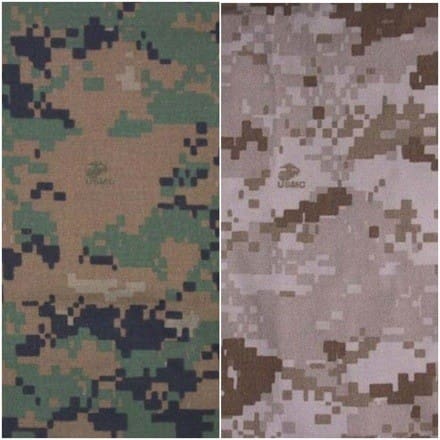
A lot of people look at the US Military’s camo wars and ask themselves, “Why not just adopt MARPAT?” That’s a fair question, especially when you take it one step further and ask, “Why bother with camouflaged PPE when using Coyote is good enough?”
HyperStealth’s Guy Cramer takes a look at the history and data available to explain why MARPAT isn’t the best answer. This is well worth the read.
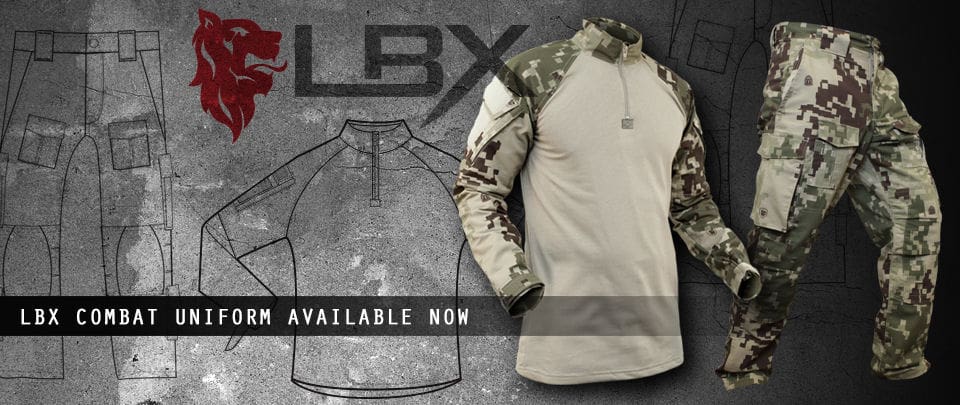
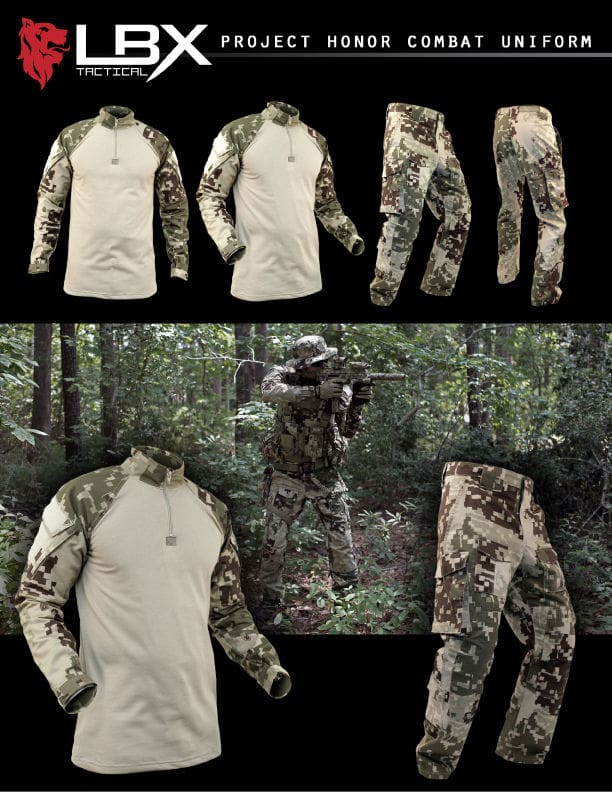
Last July, we gave you a sneak peek at a really cool combat uniform in the Project Honor camouflage pattern developed for the Medal of Honor video game to raise funds for military charities. Now, those uniforms are available for order. I know what I’m wearing to my next shooting class.
To download a pdf of these images click here.
I have a feeling these are going to go quickly. Whether or not you are a Medal of Honor fan, these are very well laid out combat uniforms and no one has ever offered a youth size combat uniform.
To order yours, visit lbxtactical.com/products/combat-uniform.
On March 6th, 2012, SSD reported that the US Army had withdrawn its family of patterns from the Camouflage Improvement Effort. We published this statement from PEO Soldier:
“On Jan. 10th, the Army announced that families of camouflage patterns from one government team and four commercial vendors were selected to proceed into the next step of evaluations. As part of a cost savings strategy and as a result of initial assessments, the government submission is being removed from further consideration as a replacement to the universal camouflage pattern. This decision has been made in light of the similarity between elements of the government and one industry submission and the higher score of the industry submission during the initial evaluation. We are excited about the four vendor patterns we are going forward with. We anticipate experiencing very positive results in our field trials and more advanced computer evaluations. We will continue to work closely with our industry partners and our government team, especially in terms of research, development and evaluation. The Army conducts extensive testing to ensure we provide Soldiers with the very best clothing and equipment.”
Based on that information (and a couple of tips), we surmised that the withdrawn pattern was indeed the Scorpion originally developed for the Objective Force Warrior program. Ultimately, OFW was never fielded and developer Crye Precision went on to great success by refining the pattern into MultiCam which was ultimately chosen for use in Afghanistan by the US Army and Air Force as the Operation Enduring Freedom Camouflage Pattern (OCP). Occasionally, Natick does some work on Scorpion so it wasn’t that far of a stretch to believe that they had created an entire family of patterns from it. But as it turns out, Scorpion was only part of the story.
Now that we are a week or so away from the Army’s anticipated announcement of a completely new family of camouflage patterns on 14 June, we’d like to tell you the rest of the story.
And now for the rest of the story…
That “family” of patterns submitted by Natick for the Army Camouflage Improvement Effort wasn’t really a family at all. Originally, the plan was that Natick was going to get two families of patterns but industry balked citing unfair advantage against their three allotted patterns and it was dropped to one government and upped to four commercial patterns. As we understand it, the engineers at Natick took a look at the requirement and what would work best in each environment and entered a most unanticipated candidate considering the Army’s public assertion that it wanted a family of camouflage patterns with a common geometry and specialized colors for each environment of Woodland, Arid, Transitional and an option OCIE/PPE pattern if needed.
The government solution?
Woodland – AOR2 or similar variant
Arid – Desert All Over Brush
Transitional – Scorpion
Why the disparity? The camouflage experts at Natick analyzed previous testing as well as other data at their disposal and realized that these three patterns would perform best based on the overall requirement. One thing we do know, the team that developed the government entry was kept separate from the team that developed the evaluation strategy. They weren’t gaming the system, they were trying to offer the best solution at their disposal.
Ready to hear something else that will blow your mind? The Brookwood finalist family of patterns isn’t a true family either. If anything, you could call the individual patterns “cousins.” The geometries are similar but aren’t an exact match. Despite all of the talk, it wasn’t part of the selection criteria.
Worse yet, it shouldn’t be. Not if you want the best camouflage for each of those environments. The environments are each different and the patterns should utilize different shapes, sizes and orientations, as well as colors. Natick realized it but their entry was withdrawn. The question is, was it done to eliminate unfair competition or to conceal the common geometry shortcoming?
Slangvel currently manufactures M43-styles, Bigeards, Recce Hats, 2? Brim Boonie Hats, Berets, and Rhodesian Kepis. All of his offerings are made via eBay as they come off the line so you have to check back regularly to ascertain available styles and patterns.
He’s getting ready to release a run in Kryptek Mandrake (M43 seen here) as well as Highlander and Nomad.
Those interested in his services should visit Slangvel on eBay. myworld.ebay.com/slangvel.
In Part 2 of U.S. Army Camouflage Improvement Explained, Hyperstealth Biotechnology Corp front man Guy Cramer takes a look at the US Army’s Scorpion camouflage pattern. For those unfamiliar, Scorpion bears a distinct similarity to MultiCam because Crye Precision developed them both. Scorpion was created as part of the Future Force Warrior program under contract to Natick while MultiCam is the fruit of Crye’s independent refinement of the pattern once FFW (later OFW) was abandoned.
Read the entire article here.
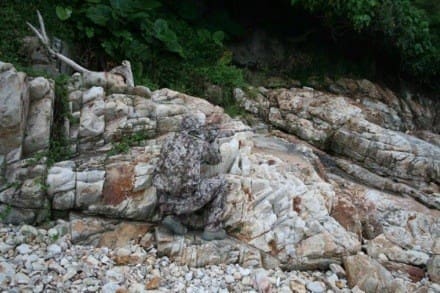
Guy Cramer released some additional US4CES photos to illustrate the effective of family of patterns he developed with ADS Inc for the US Army Camouflage Improvement Effort. One of four finalists patterns, US4CES consists of an OCIE pattern in addition to Woodland, Arid and Transitional variants that all share the same pattern geometry with color variations based on application. The Secretary of the Army is expected to announce the selection for a new family of camouflage patterns on the US Army’s birthday, June 14.
Here we see the US4CES transitional pattern next to the OCP (MultiCam) which was used as a Government baseline during the effort.
Above is the US Navy’s AOR 2 which was used as a Government baseline during the effort next to US4CES Woodland.
US4CES Arid
US4CES Woodland
US4CES Arid
US4CES Woodland
US4CES Arid