Aquaterro

FN’s Five-Seven Pistol Receives Major Upgrade

June 13th, 2022

THE ULTIMATE PRECISION PISTOL IS
NOW OPTICS-READY
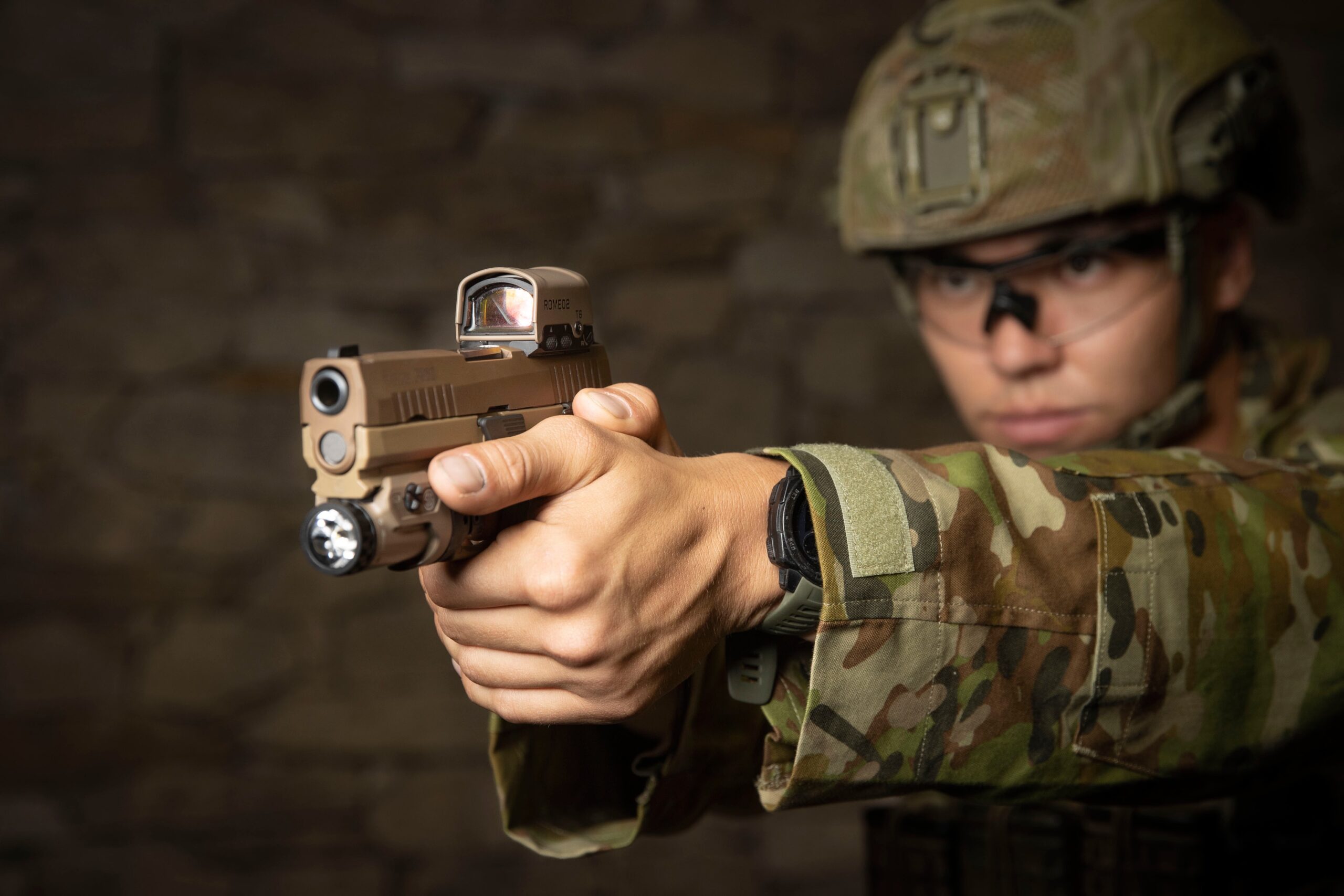
(McLean, VA – June 13, 2022) FN America, LLC is proud to introduce the all-new FN Five-seveN® MRD optics-ready pistol chambered in 5.7x28mm. After decades of trusted service with global militaries, law enforcement and civilian sport shooters, the FN Five-seveN receives a complete design update with a factory-milled slide to accept most micro red dot optics. Coupled with major upgrades to the frame and slide, the new FN Five-seveN MRD sets a new standard for optic-interoperability, control and accuracy.

“The FN Five-seveN pistol has been immensely popular since its introduction. Its original design capturing the performance of the FN-designed 5.7x28mm cartridge made it an instant success, and it’s positioned to do it yet again with the dramatic redesign of the FN Five-seveN MRD,” said Chris Cole, Vice President of Sales and Marketing for FN America, LLC. “With the addition of an integral optics mounting system on the slide, an already accurate pistol now redefines what handgun accuracy means. We’re truly excited to bring this new pistol to market with features our customers want in their favorite FN caliber.”

The FN Five-seveN MRD, like its predecessor, is a 5.7x28mm-chambered, delayed blowback-operated pistol. The internal, single-action-only hammer produces a clean and consistent trigger pull that breaks at approximately 6 pounds, with minimal take-up and a short reset. FN’s 4.8-inch cold hammer-forged barrel combined with the inherent benefits of the design and high velocity bottleneck cartridge produces a flat-shooting pistol with extremely low felt-recoil. Users can stay on target with accuracy and precision at extended ranges, unmatched by any other semi-auto handguns.

“When we embarked on this design update for the Five-seveN MRD, we focused on the core benefits our user base wants in a modern pistol,” said John Ryan, Director of Product Management for FN America, LLC. “The Five-seveN pistol was already extremely accurate and reliable, although there was untapped performance in the design and cartridge to bring forward. Milling the slide in the factory allows for immediate mounting of almost any MRD on the market, with improved ergonomics and controls, the Five-seveN MRD delivers more precision and versatility for the modern handgunner.”

Following FN’s optics-ready pistol tradition, the Five-seveN MRD’s optic mount consists of a series of plates that mate the optic to the slide. Just like FN’s 509 optics-ready pistols, users are able to mount a miniature red dot sight within minutes using the corresponding plates and screws provided with the pistol. The system is compatible with most common miniature red dot sights including the Leupold DeltaPoint Pro, Trijicon RMR, Vortex Optics, Burris FastFire series, Docter Optics and more. The three-dot photo luminescent sights glow in low light conditions, are adjustable for elevation and windage and co-witness with certain optics. 

With newly enhanced slide serrations and extended cocking ridges at the rear of the slide, the Five-seveN MRD’s overall operability and user manipulations are vastly improved while the ergonomic changes to the frame’s backstrap allow for a more natural point of aim and better fit. A new stippled texturing on the grip frame along with more extensive front strap serrations improve grip consistency for complete control. The magazine release has also been enlarged and reshaped for intuitive control and rapid reloads. Carrying over from the original design are the 20-round standard magazine, safety selector located directly above the trigger, serrated trigger shoe and trigger guard.

The FN Five-seveN MRD is available in matte black or FN-signature flat dark earth (FDE) and ships in a zippered pistol case with two 20-round magazines and optics-mounting hardware required to mount an optic. To learn more about the FN Five-seveN MRD, please visit www.fnamerica.com.

You Never Know Where They’ll Show Up

June 13th, 2022

A reader sends his regards from a pre-deployment range.

Stay Safe my friend!

Night Fision Tritium Optics Ready Sights

June 12th, 2022

Night Fision’s Optics Ready Stealth Series (ORS) tritium sights are engineered to offer a lower 1/3 co-witness, but with the new blade heights, a wider array of optics, and handgun combinations will see what is regarded as the best position for backup irons on a handgun with a slide-mounted optic.

As an alternative to repurposing Suppressor Height sights, ORS sights are designed from the dovetail up to work as backup sights for optics yet obscuring less of the optic window while still allowing three-dot sight alignment if needed.

Night Fision Optics Ready Sights

Night Fision Stealth Pistol Optics Ready Sights

Night Fision is pleased to announce new blade height offerings for three manufacturers in their Optics Ready Stealth Series product line; Glock, SIG SAUER, and Heckler & Koch.

Stealth Glock Optics ReadySights

Designed to work with pistol optics, these Optics Ready Glock sights offer the perfect 1/3 co-witness tailored to the shooter’s preference. Additionally, they are serrated for low glare so you’ll never know they’re there until you need them.


Glock Optics Ready Sights

 Stealth SIG Sauer Optics Ready Sights

Designed to work with pistol optics, these Optics Ready SIG SAUER sights offer the perfect 1/3 co-witness tailored to the shooter’s preference. Additionally, they are serrated for low glare so you’ll never know they’re there until you need them.

Sig Sauer Optics Ready Sights

Stealth HK VP9 Optics Ready Sights

Designed to work with pistol optics, these Optics Ready HK VP9 sights offer the perfect 1/3 co-witness tailored to the shooter’s preference. Additionally, they are serrated for low glare so you’ll never know they’re there until you need them.

HK VP9 Optics Ready Sights

Stealth Series FEATURES

  • Green Tritium Vials in front and rear sights are housed in a ballistic-grade polymer
  • Thin ring size on front sight balances visibility without distraction
  • Perfect Dot front sights have a domed lens to focus glow for crisp sight picture and fluorescent rings guaranteed not to chip, crack, or break.
  • Rear sight available in blank or with black polymer ringed Tritium.
  • Serrated heavy-duty steel sight body complimented by a tough Nitride Coating
  • Blade heights allow for various co-witness possibilities with a variety of optic, plate, and milling-depth combinations.
  • Built in the USA with Swiss Tritium

These new sights are designed in a way that they are just high enough to clear the optic. In the past, many shooters have used suppressor height sights to co-witness with an optic. The problem with that is that clutters the optic sight window and can become distracting to the shooter. With many pistol optic manufacturers making larger sight windows, why would we want to impede that with tall irons?

The new Optics Ready Stealth tritium sights are designed to sit right at the bottom of the pistol optic sight window, allowing you to take full advantage of the sight picture, but still have co-witnessed irons as a backup.

These additions to our most popular product line affirm that they truly are designed with our customers in mind,” said Rachel Maloney, Marketing Director for Night Fision, “that we can help our customers create their perfect sight picture and remove any barriers to both having the brightest night sights on the market mounted on their gun, yet avoid crowding their optic window when they aren’t needed.”

For more information on these products or other Night Fision offerings, visit the Night Fision website.

Safariland Brings Black Multicam Holsters Back by Popular Demand

June 12th, 2022

ONTARIO, Calif. – The Safariland Group® is a leading global provider of a broad range of safety and survivability products designed for law enforcement, civilians and the military. Safariland continues to stay on the leading edge of duty and concealed carry holsters and is proud to bring back Black Multicam holster options.

Due to high demand and continued requests, Safariland has relaunched Black Multicam for the 6304RDS and 6354RDS holsters in the Cordura® wrap print options. These holsters are a top choice among law enforcement and individual users—thanks in large part to the patented Automatic Locking System (ALS®) that provides retention and security other brands lack and end-users demand.

“We continue to set our company to meet the latest demands from the market,” said Safariland VP of Marketing & Commercial Sales Tim Drnec. “This is a great example. We launched this option last year as a limited-time one-off. The response was overwhelming and the demand for Black Multicam only continues to grow. The team is excited to bring these back.”

The 6304RDS and 6354RDS are versatile in fit and function. With the QLS 19 Locking Fork, these holsters can be used with any mounting platform (leg shroud, belt loop, etc.) that has the QLS 22 Receiver Plate installed. These two products also allow users to securely and discreetly carry their firearms with or without optics. The Black Multicam options fit top handgun brands such as Glock, Smith & Wesson, Staccato, and Sig Sauer—plus others.

The Black Multicam camouflage pattern is in high demand, blends well in most environments, and contributes to the lower-profile holsters demanded today. Adding to the benefits is Safariland’s approach using a Cordura wrap finish that reduces the Infrared (IR) profile.

Products are available now for consumers and retailers alike. More information is available at safariland.com.

SCUBAPRO Sunday – Navy Corpsman Birthday

June 12th, 2022

In my 26 years in the US Navy, I came across some of the best Corpsman you could possibly imagine. Almost all have gone on to become doctors, not that that is a measure of anything. But the Rips the Doc Conza, Doc Henao, and Smiths of the SEAL teams would break their backs to make sure you were good to go. To all of them, Happy Birthday to all the Docs that patch us mortals up. The Rules for the Regulation of the Navy of the United Colonies of North America of 1775 contained only one article that directed the formation of Navy medicine. “A fitting area shall be set apart for sick or hurt men, to be removed with their hammocks and bedding when the surgeon shall advise that it is necessary: and members of the crew shall be designated to attend to and serve them, as well as to maintain the space clean,” according to Article 16.

Between 1775 and 1814, the period covered America’s first maritime conflicts, and little changed medical techniques and structure. Feeding and personal care of the non-combat wounded and injured were among the less dramatic obligations of caring for them. Untrained personnel was sure to bring down the minimal daily feed of porridge or “loblolly” to those in the medical section. On March 2, 1799, Congress passed an act that exacted the language of the Continental Congress’s medical department article 16 of 1775. As a result, enlisted medical personnel still lacked a title or job description. The term “loblolly lad” had been around for so long that it was adopted as an official title in the Navy Regulations of 1814. A new senior enlisted medical rate, surgeon’s steward, was established in the decades that followed. The phrase appeared in Navy pay charts for the first time in 1841; however, the new billet was only available on larger ships. The Navy Department issued an order on April 1, 1843, that allowed surgeon’s stewards to be attached aboard brigs and schooners. The relative relevance of medical Sailors was raised as a result of this. Surgeon’s stewards would be second only to the master-at-arms in seniority among the ship’s petty officers. With the tremendous rise in the Navy and the onset of the civil war in 1861, improvements and developments in the medical sector were bound to occur. On June 19, 1861, a Navy Department circular order gave the loblolly boy a new moniker.

The United States Navy Hospital Corps was not formally created as a unit inside the Navy’s Medical Department until June 17, 1898. The Spanish-American War was looming on the horizon at the time, and the U.S. Navy and Marines needed a well-trained medical section. Since that time, Hospital Corpsmen have served with their fellow Sailors and Marines on every continent, on every warship, submarine, and ocean.

Modern hospital corpsmen can pursue additional training to become highly skilled medical specialists, specializing in areas such as laboratory technologists, dive medicine, or aerospace medicine.

On August 29, 1916, Congress enacted the following significant change in the structure of the Hospital Corps. Hospital apprentices, second class and first class (both of whom wore a red cross on their sleeve), pharmacist’s mates, third, second, and first, and chief pharmacist’s mate would be the rates under this model. The two warrant officer grades of pharmacist and chief pharmacist would be included in the Hospital Corps’ officer contingent. The restructure would allow the Hospital Corps to grow by five times its current size. The Hospital Corps’ greatest manpower, diversity of duties, and example of sacrifice occurred during World War II. Between 1941 and 1945, the ranks of this modest organization increased from about 4,000 at pre-war levels to over 132,000. This raise was necessary to meet new tasks that required new technology at new duty sites. The Hospital Corps’ reputation for efficacy and bravery would be cemented in the face of severe difficulty.

The Hospital Corps has a long history of courage and sacrifice. Hospital corpsmen have also responded to natural disasters, military mishaps, and peacetime emergencies. They’ve also kept their Sailors and Marines healthy by immunizing, practicing preventative care, and holding sick calls. 23,000 regular and 6,000 reserve Navy Hospital Corps troops serve globally. They operate in naval hospitals, clinics, ships, and submarines. Search-and-rescue missions and Seabee deployments. Not to mention their deployments with the Marine Corps and SEAL teams.




Corpsmen have always been responsible for shipmates’ health. Their endless acts of heroism, exposing themselves to risk to save lives, were essential. Because they cared about their shipmates, their bravery is notable.

During the United States Navy Hospital Corps’ 124-year history, it has risen to become the most decorated rating in the U.S. military. 22 Medals of Honor, 179 Navy Crosses, 31 Navy Distinguished Service Medals, 959 Silver Stars, and almost 1,600 Bronze Stars with Vs. for heroism have been awarded to Corpsmen. In addition, 14 Naval Vessels have been named after Hospital Corpsmen, and other hospitals and clinics have been named after brave individuals who gave their lives in the service of our country and freedom.

My Friend James Yeager Has ALS

June 12th, 2022

I saw my old friend James Yeager at the NRA show in Houston and he was just ornery as ever. We’ve always treated one another with mutual respect and I’ve always enjoyed our visits at various trade shows. This was no different but something was different. It’s his health and it’s gone for the worse. He’s produced this video to publicly acknowledge that he has been diagnosed with ALS which you may also know as Lou Gehrig’s Disease.

It’s not a condition I would wish on anyone, but he’s taking it in stride. I wish him well and hope he enjoys as much as he can, as long as he can.

Helmet Pads from Hard Heads: Micro Lattice For Your Lid

June 12th, 2022

Hard Head Veterans is excited to showcase their Micro Lattice Helmet Pads – an excellent and affordable upgrade for tactical or ballistic helmets. Developed in association with Carbon, using their Digital Light Synthesis manufacturing process, the Micro Lattice assembly is a superb energy-absorbing structure.

Hard Head Veterans Helmet Pads

This substantially improves the protective capabilities of a helmet by mitigating and even preventing head trauma.

The Micro Lattice Pads average single-digit deformation numbers when tested to 1400 fps with 9mm projectiles on our ATE ballistic helmet. Regardless of whether they are at -60 degrees or 160 degrees they still perform the same.

Micro Lattice Helmet Pad system

This cannot be said for standard foam pads.

HHV Micro Lattice Helmet Pads

  • Up to a 66% decrease in ballistic transient deformation over standard foam pads
  • Up to a 21.70% decrease in blunt impact accelerations over standard foam pads
  • Lattice construction allows unrestricted airflow keeping helmets an average of 14 degrees cooler
  • Pads do not absorb sweat or water making them quick-drying, positively buoyant, and easily washable.
  • The comfort lattice conforms evenly to the user’s head
  • Available in 1” and ¾” sizes

Micro Lattice Helmet Pads

Shock Absorption

The Carbon DLS process enables lattice structures that absorb and dissipate energy through the precise tuning of strut thickness and cell size.

Micro Lattic

This lattice structure facilitates the absorption and dissipation of energy by aligning internal damping struts against the directions of impact. With over 28,000 individual struts, the lattice is built so each strut is specially tuned at every point on the helmet. Increases or decreases in the stiffness of the lattice structure are enabled through precise adjustments to the thickness of each strut, allowing the lattice to absorb and disperse energy from various impacts.

Helmet padding system

The Micro Lattice Helmet Pads are compatible with the following helmets, among others: ACH, MICH, LWH, ECH, Crye Precision, Ops-Core, MTEK, Revision/Galvion, Gentex, Team Wendy, United Shield, and most others that utilize Velcro attachment.

Helmet Pad Systems

You can find documentation of the ballistic testing online here; read a more in-depth explanation on the Hard Head Blog.

You can find the Micro Lattice Helmet Pad system on the Hard Head Veterans website.

Milrem Robotics Launches Command and Control for Robotic Systems at Eurosatory

June 11th, 2022

The European leading robotics and autonomous systems developer Milrem Robotics will launch their command and control (C2) system for intelligent unmanned systems at Eurosatory 2022.

Milrem Robotics’ solution integrates multiple different unmanned aerial and ground assets (UxV) into a composite command and control system and merges sensor and effector data from multiple payloads. It allows the constant monitoring and controlling of the UxV systems’ most important variables, such as energy status, fault conditions, operating parameters, built-in diagnostic tests, initialization, and configurations.

The system is developed in cooperation with Fleetonomy.ai, Rait88, MIL Sistemika and other partners.

“Integrating different unmanned systems and traditional manned assets through a command-and-control system enables the efficient deployment of autonomous vehicles on the battlefield,” explained Kuldar Väärsi, CEO of Milrem Robotics. “Integrated autonomous ground systems enable a significant increase of firepower and capabilities using fewer human resources and at the same time increasing the safety of our troops, which has always been the goal of Milrem Robotics.”

The C2’s autonomy engine is capable of remotely navigating and controlling the position and motion vectors of the UxV’s and/or other integrated RAS components.

It supports user-defined autonomous missions and behaviour sets, delivers an ALFUS Contextual Autonomy Capability level of 4+ for behaviours related to autonomous navigation such as route planning, object avoidance and geo-mapping. It also provides many autonomous functions like flight control, target detection and automatic optimized routing.

The autonomy engine autonomously creates routes against pre-determined mission sets such as search, intercept, shadow etc, considering the selected vehicles’ mobility & intelligence characteristics.