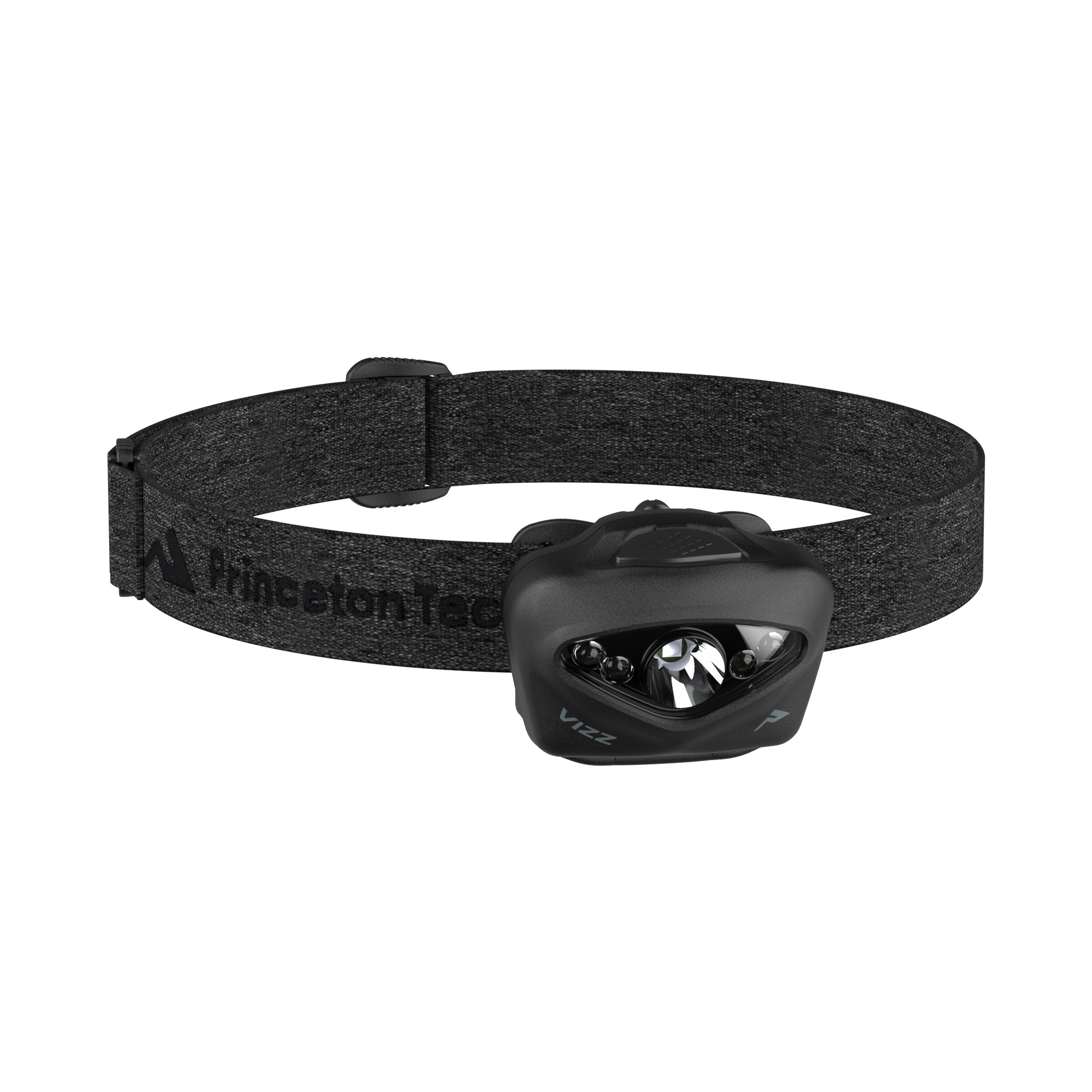
XC3 Weaponlight

Liberty Lifter Aims to Revolutionize Heavy Air Lift

November 26th, 2022

Large seaplane concept envisions extended operations, affordable production, advanced controls

DARPA has launched the Liberty Lifter project to demonstrate a leap in operational logistics capabilities by designing, building, and flying a long-range, low-cost X-plane capable of seaborne strategic and tactical lift. The new vehicle concept seeks to expand upon existing cargo aircraft by proving revolutionary heavy air lift abilities from the sea.

The envisioned plane will combine fast and flexible strategic lift of very large, heavy loads with the ability to take off/land in water. Its structure will enable both highly controlled flight close to turbulent water surfaces and sustained flight at mid-altitudes. In addition, the plane will be built with a low-cost design and construction philosophy.

Although current sealift is very efficient in transporting large amounts of payload, it is vulnerable to threats, requires functional ports, and results in long transit times. Traditional airlift is much faster, but has limited ability to support maritime operations. Additionally, today, such aircraft suffer payload limitations or require long runways.

There is a history of attempting to develop aircraft created to fly with “wing-in-ground effect,” which means the aircraft is flying no more than the length of its wingspan above ground or water. The most well-known examples are the Soviet “ekranoplans.” These vehicles were high speed and runway- independent, but were restricted to calm waters and had limited maneuverability.

“This first phase of the Liberty Lifter program will define the unique seaplane’s range, payloads, and other parameters,” said Alexander Walan, a program manager in DARPA’s Tactical Technology Office. “Innovative advances envisioned by this new DARPA program will showcase an X-plane demonstrator that offers warfighters new capabilities during extended maritime operations.”

To address the shortcomings of existing vehicles and operational concepts, the Liberty Lifter program focuses on addressing three main challenges.

Extended Maritime Operations: Emphasis will be placed on operating in turbulent sea states by creating high-lift abilities at low speeds to reduce wave impact load during takeoff/landing, and innovative design solutions to absorb wave forces. In addition, the project will address risks of vehicle collision during high-speed operation in congested environments. Finally, the aim is for the vehicle to operate at sea for weeks at a time without land-based maintenance activities.

Full-Scale Affordable Production: Construction will prioritize low-cost, easy-to-fabricate designs over exquisite, low-weight concepts. Materials should be more affordable than those in traditional aircraft manufacturing and available to be purchased in large quantities.

Complex Flight and Sea Surface Controls: Advanced sensors and control schemes will be developed to avoid large waves and to handle aero/hydro-dynamic interactions during takeoff/landing.

Unit Profile – US Army Indian Scouts

November 26th, 2022

During the nation’s westward expansion after the Civil War, the U.S. Army fought a series of Indian Wars against the Native American Nations with whom white settlers had come into conflict.

Instrumental to Army success in the post-bellum Indian Wars were the Indian Scouts, an enlisted cadre of Native American scouts often drawn from Nations with longstanding antagonisms toward the Nations at war with the United States.

First formed in 1866, the Indian Scouts were a force of up to 1,000 men (although this slowly declined as the years passed) whose members were be compensated the same as a white cavalryman.

The Indian Scouts supplied desperately needed knowledge of the terrain and enemy belligerents to an Army short on expertise and struggling to accomplish its mission. Indian Scouts were essential to Army’s efforts across the greater frontier and played crucial roles in iconic conflicts like the Great Sioux War and the Apache Wars.

The settlement of the frontier by the close of the 19th century spelled the end for the Indian Scouts and their unique place in Army history; the service slowly declined until coming to a practical end by the beginning of World War One.

During their time in Army service, Indian Scouts earned 16 Medals of Honor; a small part of their legacy has been carried into the present day by U.S. Army Special Forces, whose crossed arrows insignia was originally designated for use by the Indian Scouts in 1890.

US Army Center of Military History

Red Arrow Weapons Adds Phillips to Sales Team

November 25th, 2022

Fork Union, VA – Red Arrow Weapons is excited to announce Dwayne Phillips as the growing company’s latest hire.

In his role as Sales & Customer Manager, Phillips will create and execute sales strategies, develop and grow retail partner relationships, and manage customer service communication between retailers, customers, and the manufacturing team. He’ll also help Red Arrow Weapons achieve its goal of selling as many guns as possible to put the best AR platform firearm in the hands of patriotic Americans for a price that fits everyone.

“We’re thrilled to bring Dwayne on board as an integral part of Red Arrow Weapons,” said Kip Campbell, ??Founder of Red Arrow Weapons. “We’re confident his strong background and shared passion will help us better serve our partners and customers.”

To learn more about Red Arrow Weapons and browse the full lineup of products, visit redarrowweapons.com.

Backfill Activity: Rheinmetall Supplies Marder Infantry Fighting Vehicles to Greece

November 25th, 2022

As part of another backfill activity commissioned by the German government, Rheinmetall is supplying Marder 1A3 Infantry Fighting Vehicles to Greece. The first units of these Marder Infantry Fighting Vehicles were presented as part of the parade of the Hellenic Armed Forces on the occasion of the national holiday on October 28th in Thessaloniki.

The Hellenic Armed Forces, for their part, are giving Infantry Fighting Vehicles of Soviet design and other military equipment for support to Ukraine and are receiving Marder 1A3 Infantry Fighting Vehicles in exchange. In addition to the delivery of the Infantry Fighting Vehicles, an ammunition package, an integrated service package including training services and a spare parts package will also be provided by the Bundeswehr and Rheinmetall. Deliveries should be completed by the end of 2023.

The vehicles provided are overhauled Marder 1A3 from former Bundeswehr stocks. These Marder 1A3s have been repaired at Rheinmetall Landsysteme GmbH at their own expense since spring 2022 at the Unterlüß site so that they are ready for immediate use. The first vehicles were loaded on October 11 at the Rheinmetall site in Unterlüß and transported to Greece.

The Marder Infantry Fighting Vehicle, which was developed for the German Armed Forces and is still in use, is one of the most proven weapon systems of its kind in the world. The vehicle was modernized several times in the course of its use and its combat value increased.

The backfill activity is a procedure developed by the German government to support Ukraine in its efforts against the Russian invasion in cooperation with its European neighbours and NATO partners. NATO partners hand over equipment from former Soviet production to the Ukraine and receive available systems from Western production in return. Rheinmetall is already involved in ring exchanges with the Czech Armed Forces as well as with the Slovak Armed Forces, here with Leopard 2A4 main battle tanks.

 

SIG SAUER – ROMEO4XT-PRO Red Dot Sight

November 25th, 2022

The new ROMEO4XT-PRO Red Dot Sight is the latest addition to SIG’s ever-growing optics line.

They’ve moved the Illumination control to the top, providing easy access with either hand while staying clear of chest rigs and plate carriers when slung. A dedicated night vision override switch makes short work of drastic changes in lighting conditions and by combining MOTAC with a common AAA battery, the ROMEO4XT-PRO is rated for 50,000 hours of runtime.

Like its predecessor, the ROMEO4XT-PRO is IPX8-rated for waterproof and fog proof performance and is tested to MIL-STD-810 to ensure reliable service.

www.sigsauer.com/romeo4xt-pro-1×20-mm

Varusteleka – Products Now Available In Finnish M05 Snow Camo

November 25th, 2022

Fans of Finnish M05 camouflage rejoice! Finland-based Varusteleka Oy has released their range of basic load-carrying gear in the aforementioned camo pattern, including their PC18 plate bag, and CP15 combat pack, as well as various pouches and other products.

You can order direct from Varusteleka via their website, and you’ll be pleasantly surprised on how fast your gear gets to you.

www.varusteleka.com/en/group/sarma-tst-novelties-and-coming-soon/2277

FirstSpear Friday Focus: NSNS Carrier Systems

November 25th, 2022

This week, we’re showcasing our best selling Non-Stocking Non-Standard (NSNS) carrier systems.

Taking its name from an old Norse Viking term for a lightning raid, Strandhögg was one of the first formalized battle tactics to use covert infiltrators in advance of an actual raiding operation. Strandhögg was a tactical game changer in its time, just like the technological advances FirstSpear brings forward in this line of plate carriers.

Cut edge-to-edge to specifically fit SAPI / ESAPI / SPEAR plate sizes, the Strandhögg can be worn with or without soft armor panels, depending on ballistic requirements, threat conditions and type of plates used. Maximizing lightweight 6/12 technology and rapid Tubes® Closure Systems, this carrier can be rapidly donned and doffed. The Strandhögg is a streamlined fit and is easily tailored for comfort and ventilation.

Named for the intrepid explorer and cunning warrior Ragnar Lodbrok, the Ragnar Vest and its accessories are suited for a wide variety of roles and circumstances. The Ragnar Vest is covered in loop fabric and can be altered with different cummerbunds. Four special built-in pockets with retention tabs allow for storage of accessories based on situational requirements. This is a multi-mission vest with the flexibility to cover a variety of profiles.

The Sloucher combines many of the most desirable features of both the Siege-R and the Sleeper. Stretch panels on the cummerbund and Tubes closures keep the fit tight and allow for quick donning and doffing. The 6/12 Pocket Attachment System provides a low profile. This carrier accepts front, back and side plates SPEAR / BALCS cut soft armor (not included), MASS accessories and pockets using 6/12, 6/9 and MOLLE / PALS. The sloucher provides state of the art capability to support a full spectrum of operations.

The Sleeper is a stay behind asset and a less visible alternative to more overt style tactical vests. This carrier is designed to be worn over or under garments, as a stand alone vest or in conjunction with other FirstSpear carrier systems. The Sleeper fits US SOCOM SPEAR / BALCS soft armor and SAPI / ESAPI / SPEAR plates, including swimmer cut.

Visit FirstSpear to find other NSNS deals and all of our gear and apparel.

Airmen Innovate, Ensure HH-60W’s First Deployment

November 25th, 2022

MOODY AIR FORCE BASE, Ga. (AFNS) —

In preparation for the Air Force’s newest rescue platform’s first deployment, Airmen from the 41st Rescue and Rescue Generation Squadrons conducted extensive training to learn the intricacies of the new HH-60W Jolly Green II.

As a result of the increase in training, the 41st RQS expended more of the aircraft’s hoist cables than anticipated, lending to a potential shortfall. A team of 41st RGS maintenance Airmen, however, quickly recognized the need to replace these cables and jumped at the chance to accelerate change and make an Air Force-wide impact.

“Our maintenance Airmen have a won’t-fail mentality and are constantly working to make things better not only for the 23rd Maintenance Group but for the entire Air Force,” said Col. Jason Purdy, 23rd MXG commander.

These hoists are critical to the success of combat search and rescue operations. They are used in high-stakes scenarios to rescue individuals in dangerous or remote areas that aren’t accessible by ground transportation, or if the victim is trapped by fire or water.

Recognizing the need to adapt, the Airmen came together and discovered they could circumvent the supply shortage by using the HH-60G Pave Hawk cables in the HH-60W with only slight modifications.

“We used our subject matter expertise to troubleshoot the issue,” said Staff Sgt. Nicholas Cellini, 41st RGS flying crew chief. “We improvised and adapted to overcome the supply shortage, by using a cable that we know is reliable and the Air Force has plenty of.”

Cellini and his counterparts went to the field training detachment hoist trainer to test and write the operating procedures for converting the HH-60G cables for use in the HH-60W. The process ensured the safe use of the hoist cables by synchronizing the speed in which they extend at the appropriate points of the cable.

The 41st RGS submitted an engineer request and engineers from Warner Robins Air Force Base came to Moody AFB to provide safety checks and approve the process.

With the process approved and implemented, the rescue Airmen ensured the HH-60W was fully mission-capable and ready to deploy by Air Combat Command’s initial operational capability deadline.

“Finding and testing this information and realizing it can work for us is going to make a huge difference knowing there will never be a shortage of cables,” said Master Sgt. Jonathan Holford, 41st RGS production superintendent.

Discovering innovative solutions for unpredictable circumstances is a testament to the Airmen who feel empowered to do so. The Airmen with the 41st RGS said they feel confident in providing creative solutions to these shortfalls thanks to their leadership.

“People say aircraft maintenance is pretty black and white, but some of it’s not,” Cellini said. “Our leadership is open to ideas; as long as it’s safe and we can effectively and efficiently accomplish it, our whole chain of command will back us.”

Holford attributed the success of the organization to this leadership philosophy and the teamwork mentality fostered within the unit.

“We encourage Airmen to solve problems,” Holford said. “We always want to afford them the opportunity to fail, but we fail together; we learn from it and continue to grow on what we learned.”

The mission relies on Airmen’s ingenuity and initiative to succeed, and Moody AFB Airmen have exemplified these traits throughout the transition to the HH-60W.

“I’m very proud of our maintainers for leading the way on the HH-60W fleet,” Purdy said. “Whether it’s been a hoist, a gun system, or a lapse in technical data, our Airmen developed ways to make the entire program better.”

Story Airman 1st Class Deanna Muir, 23rd Wing Public Affairs

Photos by Staff Sergeant Devin Boyer