Phantom Lights

Archive for the ‘Press Release’ Category

Scout LT2 Slingshot Starter Kit by SimpleShot

Saturday, November 7th, 2026

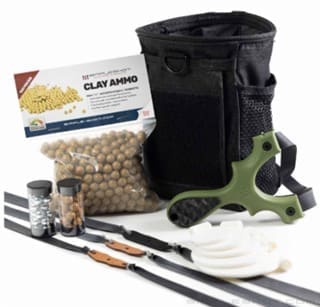
The Scout LT2 Starter Kit is the simplest way to go from “I want to try this” to landing shots in the backyard. It’s built around the Scout LT2, SimpleShot’s most popular slingshot, and packed with everything that gets you shooting: ammo, bands, reactive targets, a carry bag, and safety glasses. One box, one purchase, and you’re ready, at a better price than buying it all separately. The Scout LT2 is at the center. The frame comes set up with integrated clips and handle scales, plus bandsets and ammo, so band changes are quick and your first shots come easy. It also includes something to aim at … six reactive spinner targets that spin and smack when you hit them. Designed for comfort, the Scout LT2 accommodates large and small hands alike, with options for full pinch grip and thumb support grip.. Whether you’re a beginner discovering the thrill of slingshot shooting or a seasoned pro looking for a reliable addition to your arsenal, the Scout LT2 is designed to impress.

simple-shot.com/products/starter-kit-scout-lt2

Silynxcom Announces Development of New AI-Powered Wearable Technology to Strategically Target the Counter-Drone Defense Market

Friday, November 6th, 2026

New standalone product platform under development would position Silynxcom to address a significantly expanded defense market beyond its traditional tactical communication accessories business AI-powered acoustic drone detection is being designed to give individual soldiers real-time threat warnings, which would be capable to connect through an autonomous mesh network where multiple devices can share alerts across an entire platoon, without requiring integration with existing tactical communication systems.

NETANYA, Israel, Oct. 21, 2026 — Silynxcom Ltd. (NYSE American: SYNX) (“Silynxcom” or the “Company”), a developer of advanced soldier-worn tactical communication solutions, today announced its strategic entry into the counter-uncrewed aircraft systems (“C-UAS”) market through the development of a new wearable drone detection and early-warning platform powered by artificial intelligence (“AI”). The Company aims to address one of the most persistent challenges in modern warfare: protecting individual soldiers from drone threats while on the move.

The wearable detection device, currently at prototype stage, is designed to detect drone acoustic signatures in real time. Because the system relies on acoustic signatures rather than detecting drone radio transmissions, it is designed to identify threats that conventional radio frequency-based detectors may miss, including fiber-optic guided drones. These drones emit no radio signal, but every drone makes noise.

According to a Fortune Business Insights anti-drone market study, the market for C-UAS detection and interdiction technologies is projected to grow from $3.88 billion in 2026 to $16.45 billion by 2034, a compound annual growth rate of 19.79%.

Rather than an enhancement to existing tactical communication equipment, Silynxcom is developping this new platform as a standalone product. It is designed to operate without integration into tactical radio systems, while retaining the option to connect with existing tactical communication equipment where customers require it.

This architecture is intended to enable Silynxcom to address a broader range of military customers, operational requirements and defense procurement programs, creating the potential for a new business line and an additional growth engine alongside the Company’s existing business of ruggedized tactical communication headset devices.

From Individual Soldier Protection to Networked Unit Defense The wearable detection device’s on-device AI analyzes potential drone signatures and the wearer receives an alert. The acoustic detection capability builds on Silynxcom’s combat-proven personnel headset, which already amplifies drone sounds for soldiers in the field while protecting their hearing from the continuous and sudden noise of the battlefield.

A mesh networking capability is under development and is being designed to allow multiple wearable devices to connect and form coordinated protection groups, such that an alert generated by one device could be shared across connected platoon members, enabling collective situational awareness and coordinated early warning without dependence on existing infrastructure.

The modular approach is intended to allow customers to deploy the technology for individual soldier protection or scale it across military units, according to their operational needs.

Dedicated and Experienced C-UAS Development Team The Company is establishing a dedicated team to lead its counter-drone activities. The team includes recently recruited professionals with years of experience in drone technologies, including at leading drone manufacturers in Israel. The team will draw on Silynxcom’s experience in tactical acoustics, soldier-worn electronics and ruggedized military equipment to accelerate development of the new business.

Nir Klein, Chief Executive Officer of Silynxcom, commented: “From Ukraine to the Middle East, modern warfare has brought the drone threat down to the individual soldier. Troops need warning that moves with them as they disperse and operate beyond defended positions. Fixed-site defenses are important, but they are only one part of the protection soldiers need. This initiative represents more than the development of a new product. It marks our strategic entry into an entirely new defense market.

By designing a wearable detection device combined with networked group protection, we aim to help address the protection gap at the individual-soldier level and turn one soldier’s drone warning into shared awareness across a connected platoon. We believe this can establish a new platform for long-term growth.”

NSRI Delivers Prototype in Air Force Nuclear Weapons Center Modernization Effort

Friday, November 6th, 2026

OMAHA, Neb., Nov. 4, 2026 — The National Strategic Research Institute (NSRI) at the University of Nebraska has delivered the requested prototype in the second year of its effort to modernize data architecture for the Air Force Nuclear Weapons Center (AFNWC). The work supports U.S. Strategic Command (USSTRATCOM), which sponsors the institute as a University Affiliated Research Center designated by the U.S. Department of War.

The Enhanced Consequence Assessment Alternatives Analysis of Emerging Technologies Database Analysis project launched in 2024 as part of an effort to replace legacy systems that support mission planning and analysis. Its success has resulted in ongoing funding for the database effort and for additional prototyping initiatives led by the NSRI team.

After NSRI’s review and recommendations for a modern toolset in year one, AFNWC approved year two to develop a prototype and document requirements for full implementation. That prototype has been delivered.

“Modernizing data architecture for AFNWC is about ensuring the systems that underpin strategic deterrence remain resilient, agile and ready for tomorrow’s demands,” said Josh Miller, NSRI senior analyst. “Our team’s work helps reduce the burden on operators while positioning the enterprise for long-term success.”

The team has used Python and SQL to assess how legacy systems could interface with newer tools, with the goal of improving performance and preserving institutional knowledge.

Dr. Dustin White, professor at the University of Nebraska at Omaha (UNO) College of Business Administration, leads the project’s technical direction.

“Our team’s work gives AFNWC the research foundation and practical prototype they need to modernize without disrupting essential operations,” Dr. White said. “By combining technical exploration with careful documentation, we’re helping ensure these systems remain resilient and ready to integrate emerging technologies.”

According to the team, the project will help AFNWC maintain daily operations while preparing for system upgrades that may support exercises, operations and long-term planning. The work allows AFNWC and USSTRATCOM to consider future technologies without adding demands on existing personnel.

The project also reflects NSRI’s workforce development focus. Kirk Bramwell, a UNO graduate student studying economics, has contributed analysis of business logic, database schemas and data import processes for the prototype.

“This experience has given me a foundation of technical and research skills that I can build a career on,” Bramwell said. “Working directly with AFNWC and NSRI has shown me how modern data architecture supports national security, and it has strengthened my commitment to staying in the defense field.”

Bramwell plans to remain involved as the prototype is transferred to a contractor. The team said this continuity will support the transition to a production-ready system.

“Our deliverables on this project position AFNWC to adopt emerging technologies more quickly in the future,” Miller said. “The research and prototype provide a base for evaluating how modern tools may enhance planning, analysis and mission execution across the nuclear enterprise.”

Learn more about NSRI strategic deterrence and nuclear programs at nsri.nebraska.edu/nuclear.

IWC Launches Foundational Course on Future Threats: Irregular Warfare 120

Friday, November 6th, 2026

ARLINGTON, Va. — The Irregular Warfare Center (IWC) launched a new online course on emerging technologies and gray-zone threats to homeland security.

The self-paced class, Irregular Warfare 120: The Future of Conflict, Irregular Warfare, and Homeland Defense, is open to defense practitioners, interagency partners, and national security professionals. It serves as the prerequisite to the center’s eight-part Future Threats Certificate series.

IW 120 explores the methods that state and non-state adversaries use below the threshold of conventional armed conflict. Course modules examine how competitors use artificial intelligence, cyber operations, contested space domains, autonomous systems, and proxy forces to compromise infrastructure and challenge U.S. interests without provoking direct military confrontation.

A primary focus centers on cognitive warfare and analyzing how adversaries employ targeted information operations and psychological manipulation to deepen societal divides and erode domestic cohesion.

“With our foundational and specialized offerings having already surpassed 6,000 enrollments, IW-120 provides Department of War practitioners, and even college students, with the essential information to identify and anticipate future asymmetric threat vectors while we still have time to adapt to what is coming just beyond the horizon,” said Jeff Gardner, the IWC’s chief of curriculum.

Students need roughly 90 minutes to finish the coursework and its capstone assessment. Subsequent courses in the certificate program will project adversary tactics five to ten years out. The course is hosted online in partnership with the Naval Postgraduate School’s Center for Homeland Defense and Security. It is available at no cost to users with a CHDS Self Study account. Registration and access details are available through the Irregular Warfare Center course page and the CHDS Self Study portal.

The Irregular Warfare Center operates under 10 U.S.C. 345 as the department’s primary hub for irregular warfare doctrine, education, and interagency collaboration.

ORIGIN and Anduril Demonstrate Joint Counter-UAS Capability on NATO’s Eastern Flank

Friday, November 6th, 2026
  • BLAZE, ORIGIN’s autonomous counter-drone interceptor, was integrated with Anduril’s Lattice for Air Defense command and control platform and demonstrated to senior Latvian military leadership
  • Demonstration took place one month after the companies signed their MoU, highlighting the speed of operations of the companies; the technical integration of BLAZE onto Lattice was done in a mere four days
  • Joint work continues toward a layered counter-UAS defense capability for NATO’s eastern flank

RIGA, Latvia (5 November 2026) – ORIGIN, a defense technology company building autonomous unmanned aerial systems, and Anduril, a defense technology company developing autonomous systems and command-and-control software platforms have demonstrated a joint capability to senior Latvian military leadership, just over a month after signing a memorandum of understanding.

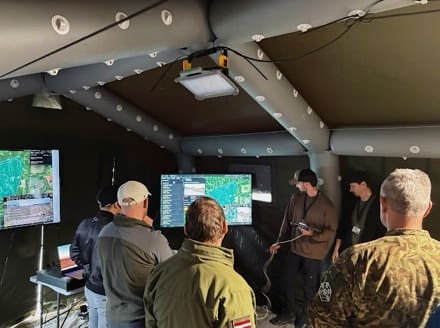
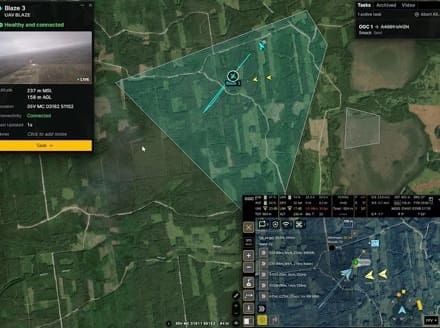
The demonstration, held on the end of October at a military training facility in Latvia, showed BLAZE, ORIGIN’s autonomous counter-drone interceptor, operating as the effector of an integrated air defense solution through Anduril’s Lattice command-and-control platform, alongside an existing radar system already deployed for Latvian air defence. The demo follows the MoU signed on 25 September, under which the two companies agreed to explore integrating BLAZE with Lattice to offer a layered counter-UAS capability in support of NATO’s Eastern Flank air defense.

The integration showcases how an open and interoperable software architecture can rapidly bring together individual air defence capabilities, from sensors and effectors to command-and-control, into a unified, centrally coordinated air defence solution.

Martins Marenis, Commercial Director of ORIGIN, said: “Going from signed MoU to a joint demonstration in front of Latvia’s senior military leadership in a few weeks is what working at speed looks like. Seeing BLAZE operate as part of a connected system with Lattice is exactly what NATO’s eastern flank needs. Interceptors that plug into a shared command and control layer, rather than operate in isolation, give operators better visibility and faster response against evolving drone threats.”

Brian Moran, Vice President of Anduril Europe said: “Lattice gave us the foundation  to integrate different capabilities,  fuse their data, and present operators with a single, coherent picture. On the ground in Latvia, it took just four days to integrate BLAZE into Lattice alongside ORIGIN and demonstrate a successful engagement, showcasing the speed that’s possible when partners come together around Allied air defence.”

The companies will continue joint testing and validation activity on NATO’s eastern flank, alongside concept of operations development for counter-UAS missions.

DRPM-UxS Deliver Over 25,000 Autonomous and Counter-Unmanned Systems to CENTCOM AOR

Friday, November 6th, 2026

The Department of War announced today that this year, the Direct Reporting Portfolio Manager for Unmanned Systems (DRPM-UxS) has delivered a massive surge of combat-ready, mass-producible unmanned systems and counter-drone capabilities to U.S. Central Command (CENTCOM), providing operational commanders with immediate, cost-effective tactical lethality across the theater.

Through an investment of approximately $782 million this year, DRPM-UxS has fielded:

  • Over 1,300 One-Way Attack (OWA) Unmanned Aerial Vehicles (UAVs), providing precision deep-strike mass.
  • Over 100 Unmanned Surface Vessels (USVs) and Unmanned Underwater Vessels (UUVs), expanding maritime reconnaissance and strike lethality; and
  • More than 24,000 Counter-Unmanned Aerial Systems (C-UAS), establishing a dense, multi-layered defensive shield to protect forward-deployed forces against adversary drone attacks through its counter unit, Joint Interagency Task Force 401 (JIATF-401).

These deliveries demonstrate the Department’s rapid shift from multi-year developmental pipelines to an agile “Warfighting Acquisition” model. In the hands of American warfighters, these low-cost, attritable systems serve as high-volume alternatives to legacy, multi-million-dollar exquisite munitions—flipping the battlefield cost-exchange ratio firmly in favor of the United States.

“Under Secretary Hegseth’s direction, we are moving at the speed of modern combat to equip our forces with decisive, affordable mass,” said Owen West, CEO of Project Agincourt and DRPM-UxS. “DRPM-UxS was established to cut through red tape and put lethal technology directly into the hands of our frontline troops. The thousands of systems operating across CENTCOM this year are just the beginning. We will out-innovate, out-build, and out-adapt any adversary on the battlefield. The goal is to scale these capabilities across the Joint Force.”

By scaling commercial production lines and deploying modular software baselines, DRPM-UxS is driving a fundamental restructuring of defense procurement. This effort serves as the operational foundation for the Autonomous Warfare Command (AUTOWARCOM), a planned four-star functional combatant command scheduled to stand up by October 1, 2027.

At Secretary Hegseth’s direction, DRPM-UxS will sustain continuous deliveries of low-cost, mass-producible unmanned and autonomous systems to CENTCOM while rapidly expanding fielding pipelines to Pacific Command, European Command, and the broader Joint Force.

San Tan Tactical Introduces 1836 Series Ironclad Barrel Lineup

Thursday, November 5th, 2026

New barrel family brings four configurations in 5.56 NATO and 6mm ARC, featuring precision-machined 4150 steel construction and Black Nitride finishes.

FORT WORTH, TEXAS – San Tan Tactical is expanding its 1836 Series with the introduction of the Ironclad barrel lineup. Featuring four configurations in 5.56 NATO and 6mm ARC, the new series gives builders additional options for their 1836 platform.

The Ironclad lineup includes 11.5″ and 16″ 5.56 NATO barrels, along with 12.5″ and 18″ 6mm ARC barrels. Each configuration features a purpose-matched gas system and a durable Black Nitride finish.

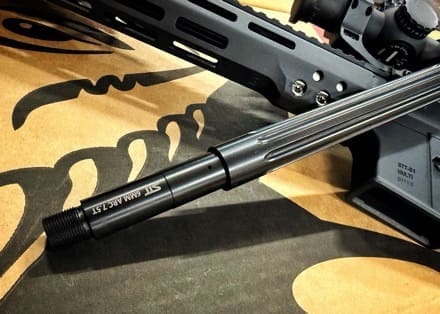
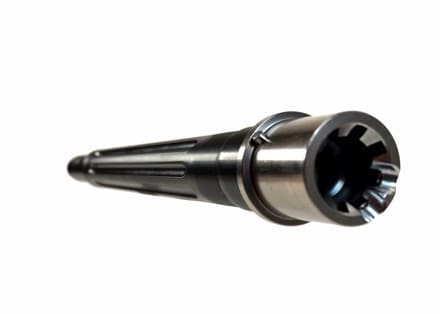
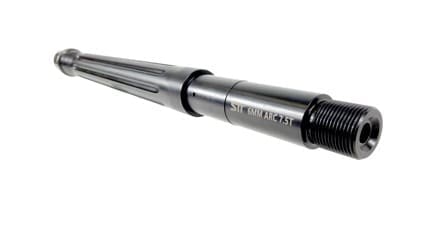
The featured 12.5″ 6mm ARC Ironclad barrel is designed to bring the capabilities of the 6mm ARC cartridge to a compact platform. Precision-machined from 4150 steel, it features a straight-fluted profile that reduces overall weight while increasing surface area for heat dissipation.

The 6mm ARC barrels feature a 1:7.5 twist rate and 5R rifling profile designed to support bullet stabilization while helping reduce jacket deformation. The 12.5″ configuration uses a mid-length gas system, while the 18″ configuration features a rifle-length gas system.

Attention to detail extends throughout the manufacturing process. Ironclad barrels feature honed and polished chambers, hand-polished feed ramps, factory-dimpled .750″ gas block journals, and NTF-coated barrel extensions. Every barrel undergoes 100% quality control inspection and Magnetic Particle Inspection (MPI).

All four configurations feature a Black Nitride (QPQ) finish for corrosion resistance and added protection against wear.

With four initial configurations, the 1836 Series Ironclad lineup gives builders more choices in barrel length, caliber, and gas system configuration. San Tan Tactical will continue developing the 1836 Series with additional products and configurations in the future.

1836 SERIES IRONCLAD BARREL LINEUP

5.56 NATO – 11.5″ Carbine Length

• SKU: STT-1836I-115B-556-N

• Carbine-length gas system

• Black Nitride finish

5.56 NATO – 16″ Mid Length

• SKU: STT-1836I-16B-556-N

• Mid-length gas system

• Black Nitride finish

6mm ARC – 12.5″ Mid Length

• SKU: STT-1836I-125B-6ARC-N

• Mid-length gas system

• Black Nitride finish

6mm ARC – 18″ Rifle Length

• SKU: STT-1836I-18B-6ARC-N

• Rifle-length gas system

• Black Nitride finish

12.5″ IRONCLAD 6MM ARC TECHNICAL SPECIFICATIONS

Specification Detail

Caliber 6mm ARC

Barrel Length 12.5″

Weight 1 lb. 14 oz.

Material 4150 Steel

Profile Straight Fluted

Twist Rate 1:7.5

Rifling 5R

Chamber Honed & Polished

Feed Ramps Hand-Polished

Gas System Mid-Length

Gas Block Journal .750″ Factory Dimpled

Barrel Extension NTF Coated

Muzzle Threads 5/8×24 TPI

Finish Black Nitride (QPQ)

Inspection 100% QC & MPI

SKU STT-1836I-125B-6ARC-N

AVAILABILITY

The 1836 Series Ironclad barrel lineup will be available through San Tan Tactical and its authorized dealer network.

For additional product information, visit www.santantactical.com.

Tenicor Releases ARX2 and ARX LUX2 OWB Holsters and CRUX Double Magazine Pouch

Thursday, November 5th, 2026

MOSCOW, Idaho – November 5, 2026

Tenicor has released the ARX2 and ARX LUX2 concealment belt holsters and the CRUX double magazine pouch. The ARX2 and ARX LUX2 replace the ARX, ARX LUX and ARX SOL.

Hiding a gun outside the waistband comes down to three things: how close the holster pulls the gun to the body, whether the belt attachment holds up over years of carry, and whether the holster survives the fight. The ARX2 is built around all three.

ARX2 and ARX LUX2

• The belt loops are injection-molded polycarbonate. Each one held 700 pounds of pull in our strength test.

• The .093″ Kydex shell has molded ridges that add strength at common stress points.

• The wings and belt loops are angled to pull the gun into the body. This reduces printing on a variety of body types.

• Zero cant. The gun sits neutral, so the draw is the same every time.

• The Kydex is cut low enough to get a full firing grip on the gun.

• Fits most slide-mounted red dots. Fit is confirmed with common red dots sized for each gun.

• One screw sets retention, which removes excess bulk from the holster. On the ARX LUX2, the adjustment is built into the rear belt loop.


The ARX LUX2 fits most lights suitable for duty use, including the Streamlight TLR-7 and TLR-1 series and the SureFire X300 and XC3 series.

CRUX
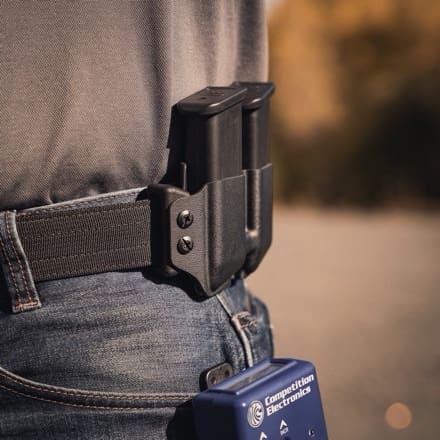
The CRUX carries two magazines outside the waistband on the same belt loops as the ARX2.

• The pouch is curved, with angled wings and belt loops that pull the magazines into the body.

• Retention adjusts separately for each magazine, with one screw each on the front of the pouch.

• Left-hand and right-hand versions both hold the magazines with the bullets facing forward.

Pricing: ARX2 $125, ARX LUX2 $135, CRUX $75.

Compatibility at launch

• ARX2: Glock 17/47, 19/45, 43X and 48; Staccato HD P4/C4X; SIG SAUER P365 and P365-XMACRO; 1911 Government (no rail)

• ARX LUX2: Glock 17/47, 19/45, 43X and 48; Staccato HD P4/C4X

• CRUX: Size D (Glock 17/19, Staccato HD, M&P M2.0, SIG P320 and others) and Size C (Glock 48, SIG P365, Walther PDP, S&W Shield Plus and others)

More fitments are in development.

Availability:
All three are available November 5, 2026 at www.tenicor.com and ship in one business day.
Agencies can contact gov@tenicor.com.