Salomon Forces Genesis MID GTX

Archive for the ‘weapons’ Category

US Air Force Supplemental Inspection of M18 Modular Handguns Found Zero Evidence of Conditions Which Would Allow “Uncommanded Discharge”

Friday, August 7th, 2026

Last July Amn Brayden Lovan was tragically killed in a shooting which occurred in the Weapons Storage Area of FE Warren AFB, Wyoming. It is alleged he was shot by another member of his squadron, Amn Marcus White-Allen who was charged with involuntary manslaughter as well as making a false official statement. That Airman was later found dead in his dorm room when his command failed to hold him in pre-trial confinement.

But that’s not the story most people heard for many months after the shooting. The Air Force failed to address the death in a timely fashion which gave opportunity for false accounts of the shooting to infest the internet. Even after lies about the M18 MHS “going off on its own” the Air Force allowed the issue to fester while Air Force Global Strike Command Commanding General Gen Thomas Bussiere removed the weapon from service so that the command’s inventory could be inspected for defects, despite knowing almost immediately that the assailant had lied about his role in the death.

While General Bussiere (who is now retired) remained on leave and failed to address the issue, a paranoid firestorm led to calls to remove MHS from service across the entire Department of War (as well as other agencies at all levels of government) based on unfounded rumors that were circulating the internet. Although the pistols were returned to service with AFGSC by late August, the command did not fully set the record straight as to how AMN Lovat died for over three months.

Eventually, the Air Force directed a complete “Supplemental Inspection” of the service’s entire inventory of MHS. This was “to ensure Airmen/Guardians with an arming requirement, whether at home station or deployed, have a weapon which is safe, reliable, and functional if the moment of need may arise.” The Supplemental Inspection Criteria went above and beyond the requirements of the Technical Order at the time and have since been incorporated into the TO.

Despite consisting of nearly 126,000 pistols, the AF inspection was completed last year and the report was signed on 23 January, 2026 by Brig Gen Brian Filler, Director of Security Forces.

Unfortunately, it has taken over six months for us to obtain a redacted version of the Final Report. At only three pages it is succinct and to the point.

The executive summary tells the story:

“100% of the inspected weapons exhibited no signs of any condition that could have allowed the weapons to experience an “uncommanded discharge.”

Rather than just telling you what is in it, we are sharing the report for you to read every detail yourself. This revelation should put further rumors to bed that the Air Force inventory of sidearms is not safe. To the contrary, MHS is both safe and reliable and this has been attested to time and again. As you can see, no weapon exhibited anything beyond normal wear and tear and those deficiencies have been addressed by maintenance.

Adopted in 2017, there are currently around 500,00 MHS in the US military’s inventory consisting of the M17 and M18 pistols. They are based on the SIG SAUER P320 pistol which is also issued to militaries and law enforcement agencies worldwide. Combined with civilian owned versions of the pistol, they number in the millions.

When Industry Leaders Unite, Innovation Follows

Thursday, August 6th, 2026

Barrett CEO Bryan James recently met with Strategic Sciences CEO Russ Oliver and President Patrick Kisgen to explore how Strategic Sciences’ advanced technologies can integrate with Barrett systems while advancing the future of shoulder-fired capabilities.

Together, we’re building the next generation of battlefield capabilities and delivering innovative solutions for today’s warfighter and tomorrow’s mission.

Seeing Further, Striking Deeper: Unpacking the Army’s Launched Effects Portfolio

Monday, July 27th, 2026

FORT IRWIN, Calif.— To secure a decisive warfighting advantage, Army Aviation must project power beyond the enemy’s threat ring. By penetrating and defeating an adversary’s Integrated Air Defense Systems (IADS) from a standoff distance, Army Aviation opens critical corridors that allow the subsequent infiltration of joint systems, precision fires, and other manned and unmanned assets.

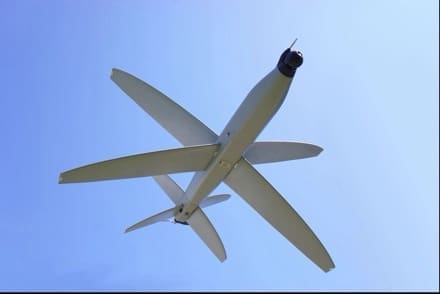
Above the high-desert sands of Fort Irwin during Project Convergence-Capstone 6 (PC-C6), Army Aviation demonstrated decisive air-launched capabilities in contested airspace. The U.S. Army proved it was actively delivering integrated sensor-to-shooter lethality to the tactical edge by pairing two Active/Passive Infrared launch effects (LEs) — which successfully executed the mission to detect, identify, locate, and report (DILR) the threat — with a third, “lethal LE” Long-Range Precision Munition (LRPM) that executed the terminal strike.

PC-C6 is the premier Army-hosted experiment that allowsthejointforceandmultinational alliesand partnersto integrate people, equipment, and technologies to support continuous transformation efforts aimed at shaping how future warfighters willoperatein fast-paced, high-techenvironments.

Understanding the Portfolio: Finding and Finishing

The LE portfolio is not a single drone; it is a comprehensive ecosystem of diverse capabilities categorized by range (short, medium, long) and payload (lethal, non-lethal, electronic warfare, and enabling reconnaissance through sensing) tailored to meet specific mission requirements.

Through persistent experimentation at PC-C6, Army Aviation demonstrated the critical interplay between these variants. Operating deep within contested territory, reconnaissance assets like the LE-Medium Range (LE-MR) utilized the Integrated Tactical Network (ITN) within the Next Generation Command & Control (NGC2) ecosystem to push real-time targeting coordinates back to the corps echelon. By treating data as a weapon system, this seamless flow enabled rapid decision-making to determine follow-on kinetic operations. Once a target was identified, the lethal sub-variant of the portfolio was called upon to finish the mission.

What truly distinguishes the LE portfolio is its capacity for collaborative, autonomous operations. Rather than functioning as isolated assets, multiple LEs can dynamically network to operate as a “wolfpack,” overwhelming adversary air defenses through synchronized, multi-domain effects. Designed to be low-cost and attritable, these systems offer a highly tactically survivable solution for penetrating Anti-Access/Area Denial (A2/AD) environments. This strategic blend of autonomy and affordability allows commanders to project persistent sense and strike capability and maintain overmatch without unnecessarily risking manned aviation platforms.

From Prototype to Production: The LRPM Milestone

The primary lethal asset within this comprehensive ecosystem is the LRPM. At PC-C6, the Army achieved a significant operational milestone by validating the first production-line LRPMs when, in a separate demonstration, a manned aircraft successfully employed the munition, which independently identified and terminated a high-priority threat in contested environment.

Transitioning past the prototype phase distinguished the LRPM from existing standoff munitions. This successful evaluation solidifies its role as the dedicated lethal effect of the LE family and establishes a clear path for targeted FY27 fielding.

The Integration Enablers: LEDGR and UVC

The Launched Effects Dispenser for Ground and Rotorcraft (LEDGR) and Universal Vehicle Control (UVC) architecture act as a universal interface. Rather than building custom launch tubes and cockpit hardware for every new system, this standardized, modular architecture allows aircrews to plug, play, and control diverse LE payloads. These enablers will allow the Army to employ these capabilities at scale by FY27.

Maximizing Survivability and Lethality

The core philosophy driving this modernization is simple: push autonomous assets into harm’s way instead of manned aircraft.

“Launched Effects are not just stand-alone tools; they are networked combat enablers,”said Dan Bailey, Deputy Director, Aviation Future Capability Directorate (AFCD).”By standardizing our launch and control systems, we’re giving the Combat Aviation Brigades the flexibility to dynamically deploy multiple capabilities, share critical targeting data on the fly, and secure a decisive overmatch against peer adversaries.”

By deploying LE via standardized systems like LEDGR, commanders can maintain continuous pressure on the enemy while preserving valuable aviation assets. However, this capability extends far beyond just protecting aviation. By systematically dismantling the enemy’s theater long-range artillery, drone networks, and rocket systems, LE preserves the combat power of the ground maneuver force. Neutralizing these deep-area threats creates a protective umbrella for Maneuver Brigades, drastically increasing overall force survivability while enhancing mission success.

Looking Ahead: Future Technology Demonstrators

The Army also utilized PC-C6 to evaluate future concepts within the LE-MR category. Emerging technology demonstrators designed for significant speed and range were assessed as multi-use platforms capable of carrying both lethal and non-lethal payloads. While these specific systems are currently in the technology demonstration phase rather than formal programs of record, they represent the continuous evolution of the LE portfolio to meet future operational demands.

Through rigorous experimentation in realistic tactical scenarios, the Army ensured that when LE capability reaches the operational force, it will provide a decisive warfighting advantage.

By Nelson Ballew

USAF Seeks Common Ground-Based Launcher

Tuesday, July 21st, 2026

The The Air Force Life Cycle Management Center (AFLCMC) Command, Control, Communications, and Battle Management (C3BM) Directorate at Wright-Patterson Air Force Base (WPAFB), Ohio is has released a Request for Information to industry to identify viable solutions for a Ground-Based Launcher ground-to-air missiles. At this point there’s no formal requirement. Rather, the information provided by industry helps the Air Force paint a picture for itself of what is in the realm of the possible.

They want to be able to engage Group 1 to Group 5 Unmanned Aerial Systems as well as cruise missiles. This new capability will augment technologies like the the Tactical High Power Operational Responder system seen above which uses directed energy to defeat drone swarms.

They’ve listed Eleven Critical Baseline Attributes:
1. Munition Types
2. Integrated Sensor Capability
3. Laser Illuminator
4. Firing Rate (Total of All Magazines)
5. Magazine Depth
6. C2 System Integration – for dissemination of sensor data and weapon cueing
7. Bounding Price Point (Per System Cost)
8. Transportability
9. Manpower
10. Built-In Test (BIT)
11. Weapon System

In addition to the baseline attributes, the Air Force is asking industry how their proposed concepts balance platform integrated sensing capabilities and the operational requirement for the system to be rapidly deployable.

This comes on the heels of an announcement in late June by Air Force leadership that they were now planning to create a new counter-drone careerfield. Until this can be accomplished the June Corona determined that Point Defense Flights will be established at select AF installations.

While grounded in a real need for expertise in this emerging Warfighting skill, Air Defense of airfields had been left to the Army since 1948 due to the Key West Accords which delineated roles and missions to the military branches under the newly created Department of Defense.

However, during the GWOT, the Army allowed its Air Defense branch to atrophy and is just now reacting to the threat of FPV drones. As we saw during Ukraine’s Operation Spiderweb in Russia and the Israeli Operation Rising Lion in Iran, air bases as particularly susceptible to drone attacks, even in areas considered safe zones.

US bases and critical infrastructure have been regularly infiltrated by drones in the recent past. Fortunately, none of the CONUS incursions have been kinetic, but that’s not true in the Middle East.

With the Army’s assets stretched thin, this is hopefully the beginning of the Air Force assuming full responsibility for air defense of their activities.

Wilcox Industries Mini-GL40

Tuesday, July 14th, 2026

At SOF Week I got my first look at the Mini-GL40 from Wilcox Industries. Their RAAM GSS (Rapid Acquisition Aiming Module Grenade Sighting System) is highly successful and been adopted by the US military as well as some of our allies as an effective fire control solution for 40mm Grenade Launchers.

During its development and fielding the team at Wilcox Ind had a lot of interaction with grenadiers and took what they had learned to develop the Mini-GL40.

First and foremost, the Mini-GL40 is intended to be used at all times with the RAAM GSS M (Modified) and the two integrate seamlessly with one another.

Designed from the ground up as a stand-alone launcher, it cannot be attached to a rifle like others on the market. Instead, this streamlined design eliminates excess weight and bulk as well as cable complexity.

A major selling point is the Steyr steel lined barrel. Most 40mm GLs have aluminum lined barrels. Wilcox Ind went with a steel lined barrel to maximize barrel life as it is more resistant to wear to the lands and grooves. In fact, they’ve got over 4,600 rounds through one of their prototype launchers.

Accessible with an enlarged breach lock locking lever, the side opening barrel will also accommodate any length, low-velocity 40mm round. The two position safety is ambidextrous and the weapon doesn’t have to be recocked in order to pull the trigger (also made by Steyr) in the event of a misfire.

Both adjustable and collapsible, the “ON THE FLY” buttstock can lock into two positions: 6 O’Clock for ranges from 50 to 300 meters and 12 O’Clock for 300 meters and beyond.

It will also collapse to the side and incorporates a steel insert which interfaces with magnet-based belt mounted weapon catches and the launcher is compatible with a “Quick-Draw” leg holster.

Both the stock and pistol grip come from Magpul due to their reliability and popularity. However, both can be replaced with other models by the user.

The GSS M is attached to the Mini-LG40’s three control buttons via a cable. With the buttons integrated into the weapon there’s no need for the grenadier to break his grip meaning quicker follow up shots. Additionally, the sight remembers the last input so the grenadier doesn’t have to program each round independently.

Powered by single AA battery, the sight provides Day/Night Capability complete with Red Dot Sight with BUIS, NIR aiming laser, NIR illuminator, and on-board ballistic computer with 2 pre-programmed ballistic solutions and quick ammo select. The reticle offers easy to read OLED Display in meter increments with aiming references to correspond to ballistic range. The system is also waterproof to 1 meter for 30 minutes.

Specs:

Barrel Length: 18 cm (7.09”)

Total Length:

With Buttstock Collapsed and Folded: 35.9 cm (14.13”)

With Buttstock Collapsed and Unfolded: 55.9 cm (22”)

With Buttstock Extended and Unfolded: 65 cm (25.6”)

Weight:

Standalone: 2.06 kg (4.54 lbs)

With RAAM GSS M: 2.27 kg (5 lbs)

Although Wilcox Ind is selling the Mini-GL40 with RAAM GSS M as a package, they know there are already a lot of their sights out there. There is an opportunity for those who already have a RAAM GSS to retrofit their optic to a MINI-GL40. Essentially, if you already have the Wilcox grenade launcher sight, they will sell you the GL à la carte.

www.wilcoxind.com/MINI-GL40

Staccato 2011 Introduces the All-New Staccato HD P4X

Saturday, July 4th, 2026

Optimized for professional use, the latest Staccato 2011 HD pistol features a steel frame, full-size grip and compensated barrel for enhanced control and shootability.

FLORENCE, Texas – (July 4, 2026) – Staccato 2011®, creator of the 2011® pistol platform and a leading developer of precision firearms, ammunition and shooting facilities, today announced the introduction of the Staccato HD P4X, the brand’s most advanced mission-ready pistol.

Built on the same 4-inch compensated platform as the widely popular Staccato HD C4X, which is optimized for concealed carry with a compact aluminum frame, the HD P4X features a precision-machined steel frame and full-size grip, making it ideal for professional deployment, duty belts and overt carry.

Key features of the Staccato HD P4X include a 4-inch DLC flush-fit compensated barrel that reduces muzzle rise and improves shootability, a 4140 DLC steel frame that absorbs recoil and improves shot-to-shot consistency, and a full-size Staccato HD grip that enhances stability and capacity with 18-round magazines. The result is a duty-ready pistol built for control and hard use, delivering the performance and confidence the Staccato HD line is known for.

“Every Staccato product is built to elevate human performance, and the HD P4X is the clearest expression of that yet,” said Paul Smith, Senior Vice President of Product at Staccato. “We engineered a hybrid full-size grip, 4” compensated pistol that delivers more control, more rounds and the kind of shootability the world’s most elite professionals demand. This configuration was one of our most requested, and the result is the most shootable, reliable, mission-ready handgun we’ve ever built.”

The Staccato HD P4X, like all models in the Staccato HD line, represents the most advanced evolution of the 2011 pistol platform. It’s crafted in Texas with American steel and offers exceptional versatility to match its performance. Strategic design features include ambidextrous controls with a dual-sided safety and slide stop, a reversible magazine catch, Glock®-pattern magazine compatibility, an active firing pin block, and Staccato’s HD HOST™ optic-mounting system.

Additionally, every Staccato HD pistol delivers proven performance by passing the federal Ballistic Research Facility standards, a rigorous set of protocols developed to simulate real- world defensive encounters that are the benchmark for evaluating handgun ballistic performance.“Everything we make is aimed at elevating the standard,” Smith added. “From the materials and technology to our development and testing teams, every piece works to give Staccato customers the reliability and shootability they count on.”

The Staccato HD P4X is chambered in 9x19mm and will be available in three configurations, with a starting MSRP of $3,599. It will be offered through Staccato authorized dealers beginning July 13, 2026.

To learn more about the Staccato HD P4X or to locate an authorized Staccato dealer, visit www.staccato2011.com or follow @staccato2011 on social media.

Strengthening NATO’s Eastern Flank: Romania Orders Skyranger 35 Air Defence Systems from Rheinmetall

Saturday, June 27th, 2026

The technology group Rheinmetall has achieved another significant success in the field of ground-based air defence (GbAD) systems. The Romanian government has awarded the company a contract to supply Skyranger 35 air defence systems. This contract is part of a historic major order worth €5.7 billion covering combat vehicles, vessels and air defence systems, and includes not only 24 Skyranger 35 systems, but also seven Skynex systems and two Millennium Guns for maritime air defence solutions. Rheinmetall published a press release on this matter on  2 June 2026.

The Skyranger system will be integrated onto the proven Lynx KF41 tracked platform. The contract highlights Rheinmetall’s role as a leading system provider for mobile air defence solutions in Europe.

This major contract further strengthens the long-standing and trusting customer relationship between Romania and Rheinmetall. The country is therefore continuing to invest in the modernisation of its armed forces and in future-oriented technologies in order to protect its own territory and strengthen NATO’s eastern flank. The Skyranger 35’s enormous firepower and sensor capabilities, combined with the mobility and protection offered by the Lynx infantry fighting vehicle, provide an excellent response to modern threat scenarios. Recent geopolitical developments, including the incident involving an unmanned drone in Romanian airspace, have highlighted the urgent need for a thorough and highly mobile very short-range air defence (VSHORAD) system.

Oliver Dürr, Head of Rheinmetall’s Air Defence Division, emphasises the project’s strategic importance: “Romania’s decision to choose the Skyranger 35 on the Lynx platform is a significant milestone for European air defence. We are proud to continue our decades-long partnership with the Romanian government and provide the country with direct support in this critical security situation. The recent drone incident has shown how quickly airborne threats can become a reality. The Skyranger 35 provides Romania with a highly efficient and flexible solution for protecting soldiers reliably as well as critical infrastructure against modern threats at short and very short range”.

With this order, Rheinmetall sends a clear message in favour of standardisation and interoperability among NATO allies.

About Skyranger 35

The Skyranger 35 is specifically designed to effectively engage loitering munitions, swarm drones and conventional aerial threats in the immediate vicinity. It is equipped with a high-precision 35 mm revolver cannon and can use programmable AHEAD airburst munition. The integrated system combines state-of-the-art radar sensors and electro-optical tracking systems with the proven 35 mm anti-aircraft gun within a single protected vehicle. This enables the Romanian Army to conduct airspace surveillance and engage targets autonomously while on the move.

Rheinmetall Destinus Strike Systems Sets Out Its Program Priorities

Thursday, June 18th, 2026

At Eurosatory 2026 in Paris, the European joint venture Rheinmetall Destinus Strike Systems set out its priorities. The joint venture is accelerating the introduction of the Ruta Block 3 – a cruise missile for strategic deep strike with a range of over 2,000 kilometers and a warhead of up to 250 kilograms – and begins production with its initial products, the Kryla and Ruta Block 2 cruise missiles.

The Ruta Block 3 is designed for high-value and hardened targets at depth and is launched exclusively from standard containers, which can be carried on vehicle platforms – including Rheinmetall HX trucks – and in maritime applications. Firing readiness is reached in around 2 minutes.

The objective is NATO qualification, making the Ruta Block 3 available to all NATO and EU member states.

“Together we are advancing NATO qualification on an accelerated path, embedded in existing programs for European defense ministries. This allows us to rapidly provide European armed forces with a ready-to-deploy, certified and fully European effector,” says Roman Köhne, Head of Division Weapon and Ammunition, Rheinmetall.

The basis is the signed Term Sheet; the final shareholders’ agreement is close to signature. Within the joint venture, Destinus combines its technology with Rheinmetall’s industrial scale.

Joint production begins with the joint venture’s two initial products. Kryla is a compact, cost-efficient cruise missile with a 50 kg warhead for massed saturation strikes; it launches from containers and from common rocket artillery launchers (MLRS), immediately adding a cruise-missile capability to existing launcher fleets.

Ruta Block 2 carries a 250 kg warhead, is designed for high target effect against high-value and hardened targets and is launched exclusively from containers.

“We are firmly committed to launch from standard sea containers. This gives our customers maximum flexibility: our systems can be deployed across virtually any land and sea platform and through existing logistics chains – concealed and brought to firing readiness in the shortest time,” says Mikhail Kokorich, Founder and CEO of Destinus.

The joint offering comprises Kryla, Ruta Block 2 and Ruta Block 3 – precision deep strike throughout, from a 100% European value chain.

For logistical independence, Rheinmetall Destinus Strike Systems will establish its own facility for final assembly, integration and testing in Germany; initial delivery readiness is planned for 2026.