TYR Tactical

Archive for the ‘weapons’ Category

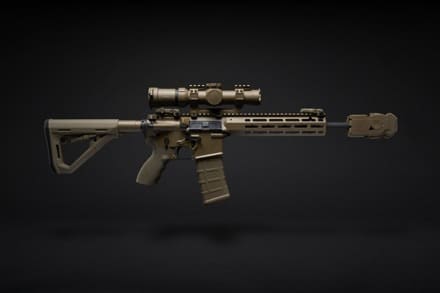
Caracal USA Awarded Government Contract in Belize for CAR814 A2 Patrol Rifles

Thursday, March 26th, 2026

The agreement further strengthens Caracal USA®’s presence and partnerships across the Caribbean region.

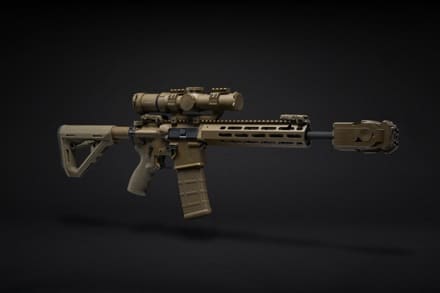
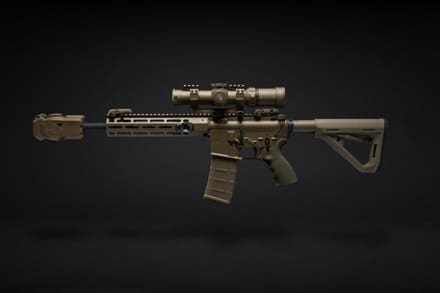
Nampa, Idaho (March 2026) – Caracal USA, a leading US-based manufacturer of small arms for the law enforcement and defense markets, announced today that it has been awarded a new supply contract with various government agencies in Belize for the CAR814 A2 Patrol rifle. The award highlights the continued recognition of Caracal USA’s firearm platforms among government and security organizations throughout the Caribbean region.

Chambered in 5.56x45mm NATO, the CAR814 A2 Patrol is a centerfire, direct impingement gas-operated tactical rifle engineered and manufactured in accordance with NATO standards. Designed specifically for military and law enforcement users, the platform incorporates high-quality components, advanced engineering, and state-of-the-art manufacturing processes to deliver a durable, reliable, and accurate weapon system built to exacting tolerances.

This contract further demonstrates Caracal USA’s growing footprint in international markets and its commitment to providing trusted, mission-ready weapon systems to allied partners and professional end users.

“Working with our Caribbean regional representatives, I.I. & E, Caracal USA products have become well known with the government agencies of Caribbean nations,” said Jeffrey Spalding, CEO and President of Caracal USA. “Our dedication to safety, reliability, and durability continues to showcase the quality of Caracal USA weapon systems and has allowed the opportunity to compete in tender solicitations and be awarded supply contracts for new modern weapon systems to Belize.”

Caracal USA continues to expand its international partnerships while supporting the operational needs of military and law enforcement professionals worldwide.

For more information about Caracal USA and its full line of firearms, visit www.caracalusa.com.

DOT&E Report on Next Generation Squad Weapons, Ammunition and Fire Control

Thursday, March 26th, 2026

On 13 March, 2026, the Department Of War’s Director, Operational Test and Evaluation Office (DOT&E) released their 2025 annual report to Congress. DOT&E provides oversight for acquisition related testing of new capabilities and releases an annual report. The report covers acquisition programs from each of the services and United States Special Operations Command, as well as missile systems. You can check it out here.

This article concentrates on the Next Generation Squad Weapons (NGSW) and Ammunition (W&A) and NGSW – Fire Control (FC) section.

As a reminder, the NGSW system includes the M7 Rifle, M250 Automatic Rifle, 6.8mm ammunition common to both weapons, and XM157 Fire Control mounted on each weapon. Recently added to the NGSW program is the XM8 Carbine. The M7, XM8, and the M250 are replacements for the 5.56mm M4/M4A1 carbine and M249 Squad Automatic Weapon currently used in the close combat force (CCF).

I’d like to note that the report refers to the XM157 FC without the eXperimental designation prefix it continues to carry. Over the years I have noted such instances of small details slipping through the cracks on their reports which remain at a very generic, high level for executive use.

NGSW is being procured under two separate Middle Tier of Acquisition programs: weapons and ammunition in one and Fire Control in the other. These are not traditional procurement programs but rather much more adaptive and fast paced. The NGSW W&A are manufactured by SIG SAUER, Inc, and the NGSW-FC is manufactured by Sheltered Wings, Inc, doing business as Vortex Optics.

According to the report, the Army completed an Operational Assessment of the NGSW system in October 2024 and limited lethality testing of the 6.8mm SP ammunition in December 2024 to support the planned transition of both the NGSW W&A and NGSW-FC programs from the MTA rapid fielding pathway to separate major capability acquisition programs in 3QFY26. The Army anticipates completing Live Fire Test & Evaluation (LFT&E) of the 6.8mm GP ammunition by 2QFY26. NGSW is no longer under DOT&E oversight for Developmental or Operational Testing. It has completed those tests. It does however, remain under Live Fire oversight.

The Army anticipates completing LFT&E of the 6.8mm GP ammunition at Aberdeen Proving Ground by 2QFY26. DOT&E will report on the 6.8mm GP ammunition LFT&E results in a classified lethality report in 3QFY26.

An Early Fielding Report (EFR) assessed individual soldier and squad performance using the NGSW system on static and maneuver ranges; highlighted the weapons’ suitability and soldiers’ safety concerns; and compared performance of the SP ammunition to that of current ammunition against specific types of targets.

Overall results of testing revealed these comments regarding the EFR report:

– Individual soldiers consistently qualified with their NGSW and, when firing on the variable distance range, demonstrated the ability to engage targets at extended distances.

– The 6.8mm SP ammunition generally provides increased lethality over the M855A1 (i.e., the SP ammunition for the legacy M4A1 weapon) against the tested targets.

– Improvements to system reliability, safety, human-systems integration, and compatibility with cold weather operations are needed.

– During the OA, soldiers reported negative physiological effects caused by the noxious off-gassing from their weapons, as well as concerns about the extreme heat from the weapons’ suppressors after firing.

– Most M250s equipped with M157s did not retain zero during the OA or the airborne test.

– Ergonomic complaints about the M157 persisted.

– The NGSW is compatible and safe for use during static line and military free-fall airborne operations.

In the end, the report leaves this lone recommendation:

The Army should:

1. Address the recommendations in the June 2025 EFR and classified limited lethality annex.

Naturally, we have no idea what is the classified annex. In fact, no information has been released regarding ammunition performance of NGSW than a mention that it performs similar to the commercial 270 WSM cartridge. However, considering the NGSW program remains under DOT&E oversight for the LFT&E portion of testing, we may learn more in the future.

Until then, NGSW remains a fast track program that has fielded over half of its basis of issue plan.

Barretta Defense Technologies Releases White Paper Calling for Focus on Dismounted Soldier in Europe

Saturday, March 21st, 2026

Fabbrica d’Armi Pietro Beretta S.p.A., founding member of the Beretta Defense Technologies (BDT) strategic alliance of Beretta Holding group companies, is launching a White Paper calling for greater consideration of the dismounted soldier in Europe’s defence policy and programming.

The paper, titled “the Enduring Importance of the Dismounted Soldier in Modern Conflict” was presented to Members of the European Parliament, national and EU defence representatives on 5 March. Taking stock of lessons from the war in Ukraine, the paper underlines that the human element remains central to operational effectiveness. To defend Europe, training and equipping soldiers effectively must be a priority.

Speaking ahead of the launch, Beretta Holding Vice-President and CEO of Fabbrica d’Armi Pietro Beretta S.p.A., Dr Franco Gussalli Beretta, said “As warfare continues to evolve through advancing technologies, the soldier remains a vital and irreplaceable element of modern defence. In this context, innovation and the continuous enhancement of individual equipment are essential to strengthening the capabilities and effectiveness of today’s soldiers”.

Although investment in defence at European and national level is ramping up, several challenges remain.

Programmes like the European Defence Fund (EDF), Permanent Structured Cooperation (PESCO), and the European Defence Industry Reinforcement through common Procurement Act (EDIRPA), the European Defence Industry Programme (EDIP), and the Security Action for Europe (SAFE) have strengthened Europe’s ability to invest together in defence. However, too little of this funding is allocated to soldier-focused capabilities.

A new industrial mindset

The White Paper highlights that Europe’s small arms, ammunition and equipment markets remain fragmented, characterised by different national approaches to equipping soldiers. Many countries are still equipping their soldiers with outdated service weapons or relying on non-European products.

The rapidly changing defence and geopolitical landscape calls for a new industrial mindset to address the challenges to equipping soldiers effectively. This mindset should focus on common requirements, pragmatic solutions and European collaboration.The paper calls on European policymakers to make the dismounted soldier a strategic priority by:

• Investing in modern infantry equipment;

• Harmonising European standards for that equipment;

• Streamlining design and performance criteria;

• Reforming procurement;

• Encouraging industrial cooperation between member states.

Beretta urges faster innovation, better planning, and learning from current conflicts to ensure soldiers are ready to face current and future threats.

Next steps

The White Paper draws on expertise from across Beretta Defense Technologies, a predominantly European alliance of Beretta Holding companies. Each BDT company has a rich history and reputation for excellence in their field: from firearms and ammunition production to precision optics, clothing and accessories.

Through this alliance, Beretta is uniquely placed to offer scalable solutions, designed and manufactured in Europe.

The latest innovations from BDT include specialised anti-drone firearms and ammunition.

This launch is intended as a first step towards the wider goal of a credible and autonomous European defence posture. Beretta stands ready to support decision makers to learn the lessons of today’s conflicts, address market fragmentation, establish key standards and criteria, and facilitate industrial alliances.

About Beretta

Beretta (Fabbrica d’Armi Pietro Beretta SpA) is the oldest firearms manufacturer in the world. With roots in Northern Italy going back to 1526, the company remains under the leadership of the Beretta family, making it one of the world’s oldest family-owned and family-run businesses. Beretta is also a founding member of BDT (Beretta Defense Technologies), an alliance of Beretta Holding Group companies that supply leading armed forces and law enforcement agencies worldwide with firearms, ammunition, optics, electro-optics, clothing and accessories.

To access the white paper, visit here.

Defence Investment Agency Awards Contract to Replace Current Canadian Armed Forces Assault Rifles

Thursday, March 19th, 2026

March 19, 2026 – Kitchener, Ontario       

The Government of Canada is committed to rebuilding, rearming and reinvesting in the Canadian Armed Forces (CAF) to ensure they receive the equipment they need to achieve mission success and protect Canadians.

Today, the Honourable Stephen Fuhr, Secretary of State (Defence Procurement), and the Minister of National Defence, the Honourable David J. McGuinty, announced that the Defence Investment Agency has awarded a contract to Colt Canada of Kitchener, Ontario, to acquire up to 65,402 assault rifle systems under the Canadian Modular Assault Rifle (CMAR) initiative. By awarding this contract to Colt Canada, the Government of Canada is reinforcing the recently announced Defence Industrial Strategy and its commitment to invest in Canadian innovation.

The CMAR project will be delivered through 2 phases:

Phase 1 includes procuring 30,000 General Service (GS) rifles over a three-year period. The estimated value of this initial phase is approximately $307 million, including applicable taxes.

Phase 2, which is expected to begin in year four under an optional provision, will include procuring the remaining 19,207 GS rifles, 16,195 Full Spectrum (FS) rifles, as well as associated ancillaries.

This contract will provide a modern replacement for the current C7/C8 assault rifle fleet, which has been in service for more than 35 years. The new rifles will enhance the awareness, protection, and reliability of deployed CAF members. The project also includes system integration and engineering support.

The investment will bolster Canada’s defence industrial base for years to come, creating good?paying jobs and contributing roughly $10 million annually to Canada’s GDP over the next five years. Colt Canada’s commitment to include at least 80% Canadian content will also generate opportunities for suppliers across the country. Further economic benefits are expected under the Industrial and Technological Benefits (ITB) Policy, which ensures that defence procurements generate long?term, high?value investments in Canada.

This contract is part of the first wave of high-priority defence procurements to be implemented by the Defence Investment Agency. The Agency play a central role in implementing Canada’s Defence Industrial Strategy by engaging industry earlier in the procurement process, supporting innovation and aligning procurement strategies with long-term military and industrial priorities.

Together, the Defence Investment Agency and the Defence Industrial Strategy are making generational investments in Canada’s defence ecosystem—transforming how Canada equips its military, strengthening domestic supply chains, and ensuring the Canadian Armed Forces have the equipment they need to keep Canada safe and sovereign.

To replace the current service rifle, the DIA made a deliberate decision to advance CMAR through a direct acquisition for asset replacement, and advanced the procurement using a Risk?Based Approach (RBA). These actions reflect Canada’s commitment to streamlining processes and accelerating the delivery of equipment to the CAF. This investment supports Canada’s efforts to meet its NATO defence spending targets, while ensuring the CAF has the modern equipment needed to respond to evolving operational demands. 

“Providing modern, reliable capabilities to the Canadian Armed Forces is central to the Defence Investment Agency’s mission, and our streamlined approach will deliver this capability to our troops faster. This contract with Colt Canada advances Canada’s new Defence Industrial Strategy by strengthening domestic production, creating good?paying jobs, and growing our economy. By investing in advanced systems and Canadian expertise, we are ensuring our Forces remain ready for the challenges ahead while building a stronger, more resilient defence industry at home.”

The Honourable Stephen Fuhr
Secretary of State (Defence Procurement)

“Today’s announcement reflects our government’s ongoing commitment to ensuring the Canadian Armed Forces have the capabilities they need to protect Canadians and contribute to global security. The Canadian Modular Assault Rifle project is an important step in modernizing the equipment our service members rely on every day. By investing in modern, reliable tools and working with a trusted Canadian partner, we are supporting the operational readiness of our Armed Forces while strengthening Canada’s defence industry and the skilled workforce behind it.“

The Honourable David J. McGuinty
Minister of National Defence

“Today’s announcement is a win for Canada and the Canadian Armed Forces. Rifles remain foundational to soldier effectiveness in the field, and this development brings over 40 years of technology evolution to Canada’s fighting forces. This represents tangible progress, and a clear example of how we can move with greater agility to bring modern, reliable equipment to soldiers. It is about delivering the Army Canada needs, today, and into the future.”

Lieutenant-General M.C. Wright
Commander Canadian Army

On February 17, 2026, the Prime Minister launched Canada’s first Defence Industrial Strategy to transform our defence industries by prioritising Canadian suppliers and materials, investing in Canadian innovation and commercialisation, and streamlining procurement to give businesses consistent and predictable demand. 

On October 2, 2025, the Prime Minister announced the creation of the Defence Investment Agency. This new special operating agency was established to strengthen Canada’s defence procurement system. It marks a major advancement in modernizing the process, aimed at rebuilding, rearming, and reinvesting in the Canadian Armed Forces to address evolving global threats and meet operational requirements.

The newly established Defence Investment Agency is modernizing defence procurement for the Government of Canada. The Agency is accelerating mission-critical equipment delivery to the CAF by centralizing expertise and streamlining decisions. 

Under this contract, up to 65,402 modern assault rifles will be delivered: 16,195 will be the FS variant, while the remaining 49,207 will be the GS variant. 

The FS variant is designed for front-line combat roles. It is optimized for offensive operations in urban and open terrain, and it has advanced features for soldiers in Regular Infantry units. The GS variant is intended for broader use across the CAF. It provides reliable personal protection and deterrence for personnel who are not in primary combat roles. 

The ammunition to be produced as part of the CMAR initiative will also be made in Canada.

The CMAR contract was advanced under a Risk?Based Approach (RBA), through which a procurement is managed according to its level of complexity and risk . This approach ensures that procurements receive Treasury Board (TB) approvals and oversight appropriate to their complexity, enabling timely delivery for the CAF by streamlining processes.

The Munitions Supply Program, established in 1974, ensures that the CAF have reliable sources of supply in Canada for ammunition, small arms and related equipment. Equipment is purchased from designated domestic facilities that serve as strategic sources of supply and centres of excellence. The MSP supports the development of a competitive Canadian defence industry, creating long-term economic benefits and thousands of jobs across the country.

Back “Guardians of Neutrality – Swiss Rifles Through the Ages” Now

Thursday, March 19th, 2026

Now available on Kickstarter, Safar Publishing’s latest book “Guardians of Neutrality – Swiss Rifles Through the Ages” offers a deep dive into the evolution of Swiss military rifles, spanning over a century of innovation, precision, and craftsmanship.

Author Thomas Anderson promises around 550 pages of the history of Swiss rifles from 1860 to 1990 through meticulously researched data and photographs.

This is a must-have for students of small arms history.

Join over 400 other backers and secure your copy now at www.kickstarter.com/projects/345pdp/guardians-of-neutrality-swiss-rifles-through-the-ages.

Marines Can Use Red Dot Optic Equipped M18 Pistols for Qualification

Thursday, March 19th, 2026

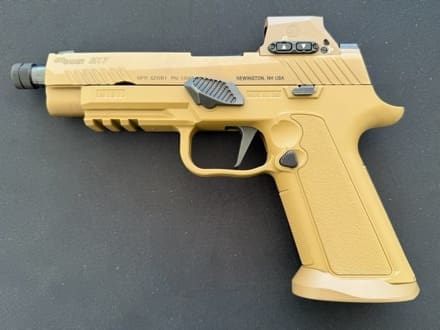
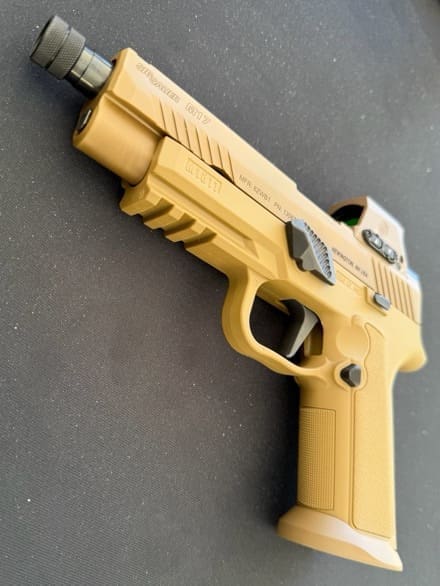
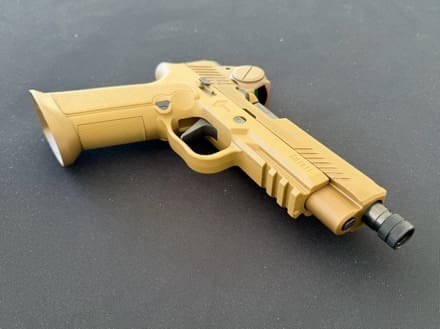
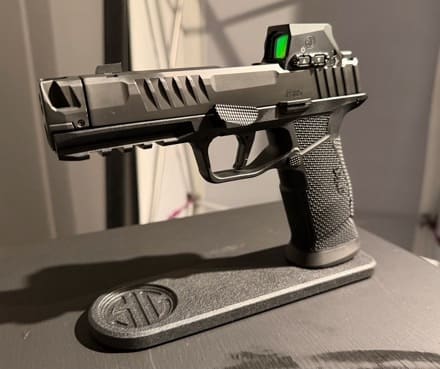
According to a released recently MARDMIN (104/26) message, Marines are authorized to use unit funded, Using Unit Responsibility Item, M17 Romeo (sic) red dot optic, National Stock Number 1240-01-713-9795 for Combat Pistol Program (CPP) qualifications with the M18 Modular Handgun System (MHS).

Manufactured by SIG Electro-Optics, the ROMEO-M17 was assigned its NSN and added to the MHS Additional Authorized List (AAL) in October, 2023.

ROMEO-M17 Specs:

  • Objective Lens Diameter: 24mm
  • Reticle: Circle dot with 2 MOA Red Dot / 32 MOA Circle
  • Lens Type: Asphere
  • Brightness Adjustment Settings: 15 (12 Day / 3 Night Vision)
  • Water Resistance: Submersible to 20 meters
  • Overall Length: 2.4 inches
  • Overall Width: 0.9 inches
  • Overall Height: 1.1 inches
  • Mounting Footprint: SIG-LOC™ MHS
  • Battery Type: CR2032
  • Battery Location: Side
  • Weight (w/o battery): 1.5 ounces
  • MOTAC (Motion Activated Illumination)
  • MAGNETAC (Magnetic Activation)
  • D.A.R.C. (Dark Adaptive Reticles & Coatings)
  • Designed, developed, tested and fully assembled in the USA
  • Integrated loaded chamber indicator (LCI) gas deflector and machined anti-reflection grooves on all rear facing surfaces for reduced glare

In other pistol marksmanship news, an earlier MARADMIN (095/26) authorizes Marines in units that are issued Glock pistols from the USMC (e.g., MARSOC) or Department of State (e.g., MCESG) for unique duty requirements to use these pistols for CPP qualifications.

Rheinmetall Nordic Mortar Day: Rheinmetall Presents the Capabilities of the Next Generation of European Mortars

Wednesday, March 18th, 2026

Rheinmetall has once again demonstrated its expertise in the future of indirect fire weapon systems. In winter 2026, its subsidiary Rheinmetall Nordic hosted the Rheinmetall Nordic Mortar Day. In front of high-ranking representatives of armed forces, authorities and industry partners from Norway, Sweden, Finland, the Netherlands and Germany, the company presented the latest generation of high-performance European mortar systems in a live demonstration. The focus was on the 120 mm Ragnarok mortar system and the newly developed Mortar Mission Module. This is a European, scalable solution designed to have a decisive impact on the battlefield through its speed, precision, reliability and affordability.

The Ragnarok Mortar Mission Module will provide users with true shoot/scoot capability allowing users to leave the firing position immediately after the last round is fire. The system is designed for high flexibility through its platform and barrel independence.

The live fire demonstration took place in Rena, Norway. Weather conditions were adverse, with double-digit sub-zero temperatures and high humidity. During the demonstration, the Mortar Mission Module integrated in a HX truck demonstrated its high accuracy and rapid response capability. Designed for speed and simplicity, the system can be seamlessly integrated into existing and future platforms, enabling European armed forces to enhance their capabilities easily and without significant logistical effort.

The demonstration underscored the growing importance of European cooperation in strengthening collective defence. In light of increasing geopolitical pressure and growing demand for robust capabilities on the battlefield, Rheinmetall Nordic emphasised the urgency of delivering effective, user-oriented systems that enable nations to act quickly and decisively.

‘Today’s security environment requires us to act in a targeted manner,’ said Morten Kjorum, CEO of Rheinmetall Nordic. ‘Europe’s strategic autonomy depends on providing solutions that maximise operational impact while being practical, cost-effective and rapidly deployable. The Mortar Mission Module is the result of close collaboration between Rheinmetall and European industry partners and users, based on transparency, shared goals and technological excellence.’

‘Together we are stronger,’ added Kjorum. ‘Our goal is clear: we want to deliver systems that meet the operational requirements of European soldiers at the speed that the current situation demands.’

With its scalable production presence worldwide, Rheinmetall is ready to meet the growing demand for advanced infirect fire capabilities while ensuring a resilient, sovereign supply chain. 

US Army Seeking COTS Direct View Optics, Aiming Lasers, and Mounting Hardware for NGSW

Wednesday, March 18th, 2026

“The US Army Contracting Command – New Jersey (ACC-NJ), on behalf of Project Manager Soldier Lethality (PM SL), located at Picatinny Arsenal, NJ, is conducting a market survey for direct view optics and aiming lasers for use on shoulder fired weapon systems (i.e. rifles, carbines and automatic rifles) within the Close Combat Force.”

That’s how the recent US Army RFI to industry for commercial off the shelf weapon enablers starts out. I’m going to dissect it a little bit. It’s for “rifles, carbines and automatic rifles within the Close Combat Force.” Considering the Army is currently replacing the M4 Carbines and M249 Squad Automatic Weapons with the M7 Rifle, XM8 Carbine (basis of issue still undetermined), and M250 Automatic Rifle, this is obviously for the Next Generation Squad Weapon System.

Photo by Mr. Thomas Mort, Audio Visual Specialist

They want to hear from companies manufacturing direct view optics, aiming lasers, and scope rings/mounting hardware for optics that are at a technology readiness level 9, currently in production, and may be commercially available.

Here are the specifics:

Direct view optics and mounting hardware must be mountable on a MIL-STD-1913 Picatinny Rail. Direct view optics may include but are not limited to red dot sights with flip-in magnifiers, low-power variable optics, discrete variable magnified optics, or fixed magnified direct view optics with magnification contained in the range of 1x to 10x. The direct view optics should aid Rifleman and Automatic Rifleman to effectively engage targets at distances up to 600m. Optics must survive weapon pyro-shock, be rugged for Soldier use and conform to MIL-STD-810 Environmental conditions for Small Arm Weapons.  Optics should allow for the use of protective eyewear and provide an interface for attaching laser protection filters and anti-reflective devices.

Aiming lasers must be mountable on MIL-STD-1913 Picatinny Rail or using Modular Lock (M-LOK) and provide a visual aiming laser, infrared aiming laser, and an illuminator flood light that aids Rifleman and Automatic Rifleman to effectively engage targets at distances up to 600m. The IR pointer and illuminator must be compatible with I2 night vision devices and offer eye safe settings for general use and high-power settings (no greater than 3B) for long range use. Aiming lasers may have laser range finder and/or remotes but not required. Aiming lasers must survive weapon pyro-shock, be rugged for Soldier use, and conform to MIL-STD-810 Environmental conditions for Small Arm Weapons.

XM157 Next Generation Squad Weapon Fire Control

NGSW was procured to be fielded along with the XM157 Next Generation Squad Weapon Fire Control, manufactured by Vortex Optics. This sustem was actually selected before the weapons it was intended to be attached to and offers an integrated laser ranger finder as well as ballistic software to present a disturbed reticle for the shooter to increase first round hits. Additionally, it is a 1-8x magnified optic and includes visible and IR aiming lasers.

Early NGSW fieldings included the XM157. However, more recently we’ve seen M7 Rifles being used with various optics to include LVPOs and Red Dots.

Take for example this Army Marksmanship Unit photo by SFC Timothy Hamlin. It depicts a Soldier with M7 outfitted with a B.E. Meyers MAWL X-1 aiming laser and a Vortex Optics “Eleanor” AMG 1-10x optic.

Although the Army has not commented on the disparity in Fire Control systems to NGSW weapons it may well come down to how quickly they are manufactured. Weapon manufacturer SIG SAUER is ahead of schedule, allowing the Army to speed up fielding of the M250 to select Infantry Brigades. Considering the complexity of electro-optics in the XM157, Vortex may be proceeding more slowly.

To be sure, there have been critiques of the NGSW program, generally from those who have not yet had any experience with the guns. The M7 is indeed heavier than the M4 it replaces, especially when equipped with the XM157. In fact, it is said to be three pounds heavier than an M4A1 with Close Combat Optic when equipped with the XM157 NGSW Fire Control System and suppressor. But in that scenario the M4 doesn’t have a suppressor or lasers (aiming and range finding).

On the other hand, the M250 is lighter than the SAW, 2.7 pounds to be exact. Regardless, the 6.8x51mm composite case round has a longer range and a larger projectile which travels at a higher velocity than the 5.56mm NATO round. This makes it difficult to offer a direct comparison between legacy and NGSW.

One of the answers to this feedback from the field is to develop the Product Improvement Effort versions of the M7 and M250 which has succeeded in lowering the weight. This project also resulted in the XM8 carbine variant.

Granted, the XM157 offers the Soldier capabilities on an individual weapon that few others enjoy, but it comes at a price. Aside from the weight of the XM157 still others are concerned about the cost and complexity. While a per unit cost has not been disclosed, the Army was talking at one time at under $10,000 per unit. Since all of the fire control unit’s capabilities are integrated into a single chassis, the only feasible way to upgrade the system is via software. This single component architecture also means that if one of the features malfunctions the entire system has to be taken out of service for maintenance.

Does this move to procure COTS solutions mean the demise of the XM157? There’s been no direct evidence of that. However, it does signify that the Army is using acquisition authorities to quickly close lethality capability gaps through use of readily available technologies.

While NGSW is definitely the US Army’s major small arms focus, there are a lot of legacy M4s and M249s out there and these COTS solutions can be proliferated across the force if they prove valuable.

Any company who wants to get in on this has until April 3rd, 2026. Visit Sam.gov for details.