

LENGGRIES, GERMANY (26 November 2026)
What does it take to make a piece of tactical equipment once, then make it 10,000 times to the same standard? For Paul Jennewein, Managing Director of Lindnerhof, the answer starts in the sample room, where building a prototype exposes decisions the team will have to get right in production.
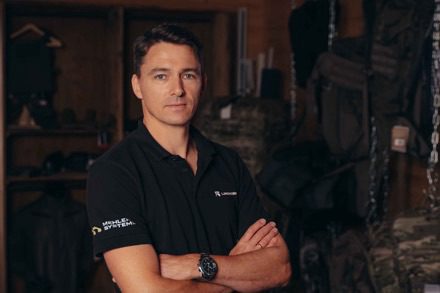
Jennewein explains what Lindnerhof’s sample makers learn from the first build, how the team chooses materials it can source and work with reliably, and how it keeps quality consistent as order volumes grow.
Q: What drew you to Lindnerhof after more than 18 years in high-performance and defence textiles?
A: I wanted to take what I had learnt in high-performance textiles and technology development and apply it to complete tactical products used on the front line. Lindnerhof’s combination of operational experience and hands-on development appealed to me. I could have a more direct influence at every stage, from choosing a material and building the first prototype to manufacturing the product and getting it to the customer. I’m drawn to technical products where function and reliability are what count in the field. I also saw an opportunity to build on the expertise Lindnerhof had developed locally and bring it to more customers through Mehler Systems.
Q: How do you and Jakob Kolbeck complement each other as managing directors?
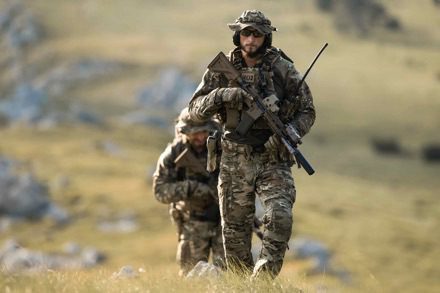
A: Jakob brings an operational background and a direct understanding of users and their missions. He also brings the customer perspective through his focus on sales and the market. My background is in textiles, materials technology and production. When we look at the same product, Jakob asks what the operator really needs. I ask whether we can make it once and then make it 10,000 times to the same standard. That’s what field to factory means to me. We take what operators need and bring it together with expertise in textiles, materials, engineering and manufacturing.
Q: How does bringing development, manufacturing and the supply chain closer together benefit customers?
A: It shortens the path from a customer requirement to a finished product. Material availability, manufacturability, quality, compliance, cost and reliable delivery all influence the design. We bring manufacturing and procurement into development early so that, while we’re still prototyping, we can ask whether we can source the materials reliably and manufacture the product consistently as volumes increase. We also ask whether we can specify and test it objectively and whether it can be maintained or repaired. With fewer handovers, less information gets lost along the way.
Q: What can Lindnerhof’s sample makers learn from building the first prototype?
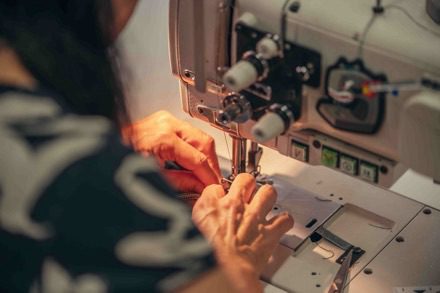
A: It gives us a real competitive advantage because we can turn around development iterations quickly. Experienced sample makers often spot issues while building a prototype that you would never see on a drawing. What they learn goes straight into preparing the product for series production. A prototype should prove that an idea works and teach us how to manufacture it.
Q: Can you share an example of how a product evolved from the first prototype to the finished design?
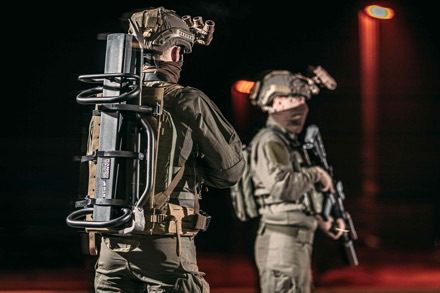
A: One example is a modular load-carrying system we developed to help operators move more easily under load and keep their hands free. The first prototypes can look a bit like Frankenstein’s monster, but they reveal seemingly small issues that are important to catch early. We get feedback from users as soon as we can. If we need experience we don’t have in-house, we take the prototype to potential customers and ask them what they think.
We build another version, refine it and strip away anything that serves no useful purpose. Several small improvements can make a significant difference to the finished product. In my experience, good tactical equipment often comes from a series of changes based on what we learn along the way.
Q: What tells you a material is suitable beyond its laboratory performance?
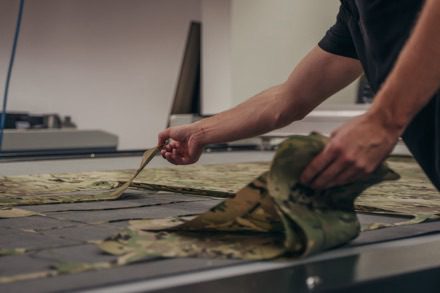
A: The right material depends on the application and how it performs in the complete equipment system. Improving one property can come at the expense of the system as a whole, so laboratory results are only one part of the decision. We also consider how the material behaves in manufacturing, how reliably we can source it over the long term and whether it can continue to meet regulatory requirements as they evolve. Those last two considerations are becoming increasingly important.
Q: How do you decide whether a new material or manufacturing method is worth adopting?
A: We define the problem first, then benchmark the new material or method against the existing solution. That means looking at what improves and what trade-offs the change introduces across the complete product. Reliability comes first.
Q: What does it take to move a prototype into reliable series production?
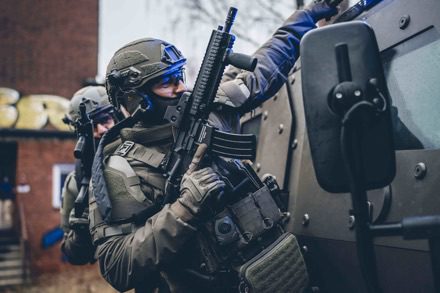
A: If we need to bring a product to market quickly, we work within a pool of materials that meet known, accepted standards. The further we move away from those standards, the more time we need to establish that we can manufacture the product reliably and achieve the required quality.
Scaling up deserves particular attention. The product passes through several hands, and people across the organisation independently review all aspects of manufacturability at up to five points in the process. We build quality into the production process from the start so that the final inspection can confirm it.
Q: How do you keep materials, dimensions and workmanship consistent as production grows?
A: Clear specifications tell everyone what the product has to meet, from materials and dimensions to workmanship, functional requirements and test criteria. We then need processes capable of delivering to those specifications. That includes preparing the product for series production, qualifying suppliers, controlling the process, standardising how the work is done and managing changes. It also takes trained production staff, experienced sample makers, people in purchasing who understand the technical requirements and colleagues with quality expertise.
Q: Which parts can you standardise when customers need different configurations?
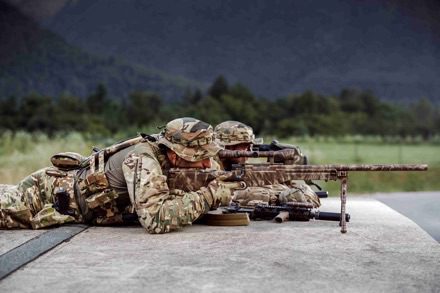
A: Defence and police customers will always need specialised solutions. We manage that variety by identifying what needs to be specific to the customer and what can be built on a common technical platform. We standardise wherever variation offers the customer no benefit. That can include materials, buckles and other components, interfaces, attachment systems, manufacturing processes, test methods and quality requirements. Modular design lets us build different configurations from common components. Customers get equipment that meets their needs, and we can manage the resulting variety in production.
Q: How do you pass practical expertise on within the team?
A: Some of our most important knowledge comes from years of doing the work and is hard to capture in a document. That’s one reason sample makers and experienced production staff are an essential part of development. We pair experienced employees with younger colleagues so they can learn why a construction or production step matters as well as how to do it. My approach is to build on the expertise we have, make it visible and help more people develop it.
Q: Where do you see opportunities to develop the team’s skills?
A: I see particular value in helping teams understand each other’s work. Developers can learn more about manufacturing, and purchasing can build a stronger understanding of technical requirements. Production can contribute earlier in development. Quality teams can focus more on preventing problems and making sure processes are capable of delivering consistent results. Product managers can deepen their knowledge of materials and compliance. The aim is for specialists to understand how their decisions affect the entire value chain.
Q: What do you want to preserve about Lindnerhof’s hands-on approach as the company grows?
A: I want to keep the maker mentality. You have an idea, you build it, you test it and you improve it. People need room to experiment in a practical way. As we grow, we need processes that help engineers work consistently while protecting the speed, practical expertise and hands-on culture that make Lindnerhof effective. The distance between an idea and the person who can build it should stay short.
Q: What are your main priorities for Lindnerhof over the next few years?
A: The first is a resilient supply chain. We want reliable access to materials and components, more transparency and traceability, and enough capacity to fulfil small and medium-sized orders within reasonable lead times.
The second is people. They’re at the core of the company. We want to retain and develop the expertise we already have and bring in people who think differently and offer different skills.
The third is innovation with a measurable benefit for the user. We want to develop materials and designs that solve real operational problems. Combining Lindnerhof’s agility with the scale of Mehler Systems gives us more scope to do that.
Q: Where can Lindnerhof draw on the group’s capabilities as it grows?
A: It gives us access to expertise and markets beyond our own organisation. We can share materials knowledge and manufacturing capabilities, work together on purchasing and sourcing, develop products jointly, reach customers internationally and bring products from across the group to customers through each other’s sales channels.
We need to use that scale while preserving Lindnerhof’s ability to act quickly and make decisions close to the customer. We bring work together across the group where it creates genuine customer value. The advantage is access to colleagues whose expertise complements ours.
Q: What can customers look forward to as Lindnerhof develops?
A: We want to keep responding quickly to specialised requests while moving from individual products towards integrated, modular systems. That means designing each item as part of the equipment the user carries and wears. Drawing on expertise across Mehler Systems lets us design pouches, carriers, clothing and ballistic protection to work together and improve the complete equipment system.
About Paul Jennewein:
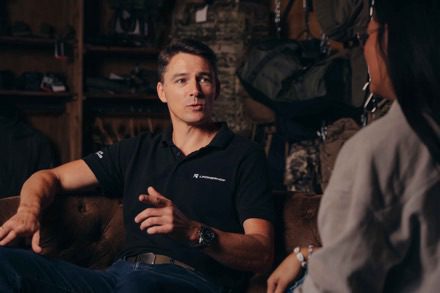
Paul Jennewein joined Lindnerhof as Managing Director on 1 September 2025. He has more than 18 years of experience in high-performance and defence textiles, including work on projects for Germany’s Special Forces Command (KSK), the German Navy and the Nordic Combat Uniform initiative. At Lindnerhof, he focuses on textiles, adaptive systems, sample production, industrialisation and supply chain processes.
About Lindnerhof:
Born out of battlefield experiences, Lindnerhof was founded by a German Special Forces soldier with a relentless committment to developing performance-enhancing tactical gear. The goal today is the same as at the beginning: to cultivate and maintain close working relationships with elite units.
Lindnerhof complements the capabilities of Mehler Systems by providing modular, functional, high-quality carrying solutions suited specifically for tactical missions. Designed for use by special forces, military personnel, and law enforcement, the products prioritise rapid access to carried gear, the ability to extensively customise, and provision of the help operators need to be tightly organised and speedy.
For more information about Lindnerhof please visit: lindnerhof-taktik.de