GORE-TEX WINDSTOPPER

Archive for the ‘Gunfighter Moment’ Category

Gunfighter Moment – Mike Pannone

Saturday, January 31st, 2015

Safety vs. protocol: why safety is safe and protocol can be dangerous

The topic of safety is always at the front of every individual and institutions consciousness. The obvious concern is to ensure people are not injured or killed in the conduct of training but safety has taken a turn years ago away from common sense to rote compliance. Often times range protocol is confused with range safety. Range protocol is that which a range complex will or will not allow individuals or groups to do as well as specific control measures and procedures designed, in the eyes of those that created them, to minimize risk. This is counterproductive to learning and good training because it does not require individuals to think and often violates tactical principles. They are designed to replace individual thought and proficiency. The implied task in all training is safety and that translates directly to operational safety.

A few examples:

• “Point your weapon down range” when actually you mean “Point your weapon in a safe direction.”

o Down range is an administratively designated area where projectiles are intended to impact. Conditions and range status will identify it as a direction where a weapon may or may not be safely pointed and discharged.

o A Safe Direction by definition is a conscious decision to point and manipulate a weapon in a direction where a negligent, accidental or mechanical failure discharge cannot harm personnel or equipment.

o Down range is not always a safe direction so regardless of official status be aware. You are responsible for what your weapon does!

• Not allowing someone to pick up a magazine that has been ejected and bounced 6” over the established firing line.

o If it is so unsafe to reach over the firing line 6” (which I have witnessed repeatedly in institutional training both Mil and LE) then it’s probably not safe to even be standing next to the shooters on your left and right. Statistically more people are shot in parking lots at ranges than on the firing line.

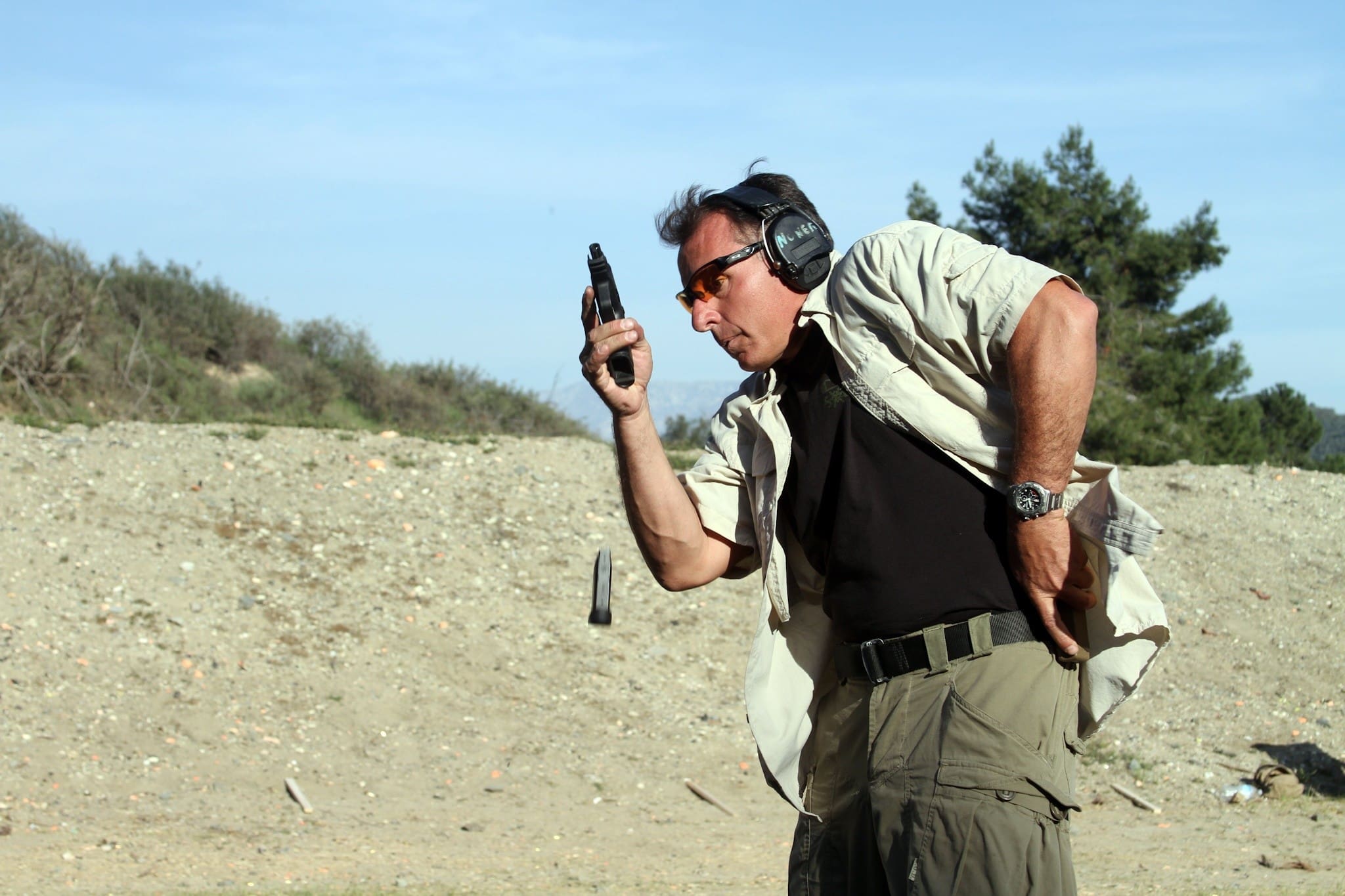
• Requiring shooters to drop a magazine on the ground when unloading. The methodology behind this is “if you drop a magazine into your hand on the range you’ll do it in a gunfight.”

o If you can’t separate the difference between being in a gunfight and needing to reload your pistol/rifle versus clearing your system at the end of a firing sequence then you really shouldn’t have one in your hands if you may ever need it under pressure.

Protocol robs the individual of the authority to think and in doing so people will not think because their actions are dictated. There is no individual more dangerous to themselves or others than those in possession of a lethal implement who are not only not thinking but not allowed to think only follow instructions.

I have been in the presence of negligent discharges, some that have resulted in injury and one of three things that are always the first words out of the shooters mouth are either:

“I didn’t see…”

“I didn’t know…”

“I didn’t think…”

The last one is the only one that counts and the cause of the catastrophic failure. YOU DIDN”T THINK!!

Do not confuse protocol with safety! Protocol may or may not enhance safety but safety itself is a standalone concept. There is safe training, high risk safe training and unsafe training.

• Safe training is that which has been managed in a manner where injury is minimized by design and control measures. It is usually very basic in nature and highly structured.

• High Risk safe training is more complex training with an elevated amount of assumed risk but is deemed necessary for operational requirements. It has specific control measures in place to mitigate the chance of mishap or injury.

• Unsafe training is that which assumes an unnecessary amount of risk or more often than not is poorly designed and managed creating unnecessary and potentially catastrophic results. It lends itself to injury and catastrophic results and must never be undertaken.

There is no time when unsafe training is acceptable.

Safety:

• Treat all weapons as though they are loaded regardless of their perceived condition.

• Never point a weapon at anything you are not willing to kill or damage.

• Keep your weapon on safe and finger off the trigger until your sights are aligned and you have made the conscious decision to fire.

• Know your target, foreground, background, left and right. Be aware of the ballistic capability of your weapon, the intended target and the backstop.

Down range is an administratively designated area where projectiles are intended to impact. Conditions and range status will identify it as a direction where a weapon may or may not be safely pointed and discharged. A Safe Direction by definition is a conscious decision to point and manipulate a weapon in a direction where a negligent, accidental or mechanical failure discharge cannot harm personnel or equipment.

Down range is not always a safe direction

If you have any doubt as to your actions STOP, THINK and then act accordingly because you can’t recall the bullet once it’s gone. Be safe and not a robot. In practice robotic actions are devoid of thought and that is ultimately dangerous. Protocol be damned, think first!

– Mike Pannone
GFmomentpic

Mike Pannone retired from the Army’s premier assault force (1st SFOD-D) after an explosive breaching injury. A year after his retirement America was attacked on 9/11 and he returned to help serve his country as the head marksmanship instructor at the Federal Air Marshals training course and then moved to help stand up the FAMS Seattle field office. In 2003 he left the FAMS to serve as a PSD detail member and then a detail leader for the State Department during 2003 and 2004 in Baghdad and Tikrit.

In 2005 he served as a ground combat advisor of the Joint Counter IED Task Force and participated on combat operations with various units in Al Anbar province. Upon returning he gave IED awareness briefings to departing units and helped stand up a pre-Iraq surge rifle course with the Asymmetric Warfare Group as a lead instructor. With that experience as well as a career of special operations service in Marine Reconnaissance, Army Special Forces and JSOC to draw from he moved to the private sector teaching planning, leadership, marksmanship and tactics as well as authoring and co-authoring several books such as The M4 Handbook, AK Handbook and Tactical Pistol shooting. Mike also consults for several major rifle and accessory manufacturers to help them field the best possible equipment to the warfighter, law enforcement officer and upstanding civilian end user. He is considered a subject matter expert on the AR based Stoner platform in all its derivatives.

www.ctt-solutions.com

Gunfighter Moment is a weekly feature brought to you by Alias Training & Security Services. Each week Alias brings us a different Trainer and in turn they offer some words of wisdom.
Gunfighter Moment – Larry Vickers

Saturday, January 24th, 2015

I just finished up the 2015 SHOT show in Las Vegas and it reminded me just how far we have come in the tactical firearms and gear industry since 9/11.

Many companies did not even exist in the tactical industry prior to 9/11 and the offerings were a fraction of what we have today.

In my line of work this is the best time ever – always try to keep this in mind when commenting on equipment and companies on SSD and elsewhere. Thanx to all those who have revolutionized the tactical industry – we all owe you tremendously for your efforts.

-Larry Vickers
Vickers Tactical Inc.
Host of TacTV

20130202-083903.jpg

Larry Vickers of Vickers Tactical is a retired US Army 1st SFOD-Delta combat veteran with years of experience in the firearms industry as a combat marksmanship instructor and industry consultant. In recent years he has hosted tactical firearms related TV shows on the Sportsman Channel with the latest being TacTV of which Bravo Company is a presenting sponsor. Larry Vickers special operations background is one of the most unique in the industry today; he has been directly or indirectly involved in the some of the most significant special operations missions of the last quarter century. During Operation Just Cause he participated in Operation Acid Gambit – the rescue of Kurt Muse from Modelo Prison in Panama City, Panama. As a tactics and marksmanship instructor on active duty he helped train special operations personnel that later captured Saddam Hussein and eliminated his sons Uday and Qusay Hussein. In addition he was directly involved in the design and development of the HK416 for Tier One SOF use which was used by Naval Special Warfare personnel to kill Osama Bin Laden. Larry Vickers has developed various small arms accessories with the most notable being his signature sling manufactured by Blue Force Gear and Glock accessories made by Tangodown. In addition he has maintained strong relationships with premium companies within the tactical firearms industry such as BCM, Aimpoint, Black Hills Ammunition, Wilson Combat and Schmidt & Bender.

Larry Vickers travels the country conducting combat marksmanship classes for law abiding civilians, law enforcement and military and has partnered with Alias Training to coordinate classes to best meet the needs of the students attending the class.

Gunfighter Moment is a weekly feature brought to you by Alias Training & Security Services. Each week Alias brings us a different Trainer and in turn they offer us some words of wisdom.

Gunfighter Moment – Daryl Holland

Saturday, January 17th, 2015

Streamline your kit and don’t be that guy with the floppy leg holster, soon to lose his pistol when he really has to run for it!

pic_1

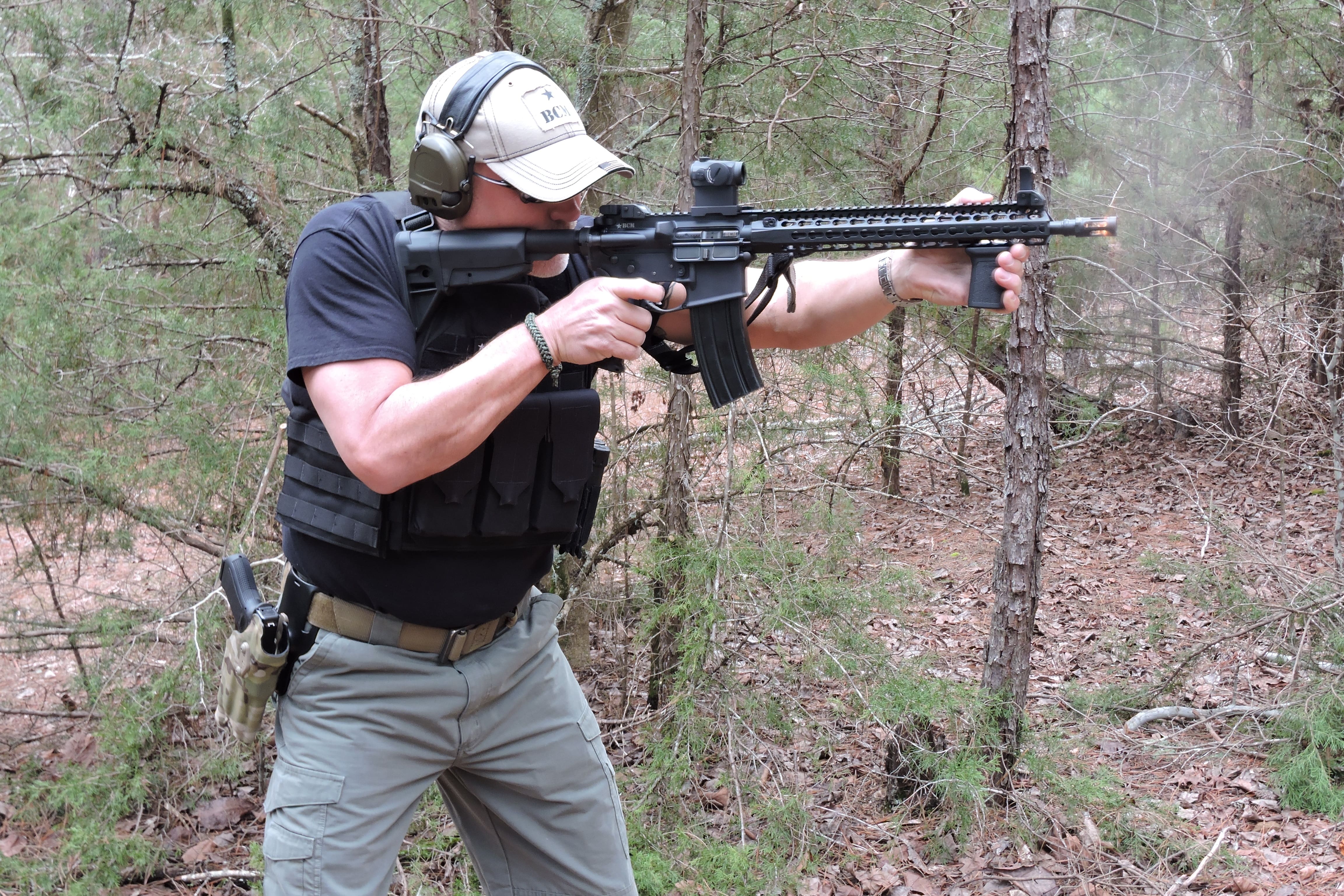
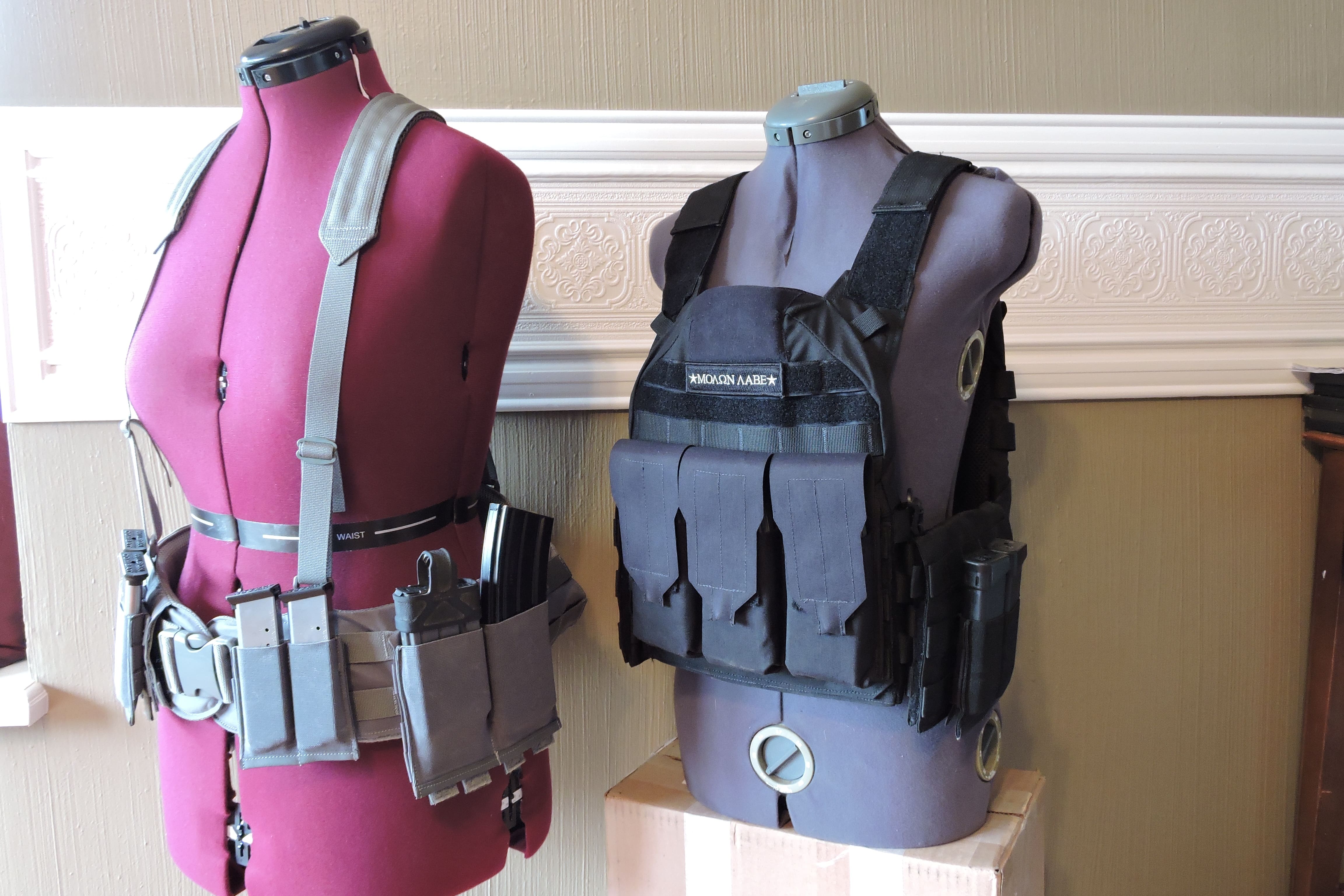
Why wouldn’t you want a streamlined kit? Sure, cover the vital body parts of the head and torso. However, don’t become a Kevlar turtle because mobility and speed are extremely critical in a gunfight without even getting into marksmanship capabilities. For what’s at stake, you would think that everybody wants a lighter and more streamlined kit. If it’s not the heavier weight slowing you down and humbling you or adding more wear and tear to the body, I t’s that there is always something to climb over in an urban environment. I’ve been told that around 80% of the world’s population lives around the urban environment. During my time as a sniper, weight became a high consideration due to climbing into position before the assault, which meant roof tops most of the time. I’ve been on dozens of roof tops in Baghdad alone. Even as an Assault Team Leader, every suspect had a wall or fence to climb over.

pic_2

I like seeing that Bravo Company Manufacturing & Blue Force Gear have done their research, with hands on experienced personnel helping design gear for the current day battlefield that keep our operators on the leading edge of kit. Several colors and options help modify to your own specific needs and easily changed out to meet the next mission requirements.

If I was putting my kit on with the chance of a gun fight, I’d consider taking kit off my legs and wear a drop holster on my belt. Before going out on a mission after modifying your kit, you should always test it by jumping up and down, running and not just jogging, but like your life depended on it. If you’re a garage sale afterward, then adjust as necessary.

Respectfully, Daryl Holland

image1

Daryl Holland is a retired U.S. Army Sergeant Major with over 20 years of active duty experience, 17 of those years in Special Operations. Five years with the 1st Special Forces Group (SFG) and 12 years in the 1st SFOD-Delta serving as an Assaulter, Sniper, Team Leader, and OTC Instructor.

He has conducted several hundred combat missions in Afghanistan, Iraq, Bosnia, Philippines, and the Mexican Border. He has conducted combat missions in Afghanistan’s Hindu Kush Mountains as a Sniper and experienced Mountaineer to the streets of Baghdad as an Assault Team Leader.

He has a strong instructor background started as an OTC instructor and since retiring training law abiding civilians, Law Enforcement, U.S. Military, and foreign U.S. allied Special Operations personnel from around the world.

Gunfighter Moment is a weekly feature brought to you by Alias Training & Security Services. Each week Alias brings us a different Trainer and in turn, they offer some words of wisdom.

Gunfighter Moment – Larry Vickers

Saturday, January 10th, 2015

Misinformation overload; I hate to sound like a broken record but once again I must say be careful what you read and take as gospel from the Internet. Every single day I read something posted as if it is gospel handed down by Moses himself and it is dead ass wrong in regards to firearms and their use. Attending a class by an established instructor like those listed by Alias will teach you more than you will learn in a year of researching on the Internet. Be careful and consider the source before you listen to a keyboard commando on the World Wide Web.

-Larry Vickers
Vickers Tactical Inc.
Host of TacTV

20130202-083903.jpg

Larry Vickers of Vickers Tactical is a retired US Army 1st SFOD-Delta combat veteran with years of experience in the firearms industry as a combat marksmanship instructor and industry consultant. In recent years he has hosted tactical firearms related TV shows on the Sportsman Channel with the latest being TacTV of which Bravo Company is a presenting sponsor. Larry Vickers special operations background is one of the most unique in the industry today; he has been directly or indirectly involved in the some of the most significant special operations missions of the last quarter century. During Operation Just Cause he participated in Operation Acid Gambit – the rescue of Kurt Muse from Modelo Prison in Panama City, Panama. As a tactics and marksmanship instructor on active duty he helped train special operations personnel that later captured Saddam Hussein and eliminated his sons Uday and Qusay Hussein. In addition he was directly involved in the design and development of the HK416 for Tier One SOF use which was used by Naval Special Warfare personnel to kill Osama Bin Laden. Larry Vickers has developed various small arms accessories with the most notable being his signature sling manufactured by Blue Force Gear and Glock accessories made by Tangodown. In addition he has maintained strong relationships with premium companies within the tactical firearms industry such as BCM, Aimpoint, Black Hills Ammunition, Wilson Combat and Schmidt & Bender.

Larry Vickers travels the country conducting combat marksmanship classes for law abiding civilians, law enforcement and military and has partnered with Alias Training to coordinate classes to best meet the needs of the students attending the class.

Gunfighter Moment is a weekly feature brought to you by Alias Training & Security Services. Each week Alias brings us a different Trainer and in turn they offer us some words of wisdom.

Gunfighter Moment – Pat McNamara

Saturday, January 3rd, 2015

“It should surprise you when it goes off.”

That’s always seems like bad advice to me. I’ve been surprised when the hammer falls, and it’s usually called a ‘Miss.’

When we train, we should train to the point of knowing exactly when the hammer is going to fall. No surprises. In order to reach this point, proper repetition is paramount. To achieve proper repetition dry fire is necessary. Not the kind of dry fire where you are simply going through the motions, but deep practice and meaningful repetition.

We should work to the point of automaticity.

Automaticity is the ability to do things without occupying the mind with the low-level details required, allowing it to become an automatic response pattern or habit. It is usually the result of learning, repetition, and practice.

Of the fundamentals, one that is sometimes neglected in teaching is presentation. Especially important in pistol fundamentals, the presentation is how you present the pistol from a ready position to your firing position. As part of your draw stroke, the presentation should lie as flat as possible for as long as possible mitigating arching or scooping. In a perfect world, the hammer should fall right at the apex of your presentation.

Only through deep practice dry fire to the appropriate amount of repetition, can one achieve automaticity. When you’ve reached this point, with flat presentation and trigger preparation the dreaded ‘surprised shot’ will surprise you in that it will be an ‘A’ zone hit.

Patrick McNamara
SGM, US Army (Ret)

McNamara_pistol
Patrick McNamara spent twenty-two years in the United States Army in a myriad of special operations units. When he worked in the premier Special Missions Unit, he became an impeccable marksman, shooting with accurate, lethal results and tactical effectiveness. McNamara has trained tactical applications of shooting to people of all levels of marksmanship, from varsity level soldiers, and police officers who work the streets to civilians with little to no time behind the trigger.

His military experience quickly taught him that there is more to tactical marksmanship than merely squeezing the trigger. Utilizing his years of experience, McNamara developed a training methodology that is safe, effective and combat relevant and encourages a continuous thought process. This methodology teaches how to maintain safety at all times and choose targets that force accountability, as well as provides courses covering several categories, including individual, collective, on line and standards.

While serving as his Unit’s Marksmanship NCO, he developed his own marksmanship club with NRA, CMP, and USPSA affiliations. Mac ran monthly IPSC matches and ran semi annual military marksmanship championships to encourage marksmanship fundamentals and competitiveness throughout the Army.He retired from the Army’s premier hostage rescue unit as a Sergeant Major and is the author of T.A.P.S. (Tactical Application of Practical Shooting). He also served as the Principle of TMACS Inc.

Gunfighter Moment is a weekly feature brought to you by Alias Training & Security Services. Each week Alias brings us a different Trainer and in turn they offer some words of wisdom.
Gunfighter Moment – Mike Pannone

Saturday, December 27th, 2014

Getting a good deal or how to avoid pistol envy

With Christmas 2014 and all the associated shopping still clear in the rear view mirror I think it’s fitting to talk about getting a good deal when purchasing a firearm. I hear a lot about price comparatively speaking and want to make a few suggestions. There are many quality handguns available today but none in my opinion are without some needed upgrades Let’s look at pistols generically. Aside from price what do we really want? First a pistol that feels “right” in your hand. Without that you will never have a comfortable grip and will fidget incessantly, degrading your consistency and thereby your accuracy and speed. Second is reliability, without that you’ll never trust the pistol and only be able to employ it in certain capacities (even my competition pistols are combat reliable). Third is durability. If you shoot your pistols a lot then you don’t want to be frequently replacing parts or have a pistol that can’t handle +P or +P+ loads for instance. Fourth is trigger press weight which will dictate the amount of input required on the gun to make it discharge. The less and the smoother the more consistent and controlled the trigger manipulation. Fifth and final is accuracy and when you shoot guns at 25m and beyond that is an enormous strength or weakness. Trigger and inherent accuracy are both near and dear to me from my formal training in JSOC where pistol marksmanship standards were extremely challenging . Without a good trigger and an inherently accurate pistol (think barrel fit) that is virtually impossible. I assume you have noticed price has still not been mentioned. That is because price is the least important factor within reason. I say that because the extra $200 or $600 is 1-3 cases of ammunition depending on caliber and in the life of a well used gun that is not much. If you don’t have a list of criteria and evaluate your next purchase based on them then you are buying on impulse and emotion and may very well end up with something less than optimal. You won’t be satisfied with it and will end up purchasing what you really wanted or adding work to it that you hadn’t but should’ve expected. That said I know of no stock gun that will meet all the needs I have completely. I’m finicky about triggers and I shoot even sub-compacts to 50m so accuracy and trigger are critical. I have very few bone stock guns and honestly look at a new gun with the upgrades already in mind. Make sure your pistol is an investment in your training as much as the gun itself. Your guns should do what you want, how you want reliably and consistently or get worked on.

I highly recommend you pick a pistol that meets your own critical criteria and identify the mods and accessories you’ll want and then add it to the price. If you shop wisely you get what you pay for and quality is not cheap but is sometimes elusive . Going cheap always leaves you with pistol envy.

“The common law of business balance prohibits paying a little and getting a lot-It can’t be done! If you buy from the lowest bidder it is well to add something for the risk you run, and if you do that you will have enough to pay for something better. ”
Attributed to John Ruskin 1819-1900

-Mike Pannone

GFmomentpic

Mike Pannone retired from the Army’s premier assault force (1st SFOD-D) after an explosive breaching injury. A year after his retirement America was attacked on 9/11 and he returned to help serve his country as the head marksmanship instructor at the Federal Air Marshals training course and then moved to help stand up the FAMS Seattle field office. In 2003 he left the FAMS to serve as a PSD detail member and then a detail leader for the State Department during 2003 and 2004 in Baghdad and Tikrit.

In 2005 he served as a ground combat advisor of the Joint Counter IED Task Force and participated on combat operations with various units in Al Anbar province. Upon returning he gave IED awareness briefings to departing units and helped stand up a pre-Iraq surge rifle course with the Asymmetric Warfare Group as a lead instructor. With that experience as well as a career of special operations service in Marine Reconnaissance, Army Special Forces and JSOC to draw from he moved to the private sector teaching planning, leadership, marksmanship and tactics as well as authoring and co-authoring several books such as The M4 Handbook, AK Handbook and Tactical Pistol shooting. Mike also consults for several major rifle and accessory manufacturers to help them field the best possible equipment to the warfighter, law enforcement officer and upstanding civilian end user. He is considered a subject matter expert on the AR based Stoner platform in all its derivatives.


www.ctt-solutions.com

Gunfighter Moment is a weekly feature brought to you by Alias Training & Security Services. Each week Alias brings us a different Trainer and in turn they offer some words of wisdom.

Gunfighter Moment – Jeff Gonzales

Saturday, December 20th, 2014

Do you ever get that feeling someone is paying way too much attention to you. Did you ever think you may be drawing that attention because of some poor choices for your method and behavior while carrying concealed.

We run a boatload of students through our Concealed Carry Tactics class and one thing we always get them to do is a “peer review”. This is where they walk the line looking over each other’s method of carry. Some are better than others, but having someone give you a once over is worth it big time. There is a mutual benefit through the feedback, honest feedback. Then the other person becomes more familiar with common mistakes and what they look like for real.

IMG_0506.JPG

There are so many things people do that give away the fact they are carrying concealed, but the most obvious is when the gun actually is recognizable through the clothing. You really only see this one with poor selection in clothing options, mainly too tight or too light in nature. However, another method of printing is through what we call a “uniform”. While you may not actually be standing their in your dress blues, you fit the profile. Traveling overseas taught me a lot about this and in some parts of the world I absolutely did not want to be associated with my fellow Americans. Just about every single one of them looked like they stepped out of an REI catalogue. It was actually a bit funny when you stopped to look at it and while working on vulnerability studies it was something I would look for on the bad guy side, so it makes sense we do the same thing.

While we may not be walking around in little clusters of catalog models, I still see a lot of people making poor choices of clothing. So, while yes you want to conceal the weapon well, you also don’t want to draw attention to how you conceal the weapon. A year in the life.

– Jeff Gonzales
Trident Concepts, LLC

Gunfighter Moment is a weekly feature brought to you by Alias Training & Security Services. Each week Alias brings us a different Trainer and in turn, they offer some words of wisdom.
Gunfighter Moment – Daryl Holland

Saturday, December 13th, 2014

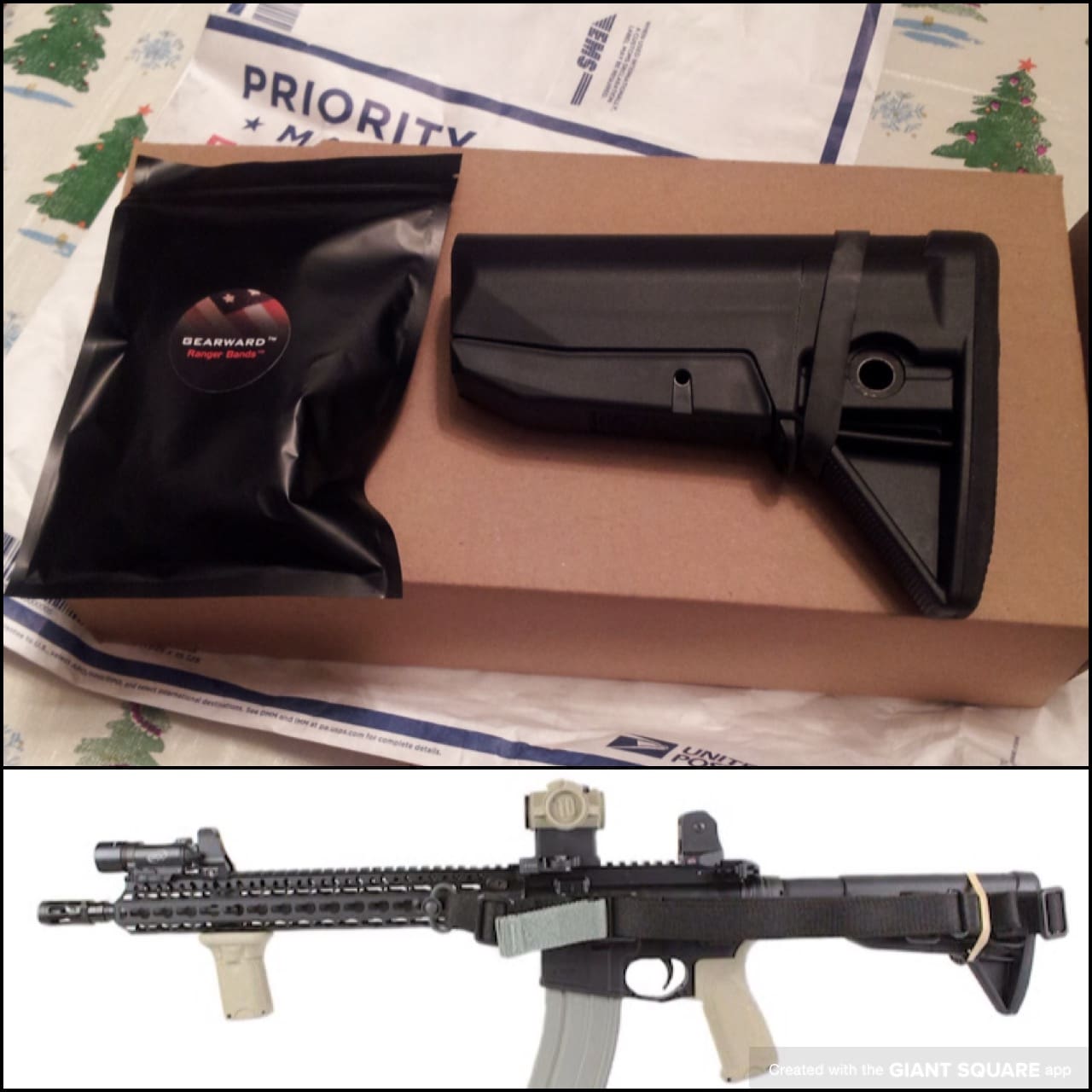
Ranger Bands – Carbine Sling “S Roll”

download

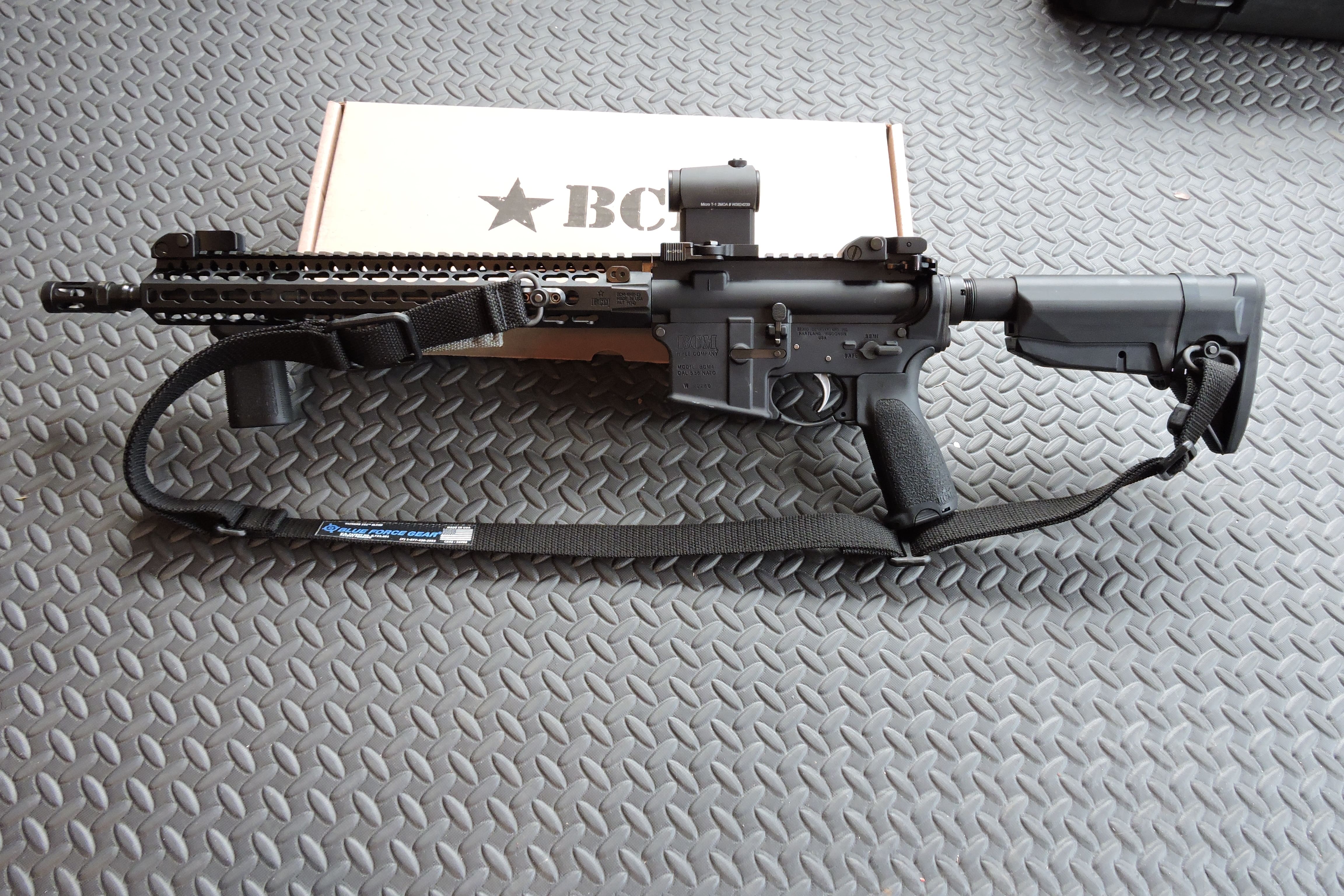
I had a Gunfighter Moment putting together a BCM carbine and I noticed this nice thick black rubber band around the BCM stock holding a bag of Ranger Bands by GEARWARD. I wondered how many people didn’t know about “S” rolling the sling and securing it to the stock to keep it out of the way until needed, so hopefully I can help a few learn something new.


This simple heavy duty rubber band has been very useful for me over the years. Only, I had to use the beige rubber band that my Rigger friends would also use on parachutes. One of the uses with the carbine is to collapse the stock and “S” roll the sling so that the rifle is compact and a 215lb commando can fit into a sedan with kit on and spring into action as the vehicle stops without hanging himself by the sling around the neck and catching it on the corner of a car door thus becoming an obstacle for his team mates.

I learned another reason watching my cousin from Arkansas pull out what he calls a “Black Gun”, which was that he simply stored them in his safe collapsed and “S” rolled to make for a neatly kept gun safe. The sling is always in the way until you need it and having a few extra rubber bands in your pocket is always a good idea during operations…and rubber band wars!?

Having a “Gunfighter Moment” is way cooler than having a “Senior Moment”.

– Daryl Holland

image1

Daryl Holland is a retired U.S. Army Sergeant Major with over 20 years of active duty experience, 17 of those years in Special Operations. Five years with the 1st Special Forces Group (SFG) and 12 years in the 1st SFOD-Delta serving as an Assaulter, Sniper, Team Leader, and OTC Instructor.

He has conducted several hundred combat missions in Afghanistan, Iraq, Bosnia, Philippines, and the Mexican Border. He has conducted combat missions in Afghanistan’s Hindu Kush Mountains as a Sniper and experienced Mountaineer to the streets of Baghdad as an Assault Team Leader.

He has a strong instructor background started as an OTC instructor and since retiring training law abiding civilians, Law Enforcement, U.S. Military, and foreign U.S. allied Special Operations personnel from around the world.

Gunfighter Moment is a weekly feature brought to you by Alias Training & Security Services. Each week Alias brings us a different Trainer and in turn, they offer some words of wisdom.