GORE-TEX WINDSTOPPER

Archive for the ‘Gunfighter Moment’ Category

Gunfighter Moment – Jeff Gonzales

Saturday, June 18th, 2016

Bringing nothing to a gunfight

How much thought have you given to carrying personal protection tools other than a firearm? With the rampant increase in “gun free” zones are you still able to effectively and quickly protect yourself and loved ones.

Be prepared

Often times we get wrapped around the axle whether we can or cannot carry a gun. The subject of gun free zones is not relevant to this article, at some point we will all be in what I prefer to reference as “victim rich zones” or VRZ. The real question is what do you have available and have you trained for this contingency. I think it is foolish avoiding this subject, it is inevitable not to mention the consequences for breaking the law can be far more severe. While I recognize it is a personal choice, make sure you have weighed the options as well as consequences.

Think outside the box

In our Concealed Carry classes we talk about a threat matrix. This matrix is a breakdown of your perceived threat level as well as various loadouts. I ask all students to think long and hard into how you would effectively manage each of the blocks reminding them some blocks may not have any weapons at all. This exercise is incredibly helpful at addressing what to do when you must navigate a VRZ. The difficult part of many is recognizing the firearm free blocks. It sometimes is helpful to provide scenarios to this firearm free blocks such as going to the pool, boarding an airplane or visiting your children’s school. Even if you are permitted to carry in these locations now, recognize at some point you might not and better to acknowledge that notion now rather than later.

Create time and space

I find a firearm in the right hands to be incredibly effective at dealing with lethal threats. That should come as no surprise, but why is it effective? A major reason is it has the capability to launch multiple ballistic projectiles at varying distances. The key word is distances, in some cases you may not have access to your firearm even if it was permissible to carry so developing a layered defensive approach is sound. This approach can be scaled up or if necessary scaled down, but there is two more thoughts to consider here; metallic versus nonmetallic is one and whether you are subject to a physical search the other.

Plastic fantastic

Part of your threat matrix should include both metallic and nonmetallic weapons. If you cannot carry a firearm then you scale down to your next best options such as edged weapons, impact weapons, maybe chemical deterrents, stun guns and tasers should be considered. If you must navigate these VRZ’s frequently then suitable replacements must be explored and practiced with the same frequency as your firearms training. If you have to navigate these locations infrequently then scaling down is the better idea. On the nonmetallic side you may want to consider high impact plastic replacements for your normal array of edged and impact weapons. While these may lack some effectiveness as their metallic kin they will more than likely be adequate when you need them and can easily be replaced.

The black ops feel

If you must subject yourself to a physical search then stop and ask yourself is it really worth it for the simple reason your options are severely limited. However, there are still plenty to consider along with their covert method of carry and deployment. To me this is one of the most overlooked subjects within the concealed carry field. Carrying with no residual presence of any weapons. These types of options are available, but at a cost. Aside from the potential legal consequences the deeper the concealment the more difficult it will be to access; which puts even more emphasis on training.

Clothing attire, weapon selection and immediate actions to buy you time and distance to deploy your deep concealment options are becoming more and more relevant in our urban setting. This is were the art form of concealing really gets interesting.

– Jeff Gonzales
Trident Concepts, LLC
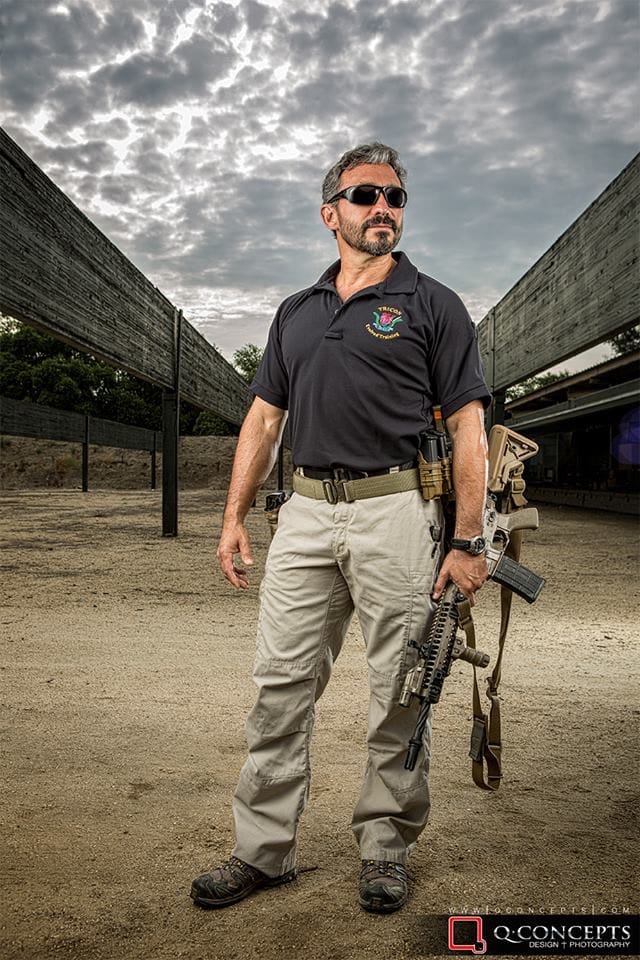
Jeff Gonzales of Trident Concepts, LLC is a decorated and respected U.S. Navy SEAL who has worked in a variety of environments and capacities throughout the globe. He specializes in personal protection tactics and training for armed and unarmed conflicts. His motto is “Concepts that meet reality”. Jeff’s goal is not simply to train you, but to better prepare you for the worst-case scenario.

Gunfighter Moment is a weekly feature brought to you by Alias Training & Security Services. Each week Alias brings us a different Trainer and in turn, they offer some words of wisdom.

Gunfighter Moment – Daryl Holland

Saturday, June 11th, 2016

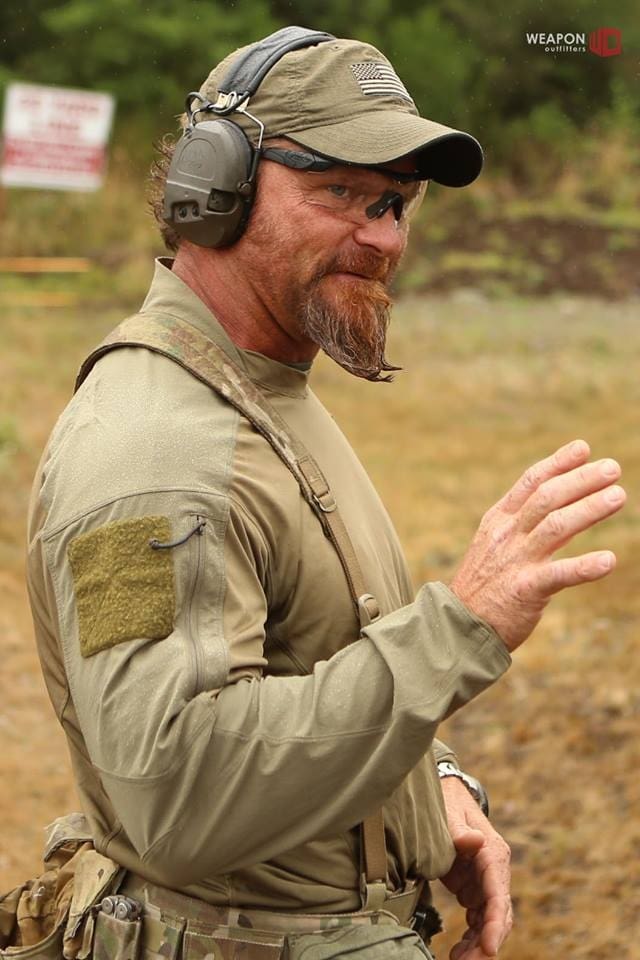
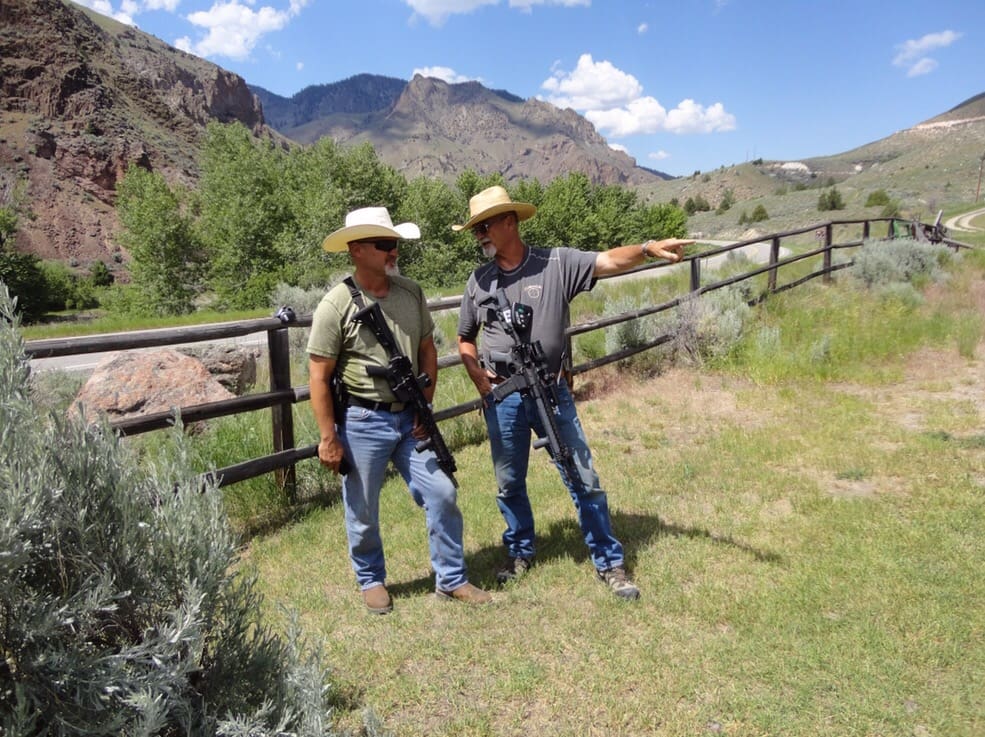
When you have been playing G.I. Joe without the fancy grip as long as I have, it becomes your lifestyle. So, when given the opportunity to train/calibrate with my peers and mentors, I jump on it, especially when it’s a mentor like Ken Hackathorn, who I met back in the mid-90s while assigned to 1st SFOD-Delta. It’s common knowledge that the unit would receive great instruction in everything from Close Quarter Battle (CQB) to driving the wheels off of anything with wheels, which was one of several contributing factors that separated the operator from the lesser funded special ops guy. Marksmanship training was the bulk of our training and when it comes to small arms Instructors, Ken has been at the top of the list for over 30 years.

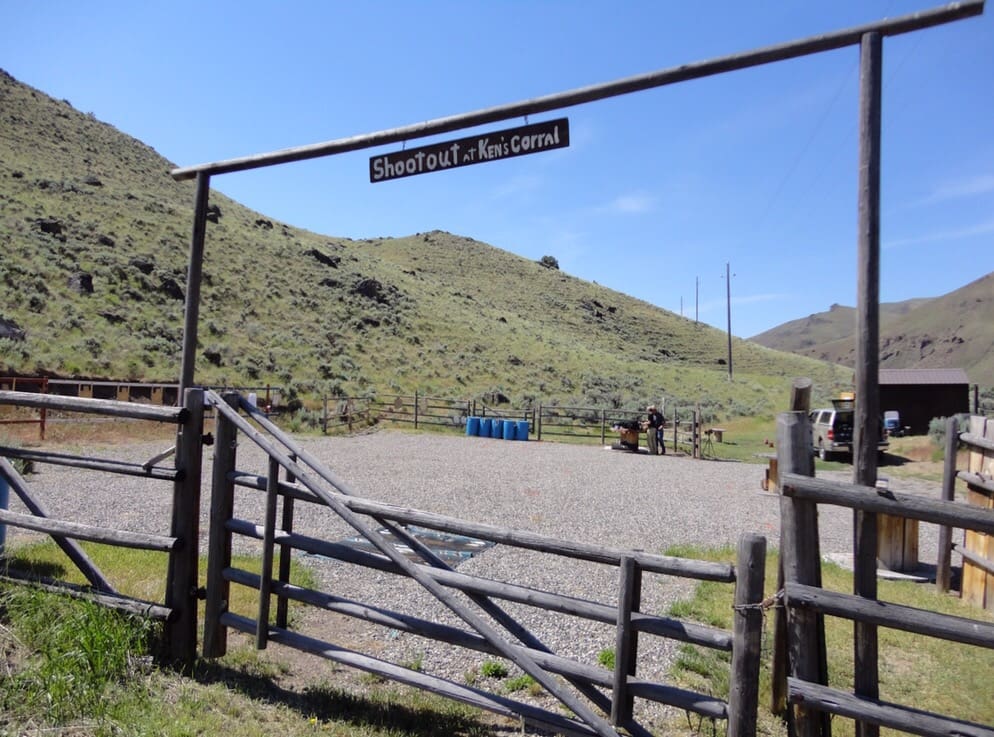
While hanging with Ken at the Colt booth during the last NRA show he invited me to his home, which of course has a range on the property. Only a fool turns down such an offer, so last week I made it out to Ken’s place for some home cooking and blasting. I’d like to say that I burned down all of Ken’s drills, but I can’t. At 70, the legendary shooter can still perform. Even at the end when I thought I had him on maneuvering to several positions during his “Scrambler”, the old man humbled me. I still walked away with several new drills to add to my library.

Thank you Ken and Paula for sharing your awesome home.

Respectfully, Daryl Holland

image1

Daryl Holland is a retired U.S. Army Sergeant Major with over 20 years of active duty experience, 17 of those years in Special Operations. Five years with the 1st Special Forces Group (SFG) and 12 years in the 1st SFOD-Delta serving as an Assaulter, Sniper, Team Leader, and OTC Instructor.

He has conducted several hundred combat missions in Afghanistan, Iraq, Bosnia, Philippines, and the Mexican Border. He has conducted combat missions in Afghanistan’s Hindu Kush Mountains as a Sniper and experienced Mountaineer to the streets of Baghdad as an Assault Team Leader.

He has a strong instructor background started as an OTC instructor and since retiring training law abiding civilians, Law Enforcement, U.S. Military, and foreign U.S. allied Special Operations personnel from around the world.

Gunfighter Moment is a weekly feature brought to you by Alias Training & Security Services. Each week Alias brings us a different Trainer and in turn, they offer some words of wisdom.
Gunfighter Moment – Pat McNamara

Saturday, June 4th, 2016

Many of us are wrapped up in the notion that speed is everything. Speed is a byproduct of working the fundamentals with absolute meaning. With any skill set requiring a tempo, beats per minute, or revolutions per second, we do not get faster by working fast. Any professional performer in any skill set works with meaning and in deep practice mode until the tempo at which he is training is perfected. Then, and only then, will he work / train up to the next level.

Regardless of whether you are playing a cello, drums, doing origami, or perfecting a martial arts move, perfection requires keen intellect, introspection and objective self-critique. Gun fighting is no different. If you are working draw strokes from the holster for example, at a certain speed with a shot timer, and your hit ratio is less than 100 percent, you are probably going too fast. Gradually increase speed once perfection or 100 percent is reached. Push until the wheels come off then back down again to a slower tempo. Additionally, work to a point of diminishing return. When you hit that point, a point that is different for all of us, stop or take a break. No need to encourage a bad habit.

Patrick McNamara
SGM, US Army (Ret)

Pat McNamara

Patrick McNamara spent twenty-two years in the United States Army in a myriad of special operations units. When he worked in the premier Special Missions Unit, he became an impeccable marksman, shooting with accurate, lethal results and tactical effectiveness. McNamara has trained tactical applications of shooting to people of all levels of marksmanship, from varsity level soldiers, and police officers who work the streets to civilians with little to no time behind the trigger.

His military experience quickly taught him that there is more to tactical marksmanship than merely squeezing the trigger. Utilizing his years of experience, McNamara developed a training methodology that is safe, effective and combat relevant and encourages a continuous thought process. This methodology teaches how to maintain safety at all times and choose targets that force accountability, as well as provides courses covering several categories, including individual, collective, on line and standards.

While serving as his Unit’s Marksmanship NCO, he developed his own marksmanship club with NRA, CMP, and USPSA affiliations. Mac ran monthly IPSC matches and ran semi annual military marksmanship championships to encourage marksmanship fundamentals and competitiveness throughout the Army.He retired from the Army’s premier hostage rescue unit as a Sergeant Major and is the author of T.A.P.S. (Tactical Application of Practical Shooting). He also served as the Principle of TMACS Inc.

Gunfighter Moment is a weekly feature brought to you by Alias Training & Security Services. Each week Alias brings us a different Trainer and in turn they offer some words of wisdom.

Gunfighter Moment – Larry Vickers

Saturday, May 28th, 2016

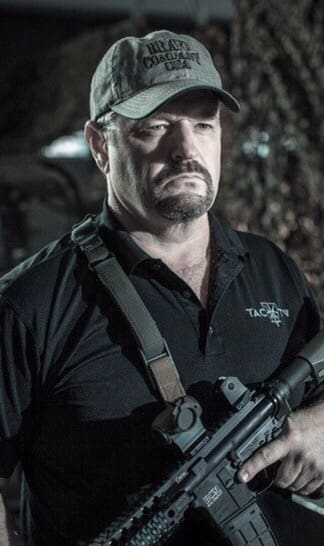
I just wrapped up the NRA show in Louisville KY and I gotta tell you I really enjoy meeting shooters and fans of my shows and products. A great time was had by all and it was especially important to me personally to see all the whole families and children visiting the show. I have been very fortunate to make a good living in the firearms industry and I remind myself regularly to treasure it and not take it for granted. Thanks once again to everyone who stopped by the Wilson Combat, Raven Concealment Systems, Aimpoint and Blue Force Gear booths while I was there to say hi. Be safe and I’ll keep driving on with training, shows and products. LAV out

-Larry Vickers
Vickers Tactical Inc.
Host of TacTV

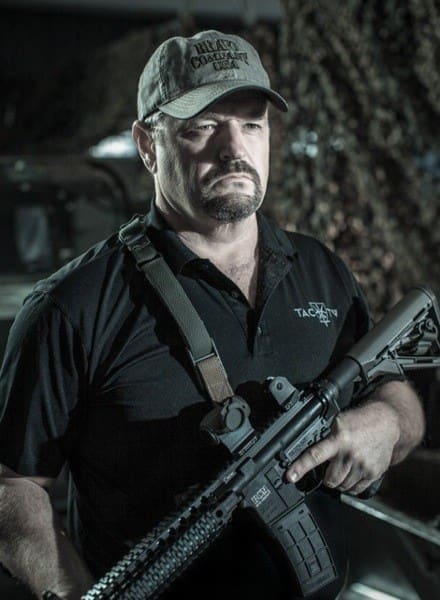
Larry Vickers of Vickers Tactical is a retired US Army 1st SFOD-Delta combat veteran with years of experience in the firearms industry as a combat marksmanship instructor and industry consultant. In recent years he has hosted tactical firearms related TV shows on the Sportsman Channel with the latest being TacTV of which Bravo Company is a presenting sponsor. Larry Vickers special operations background is one of the most unique in the industry today; he has been directly or indirectly involved in the some of the most significant special operations missions of the last quarter century. During Operation Just Cause he participated in Operation Acid Gambit – the rescue of Kurt Muse from Modelo Prison in Panama City, Panama. As a tactics and marksmanship instructor on active duty he helped train special operations personnel that later captured Saddam Hussein and eliminated his sons Uday and Qusay Hussein. In addition he was directly involved in the design and development of the HK416 for Tier One SOF use which was used by Naval Special Warfare personnel to kill Osama Bin Laden. Larry Vickers has developed various small arms accessories with the most notable being his signature sling manufactured by Blue Force Gear and Glock accessories made by Tangodown. In addition he has maintained strong relationships with premium companies within the tactical firearms industry such as BCM, Aimpoint, Black Hills Ammunition, Wilson Combat and Schmidt & Bender.

Larry Vickers travels the country conducting combat marksmanship classes for law abiding civilians, law enforcement and military and has partnered with Alias Training to coordinate classes to best meet the needs of the students attending the class.

Gunfighter Moment is a weekly feature brought to you by Alias Training & Security Services. Each week Alias brings us a different Trainer and in turn they offer us some words of wisdom.

Gunfighter Moment – Mike Pannone

Saturday, May 21st, 2016

The Pool of Time Concept or, “How to Shoot Faster Without Physically Moving Faster.”

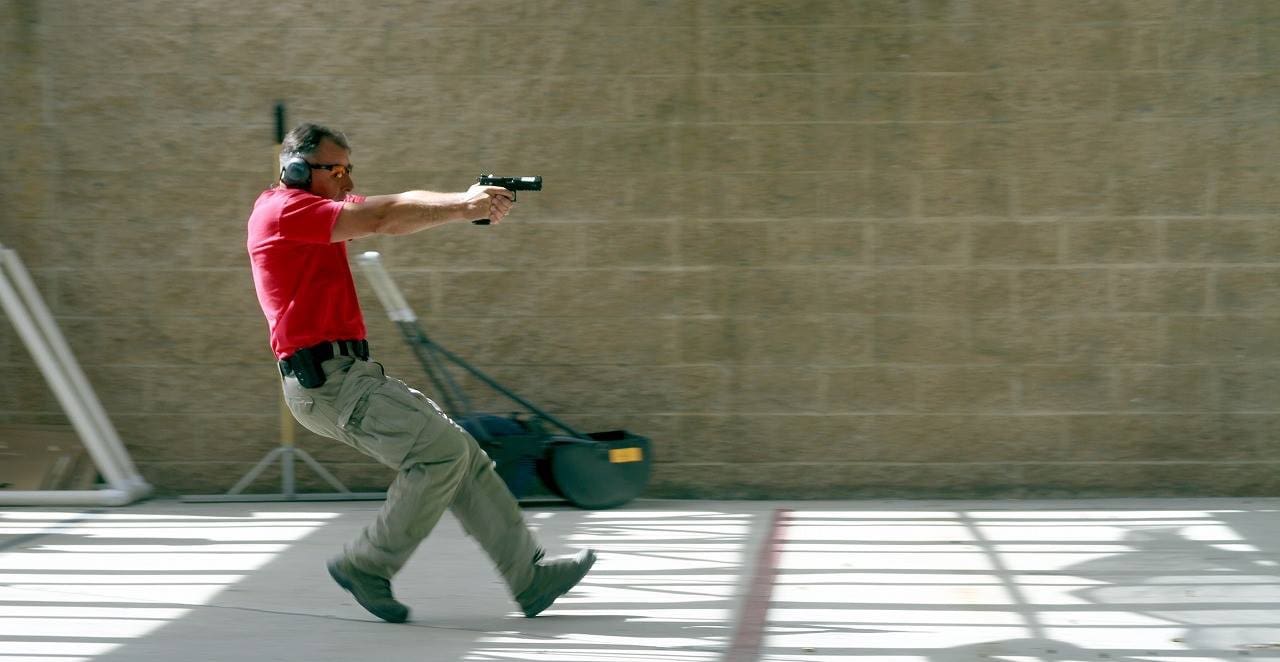
One of the most useful things I learned from shooting USPSA and competing on the same range with the best shooters in the world is what I call “the pool of time concept”. It is nothing new but it had never been explained to me but now that I figured it out it has been a staple in all my shooting lecture at classes. To make it short and sweet here’s the Cliff Notes:

Every action you take has a pool of time associated with it. When you are trying to shoot faster but feel like you are at the limits of your physical ability then examine how you are spending your time. Start with the largest pool of time and see if you can get some back by refining and making more efficient that particular action. For me in USPSA I found I was shooting fast and accurate enough but my movement and set-up were costing me 2-4 seconds every time against other shooters. In a match those 2-8 seconds even on the shorter courses of fire which is an eternity and the difference between 2nd and 22nd sometimes. I took out that specific component and began to practice rapid exit from a shooting position and rapid entry into and set-up/shot in another position. I found that in the next few matches I was doing substantially better even though I shot no differently as it related to speed and accuracy. I had refined a particular component skill and taken some time back from that particular pool of time but never moved my physical body any faster.

Above is just an example of a component skill and the pool of time concept. The key is to start with the largest pool of time available and work your way down to the smallest. Final hint, there is no real time to be had with substantial benefit in trigger press. If you shoot .25sec split times for shots and I shoot .15, that is 60% faster. I am shooting at the fringes of control and will be losing points and gaining penalties and you will be shooting great scores without penalties. The big take away in this example is that a course of fire with 10 targets will only give me an advantage of 1 second! So I am shooting 60% faster in splits on the target and losing points and I only gain 1 second. There is no usable time in the trigger overall so before you try and shoot faster, work on doing everything else faster. There is no difference in this from sport to combative shooting; it’s the hits at speed not just speed that wins the fight.

Go to each pool of time starting with the biggest and then work your way down to the smallest taking a little back from each pool while leaving the trigger press consistent. If you do that you will be far more efficient which is where speed comes from and you will shoot faster without physically moving faster.

– Mike Pannone

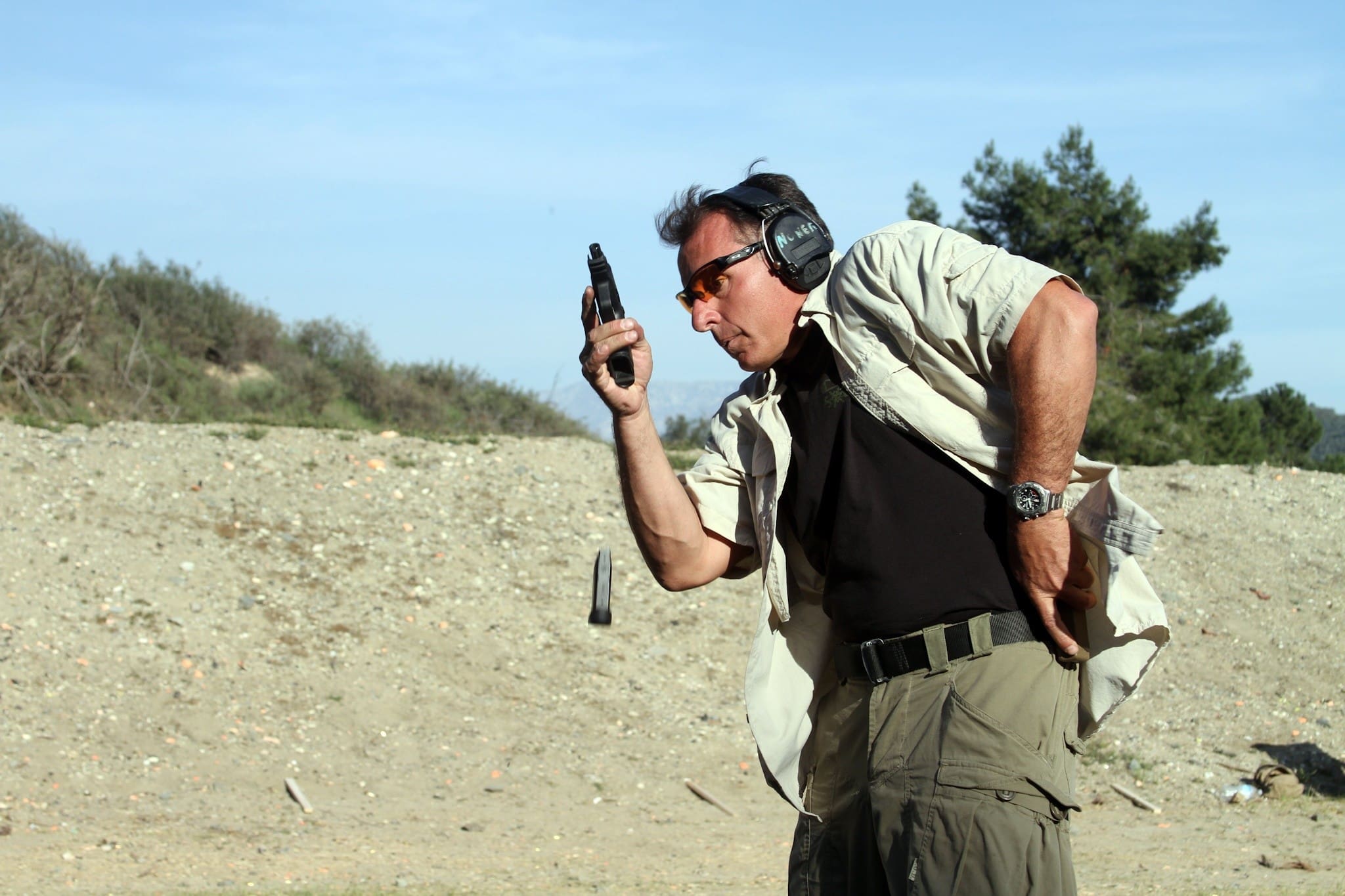
Mike Pannone retired from the Army’s premier assault force (1st SFOD-D) after an explosive breaching injury. A year after his retirement America was attacked on 9/11 and he returned to help serve his country as the head marksmanship instructor at the Federal Air Marshals training course and then moved to help stand up the FAMS Seattle field office. In 2003 he left the FAMS to serve as a PSD detail member and then a detail leader for the State Department during 2003 and 2004 in Baghdad and Tikrit.

In 2005 he served as a ground combat advisor of the Joint Counter IED Task Force and participated on combat operations with various units in Al Anbar province. Upon returning he gave IED awareness briefings to departing units and helped stand up a pre-Iraq surge rifle course with the Asymmetric Warfare Group as a lead instructor. With that experience as well as a career of special operations service in Marine Reconnaissance, Army Special Forces and JSOC to draw from he moved to the private sector teaching planning, leadership, marksmanship and tactics as well as authoring and co-authoring several books such as The M4 Handbook, AK Handbook and Tactical Pistol shooting. Mike also consults for several major rifle and accessory manufacturers to help them field the best possible equipment to the warfighter, law enforcement officer and upstanding civilian end user. He is considered a subject matter expert on the AR based Stoner platform in all its derivatives.

CTT Solutions

Gunfighter Moment is a weekly feature brought to you by Alias Training & Security Services. Each week Alias brings us a different Trainer and in turn they offer some words of wisdom.

Gunfighter Moment – Daryl Holland

Saturday, May 14th, 2016

After my recent trip to Gunsite with Ken Hackathorn, I was telling him about how I and my favorite gunsmith (cousin) ruined a hammer while trying to get my 1911, 80 series trigger lighter and lighter. Ken told me that “good is good enough…most of us are too picky about our triggers”. When the legend was done humbling me in front of “Shooting USA”, I realized that I was fine with a stock trigger for training. Maybe a little polishing to remove some tool marks, but leave the custom trigger jobs to the custom shop that will replace your hammer if they screw it up.
If your trigger is below 4lbs of pressure you are fine. I never had a pistol below that number while in the Military due to liability and I assume that our States, Counties and Cities are the same.

Stop complaining about your hard trigger and work on your hand strength.

Respectfully, Daryl Holland

image1

Daryl Holland is a retired U.S. Army Sergeant Major with over 20 years of active duty experience, 17 of those years in Special Operations. Five years with the 1st Special Forces Group (SFG) and 12 years in the 1st SFOD-Delta serving as an Assaulter, Sniper, Team Leader, and OTC Instructor.

He has conducted several hundred combat missions in Afghanistan, Iraq, Bosnia, Philippines, and the Mexican Border. He has conducted combat missions in Afghanistan’s Hindu Kush Mountains as a Sniper and experienced Mountaineer to the streets of Baghdad as an Assault Team Leader.

He has a strong instructor background started as an OTC instructor and since retiring training law abiding civilians, Law Enforcement, U.S. Military, and foreign U.S. allied Special Operations personnel from around the world.

Gunfighter Moment is a weekly feature brought to you by Alias Training & Security Services. Each week Alias brings us a different Trainer and in turn, they offer some words of wisdom.
Gunfighter Moment – Larry Vickers

Saturday, May 7th, 2016

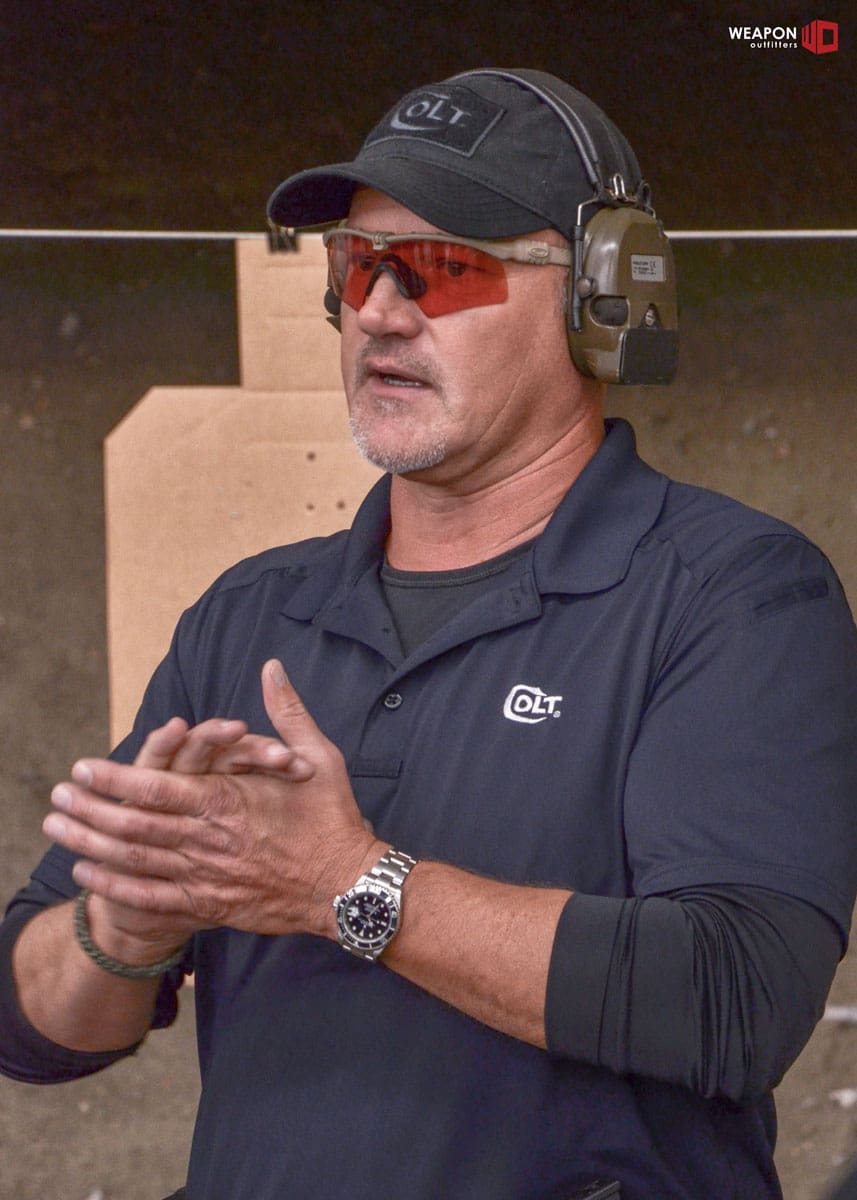
In nearly every single class I teach these days, I see problems with factory ammunition (defects). Five years ago they were uncommon, today they are common place. It’s a byproduct of the amount of ammo being produced and consumed by the shooting community in this day and age. A word to the wise would be to both check visually and chamber check any self defense handgun ammo you trust your life to regardless of the brand.

Be safe and have a good one – see you at the range.

-Larry Vickers
Vickers Tactical Inc.
Host of TacTV

20130202-083903.jpg

Larry Vickers of Vickers Tactical is a retired US Army 1st SFOD-Delta combat veteran with years of experience in the firearms industry as a combat marksmanship instructor and industry consultant. In recent years he has hosted tactical firearms related TV shows on the Sportsman Channel with the latest being TacTV of which Bravo Company is a presenting sponsor. Larry Vickers special operations background is one of the most unique in the industry today; he has been directly or indirectly involved in the some of the most significant special operations missions of the last quarter century. During Operation Just Cause he participated in Operation Acid Gambit – the rescue of Kurt Muse from Modelo Prison in Panama City, Panama. As a tactics and marksmanship instructor on active duty he helped train special operations personnel that later captured Saddam Hussein and eliminated his sons Uday and Qusay Hussein. In addition he was directly involved in the design and development of the HK416 for Tier One SOF use which was used by Naval Special Warfare personnel to kill Osama Bin Laden. Larry Vickers has developed various small arms accessories with the most notable being his signature sling manufactured by Blue Force Gear and Glock accessories made by Tangodown. In addition he has maintained strong relationships with premium companies within the tactical firearms industry such as BCM, Aimpoint, Black Hills Ammunition, Wilson Combat and Schmidt & Bender.

Larry Vickers travels the country conducting combat marksmanship classes for law abiding civilians, law enforcement and military and has partnered with Alias Training to coordinate classes to best meet the needs of the students attending the class.

Gunfighter Moment is a weekly feature brought to you by Alias Training & Security Services. Each week Alias brings us a different Trainer and in turn they offer us some words of wisdom.

Gunfighter Moment – Mike Pannone

Saturday, April 30th, 2016

The lost art of the question

What is it about the internet that has made asking questions something that has become all too rare in the training and firearms world? I have seen far too many instances of it and most especially in forums. Often there, questions are posed in an adversarial way that is actually an accusation which the one posing the question wants you to defend, deny or admit. It seems many are not looking for an answer but to validate an answer they already hold. Anyone that has trained with me knows I am all too glad to answer questions and that I won’t give one that is not well thought out … so why not just ask me something? Why does it have to be in reference to something someone else said? I often tell folks in my classes “I don’t care what anyone else said” and there are good reasons for that. It is because I have thought out, researched and validated my ideas and have already taken those of others into account. I also was not present when the named individual said whatever it was that he or she said and so I really don’t know what the response was EXACTLY. One word in a sentence can make something sound completely different than the original statement and so if I didn’t hear it, who am I to assume I know what was said? If I see a video I feel completely free to comment on it because I watched it. I see many comments that say “context is important here” but then fail to comment on the context that they think has been misconstrued even though you watched the video. If you want to make a point feel free but don’t say someone is misunderstanding something and then not say why.


The point here is very simple to articulate. One should ask questions to find new knowledge and not to stir up controversy for the sake of it. You need only to present a question in an inquiring manner and then evaluate the answer for yourself. Making blanket statements or asking scenario based questions in order to try and lead someone into a rhetorical position where you can find some perceived intellectual flaw is a waste of everyone’s time and ends up branding you as a zealot or a fan-boy. One final note, if you are unwilling to put your real name out in public then why should someone who uses their real name answer you, especially if the questions are argumentative or adversarial?

The effects of the internet on personal and respectful decorum have been terrible. People are far more willing to be antagonistic and disrespectful behind a keyboard than in person and in the end we all lose out.

Ask questions because you seek knowledge, not to argue a position you don’t seek to clarify. Don’t mention your perception of another instructors’ comments unless the author can reference a transcript or was present during the statement.

Finally, don’t ascribe any desired intent or target of the article other than what the author stated. Some people say exactly what they mean and mean exactly what they say. I happen to be one of those people.

– Mike Pannone

GFmomentpic

Mike Pannone retired from the Army’s premier assault force (1st SFOD-D) after an explosive breaching injury. A year after his retirement America was attacked on 9/11 and he returned to help serve his country as the head marksmanship instructor at the Federal Air Marshals training course and then moved to help stand up the FAMS Seattle field office. In 2003 he left the FAMS to serve as a PSD detail member and then a detail leader for the State Department during 2003 and 2004 in Baghdad and Tikrit.

In 2005 he served as a ground combat advisor of the Joint Counter IED Task Force and participated on combat operations with various units in Al Anbar province. Upon returning he gave IED awareness briefings to departing units and helped stand up a pre-Iraq surge rifle course with the Asymmetric Warfare Group as a lead instructor. With that experience as well as a career of special operations service in Marine Reconnaissance, Army Special Forces and JSOC to draw from he moved to the private sector teaching planning, leadership, marksmanship and tactics as well as authoring and co-authoring several books such as The M4 Handbook, AK Handbook and Tactical Pistol shooting. Mike also consults for several major rifle and accessory manufacturers to help them field the best possible equipment to the warfighter, law enforcement officer and upstanding civilian end user. He is considered a subject matter expert on the AR based Stoner platform in all its derivatives.

CTT Solutions

Gunfighter Moment is a weekly feature brought to you by Alias Training & Security Services. Each week Alias brings us a different Trainer and in turn they offer some words of wisdom.