 The Jerome fire department is seeking teams to compete in their Rope Rescue Competition, November 4-5 2022 in Jerome, Arizona. ?
Contact Dan via email at penyfan@me.com.


The Jerome fire department is seeking teams to compete in their Rope Rescue Competition, November 4-5 2022 in Jerome, Arizona. ?
Contact Dan via email at penyfan@me.com.
KE Arms is currently offering complete KP15 rifles for $599.95; that’s a KE15 forged flat top complete upper receiver atop a KP15 monolithic polymer lower receiver with a MilSpec fire control group and KP15-optimized parts. This complete KP15 offers four (4) choices of bolt carrier group and three (3) rail system options.
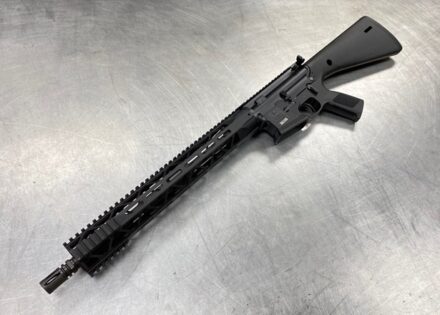
KP15 with 15 in. Delta-P MLOK Rail and Forward Assist Upper: 5.85 lbs, lighter with a shorter handguard selection. This configuration would normally retail for $899.95, but KE Arms is currently trying to reduce inventory to make way for new products. They’ll continue selling rifles in this configuration until they’re all gone.
BLUF: The KP15 is a superb and reliable lightweight rifle for an excellent price.
Upper
• Precision machined from 7075-T6 forgings to MilSpec standards.
• Available with a standard forward assist or slick side without forward assist.
• MilSpec Type III Hard Anodized
• Made to fit all M16/M4 rifles and carbines.
• Features a USGI Type T marked top, making it easy to remount your tactical accessories.
• Weight: 0.5lbs.
Lower
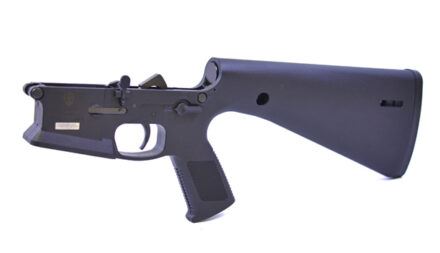
• KP15 Complete MilSpec FCG Polymer Receiver
• Flared magwell to make reloads under stress easier to perform.
• A1 Length 13 in. Length of Pull (LOP) Buttstock to fit a wide range of shooters
• MLOK Slots at the rear of stock for sling attach points or strap
• Holes at the front of the stock for QD socket inserts for more sling attachment options
• Improved grip for comfortable use
• ‘Winter’ Trigger Guard
• Standard or Trapdoor buttplate available
Barrel
• 16 in. 5.56mm stress-relieved 41V40 steel barrel
• 1:9 button-rifled
• Chrome-lined bore and chamber, and phosphate finish
• 750″ gas block with drilled gas port
• 1/2 x 28 muzzle thread
• Assembled with M4 feed ramp extension
• Designed for carbine length gas system
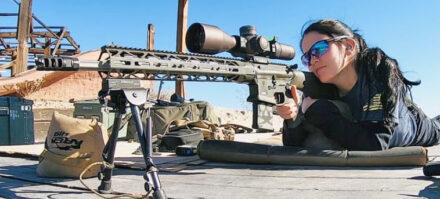
Danyela D’Angelo behind her KP15.
Charging Handle
• Billet machined out of 7075 T-6 aluminum
• Mil 8625 Type III, Class 2 hard anodized
• Includes a heavier spring for increased durability and longevity
• Large latch for easy manipulation in times of stress.
Bolt Carrier Group Options
• M16 Black Nitride
• M16 Chrome Standard
• M16 Chrome with HMB Bolt
• Slick M16 Chrome with HMB Bolt
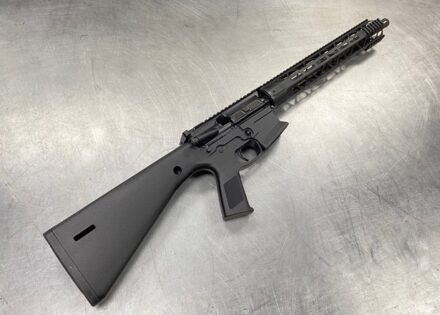
The KP15 does not come with magazines; KE Arms recommends Gen 3 PMAGs.
Rail System Options
• 12.5 in. Delta-P MLOK
• 12.5 in. Delta-R MLOK
• 15 in. Delta-R MLOK
Learn more about the KP15 rifle and other platforms online at KEarms.com.
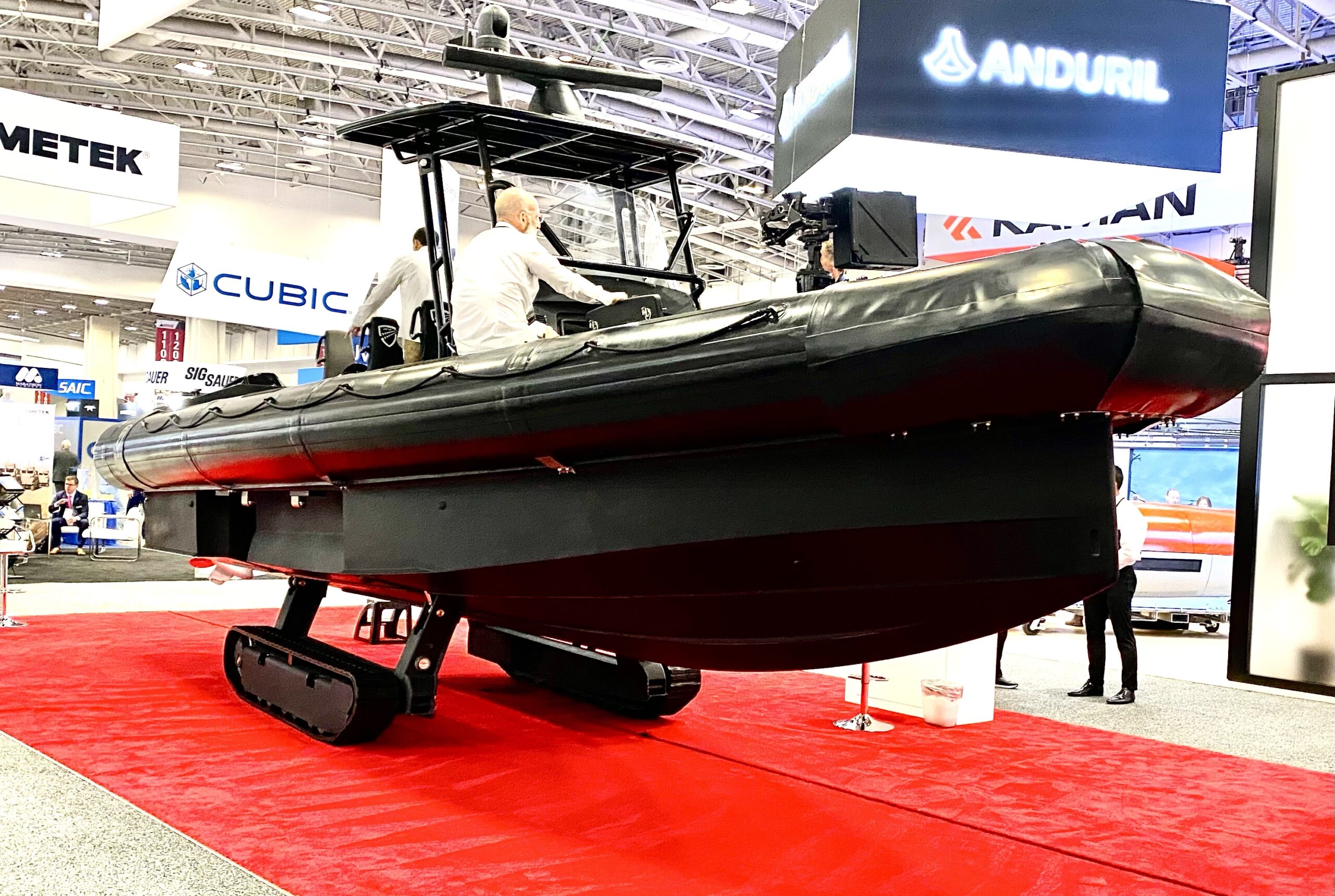
The IG-Interceptor RIB Extreme Purpose Intereiction Craft is an interesting mobility solution that combines a rigid inflatable boat with tracked “landing gear” to self-deploy the boat into the water.
Featuring a carbon fiber hull it can reach surface speeds of 50 knots once in the water.
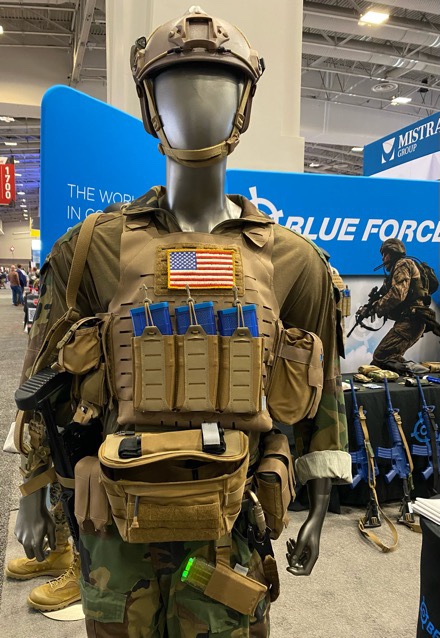
Designed to be worn as a stand-alone waist bag or in conjunction with a plate carrier dangler-style, the Two-4 Waist Bag integrates an adjustable strap and a removable plate carrier attachment placard seen below.
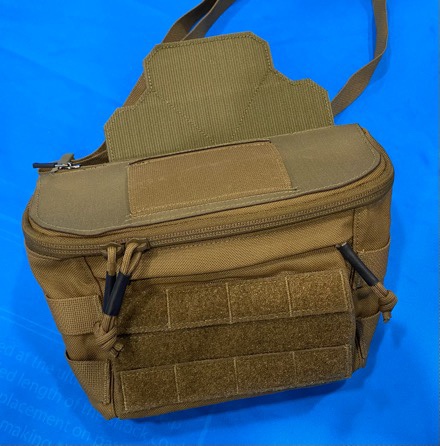
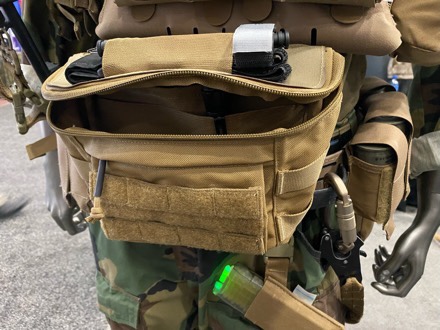
It has a water resistant zippered opening with the lid integrating ten-speed tourniquet storage. Inside there are slots for organization while externally there are PALS webbing. At the front the PALS is made from loop. At the rear, there is a slot which will accept sideways mounted mini tripods.
FN America has unveiled their new Mid Range Gas Gun. While it definitely shares DNA with the SCAR, it’s enough of a new gun to warrant a new name.
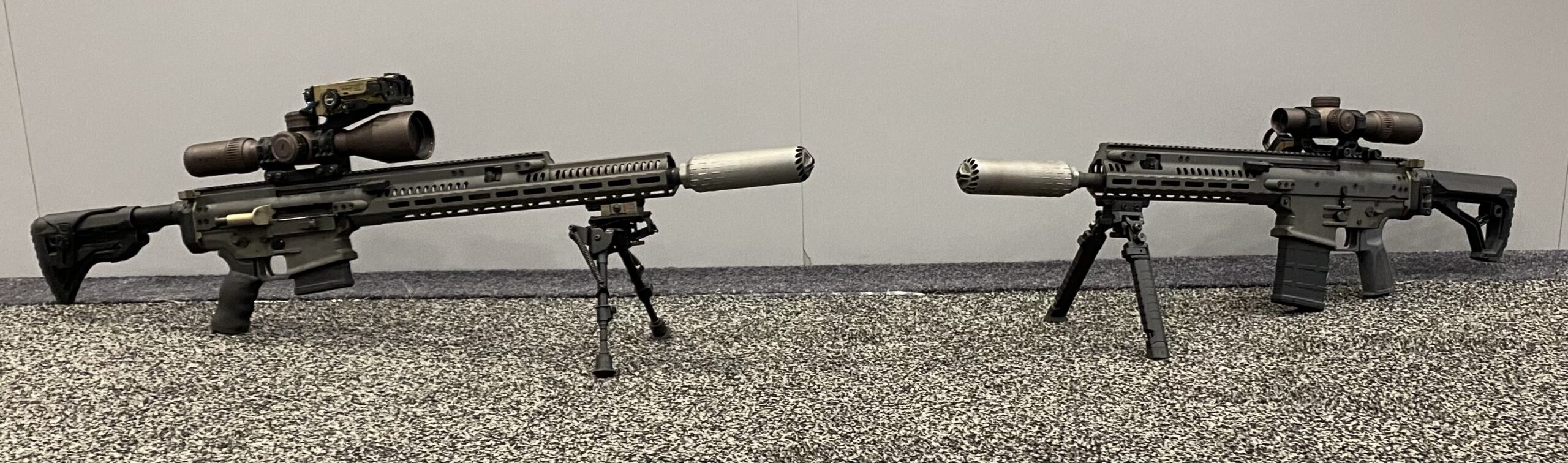
Offered in two variants MRGG-A for Assault and MRGG-S for Sniper Support. The most glaring differences between the two variants are a 14.5″ barrel for MRGG-A and 20″ MRGG-S as well as different pistol grips and buttstock for the two versions. However, the side-folding adapter fits with an M4 standard buttstock so the shooter can configure the stock as he sees fit.
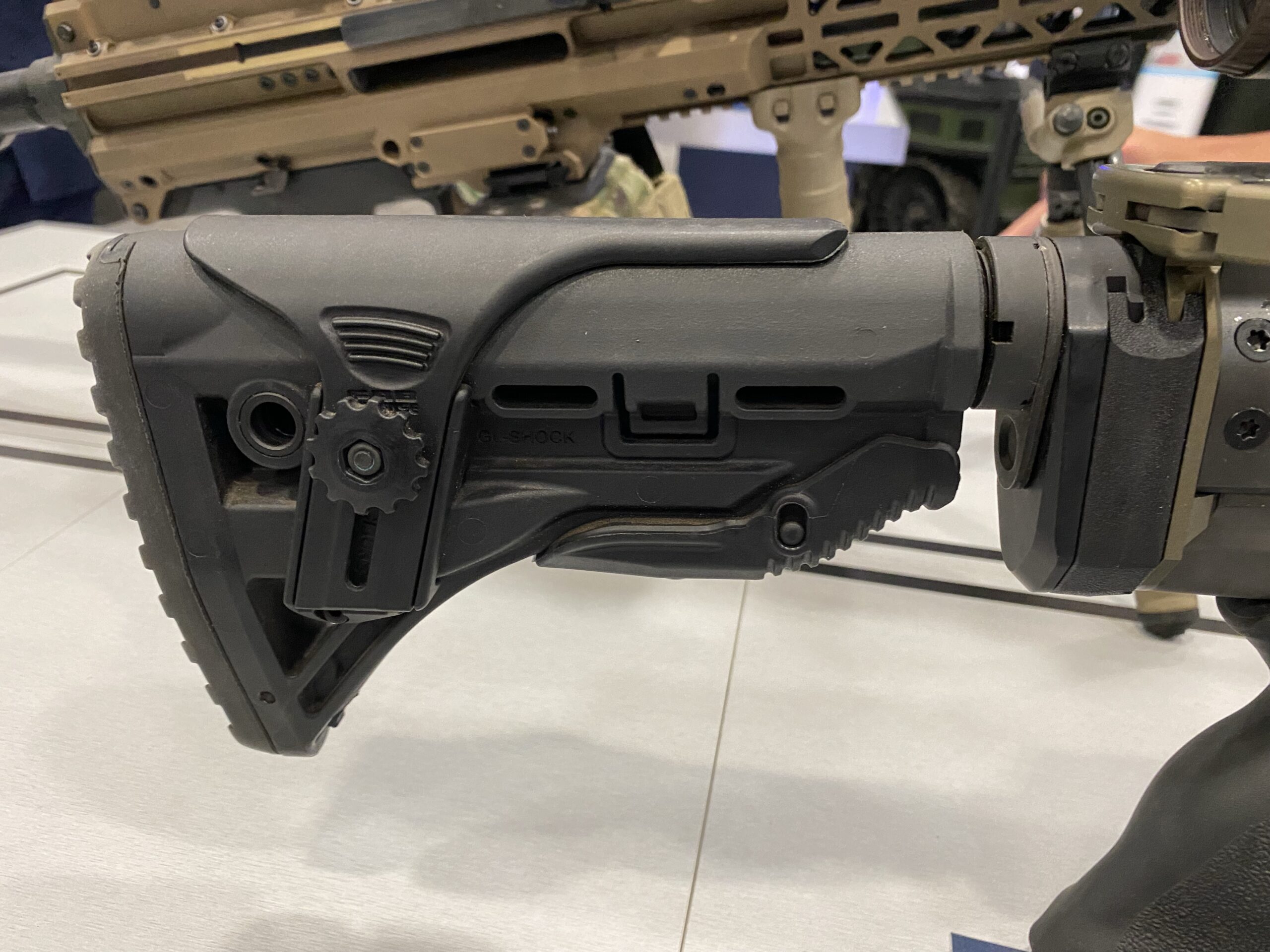
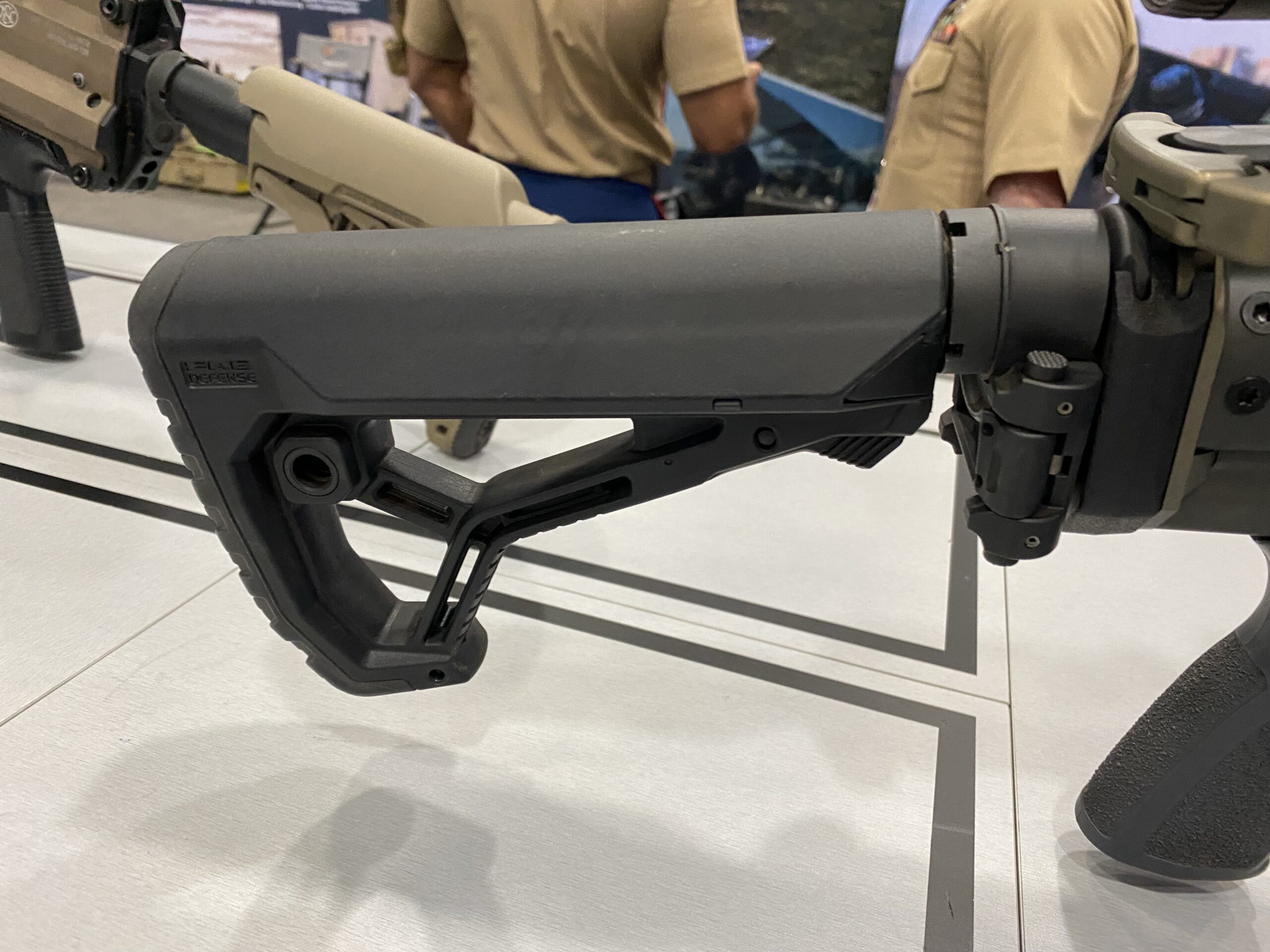
Controls are ambidextrous. Additionally, only MRGG-A offers full-auto fire. Otherwise, it’s semi and safe selectors for both, but it is more ergonomic than on the SCAR. There’s also a two-stage trigger which was designed in house.
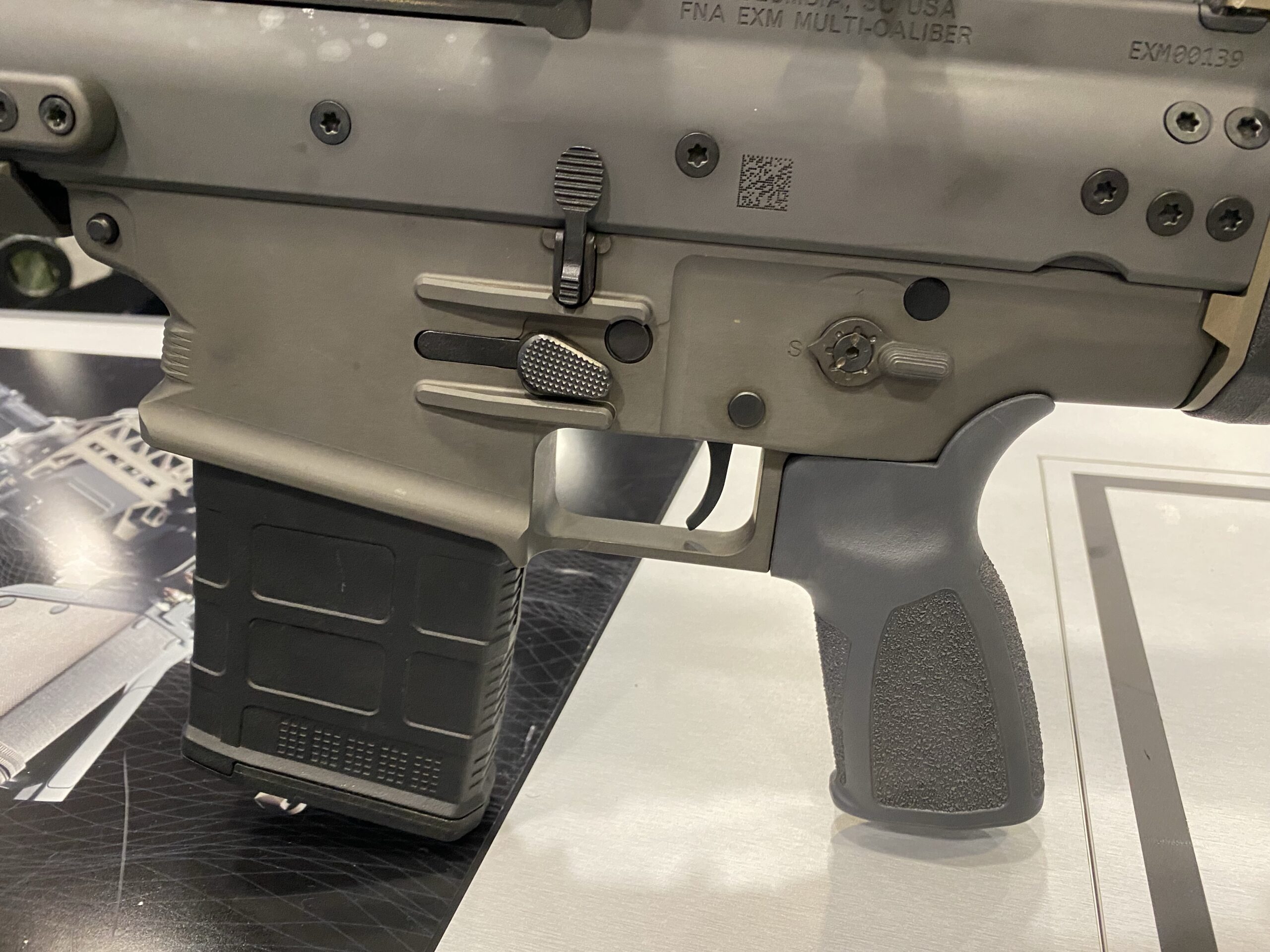
A very interesting feature is that there are non-reciprocating side charging at both left and right as well as a rear AR-style charging handle. These are all user configurable.
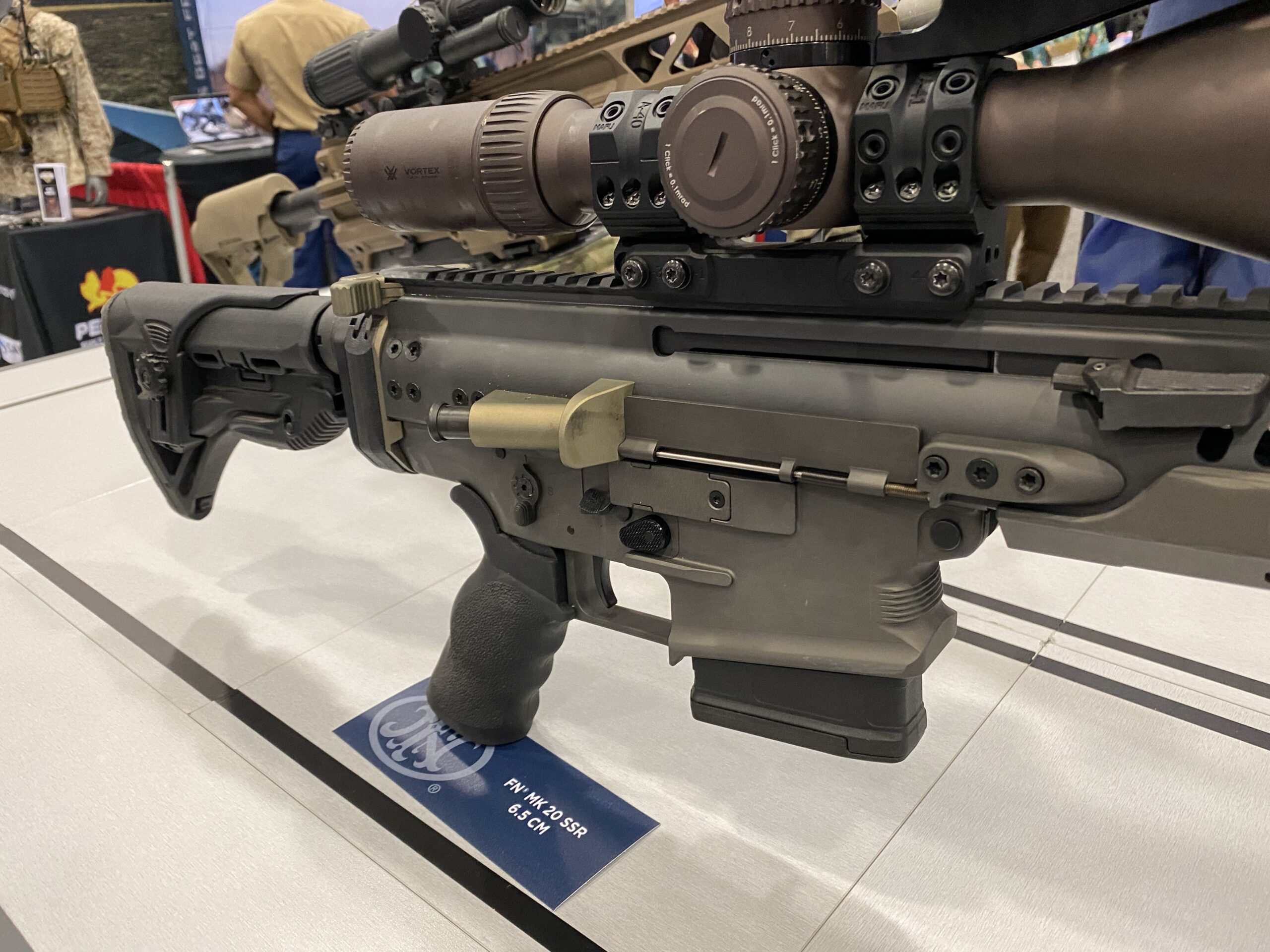
They have also introduced a combination forward assist and brass deflector as well as ejection port cover.
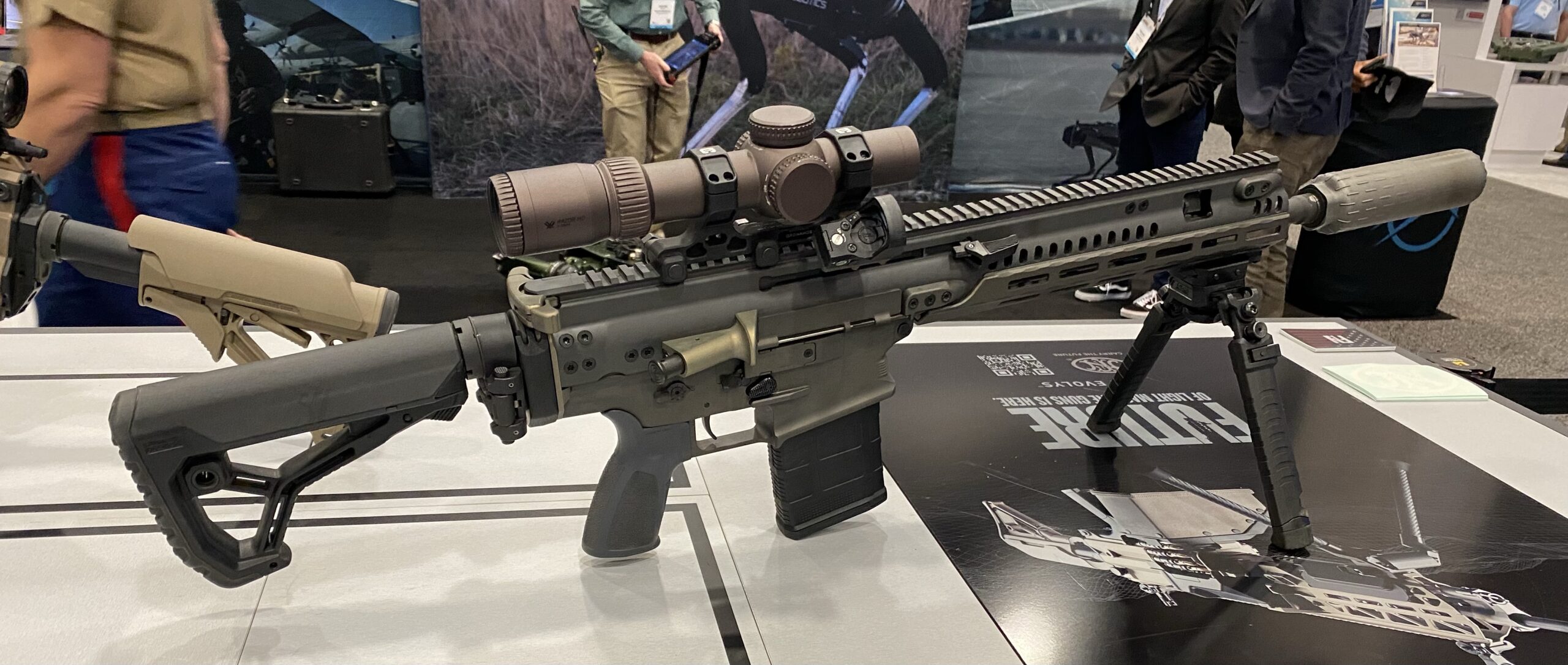
The two rifles are offered with swappable cold hammer forged barrels in 6.5 Creedmoor and 7.62 NATO. MRGG accepts SR25 pattern magazines.
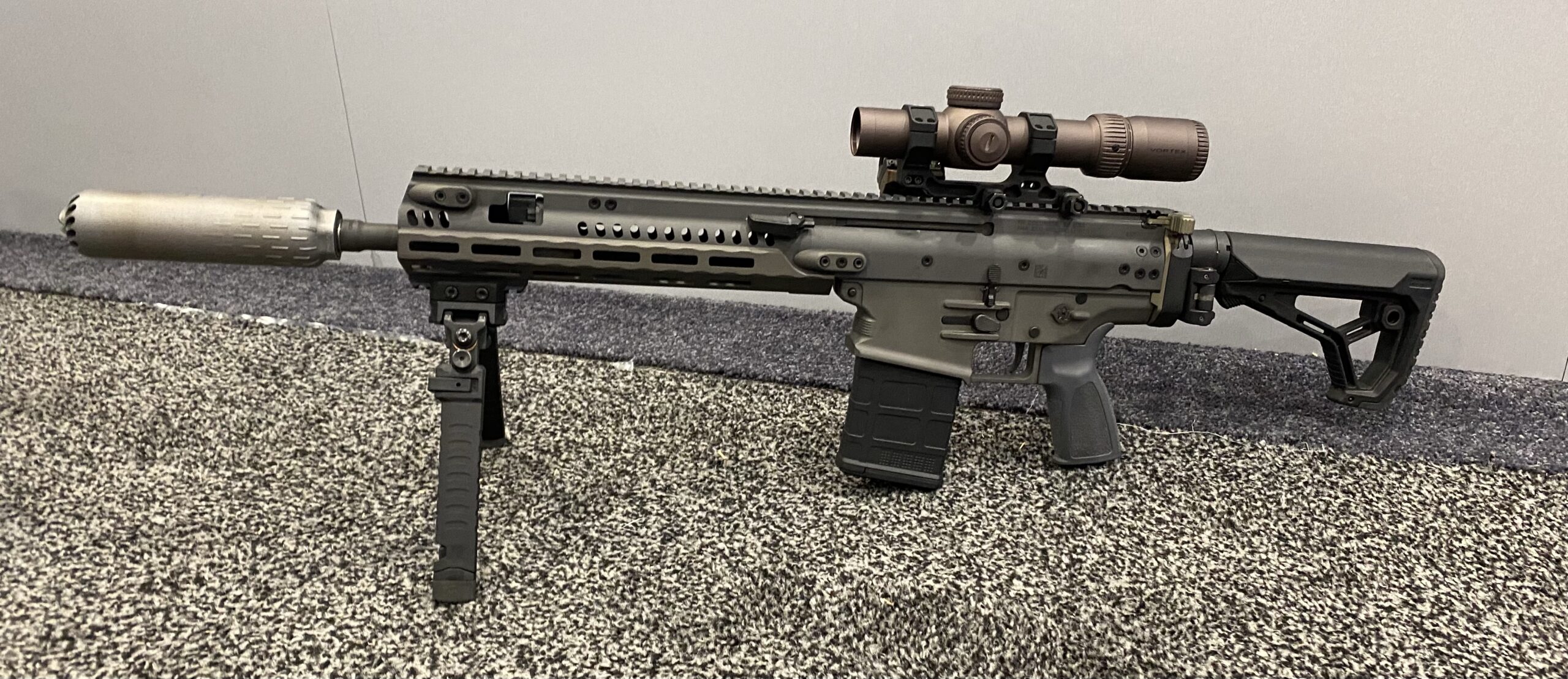
The optic package on this MRGG-A is a Gen 3 Vortex Razor 1-10×24 in a Badger C1 mount and Leupold Delta Point Pro back up sight.
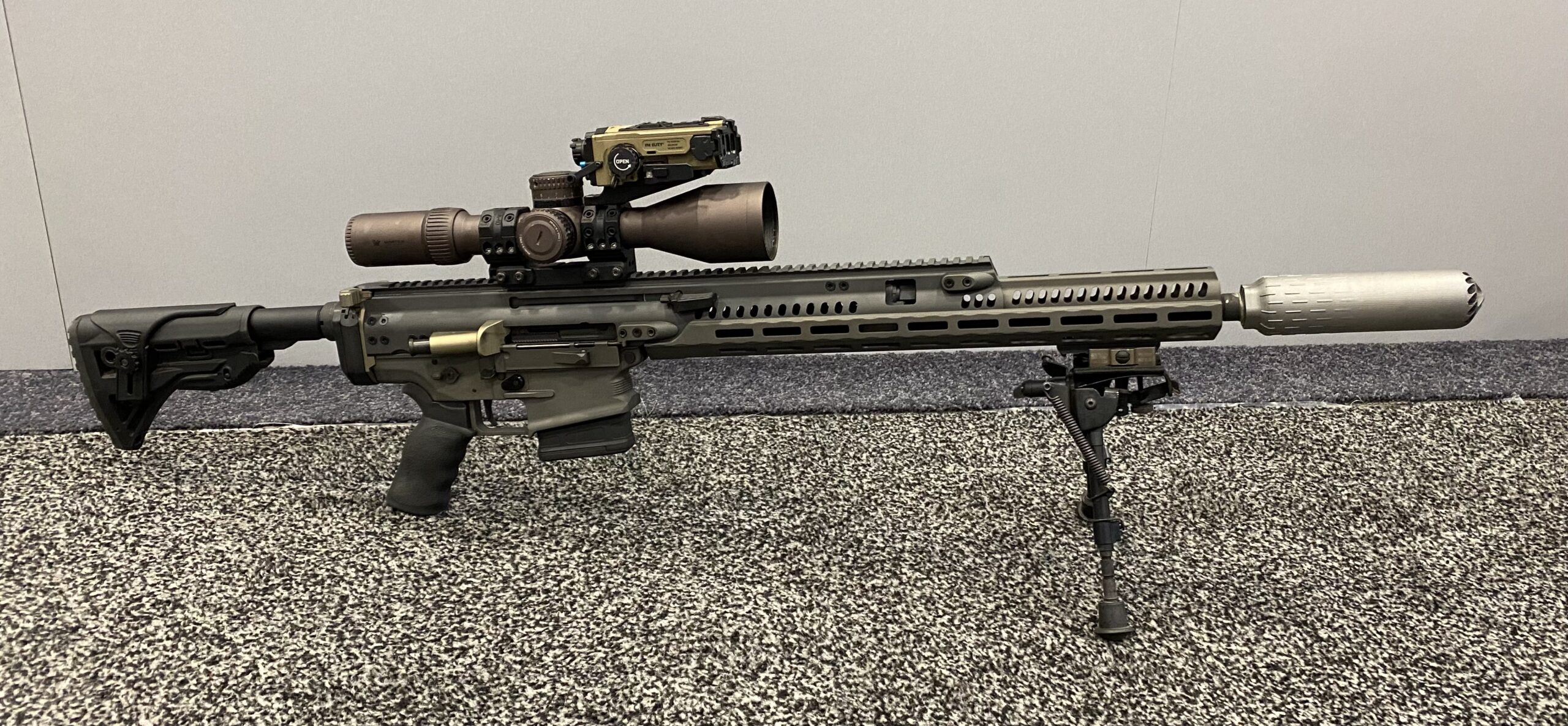
The optic on this MRGG-S is a Gen 2 Vortex Razor 4-27×50 in a Spuhr 4002 mount with FN ELITY.
To mount enablers, there’s a a full length Mil Std 1913 rail along the top to a point where the handguard steps down to offer an MLOK compatible perch for a laser pointer below the line of sight of the optic. There are MLOK slots at 3-6-9 O’clock as well as at lower 45 degrees.
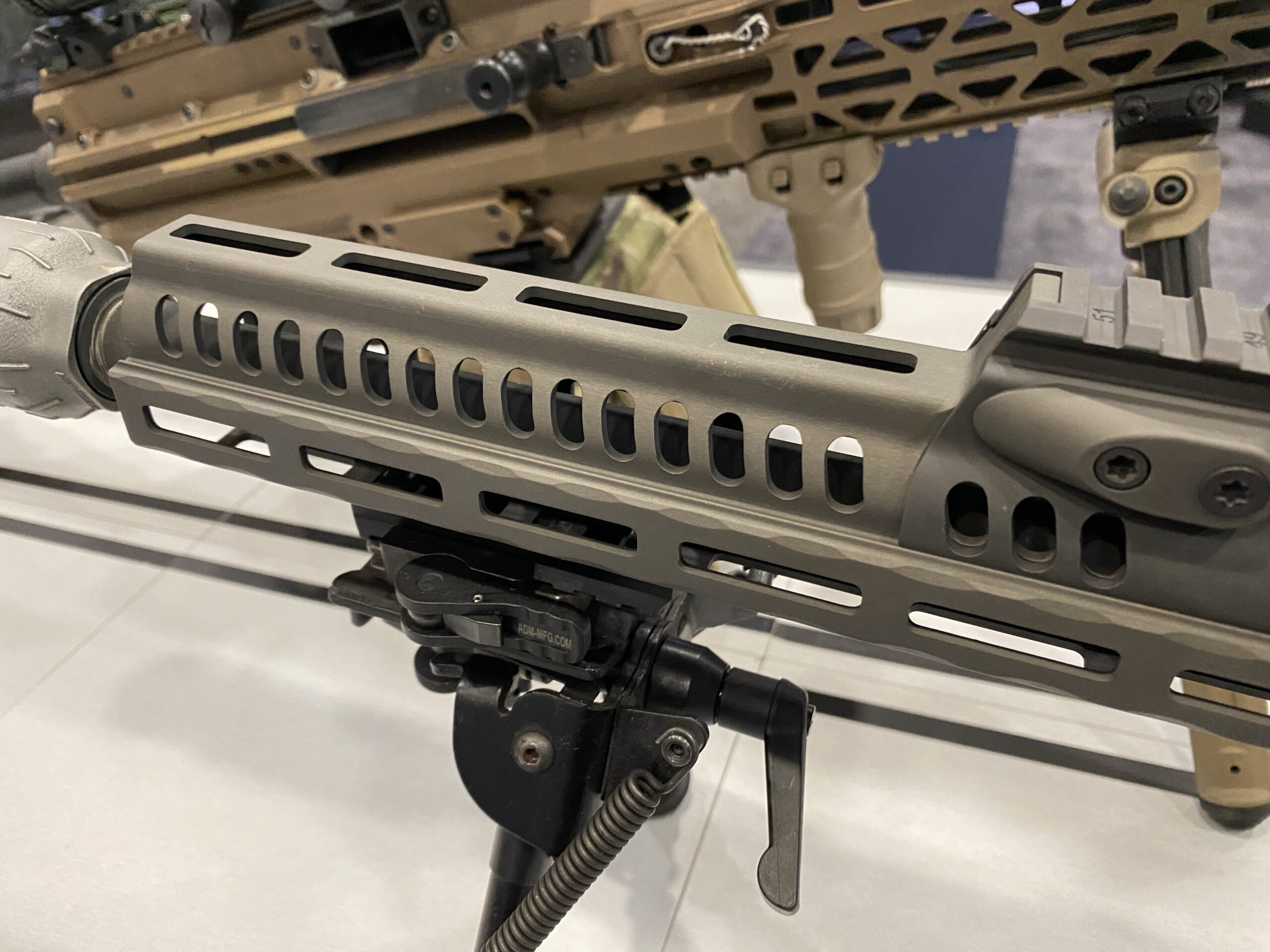
There is an adjustable gas block with suppressed and unsuppressed settings while the Gas Regulator is now buried in the receiver assembly and redesigned to reduce flash while shooting under NODS.
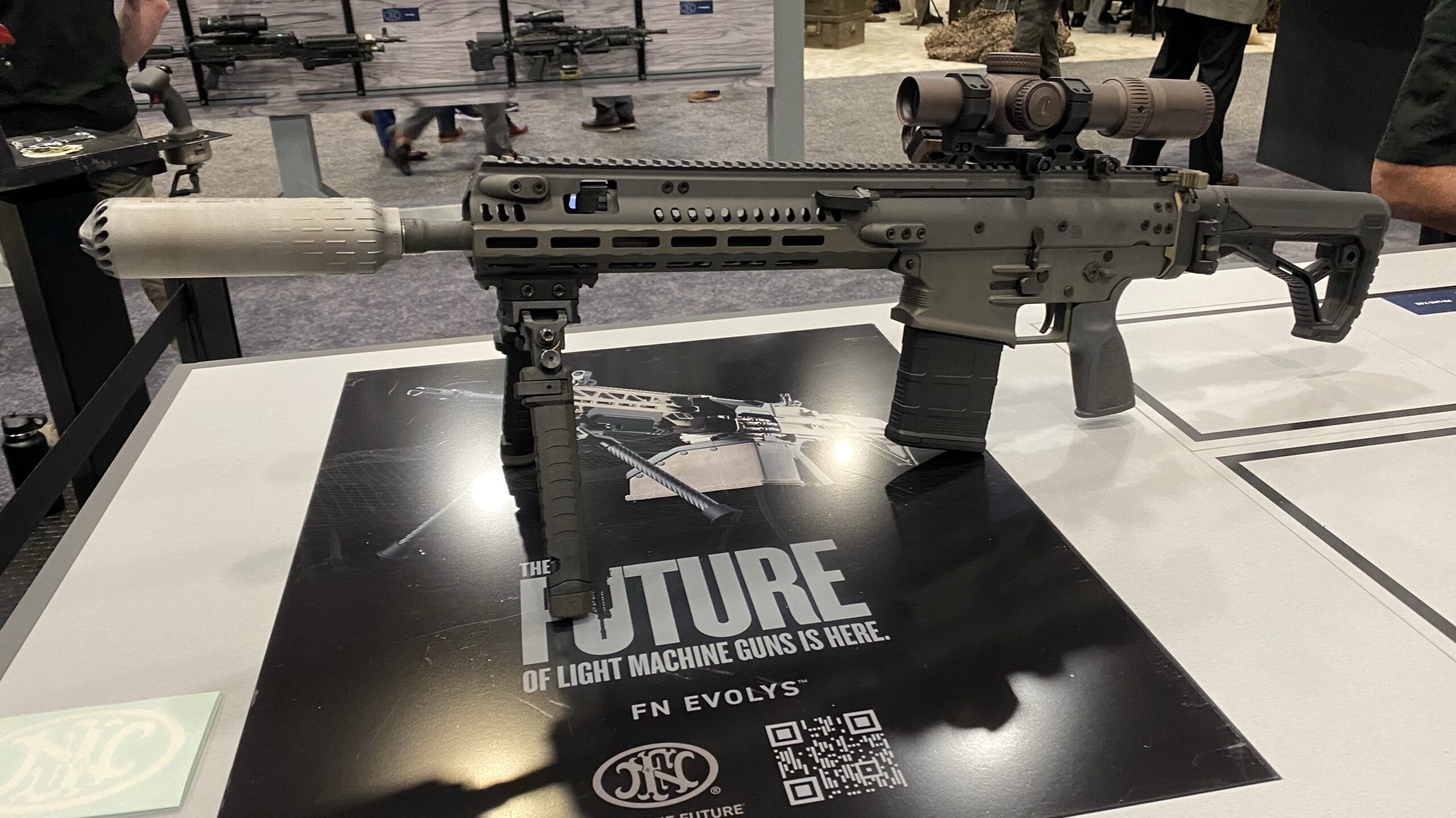
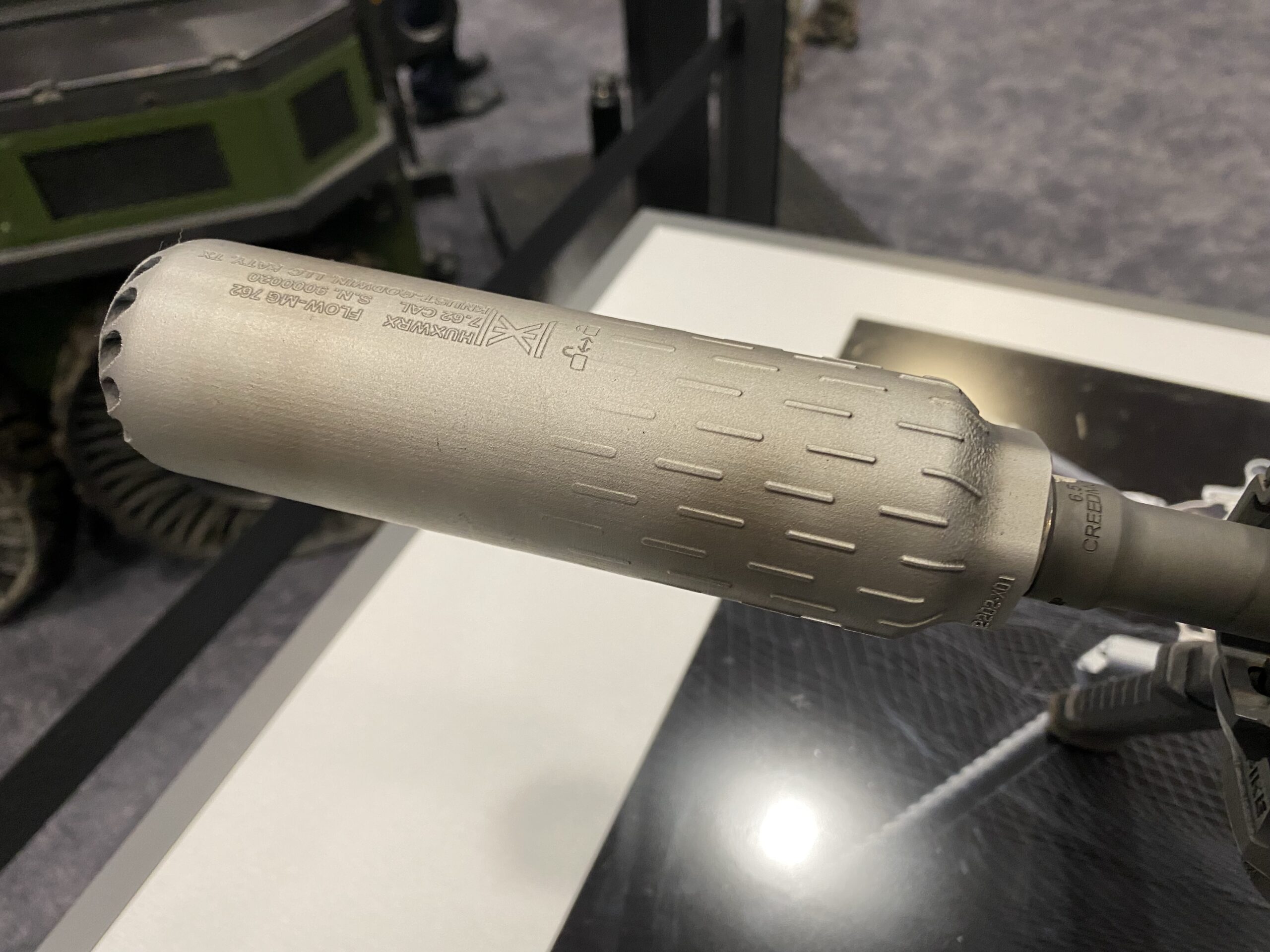
Finally, both MRGG models are fitted with HUXWRX Safety Co suppressors.
Look for more information during next week’s SOFIC as well as a follow-on range report.
Gentex is displaying their candidate for the Marine Corps’ Integrated Helmet System program.
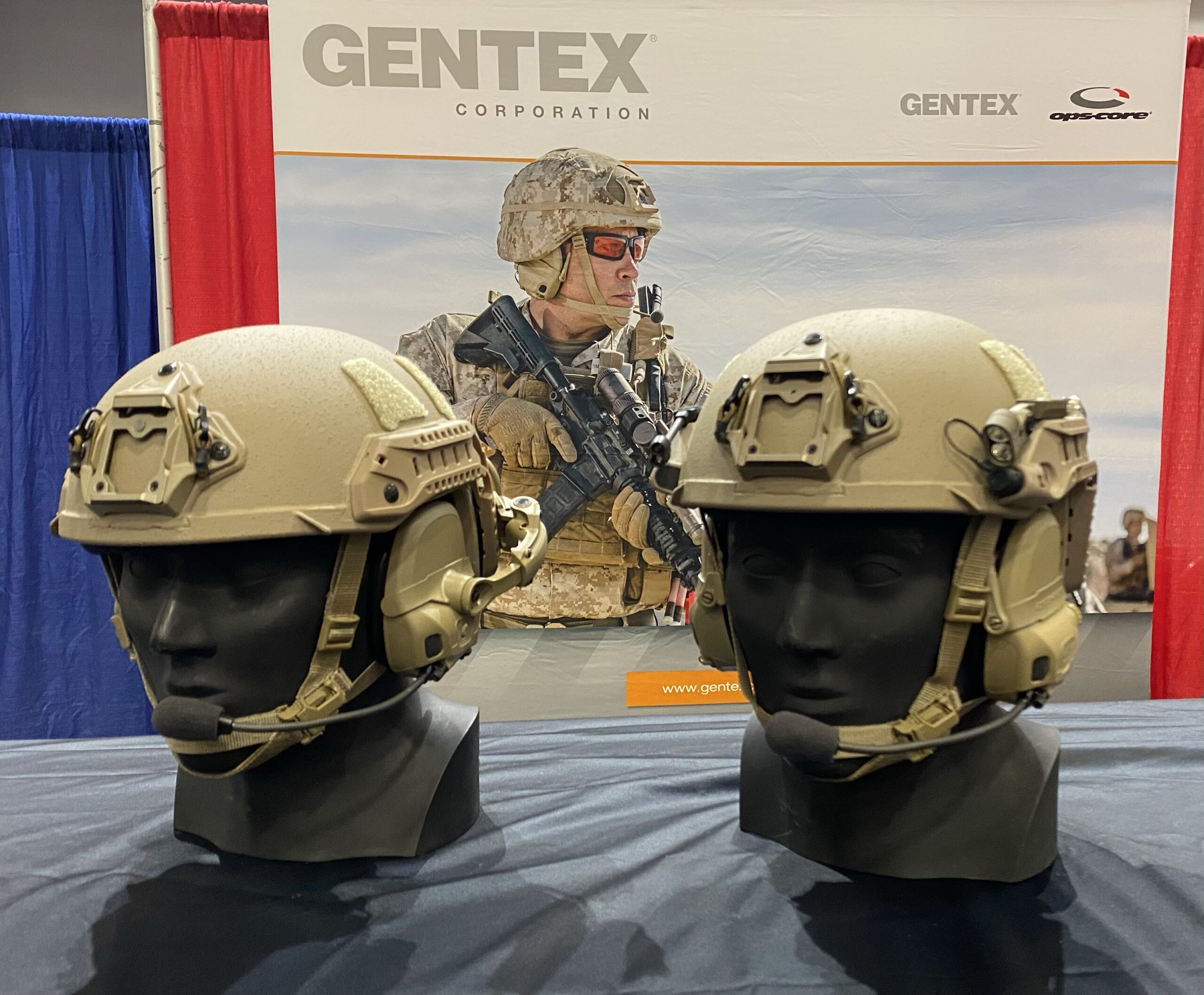
A true system, they offer a scalable approach with a high cut ECH level protection helmet but at 12% lighter than the current helmet. To this bolt-less shell is added ARC rails and modular bungee shroud. It will also accommodate AMP headset with rail arms.
This baseline configuration can be further upgraded to the RAILINK, a powered system we’ll discuss in-depth during next week’s SOFIC.
Currently under evaluation by the USMC.
Getting ready to kick off the first Modern Day Marine Expo held at the Washington DC Convention Center.
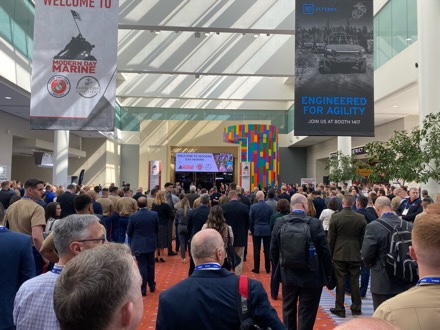
The Marine Corps’ goal is to make sure they don’t get into any fair fights and defeat the enemy before he knows what’s going on. I can’t wait to see what industry is offering to help with that goal.
During last weekend’s SIG Freedom Fest in Phoenix I had the opportunity to ask SIG SAUER CEO Ron Cohen five questions about the US Army’s Next Generation Squad Weapons Program.
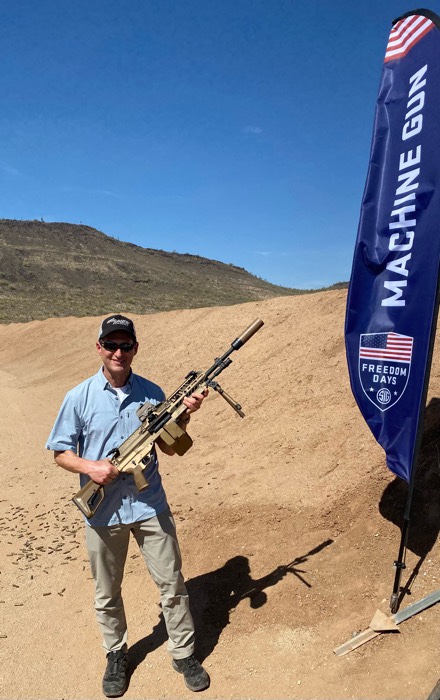
The Army recently awarded SIG a 10-year IDIQ contract worth up to $4.5 billion for 6.8mm Common Cartridge Architecture Ammunition and two weapons, the XM4 Rifle and XM250 Automatic Rifle to replace the 5.56 NATO M4 Carbine and M249 Squad Automatic Weapons in its close combat formations consisting of infantry, armor and engineers.
SSD: The biggest question on everyone’s lips is performance. The Army hasn’t released any specifics on what the XM5 and XM250 are capable of and SIG has remained silent as well.
RC: This is Day 16 of this program award for us. As far as velocity, range and energy delivered on target, that’s the Army’s story to tell when they are ready. SIG built a system based on what the Army wanted. It works.
SSD: Can I follow up on that a bit? There is a lot of rumor out there that your 6.8×51 high pressure hybrid round is eating barrels. What kind of barrel life are you getting out of the weapons?
RC: Barrel life has been a major challenge since day one. We fought with barrel and component life three years ago. Now, I’m not nervous about barrel life. The M4’s barrel life is set at 6,000 rounds. We started at meeting the Army threshold for NGSW of 5,000 rounds and now we’re getting in excess of 10,000 rounds thanks to metallurgy and proprietary coatings.
A lot of people are fixated on barrels, but it’s not just barrels that are stressed with these high pressure rounds. What about the bolt? The carrier? The extractor?
Over the past two-and-a-half years we’ve used analysis of our guns and ammunition and integrated new materials and coatings to exceed what the Army spec’d in NGSW.
SSD:Why do you think the Army selected SIG?
RC: Our biggest strength is that both the ammo and guns are made by the same company.
None of this would have been possible without winning Modular Handgun System and the Mk 248 Mod 1 sniper ammunition contract. We learned a lot and were able to make infrastructure and personnel investments.
I believe the Army also sees our team and knows that we will listen to what they want and give it to them. We don’t overprice and we don’t pull any “gotcha’s”.
SSD: Now that you’ve won, do you feel that SIG has everything it needs to fulfill the contract?
RC: My job everyday is to ask, “what do you need?” It’s also my job to give it to them when they ask.
We are a defense company. Back in 2014 I decided we needed to become a company that combined weapons and suppressors with ammunition and optics. We’ve since created a holistic system under one brand.
We won’t have any problem scaling along with the pace of the program. We’ve already done it once with MHS.
SSD:What was the biggest challenge during development?
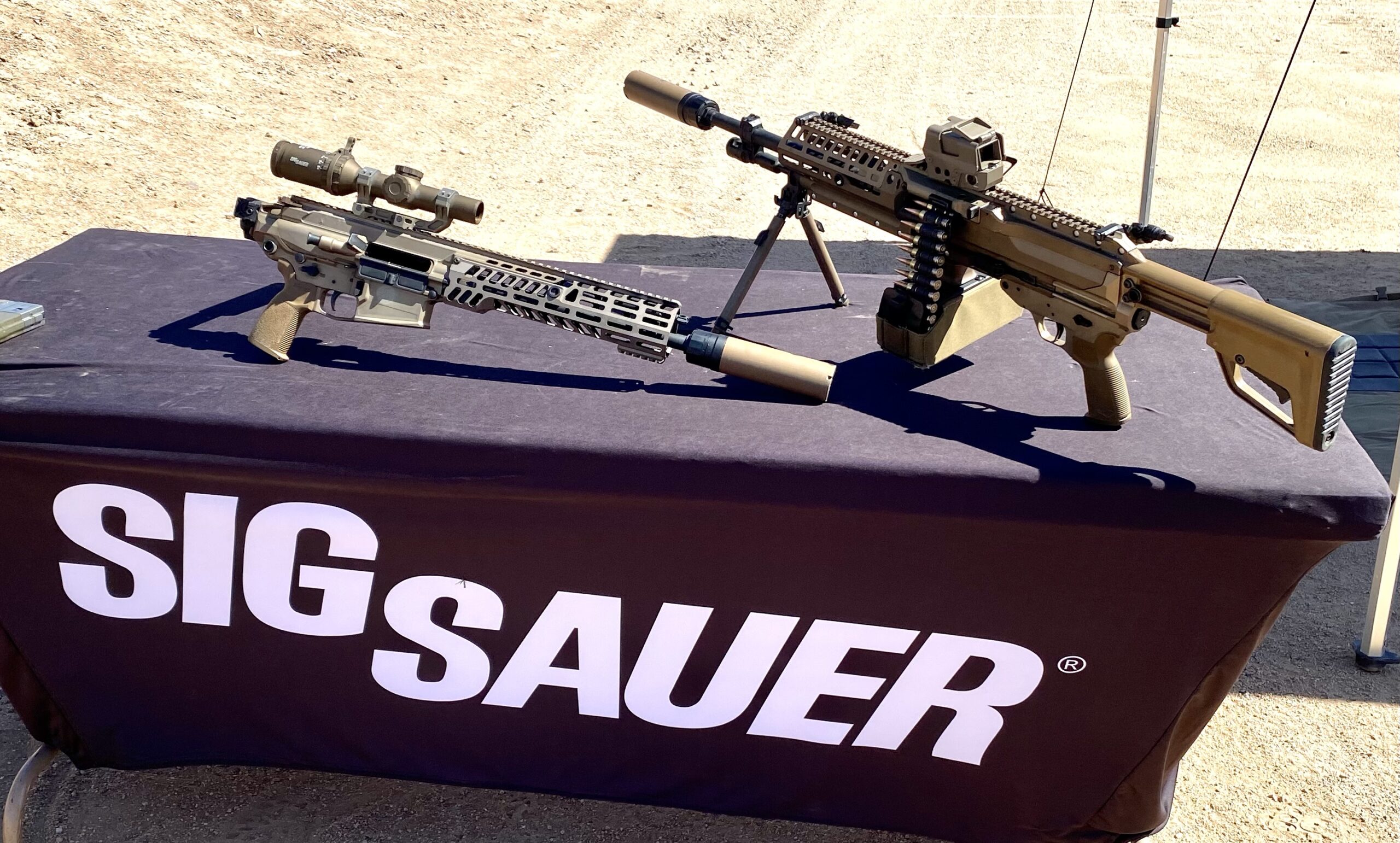
RC: It wasn’t just a single challenge, there were multiple hurdles to overcome. When I first looked at what the Army was asking for, I thought they weren’t serious. It was science fiction. They wanted to decrease weight yet increase range and energy. I thought there was no way, but we took a look at it.
We had an MCX variant we had created for the Army’s Compact Semi Automatic Sniper System program. That was a starting point.
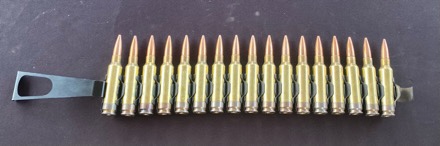
We picked up the phone to our ammunition team and Jason Imhoff had been working on a high pressure round for long range shooting which became our hybrid case technology. If we hadn’t had both weapons and ammunition in the same company this never would have happened. When the gun guys heard the hybrid case produced upwards of 80,000 psi, they said “no way!” We needed extreme cooperation. The weapons side of things and the ammunition developers had to work collaboratively and trust one another.
The brass case in common use today dates from 1840. It’s cheap, plentiful, ductile and deals well with both cold and heat. But you pay for that in strength. There are limits to what it can do. Our hybrid case is stronger and lighter.
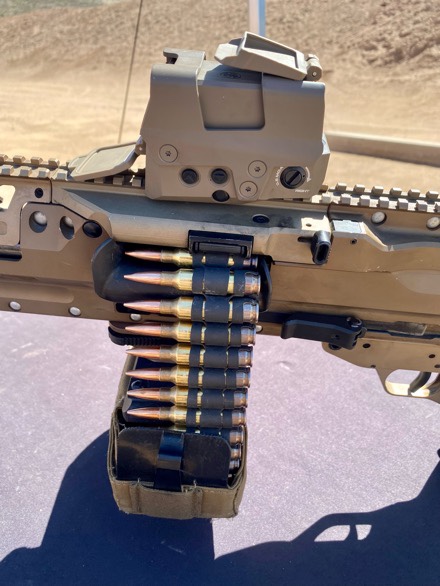
I had already set the defense team to work on a belt-fed machine gun so we brought that into the project. I was in the Israeli Defense Force and carried a MAG58. My father had carried a MAG58 in the IDF and my son does so as well. I made a vow that my grandchildren wouldn’t have to carry that same gun. I knew that designing a machine gun was going to take awhile but that it was worth the investment in the company’s future. Initially we worked on .338 Norma Mag, but the pace quickened due to this opportunity.
On top of all that I have a great bunch of former NonCommissioned Officers on the Defense team. Many of them come from the tip of the spear. They not only bring decades of experience but they want to give the end-user what they want and need. They listen and they also translate the Army’s needs into something our engineers understand. They don’t mind jumping and pitching a hand. We’ll have Vice Presidents loading magazines for a demonstration. They are our secret sauce.
Have I told you about our engineers? SIG has has made a massive investment in engineering and has more engineers than any other firearms manufacturer. SIG has over 2800 employees and about one in nine is an engineer, spread across dedicated engineering and product development as well as the manufacturing floor. This has allowed us to solidify our process.
We’ve also increased our investment in robotics, even while growing our number of employees. That’s because we use robotics to ensure consistency and quality rather than a replacement for human labor. That has been crucial to us during the MHS contract.
So we’ve got all these people and we empower them to do what we pay them to do and we’ve achieved a great result from it.
SSD:What does winning NGSW mean for the future of SIG?
RC: Opportunity. We are just starting out on seeing where our hybrid case will take us and what we can do with our weapons.
Just like MHS we expect the Army to accelerate production and fielding and we’ll scale with it.
I believe that within the next five years the Army will rethink weapon length and go even shorter. It’s been the trend for the past few decades and we can still give them increased range and penetration in even shorter packages than now.
At it’s heart NGSW is an ammunition program. I keep coming back to it, but the Army wants increased range and penetration. We’re giving them that and can do even more. It comes down to our case technology. We can take any caliber and make it “super” with any barrel length adding up to 350 fps in velocity. We’re just starting the conversation on what this means.
I’d also like to mention that this is the first time in history that an Army has wanted to suppress 100% of its guns. They are not just concerned about flash and sound, but also particulate contamination of the shooter. We’ve spent three years optimizing our suppressors to decrease the amount of particulate at the shooter yet still provide sound and visual suppression.
A challenge is that USSOCOM and the Army measure toxic particulates differently. For example, SOCOM’s primary measurement is Carbon Monoxide while the Army is looking at HCN and other toxic fumes. However, I can tell you that an M4 unsuppressed is 100 parts per million at the shooter and a Mk18 produces 395 ppm. Our Suppressed Upper Receiver Group final configuration which we are currently delivering to SOCOM measures 70 ppm.
For NGSW, the Army’s threshold requirement is 20 ppm and we are measuring 6.1 ppm for the XM5 and 13.1 ppm for the XM250.
We continue to work on it. Suppressor customers will benefit from this work as well. Safety of the shooter from toxic particulates is currently our primary concern in suppressor development.
SSD: Thanks for your time and allowing me to sneak an extra question in there.
RC: My pleasure. I love talking about SIG.