

FULDA, GERMANY (18.12.2025)
In a recent interview, Daniel von Chamier, Group Director of Sales at Mehler Systems, reflects on market dynamics, growth priorities, and the importance of execution as demand across global defence and security markets continues to rise.
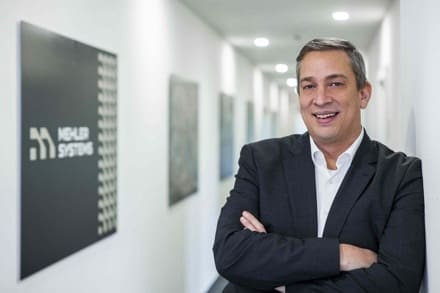
Q: The global defence and security sector is experiencing a surge in investment and modernisation. How is Mehler Systems positioning itself to respond to this growing demand?
A: What you’re seeing now is the result of decisions we started making quite a while ago. As requirements evolved and projects became larger and more complex, it became clear that relying on existing structures alone would not be sufficient.
We are continuing to expand production, and at the same time we are further strengthening the sales organisation. A key part of this is our increased focus on international markets. For a long time, we were very strong in German-speaking regions. That remains important, but it is no longer enough on its own.
Today, we work with customers who have very different ways of procuring, very different expectations, and very different operational realities. That’s why building international teams remains a priority. People who understand the language, the culture, and how things really work on the ground make a huge difference, especially as demand continues to grow.
Q: From your perspective, what are the main factors behind Mehler Systems’ strong market performance in recent years?
A: It’s never just one factor. What has worked well for us is that several things came together at the right time and were executed consistently.
One key element is our in-house capability. We can develop, test, and validate solutions internally across different product areas. This gives us speed and flexibility when customer requirements change or when new operational needs emerge.
Experience also plays a big role. We’ve been doing this for more than 40 years, so we understand materials, suppliers, and production realities very well. We know where risks are and how to manage them. On top of that, customers increasingly look for complete systems rather than individual products. Being able to align protection, clothing, and equipment within one group gives us a clear advantage.
Q: Which markets are currently driving growth, and why?
A: Right now, Europe and the Asia-Pacific region stand out very clearly. What’s driving this is a change in mindset. For many years, defence planning was focused on expeditionary missions. That has shifted.
There’s a renewed focus on territorial defence and readiness. That naturally leads to more investment and more procurement. And it’s not just about buying more of the same. Customers are looking at complete systems, how things work together, how fast they can be delivered, and how sustainable the supply chain is.
From what I see, this isn’t a short-term reaction. It’s a longer-term adjustment to a changed security environment.
Q: Trust is critical in this industry. How do you build and maintain trust with customers and end users?
A: Trust is built through performance, not through talking. That means being transparent about what works, what doesn’t, and where the limits are. We test a lot, and we don’t hide the results. Durability, comfort, integration, all of that matters in real use.
We don’t treat testing as a sales argument. We treat it as responsibility. At the end of the day, someone is wearing this system in a situation where things can go very wrong very quickly. If you keep that in mind, a lot of decisions become very clear.
The same applies to partnerships. We work long-term. We look for partners who think the same way and who understand that this is not about quick wins, but about reliability over years.
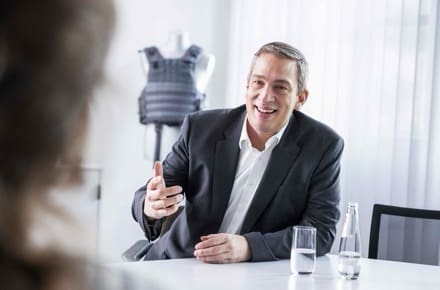
Q: Mehler Systems works with a number of long-term defence and security partners across different regions. What defines these relationships?
A: What really defines our long-term partnerships is continuity. These relationships are built over many years, often across several generations of equipment and changing operational requirements. It’s not about delivering one solution and moving on, but about staying relevant as needs evolve.
Working with the same partners over a long period forces you to adapt. Requirements change, threats change, and operational concepts change. Being a trusted partner means listening carefully, adjusting solutions, and sometimes rethinking established approaches rather than simply repeating what worked in the past.
Another key element is discretion. In this industry, not everything that creates value can or should be communicated publicly. Respecting that is part of building trust. The real measure of these partnerships is not visibility, but longevity and consistency.
For Mehler Systems, these long-term relationships are essential. They create stability, provide honest feedback, and help us develop integrated systems that are grounded in real operational experience rather than assumptions.
Q: How do you manage growth without neglecting long-standing customers?
A: Honestly, that’s one of the hardest parts. We don’t want to tell long-term customers that they have to wait because something new and exciting came up somewhere else. At the same time, we don’t want to turn away new customers either.
The only way to deal with that is to grow properly. That means more people in sales, more capacity in production, and better coordination internally. We’ve invested a lot in all three areas.
It’s still a balancing act, and there are moments where demand is right at the edge of what’s comfortable. But with the expansions we’ve made, we still have room. That’s important, because reliability disappears very quickly once you start overstretching.
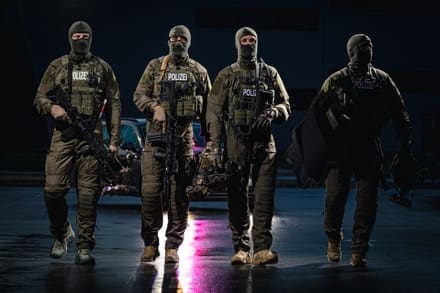
Q: Mehler Systems works closely with elite European special operations units such as KSK. How have these partnerships evolved over time, and how do they influence your work today?
A: They keep us honest. When you work with people who actually use the equipment in real operations, there’s no room for theory or marketing ideas that sound good on paper. That has shaped these partnerships from the very beginning.
Over time, the relationship naturally moved beyond a classic customer–supplier setup. We don’t just deliver products and wait for the next order. We stay in close contact, talk openly about what works, what doesn’t, and what needs to change. Having former operators within the organisation helps a lot here, because there’s a shared understanding of operational reality and no need to translate everything into theory.
The feedback we get is very practical. It covers protection levels, mobility, comfort, temperature management, weight, and how systems behave when someone is moving constantly, tired, and under pressure. That feedback directly influences how we develop ballistic solutions, tactical clothing, and equipment, and how all of it works together as a system.
Q: Large-scale programmes such as MOBAST have received significant visibility in recent years. What impact has this had on Mehler Systems’ position in the market?
A: One of the most important aspects is that this programme was delivered fully on time, which is far from common in large defence projects.
Successfully executing a programme of this scale demonstrates that we are capable of handling complex, high-volume requirements while maintaining quality and delivery discipline. It shows that we can manage both large framework programmes and smaller, more specialised projects at the same time.
It also proved something internally. That we can run a massive programme like that and still keep everything else going. Police contracts, other military customers, smaller projects, none of that stopped.
Q: What do projects of that scale say about Mehler Systems’ ability to adapt?
A: They show that we can adapt very quickly when we have to. For MOBAST, we had to ramp up production fast and even set up new facilities in a short time. That’s not easy, and it only works if people across the organisation are aligned.
What I’m particularly proud of is that quality didn’t suffer. Not a single system was rejected. That doesn’t happen by accident. It happens because people care about what they’re doing.
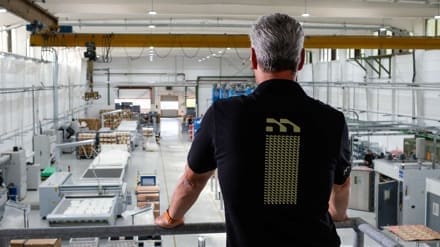
Q: The project in support of Ukraine has been one of the most complex undertakings in recent years. What can you share about Mehler Systems’ involvement and contributions?
A: What I can say is that this was a true group effort. We were asked to provide an integrated, head-to-toe solution, combining protection, clothing, and equipment.
Coordinating such a project under time pressure and across multiple entities is challenging, but it also shows what the group is capable of. Everything so far has been on track, and deliveries have started as planned.
Beyond the technical and logistical aspects, it’s a project where everyone involved understands the responsibility that comes with it.
Q: Looking ahead, what are your priorities for further strengthening Mehler Systems’ global presence?
A: Internationalisation remains the main priority. We want to be closer to customers in more regions, without losing what makes us reliable.
That includes strengthening sales channels, building the right partnerships, and selectively expanding know-how where it makes sense. Trade shows are part of that, because they allow direct conversations with users and decision-makers.
For me, growth only makes sense if it’s sustainable. Being able to say yes to a customer is easy. Being able to deliver on that yes is what really matters.
About Daniel von Chamier:
Daniel von Chamier is Group Director of Sales at Mehler Systems, overseeing global sales activities across the group and its brands, including Mehler Protection, Lindnerhof, and UF PRO. He brings extensive international leadership experience, having previously served as Managing Director and Group COO within the LHD Group, as well as Managing Director at the uvex group. His career spans senior sales and executive roles across the US, Europe, Africa, the Middle East, and the Asia-Pacific region. Earlier in his career, von Chamier held operational roles in emergency services and law enforcement, providing him with first-hand insight into the realities faced by end users.
For more information about Mehler Systems, please visit mehler-systems.com.