

ADELPHI, Md. — The U.S. Army’s Catalyst Pathfinder program began driving bottom-up innovation at the Joint Readiness Training Center at Fort Johnson, Louisiana in March and will continue with about one rotational training unit each month. The program is integrating Soldier-driven technologies into large-scale combat operations, supporting both rotational units and the Opposing Force.
Managed by the U.S. Army Combat Capabilities Development Command, known as DEVCOM, Army Research Laboratory, Catalyst Pathfinder fosters direct collaboration between Soldiers, researchers and industry to accelerate the development and deployment of cutting-edge solutions to meet evolving operational needs and support the Army’s continuous transformation.
JRTC is one of the Army’s four premier Combat Training Centers, providing the Army’s most rigorous and realistic training environments. Units conduct large-scale collective exercises that integrate combined arms, joint enablers and emerging capabilities.
The Catalyst Pathfinder program’s recent rotation at JRTC brought together elements from Fort Bragg’s 3rd Special Forces Group, the 82nd Airborne Division, and the 18th Airborne Corps, while also providing enduring support to the training center and its Opposing Force, which participates in every rotation.
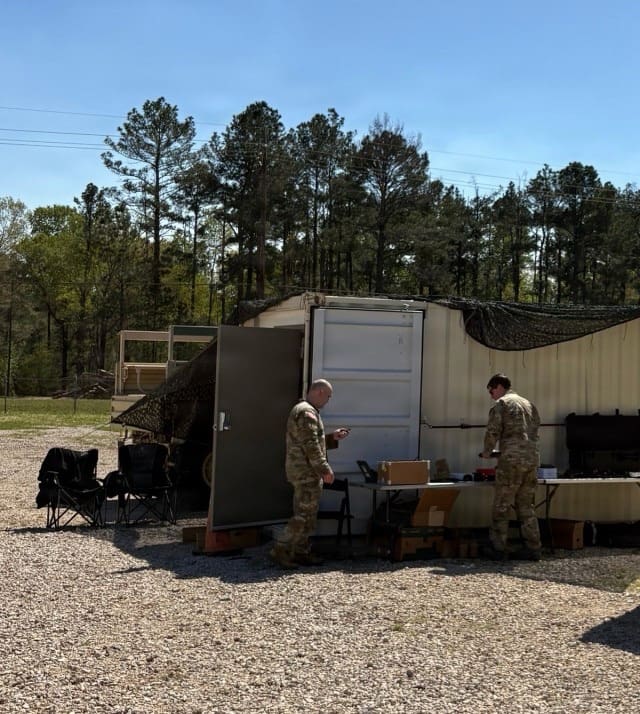
Going forward, the program will continue to expand its enduring support to JRTC itself, while also assisting the many units rotating through for large-scale training exercises.
“Soldiers are our greatest innovators,” said Dr. Arwen DeCostanza, Catalyst Pathfinder program manager at DEVCOM Army Research Laboratory. “This rotation at JRTC demonstrated the program’s commitment to enhancing readiness by embedding Soldier-driven innovation directly into the Army’s most demanding training environments.”
The program will establish a Design, Innovation, Research, and Technology (DIRT) lab at JRTC that will serve as a hub for Soldier-driven experimentation and rapid prototyping. The DIRT lab will empower Soldiers to shape the technologies they need to succeed, bridging the gap between academia, industry and operational units to collaboratively deliver battlefield-ready capabilities.
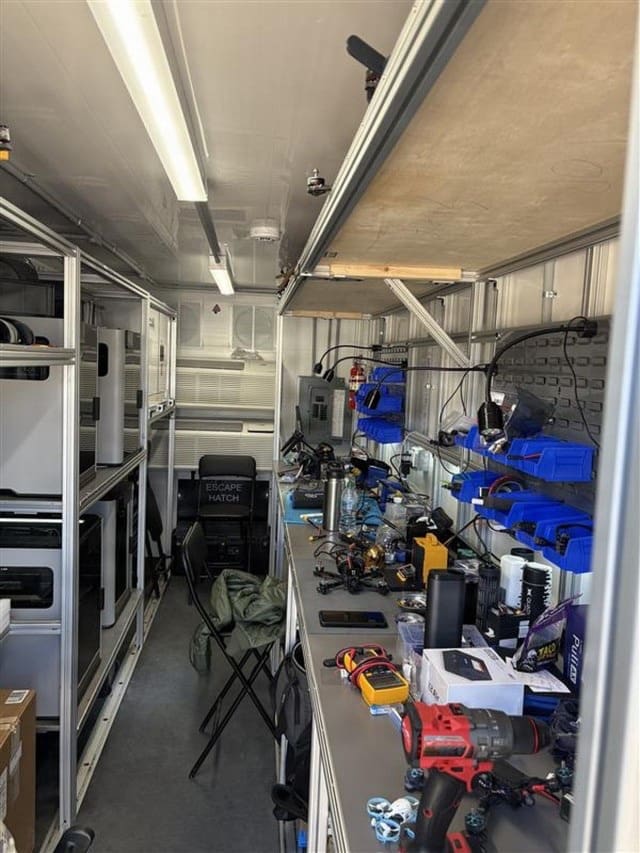
The program also deployed its Buildable Innovation Shop for Operational Needs, or BISON, a mobile makerspace equipped with 3D printers and tools for drone development, to JRTC for the March rotation. Currently stationed at Fort Bragg, the BISON traveled with the units to JRTC to enable on-the-fly design, repair and fabrication in the field, allowing Soldiers to create mission-specific solutions during training.
After the rotation, the BISON returned to Fort Bragg, but there are plans to potentially include a BISON in the permanent JRTC buildout for use by both the Opposing Force and any rotating units interested in forward innovation capabilities.
“This approach transforms the Army’s culture by integrating Soldier-driven experimentation and rapid prototyping into the innovation process,” DeCostanza said. “Through hands-on training in advanced manufacturing, robotics, AI and drones, we are building a cadre of technical experts who will lead the Army into the future.”
The Catalyst Pathfinder program, now in its fifth year, has expanded to support 13 DIRT labs across six states and two countries, including the new lab at JRTC. These labs provide Soldiers with the tools to move quickly from ideation to action and to engage with academia, small businesses, and government researchers to rapidly build prototypes.
“By integrating Soldier-driven experimentation into the innovation process, the program is transforming the Army’s culture and ensuring that its most critical capability gaps are addressed by those closest to the challenges,” DeCostanza said.
Soldier-led innovations previously developed in DIRT labs to address real-world operational gaps are gaining traction and being pushed forward for additional experimentation and feedback in operational environments during this JRTC rotation.
These technologies were built in the Airborne Innovation Lab at Fort Bragg and brought to JRTC by the 82nd Airborne Division:
- Modular Drone Case allows Soldiers to safely jump with small unmanned aerial systems using lightweight, rucksack-mounted cases with interchangeable, 3D-printed padded inserts.
- PRC-162 Cooling Case (Modular Airborne Radiator) addresses overheating issues with the PRC-162 radio, a critical communications system, by reducing radio temperatures by approximately 20 percent through a 3D-printed sleeve housing cooling fans.
- ISV Tablet Mounting System and Airdrop Antenna System addresses critical gaps for the 82nd Airborne Division’s Infantry Squad Vehicle fleet, providing a tool-less, hood-mounted bracket that clips securely into place and can be stowed during airdrop. The solution ensures full communications capability while maintaining compliance with airdrop safety requirements.
- PRC-162 ISV Roll Cage Mount eliminates the need for the radio to be held on a Soldier’s lap, which limits mobility and slows entry and exit from the vehicle. This mount provides a stable, accessible solution for rear-seat occupants.
The Catalyst Pathfinder program and 82nd’s innovation team will use the outcomes of the experimentation at JRTC to scale these critical solutions to unit needs in partnership with the Pathway for Innovation and Technology.
“By focusing on Soldier-identified needs, we are accelerating the Army’s technological edge and ensuring readiness for future challenges,” DeCostanza said. “This program showcases the power of collaboration between Soldiers, academia, and industry.”
By DEVCOM Army Research Laboratory Public Affairs
Is anyone else concerned to see multiple Bambu Labs products being used within military installations for these purposes? This is just the latest article I’ve seen where we can see these printers in use. There have been multiple reports on security vulnerabilities/flaws around these devices, and beyond that, they’re a Chinese-owned company with cloud-based software that sends data back to their servers. Even if these devices have been airgapped, I’m surprised to see them used in sensitive areas when there are alternative options available.
Yes, their use violates the NDAA but units don’t know any better and buy them with Government Purchase Cards. They have no idea they are reporting everything they print and where they are.