

The range is quiet except for the sound of a sling shifting across nylon and metal. The rifle moves from one position to the next. Nothing dramatic happens. No missed targets. No timer. No visible failure.
Then the stock catches on a piece of gear.
The sling binds during a transition.
The muzzle drifts somewhere it shouldn’t.
A grip that felt secure a moment ago suddenly feels awkward.
Those small moments are easy to dismiss, but they are often the most valuable information a training session can provide.
Most shooters use training to measure performance. A timer records speed, a target records accuracy, and the results show whether the shooter met the standard. Those metrics matter, but some drills serve a different purpose. Instead of measuring performance, they expose inefficiencies in equipment setup, weapon handling, and movement mechanics that might otherwise go unnoticed until stress magnifies them.
The Carbine Flow Drill moves the shooter through six practical positions:
• Retention
• High Ready
• High Carry
• Low Ready
• Rear Sling
• Low Carry
The sequence is simple by design. Its value comes from what happens during the transitions.
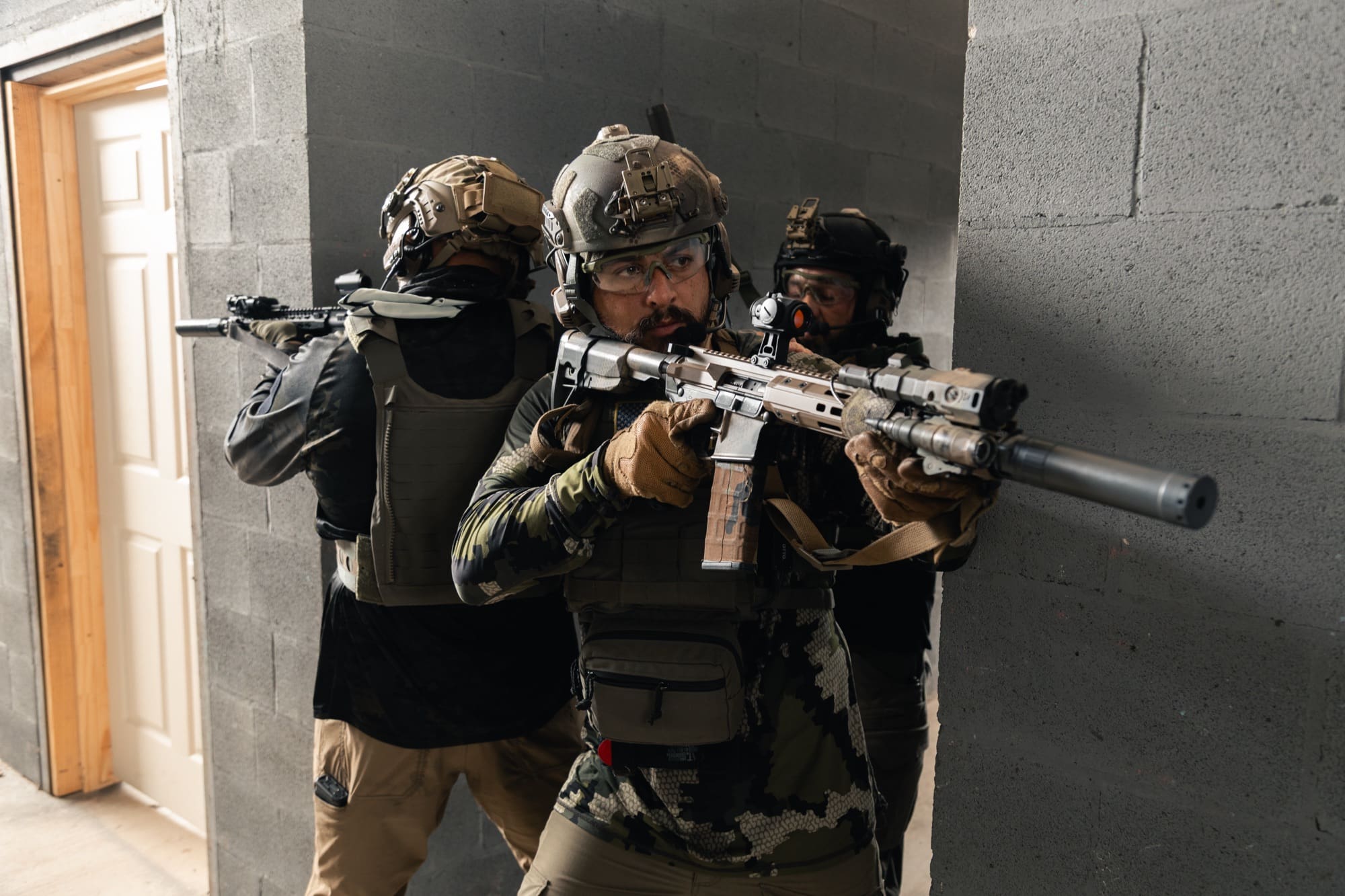
In a real-world environment, controlling a carbine is critical. What was a safe direction one moment may no longer be safe the next. The established rules of firearm safety do not disappear when someone leaves the flat range. If anything, they become even more important.
Working through these positions forces shooters to evaluate how well they maintain positive control of the weapon as its orientation and relationship to the body change.
Each position also serves a practical purpose. Low Ready and Low Carry can be useful when people occupy upper floors or other elevated locations. Rear Sling moves the carbine out of the immediate workspace while keeping it attached to the body. This may be necessary when a law enforcement officer needs to climb a ladder, operate a breaching tool, or go hands-on with a subject.
Understanding when and why to use each position is important. Equally important is understanding how efficiently a shooter can move between them.
That is where the real value of the drill emerges.
A carbine sling that feels comfortable while standing still may suddenly feel too loose during movement. A pouch that never seemed problematic might interfere with a transition into Retention. A rifle that hangs correctly in one position may become an obstacle when moved into Rear Sling.
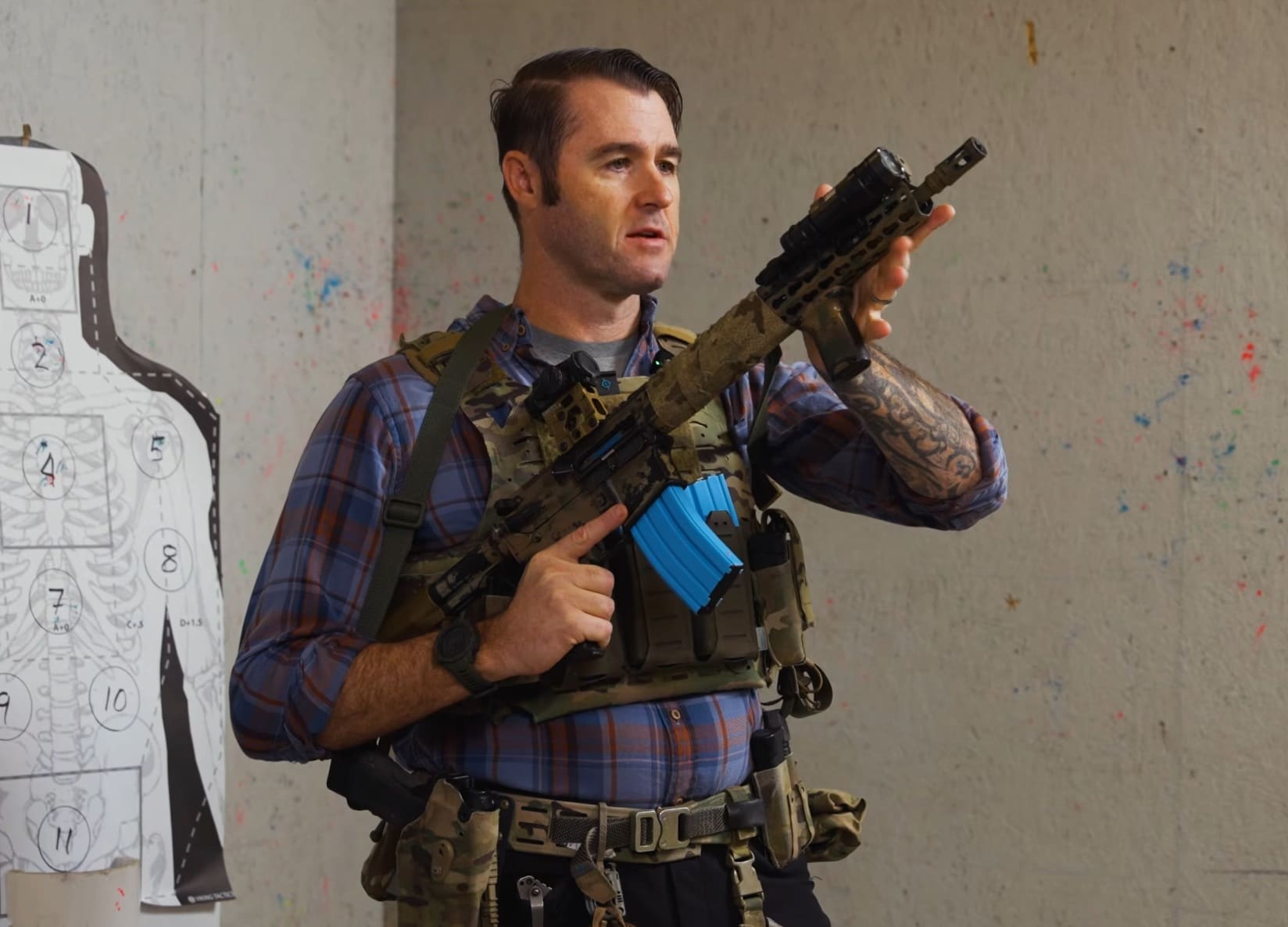
None of these issues represent a major equipment failure, but each creates friction. The drill brings that friction to the surface.
As the transitions accumulate, patterns begin to emerge. The shooter may notice unnecessary hand movement, inconsistent rifle placement, or equipment that shifts unpredictably. Maintaining muzzle awareness may require more attention than expected.
These observations are not setbacks. They are feedback.
The Carbine Flow Drill creates a controlled environment where those lessons can be learned early. Instead of discovering a problem during a qualification, competition, or operational task, shooters can identify and correct it beforehand. The flat range becomes a laboratory for experimentation, adjustment, and refinement.
This is why some of the most productive training sessions generate more questions than answers.
Why did that transition feel awkward?
Why did the sling bind?
Why did the rifle move differently than expected?
Each answer leads to a better understanding of the shooter, the equipment, and the interaction between the two.
Improvement is rarely about adding more complexity. More often, it comes from eliminating the small obstacles that create hesitation, inconsistency, and wasted motion. Once those obstacles are removed, the shooter can devote more attention to observation, decision-making, and the task at hand.
Not every range session needs to be measured by speed, score, or round count. Some of the most valuable sessions are the ones that expose problems before they become habits.
The objective is not simply to complete the sequence.
The objective is to discover what is not working.
The problems you discover today are the problems that will not surprise you tomorrow.
The best way to understand the Carbine Flow Drill is to run it yourself. Before your next range session, take a few minutes to watch the full walkthrough from Blue Force Gear, then put your rifle, sling, and equipment through the same sequence. What you discover may be the most valuable lesson of the day.