

A student shows up to a CQB or vehicle tactics course with gun handling that would hold up on any square range. Then I change one thing. I ask the student to give calm, direct commands while holding a subject at gunpoint. Or I ask the student to move to a better position of advantage instead of shooting from where they are standing.
And it comes apart.
Either the gun handling falls apart or the decision does. Usually, it is the decision.
I have trained several thousand students across the country, and by my rough estimate, I have watched this happen with about one in five. Most were good shooters. That was the part that took me too long to understand.
The same lesson eventually changed how I looked at equipment. A piece of gear can perform perfectly when it is the only thing being evaluated, then become a problem when the user has tocommunicate, move, process information, and make a decision at the same time. The real test is not whether a skill or a piece of equipment works when someone is thinking about it. The real test is whether it continues to work when the mission demands that attention go somewhere else.
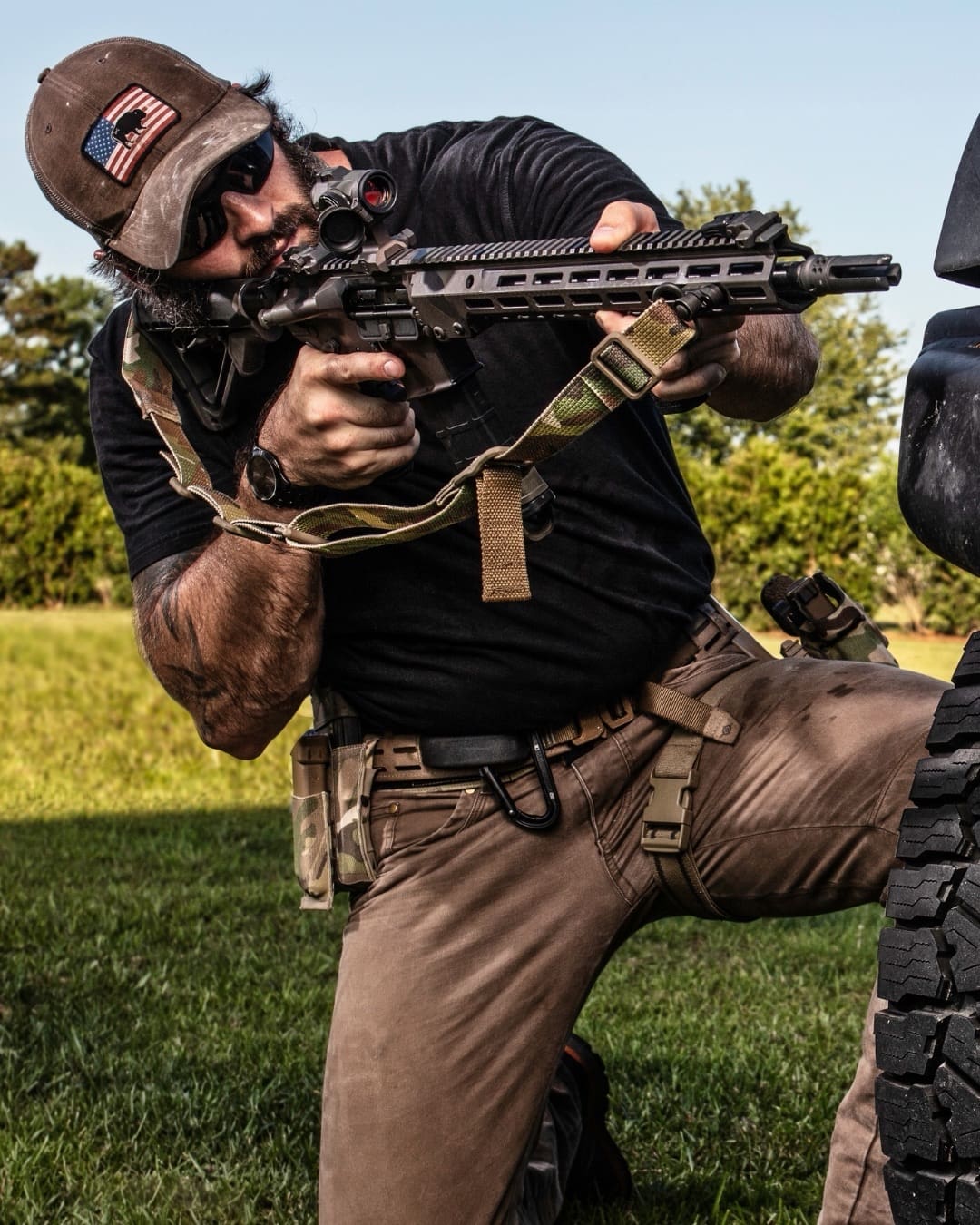
What I Used to Get Wrong
For years, I read what I saw on the line the wrong way. A student with clean mechanics looked ready to me. I was grading the physical skill, especially with firearms, and assuming the student had also done the work of placing that skill into the context where it would actually be needed.
Those are two different things.
A drill can tell me whether a student can perform a defined task under controlled conditions. It cannot, by itself, tell me whether that skill will remain available when the student must identify the problem, communicate clearly, move to an advantage, account for other people, and decide whether force is appropriate at all.
I did not separate mechanical proficiency from operational capability, and I do not think much of the training world separates them consistently enough.
The Skill That Still Demands Attention
The students who lock up in moments of decision have often hyper-focused on one measurable skill before they get to me. It is usually shooting: a perfect Bill Drill, a faster draw, a tighter group, or a better split time. They have run the drill so many times that they appear to own it.
But some have become very good at performing the drill while still devoting most of their attention to the drill itself. They are thinking about the sight picture, the movement, the time, and the result. Then I ask them to solve another problem at the same time, and something breaks.
Driving is the best comparison I have. An experienced driver does not consciously think through every movement required to signal and turn. Those actions happen with very little attention, leaving the driver free to see the person who steps off the curb or the vehicle that enters the intersection.
A student who is still consciously running the gun has less attention available for the person in front of them. Add commands, movement, identification, or another problem, and the student reaches capacity. The student can see the shooting. What the student cannot always see is the part that matters most: making the right decision, and the constitutional one, with a gun in hand.
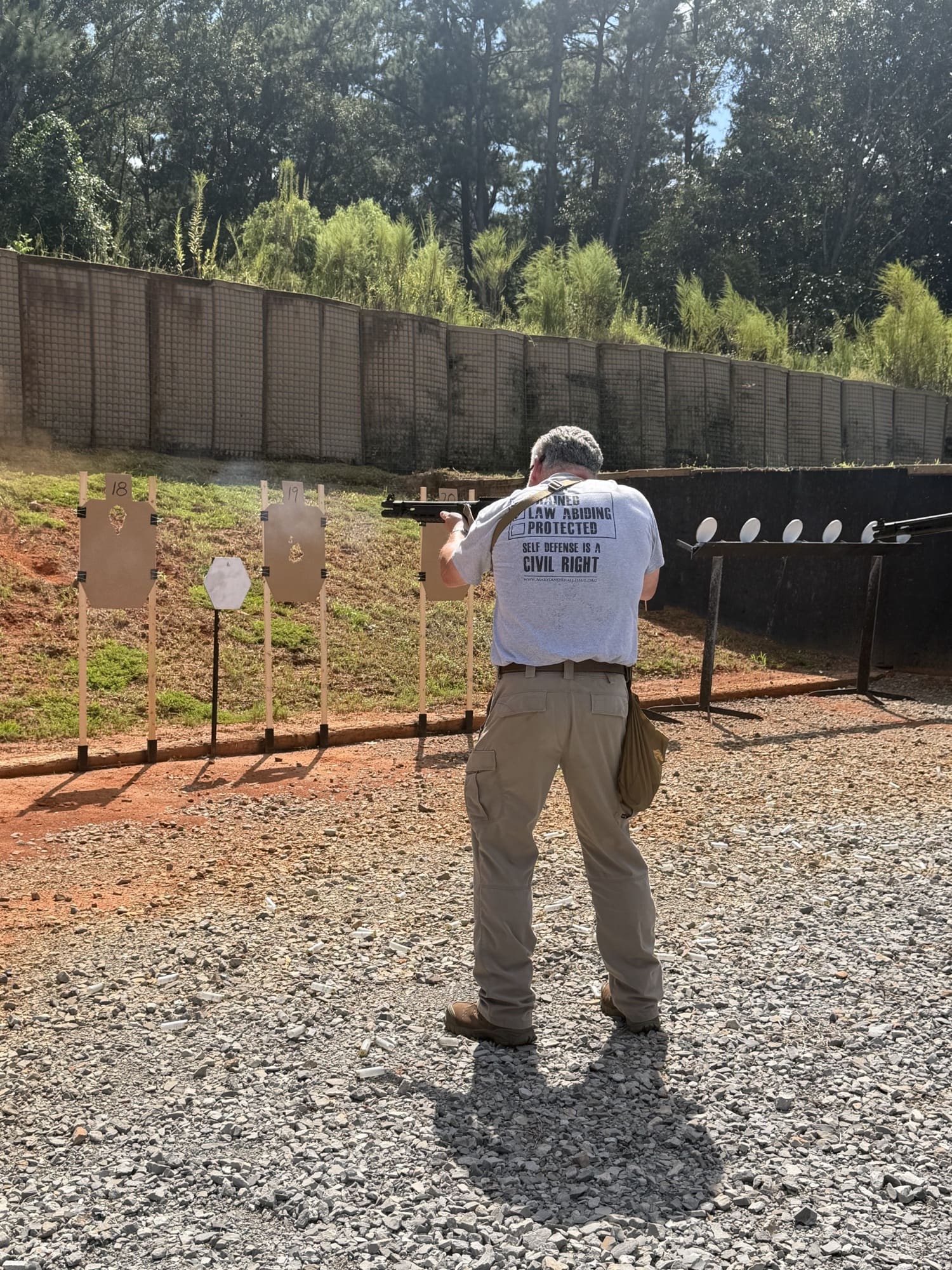
What the Students Who Adapt Have in Common
The students who adapt well are not necessarily better shooters. What matters is whether their skills can hold up when shooting stops being the only thing receiving their attention.
This is not an argument against the square range or against getting very good at shooting. Get as good as you can. Measure performance. Build consistency. Pressure-test the fundamentals. But remember what the training is for.
Every skill should eventually be internalized to the point that it can sit underneath a decision rather than compete with it. When the drill becomes the goal instead of a tool for building capability, training can drift into recreation. There is nothing wrong with recreation. Just do not confuse it with readiness.
What I Changed
That realization changed how I build courses. I now plan from the top down, beginning with the mission and the end state the officer or armed citizen is actually there to achieve. I work backward through the decisions, communications, movements, and tasks required to reach that end state until I arrive at the individual skills.
Training then runs in the other direction, from the skill back up to the mission. Every skill has to trace to a real task. If it cannot, it may still be useful or enjoyable, but it does not automatically belong in the course.
That also changed what counts as a skill. Verbal commands, a suspect-compliance script, movement to a position of advantage, and contact and control of a subject sit alongside marksmanship. Each must be defined, taught, and trained to a standard so the skills can be layered together without competing for all of the student’s attention when the decision appears.
I also stopped calling something a capability simply because a student could demonstrate it once. A capability is something the student can apply on demand, under the conditions where it will actually be needed, without extra train-up first.
The standard I care about now is not simply how fast a student shoots. It is whether the student can shoot well while paying attention to the subject, the environment, the position, the communication, and whether a shot should be taken at all. That last part is the job. Everything else is there to serve it.
Equipment Competes for Attention Too
The same principle applies to equipment. Gear can make perfect sense on a design table, in a product photograph, or during a clean demonstration and reveal a completely different problem once it is placed inside a realistic training evolution.
The best equipment does not ask the user to stop solving the problem in order to manage the gear. It reduces unnecessary steps, searching, fine-motor manipulation, bulk, weight, and adjustment. It becomes part of the capability rather than another demand on the user’s attention.
This is why repeated training matters to product development. The first repetition shows whether a product can work. The twentieth reveals whether it works without demanding the user’s attention. Add vehicles, protective equipment, darkness, communication, physical stress, and other people, and small inefficiencies become obvious. A pouch that is easy to access while standing still may be difficult from a seated position. A control that is obvious during setup may be difficult to find when the user is looking somewhere else. An item that appears light by itself may become part of a load that degrades endurance over hours.
Those are not styling problems. They are capability problems.
What Repeated Use Teaches Blue Force Gear
Blue Force Gear’s connection to training is not simply that the company works with experienced instructors and users. Repeated use creates an opportunity to observe where equipment helps preserve attention and where it still demands too much of it. Training exposes friction that may never appear during a conventional product review, and those observations can be carried back into evaluation and design.
The MARCO marking light dispenser is a useful example of the principle. Marking is rarely the user’s only task. The user may also be moving, communicating, controlling a scene, identifying people or positions, and tracking changing conditions. A marking tool must be accessible and deployable while the user remains focused on movement, communication, and the changing environment. That is where MARCO earns its place: not as a standalone object, but as a tool designed to complete a necessary task quickly and return the user’s attention to the larger problem.
The gear on a carrier is only one layer of a force encounter. Slings, pouches, medical equipment, and marking tools all have to work alongside movement, communication, judgment, and the rest of the user’s load. Good equipment performs its function. Better equipment helps the user remain focused on the mission.
Questions for Your Next Training Session
Take these questions to the range or your next training evolution:
• When you run your favorite drill, where is your attention? If it is entirely on the drill, add another problem.
• Run the same drill while giving clear commands out loud. What breaks first?
• Does any repetition begin with a decision, or does every repetition begin with a timer?
• Which skill have you trained the most, and have you ever trained it underneath another task?
• What piece of equipment requires your attention every time you use it?
• What works perfectly during setup but becomes difficult once movement, communication, or another problem is added?
The answers may tell you more about your readiness and your equipment than your fastest time.
Stay Teachable
The students who struggled taught me as much as I taught them. They showed me that I had been grading the wrong thing. Admitting that was harder than any drill I have ever run, and I had to rebuild much of how I teach because of it.
The same obligation applies to instructors, students, and equipment companies. We have to remain willing to put our assumptions into realistic conditions, pay attention to what fails, and change what we do next.
Look hardest at the skill you are proudest of and the gear you trust the most. If either one still demands your full attention to work, it is not finished, no matter how good it looked in isolation.
Train deliberately. Move with purpose. Stay ready.
Explore purpose-built gear designed to support the way you train, work, and move at Blue Force Gear.
About the Author
John “Chappy” Chapman is a law enforcement professional with more than 34 years of experience in operational, leadership, doctrinal development, applications engineering, and training roles. He is a published author and has specialized in the development and delivery of patrol and tactical law enforcement curricula for more than 28 years.
Chappy is the Executive Director of the Task Force 70 Foundation, a nonprofit focused on training, mentoring, and educating underserved rural and small-town law enforcement officers and agencies across the United States.