

Patrol runs on communication, and most of that communication happens over a radio or through spoken words. Both fail in predictable places.
A driver cannot describe which of four driveways is his. An officer inside a house cannot safely call out that he has cleared the back bedroom. A medic pulling into a dark rural property has no way to know the patient is two hundred feet behind the house near the tree line.
These are not rare problems. They happen on ordinary calls, especially in rural jurisdictions where distance, terrain, darkness, and limited staffing are part of the job.
Patrol has accepted a lot of that friction as normal. It should not.
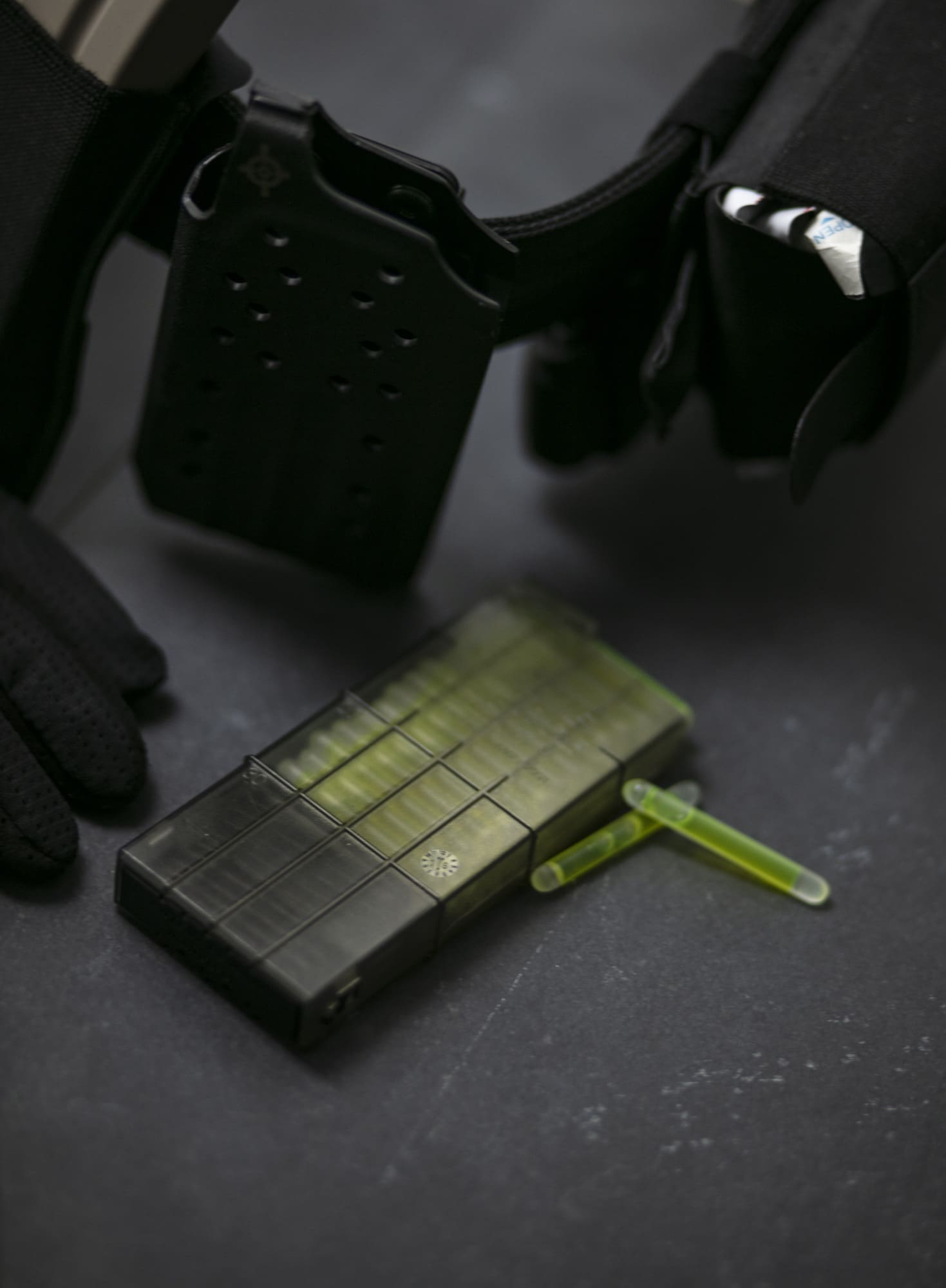
There is an old fix that law enforcement has mostly left toSWAT, the military, and the training range: the chem light. A breakable stick, a couple of dollars, no batteries, no signal, and no maintenance. Used under a simple patrol marking standard, it becomes a practical tool for guiding responders, marking progress, and reducing confusion when events start moving faster than the radio can keep up.
Start With the Standard
The standard matters more than the light.
Without a standard, the tool becomes noise. One officer uses blue for one thing, another uses yellow for something else, supply buys whatever color is cheapest, and the whole idea falls apart before it becomes doctrine.
Patrol does not need five colors. It needs two.
Green means a law enforcement function.
Red means a medical function.
That is the entire vocabulary.
The military can sustain larger marking systems because it has standardized training and constant reinforcement. Most local agencies cannot. Every additional color is one more thing officers have to remember under stress.
Put the standard in policy. Keep it simple. Green is law enforcement. Red is medical.
For stocking, agencies will likely find that an eighty-percent green and twenty-percent red mix covers most patrol needs.
When the Call Goes Bad Fast
The highest value of a marking standard appears when events become confusing.
During an active threat, a school response, or a large building search, officers are not only trying to find the threat. They are trying to understand what has already happened inside the structure.
An officer moving into a building can mark his path as he goes. That tells responding officers something important before a word is spoken: a friendly officer has already moved through this area.
The same applies to searched rooms. A light at a doorway can indicate a room has been checked. Moving that light to the center of the room after a more detailed search provides a visible indicator of progress.
This matters because patrol officers do not perform methodical building searches every day. Under stress, assumptions happen. A simple marking standard gives supervisors and responding officers a way to quickly understand what has and has not been done.
You do not call the structure clear because someone thinks it is clear.
You call it clear because the search process shows it is clear.
Rural Calls Need Better Marking
The most common patrol application may also be the most valuable: marking the call location.
Rural addresses lie.
The published address may sit on the road while the actual residence is hidden hundreds of yards away. Multiple driveways can look identical in the dark. Responding units waste time driving past entrances, turning around, and clarifying directions over the radio.
A green chem light placed at the driveway entrance solves the problem immediately.
“Turn in at the green light.”
For a medical call, use red.
That single visual reference reduces confusion and gets responding units to the correct location faster.
Medical calls create another challenge. Medics often arrive at the police vehicles first, but the patient is not always there. The casualty may be behind a house, inside a barn, at the edge of a wood line, or somewhere off the main driveway.
A red chem light placed at the patient location creates a direct reference point for EMS.
I worked a call on a large property at night where the patient was near the woods behind the residence. The ambulance stopped at my vehicle because it was the obvious landmark. I ended up breaking a red chem light and throwing it toward them so they knew where to come.
That is not complicated.
But on a medical call, seconds matter.
Search Operations
The same principle applies during area searches.
Whether officers are searching for a suspect, a missing child, or a vulnerable adult, visibility into what terrain has already been covered becomes critical.
A line of green chem lights can indicate completed search areas and direct newly arriving officers toward unchecked ground. Instead of relying entirely on radio traffic, supervisors gain a visible way to track the search effort and reduce duplicated work.
The farther a search expands, the more valuable that becomes.
The Carry Problem
The issue with chem lights has never been whether they work.
They work.
The issue is carrying enough of them without creating another gear problem.
A handful of full-size chem lights stuffed into a cargo pocket is not a system. They get crushed, lost, or left in a patrol bag.
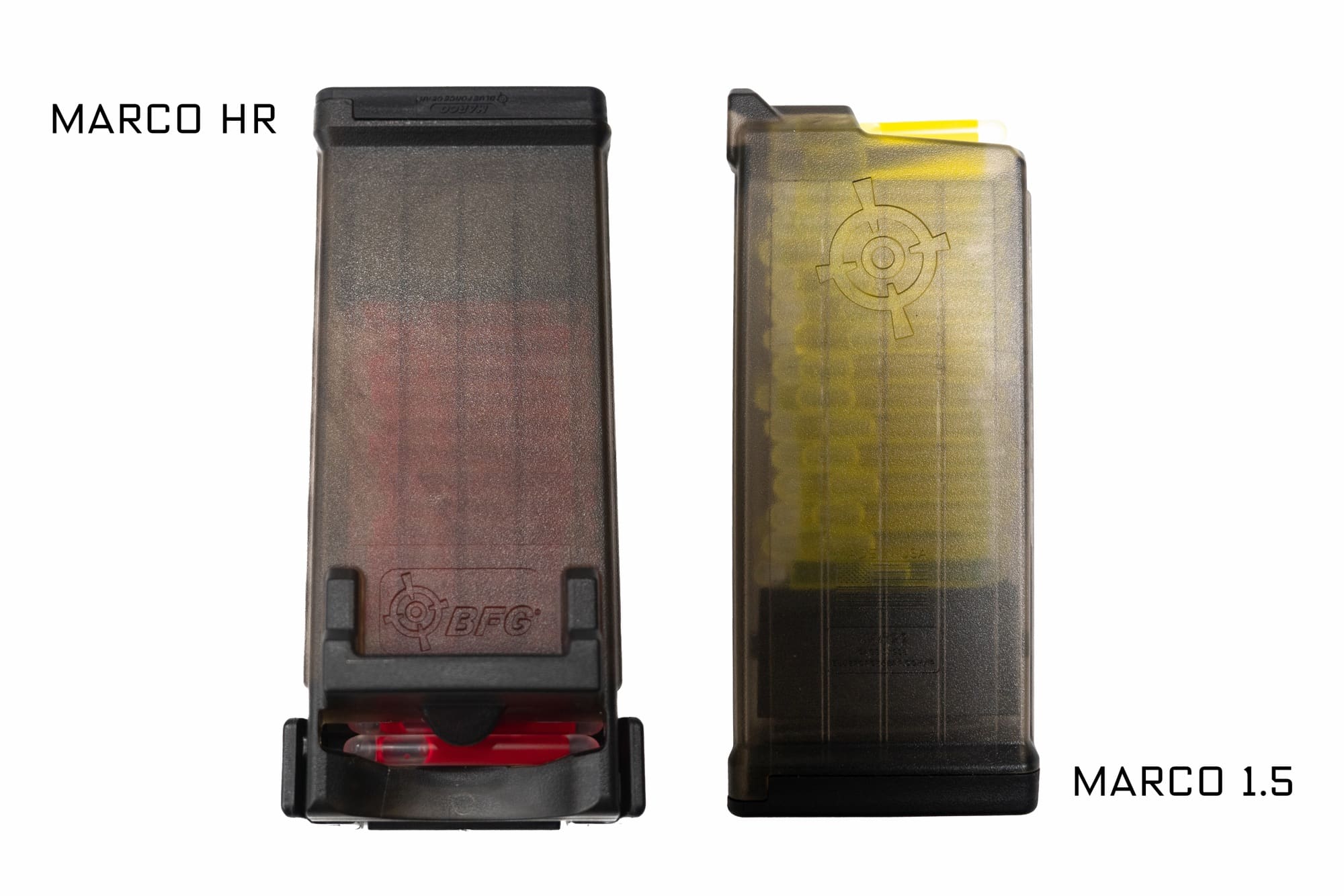
That is where the Blue Force Gear MARCO® system becomes relevant.
MARCO reduces the chem light to a compact two-inch format and organizes it in a dispenser officers can actually carry on a duty belt, plate carrier, or existing loadout.
For patrol use, that matters more than the light itself.
A marking concept only works if officers have the tools readily available when they need them.
Blue Force Gear® originally developed MARCO as a low-light training tool for marking firing lines, lane boundaries, and targets. The same hardware adapts naturally to patrol marking applications because it solves the biggest obstacle to adoption: carrying the lights consistently.
Why Agencies Can Adopt It Quickly
One of the strengths of this system is its simplicity.
Two colors and a placement standard can be taught during roll call, reinforced during training, and implemented immediately.
There are no batteries to charge, no software to manage, and no specialized systems to maintain.
The equipment is affordable; the training burden is minimal, and agencies can begin using it almost immediately.
Every jurisdiction will develop its own applications. Rural properties, apartment complexes, schools, churches, industrial sites, and large outdoor events all create situations where clear visual marking can reduce confusion and improve coordination.
Bottom Line
The patrol profession has spent decades working around problems that often do not need to exist.
The wrong driveway. The patient nobody can find. The room that gets searched twice while another goes unchecked.
Most officers simply accept those things as part of the job.
They do not have to be.
A two-color chem light standard will not solve every communication challenge on patrol. It is not intended to.
What it does provide is a simple, affordable, and immediately deployable way to reduce confusion, improve coordination, and help responders find what matters faster.
For agencies operating in rural areas, where distance, darkness, terrain, and limited resources amplify every problem, that can make a meaningful difference.
Sometimes the best solution is not the most complicated one.
It’s the one everyone can understand and use tomorrow.
By John Chapman
Executive Director, Task Force 70 Foundation