

Arabian Sea – U.S. Marines and Sailors with the Boxer Amphibious Ready Group (ARG) and the 11th Marine Expeditionary Unit (MEU) recently conducted training with small unmanned aerial systems (sUAS) while underway in the U.S. 5th Fleet area of operations. The training aimed to find innovative ways to integrate sUAS and counter-sUAS (C-sUAS) platforms within a maritime operational environment.
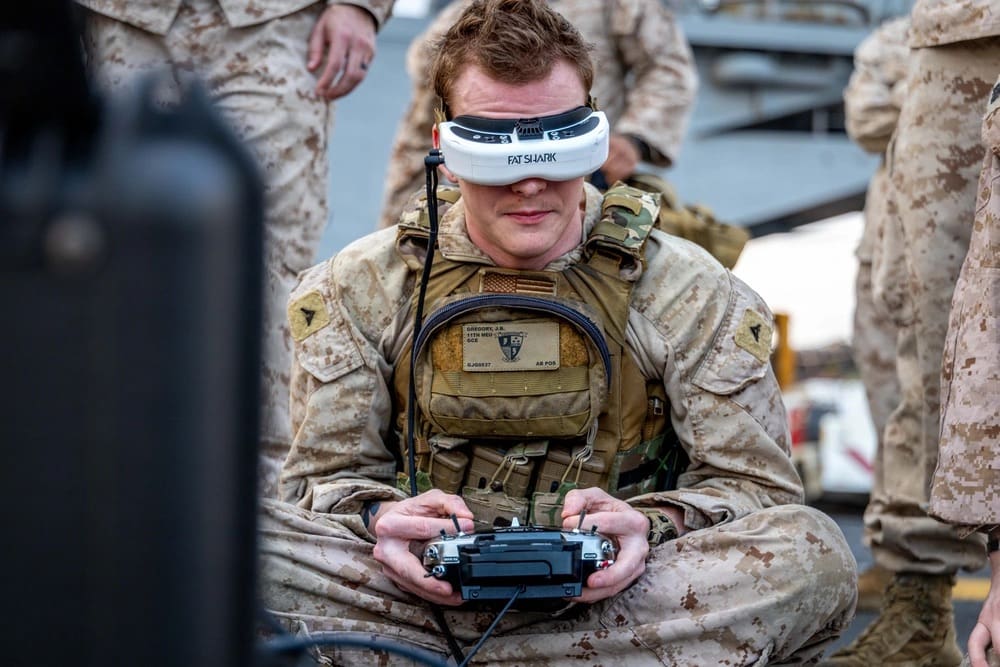
With the proliferation of drones in modern warfare, the Navy and Marine Corps team is preparing for the future fight by adapting and innovating with these emergent technologies. This experimentation with both sUAS and C-sUAS capabilities allowed Sailors and Marines to not only refine drone employment but also to enhance their ability to defend against these modern threats.
“A lot of what we see on modern battlefields is FPV drones being used to attack infantry units in the open or high-value targets like ground radar stations, energy and communications infrastructure, or hardened structures,” said U.S. Marine Corps 1st Lt. John Pfeiffer, a rifle platoon commander with Battalion Landing Team (BLT) 3/5, 11th MEU. “We’ve tailored our training towards defeating critical enemy infrastructure that could have kinetic means of defeat, which our drones are naturally more capable of achieving due to their acrobatic flying capabilities.”
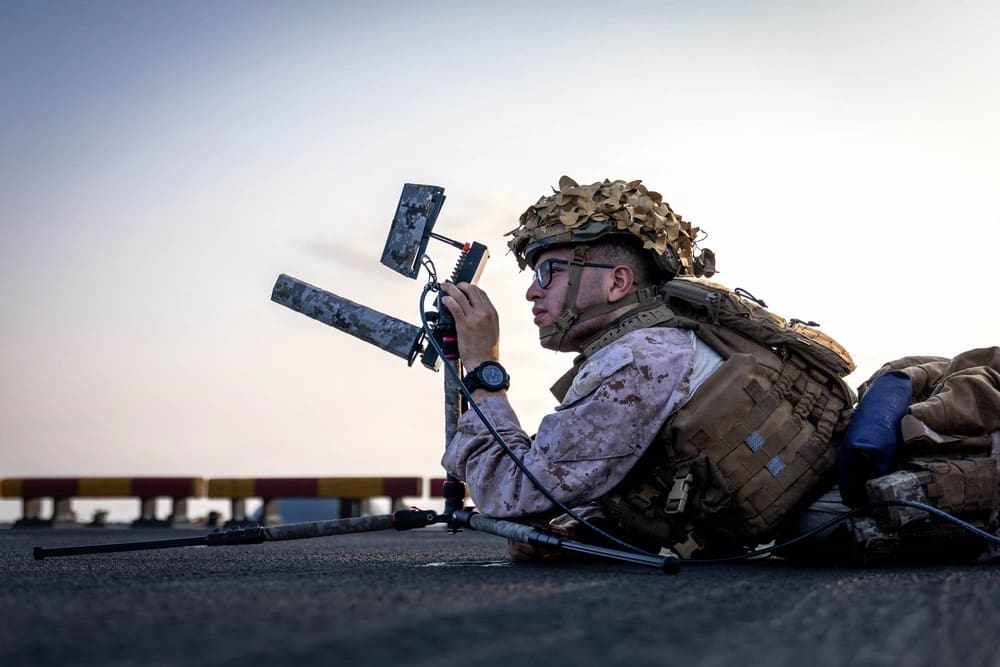
This training drew on lessons from contemporary conflicts, including the use of drones to both attack and launch from naval assets.
“We use these lessons learned in all of our training, both on the MEU and on Camp Pendleton, so that we can assist in integrating developing tactics, techniques, and procedures into our doctrine,” said Sgt. Austin Mercier, a battalion attack drone team leader with BLT 3/5, 11th MEU.
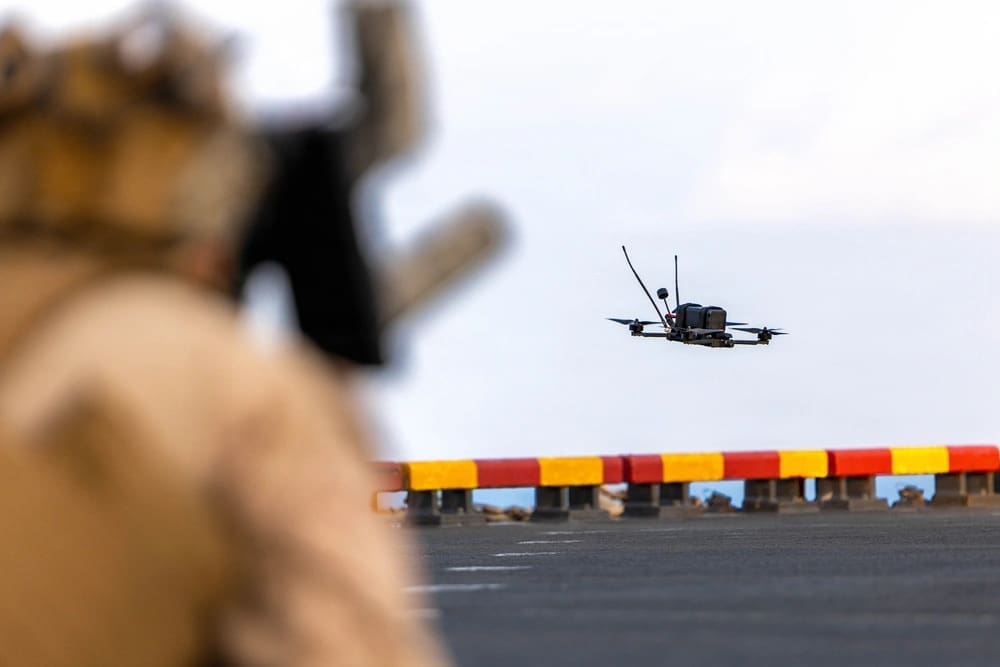
The training consisted of a Neros Archer, an expeditionary first-person-view controlled strike drone, taking off from both Wasp-class amphibious assault ship USS Boxer (LHD 4) and San Antonio-class amphibious transport dock ship USS Portland (LPD 27). The drones were piloted through various flight profiles to simulate precision strikes from the sea. This demonstrated the ARG/MEU’s ability to deploy sUAS in a maritime setting by launching, tracking, and recovering these assets aboard a moving naval vessel.
“Up to this point in deployment, we have primarily been utilizing our simulators to stay proficient on our systems,” said Mercier. “The simulator is a very good substitute, but it doesn’t bring in external factors very well, like wind, propeller oscillation, or density altitude. So, getting in actual flights was crucial for our sustainment and served as a proof of concept that our attack drone teams could be employed from the deck of amphibious ships.”
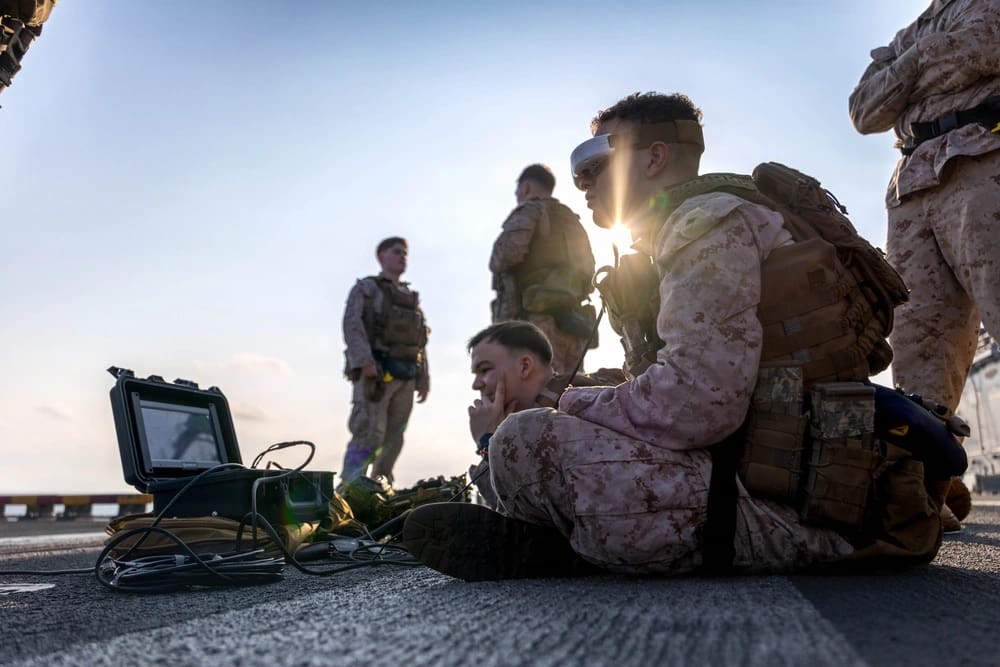
The Neros Archer, fielded to Marine Corps units in late 2025, is built to deliver modular warheads, providing platoon-level units with a rapidly deployable precision-strike capability.
“What this does for the MEU and ARG is that it gives the lowest echelon a precision-strike capability that simply did not exist within the formation before deployment,” said Pfeiffer. “With this system, we can damage, destroy, or neutralize critical enemy infrastructure with an exceptionally short kill-chain, giving ourselves an advantage in combat power.”
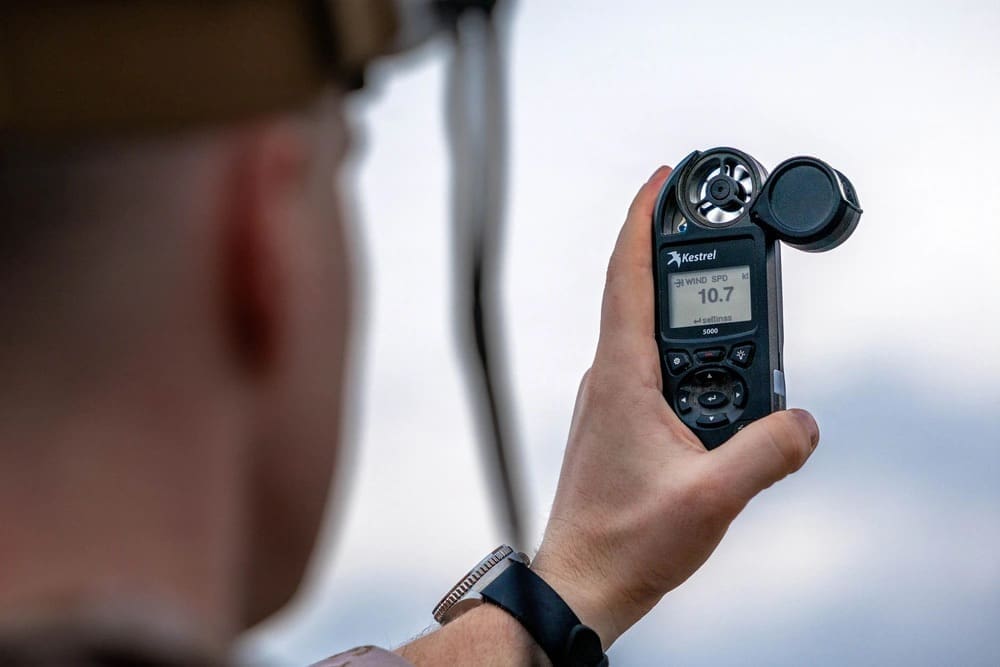
The training also validated the ARG/MEU’s C-sUAS abilities to detect and track sUAS assets on the high seas, ensuring that friendly forces remain postured to defend against this emergent threat. Platforms utilized included the SmartShooter (SMASH) optic, Regulus Ring, and Titan SV systems.
“Our kinetic system—specifically the SMASH optic mounted to a Marine’s issued service rifle—is going to become an incredibly common optic in future conflicts, so getting our Marines familiar with it is just as important as their standard optics,” said Pfeiffer. “Our non-kinetic means, like the Regulus Ring and TITAN SV, are also extremely important for use as part of a multi-layered defense against drones, with early detection and interception capabilities that could reveal critical information about whatever system is targeting them and what defense is best suited to defeat them.”
As technology continues to advance, the Navy and Marine Corps team remains committed to staying at the forefront, innovating to counter new challenges and maintain its tactical edge. As new threats constantly emerge, Marines and Sailors stand ready to face them head-on, sustaining readiness for future warfare.
“This system makes the nature of warfare much more complex through its psychological effects,” said Sgt. Aidan Shafer, an FPV attack drone team leader with BLT 3/5, 11th MEU. “My team can locate, close with, and destroy the enemy without ever physically encountering them. We bring utmost surprise, speed, and violence of action. We are not only warfighters, but technological strategists.”
Story by Sgt Trent A. Henry
11th Marine Expeditionary Unit