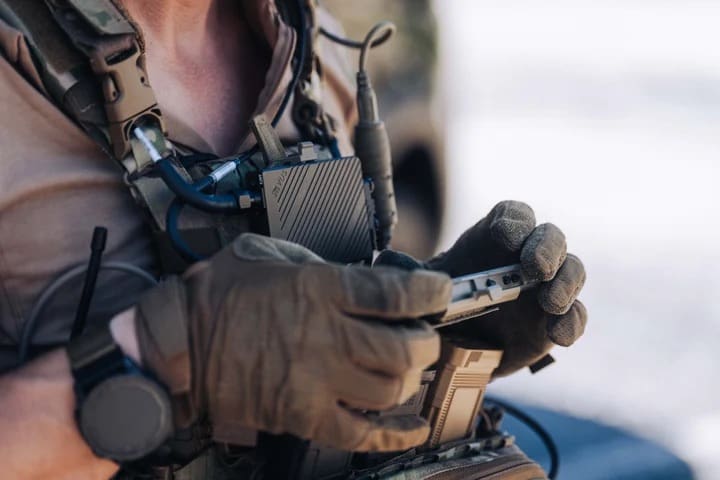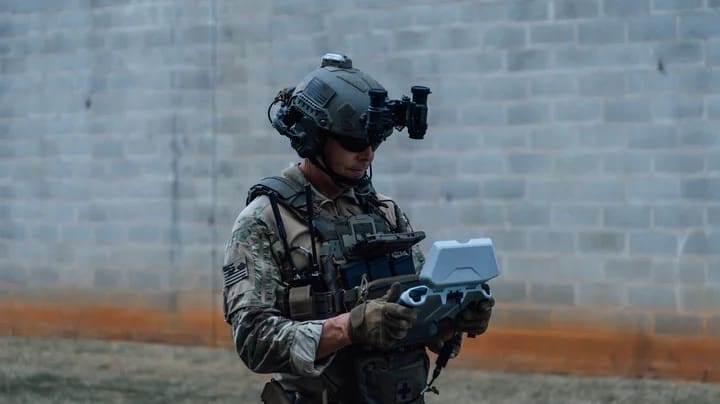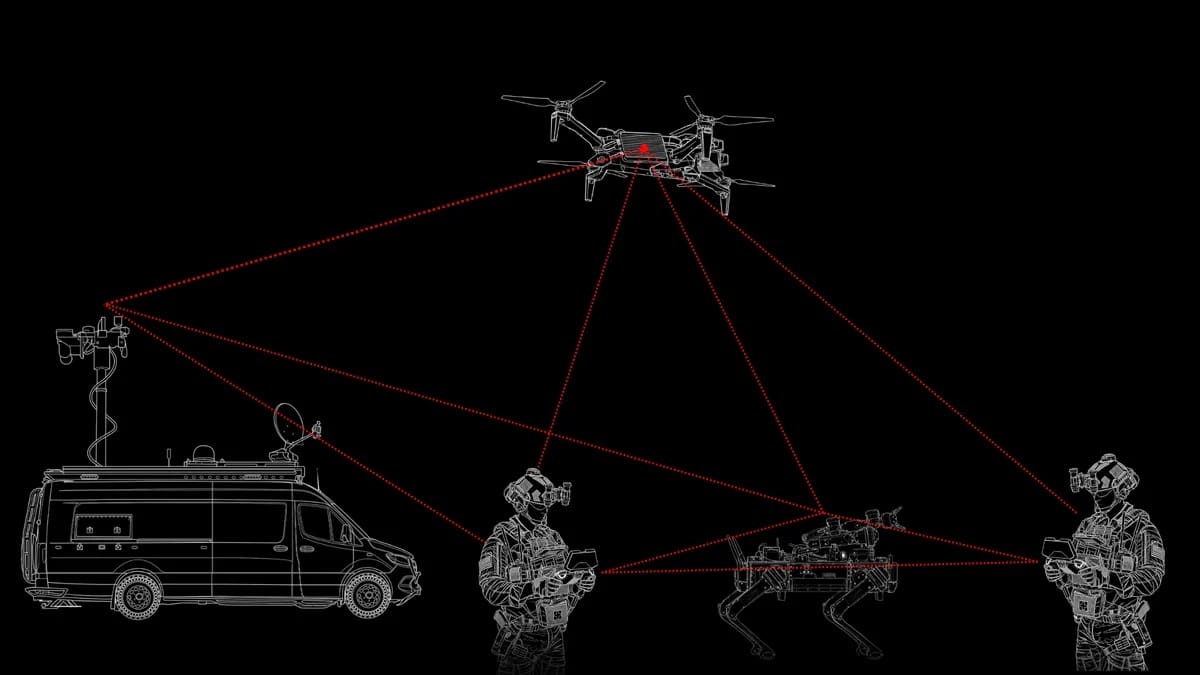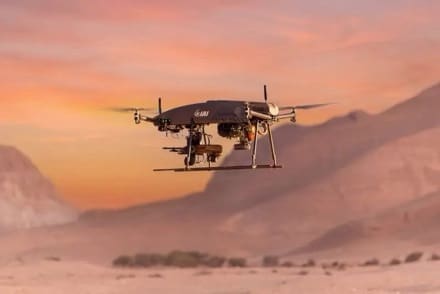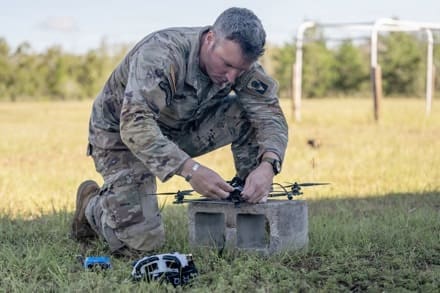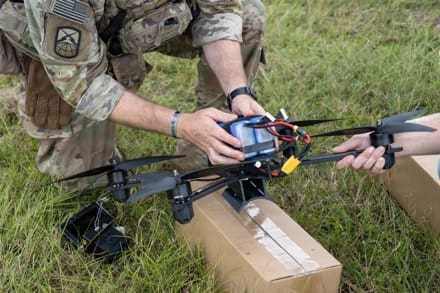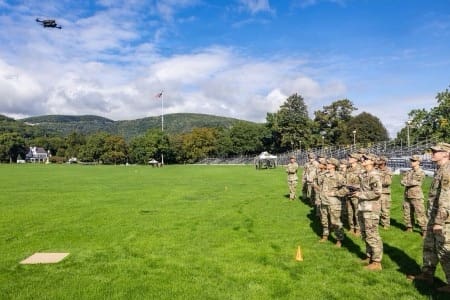
While some visions of the futuristic battlefield remain in the realm of science fiction, modern conflicts have demonstrated that many emerging technologies are already a reality.
Among them are Unmanned Aerial Vehicle (UAV) and Unmanned Aircraft Systems (UAS), commonly known as drones, which can operate via remote control or autonomously using onboard computers and GPS systems. Within the realm of military operations, drones can be used for surveillance, reconnaissance and combat missions.
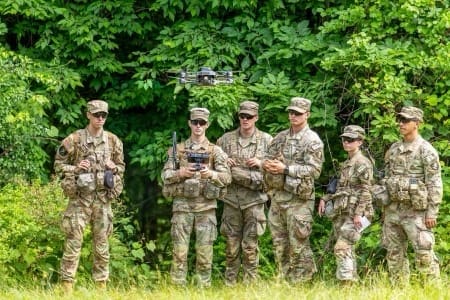
At the U.S. Military Academy, staying at the forefront of these technologies through field application, classroom instruction, and drone construction prepares cadets for what awaits them when they graduate and transition into their Army units as young leaders.
As the academic year gets underway, cadets are learning the functions and applications of drones through courses including Technology Innovation in Emerging Warfare and Computing Fundamentals, taught by the Department of Electrical Engineering and Computer Science (EECS).
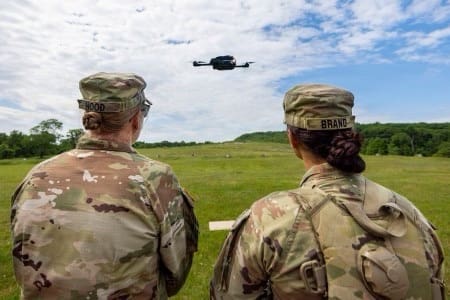
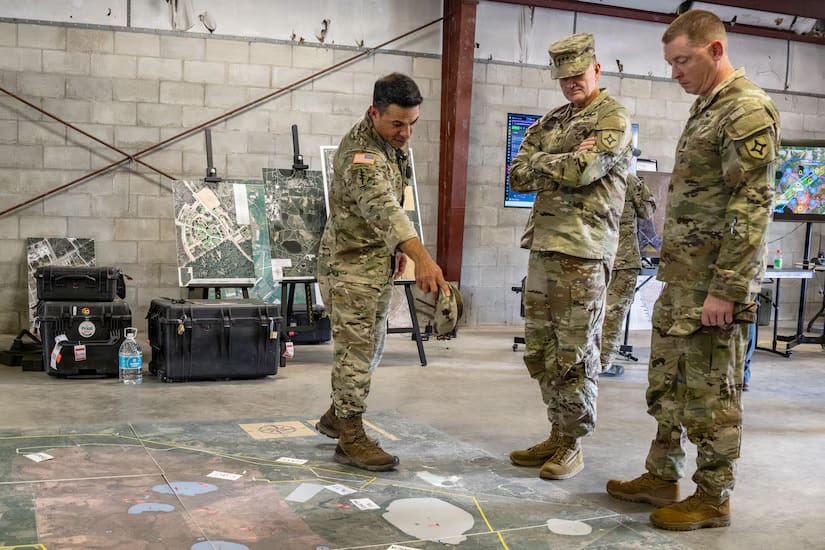
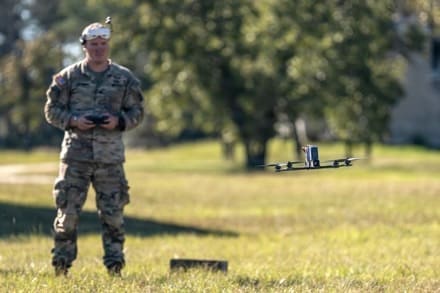
With the help of members of the Robotics Research Center (RRC) at West Point and its supply of drones, Technology Innovation in Emerging Warfare course instructors provided a culminating event called Drone Day on Sept. 29-30 on The Plain. The culminating event gave juniors and seniors enrolled in the course an opportunity to build upon their understanding of unmanned systems through hands-on application.
“The cadets get some hands-on experience operating the drones that are built at West Point after we have spent the last few weeks discussing how drones are shaping modern conflict,” said Maj. Tyler Bertles, EECS Cyber Foundations instructor.
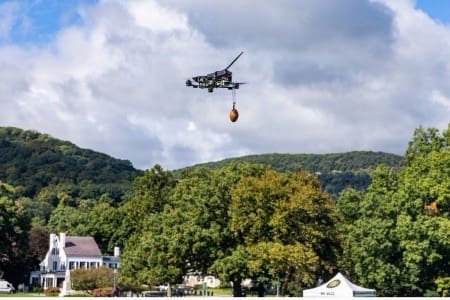
Over the past two years, drones have also been incorporated into Cadet Field Training (CFT) and Cadet Leader Development Training (CLDT), giving cadets opportunities to work with the technology during summer training. Drone Day provides additional exposure for cadets who may not have had that experience.
“Within EECS, we expect drone technology to continue to dominate modern conflict as we are seeing in Ukraine and the Middle East,” Bertles stated. “We are working to prepare cadets to both use and adapt drone technology for the diverse situations that they will encounter in the Army.”
Drone usage during Cadet Summer Training
As cadets embrace learning innovative technologies, they are guided by officers who have worked first-hand in the field with unmanned aerial systems (UAS).
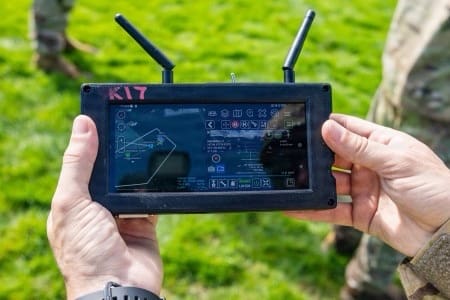
Maj. Vincent Kaple, with the Department of Military Instruction’s (DMI) Accessions Division, served with the 5th Battalion, 4th Air Defense Artillery Regiment in Ansbach, Germany, from 2021-24 as a battalion operations officer and battery commander. There, Kaple gained experience testing, fielding and employing short-range air defense capabilities against emerging aerial threats, including UAS. His unit also trained Ukrainian Armed Forces and special operations forces from NATO member states on short-range air defense platforms.
“That experience gave me significant exposure to emerging technology, particularly from the perspective of detecting, tracking and defeating UAS,” Kaple stated.
Kaple now brings that experience to cadet training, helping expose cadets early in their military careers to a capability becoming increasingly common across the Army, regardless of branch.
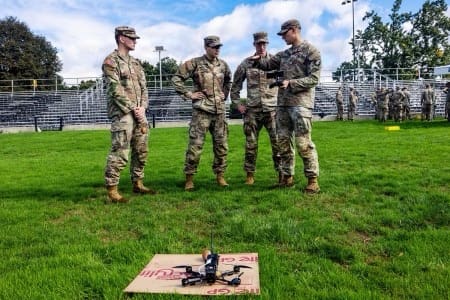
“There is tremendous value in giving cadets that exposure before they enter the operational force,” Kaple said. “It allows them to experiment in a relatively low-risk environment, understand both the capabilities and limitations of the technology, and begin thinking about how they would integrate it into tactical problems. More importantly, it develops comfort with adaptation.
“By the time they become platoon leaders, the specific drone they trained on may have changed, but their ability to rapidly learn, experiment with and integrate new technology will still be relevant,” he added. “My previous exposure to drones had largely been from the air defense perspective – detecting, tracking, integrating sensors and defeating aerial threats. Working directly with cadets employing drones forced me to look at the problem from the opposite perspective, which is how small units can employ UAS to support reconnaissance, fires correction, logistics resupply and other tactical operations.”
That early exposure to emerging technologies, Kaple said, is important because cadets are entering an Army where adapting to new systems will be “a routine part of leadership.” He added that instructors in the field are not simply teaching cadets how to operate a drone.
“We are teaching them how to think about technology as part of a tactical problem in what advantages it creates, what vulnerabilities it introduces, how it changes decision-making, and how an adversary might respond,” Kaple described.
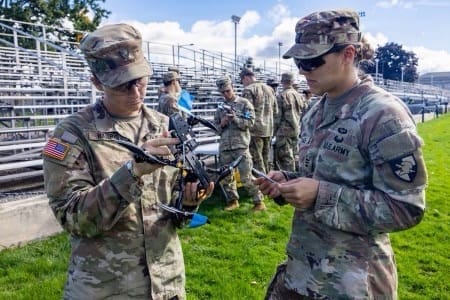
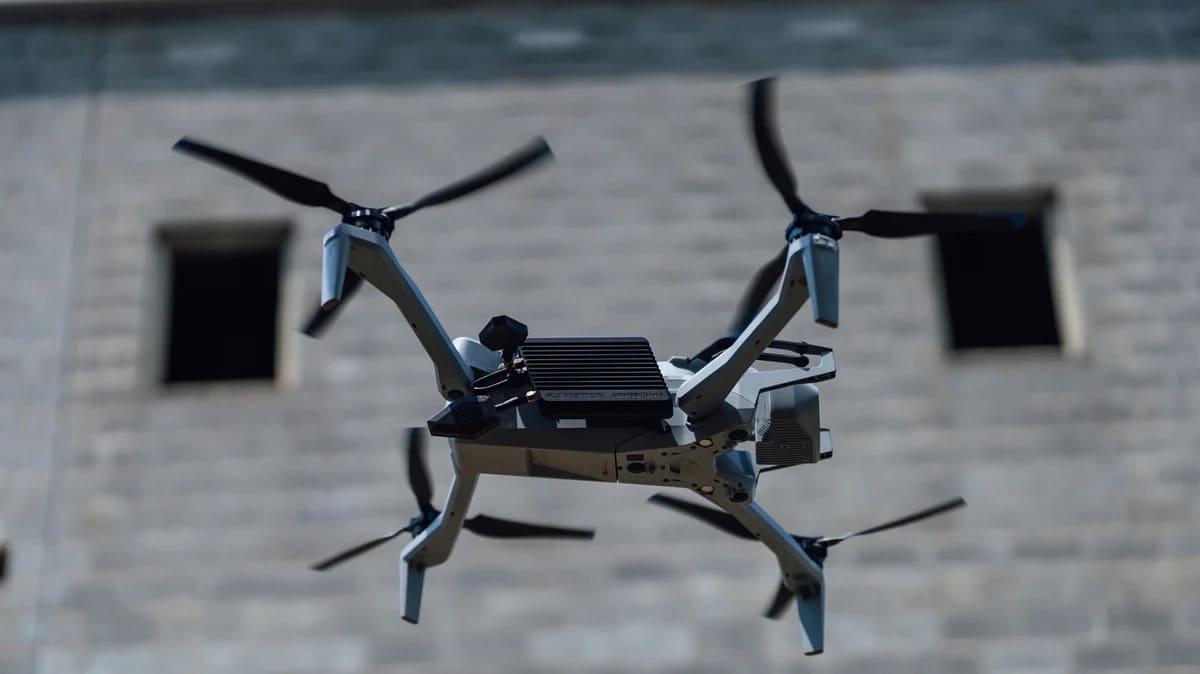
On the academic side, the RRC developed and manufactured the current Storm King drone with faculty and cadet involvement. Faculty and cadet feedback from CFT in 2025 was incorporated during the following academic year, leading to improvements in the drone’s capabilities and ease of use and helping move the system from the larger Harvey model to the current Storm King.
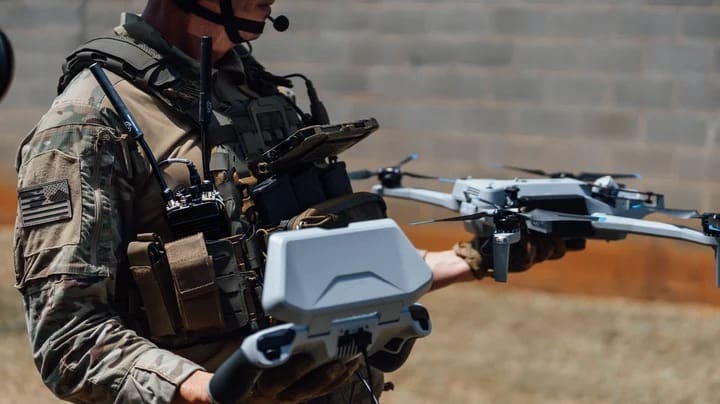
On the military side, cadet platoons employed drones during the five-day CFT field training exercise, primarily for reconnaissance and observing areas of interest throughout the training area.
“Platoon leadership had to deliberately determine how and when the drone would be employed to support their operations rather than simply launching it because it was available,” Kaple stated. “For me, it reinforced the idea that the real capability is not the platform itself, the capability comes from the combination of the technology, the operator, the tactical leader and the process for turning information into action.”
After this past summer’s CFT, Kaple said that dozens of cadets contacted him asking how they could become more involved in UAS development or what additional training opportunities were available to become drone operators.
“While the primary purpose of CFT remains developing cadets through small-unit, light infantry operations, the introduction of UAS appeared to generate significant additional interest in UAS,” Kaple said. “That was one of the most encouraging outcomes. We were not just teaching cadets how to operate a drone, we were generating curiosity and motivating them to continue learning about technology that is going to shape the Army they will eventually lead.”
RRC: A conduit to build adaptable leaders through technology
Kaple described the drone training during CFT and CLDT as an “outstanding partnership,” with the Robotics Research Center (RRC) bringing technical expertise and DMI providing the operational context and training objectives. Together, they developed a training plan that enabled approximately 1,200 cadets participating in CFT to develop basic drone piloting skills.
The five-day CFT field training exercise allowed each platoon access to a drone to support its operations, and the RRC and DMI partnership created an effective feedback loop.
“DMI could tell the RRC what we were seeing in the field … at the same time, the RRC could respond rapidly to that feedback by improving the system, troubleshooting technical issues and helping cadets understand how to maintain and employ the drones more effectively.
“The biggest lesson from that relationship was that successful technology integration requires connecting the people developing and understanding the technology with the people actually employing it,” Kaple said. “The RRC provided that connection and it allowed us to give cadets a much more meaningful experience than simply teaching them how to fly a drone.”
Established at West Point in 2017, the RRC is the Academy’s largest research center and serves as a resource for research and technical expertise in robotics and autonomous systems (RAS) and super intelligence. Led by Col. Joseph Davis, an academy professor with an aviation background, the center incorporates cadets and faculty into projects addressing real-world Army challenges.
“We do some amazing projects here … all that we do is centered around developing cadets and faculty,” Davis stated.
The RRC not only works with faculty and cadets from EECS, but also from across West Point in a wide variety of disciplines.
Those partnerships extend across West Point, including work with Keller Army Community Hospital involving super intelligence and medical applications.
“Our cadets have been teaming with Keller to design and prototype medical delivery drones that are capable of flying medicine between the hospital and the barracks,” Davis said.
The RRC aligns its priorities with the warfighter and what it needs to be successful on modern and future battlefields.
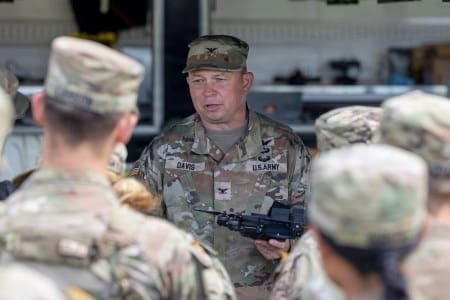
“Autonomy, super intelligence and robotics are at the forefront of where we believe that the future fight is going,” Davis said. “We want to see weapons mature faster, and we want to see this happen at a lower cost.”
The RRC has put that approach into practice with the Storm King drones used during cadet training this past summer. The goal is to achieve approximately 80% of commercial capability at 20% of the cost. The RRC has built baseline Storm King models for just over $3,000, compared with commercial systems costing over $30,000.
Part of the challenge in reducing costs and sourcing off-the-shelf components is the supply chain. Because the drones must meet National Defense Authorization Act requirements, the RRC must identify compliant sources for critical components. Davis said the industry’s reliance on Chinese-manufactured components made sourcing parts for the original Harvey drones particularly difficult, although an expanding domestic drone market and War Department initiatives are beginning to improve availability.
“It wasn’t the technical challenge of putting together a drone,” Davis said. “It was trying to find sources of supplies for drone parts that are not made in China.”
“That is changing with the drone dominance initiatives, the drone foundry, the drone marketplace, and other initiatives started by the War Department,” he added. “We’re starting to get drone parts quicker.”
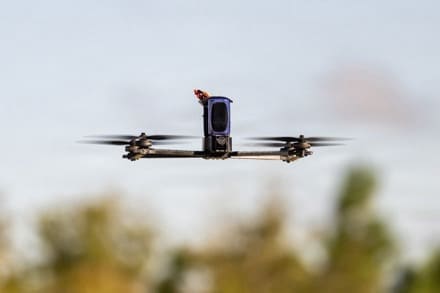
The Storm King replaced the larger Harvey version from the previous summer training. The Storm King is much smaller, folds for easier transport and is more durable, although its flight time of roughly 25-28 minutes is significantly less than the Harvey version.
“In year one, the Harvey could stay in the air for almost an hour, but it was large and basically a giant flying battery,” Davis said.
The RRC designed the Harvey drone in about a month. With a deadline driven by summer training, they rushed to prepare 18 drones for training.
“We learned that summer that they did not need to be in the air for a full hour,” Davis explained. “They needed about 20-to-25minutes worth of flight time, and certain other design considerations were more important, like having the drone be lighter and easily transportable. So, we designed the Storm King to be smaller, lighter, more compact, and a lot more robust and resilient. It doesn’t break as easy and it has flown effectively in the rain.”
In the future, Davis hopes to increase the Storm King’s capabilities through the addition of new technologies and move the system from a prototype to a production-level drone, with the ability to support repairs at the unit level using inexpensive, locally produced parts.
Software upgrades are also planned to bring Storm King closer to industry capabilities while maintaining the goal of achieving 80% of the capability at 20% of the cost, with some of that work incorporated into the classroom.
“Storm King is the drone that we’re going to have every cadet learn how to build and repair in Computing Fundamentals,” Davis said. “The course is a freshman-level course that every cadet at West Point takes, and as part of the course there is a drone build and repair block, which culminates with flying the drone that they either built or repaired themselves.”
In 2026, a total of 11 individual classes were offered through the pilot program. Beginning in 2027, every freshman will get an opportunity to do that on a yearly basis.
“The vision is that a freshman cadet coming into West Point learns to assemble this drone their first year, they learn to repair it, they learn how to fly it and operate it, so they’ve done it in the classroom,” Davis said. “Then by the summer, when they get to Cadet Field Training, those drones get issued to the CFT companies and they take them out to the field for their FTX and conduct realistic military training with it.
“Later on, when they take Technology Innovation in Emerging Warfare, they see the same drone again, and they integrate higher-level super intelligence capabilities onto that drone,” he added. “One of the things we’re looking at is integrating computational systems on board the drones capable of Aided Target Recognition (AiTR).”
Once that happens, the drones can start recognizing targets, and the cadets can even write code to do it. Later, during CLDT, cadets would use the drones tactically in the field during force-on-force engagements.
By that point, cadets would have encountered drones through four different academic and military training experiences. The overall vision is for cadets to leave West Point and enter the Army as leaders who are comfortable with the technology and prepared to adapt alongside it.
“We want to inculcate this concept of tech craft into our formations as you see happening in Russia and Ukraine where Soldiers are being adaptive to emerging technologies,” Davis stated. “Cadets are learning trade skills that are going to serve them well in combat. They’re learning how to repair systems.”
At a time when unmanned systems are playing an increasingly significant role on the battlefield, Davis said developing these skills is critically important.
“You start thinking about what do we need to get good at as Soldiers, and I would argue one of those key skills is learning to employ and survive against unmanned aircraft systems,” Davis said. “I think that’s becoming arguably as important as learning how to shoot a rifle.”
Cadets seeking more advanced experience with drones and other emerging technologies can also pursue opportunities through groups including the West Point Robotics Club, Future Applied Systems and Tactics Team, Black Knight Drone Racing Team and Combat Aerial Weapons Team.
“Those cadets are using and developing drones with much more enhanced capability,” Davis explained. “These specialized cadets get to design and employ drones that drop clusters of grenades, drones with exoskeletons that can fly through windows and bounce around stairwells. They’re seeing first-person viewer drones that you’re seeing in Ukraine right now.”
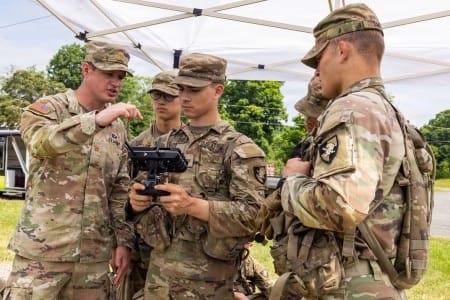
Overall, the speed of innovation has created opportunities for faculty at West Point to provide intellectual capital and develop solutions for the Army while giving cadets opportunities to engage with emerging technologies throughout the academic year and summer training.
The 12 rotating faculty, like Kaple, who helped teach cadets on the training lanes during the summer were also an important part of the process.
“That second graduating class, as we call them, and their ability to use the skills they learned in graduate school and in the field to apply toward leadership and warfighting is making the cadets here better,” Davis said. “It’s going to make them better when they go back out into the operational Army. They’ll be more prepared to be future battalion commanders having been exposed to this kind of technology.”
Ultimately, the goal is not simply to teach cadets how to use today’s technology, but to develop leaders who can think critically and adapt as technology continues to evolve.
“They are the best and brightest, and they impress me with their adaptability and their young capable minds that are full of creativity,” Davis concluded. “We also have disciplined faculty members who come up with challenging ways of teaching and inspiring them. This is about developing their critical thinking skills.
“They’re highly capable, smart cadets who can learn through tough problems, and they will rise to the suitable level if you challenge them appropriately.”
By Eric Bartelt West Point Public Affairs Specialist