TYR Tactical

Archive for the ‘Drone’ Category

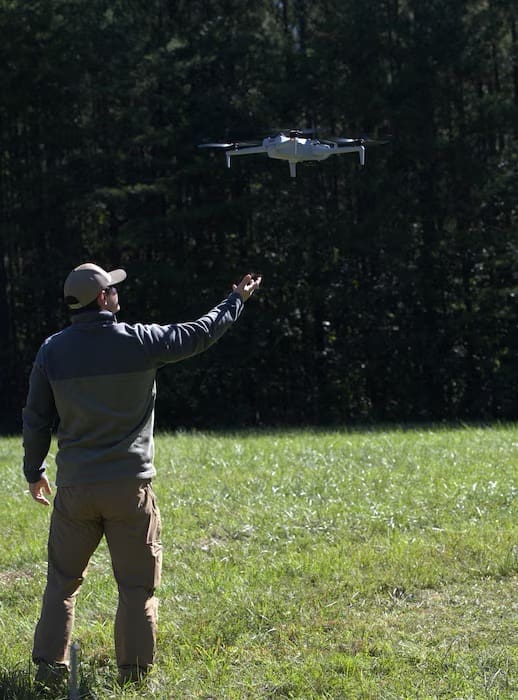
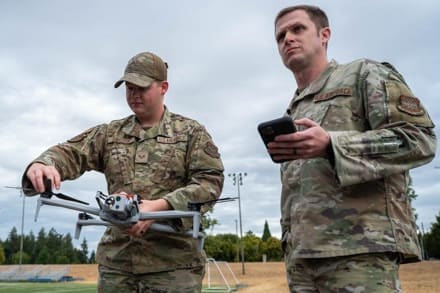
101st ABN DIV (AA) First to Employ Aevex Atlas Technology at JRTC

Thursday, April 30th, 2026

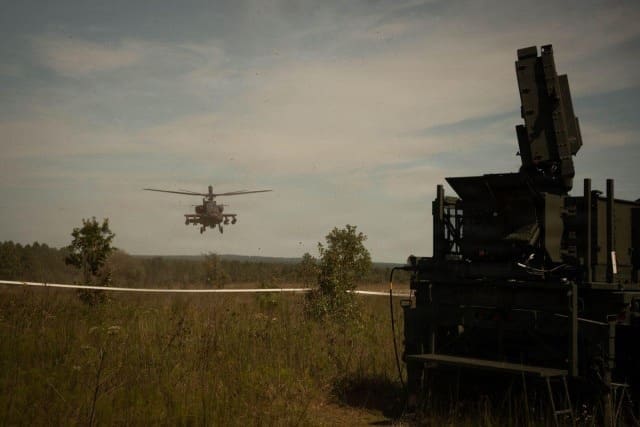
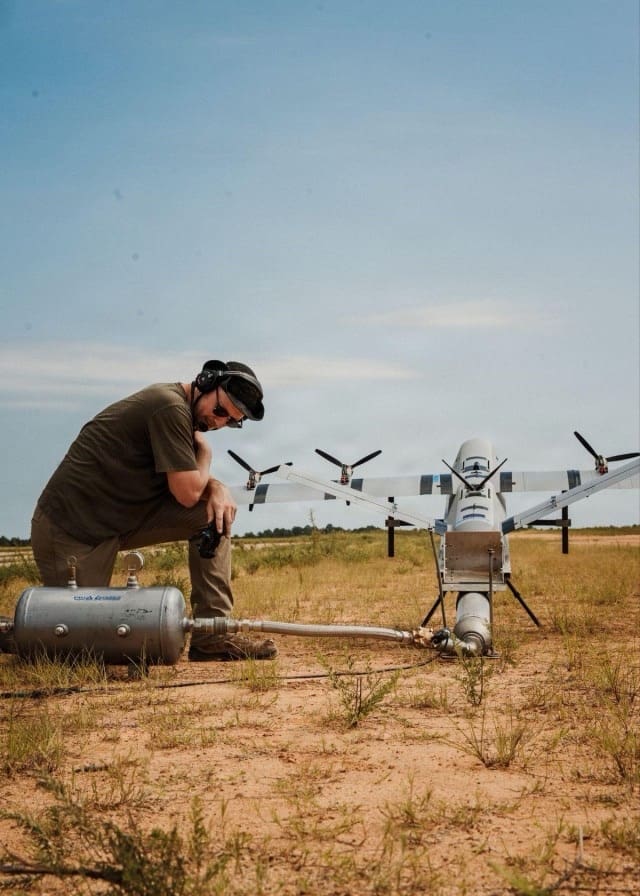
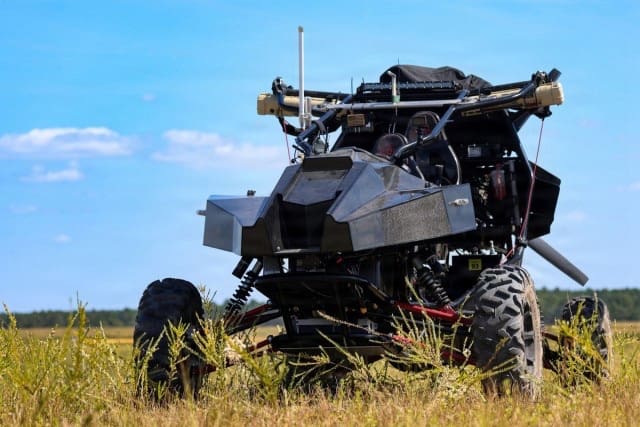
FORT POLK, La.– The 101st Airborne Division (Air Assault) became the first Division to use an Aevex Atlas Uncrewed Aircraft System (UAS) at the Joint Readiness Training Center (JRTC), Fort Polk, Louisiana, April 5, 2026. Soldiers went through a mix of intensive classroom instruction, hands-on machine and flight operations. The comprehensive training culminates in the system’s first validation during the unit’s Combine Arms Live Fire Exercise (CALFEX), April 18, 2026.

The rotation marks the first integration of the Atlas system at JRTC, a result of the company’s partnership with Project Manager Uncrewed Aircraft Systems (PM UAS) to provide Soldiers with advanced loitering munition and UAS capabilities through flight simulations and mission planning.

“This is the product’s first time at JRTC. This is a new milestone. This product will be graded [at the CALFEX], it’ll be interesting to get that feedback from the operations group,” said Caroline Christian, Logistics Analyst, PM UAS.

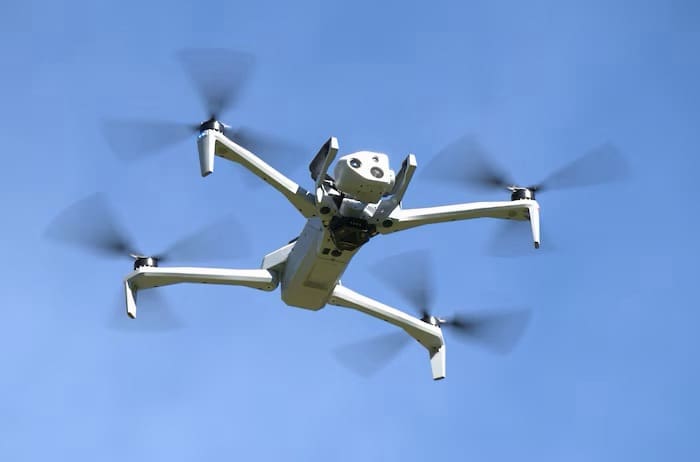
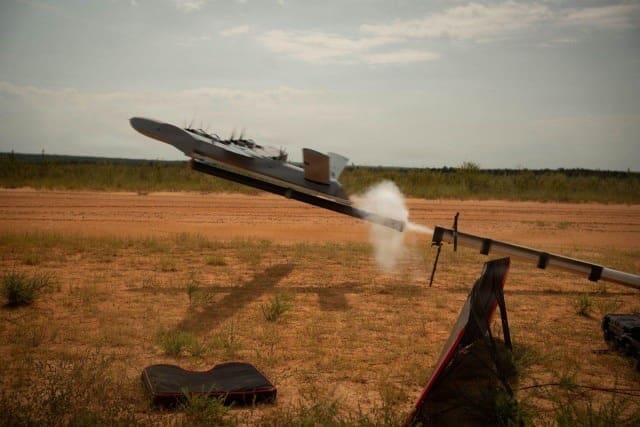
As a multi-domain Group II Launched Effects system, the Atlas can be deployed from land, air, or sea. It provides forward-stationed commanders with organic, instant access to Intelligence Surveillance Reconnaissance (ISR) assets and smart munitions, significantly enhancing lethality at the Forward Line of Troops (FLOT).

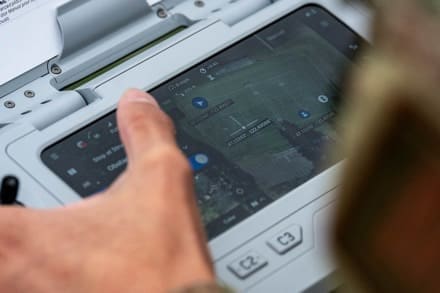
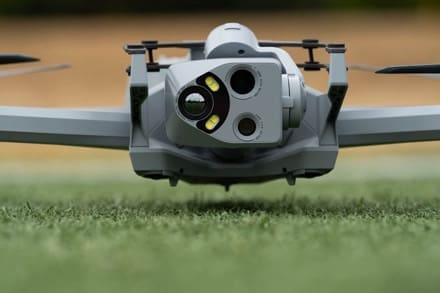
The Atlas includes a scout drone, which surveys, finds targets, and can be seen through a live video feed on the handheld Soldier Robotic Controller (SROC). The Atlas autonomous attack drone, called a “Storm”, enables Soldiers to command precision strikes on targets in contested and denied environments.

By utilizing these autonomous systems, units can execute fire support missions without exposing personnel to enemy counter-fire.

“No human life is in danger when these attack drones are employed,” said Staff Sgt. Randy Denson, 3rd Battalion, 320th Field Artillery Regiment, 3rd Brigade Combat Team, 101st Airborne Division (Air Assault).

The primary objective of PM UAS is to replace physical exposure with technological endurance. For the leadership at PM UAS, the value of the Aevex system is simple: it is better to lose a drone than a life.

“These drones keep our Soldiers out of harm’s way and safe. Pieces of metal can go in front of the line and get shot down. And Soldiers can be kept safe,” said Heather Cole, Assistant Product Manager, PM UAS.

Building proficiency with the Atlas system requires high-volume repetition. Soldiers “learn by doing”, an approach deeply rooted in Army doctrine.

“We want to make Soldiers bored, not because it’s boring, but I mean repetition,” said Blaine Tirendi, Director of Group 2 UAS, Aevex “So we’re having them plan different missions…So they understand the graphic user interface.”

Soldiers have noted the effectiveness of this “learn-by-doing” method.

“We’re on day six of training, [I feel] eight or nine out of 10 proficiency with the system,” said Staff Sgt. William Shouse, 3rd Battalion, 320th Field Artillery Regiment, 3rd Brigade Combat Team, 101st Airborne Division (Air Assault).

By putting Aevex’s Atlas directly into the hands of 101st Soldiers, PM UAS is ensuring that the next generation of technology is built for the user, by the user.

“Our main mission is to get feedback from the Soldiers so that we can improve the technology,” said Cole.“We’re trying to make sure the technology grows so that it helps Soldiers in a wartime situation.”

The end state is for Soldiers to become self-sufficient in employing the Atlas system during high-intensity operations. Having the technology in the hands of the 101st allows developers to refine the platform for the future fight.

“The Aevex engineers who designed the Atlas system are here to integrate Soldiers’ feedback in real time. That feedback loop is very quick, we’re making changes and maturing the technology right now,” said Christian.

By SPC Mariam Diallo

Mountain Horse Solutions Wins Drone Dominance Lethality Prize Challenge

Wednesday, April 29th, 2026

SARASOTA, FL – (April 29, 2026) – Through the Department of War Drone Dominance Program, Mountain Horse Solutions — a Global Ordnance company — in partnership with Gale Force Marine, Argus Industrial, and Crucial Defense Technologies, has been selected as a winner of the Drone Dominance Program (DDP) Lethality Prize Challenge.

This challenge focuses on identifying scalable and modular lethal payload solutions that can transform any Group 1 sUAS into a one-way attack system or droppable munition capable in minutes. Mountain Horse Solutions has brought together outstanding warhead and explosive design, safe-and-arm systems, remote explosive initiation systems — and integrated them into a dynamically lethal capability for any drone on the market.

“This is exactly the kind of problem set we are built for — delivering adaptable, scalable lethal solutions that keep pace with the lightning-fast evolution of drone warfare,” said Bill Allen, president of Mountain Horse Solutions. “This is a big step toward accelerating safe integration and real-world deployment, and we are poised to bring these solutions to the warfighter.”

Mountain Horse Solutions Lethality Focus Areas: 

•        Integration across multiple Group 1 sUAS platforms.

•        Support both live and training payload configurations.

•        Scalable ESAD/EMSAD safety architectures suitable for government safety review and approval processes.

•        Ability to demonstrate integrated drone-payload system at DDG2 events.

Mountain Horse Solutions, through its parent company Global Ordnance, provides comprehensive, turn-key munitions and explosives safety, transportation, and storage solutions — particularly for DDP participants. With full firearms, munitions, and explosives licenses in place, the company enables drone manufacturers to focus on their core competency, while Mountain Horse Solutions manages full lethality and munition integration —delivering mission-ready armed drones to the government.

“The requirements and licenses required to handle and arm munitions are extensive, and we are well-versed and compliant in all aspects, alleviating the need for each individual drone manufacturer to undergo that effort and expense,” Allen said.

About the Drone Dominance Program

The Drone Dominance Program (DDP) is awarding $1.1 billion in prototype orders utilizing 10 U.S.C. 4022 over four independent phases. This multi-phase plan is an advanced market commitment: the Department is posting quantities and prices up front and will award fixed price prototype deliveries with vendors whose systems meet the Gauntlet performance and delivery requirements. Each phase includes a Gauntlet test event, run by the Test Resource Management Center (TRMC), and ends with delivery of sUAS via an Other Transaction —Prototype delivery order for the winners of the Gauntlet.

At the completion of the DDP, multiple U.S. vendors will have demonstrated the ability to produce capable, low-cost, secure supply-chain sUAS at scale, enabling Services to integrate these capabilities into future acquisition pathways. Drone Dominance is relying on industry to innovate to complete battlefield missions, reduce unit costs and scale production, with a preference for systems sourced and manufactured primarily in the United States.

About Mountain Horse Solutions

Mountain Horse Solutions delivers high-performance, mission-tailored solutions for defense, first responders, and critical infrastructure worldwide. The company specializes in rapid-response equipment, integrated systems, and targeted training to address infectious disease threats, advanced security challenges, and CBRNE (Chemical, Biological, Radiological, Nuclear, and Explosive) hazards. Capabilities span Maintenance, Repair, and Operations (MRO); C5ISR (Command, Control, Communications, Computers, Cyber, Intelligence, Surveillance, and Reconnaissance); and cutting-edge protective technologies.

Every solution is purpose-built to meet the specific operational demands of military personnel, government agencies, and commercial partners — ensuring precision, reliability, and readiness in the most demanding environments. Backed by a global team with extensive experience serving the U.S. Department of Defense, Federal agencies, and international customers, Mountain Horse Solutions stands ready to solve the most complex challenges. To learn more about Mountain Horse Solutions, visit www.mtnhorse.com. 

Teledyne FLIR Defense Grows Third-Party Payload Integration Program, Adds Emesent Hovermap LiDAR for Unmanned Air, Ground, and Detection Platforms

Wednesday, April 29th, 2026

Newly certified payload works across drones, robots, and radiation detection systems to speed deployment of GPS-denied mapping and fused CBRN visualizations
QUANTICO, VA, April 28, 2026 — Unveiled at Modern Day Marine 2026, Teledyne FLIR Defense announced the expansion of its Third-Party Payload Integration Program with the certification of Emesent’s Hovermap LiDAR Payload. The agreement will deliver Emesent’s GPS-denied 3D-mapping capabilities across Teledyne FLIR’s unmanned aerial systems (UAS), ground robots, and radiation detection platforms. 

The Emesent–Teledyne FLIR combination addresses a GPS-denial gap in air and ground domains where unmanned systems can lose GPS connectivity in common operating areas, such as tunnels, urban structures, and CBRN-contaminated spaces. Using LiDAR-based Simultaneous Localization and Mapping (SLAM), Emesent’s Hovermap payload generates accurate 3D maps without GPS or external infrastructure. 

On Teledyne FLIR’s SkyRanger® R70 and R80D SkyRaider® UAS platforms, Hovermap enables mapping even in GPS-denied environments. Mounted on the company’s SUGV™ 325 ground robot, Hovermap provides users with persistent 3D awareness of complex enclosed environments streamed in real-time. And integrated with Teledyne FLIR’s MUVE™ R430 radiation detection payload on the SUGV, Hovermap allows operators to see not just where a robot has been, but where radiation levels are elevated, giving CBRN teams an immediate, geo-referenced picture of the threat environment. 

“Knowing the shape of a space is powerful. Knowing where the radiation is within that space, in real time, without putting a person in harm’s way, is an operational game-changer,” said Stefan Hrabar, co-founder and chief strategy officer at Emesent. “Our partnership with Teledyne FLIR Defense brings together GPS-denied mapping and radiation detection in a way that directly addresses what CBRN operators need in the field.” 

“Teledyne FLIR builds platforms trusted for the most demanding CBRN missions in the world,” said Tung Ng, vice president of Unmanned Systems North America for Teledyne FLIR Defense. “Working with Emesent, we’ll be able to give operators a fused, spatial picture of the threat environment they simply haven’t had access to before.  

“This is the direction the whole field is heading in, and we’re delivering it now through certified third-party payloads like Hovermap,” Ng added. 

Emesent’s Hovermap represents the firm’s success in utilizing Teledyne FLIR Defense’s open-architecture, partner-enabled development ecosystem. Certified payloads are assessed for mechanical fit, electrical interface, software compatibility, and flight performance, giving customers confidence in mission-tailored capabilities from a growing partner ecosystem.  

The partnership also establishes a technical foundation for future capability development. Both companies are actively developing autonomous navigation capabilities and expanding multi-sensor fusion beyond radiation to additional CBRN detection modalities. 

The integrated systems will be on display at Teledyne FLIR Defense booth #1724 at Modern Day Marine 2026, April 28–30, at Marine Corps Base Quantico.  

BRAKER Breakthrough: New Air-Delivered Bunker Busting Warhead Tests Successfully

Sunday, April 26th, 2026

PICATINNY ARSENAL, N.J. – In a significant leap forward for battlefield technology, U.S. Army Infantry Drone Operators have successfully tested a new warhead designed to be delivered by an unmanned aerial system (UAS).
The live-fire demonstration of the Bunker Rupture and Kinetic Explosive Round (BRAKER), which took place at a Redstone Arsenal in Alabama on March 26, comes only weeks after the initial design and rapid prototyping of the system, showcasing the Army’s accelerated approach to innovation in the face of evolving threats.

VIDEO BELOW:

The Army continuously transforms by using the latest technologies for warfighting advantage, and ensures that the force is lethal, modern and ready. The development of this air-delivered munition directly supports that mission as well as two senior leader priorities in Readiness and Transformation.

SLOW-MOTION VIDEO BELOW:

The BRAKER project, led by a team from the U.S. Army Combat Capabilities Development Command (DEVCOM) Armaments Center and Project Manager Close Combat Systems (PM CCS), a project office under the U.S. Army Capability Program Executive Ammunition and Energetics (CPE A&E), aimed to create a lightweight, powerful, and lethal warhead that could be deployed from a small, agile drone.

“Our Picatinny team went from concept to live-fire in two weeks,” said Col. Vincent Morris, PM CCS. “BRAKER proves our ability to rapidly develop and safely deliver devastating effects from small unmanned aircraft systems (sUAS). We are now creating the architecture with Picatinny Common Lethality Integration Kit (CLIK) and the small universal payload interface (sUPI) for industry to scale this critical warfighter advantage.”

The Picatinny CLIK is a safe and effective method for integrating lethal payloads with UAS platforms, designed and developed by DEVCOM Armaments Center engineers.

The rapid development-to-testing timeline of BRAKER was made possible by the Army’s emphasis on additive manufacturing, also known as 3D printing.

Beginning in early March, Armaments Center engineers began design, explosive pressing, housing manufacture, and integration of the warhead to be used on a low-cost and expendable one-way attack drone.

Shortly thereafter, transfer and compatibility tests were conducted at Picatinny and approximately a dozen warheads were assembled, with one being tested on a makeshift bunker on one of the installation’s test ranges.

After proving worthiness and validating effectiveness, the prototype warheads departed Picatinny for Redstone where a live demonstration was conducted for U.S. Army leadership.

The successful detonation of the device deployed on a drone on a designated target demonstrates a new and potent capability for the modern warfighter and illustrates how engineers can quickly design, fabricate, and integrate hardware to meet urgent and compelling needs.

“Rapid demonstrations of overwhelming lethality such as BRAKER are attributed to years of continued technology investments and the organic core technical competencies and facilities resident at the DEVCOM Armaments Center,” said Anthony Sebasto, Executive Director, Munitions Engineering and Technology Center.

By Eric Kowal

Marine Corps Completes the Early Capability Release of OPF-Light

Wednesday, April 22nd, 2026

Marine Corps Base Quantico, Va. —

In a pivotal step for infantry modernization, the Marine Corps has successfully completed Initial Operational Test and Evaluation (IOT&E) and the early capability release of the Organic Precision Fires-Light (OPF-L) system.

Managed by the Program Manager for Ground Weapons Systems (PM GWS) at Portfolio Acquisition Executive Marine Corps (PAE MC), the OPF-L gives infantry battalions a significant advantage through organic precision strike power. With features like waypoint navigation and target-locking, Marines can guide the munition to its target while maintaining full situational awareness. This allows battalions to strike beyond the enemy’s threat range and dynamically shape the battle before closing with the enemy.

This milestone illustrates how far the program has come in just two years since contract award. “Speed and acceptance of risk have always been the drivers behind this effort, and we have identified any and all opportunities to remove roadblocks and push the limits of acquisition to move quickly,” explained LtCol Jesse Hume, from the Organic Precision Fires program office.

The comprehensive IOT&E tested the full operational sequence of the OPF-L systems. From mission planning and system deployment to target acquisitions, positive identification, and simulated engagement, the event confirmed that the hardware, software, and most importantly, the warfighter, are ready for deployment. This success demonstrates a maturing capability and proves the system’s effectiveness and seamless integration with established infantry tactics.

“This weapon system is important to the Marine Corps because it allows our maneuver element to close on the target without putting any support by fire in the line of sight of the enemy,” said 1st Lt Jaime Alarcon an infantry officer within 1stBattalion, 7th Marine Regiment, 1st Marine Division. “The system allows us to get effects on the target without exposing any of our warfighters to that target.”

The feedback gathered from Marine’s will be vital for refining the training pipeline and informing the final procurement strategy to field the capability at scale. “This early capability release allows us to learn incrementally. If it’s safe, we put it out there, and Marines help refine the solution,” explained Tyler Hall, a project officer for OPF-L at PM GWS.

The capability release signifies a major step forward in the Marine Corps’ Force Design efforts. It moves the concept of a more lethal, distributed, and agile force from a strategic goal to a tactical reality and ensures the infantry squad remains the most decisive element on the modern battlefield.

By Addi Vander Velde, Office of Public Affairs & Communication
Eyes in the Sky: How sUAS Training is Changing the Way Soldiers Fight

Tuesday, April 21st, 2026

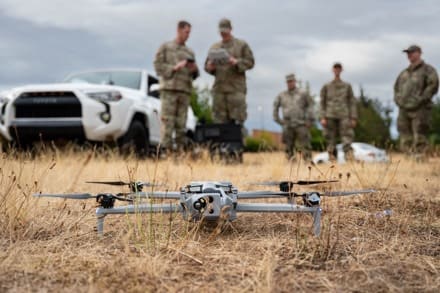
MARCH AIR RESERVE BASE, Calif. – In a classroom here, Soldiers learned that on today’s battlefield, even a small drone can present a serious threat. Through small unmanned aircraft systems training, they sharpened the skills needed to identify, report, and respond to emerging aerial dangers.

To increase readiness on an evolving battlefield, Mel Pilapil, an instructor with the U.S. Army Reserve Command Readiness Support Development Team, conducted several blocks of instruction on identifying and countering sUAS. Dozens of Soldiers assigned to the 302nd Mobile Public Affairs Detachment and the 371st Combat Sustainment Support Battalion attended the training to improve their ability to identify and respond to sUAS on a modern battlefield.
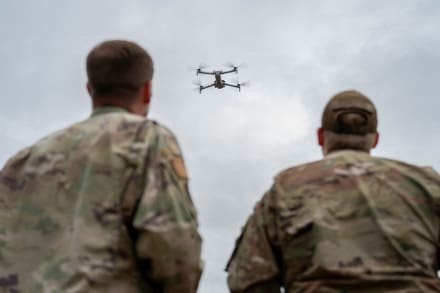
As sUAS technology continues to evolve and spread rapidly, Soldiers must be prepared not only to use these systems, but to defend against them. Training focused on recognizing, mitigating, and responding to enemy drones is now essential to maintaining battlefield awareness, protecting personnel, and ensuring mission success. During the training, Soldiers were introduced to the various ways enemy forces can employ sUAS, including intelligence, surveillance, and reconnaissance (ISR), direct and indirect attacks, swarm tactics, and electromagnetic warfare. Understanding these capabilities allows Soldiers to anticipate threats before they become immediate dangers.

Instruction also emphasized recognizing Low, Slow, Small (LSS) drone systems, including Group 1, 2, and 3 classifications. Soldiers learned to identify visual indicators such as rotor configuration, lighting, and potential payloads—critical details that improve reporting accuracy and response time.

Beyond identification, the training focused heavily on passive air defense techniques, teaching Soldiers how to reduce their visibility and vulnerability. Camouflage, dispersion, emission control, and avoiding predictable patterns were reinforced as key survival tactics in an environment where drones can quickly detect movement.

In one training scenario, Soldiers identified a simulated enemy drone entering the area of operations. Using the SALUTE reporting format, they communicated the size, activity, location, and characteristics of the threat, demonstrating how structured reporting supports faster decision-making and coordinated responses.

“This training is critical in today’s operational environment,” said instructor Mel Pilapil. “As we know currently, there are drones and drone attacks everywhere. The only way we can protect ourselves and others is by being aware of how to recognize, report, and react to these kinds of threats.”

For Soldiers preparing for future missions, the training reinforced how these skills directly impact survivability. “I think it’s important because it increases troop survivability in the battlefield and gives you insight on how to deal with drones and emerging situations,” said Pfc. Adam Li, a Soldier assigned to the 371st Combat Sustainment Support Battalion, whose unit is scheduled to deploy in the future.

For many Soldiers, the training highlighted how quickly warfare is changing. Unlike traditional threats, sUAS systems are accessible, adaptable, and increasingly used by adversaries at all levels. What once required large-scale air support can now be achieved with a small, inexpensive drone, making awareness and preparation more important than ever.

As demonstrated during the training, sUAS can serve as both a powerful force multiplier and a significant threat on the battlefield. Their rapid advancement and widespread use over the past decade have transformed the way military operations are conducted.

There is no single solution to countering this threat. Instead, Soldiers must continuously train, adapt, and employ a combination of counter-sUAS tactics, techniques, and procedures. By doing so, they remain prepared to meet the challenges of modern warfare and maintain the advantage in an increasingly complex operational environment.

Story by SPC Nathan Starr 

302nd Mobile Public Affairs Detachment
Sapient Perception Secures €2M to Advance 10K Sensor Systems for Mission-Critical UAV Operations

Thursday, April 16th, 2026

Software-defined cameras and AI framework expands drone coverage 100x, with deployments planned for frontline operations in Ukraine and other contested environments

COPENHAGEN, Denmark, April 14, 2026 — Sapient Perception ApS, which builds physical AI sensor systems for UAVs, has raised a €2M pre-seed round co-led by Balnord and FORWARD.one. The Danish startup will utilize the capital to accelerate development of the company’s software-defined cameras and AI framework that enable mission-critical decision-making and autonomy through large area perception. The round will also assist in growing its engineering team, and supporting initial deployments with customers across the defense, security, and emergency response industries.


Founded by Anthony Garetto (CEO), Lau Norgaard (CTO), and Michael Messerschmidt (CBO), Sapient Perception is focused on solving a fundamental visibility challenge in modern UAV operations. Drones capture more images and data than ever, but bandwidth limitations force a tradeoff between imaging coverage and resolution. Operators are constantly switching views to compensate.


Sapient addresses this problem with first-of-its-kind 10K sensors that cover up to 100 times larger areas than conventional sensors at the same detailed resolution in a single frame. Meanwhile, its novel edge processing pipeline enables actionable insights from enhanced imaging to be delivered onboard in real-time with whatever AI models are preferred by operators. By overcoming constraints related to bandwidth, latency, and human cognitive overload, Sapient Perception unlocks autonomous operational capabilities that were previously inaccessible in time-critical environments.

“In mission-critical situations, the ability to make fast, informed decisions determines outcomes,” said Anthony Garetto, CEO and co-founder of Sapient Perception. “Our perception layer enables persistent situational awareness through a far wider lens, while delivering the important details to operators in real time. Having this whole picture means decisive action can be taken faster and with a higher level of confidence.”

The company is already working with Dropla Tech to integrate Sapient’s large area perception sensors into UAVs designed to fly low and ahead of military convoys. Sapient’s imaging will feed into Dropla Tech’s Blue Eyes platform, which is being used today by the Ukrainian Ministry of Defence to process real-time drone video to detect ambush drones and landmines along supply routes near Ukraine’s front lines. Sapient is also working with partners deploying its sensors on high-altitude platforms, including stratospheric systems for wide-area ISR, highlighting the flexibility of its perception layer to customers, system integrators, and industrial partners across Europe and North America.

The investment from Balnord and FORWARD.one reflects growing demand for edge-based intelligence as operational complexity and the criticality of advanced sensors increase across defense and security domains.

“Modern defense and security operations are not taking advantage of the most advanced sensors and the vast data they generate,” said Jarek Pilarczyk, Partner at Balnord. “Sapient Perception addresses this challenge with a highly differentiated edge AI approach that we believe will become foundational to next-generation systems.”

“In the environments Sapient Perception serves, every second matters. Their technology turns high-quality sensor data into real-time insights at the edge, enabling 100× greater coverage than today’s systems. It’s a clear step change — built by a team that knows how to move fast and deliver,” added Cailin Greiner, Investment Manager at FORWARD.one.

US Army Best Ranger Competition Integrates Live Drone Threats in Historic First, Selects Powerus’ Tandem Defense Matrix-T for Targets

Thursday, April 16th, 2026
  • Elite 75th Ranger Regiment teams train against real one-way attack drone threats using Powerus-backed Matrix-T platforms
  • Powerus recently announced a proposed merger with Aureus Greenway Holdings Inc. (Nasdaq: AGH), positioning Powerus to become publicly traded upon completion

WEST PALM BEACH, Fla. and FORT MOORE, Ga., April 15, 2026 — The battlefield has changed, and now, so has the U.S. Army’s toughest competition.

Powerus, through its wholly owned subsidiary Tandem Defense LLC, today announced that the Matrix-Ttarget drone was selected and successfully fielded for the inaugural “Last Line of Defense” training lane at the 42nd Annual U.S. Army David E. Grange Jr. Best Ranger Competition (April 10-12, 2026).

This marked the first time live FPV drones were integrated into the competition, introducing a new “Last Line of Defense” scored training lane in which elite Army Ranger teams were forced to detect, track, and destroy fast-moving aerial targets with direct fire from their service rifles. The addition of FPV target drones gave America’s premier Rangers realistic, high-fidelity training against modern one-way attack-drone threats, using an American-made FPV solution from Powerus.

The Matrix-T is a purpose-built small FPV target drone engineered specifically for U.S. military counter-drone training. It accurately replicates the speed, agility, and flight behavior of operational enemy FPV systems, mirroring modern battlefield warfare, and allowing U.S. troops to practice defeating dynamic aerial threats with service rifles when electronic warfare layers are degraded or unavailable. With top speeds up to 130 mph and 2 kg payload capacity, the Matrix-T delivers authentic threat emulation in a rugged, repairable, low-cost package.

Elite Validation and Proven Performance Under Extreme Conditions

The Best Ranger Competition is one of the most demanding tests of soldier performance in the U.S. Army. This year’s winners from the 75th Ranger Regiment demonstrated exceptional adaptability and precision under pressure.

Powerus and Tandem Defense supplied multiple Matrix-T drones to support approximately 40 elite Ranger teams. Only five drones were expended across the entire high-intensity event and rehearsals. Leveraging the innovative solder-free Matrix Architecture (developed by Tandem Defense), downed drones were rapidly diagnosed, repaired, and returned to flight using only a single screwdriver. This field repairability reduces the average cost-per-engagement for U.S. soldiers’ training, offering a dramatically more sustainable and cost-effective alternative to disposable foreign systems.

The Matrix T performance underscores a critical reality: success on tomorrow’s battlefield will depend on the ability to counter drone threats at the individual soldier level.

Advancing American Military Readiness

By integrating the Matrix-T, the Best Ranger Competition set a new standard for counter-UAS training: shifting from static targets to fast-moving, realistic aerial threats that mirror those faced on today’s battlefields. Selecting a domestic, repairable platform reduces reliance on foreign supply chains and empowers soldiers to maintain their own training assets with minimal logistics support. The Matrix-T drones delivered realistic threat profiles, including: High-speed FPV attack runs, unpredictable maneuvering, and real-world engagement distances.

This forced competitors to adapt in real time, just as they would when layered counter-UAS defenses fail, and the individual soldier becomes the final line of defense.

“Matrix-T gives soldiers a low-cost way to train for the real fight,” said Brett Velicovich, founder of Powerus. “If you’re not training against realistic FPV drone threats, you’re not ready for today’s battlefield.”

Powerus congratulates the winners of the 2026 Best Ranger Competition: Sgt. Drew Schorsch and Spc. Caleb Godbold from the 75th Ranger Regiment. Their triumph, which is the Regiment’s sixth consecutive victory, exemplifies the skill and adaptability of America’s elite light infantry. The strong performance across all teams in the new drone defense lane further demonstrates the growing importance of realistic, hands-on counter-drone training.

Availability

The Matrix-T target drones are available for immediate purchase and ready to ship to U.S. military and allied units building or expanding counter-drone training programs. Units receive preprogrammed and pre-tuned systems, providing a reliable, fully domestic, and highly maintainable solution for preparing warfighters against proliferating one-way attack drones. Learn more at www.power.us or www.tandemdefense.com.

About Powerus
Powerus builds and scales unified autonomous systems architecture designed to move, protect, and sustain critical assets in high-risk environments. The company is building next-generation autonomous drone infrastructure and technologies for defense and critical infrastructure, positioning Powerus to support the rapidly expanding global demand for AI-enabled autonomy, defense systems, and modern battlefield capabilities. Production is scaled through U.S.-based manufacturing and strategic partners to support mission requirements. For more information, visit www.power.us.