Troop Performance

Archive for the ‘Unmanned Systems’ Category

FlyTrap 5.0 Puts Emerging Tech in Warfighters’ Hands

Tuesday, May 5th, 2026

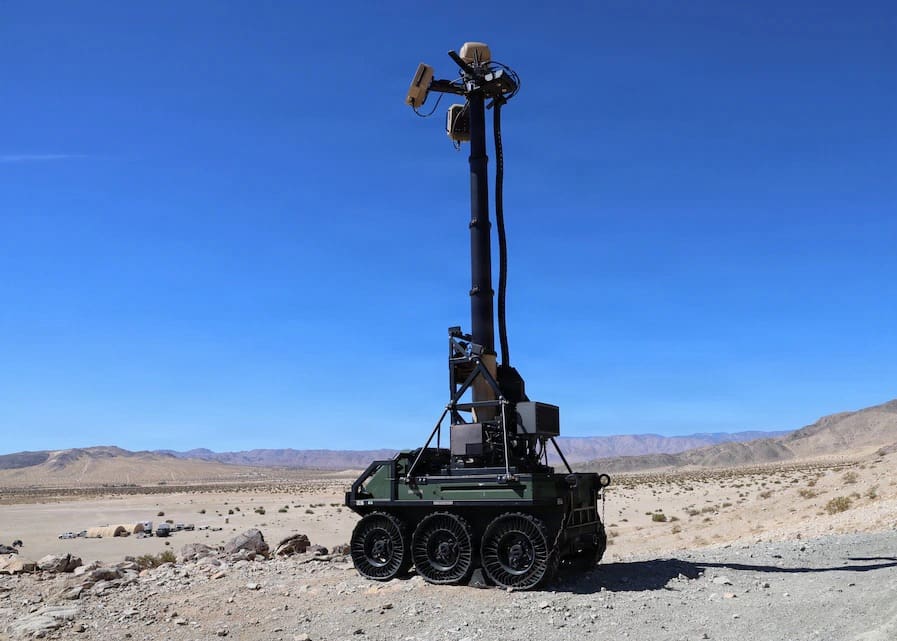
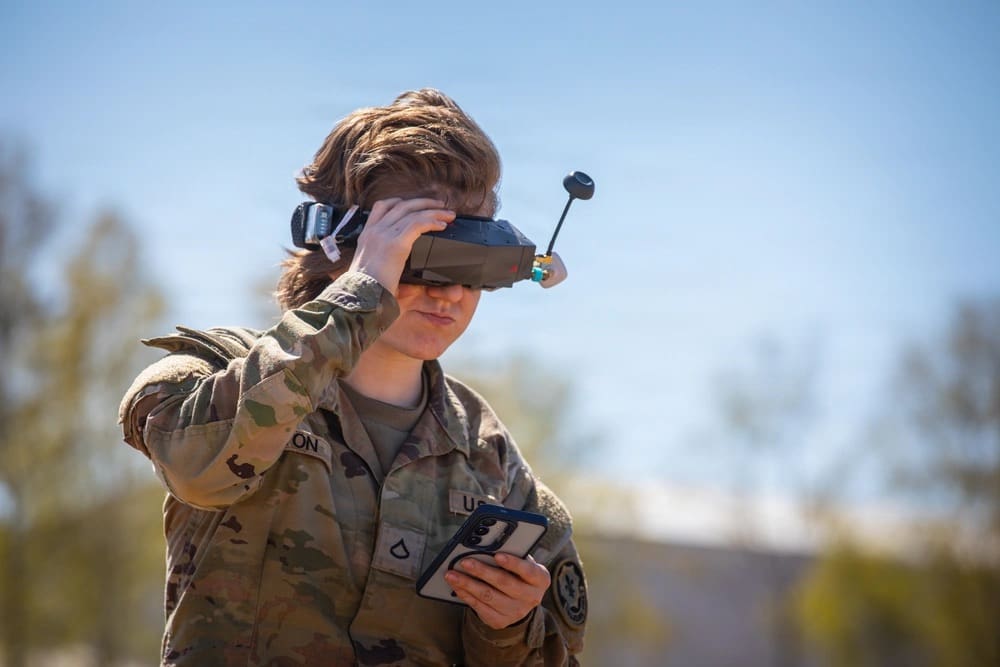
PABRAD? TRAINING AREA, Lithuania – U.S. infantry Soldiers from the 2nd Cavalry Regiment and paratroopers from the U.K. Parachute Regiment prepare for the force-on-force phase of Project FlyTrap 5.0 at Pabrad? Training Area, Lithuania, May 2. FlyTrap 5.0 integrates autonomous and unmanned ground vehicles, first-person view drones and counter-unmanned aerial systems on the simulated battlefield.

The day marked the third consecutive day of preparation and system integration for the exercise, which included an exercise briefing attended by U.S. Soldiers and U.K. paratroopers participating in the force-on-force portion of FlyTrap 5.0. Soldiers spent the remainder of the day conducting drone familiarization, operating unmanned ground vehicles and rehearsing C-UAS procedures in preparation for the upcoming engagement.

Among those preparing was Spc. Arthur Tugman, an infantryman assigned to 1st Squadron, 2nd Cavalry Regiment, who has taken on the role of unmanned ground vehicle operator for the exercise, a mission set outside his traditional infantry duties.

“My role in FlyTrap 5.0 is to serve as an unmanned ground vehicle operator, where I operate various unmanned ground vehicle platforms to transport equipment, Soldiers, unmanned aerial systems and counter-unmanned aerial systems to wherever they are needed,” Tugman said.

The integration of infantry Soldiers into UGV operations reflects a broader theme running through FlyTrap 5.0; placing emerging technology directly in the hands of warfighters regardless of their primary specialty, and using their feedback to drive rapid improvements across the force. FlyTrap 5.0 hopes to organically assimilate these new duties to Soldiers already assigned to units.

Tugman said the speed at which his unit has been able to absorb and operate the new systems has been one of the more surprising aspects of the exercise.

“Something I learned that I didn’t expect was how fast the United States Army is able to integrate new systems into warfighting tactics,” he said. “I’d say this equipment is very easy to use. I’m able to pick it up, turn it on, and send it wherever it needs to go, as far as it needs to go, as fast as it needs to go.”

That ease of use, Tugman said, has direct implications for how the soldiers could employ these systems at scale across the force.

“If all our technology works the way it’s supposed to, we will preserve manpower as well as accomplish the mission faster and more effectively,” he said.

For Tugman, the measure of success extends beyond the exercise itself. He described his goal as helping establish repeatable, standardized procedures for integrating C-UAS and UGV capabilities into 2nd Cavalry Regiment’s formations; procedures he hopes will eventually be adopted Army-wide.

U.S. and Allied forces conduct Project Fly Trap 5.0 as part of a series of linked exercises, including Sword, Saber Strike, Immediate Response, and Swift Response, which transform experimentation into capability. During Flytrap, Soldiers integrate counter-unmanned systems, AI-enabled command and control, and live data networks to move faster, decide faster, and fight more effectively across all domains.

Story by SGT Max Elliott

196th Mobile Public Affairs Detachment

USSOCOM Launches Advancing Naval Capabilities through Holistic Opportunities and Resources (ANCHOR) Initiative

Monday, April 27th, 2026

United States Special Operations Command (USSOCOM) Special Operations Forces Acquisition, Technology, and Logistics (SOF AT&L) has announced the Advancing Naval Capabilities through Holistic Opportunities and Resources (ANCHOR) Initiative.

Using Other Transactional Authority (OTA) acquisition, the ANCHOR Initiative’s purpose is to form a sphere of technological excellence made up of participants from industry, non-profit organizations, and not-for-profit entities able to rapidly and efficiently propose and carry out, through maximum practicable competitive procedures, the development of prototype solutions that sustain and expand strategic superiority within broadly stated special operations focus areas of interest. It is intended that Participants will perform a strategically important role in developing solutions focused on the development, demonstration and transition of resilient and dynamic technological capabilities critically necessary for the Nation’s Special Operations Forces.

Focus areas include:

Focus Area 1: Unmanned Systems. Across the maritime domain, USSOCOM is increasingly leveraging unmanned and autonomous systems to push the limits of where and how its forces can operate. Integrating unmanned aerial, surface, and underwater platforms enables longer persistence in contested and denied environments, surveillance and reconnaissance in high-risk areas, and enhanced situational awareness without exposing personnel to unnecessary danger. USSOCOM is particularly interested in capabilities that improve cross-domain coordination, reduce the logistical footprint of deployed forces, and deliver reliable data and effects in dynamic maritime conditions. Innovations in autonomy, sensing, endurance, and resilient communications are key to enabling the next generation of maritime unmanned systems that support USSOCOM’s evolving role in multi-domain operations.

Focus Area 2: Counter-Unmanned Systems. To stay ahead of rapidly evolving unmanned threats, USSOCOM is prioritizing capabilities that can sense, understand, and respond to hostile systems before they impact the mission. As autonomous and remotely operated platforms become more accessible and adaptive, the need for agile, layered defense systems has become essential to preserving operational security and freedom of action. USSOCOM is interested in technologies that detect, track, and neutralize unmanned threats—from individual platforms to coordinated swarms—within the constraints of maritime special operations. Solutions optimized for size, weight, and power; capable of functioning in contested electromagnetic environments; and effective against both kinetic and electronic attack vectors are of particular interest. These capabilities are critical to enabling mission assurance, safeguarding personnel, and maintaining tactical advantage in multi-domain maritime operations.

Focus Area 3: Command, Control, Communications, Computer, Cyber, Intelligence, Surveillance, and Reconnaissance (C5ISR). At the core of USSOCOM’s future force design is a resilient C5ISR enterprise that connects sensors, shooters, and decision-makers across every domain. Next-generation C5ISR systems are expected to integrate multi-source intelligence, resilient communications, and cyber-secure data networks, enabling USSOCOM operators to sense, process, and act faster than the adversary. USSOCOM is particularly interested in technologies that strengthen edge connectivity, leverage AI-enabled analytics for real-time situational awareness, and ensure data integrity across denied or degraded environments. Seamless integration of cyber defense, intelligence fusion, and tactical communications allows operators to maintain command and control across dispersed forces while enabling intelligence collection and dissemination at the speed of relevance. These evolving C5ISR capabilities form the backbone of multi-domain maritime operations, empowering USSOCOM to outpace emerging threats and sustain operational advantage across every phase of mission execution.

Focus Area 4: Scalable Effects. In parallel, USSOCOM is pursuing scalable effects that provide flexible options to influence, degrade, or defeat adversary capabilities while managing risk and escalation. These effects span both kinetic and non-kinetic options, enabling commanders to match the level of impact to mission objectives, risk tolerance, and escalation considerations. USSOCOM is particularly interested in solutions that offer tunable effects—from reversible disruption and temporary degradation to permanent disablement—while limiting collateral damage and, when required, managing attribution. Technologies of interest include directed energy, electronic warfare, cyber-enabled effects, and precision engagement tools that can be employed from distributed maritime platforms and integrated with existing C5ISR architectures to deliver coordinated, scalable effects in support of complex operations.

Focus Area 5: Human Performance. Optimization of human performance is a critical force multiplier for USSOCOM, directly impacting operational readiness, mission effectiveness, and organizational capability retention. Comprehensive physical conditioning programs that address the multifaceted demands of maritime special operations serve to enhance baseline performance while simultaneously reducing the incidence of acute and chronic injuries that can sideline operators during critical mission windows. Cognitive performance enhancement through mental acuity training, stress inoculation, and neurological health monitoring addresses the complex decision-making requirements of special operations while mitigating psychological burnout that can compromise judgment and tactical effectiveness. This holistic approach to human performance optimization directly contributes to USSOCOM ‘s ability to retain experienced personnel by extending their operational careers, reducing medical attrition rates, and maintaining the institutional knowledge and tactical expertise that takes years to develop, thereby preserving USSOCOM’s most valuable asset while maintaining operational readiness across extended deployment cycles and high-tempo operations.

Focus Area 6: Human-Machine Teaming. Human-Machine Teaming represents a transformative capability for USSOCOM, enabling intuitive control of unmanned systems through natural human interfaces and providing immersive training environments for high-risk scenarios. Natural control methods, such as voice commands and gesture recognition, enable USSOCOM operators to direct autonomous systems while maintaining tactical readiness and operational security. This reduces the cognitive burden of system management, allowing operators to focus on tactical decision-making and leverage machine capabilities for surveillance, reconnaissance, and support functions. Augmented and virtual reality technologies revolutionize USSOCOM training by enabling operators to repeatedly practice complex, high-risk scenarios without the logistical constraints and safety risks associated with live training exercises while building operator proficiency in human-machine coordination. This combination of natural system control and immersive training capabilities enhances tactical proficiency while optimizing the division of tasks between human judgment and machine processing power, ultimately improving mission effectiveness in the complex and demanding maritime special operations environment.

Responses are due Jun 01, 2026 4:30 PM EDT.

Visit sam.gov for full details.

Rheinmetall and Auterion are Working Together on Drone Technology and Developing Standard Operating System for Military Industries

Tuesday, December 10th, 2024

Rheinmetall, a leading system supplier for defence technology and Auterion, the leading supplier of drone operating systems, will be working closely together to develop standardised software-based components for unmanned drone systems. The two companies signed an agreement, thereby establishing a long-term co-operation.


The two partners are combining their expertise in order to create a military industry standard for controlling and operating unmanned aerial, land and naval drone systems. The co-operation includes joint product development and sales activities for unmanned platforms. The resulting homogeneous operating system is expected to provide military users with a significant advantage.


As a drone manufacturer, Rheinmetall is drawing on the operational experience gained from the Luna NG and Aladin systems and incorporating it into its work with the customer. Various drone systems from the Düsseldorf-based technology group have already been in service for many years with the German Armed Forces / Bundeswehr and have been deployed in Ukraine for several months.

Dr Timo Haas, Chief Digital Officer at Rheinmetall AG, explains: “We see over two hundred different aerial unmanned systems in Ukraine. This makes military training very costly and time-consuming, and system interoperability is not guaranteed. Co-operation with Auterion and the development of a homogeneous operating system will enable the efficient and scalable deployment of unmanned systems. With our approach, there will be no need for system-dependent user training or system-specific integration into an overall system network in the future”.

Lorenz Meier, CEO of Auterion: “In the future, drones will be used in large quantities and, like computers and smartphones, they need a common operating system to make this happen. AuterionOS allows the customer to combine all drones on a common basis and to integrate different manufacturers into a common architecture. Our software stack has already been tried and tested in operation and thus enables software-defined defence”.

SOFWERX to Host ISEEYOU360 Tactical FPV Goggle System Demonstration

Monday, August 12th, 2024

USSOCOM will host a demo of ISEEYOU360 on 20 August 2024 from 10:30-2:30 ET.  The purpose of this event is for stakeholders across the SOF Enterprise to (1) achieve transparency with regard to ISEEYOU360 in support of Office of the Assistant Secretary of Defense for Critical Technologies, Technical area: Human-Machine Interfaces; (2) synchronize similar efforts across government and agency organizations with the intent to leverage resources and accelerate acquisition activities; and (3) develop a holistic, unified ‘site picture’ in support of future acquisition efforts around related capability.

This demonstration is only open to government personnel and is intended for participants at the action officer level. All military service members, civilian employees, and SOF AT&L Systems Engineering and Technical Assistance (SETA) contractors are invited to attend.

RSVP NLT 19 August 2024 11:59 PM ET to attend.

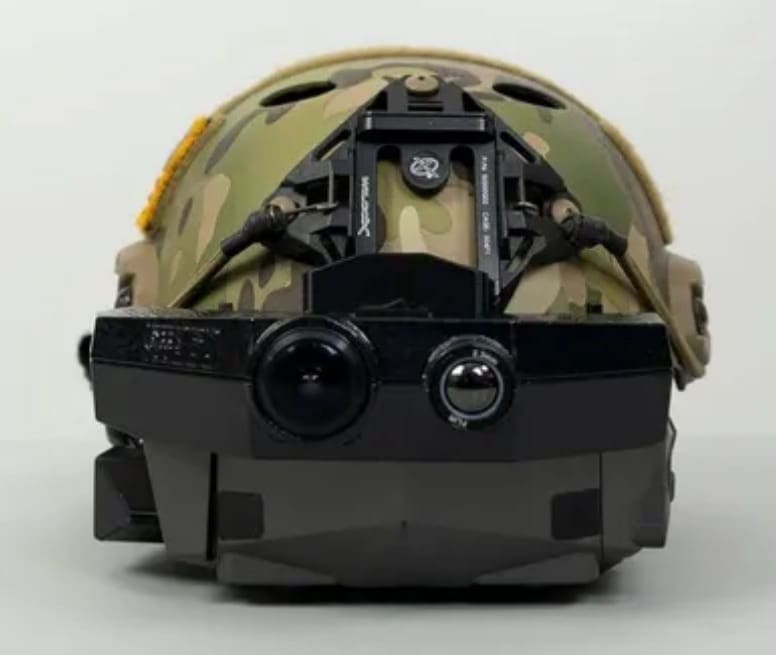
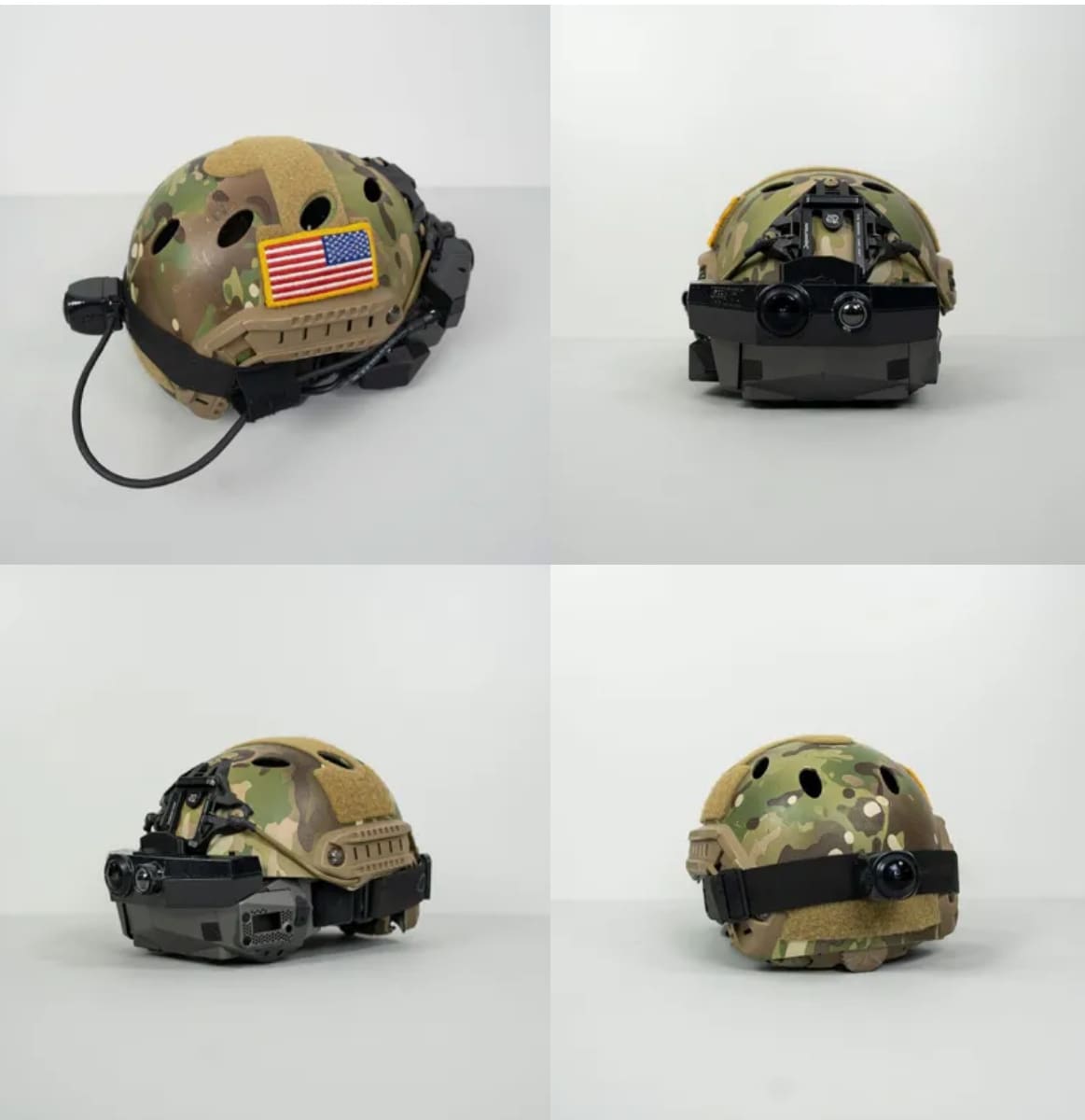
For everyone’s situational awareness, the ISEEYOU360 Tactical First-Person View (FPV) Goggle System has been under development via a couple of USAF Small Business Innovative Research grants. Initially envisioned for EOD UGV operations, it offers advantages to any unmanned system (UXS) operator whether ground, air, or maritime.

It can be used in inclement weather, sunlight, or darkness with interoperability in an Open System Architecture (OSA). As you can see from the photos, the goggle integrates with current head protection systems. It uses remotely deployable Wi-Fi through ground control, the system to provide agnostic UAV and UGV operations with hardware and cabling applications, software interface, hard surface mounting, connectivity, and signal amplification solutions.

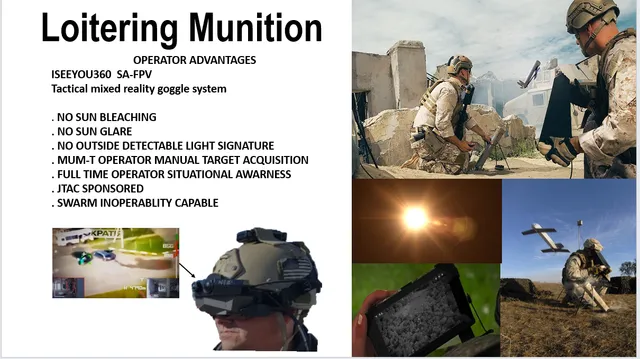
It’s an immersive FPV goggle that offers several advantages over use of a tablet. For one thing, there are no distractions outside of operating the unmanned system. Second, there’s no light signature. Additionally, the mixed reality offered by ISEEYOU360 increases situational awareness.

Below is a short video demonstrating the system.

In addition to operation of unmanned systems the ISEEYOU360 can be used for loitering munitions. Additionally, the manufacturer is working to integrating AI but they have not been forthcoming on what features they plan to incorporate.

Learn more about the ISEEYOU360 here.