TYR Tactical

Archive for the ‘Acquisition’ Category

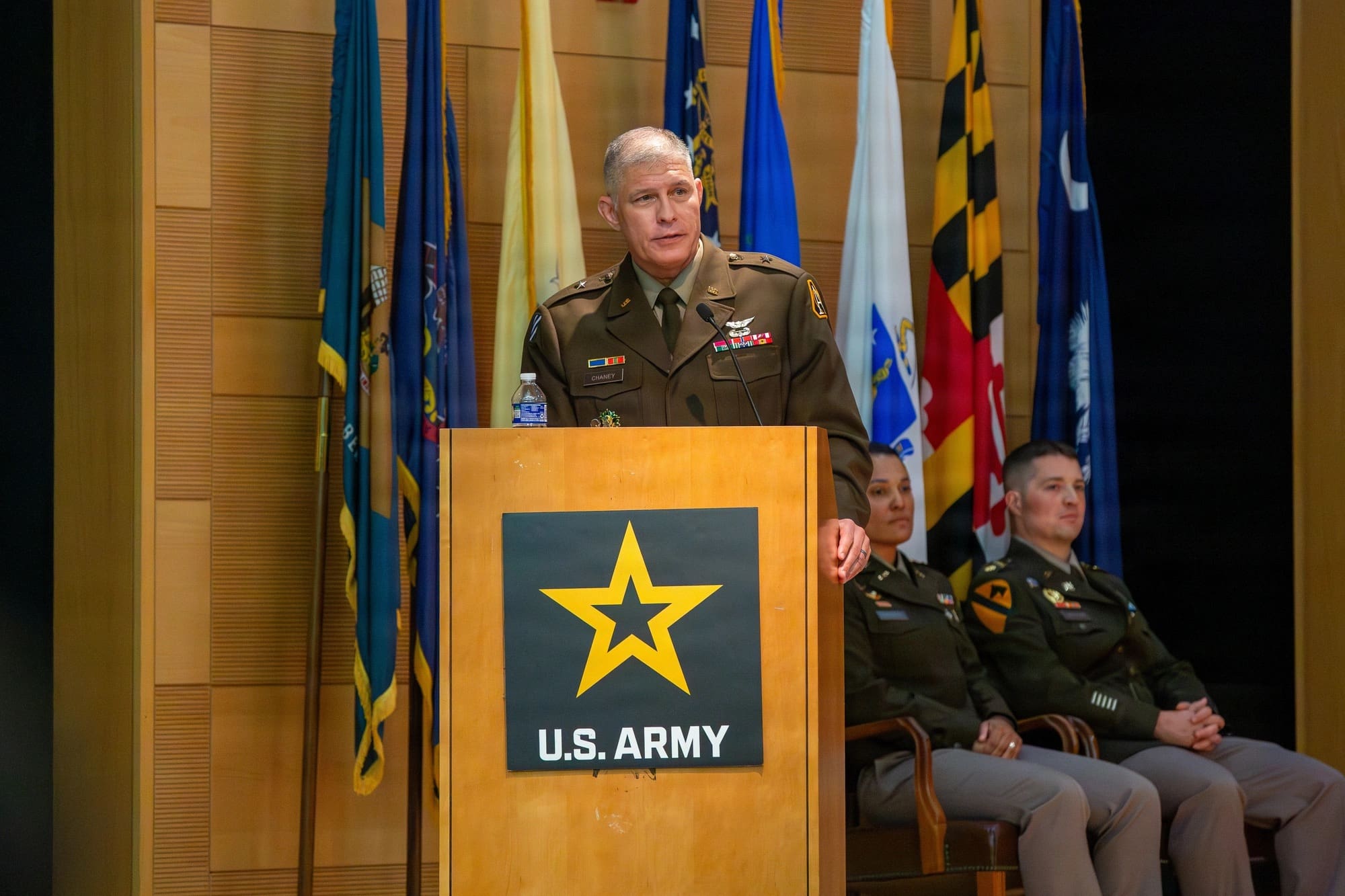
A New Force in Army Acquisition: PEOs Soldier and Ground Combat Systems Merge to Form CPE Ground

Saturday, April 11th, 2026

Fort Belvoir, Va  –  

The United States Army is currently executing the most significant overhaul of its acquisition enterprise in decades, designed specifically to increase modernization, reduce bureaucracy, and get critical warfighting capabilities into the hands of America’s Soldiers as fast as possible. This new powerhouse organization marks a fundamental shift in how the Army develops and delivers technology, unifying the teams behind the Soldier and ground combat systems into a single, integrated enterprise – Capability Program Executive (CPE) Ground. This change occurs as the Army is undergoing a deliberate transformation – altering our acquisition enterprise to match the speed, complexity, and scale of today’s security environment.

As part of this major reorganization, Program Executive Office Soldier (PEO Soldier) and Program Executive Office Ground Combat Systems (PEO GCS) are combining to form CPE Ground, bringing together Soldier systems and ground combat platforms under a single, unified organization focused on delivering integrated combat power to formations. The result is a unified force laser-focused on a single mission: delivering fully integrated combat power to our formations at the speed of relevance. The switch to a portfolio-based model ensures responsibility, authority, and accountability remain in the same hands and allows for the greatest operational impact.

This strategic move is the centerpiece of a sweeping Army-wide acquisition reform aimed at accelerating modernization. As Army Undersecretary Michal Obadal best put it, “A modernized acquisition system will position us ahead of our adversaries, strengthen our readiness, and maintain a technological edge in all domains.”

This transformation, which has been in the works for over a year, is much more than just a name change. It is a complete structural and operational realignment designed to increase unity of effort, reduce seams between platforms and Soldier systems, and accelerate capability delivery across the force.

Our North Star is efficiently delivering formation-based capabilities while driving Soldier adoption. By aligning platforms, weapons, protection, power, and mission command systems within one enterprise, CPE Ground will ensure integrated solutions are not only delivered rapidly but are intuitive, sustainable, and embraced by the Soldiers who depend on them.

CPE Ground’s portfolio includes some of the Army’s most critical modernization programs, including the M1E3 Abrams, XM30 Mechanized Infantry Combat Vehicle, M7 Rifle and M250 Automatic Rifle, Soldier Borne Mission Command (SBMC), Infantry Squad Vehicle (ISV), and the Army’s family of mortars capabilities that together strengthen combat formations from the individual Soldier to armored brigades.

And with this new realignment comes new leadership.

Leading CPE Ground will be Brig. Gen. Troy M. Denomy, who will serve as the Capability Program Executive for CPE Ground. Denomy brings two decades of experience working with and supporting Soldiers in high-profile and combat environments.

Denomy currently serves as the Program Executive Officer for PEO Soldier and is therefore deeply familiar with the breadth of systems transitioning into CPE Ground, as well as the teams that build and sustain them.

“This transformation is about delivering integrated combat power at the speed of relevance,” said Denomy. “By unifying the strengths of [PEO] Soldier and [PEO GCS] into CPE Ground, we are breaking down barriers between platforms and the Soldiers who operate them. Our focus is clear to deliver integrated, affordable, interoperable ground formation-based capabilities that provide decisive overmatch across the full spectrum of operations. The success of our work will strengthen formations from the individual rifleman to armored brigades, ensuring our Army remains lethal, agile, and ready to dominate in any fight.”

This new leadership and organizational structure streamlines the acquisition process by centralizing authority with leaders directly responsible for delivering and sustaining capabilities every day. By combining the strengths of the former PEO Soldier and PEO GCS, CPE Ground reduces bureaucratic barriers and accelerates decision-making across portfolios.

While the Army is evolving, the mission remains unchanged: to deliver integrated, interoperable ground capabilities that enable Soldiers to fight, survive, and win on the modern battlefield.

CPE Ground’s vision remains clear: to be an agile Army acquisition enterprise that rapidly delivers decisive, sustainable, and adaptable capabilities for the future fight.

Consistent with Department of War guidance, CPE Ground will field integrated capability sets more quickly, improve interoperability across weapons, sensors, protection, power, and mission command systems, and remain responsive to modernization priorities aligned with operational needs.

The stand-up of CPE Ground builds on the proven legacy of PEO Soldier and PEO GCS, positioning it to operate more effectively and respond more rapidly to emerging threats and technological change. It ensures that platforms, weapons, protective gear, and mission command systems are developed and fielded as a cohesive fighting system.

This integrated approach allows the Army to respond more rapidly to emerging threats. It ensures that America’s Soldiers will always be the most lethal and effective fighting force in the world.

By Zach Montanaro Army

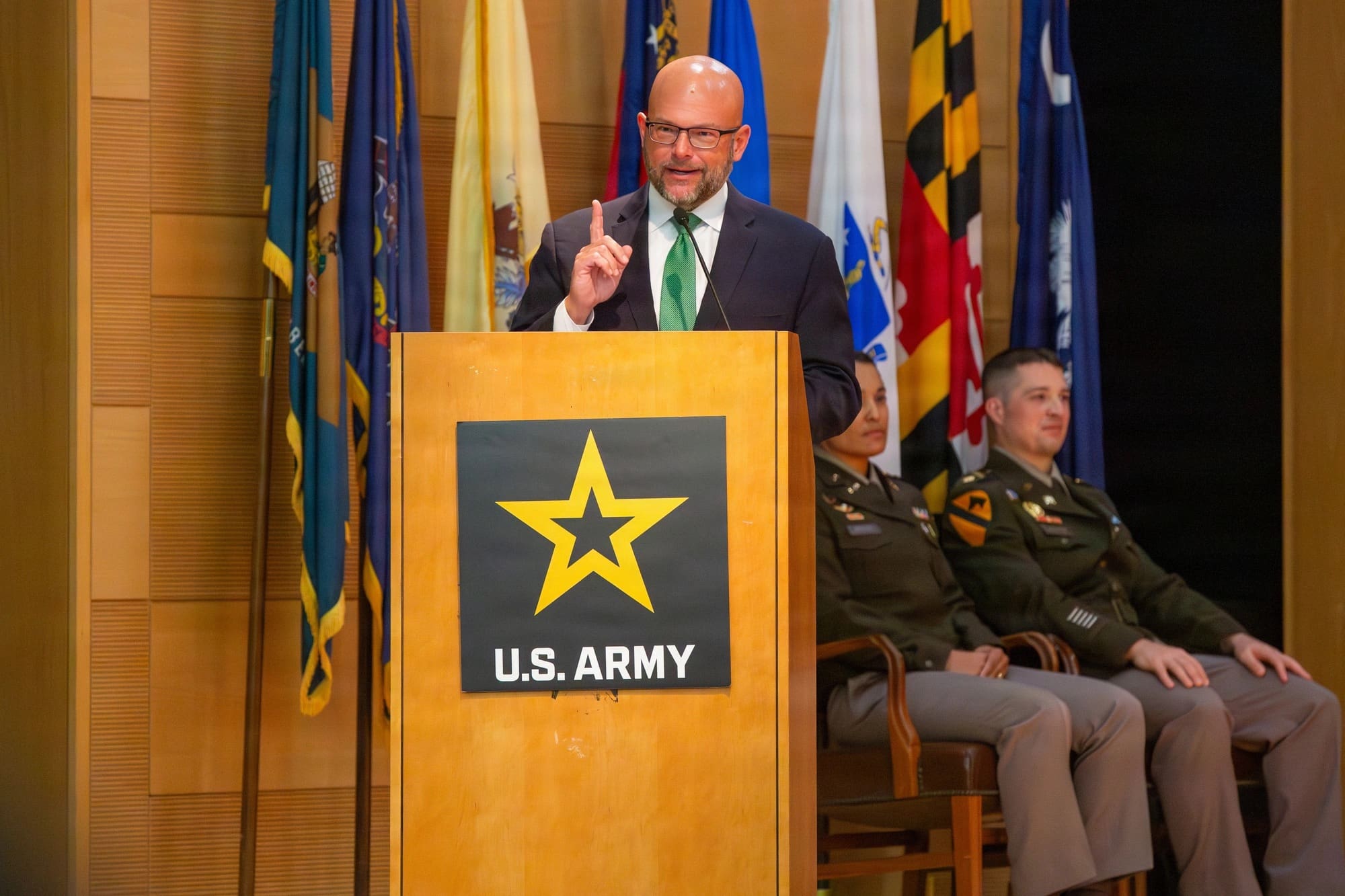
Army Reaches Conditional Agreement with Private Industry for Hyperscaled Data Centers

Sunday, April 5th, 2026

WASHINGTON – The U.S. Army has conditionally selected two companies to enter into exclusive negotiations to build and operate commercial hyperscaled data centers on two Army installations. The initiative demonstrates a model for industry relationships under the Army’s Enhanced Use Lease program.

Global Investment Firm Carlyle (NASDAQ: CG) was selected for a project on about 1,384 acres at Fort Bliss, Texas, and CyrusOne, a portfolio company jointly held by funds managed by KKR and BlackRock, was selected for a project on approximately 1,201 acres at Dugway Proving Ground, Utah. The companies were chosen through a rigorous and competitive process and will be responsible for financing, building, operating, maintaining, and decommissioning the data centers on underutilized but non-excess Army land at no upfront cost to taxpayers.

“AI is a strategic asset for the Army,” said Secretary of the Army Dan Driscoll. “It is a force multiplier, supports future transformation and requirements, keeps the Army ahead of our adversaries, and generates resiliency across the force. These data centers are a critical resource to support that strategic imperative.”

This strategic effort, which aligns with the White House’s 2025 executive order on Accelerating Federal Permitting of Data Center Infrastructure, is authorized by Title 10 U.S. Code § 2667, which allows military departments to lease non-excess property.

“By partnering with the private sector to develop cutting-edge data centers on our installations, we are bolstering our national security, driving technological innovation, and building a more resilient and modern Army,” said David R. Fitzgerald, Deputy Undersecretary of the Army. “Our new data center initiatives made possible by enhanced use leasing, are a direct investment in Army priorities.”

The Army is rapidly advancing its data center initiative, with Initial Operating Capability (IOC) at Fort Bliss projected for Fiscal Year 2027, and IOC at Dugway Proving Ground projected for Fiscal Year 2029. The U.S. Army Corps of Engineers will play a key role in the projects’ development, as they conduct lease negotiations and provide critical technical expertise, to include environmental review.

“Ensuring lethality through modernization is a fundamental mission of the U.S. Army Corps of Engineers,” said Lt. Gen. Butch Graham, USACE commanding general. “We are leaning forward with our full spectrum of talent and expertise to support the Army’s Data Center EUL program. By delivering these critical facilities on an accelerated timeline, we are not just building infrastructure; we are engineering a strategic competitive advantage for the Army and the Nation.”

While the selection is a major milestone, the deal is not yet final. It allows the Army and our private industry partners to enter an exclusive negotiation period to finalize lease and other terms. The initiative will enhance computational capability for the warfighter, create a projected significant number of American jobs, and advance the Army’s role as a key economic partner.

Insights From Our Partners:

“We are pleased to have been selected to enter exclusive negotiations with the U.S. Army on this initiative to advance next-generation digital infrastructure. With deep roots in Washington, D.C., Carlyle brings experience at the intersection of government and industry, along with a strong track record investing in and building large-scale energy and digital infrastructure. We look forward to engaging with the Army, as negotiations progress to deliver integrated solutions at scale.”

Ferris Hussein, Partner, Global Infrastructure at Carlyle

“We are honored to be selected by the U.S. Army to enter exclusive negotiations for the Dugway project. This represents a unique opportunity to support the Army’s modernization objectives through a long-term, commercially driven development. We look forward to working collaboratively with the Army as this initiative progresses.”

Eric Schwartz, Chief Executive Officer of CyrusOne.

“U.S. leadership in the global AI race will be decided in large part by who can build the infrastructure fastest. We commend Secretary Driscoll and the Army for recognizing that and developing an innovative public-private model to accelerate it. Through CyrusOne, KKR brings together land, power, and development expertise in an integrated way that cuts through the complexity of large-scale digital infrastructure delivery. We are proud to offer that capability in service of the nation.”

Waldemar Szlezak, Global Head of Digital Infrastructure at KKR.

“We are proud to partner with the Army on this important initiative, bringing together our experience in digital infrastructure and innovation. This collaboration reflects a shared commitment to advancing technology solutions that help meet the demands of a continuously changing global landscape.”

Will Brilliant, Partner and Global Head of Digital Infrastructure at Global Infrastructure Partners (GIP), a part of BlackRock.

U.S. Army Communications and Outreach Office

DOT&E Report on Next Generation Squad Weapons, Ammunition and Fire Control

Thursday, March 26th, 2026

On 13 March, 2026, the Department Of War’s Director, Operational Test and Evaluation Office (DOT&E) released their 2025 annual report to Congress. DOT&E provides oversight for acquisition related testing of new capabilities and releases an annual report. The report covers acquisition programs from each of the services and United States Special Operations Command, as well as missile systems. You can check it out here.

This article concentrates on the Next Generation Squad Weapons (NGSW) and Ammunition (W&A) and NGSW – Fire Control (FC) section.

As a reminder, the NGSW system includes the M7 Rifle, M250 Automatic Rifle, 6.8mm ammunition common to both weapons, and XM157 Fire Control mounted on each weapon. Recently added to the NGSW program is the XM8 Carbine. The M7, XM8, and the M250 are replacements for the 5.56mm M4/M4A1 carbine and M249 Squad Automatic Weapon currently used in the close combat force (CCF).

I’d like to note that the report refers to the XM157 FC without the eXperimental designation prefix it continues to carry. Over the years I have noted such instances of small details slipping through the cracks on their reports which remain at a very generic, high level for executive use.

NGSW is being procured under two separate Middle Tier of Acquisition programs: weapons and ammunition in one and Fire Control in the other. These are not traditional procurement programs but rather much more adaptive and fast paced. The NGSW W&A are manufactured by SIG SAUER, Inc, and the NGSW-FC is manufactured by Sheltered Wings, Inc, doing business as Vortex Optics.

According to the report, the Army completed an Operational Assessment of the NGSW system in October 2024 and limited lethality testing of the 6.8mm SP ammunition in December 2024 to support the planned transition of both the NGSW W&A and NGSW-FC programs from the MTA rapid fielding pathway to separate major capability acquisition programs in 3QFY26. The Army anticipates completing Live Fire Test & Evaluation (LFT&E) of the 6.8mm GP ammunition by 2QFY26. NGSW is no longer under DOT&E oversight for Developmental or Operational Testing. It has completed those tests. It does however, remain under Live Fire oversight.

The Army anticipates completing LFT&E of the 6.8mm GP ammunition at Aberdeen Proving Ground by 2QFY26. DOT&E will report on the 6.8mm GP ammunition LFT&E results in a classified lethality report in 3QFY26.

An Early Fielding Report (EFR) assessed individual soldier and squad performance using the NGSW system on static and maneuver ranges; highlighted the weapons’ suitability and soldiers’ safety concerns; and compared performance of the SP ammunition to that of current ammunition against specific types of targets.

Overall results of testing revealed these comments regarding the EFR report:

– Individual soldiers consistently qualified with their NGSW and, when firing on the variable distance range, demonstrated the ability to engage targets at extended distances.

– The 6.8mm SP ammunition generally provides increased lethality over the M855A1 (i.e., the SP ammunition for the legacy M4A1 weapon) against the tested targets.

– Improvements to system reliability, safety, human-systems integration, and compatibility with cold weather operations are needed.

– During the OA, soldiers reported negative physiological effects caused by the noxious off-gassing from their weapons, as well as concerns about the extreme heat from the weapons’ suppressors after firing.

– Most M250s equipped with M157s did not retain zero during the OA or the airborne test.

– Ergonomic complaints about the M157 persisted.

– The NGSW is compatible and safe for use during static line and military free-fall airborne operations.

In the end, the report leaves this lone recommendation:

The Army should:

1. Address the recommendations in the June 2025 EFR and classified limited lethality annex.

Naturally, we have no idea what is the classified annex. In fact, no information has been released regarding ammunition performance of NGSW than a mention that it performs similar to the commercial 270 WSM cartridge. However, considering the NGSW program remains under DOT&E oversight for the LFT&E portion of testing, we may learn more in the future.

Until then, NGSW remains a fast track program that has fielded over half of its basis of issue plan.

US Army Activates Transformation Decision Analysis Center

Saturday, March 21st, 2026

ABERDEEN PROVING GROUND, Md. — The U.S Army officially activated the Transformation Decision Analysis Center during a ceremony held Wednesday, Feb. 4, at Aberdeen Proving Ground, Md. The event marked the inactivation of the DEVCOM Analysis Center and The Research and Analysis Center, combining their expertise to strengthen the Army’s ability to plan and achieve future force capabilities.

Lt. Gen. Michael McCurry, commanding general, Futures and Concepts Command, served as the virtual host of the event, while Brig. Gen. Robert Born, commanding general, Combat Capabilities Development Command, provided local hosting onsite support.

The activation ceremony underscored the importance of TDAC’s role in the Army’s transformation efforts and its alignment under FCC, a three-star command under the Army’s newly established Transformation and Training Command.

“This is about delivering credible analysis, faster, and with greater impact,” said Larry Larimer, director of TDAC. “Together, DAC and TRAC give the Army unmatched ability to evaluate both the systems we build and the ways we will fight with them. By bringing DAC and TRAC together under FCC, we’re creating a single, authoritative source of analysis for the Army.”

DAC, headquartered at APG, has long provided systems-level analysis, modeling, and simulation capabilities to support acquisition and materiel decisions. TRAC, with centers across the country, specializes in formation-based research, combat simulations, and operational scenario development. The activation unites these complementary capabilities, enabling TDAC to connect materiel analysis with operational concepts more directly than ever before.

During the ceremony, McCurry emphasized the critical role TDAC will play in shaping the Army’s future.

“If Futures and Concepts Command is the architect of the future Army, then TDAC is the rational part of our brain,” McCurry said. “You are the scientists, the war gamers, the critical thinkers who will provide the intellectual horsepower and unvarnished truth required to turn our concepts and requirements into combat-credible reality.”

McCurry highlighted TDAC’s mission: “to ensure the Army’s most critical decisions are underpinned by objective evidence-based analysis. They are, in essence, our institutional safeguard against wishful thinking.”

Larimer echoed McCurry’s sentiments, emphasizing the deliberate choice of the word “decision” in TDAC’s name.

“The word ‘decision’ in Transformation Decision Analysis Center was deliberate. You didn’t see that word in any of our historic organizations, but when you boil it all down, that’s what we do. We inform decisions that are made from the Chief of Staff of the Army all the way down to product managers and others on the system side,” Larimer said.

The activation of TDAC marks a significant step in the Army’s transformation journey, ensuring that future force design and operational planning are informed by rigorous and sophisticated analysis.

As the Army continues to adapt to evolving threats and technologies, TDAC will serve as a cornerstone of its transformation efforts, providing the logic and evidence needed to shape the force of tomorrow.

By Kyle Bond, TDAC Public Affairs

US Army Activates CPE Mission Autonomy

Monday, March 16th, 2026

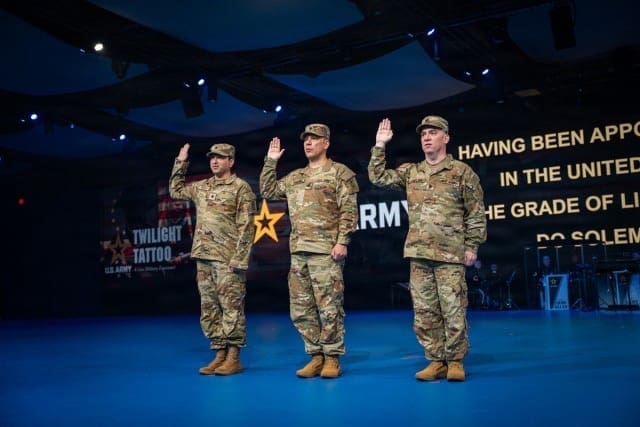
FORT BELVOIR, Va. – Last month the Army officially activated the Capability Program Executive Office for Mission Autonomy, in a ceremony at the U.S. Army National Museum. Presiding over the ceremony was the Portfolio Acquisition Executive for Maneuver Air, Maj. Gen. Clair Gill.

Gill kicked off the event by remarking on the newly established CPE Mission Autonomy’s mission and its eventual impact across the Army.

“CPE Mission Autonomy is working to revolutionize U.S. Army operations, and by extension the very art of maneuver,” said Gill. “Teams from across the CPE are set to work with every portfolio in our Army.”

CPE Mission Autonomy is preparing to transform military operations by developing interconnected unmanned systems that can operate autonomously. Gill went on to discuss the benefits of developing autonomous platforms and the potential to revolutionize planning tools, ground vehicles, and unmanned systems, among others.

“The technological advancement created by CPE Mission Autonomy will impact the life of every soldier and provide our Army with a much-needed edge in the future fight,” said Gill.

Taking the helm of CPE Mission Autonomy is Brig. Gen. Anthony Gibbs, who is tasked with leading the organization into a future where the global battlefield is rapidly shifting.

“We are living in a time of unprecedented technological change where the character of warfare is changing right before our eyes,” said Gibbs. “To maintain our edge, we must not only keep pace but set the pace. This organization is our commitment to doing just that.”

Gibbs also emphasized the organization’s commitment to taking care of the Army’s number one resource – the men and women that make up its force.

“Ultimately, our mission is about one person – and that’s the American Soldier – the centerpiece of what we do,” said Gibbs.

As the centerpiece of what CPE Mission Autonomy does, a primary goal is to take soldiers out of harm’s way when possible and help them be a more effective force on the battlefield. Gibbs highlighted

multiple situations for which the CPE is looking at applying autonomous platforms, such as conducting reconnaissance, delivering smoke, and cueing suppressive fires in support of a fully autonomous breaching operation.

“We envision a future where these operations could be done without the humans in those dangerous situations,” said Gibbs. “Our aim is not to replace them but to empower them. It’s about reducing their cognitive load and providing them with force-multiplying capabilities that allow them to dominate any adversary on any battlefield.”

To provide our Soldiers with overmatch to dominate on the battlefield, the delivery of cutting-edge technologies and capabilities must accelerate. This is where partnerships with industry will prove vital, as the Army aims to revolutionize and streamline the acquisition process.

One example of this partnership on display is the upcoming CPE Mission Autonomy Industry Day. Held in Arlington, Va, this event allows industry leaders and Army stakeholders an opportunity to foster collaboration and innovation. Click here for more information on this event.

By Ashley John

Acquisition Reform Means a Focus on Warfighter Success

Thursday, March 5th, 2026

The War Department aims to modernize how acquisition — the buying of weapons and other materiel from manufacturers — is done to ensure American warfighters get the best tools, at the right price, and as quickly as possible. 

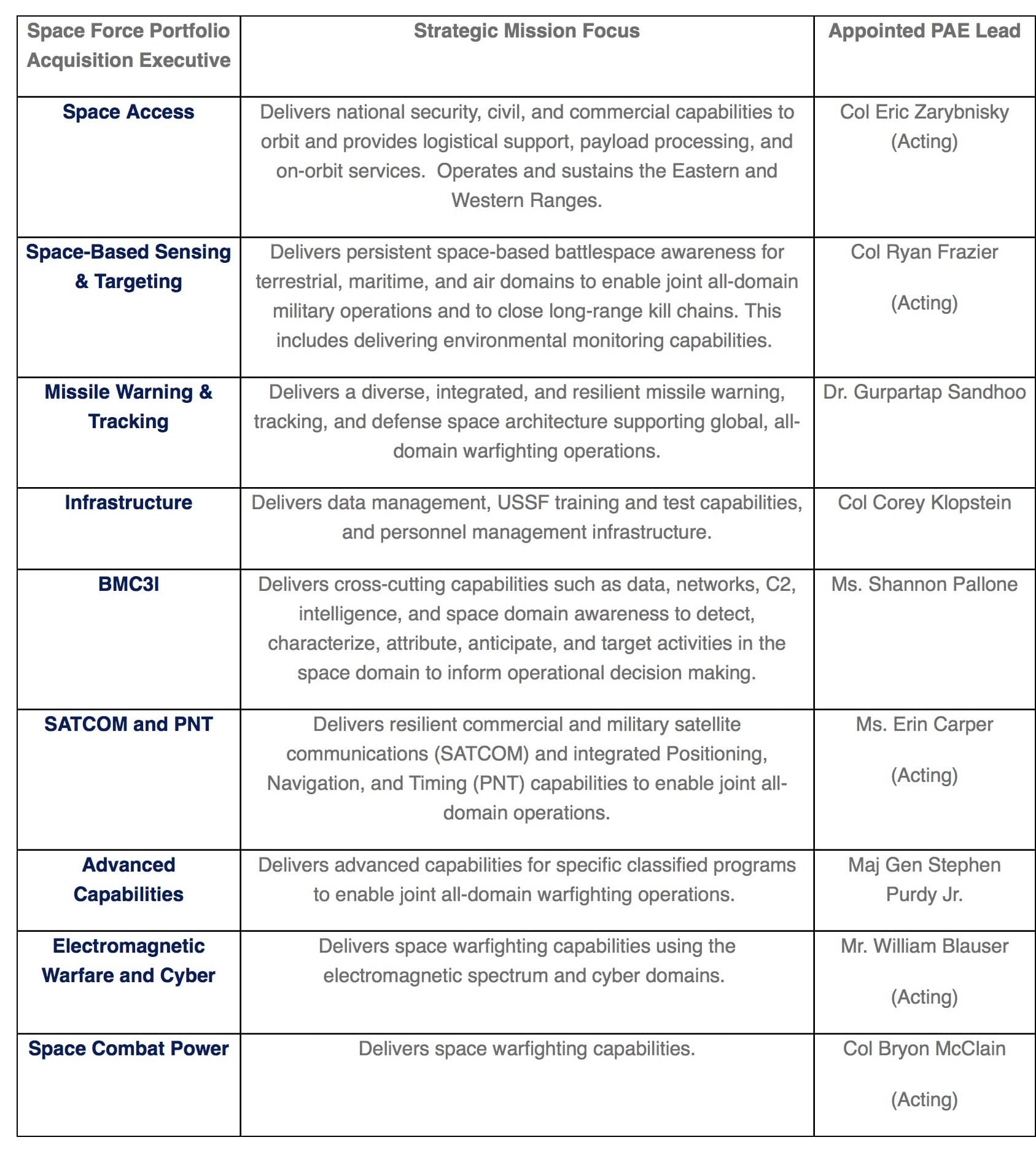
In November 2025, for instance, Secretary of War Pete Hegseth announced a reorganization of the existing program executive offices into portfolio acquisition executives. 

“The acquisition chain of authority will run directly from the program manager to the PAE,” Hegseth said at the time. “Each PAE will be the single accountable official for portfolio outcomes and have the authority to act without running through months or even years of approval chains. And they’ll be held accountable to deliver results.” 

The secretary said PAEs will be empowered with authorities to make decisions on cost, schedule and performance trade-offs that prioritize time to field and mission outcomes.  

During a panel discussion yesterday as part of the Air and Space Forces Association’s warfare symposium in Aurora, Colorado, Air Force Gen. Dale R. White, director of critical major weapon systems, said that effort will be transformational in the acquisition community. 

“I think now we take it down to the next level and just think about where we are with our [program offices], what we’re doing with the PAEs, giving them authority to make decisions in real time, make trades, and be able to do probably the most important thing with this whole transformation,” White said. “[And that] is not measure ourselves against acquisition outcomes but measure ourselves against mission outcomes, allowing that PAE to look at the operational problem and work to figure out a solution to that problem and be able to have the decision space to do so.” 

White said it’s not just PAEs that must be empowered to do their job, but the acquisition enterprise as a whole must be aligned to make acquisition success about meeting mission requirements for the warfighter, not just a positive business outcome. 

“We’re just not empowering PAEs; the idea is you get unity of command,” he said. “You get unity of effort. You allow that contracting officer to have a voice in solving that operational problem, that [financial management] person, that engineer; you change the cultural mindset of how we look at what we’re doing.” 

There are plenty of examples, White said, of where there was acquisition success that didn’t result in operational mission success. 

“We may have done well on the acquisition side, but how well did that align to the operational need and what we’re trying to do,” he asked. “It is really that hard reset. It’s the empowerment piece and changing the dynamic by which we study the problems that we have.” 

For acquisition professionals, White said, acquisition reform will require them to lead with conviction. 

“Lead with vision, lead ruthlessly and lead with an intent to solve the operational problem,” he said. “If you want to know what acquisition as a warfighting function means, it means come together as a team, the operational team, the acquiring team, and deliver on the outcome. Sometimes that means you’re going to make some tough decisions that you have to have courage to make; make the decision, drive for the outcome.”

By C. Todd Lopez, Pentagon News

US Army Activates Capability Program Executive (CPE) Enterprise Software and Services (ES2)

Sunday, March 1st, 2026

?

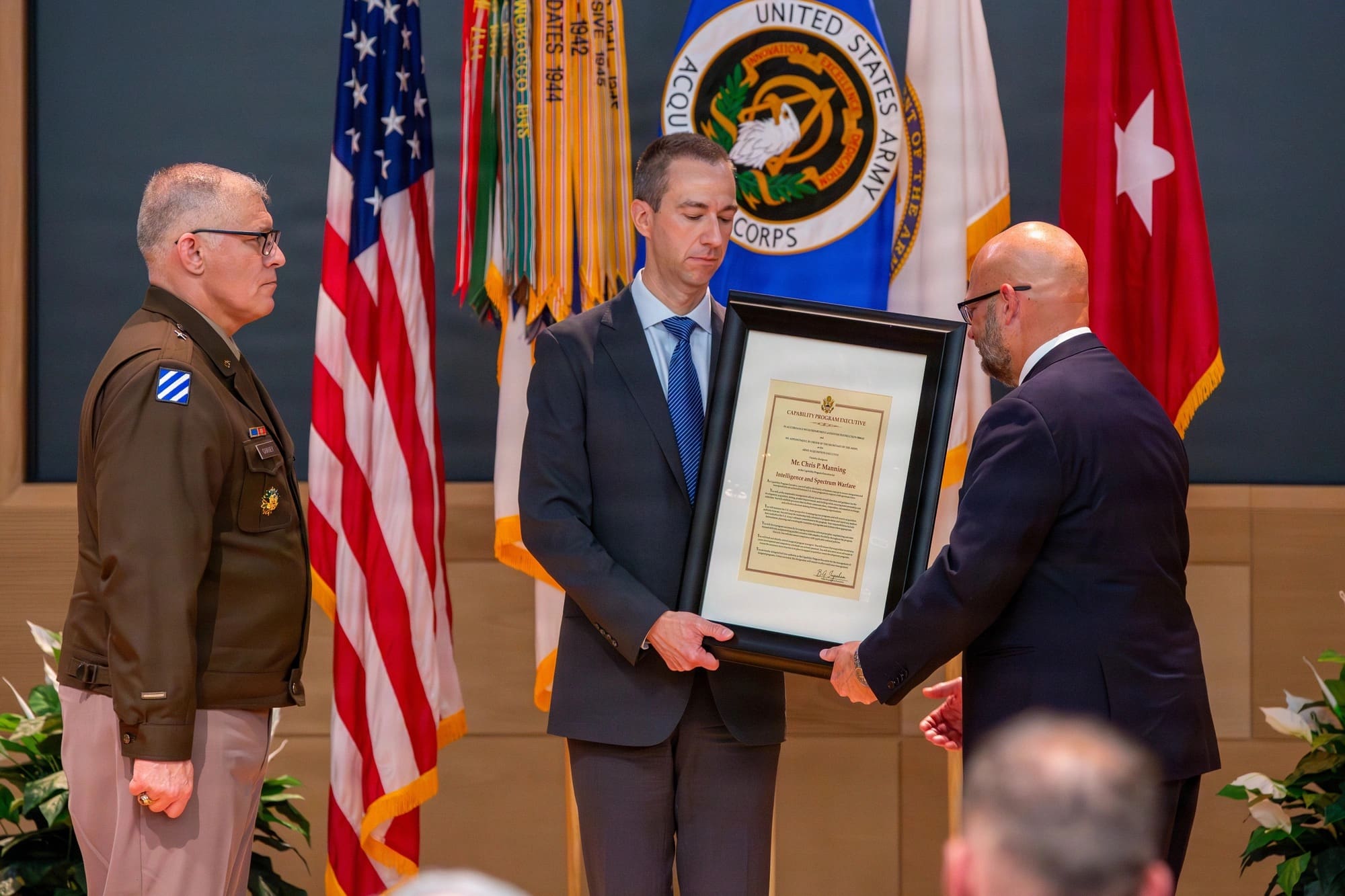
FORT BELVOIR, Va. – On Feb. 25, the Hon. Brent Ingraham, Assistant Secretary of the Army for Acquisition, Logistics and Technology, joined leaders from the former U.S. Army Program Executive Office (PEO) Enterprise in unveiling the acquisition organization’s new name, logo and colors at an activation ceremony. The organization is now officially known as Capability Program Executive (CPE) Enterprise Software and Services (ES2).

As one of the Army’s 13 newly designated capability program executives, CPE ES2 will continue its core mission of delivering software and services that drive operational readiness, providing seamless support for mission-critical systems and warfighting capabilities. CPE ES2 will report directly to Hon. Ingraham and continue to work closely with the Army Chief Information Officer on technology initiatives.

According to Miranda Coleman, CPE ES2’s acting Capability Program Executive, the organization will remain focused for the rest of fiscal year 2026 on operationalizing low-code/no-code, delivering at speed, maturing Agile practices, maintaining adaptability and flexibility, and managing talent.

“We have a lot of work ahead of us, but I’m confident we’re off to a fantastic start,” said Coleman, whose team highlighted several CPE ES2 software programs for Hon. Ingraham at a pre-ceremony capability demo.

As part of the organization’s transition to becoming a capability program executive, CPE ES2 has renamed its four portfolios to align with Army domains and better convey their areas of focus:

Project Manager (PM) Integrated Personnel and Pay System – Army is now PM Human Resources and Force Management (PM HR-FM).

PM Enterprise Business Systems and Convergence is now PM Logistics and Finance (PM LOG-FIN).

PM Defense Integrated Business Systems is now PM Acquisition, Training and Readiness (PM AT&R).

Project Director (PD) Enterprise Services is now PD Business Technology Solutions (PD BTS).

An updated organizational chart with all CPE ES2’s leaders, portfolios and product offices is available on the newly updated CPE ES2 website.

By Erika Christ

Army Transforms Acquisition Process to Enhance Ammunition Support for Warfighters

Friday, February 20th, 2026

PICATINNY ARSENAL, N.J. – The U.S. Army has established the Portfolio Acquisition Executive for Agile Sustainment and Ammunition, PAE AS&A, at Picatinny Arsenal under the command of Maj. Gen. John T. Reim. The move is a key part of broader Continuous Transformation efforts intended to increase efficiency and accelerate the delivery of critical capabilities to the warfighter.

The new organization was activated at a ceremony held on January 20 at Picatinny Arsenal where several thousand team members from all involved organizations were introduced to the new command. The Assistant Secretary of the Army for Acquisition, Logistics and Technology, the Honorable Brent Ingraham, presided over the ceremony and spoke to the significance of the new organization as a key part of the Army’s Acquisition reform initiative.

Following the ceremony, Ingraham witnessed a live demonstration featuring the Purpose Built Attritable System and a TRV-150 drone dropping smoke and a M69 training grenade onto a target simulating a small group of enemy Soldiers with a vehicle. This showed off one of DEVCOM’s latest innovations, the Picatinny Common Lethality Integration Kit or Picatinny CLIK. These are just a few of the of lethal UAS and counter-UAS technologies being developed by U.S. Army Combat Capabilities Development Command Armaments Center. The DEVCOM Armaments Center now serves as the Systems Center, a key enabler, of the PAE AS&A.

Subject matter experts from the PAE AS&A and DEVCOM Armaments Center then also briefed Ingraham on other lethal UAS, counter-UAS munitions, advanced artillery, next-gen energetics, expeditionary logistics and supply chain enabling systems that are the result of joint efforts of the two Picatinny based organizations.

“This marks a significant milestone in our journey to modernize Army Acquisition,” Ingraham said as he addressed the audience. “We are combining the capabilities of the Joint Program Executive Office for Armaments and Ammunition with critical combat logistic capabilities from PEO Combat Support and Combat Support Services to ensure fully capability alignment under our new structure.”

“Today we turn the page to an exciting new chapter in Army Acquisition,” Ingraham continued. “Every role in the organization plays an invaluable part in this journey. Cross organization engagement and agility are essential in ensuring the success of this transition. The future of Army Acquisition is bright and PAE AS&A is poised to lead the way.”

Ingraham’s visit underscored the installation’s vital role the various commands at Picatinny Arsenal play in maintaining readiness — delivering the capabilities, expertise, and innovation that ensures our Warfighters and allies are equipped to succeed in any environment.

“As we embark on this journey, we align our actions with the strategic guidance provided by our leadership including the President of the United States, the Secretary of War, the Secretary of the Army and the Chief of Staff of the Army,” said Reim who followed Ingraham. “This initiative is not merely a restructuring of our acquisition processes. It is a fundamental rethinking of how we approach the delivery of capabilities to our Soldiers, our joint warfighters, and our international partners.”

Legacies of Excellence

The Army is fundamentally restructuring its acquisition process to prioritize speed and efficiency over traditional approaches. As part of this initiative, the Army is establishing six Portfolio Acquisition Executives with increased focus on capabilities over specific programs.

The transformation includes the integration of the former Program Executive Office Combat Support and Combat Service Support, PEO CS&CSS, into the Capability Program Executive for Combat Logistics, CPE CL, led by Brig. Gen. Camilla White. PEO CS&CSS brings an unmatched history of logistics and sustainment support to the new CPE CL. It encompasses more than 200 programs spanning the Army’s transportation, ordnance, quartermaster, engineer, and training equipment portfolios.

As the CPE CL, it will continue to develop and deliver modernized tactical wheeled vehicles, engineering equipment, watercraft, power generation systems, and other force sustainment capabilities to Army, Joint, and global partners.

At the same time, the Joint Program Executive Office for Armaments and Ammunition, JPEO A&A, will realign into the Capability Program Executive for Ammunition & Energetics, CPE A&E, led by Col. Jason Bohannon. JPEO A&A has consistently delivered innovative acquisition solutions to provide Joint Warfighters and allied partners with overmatch capabilities. The JPEO was comprised of four project offices covering Combat Ammunition Systems, Close Combat Systems, Maneuver Ammunition Systems and Joint Services.

As the CPE A&E, it retains responsibility for life-cycle acquisition management of all conventional ammunition, which includes integrating budgets, acquisition strategies, research and development and life-cycle management across all ammunition families.

CPE CL will be headquartered at Detroit Arsenal, Michigan, while CPE A&E will remain at Picatinny Arsenal. Unlike the previous Program Executive Offices, each PAE will have comprehensive responsibilities and accountability for managing the full spectrum of acquisition activities, including requirements development, technology maturation, product development, testing, contracting, fielding, sustainment, and international sales. This flattened acquisition system empowers PAEs to make timely, risk-based decisions and accelerates capability delivery to Warfighters through problem-focused requirements, smarter contracts, informed risks, and faster pivots.

“This restructure achieves unity of command by establishing and empowering PAE AS&A with the full authority to direct research and development, prototyping, testing, production, and sustainment,” said Reim. “By prioritizing outcomes over processes, this new construct empowers us to award contracts faster by cutting through bureaucracy. Overall, this approach unburdens the acquisition enterprise and allows us to deliver warfighting capabilities at speed and scale.”

Accelerating Ammunition Acquisitions

Under the leadership of Maj. Gen. Reim, PAE AS&A will oversee an entire capability area including all conventional ammunition requirements including direct and indirect fire ammunition, close combat systems, explosives, and pyrotechnics, in addition to logistics, fielding, and sustainment. PAE AS&A will have oversight of the organic munition production facilities.

Maj. Gen. Sean Davis will serve as the new Deputy Portfolio Acquisition Executive adding the sustainment capabilities of the Army’s Combined Arms Support Command, CASCOM to PAE AS&A. CASCOM trains and develops adaptive Sustainment professionals for the total force while integrating innovative Army and Joint Sustainment capabilities, concepts and doctrine to sustain large scale combat operations in a multi-domain operations environment. It is also a part of Transformation and Training Command and is located at Fort Lee, Virginia. PAE AS&A is committed to supporting the warfighter through an innovative approach to ammunition acquisition and sustainment that leverages existing authorities to deliver tangible benefits, including accelerated capability delivery, smarter contracts, and informed risk management.

In addition to the two new CPEs, PAE AS&A will oversee multiple acquisition enablers including senior contracting officials, a test and evaluation integrator, the Sustainment Future Capability Directorate and the system center lead overseeing coordination among Army Combat Capabilities Development Command Centers. The PAE AS&A System Center Lead is Chris J. Grassano, the firector of the DEVCOM Armaments Center. The new structure will enable holistic management of conventional ammunition development, production and sustainment under a single command resulting in increased efficiencies and accelerated delivery of lethality aligned with the emerging Army Warfighting Concept.

Looking Ahead

In conjunction with this reform, the Army is investing $1.1 billion per year to overhaul depots, arsenals, and ammunition plants that produce and sustain Army equipment. This commitment will not only modernize facilities but also strengthen the defense supply chain and create jobs.

For industry partners, these reforms will mean faster contracts, clearer points of entry, and fewer bureaucratic hurdles. Soldiers will benefit from receiving new capabilities, such as drones, long-range fires, and next-generation command and control systems, years faster than before.

By Michael Chambers and Eric Kowal