Danner Boots - Built in the USA

Archive for the ‘Acquisition’ Category

Spearheading the Spectrum: How CPT Curtis Hart is Driving Acquisition Reform and Electromagnetic Dominance for PdM EWI

Saturday, June 13th, 2026

In an era where the battlefield is increasingly defined by invisible frequencies and data dominance, the Army Acquisition Corps is under a clear mandate: deliver capabilities faster, smarter, and with the Soldier at the center of the design process. It is a daunting task that requires moving away from the sluggish procurement cycles of the past and embracing agile, iterative modernization.

Product Manager Electronic Warfare Integration (PdM EWI) is proud to highlight a leader who isn’t just adapting to these acquisition reforms—he is defining them. MeetCapt. Curtis Hart, Assistant Product Manager (APM) for PdM EWI.

In his short but profoundly impactful tenure, Hart has become a catalyst for change. He stands at the forefront of the Army’s electromagnetic warfare modernization, bringing a rare blend of technical acumen, operational experience, and a relentless commitment to the warfighter.

Bridging the Gap to Next-Gen Command and Control

Hart’s portfolio spans the full spectrum of Army electromagnetic warfare. He is charged with supporting the legacy Electronic Warfare Planning and Management Tool (EWPMT) while concurrently driving the development of the cutting-edge Electromagnetic Warfare Command and Control (EWC2) the Army’s web application aligned with Next Generation Command and Control (NGC2).

Managing a transition of this magnitude is a classic acquisition challenge, but under Hart’s guidance, EWC2 has rapidly evolved into a modern, web-based application. Today, it provides commanders with real-time Electromagnetic Operating Picture (EOP) visualization and critical decision support. His leadership has been instrumental in bridging the gap between legacy systems and the NGC2 architecture, ensuring warfighters are seamlessly equipped with the tools necessary to dominate the spectrum.

Transformation in Contact: Speed to Relevance

At the heart of the Department of War’s acquisition reform is the concept of “Transformation in Contact” (TiC) — the ability to iteratively field, test, and refine capabilities directly with operational units. Throughout his time with Project Manager Electromagnetic Warfare & Collection (PM EW&C), Hart has been the tip of the spear for these global operational engagements.

He serves as the primary facilitator for training, fielding, and equipping Soldiers on both EWPMT and EWC2. By orchestrating these activities, he directly supports the Army’s flagship NGC2 experimentation efforts with the 4th Infantry Division (4ID) and the 25th Infantry Division (25ID).

A prime example of Hart’s impact is his leadership during the Ivy Sting exercise series. He successfully facilitated the integration of EWC2 with 4ID’s NGC2 architecture, enabling the division to conduct electromagnetic warfare operations in a fully modernized environment. This integration is not just a localized win; it is a foundational steppingstone for Project Convergence Capstone 6 (PC-C6) and a scalable model for future Army-wide adoption.

“Capt. Hart is a creative thinker who always brings a solution to the problem, he is spearheading Army Acquisition Reform by leading the charge on NGC2 TiC engagements,” said Lt. Col. Troy Merkel, Product Manager EWI. “His ability to bridge operational needs with acquisition innovation is setting a new standard for the Army.”

Closing the Loop: Soldier-Centered Design

Perhaps the most shining example of Hart’s alignment with modern acquisition reform is how he champions Soldier-centered design. Recognizing that the best software is builtwiththe user, not justforthe user, he revolutionized how PM EWI handles feedback from the field.

Hart incorporated a Human Systems Integration (HSI) Subject Matter Expert into the team to build a streamlined, online feedback loop. Now, Soldiers can complete assessments while in the field, sending critical usability data directly to the developers. This close collaboration, particularly with the 4ID CEMA Cell, successfully aligned EWC2 with real-world operational needs, posturing the division for success in exercises like Ivy Mass and beyond. It is the epitome of agile software development in action.

The Leader Behind the Mission

Hart’s drive is forged by profound operational experience. Commissioned in 2016, he served in field artillery units at Fort Bliss, TX, and Fort Drum, NY, and deployed to Iraq in 2023 and Afghanistan from 2020 to 2021.

He holds a bachelor’s degree in economics from James Madison University and, highly fitting for his current role, a Master of Science in Systems Engineering Management from the Naval Postgraduate School. When he isn’t driving modernization efforts, Hart enjoys spending quality time with his wife and two children, hitting the golf course, and tackling DIY projects at home.

Hart’s relentless drive, innovative spirit, and unwavering commitment to Soldiers are setting the pace for Army Acquisition Reform. He proves that with the right leadership, the acquisition process can be as agile and lethal as the forces it supports. He is, without question, a true superstar of the PdM EWI and a model for the next generation of Army Acquisition leaders.

Courtesy Story

Capability Program Executive – Intelligence & Spectrum Warfare
CPE ISW Leadership Changes Hands After Pivotal Year of Reorganizations and Mission Success

Thursday, June 11th, 2026

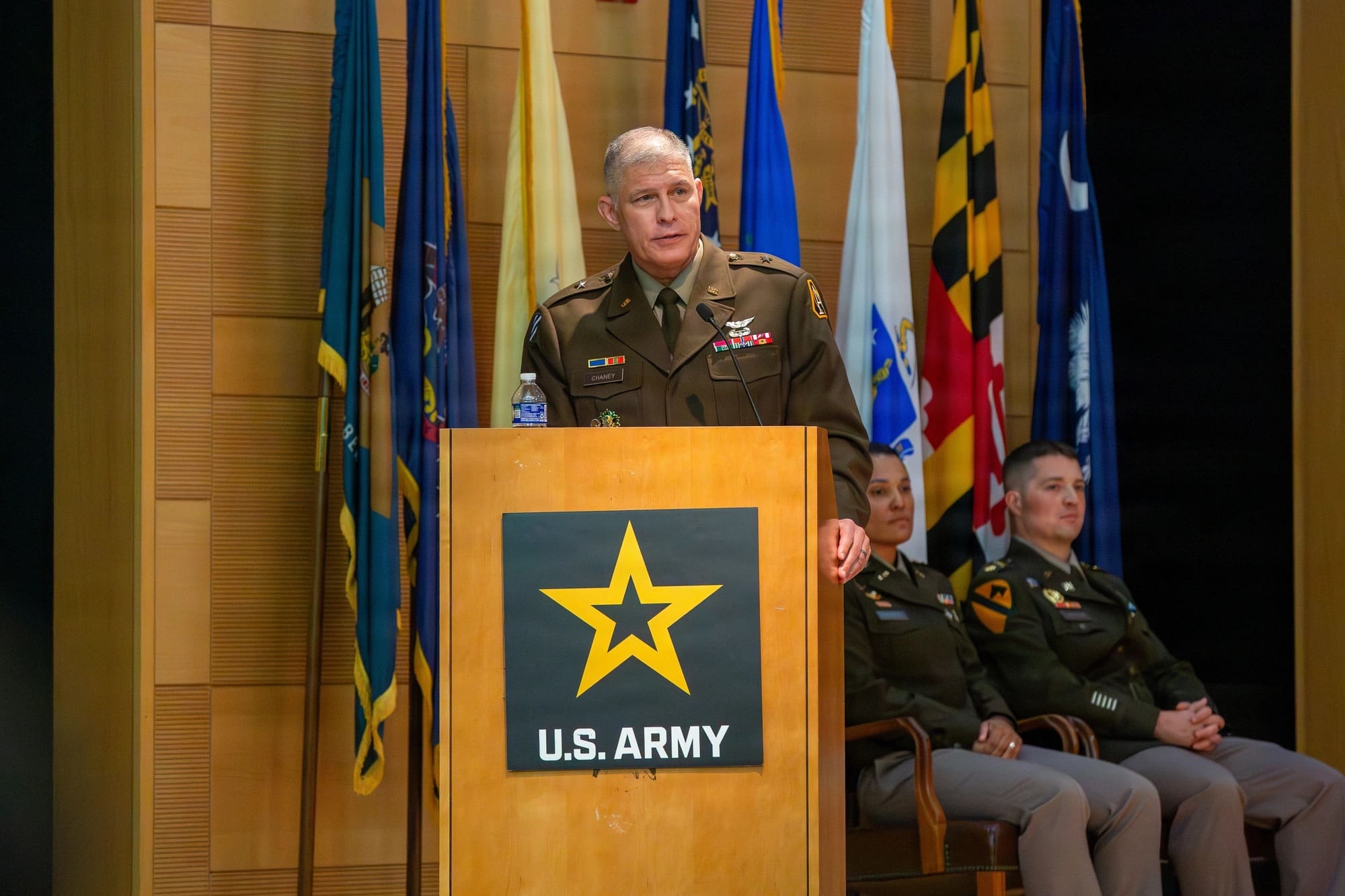
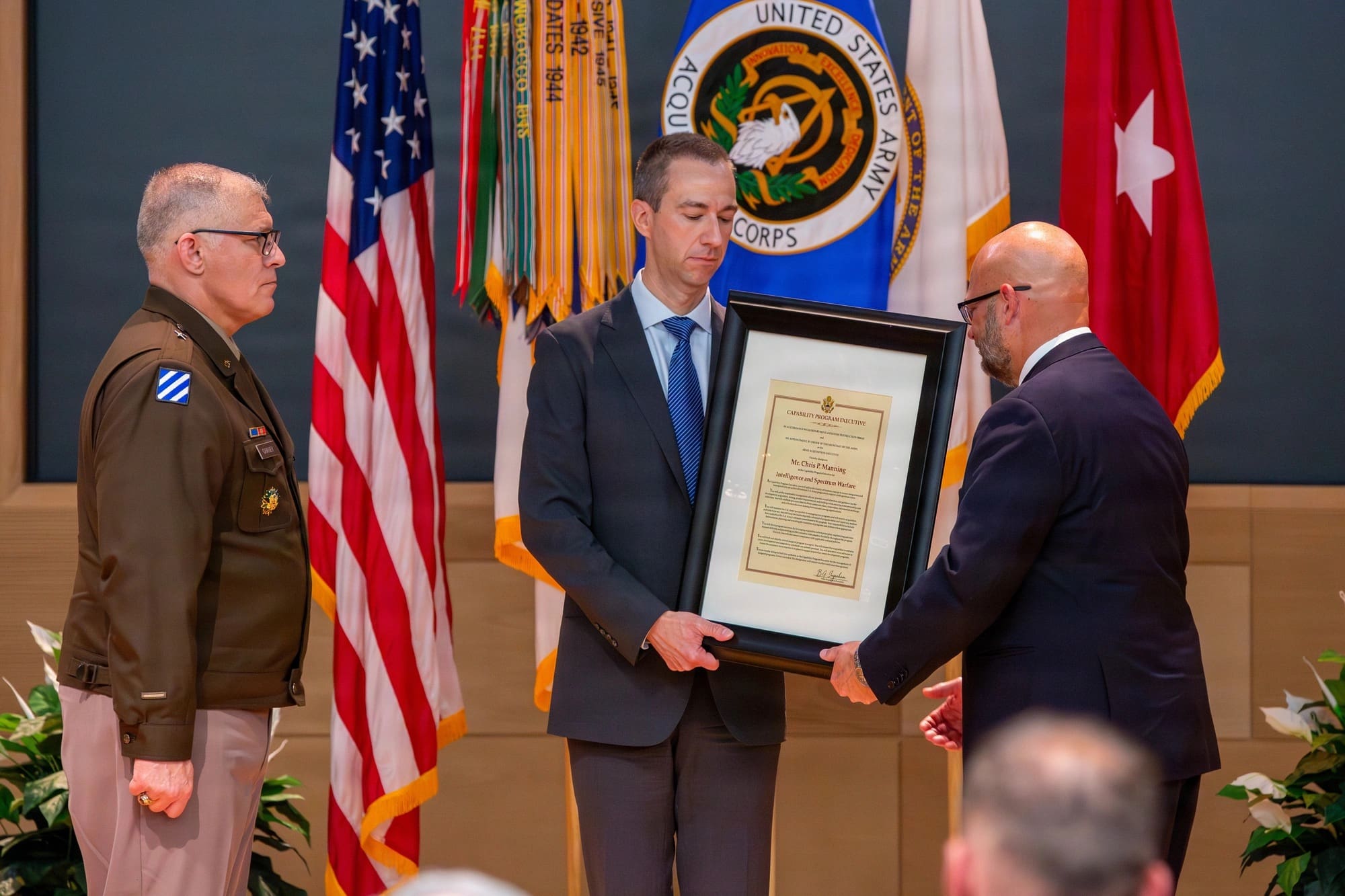
CPE ISW – Change of Charter – Brigadier General Kevin S. Chaney to Mr. Chris P. Manning. From left to right: Brigadier General Kevin S. Chaney, Mr. Joseph D. Welch (Portfolio Acquisition Executive, Command and Control and Counter-Command and Control), Mr. Chris P. Manning

In a ceremony at Aberdeen Proving Ground on June 9, Brig. Gen. Kevin Chaney passed the leadership torch of Capability Program Executive Intelligence and Spectrum Warfare (CPE ISW) to Chris Manning, former Deputy Portfolio Acquisition Executive (PAE) for Command and Control (C2) and Counter C2.  Chaney had taken over as CPE, formerly Program Executive Offe Intelligence, Electronic Warfare and Sensors (PEO IEW&S) last July.  Chaney was not a new face to the organization when he accepted the charter having previously served multiple tours at Project Manager for Aircraft Survivability Equipment (PM ASE).

His return to the organization as CPE was short but eventful.   He led the organization’s evolution into a new structure where multiple offices were affected. Chaney deftly led the workforce through the uncertainty of reorganization, moving CPE ISW forward into the future of technology and acquisition while supporting ongoing operational events seamlessly. “So, I started the year as PEO for IEW&S and leave as CPE for ISW. Obviously, this means so much more than a name change. We have been shuffling the deck with our organizations to find efficiencies and align programs where they best meet current Army demands. We rolled with the punches, without allowing the mission to suffer. The name of the respective org may have changed, but the mission has not, field critical technology to our men and women in the field,” Chaney said.

Brigadier General Kevin S. Chaney

In a ceremony at Aberdeen Proving Ground on June 9, Brig. Gen. Kevin Chaney passed the leadership torch of Capability Program Executive Intelligence and Spectrum Warfare (CPE ISW) to Chris Manning, former Deputy Portfolio Acquisition Executive (PAE) for Command and Control (C2) and Counter C2.  Chaney had taken over as CPE, formerly Program Executive Offe Intelligence, Electronic Warfare and Sensors (PEO IEW&S) last July.  Chaney was not a new face to the organization when he accepted the charter having previously served multiple tours at Project Manager for Aircraft Survivability Equipment (PM ASE).

His return to the organization as CPE was short but eventful.   He led the organization’s evolution into a new structure where multiple offices were affected. Chaney deftly led the workforce through the uncertainty of reorganization, moving CPE ISW forward into the future of technology and acquisition while supporting ongoing operational events seamlessly. “So, I started the year as PEO for IEW&S and leave as CPE for ISW. Obviously, this means so much more than a name change. We have been shuffling the deck with our organizations to find efficiencies and align programs where they best meet current Army demands. We rolled with the punches, without allowing the mission to suffer. The name of the respective org may have changed, but the mission has not – field critical technology to our men and women in the field,” Chaney said.

CPE ISW consists of more than 80 programs that deliver and sustain technologies that provide Soldiers, joint services, allies and international partners with decisive advantage for all operational environments.  The categories of technologies within the CPE portfolio include offensive and defensive cyber capabilities, electromagnetic warfare (EW), modern intelligence systems, assured position, navigation and timing solutions, multidomain and surveillance sensors, biometric systems, force protection systems and more.

Amongst the key accomplishments of CPE ISW with Chaney at the helm, includes the timely execution of support to the Joint Task Force Southern Border. The surveillance systems and EW capabilities deployed at the tactical edge dramatically enhanced border security operations with situational awareness and integration of multiple military and federal law enforcement elements.

Under Chaney’s leadership, ISW succeeded in championing the Army’s priority of acquisition reform. The organization aggressively pursued novel contracting avenues, most notably through its first execution of Commercial Solutions Openings (CSOs).  This acquisition strategy significantly reduces acquisition timelines and rapidly transitions cutting-edge, commercially derived technologies directly to the Joint Force. Specifically, this strategy was employed in the prototype award for the Electromagnetic Warfare Rapid Integration System (ERIS). ERIS is a forward-looking initiative designed to counter sophisticated radio frequency threats through adaptable, scalable technology.

In further advancement of Army modernization initiatives, Chaney led the integration of ISW technologies into the Next Generation Command and Control (NGC2) architecture by leveraging key exercises like Lightning Surge and Ivy Sting and preparing for the upcoming Project Convergence Capstone 6.

Under Chaney’s leadership ISW also began its support to the new Intelligence Electronic Warfare (IEW) Battalions this year.  IEW Battalions are new or restructured specialized units that focus on enhancing situational understanding in large scale combat operations. Intelligence and electronic warfare are two complimentary capabilities that ISW advances through research, development, and modern acquisition strategies.

Chaney oversaw the Tactical Intelligence Targeting Access Node (TITAN) program’s completion of developmental testing and prototype acquisition, which positions the Army for procurement of the key AI-enabled intelligence systems.  This capability drastically reduces operational timelines while enhancing assured decision making.

Multi-domain modernization is necessary to expand deep sensing capabilities.  Chaney strategically divested obsolete platforms to pivot resources toward more advanced capabilities such as the Army Advanced Synthetic Aperture Radar System. He accelerated the integration of this system into the High Accuracy Detection and Exploitation System (HADES), ensuring deep-look overmatch.

With the unexpected demands of Operation Epic Fury and Operation Absolute Resolve, ISW was ready to support with their full gamut of technologies including ISR, electronic warfare, and more.  Under Chaney’s leadership, the organization addressed emerging requirements directly and contributed to increased operational readiness, lethality, and mission effectiveness of deployed forces in two highly contested theaters.

Chaney will move into his next role as Deputy PAE Maneuver Air.  There he will continue to be a leader focused on priorities and further develop a workforce that meets the current and future needs of the Army. Going back to aviation where he started his career will be an exciting challenge that Chaney welcomes

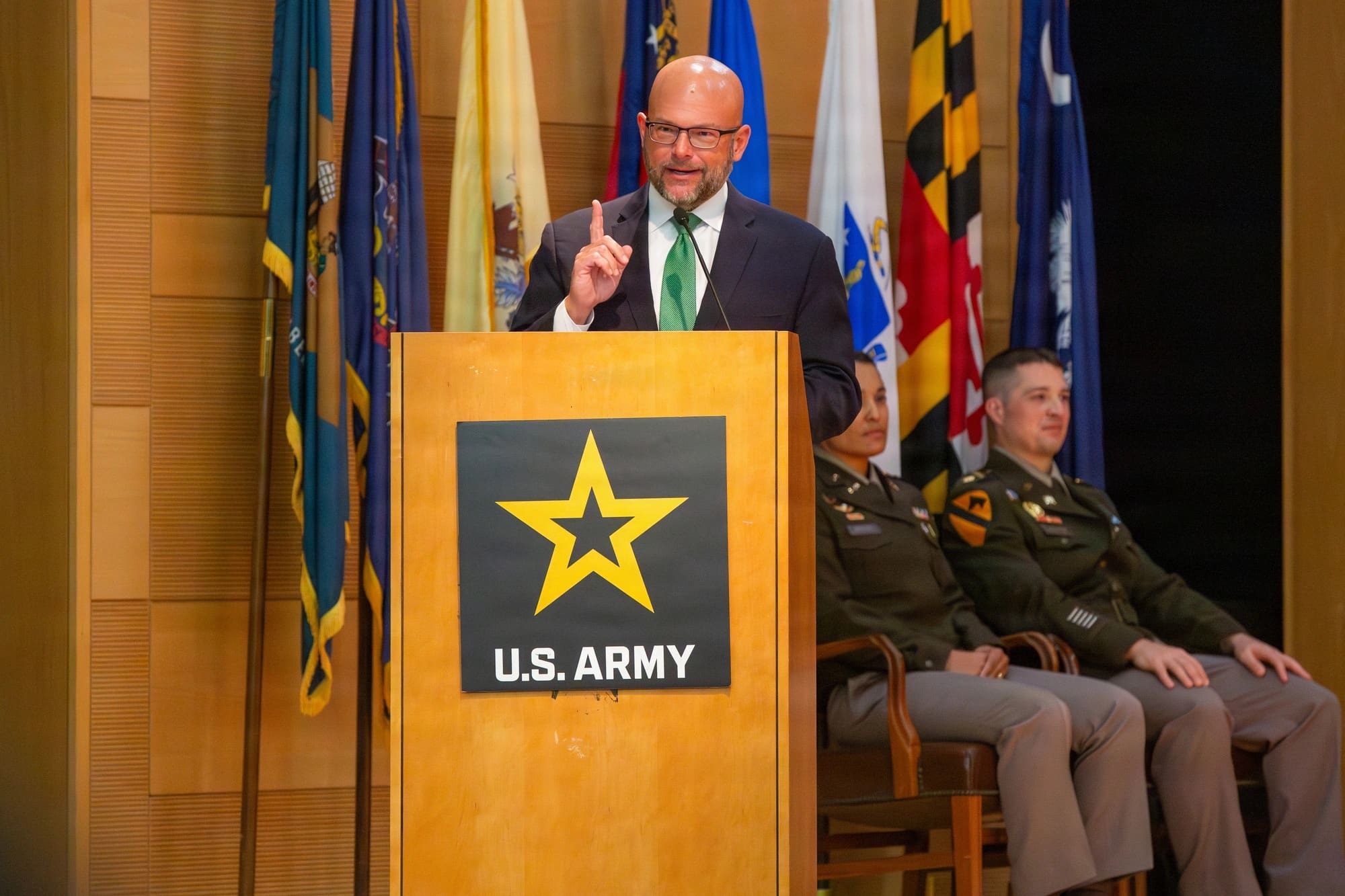
Mr. Chris P. Manning

Manning brings his experience serving concurrently as Deputy PAE C2/Counter C2, and as Deputy Assistant Secretary of the Army for Research and Technology, DASA(R&T). He advised senior leadership on the optimization of resources and meeting needs of the Warfighter more efficiently.  This is a homecoming of sorts for Manning as well. Early in his career he was assigned to the former Product Manager Global Positioning Systems office, which transitioned into the Positioning, Navigation and Timing (PNT) office. Manning established the first PEO IEW&S footprint for a Project Manager office when the organization moved from its former location in New Jersey to Aberdeen Proving Ground.

By Allison Weissert | CPE ISW Public Affairs Specialist |

Bridging the Modernization Gap: How G-TEAD’s Accelerated Capability Events Deliver Innovation to the Tactical Edge

Sunday, May 31st, 2026

WASHINGTON— The U.S. Army’s traditional acquisition system was not built for the speed, complexity or unpredictability of modern conflict. Threats evolve faster than requirements can be validated, often stalling promising technologies before they ever reach operational units. The Global Tactical Edge Acquisition Directorate (G?TEAD) exists to solve this vulnerability by linking urgent operational demand with industry innovation to deliver viable, battle-ready technology directly to the tactical edge.

As a core component of the Army’s Pathway for Innovation and Technology (PIT), G-TEAD operationalizes strategic intent. While the PIT provides the enterprise framework to synchronize innovation, demonstration, and transition across the force, G-TEAD serves as the engine that transforms emerging concepts into fielded capabilities. The driving force behind this engine is the Accelerated Capability Event (ACE), a premier mechanism for rapidly identifying, validating and transitioning disruptive technology.

Targeting Theater?Specific Operational Needs

Each ACE is anchored to a direct demand signal from an Army Service Component Command (ASCC) Commanding General, ensuring efforts target urgent theater-specific requirements. With forward-deployed teams in U.S. Army Europe and Africa (USAREUR-AF) and U.S. Army Pacific (USARPAC), G-TEAD is uniquely positioned to inject mission-tailored solutions directly into contested environments.

Executed as a rigorous 180-day sprint, an ACE rapidly validates technology performance through soldier-led demonstration. The objective is clear: identify, validate and deploy mature, Technology Readiness Level (TRL) 7 or higher solutions capable of delivering immediate impact for the ASCC.

G-TEAD engages industry through premier defense pipelines, including the Army FUZE xTech Programand the Defense Innovation Unit (DIU). These programs serve as a strategic entry point for innovators, identifying high-potential commercial technologies for military use. By partnering with these organizations to launch targeted challenges for nontraditional innovators, G-TEAD builds a curated pool of solutions tailored to specific ASCC requirements. To facilitate participation in regional Soldier-led demonstration these challenges provide nondilutive cash prizes that offset industry costs and incentivize continued engagement.

Soldier-Led Validation at the Tactical Edge

Following a rigorous down-selection process, companies enter a two-week demonstration event as part of the competition. This phase moves beyond polished pitches and controlled demonstrations; it subjects technology to operationally realistic environments. Soldiers actively stress-test the equipment and provide unfiltered, real-time feedback to vendors and evaluators. This Soldier-driven insight is the bedrock of the ACE model, guaranteeing that only solutions with proven operational relevance advance.

Technologies that pass this initial demonstration transition into an extended “leave-behind” period with operational units. This critical phase allows Soldiers to push the limits of the technology in daily operations, uncovering strengths, vulnerabilities, and integration hurdles impossible to replicate in a lab. For industry, it provides unprecedented access to authentic end-user validation. For the Army, it delivers the hard data required to justify prototype purchases and scale the capability.

A High-Velocity Pathway to Transition

The ultimate objective of an ACE is transition. Successful companies earn the opportunity for an Other Transaction Agreement (OTA) award.

This milestone signals the Army’s commitment to invest in the technology’s continued development, integration and evaluation. More importantly, an OTA bridges the gap to program offices, enabling them to assess, adopt and scale the capability across the broader Army.

For innovators aiming to cross the defense acquisition “valley of death,” ACEs offer a transparent, accelerated and operationally grounded pathway. Driven by real-world demand, shaped by the American Soldier and powered by G?TEAD, this model ensures that the Army remains the most lethal and technologically advanced force on the modern battlefield.

About G-TEAD

The Army Pathway for Innovation and Technology (PIT)’s Global Tactical Edge Acquisition Directorate (G-TEAD) is the force’s premier acquisition hub, designed to close the gap between evolving threats and the speed of delivering critical solutions. G-TEAD’s mission is to rapidly transform urgent commanders’ needs into combat-ready, interoperable systems, ensuring Soldiers sustain battlefield dominance in any environment.

Through synchronized efforts across the acquisition enterprise and close collaboration with allied partners, G-TEAD accelerates the delivery of minimum viable products (MVPs) to theater, bridging innovation with mission success. As the Army’s central hub for agile capability deployment, G-TEAD ensures Soldiers are equipped with the tools they need to win—wherever and whenever the fight arises.

About The Army Pathway for Innovation and Technology (PIT)

The Army Pathway for Innovation and Technology accelerates Army modernization through dual-use innovation, strategic partnerships, and mission-driven outcomes. As a critical enabler of Army acquisition reform, PIT injects capability faster by getting in the dirt with the Soldier, performing prototyping at the edge and delivering operational impact at the speed of relevance.

The PIT serves as a critical hub that integrates the efforts of three essential organizations within the Army innovation enterprise. Army FUZE, the Joint Innovation Outpost (JIOP), and the Global Tactical Edge Acquisition Directorate (G-TEAD) serve as the operational backbone of the PIT, underpinned by a unified vision to see, share, synchronize, and scale.

By Sarah Hepburn, Office of Army Pathway for Innovation and Technology (PIT)

Department of War Overhauls Acquisition to Speed New Technology to Troops – The Enablers are Here

Saturday, May 2nd, 2026

ABERDEEN PROVING GROUND, MD – In a decisive move to maintain military superiority, the Secretary of War directed a fundamental transformation of the department’s acquisition process. This mandate requires a new approach to deliver critical capabilities to troops in the field with greater speed and urgency. The new paradigm needs enablers that mitigate risks in equipment programs, particularly in system reliability and long-term sustainment—factors that account for up to 70 percent of a weapon system’s total cost. As organizations accelerate timelines and reduce full-up system testing programs, they must adopt approaches that ensure system robustness and mitigate risk. The following menu of options provides program managers, acquisition personnel, and sustainment professionals with the tools they need today.

Early Engineering Component Analysis

Engineers perform rapid analysis for individual components long before a full system reaches large-scale operational tests. By using advanced simulators and lab environments, engineers find and fix potential failure points early in the design process when they can make modifications most simply and inexpensively. This proactive approach streamlines final system-level testing, saving both time and resources and is applicable to both Commercial-Off-The-Shelf systems/components and developmental items.

Modeling and Simulation

Modeling and Simulation (M&S) serves as one of the most powerful and inexpensive tools for accelerating development. Digital testing—covering everything from vehicle dynamics to the thermal performance of electronics—allows for the rapid exploration of designs before manufacturers build a physical part. In one instance, M&S predicted that a circuit card’s original design would lead to over 300 component failures. A simple, validated redesign reduced displacement by approximately 80 percent, avoiding a costly delay.

Scorecards and Engineering Reviews

The Transformation Decision Analysis Center (TDAC) developed reliability scorecards for weapon systems and artificial intelligence applications based on leading practices from industry, government, and academia. These scorecards, along with early engineering reviews, provide substantial risk mitigation—even for commercial off-the-shelf systems—by using existing information to identify challenges before they emerge.

Leveraging All Data Sources

To make the most informed decisions, programs must leverage all available data. By using Bayesian-based statistical approaches, organizations create a more complete picture of system performance and potentially reduce the need for physical testing by 60 percent or more.

Mastering Modern Complexity

Today’s military systems increasingly feature complex, software-intensive designs. Systems-Theoretic Process Analysis (STPA), a modern hazard analysis technique from the Massachusetts Institute of Technology, analyzes these systems effectively. It identifies risks that emerge from the complex interactions between components, rather than just individual failures—a crucial step for developing robust autonomous and AI-enabled platforms.

Function-Based Reliability

Ultimately, mission performance dominates. A function-based assessment places test results into an operational context. This approach prioritizes risk mitigation by connecting system performance directly to the essential tasks soldiers perform, ensuring development always focuses on what matters most for mission success.

Fielding at the Speed of Relevance

The transformation of the acquisition system serves as an urgent and necessary step to equip U.S. forces for the future. This mandate does not call for cutting corners; rather, it requires us to be smarter and more proactive. By embracing these risk-reduction strategies, we empower the acquisition workforce to manage risk intelligently and deliver superior capabilities to the warfighter with speed and relevance. To meet the department’s objectives, TDAC continues to provide proven methods to minimize reliability, acquisition, and sustainment risks alongside partners such as the Army Test and Evaluation Command and various Army DEVCOM centers.

By David Mortin, Ph.D.

CPE ISW Announces Rapid Electromagnetic Warfare & Signals Intelligence Commercial Solutions Offering

Monday, April 27th, 2026

ABERDEEN PROVING GROUND, Md. – The U.S. Army’s Capability Program Executive Intelligence and Spectrum Warfare (CPE ISW) has announced a special notice for vendors. The Rapid Electromagnetic Warfare & Signals Intelligence Commercial Solutions Offering (REWSI) under the Army Open Solicitation (AOS) Commercial Solutions Opening (CSO) was released today via the VULCAN portal seeking commercially available technologies.


The Call for Solutions (Army Open Solicitation – W9128Z-25-S-A002) is part of a broader effort to establish a collection of commercial capabilities, streamlining the acquisition process and giving unit Commanders faster access to a diverse range of technologies tailored to their mission needs. Interested parties must submit a Solution Brief through the VULCAN portal. The call will remain open for approximately 12 months, with reviews of submissions ongoing.

“By utilizing a ‘library approach’ for our EMSO (Electromagnetic Spectrum Operations) solutions, the Army is embracing a more agile acquisition model,” said Joseph Welch, Portfolio Acquisition Executive for Command and Control (C2)/Counter C2. “This allows for the rapid integration of commercial technologies and non-developmental items, bypassing traditional, lengthy development cycles to ensure Soldiers have advanced capabilities in a relevant timeframe.”

The initiative, led by Project Manager Electromagnetic Warfare & Collection (PM EW&C), aims to rapidly procure and sustain advanced equipment to meet the Army’s EMSO Characteristics of Need (CoN). “The EMSO battlespace is at the forefront of all Army operations and the pace of change within this fast-moving environment. The EMSO CoN focuses on operational challenges and required capabilities rather than pre-defined solutions and will afford us greater flexibility in addressing evolving threats with emerging technologies,” said Col. Scott Shaffer, PM EW&C.

This will empower industry partners to propose a wider range of innovative technologies, ultimately bridging the gap between private sector ingenuity and the Army’s operational needs.

“The Call for Solutions is a key step in building a rigorously vetted library of commercial technologies, allowing Commanders to quickly select the best tools for their specific mission,” said Danielle Moyer, executive director, Army Contracting Command – Aberdeen Proving Ground (ACC-APG). “This approach allows us to tap into a more flexible model and encourages early and continued competition as the call will remain open and updated as specific capabilities needs emerge.”

The notice can be also be found at:
sam.gov/workspace/contract/opp/690727c72d7345a79a39b7b44135e711/view

USSOCOM Launches Advancing Naval Capabilities through Holistic Opportunities and Resources (ANCHOR) Initiative

Monday, April 27th, 2026

United States Special Operations Command (USSOCOM) Special Operations Forces Acquisition, Technology, and Logistics (SOF AT&L) has announced the Advancing Naval Capabilities through Holistic Opportunities and Resources (ANCHOR) Initiative.

Using Other Transactional Authority (OTA) acquisition, the ANCHOR Initiative’s purpose is to form a sphere of technological excellence made up of participants from industry, non-profit organizations, and not-for-profit entities able to rapidly and efficiently propose and carry out, through maximum practicable competitive procedures, the development of prototype solutions that sustain and expand strategic superiority within broadly stated special operations focus areas of interest. It is intended that Participants will perform a strategically important role in developing solutions focused on the development, demonstration and transition of resilient and dynamic technological capabilities critically necessary for the Nation’s Special Operations Forces.

Focus areas include:

Focus Area 1: Unmanned Systems. Across the maritime domain, USSOCOM is increasingly leveraging unmanned and autonomous systems to push the limits of where and how its forces can operate. Integrating unmanned aerial, surface, and underwater platforms enables longer persistence in contested and denied environments, surveillance and reconnaissance in high-risk areas, and enhanced situational awareness without exposing personnel to unnecessary danger. USSOCOM is particularly interested in capabilities that improve cross-domain coordination, reduce the logistical footprint of deployed forces, and deliver reliable data and effects in dynamic maritime conditions. Innovations in autonomy, sensing, endurance, and resilient communications are key to enabling the next generation of maritime unmanned systems that support USSOCOM’s evolving role in multi-domain operations.

Focus Area 2: Counter-Unmanned Systems. To stay ahead of rapidly evolving unmanned threats, USSOCOM is prioritizing capabilities that can sense, understand, and respond to hostile systems before they impact the mission. As autonomous and remotely operated platforms become more accessible and adaptive, the need for agile, layered defense systems has become essential to preserving operational security and freedom of action. USSOCOM is interested in technologies that detect, track, and neutralize unmanned threats—from individual platforms to coordinated swarms—within the constraints of maritime special operations. Solutions optimized for size, weight, and power; capable of functioning in contested electromagnetic environments; and effective against both kinetic and electronic attack vectors are of particular interest. These capabilities are critical to enabling mission assurance, safeguarding personnel, and maintaining tactical advantage in multi-domain maritime operations.





Focus Area 3: Command, Control, Communications, Computer, Cyber, Intelligence, Surveillance, and Reconnaissance (C5ISR). At the core of USSOCOM’s future force design is a resilient C5ISR enterprise that connects sensors, shooters, and decision-makers across every domain. Next-generation C5ISR systems are expected to integrate multi-source intelligence, resilient communications, and cyber-secure data networks, enabling USSOCOM operators to sense, process, and act faster than the adversary. USSOCOM is particularly interested in technologies that strengthen edge connectivity, leverage AI-enabled analytics for real-time situational awareness, and ensure data integrity across denied or degraded environments. Seamless integration of cyber defense, intelligence fusion, and tactical communications allows operators to maintain command and control across dispersed forces while enabling intelligence collection and dissemination at the speed of relevance. These evolving C5ISR capabilities form the backbone of multi-domain maritime operations, empowering USSOCOM to outpace emerging threats and sustain operational advantage across every phase of mission execution.

Focus Area 4: Scalable Effects. In parallel, USSOCOM is pursuing scalable effects that provide flexible options to influence, degrade, or defeat adversary capabilities while managing risk and escalation. These effects span both kinetic and non-kinetic options, enabling commanders to match the level of impact to mission objectives, risk tolerance, and escalation considerations. USSOCOM is particularly interested in solutions that offer tunable effects—from reversible disruption and temporary degradation to permanent disablement—while limiting collateral damage and, when required, managing attribution. Technologies of interest include directed energy, electronic warfare, cyber-enabled effects, and precision engagement tools that can be employed from distributed maritime platforms and integrated with existing C5ISR architectures to deliver coordinated, scalable effects in support of complex operations.

Focus Area 5: Human Performance. Optimization of human performance is a critical force multiplier for USSOCOM, directly impacting operational readiness, mission effectiveness, and organizational capability retention. Comprehensive physical conditioning programs that address the multifaceted demands of maritime special operations serve to enhance baseline performance while simultaneously reducing the incidence of acute and chronic injuries that can sideline operators during critical mission windows. Cognitive performance enhancement through mental acuity training, stress inoculation, and neurological health monitoring addresses the complex decision-making requirements of special operations while mitigating psychological burnout that can compromise judgment and tactical effectiveness. This holistic approach to human performance optimization directly contributes to USSOCOM ‘s ability to retain experienced personnel by extending their operational careers, reducing medical attrition rates, and maintaining the institutional knowledge and tactical expertise that takes years to develop, thereby preserving USSOCOM’s most valuable asset while maintaining operational readiness across extended deployment cycles and high-tempo operations.

Focus Area 6: Human-Machine Teaming. Human-Machine Teaming represents a transformative capability for USSOCOM, enabling intuitive control of unmanned systems through natural human interfaces and providing immersive training environments for high-risk scenarios. Natural control methods, such as voice commands and gesture recognition, enable USSOCOM operators to direct autonomous systems while maintaining tactical readiness and operational security. This reduces the cognitive burden of system management, allowing operators to focus on tactical decision-making and leverage machine capabilities for surveillance, reconnaissance, and support functions. Augmented and virtual reality technologies revolutionize USSOCOM training by enabling operators to repeatedly practice complex, high-risk scenarios without the logistical constraints and safety risks associated with live training exercises while building operator proficiency in human-machine coordination. This combination of natural system control and immersive training capabilities enhances tactical proficiency while optimizing the division of tasks between human judgment and machine processing power, ultimately improving mission effectiveness in the complex and demanding maritime special operations environment.

Responses are due Jun 01, 2026 4:30 PM EDT.

Visit sam.gov for full details.

Delivering Tomorrow’s Small Caliber Ammunition Lethality Today

Saturday, April 25th, 2026

PICATINNY ARSENAL, NJ – The U.S. Army’s Capability Program Executive Ammunition and Energetics (CPE A&E), headquartered at Picatinny Arsenal, NJ, is spearheading a major transformation of the nation’s small?caliber ammunition industrial base, advancing one of the Army’s highest modernization priorities. Central to this effort is the delivery of next?generation 6.8mm cartridges that will equip soldiers with increased range, accuracy, and battlefield lethality as part of the Next Generation Squad Weapons (NGSW) program.

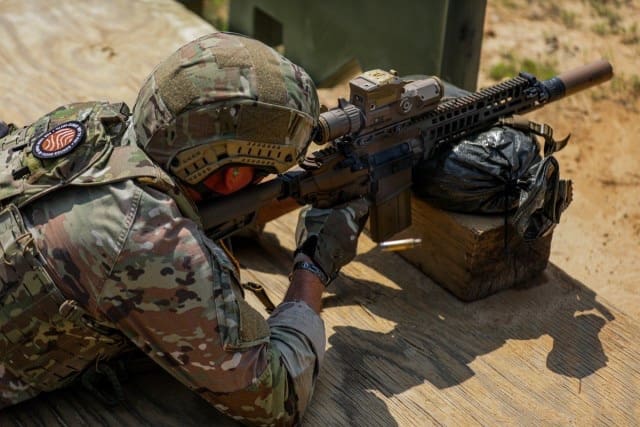
The NGSW program, featuring the M7 Rifle, XM8 Carbine, and M250 Automatic Rifle, represents the Army’s most significant small?arms upgrade in decades, replacing the M4 Carbine and M249 Squad Automatic Weapon. These new weapons, enabled by advanced 6.8mm cartridges, are designed to provide decisive overmatch in operating environments.

To accelerate production and strengthen readiness, Project Manager Maneuver Ammunition Systems (PM MAS), in partnership with Project Lead Joint Services (PL JS), has established an interim 6.8mm manufacturing capability at the Lake City Army Ammunition Plant (LCAAP) utilizing a mix of new and repurposed equipment. As of March 2026, operating contractor Olin Winchester is producing and delivering 6.8mm ammunition from this capability. The Army is also supplying projectiles from this interim line to SIG Sauer to support additional cartridge deliveries while LCAAP expansion continues.

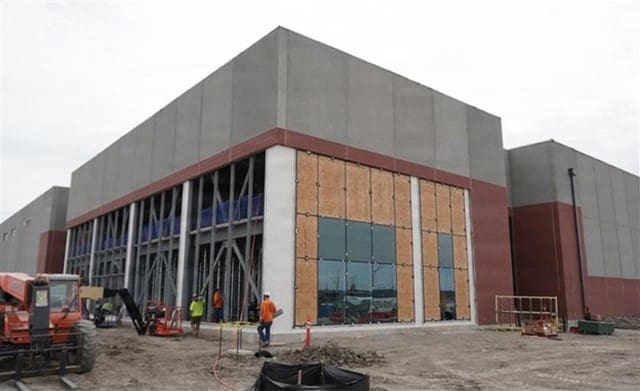
CPE A&E is executing a long-term modernization strategy to ensure the Army’s ammunition needs are met well into the future. A key milestone was the February 2025 groundbreaking for a new 450,000?square?foot 6.8mm production facility at LCAAP. This state-of-the-art complex will house advanced manufacturing systems for every component of the 6.8mm cartridge and serves as a cornerstone of the Army’s organic industrial base modernization. Construction remains on schedule, with production equipment installation anticipated to begin in 2028.

“CPE A&E is leading the development, procurement, and fielding of cutting-edge ammunition and energetics ensuring the Army and its international partners maintain a significant technological advantage,” said Col. Jason Bohannon, Capability Program Executive Ammunition and Energetics. “The work being executed is foundational to advancing the Army’s modernization goals and ensuring combat readiness across the force.”

By Laura Emanski and Robert Goetz

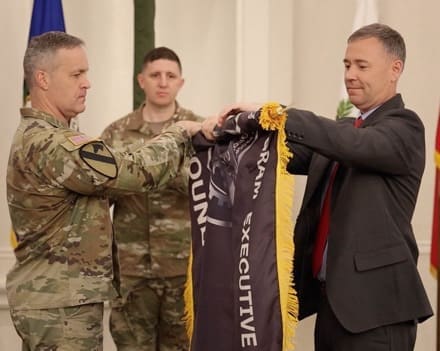
A New Force in Army Acquisition: PEOs Soldier and Ground Combat Systems Merge to Form CPE Ground

Saturday, April 11th, 2026

Fort Belvoir, Va  –  

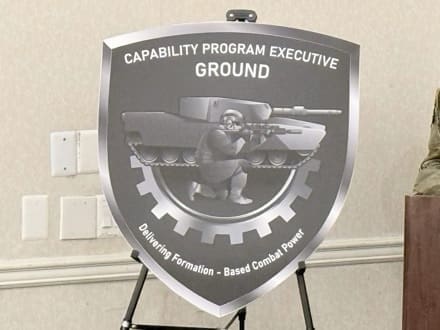
The United States Army is currently executing the most significant overhaul of its acquisition enterprise in decades, designed specifically to increase modernization, reduce bureaucracy, and get critical warfighting capabilities into the hands of America’s Soldiers as fast as possible. This new powerhouse organization marks a fundamental shift in how the Army develops and delivers technology, unifying the teams behind the Soldier and ground combat systems into a single, integrated enterprise – Capability Program Executive (CPE) Ground. This change occurs as the Army is undergoing a deliberate transformation – altering our acquisition enterprise to match the speed, complexity, and scale of today’s security environment.

As part of this major reorganization, Program Executive Office Soldier (PEO Soldier) and Program Executive Office Ground Combat Systems (PEO GCS) are combining to form CPE Ground, bringing together Soldier systems and ground combat platforms under a single, unified organization focused on delivering integrated combat power to formations. The result is a unified force laser-focused on a single mission: delivering fully integrated combat power to our formations at the speed of relevance. The switch to a portfolio-based model ensures responsibility, authority, and accountability remain in the same hands and allows for the greatest operational impact.

This strategic move is the centerpiece of a sweeping Army-wide acquisition reform aimed at accelerating modernization. As Army Undersecretary Michal Obadal best put it, “A modernized acquisition system will position us ahead of our adversaries, strengthen our readiness, and maintain a technological edge in all domains.”

This transformation, which has been in the works for over a year, is much more than just a name change. It is a complete structural and operational realignment designed to increase unity of effort, reduce seams between platforms and Soldier systems, and accelerate capability delivery across the force.

Our North Star is efficiently delivering formation-based capabilities while driving Soldier adoption. By aligning platforms, weapons, protection, power, and mission command systems within one enterprise, CPE Ground will ensure integrated solutions are not only delivered rapidly but are intuitive, sustainable, and embraced by the Soldiers who depend on them.

CPE Ground’s portfolio includes some of the Army’s most critical modernization programs, including the M1E3 Abrams, XM30 Mechanized Infantry Combat Vehicle, M7 Rifle and M250 Automatic Rifle, Soldier Borne Mission Command (SBMC), Infantry Squad Vehicle (ISV), and the Army’s family of mortars capabilities that together strengthen combat formations from the individual Soldier to armored brigades.

And with this new realignment comes new leadership.

Leading CPE Ground will be Brig. Gen. Troy M. Denomy, who will serve as the Capability Program Executive for CPE Ground. Denomy brings two decades of experience working with and supporting Soldiers in high-profile and combat environments.

Denomy currently serves as the Program Executive Officer for PEO Soldier and is therefore deeply familiar with the breadth of systems transitioning into CPE Ground, as well as the teams that build and sustain them.

“This transformation is about delivering integrated combat power at the speed of relevance,” said Denomy. “By unifying the strengths of [PEO] Soldier and [PEO GCS] into CPE Ground, we are breaking down barriers between platforms and the Soldiers who operate them. Our focus is clear to deliver integrated, affordable, interoperable ground formation-based capabilities that provide decisive overmatch across the full spectrum of operations. The success of our work will strengthen formations from the individual rifleman to armored brigades, ensuring our Army remains lethal, agile, and ready to dominate in any fight.”

This new leadership and organizational structure streamlines the acquisition process by centralizing authority with leaders directly responsible for delivering and sustaining capabilities every day. By combining the strengths of the former PEO Soldier and PEO GCS, CPE Ground reduces bureaucratic barriers and accelerates decision-making across portfolios.

While the Army is evolving, the mission remains unchanged: to deliver integrated, interoperable ground capabilities that enable Soldiers to fight, survive, and win on the modern battlefield.

CPE Ground’s vision remains clear: to be an agile Army acquisition enterprise that rapidly delivers decisive, sustainable, and adaptable capabilities for the future fight.

Consistent with Department of War guidance, CPE Ground will field integrated capability sets more quickly, improve interoperability across weapons, sensors, protection, power, and mission command systems, and remain responsive to modernization priorities aligned with operational needs.

The stand-up of CPE Ground builds on the proven legacy of PEO Soldier and PEO GCS, positioning it to operate more effectively and respond more rapidly to emerging threats and technological change. It ensures that platforms, weapons, protective gear, and mission command systems are developed and fielded as a cohesive fighting system.

This integrated approach allows the Army to respond more rapidly to emerging threats. It ensures that America’s Soldiers will always be the most lethal and effective fighting force in the world.

By Zach Montanaro Army