TYR Tactical

Archive for the ‘UxS’ Category

FlyTrap 5.0 Puts Emerging Tech in Warfighters’ Hands

Tuesday, May 5th, 2026

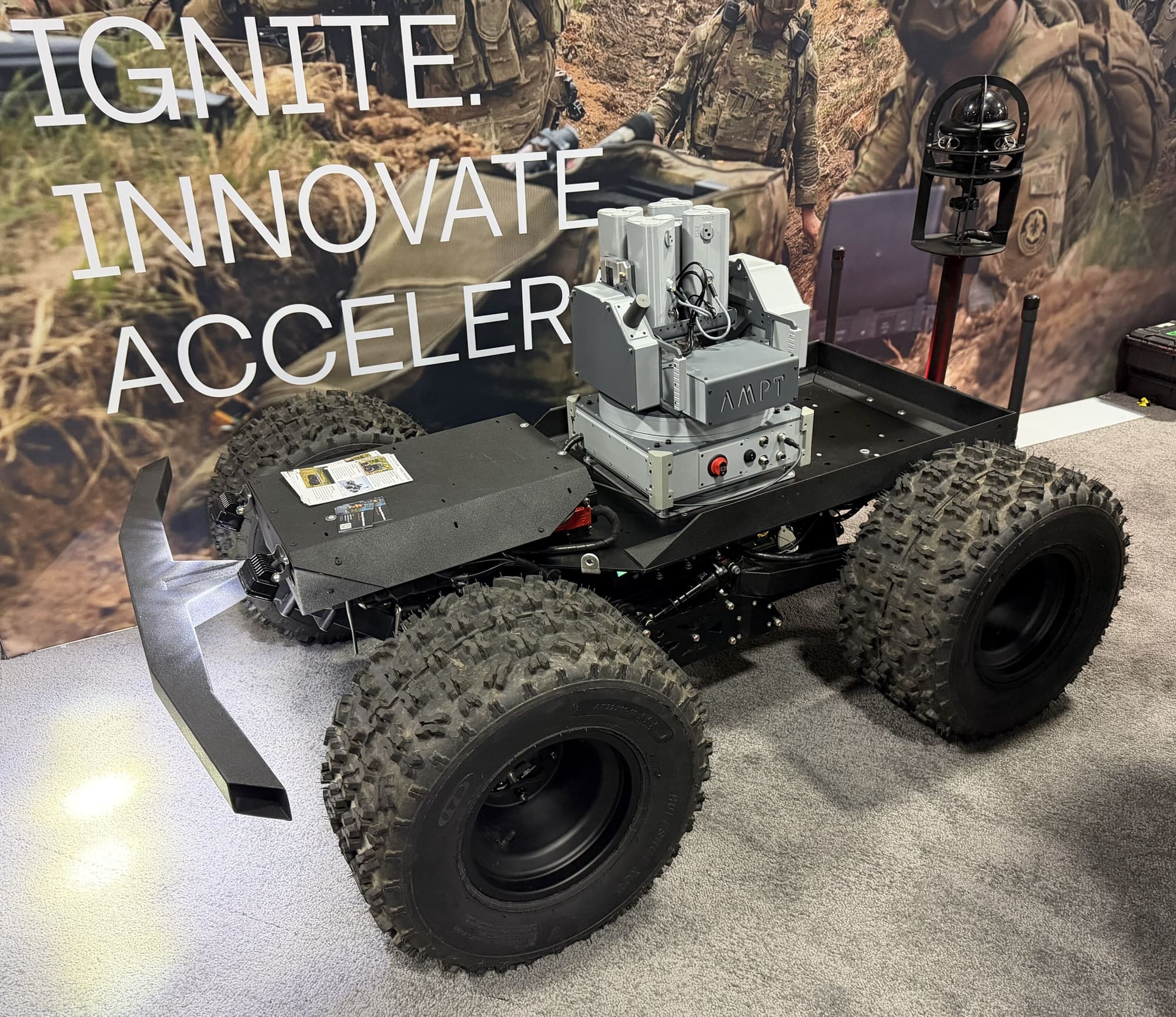
PABRAD? TRAINING AREA, Lithuania – U.S. infantry Soldiers from the 2nd Cavalry Regiment and paratroopers from the U.K. Parachute Regiment prepare for the force-on-force phase of Project FlyTrap 5.0 at Pabrad? Training Area, Lithuania, May 2. FlyTrap 5.0 integrates autonomous and unmanned ground vehicles, first-person view drones and counter-unmanned aerial systems on the simulated battlefield.

The day marked the third consecutive day of preparation and system integration for the exercise, which included an exercise briefing attended by U.S. Soldiers and U.K. paratroopers participating in the force-on-force portion of FlyTrap 5.0. Soldiers spent the remainder of the day conducting drone familiarization, operating unmanned ground vehicles and rehearsing C-UAS procedures in preparation for the upcoming engagement.

Among those preparing was Spc. Arthur Tugman, an infantryman assigned to 1st Squadron, 2nd Cavalry Regiment, who has taken on the role of unmanned ground vehicle operator for the exercise, a mission set outside his traditional infantry duties.

“My role in FlyTrap 5.0 is to serve as an unmanned ground vehicle operator, where I operate various unmanned ground vehicle platforms to transport equipment, Soldiers, unmanned aerial systems and counter-unmanned aerial systems to wherever they are needed,” Tugman said.

The integration of infantry Soldiers into UGV operations reflects a broader theme running through FlyTrap 5.0; placing emerging technology directly in the hands of warfighters regardless of their primary specialty, and using their feedback to drive rapid improvements across the force. FlyTrap 5.0 hopes to organically assimilate these new duties to Soldiers already assigned to units.

Tugman said the speed at which his unit has been able to absorb and operate the new systems has been one of the more surprising aspects of the exercise.

“Something I learned that I didn’t expect was how fast the United States Army is able to integrate new systems into warfighting tactics,” he said. “I’d say this equipment is very easy to use. I’m able to pick it up, turn it on, and send it wherever it needs to go, as far as it needs to go, as fast as it needs to go.”

That ease of use, Tugman said, has direct implications for how the soldiers could employ these systems at scale across the force.

“If all our technology works the way it’s supposed to, we will preserve manpower as well as accomplish the mission faster and more effectively,” he said.

For Tugman, the measure of success extends beyond the exercise itself. He described his goal as helping establish repeatable, standardized procedures for integrating C-UAS and UGV capabilities into 2nd Cavalry Regiment’s formations; procedures he hopes will eventually be adopted Army-wide.

U.S. and Allied forces conduct Project Fly Trap 5.0 as part of a series of linked exercises, including Sword, Saber Strike, Immediate Response, and Swift Response, which transform experimentation into capability. During Flytrap, Soldiers integrate counter-unmanned systems, AI-enabled command and control, and live data networks to move faster, decide faster, and fight more effectively across all domains.


Story by SGT Max Elliott

196th Mobile Public Affairs Detachment

USSOCOM Launches Advancing Naval Capabilities through Holistic Opportunities and Resources (ANCHOR) Initiative

Monday, April 27th, 2026

United States Special Operations Command (USSOCOM) Special Operations Forces Acquisition, Technology, and Logistics (SOF AT&L) has announced the Advancing Naval Capabilities through Holistic Opportunities and Resources (ANCHOR) Initiative.

Using Other Transactional Authority (OTA) acquisition, the ANCHOR Initiative’s purpose is to form a sphere of technological excellence made up of participants from industry, non-profit organizations, and not-for-profit entities able to rapidly and efficiently propose and carry out, through maximum practicable competitive procedures, the development of prototype solutions that sustain and expand strategic superiority within broadly stated special operations focus areas of interest. It is intended that Participants will perform a strategically important role in developing solutions focused on the development, demonstration and transition of resilient and dynamic technological capabilities critically necessary for the Nation’s Special Operations Forces.

Focus areas include:

Focus Area 1: Unmanned Systems. Across the maritime domain, USSOCOM is increasingly leveraging unmanned and autonomous systems to push the limits of where and how its forces can operate. Integrating unmanned aerial, surface, and underwater platforms enables longer persistence in contested and denied environments, surveillance and reconnaissance in high-risk areas, and enhanced situational awareness without exposing personnel to unnecessary danger. USSOCOM is particularly interested in capabilities that improve cross-domain coordination, reduce the logistical footprint of deployed forces, and deliver reliable data and effects in dynamic maritime conditions. Innovations in autonomy, sensing, endurance, and resilient communications are key to enabling the next generation of maritime unmanned systems that support USSOCOM’s evolving role in multi-domain operations.

Focus Area 2: Counter-Unmanned Systems. To stay ahead of rapidly evolving unmanned threats, USSOCOM is prioritizing capabilities that can sense, understand, and respond to hostile systems before they impact the mission. As autonomous and remotely operated platforms become more accessible and adaptive, the need for agile, layered defense systems has become essential to preserving operational security and freedom of action. USSOCOM is interested in technologies that detect, track, and neutralize unmanned threats—from individual platforms to coordinated swarms—within the constraints of maritime special operations. Solutions optimized for size, weight, and power; capable of functioning in contested electromagnetic environments; and effective against both kinetic and electronic attack vectors are of particular interest. These capabilities are critical to enabling mission assurance, safeguarding personnel, and maintaining tactical advantage in multi-domain maritime operations.

Focus Area 3: Command, Control, Communications, Computer, Cyber, Intelligence, Surveillance, and Reconnaissance (C5ISR). At the core of USSOCOM’s future force design is a resilient C5ISR enterprise that connects sensors, shooters, and decision-makers across every domain. Next-generation C5ISR systems are expected to integrate multi-source intelligence, resilient communications, and cyber-secure data networks, enabling USSOCOM operators to sense, process, and act faster than the adversary. USSOCOM is particularly interested in technologies that strengthen edge connectivity, leverage AI-enabled analytics for real-time situational awareness, and ensure data integrity across denied or degraded environments. Seamless integration of cyber defense, intelligence fusion, and tactical communications allows operators to maintain command and control across dispersed forces while enabling intelligence collection and dissemination at the speed of relevance. These evolving C5ISR capabilities form the backbone of multi-domain maritime operations, empowering USSOCOM to outpace emerging threats and sustain operational advantage across every phase of mission execution.


Focus Area 4: Scalable Effects. In parallel, USSOCOM is pursuing scalable effects that provide flexible options to influence, degrade, or defeat adversary capabilities while managing risk and escalation. These effects span both kinetic and non-kinetic options, enabling commanders to match the level of impact to mission objectives, risk tolerance, and escalation considerations. USSOCOM is particularly interested in solutions that offer tunable effects—from reversible disruption and temporary degradation to permanent disablement—while limiting collateral damage and, when required, managing attribution. Technologies of interest include directed energy, electronic warfare, cyber-enabled effects, and precision engagement tools that can be employed from distributed maritime platforms and integrated with existing C5ISR architectures to deliver coordinated, scalable effects in support of complex operations.

Focus Area 5: Human Performance. Optimization of human performance is a critical force multiplier for USSOCOM, directly impacting operational readiness, mission effectiveness, and organizational capability retention. Comprehensive physical conditioning programs that address the multifaceted demands of maritime special operations serve to enhance baseline performance while simultaneously reducing the incidence of acute and chronic injuries that can sideline operators during critical mission windows. Cognitive performance enhancement through mental acuity training, stress inoculation, and neurological health monitoring addresses the complex decision-making requirements of special operations while mitigating psychological burnout that can compromise judgment and tactical effectiveness. This holistic approach to human performance optimization directly contributes to USSOCOM ‘s ability to retain experienced personnel by extending their operational careers, reducing medical attrition rates, and maintaining the institutional knowledge and tactical expertise that takes years to develop, thereby preserving USSOCOM’s most valuable asset while maintaining operational readiness across extended deployment cycles and high-tempo operations.

Focus Area 6: Human-Machine Teaming. Human-Machine Teaming represents a transformative capability for USSOCOM, enabling intuitive control of unmanned systems through natural human interfaces and providing immersive training environments for high-risk scenarios. Natural control methods, such as voice commands and gesture recognition, enable USSOCOM operators to direct autonomous systems while maintaining tactical readiness and operational security. This reduces the cognitive burden of system management, allowing operators to focus on tactical decision-making and leverage machine capabilities for surveillance, reconnaissance, and support functions. Augmented and virtual reality technologies revolutionize USSOCOM training by enabling operators to repeatedly practice complex, high-risk scenarios without the logistical constraints and safety risks associated with live training exercises while building operator proficiency in human-machine coordination. This combination of natural system control and immersive training capabilities enhances tactical proficiency while optimizing the division of tasks between human judgment and machine processing power, ultimately improving mission effectiveness in the complex and demanding maritime special operations environment.

Responses are due Jun 01, 2026 4:30 PM EDT.

Visit sam.gov for full details.

Textron Systems’ Tsunami Autonomous Maritime Surface Vessel Sold To NIWC PAC

Sunday, December 21st, 2025

TSUNAMI™ Vessel Provides Capability for Scale, Maturity and Capacity

HUNT VALLEY, Md., Dec. 17, 2025 – Textron Systems Corporation, a Textron Inc. (NYSE:TXT) company, announced today that it has sold a 21-ft. TSUNAMI™ USV to the Naval Information Warfare Center (NIWC) Pacific (PAC) to support the testing of the Maritime Digital Experimentation Federation (MDEF) – an Australia, United Kingdom, and United States (AUKUS) testing initiative to distribute testing of interoperability standards with uncrewed vehicles. The order includes the state-of-the-art TSUNAMI craft and engineering and training support.

The TSUNAMI family of autonomous maritime surface vessels are designed to meet the needs of the U.S. Navy and its allies for a readily available, versatile portfolio of multi-mission uncrewed assets to team effectively across the fleet. Utilizing Brunswick Corporation’s reliable, high-performance vessels, Textron Systems developed the TSUNAMI family of products with its trusted CUSV® vessel-based autonomy control system. The TSUNAMI family of vessels offer several variants to meet diverse mission requirements, including size, speed and range. Our solution leverages mature commercial technologies to deliver increased capacity and immediate scale.

“The TSUNAMI craft provide the Navy with a rapidly deployable, fully autonomous solution to support their missions,” said Senior Vice President, Air, Land and Sea Systems David Phillips. “Our expertise in designing and fielding trusted autonomous solutions results in a family of small, uncrewed surface vehicles (sUSVs) that are scalable, modular in design and globally sustainable, allowing for maximum mission flexibility in an attritable system.”

The order follows the recent sale of a 24-ft. vessel to the Naval Surface Warfare Center (NSWC) Dahlgren Division. The TSUNAMI family is a low-cost, rapidly deployable solution that pairs Textron Systems’ 40+ years of multi-domain autonomous vehicle experience with the capacity and maturity of the U.S. commercial shipbuilding industry’s manufacturing and design capabilities.

Scientific Systems’ Autonomy Software Achieves A Major Milestone in Test with Group of Unmanned Boats

Wednesday, November 19th, 2025

Advanced Software Enables Coordinated, Autonomous Execution of Complex Maritime Operations During Real-World Ocean Trial

BURLINGTON, Mass., Nov. 18, 2025 — Scientific Systems, a defense software prime with expertise in maritime and multi-domain operations, announced today that its distributed AI-powered OPTIMUS autonomy software successfully executed a recent on-water test of multiple unmanned surface vessels (USVs) performing end-to-end cooperative mission activities. The weeklong maritime test demonstrates that Scientific Systems’ scalable autonomy software is ready now to support “intelligent affordable mass” — the deployment of swarms of autonomous low-cost platforms that use edge-based AI to dynamically coordinate, rapidly adapt, and dramatically increase survivability & lethality, to achieve mission intent in relevant scenarios.

The August demonstration featured a fleet of nine boats equipped with Scientific Systems’ AI-powered collaborative autonomy software. The software enabled the vessels to operate as an intelligent swarm, searching, monitoring, and engaging targets while avoiding obstacles with dynamic rerouting. This activity was a result of seamless integration of real-time sensing, sense-making, and AI decision-making in the decentralized system. Scientific Systems’ unique, decentralized autonomy software enables the formation of “smart swarms” — collaborative, adaptive teams of platforms that can execute complex missions in degraded communications environments. A single remote operator defines only the mission rules, intent, and key authorities, while the intelligent coordination and execution occur autonomously among the platforms within the contested network. This decentralizedapproach delivers major advantages over communications-dependent, centrally controlled systems, enabling mission plans to continue even with intermittent or lost communications and eliminating vulnerability to the loss of any single “leader” vessel—all while providing superior resilience, scalability, and security.

“This test underscores the critical role software plays in enabling affordable mass and autonomy at sea,” said Scientific Systems Chief Executive Officer Kunal Mehra. “We’re proud to support the mission of maritime operators and to advance the readiness of scalable, autonomous USV squadrons.”

Today’s announcement follows July’s unveiling of the VENOM small Unmanned Surface Vehicle (sUSV), developed to meet the Navy’s operational need for high-performance sUSV interceptors.

Scientific Systems’ software, integrated with the VENOM sUSV family—offered in 6-, 9-, and 13-meter models and extendable to other USVs—provides a flexible, mission-ready solution built around a modular, scalable autonomy stack tailored to customer-defined objectives.

BlackSea Technologies Unveils Modular Attack Surface Craft (MASC) USV Family to Support US Navy Fleet Modernization

Monday, September 22nd, 2025

BALTIMORE, MD — September 22, 2025 BlackSea Technologies (“BlackSea”), a leader in autonomous maritime systems, today announced the development of its new family of Modular Attack Surface Craft (MASC) unmanned surface vessels (USVs) designed to meet the U.S. Navy’s call for modular, multi-mission combatants. Submitted under Solicitation N00024-25-R-6314, BlackSea’s MASC solution delivers a mission-driven, production-ready platform to accelerate the Navy’s transition to a distributed and survivable future fleet.

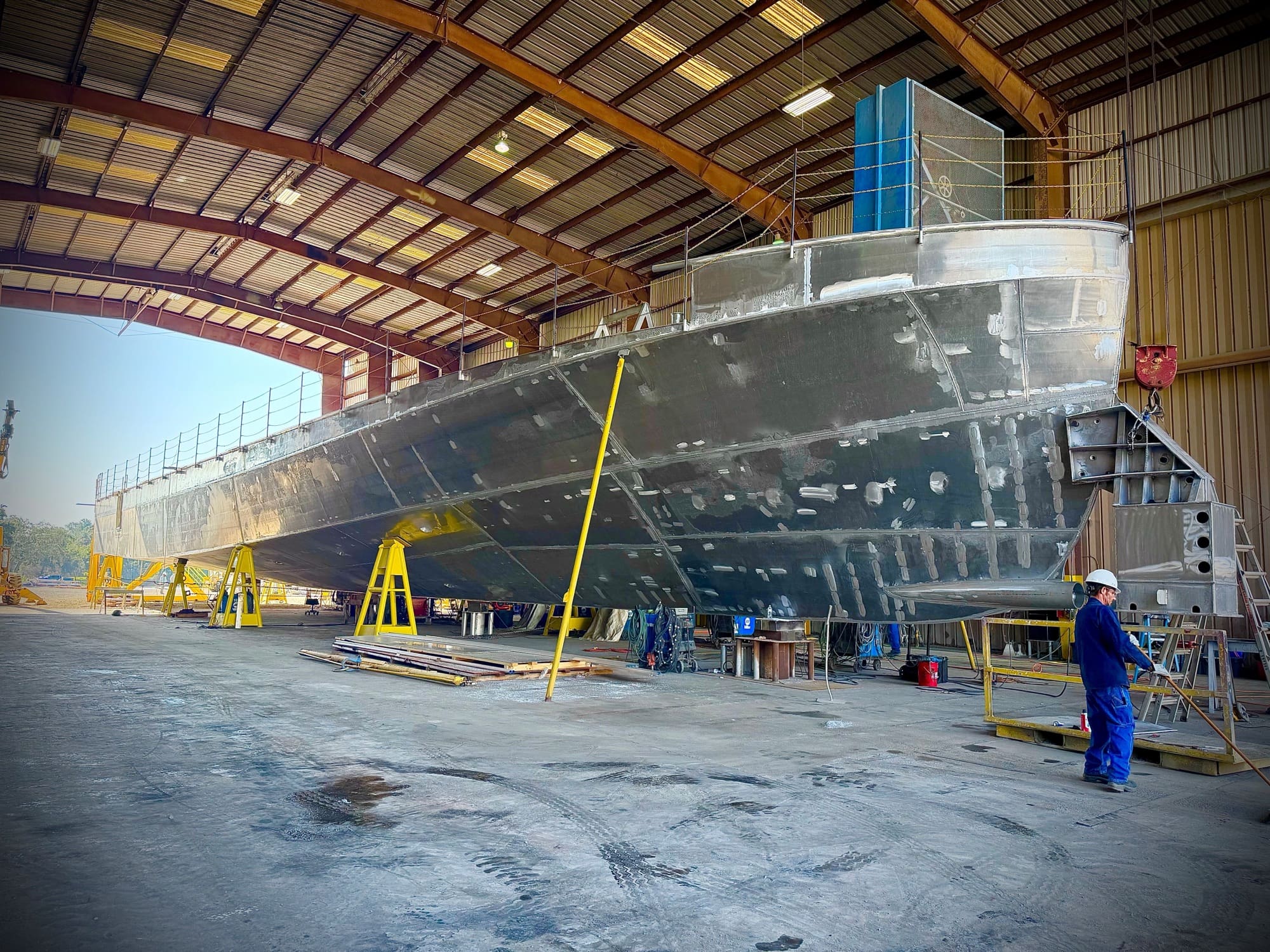
In July 2025, the U.S. Navy issued a solicitation inviting industry to propose modular surface vessels capable of executing a broad range of missions including; anti-surface warfare, strike operations, electronic warfare, mine countermeasures, and logistics—through containerized, rapidly reconfigurable payloads. BlackSea’s proposed 66-foot aluminum catamaran was purpose-built to exceed these requirements.

Mission-Driven Design

Unlike retrofitted commercial hulls, BlackSea’s MASC USV was designed from the keel up to maximize payload access, capacity, and operational flexibility.

The BlackSea MASC vessel offers:

  • 67,200 pounds of payload capacity and 900 ft² of open deck space
  • 198 kWe electrical power to support advanced sensors and weapon systems
  • 3,000 nm range at 10 knots and extended self-deploying range to 10,000 nm
  • Top speed of 25 knots, enabling responsive, long-endurance operations

With twice the payload area and electrical power of similar-sized vessels, the platform supports seven mission profiles out of the box: Anti-Submarine Warfare (ASW), Anti-Surface Warfare (ASuW), Electronic Warfare/ISR, Logistics, Infrastructure Monitoring, Strike, and Mine Warfare (MCM/MIW).

“Our approach starts with the mission, not the platform,” said Todd Greene, Deputy Director of Advanced Technology at BlackSea. “We designed a flexible, modular combatant that can evolve with the Fleet and be built at scale today, not years from now.”

Production-Ready and Rapidly Scalable

Leveraging its proven Global Autonomous Reconnaissance Craft (GARC) production line, currently producing one craft per day at BlackSea’s Baltimore facility, the company is prepared to build and deliver the first fully integrated MASC prototype within six months.

The design shares 75% commonality with BlackSea’s fielded GARC systems, ensuring supply chain resilience and rapid integration of existing autonomy, command-and-control, and perception subsystems.

The hull form, derived from BlackSea’s operational GARC platform, uses slender twin aluminum hulls for low drag and high stability—enabling safe launch and recovery of containerized payloads. Marine-grade aluminum construction aligns with existing shipyard skillsets.

Powering the craft are dual Volvo Penta D8-IPS600 integrated propulsion units, eliminating shaft alignment during assembly and supported by a global logistics network. The open architecture is built natively on the Navy’s Unmanned Maritime Autonomy Architecture (UMAA), enabling plug-and-play autonomy integration and preventing vendor lock-in.

Enabling the Navy’s Future Fleet

The Navy’s MASC program consolidates the goals of its earlier Large and Medium USV initiatives, seeking modular, containerized surface combatants to distribute lethality across the Fleet. By combining proven autonomy systems, fielded production methods, and a design tailored to naval missions, BlackSea’s MASC USV offers the Navy a decisive advantage in speed to fleet, operational flexibility, and long-term scalability.

“Fleet modernization demands bold steps,” said Chris Devine, CEO of BlackSea. “With our MASC solution, the Navy can field a family of unmanned combatants that are mission-driven, production-ready, and built to scale.”

About BlackSea Technologies 

BlackSea Technologies is a premier naval technology firm enabling new asymmetric strategies so U.S. Naval and military forces can prevail over the next several decades in multi-dimensional conflicts.  We deliver innovative maritime systems and mission solutions to our nation’s warfighters from the ocean surface to the seabed. 

For more information about BlackSea, please visit our web site and follow us on LinkedIn.