TYR Tactical

Archive for the ‘Drone’ Category

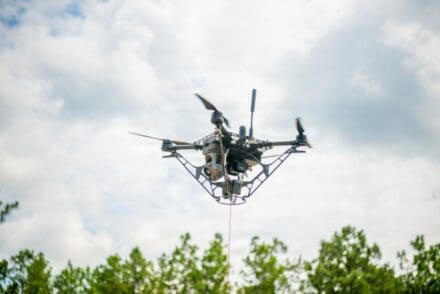
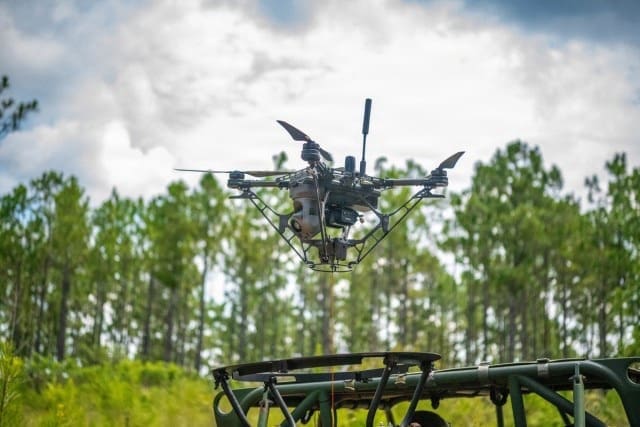
AV Introduces MAYHEM 10: Multi-Role Launched Effects System at AAAA 2026

Thursday, April 16th, 2026

ARLINGTON, Va. — April 15, 2026 — AeroVironment, Inc. (“AV”) (NASDAQ: AVAV) today announced the debut of MAYHEM 10, a groundbreaking, multi-role launched effects system purpose-built for deployment from air, ground, and maritime platforms.  

MAYHEM 10 is an autonomous, multi-role launched effects system that delivers significant operational versatility with a modular payload that supports interchangeable lethal and non-lethal effects—including intelligence surveillance and reconnaissance (ISR), electronic warfare, communications relay, and precision strike—tailored to specific mission requirements and adaptable as operational conditions change. 

“MAYHEM 10 sets a new standard for operational versatility and survivability on the modern battlefield,” said Wahid Nawabi, Chairman, President and Chief Executive Officer at AV. “By integrating advanced autonomy, multi-domain payloads, and rapid adaptability, we empower our forces to sense, disrupt, and strike with precision—even in the most contested environments. This breakthrough allows commanders to extend their reach, accelerate decision-making, and maintain superiority without putting crews or high-value assets at unnecessary risk.” 

Developed on the heritage of AV’s Switchblade® family and designed for demanding, contested environments, MAYHEM 10 boasts a 10-pound (4.5 kg) payload capacity, up to 100 km operational range, 50 minutes of endurance, and readiness for assembly and launch in less than five minutes.  

Built using a Modular Open Systems Approach (MOSA), the system supports seamless upgrades, third-party payload integration, and unified control through AV’s Tomahawk Grip controller and AV_Halo™ COMMAND interface, empowering networked, distributed, and scalable employment alone or in collaborative swarms to execute multiple effects in parallel and adapt quickly to evolving threats and mission needs. 

“MAYHEM 10 changes how forces generate combat power by enabling collaborative swarm operations at scale,” said Brian Young, Senior Vice President of Loitering Munitions at AV. “Operators can employ multiple systems to work collaboratively—expanding coverage, overwhelming defenses, and executing synchronized effects across the battlespace—without increasing platform risk or force concentration.” 

MAYHEM 10 features a removeable forward modular payload for rapid integration of third-party payloads to enhance mission flexibility. Its self-contained launcher supports flexible deployment across dismounted, mobile ground, air-mounted and vehicle-mounted operations.  

Advanced autonomy is powered by an AI-driven processor and enables effective operations in contested and denied environments, with resilience to jamming, spoofing, and navigation-denied conditions. Secure navigation and communication are facilitated by M-Code GPS and Silvus datalink, while a MANET secure mesh network ensures robust command-and-control links with a 25-40 km link range.  

Key features of the MAYHEM 10

Multi-Platform Extended Standoff: Deployable from air, ground, and maritime platforms, MAYHEM 10 extends host-platform standoff by enabling threat detection and engagement at range—pushing sensing and effects 100+ km forward while reducing risk to crews and high-value assets. 

One System, Multiple Effects: A single MAYHEM 10 supports configurations for Intelligence, Surveillance, and Reconnaissance (ISR), electronic warfare/disruption, deception/decoy, communications relay, and precision strike with up to 10 lbs of tailorable nonlethal or lethal payloads—without changing launch concepts.  

Scalable, Coordinated Effects: Employ MAYHEM 10 individually or in collaborative swarms to expand coverage, overwhelm or confuse defenses, and execute multiple effects in parallel—without concentrating forces or crewed platforms. 

Autonomy for Contested Environments: AI-enabled autonomy allows MAYHEM 10 to maintain mission effectiveness through jamming, spoofing, degraded communications, and denied navigation, reducing reliance on continuous operator control and operator burden. 

Built to Adapt and Evolve: A Modular Open Systems Approach (MOSA)-based, interoperable architecture enables rapid payload integration, autonomy upgrades, and system employment keeping MAYHEM 10 aligned with evolving threats, networks, and priorities. 

101st Airborne Division (Air Assault) operates Aevex Atlas Technology at JRTC

Thursday, April 9th, 2026

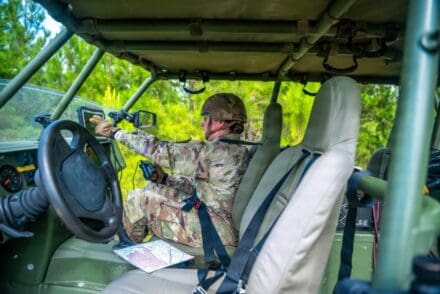
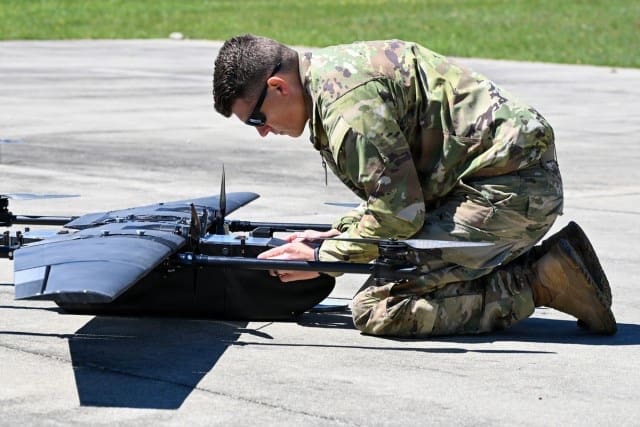
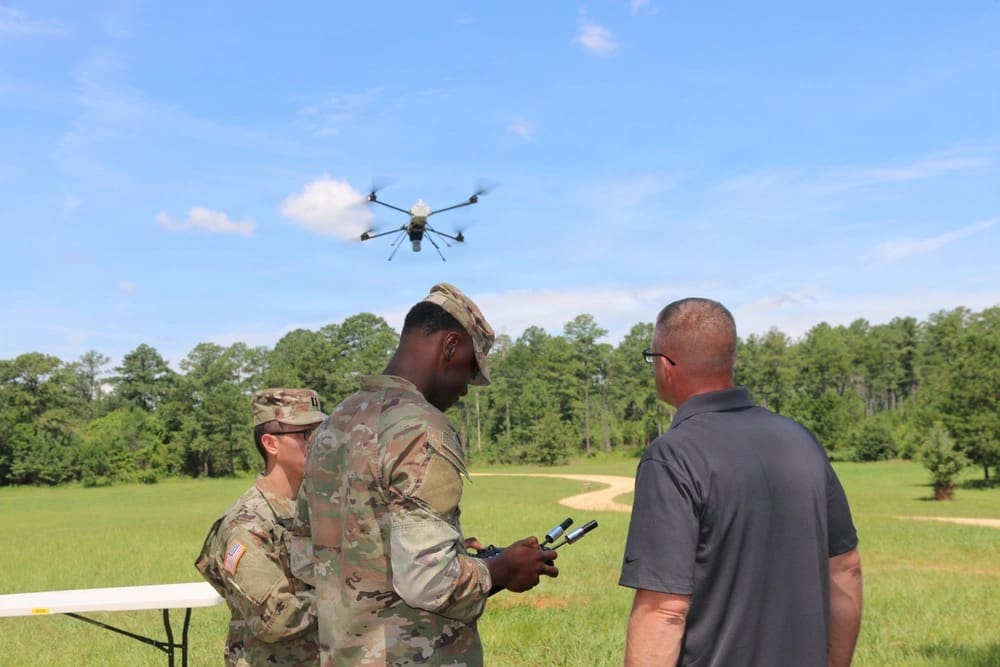
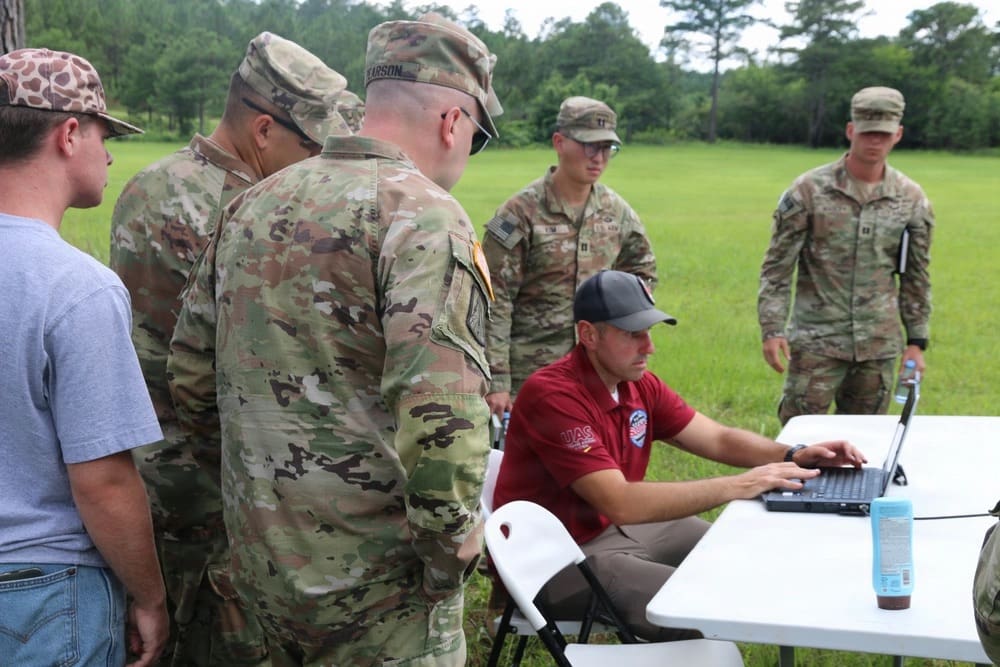
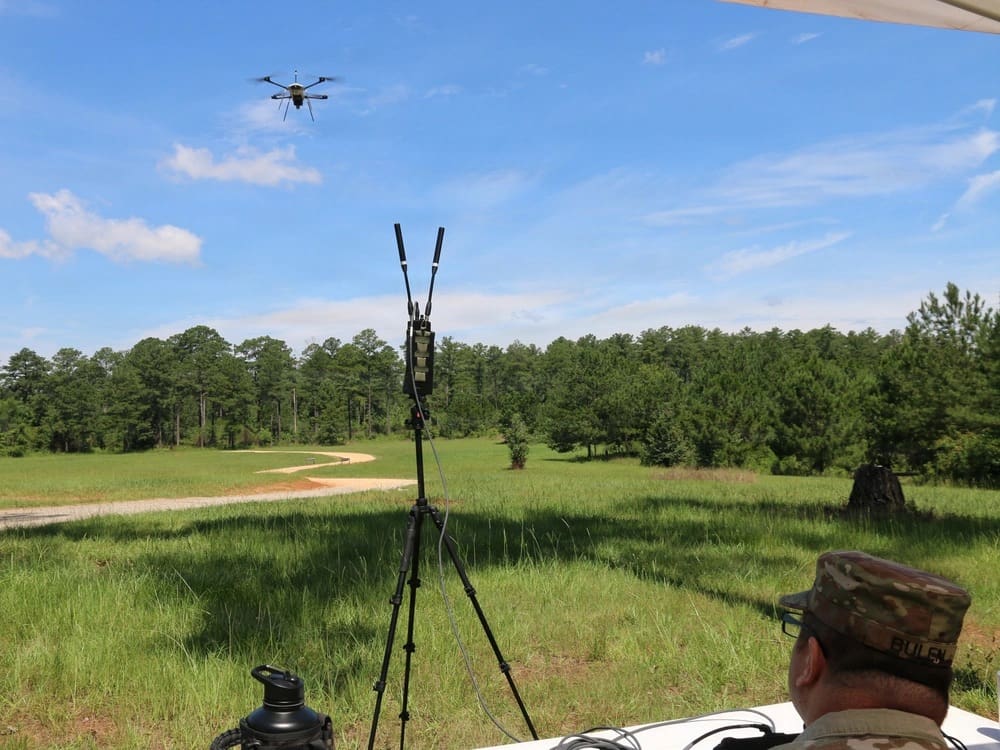
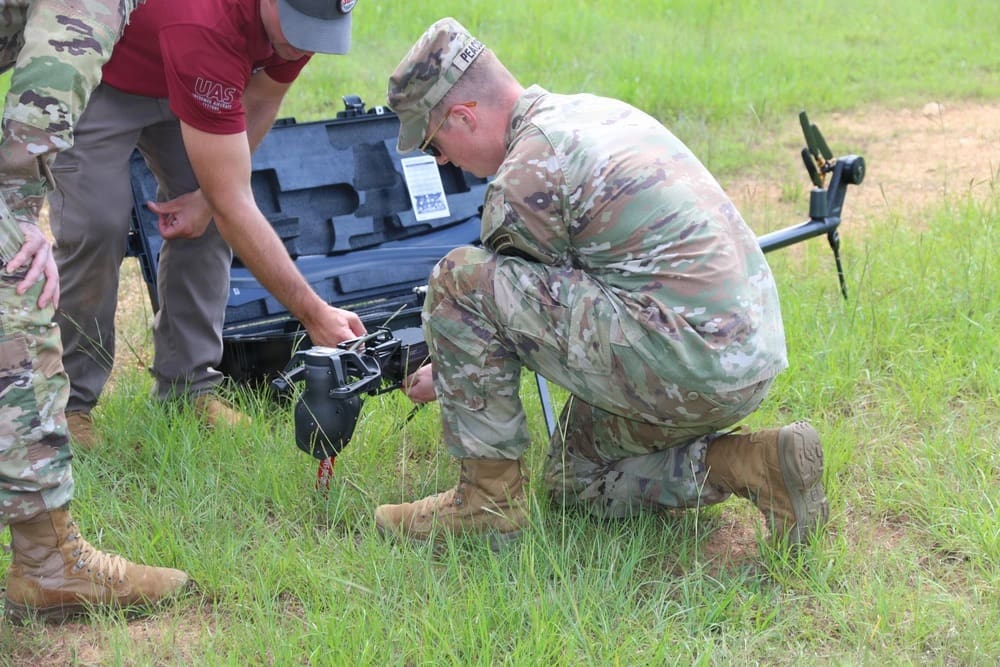
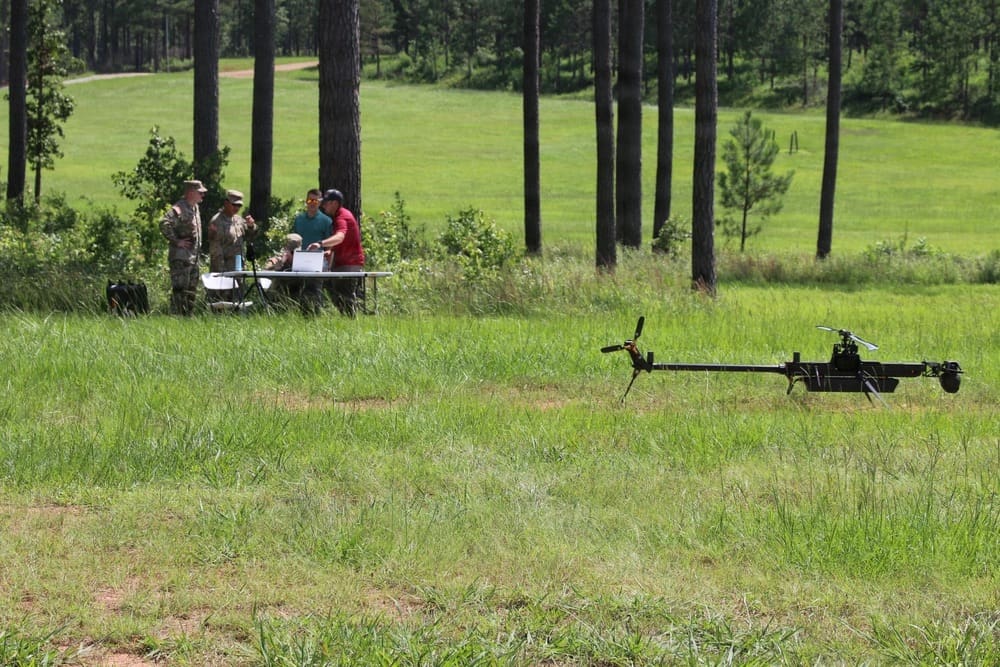
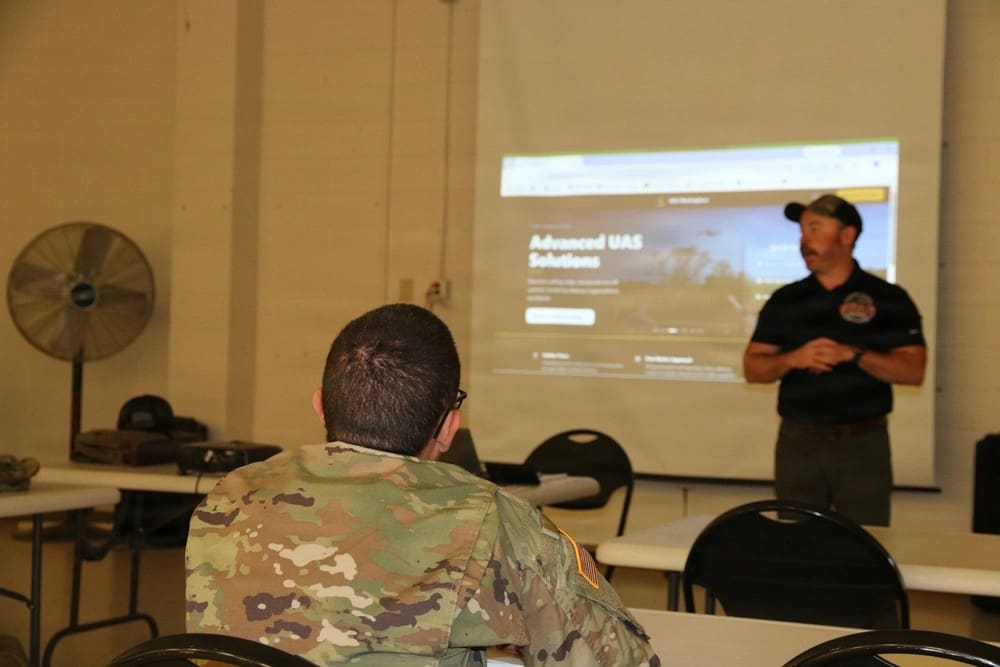
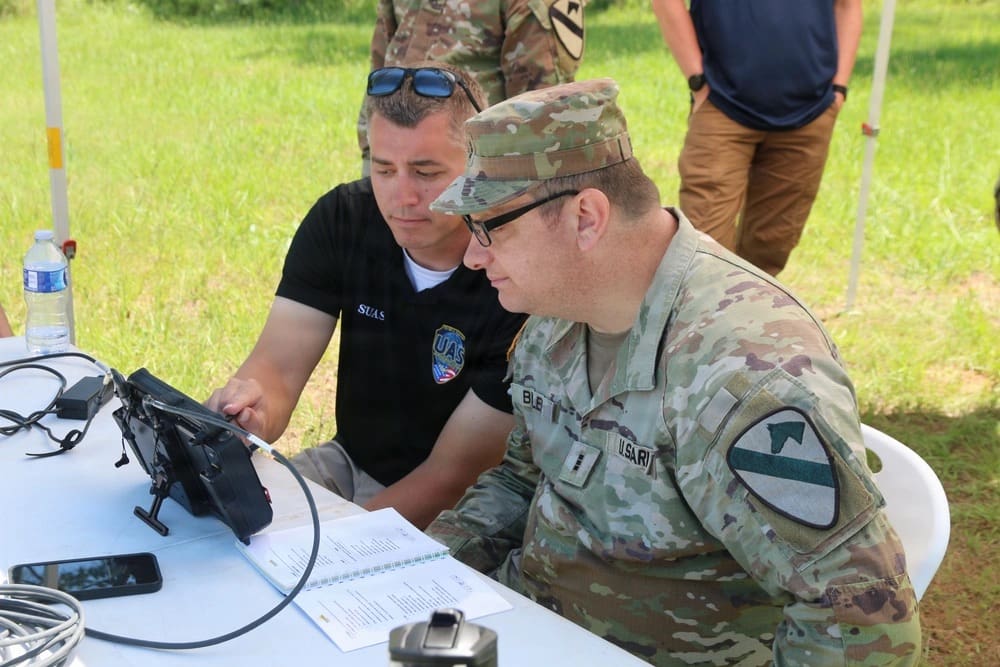
U.S. Soldiers assigned to the 101st Airborne Division (Air Assault), in collaboration with Aevex and Program Manager Unmanned Aircraft Systems (PM UAS), conduct the inaugural integration of the Aevex Atlas system during a Joint Readiness Training Center (JRTC) rotation at Fort Polk, Louisiana, April 1, 2026. The video depicts Soldiers configuring the Aevex Atlas Ground Control System (GCS), featuring a 30-foot mast and integrated interface box, and the Aevex Atlas Launcher, designed to enable small units to deploy loitering munitions and unmanned aerial systems (UAS). Additionally, senior leaders observe soldiers utilizing the Aevex Atlas Flight Simulator and Soldier Robotic Controller (SROC) to create flight mission plans. This rotation marks the first time the Aevex Atlas system has been integrated into training at JRTC, representing a significant milestone in Army modernization. These tactical innovations provide ground forces with organic, high-tech tools to dominate the modern multi-domain battlefield.

(U.S. Army video by Spc. Mariam Diallo)

X-Bow Awarded $12.2 Million Contract to Boost Drone Capabilities

Tuesday, April 7th, 2026

New Rocket-Assisted Take-Off System to Enhance AEVEX’s Unmanned Aircraft

ALBUQUERQUE, NM, Apr. 7, 2026 — X-Bow Systems Inc (X-Bow), the leading non-traditional producer of advanced manufactured solid rocket motors (SRMs), sub-orbital launch solutions and defense technologies, today announced a $12.2 million contract with AEVEX to produce rocket-assisted take-off (RATO) kits for AEVEX’s Disruptor drone. X-Bow will deliver hundreds of production kits and thousands of SRMs and components between March and August 2026, demonstrating its commitment to building fast, fielding faster, and delivering now to meet urgent defense needs.

X-Bow’s RATO2 motor launching an AEVEX Disruptor drone.

X-Bow’s RATO² (Rapidly Assembled Tactical Option for Rocket-Assisted Takeoff ™) system allows drones to take off from unprepared surfaces and confined spaces, significantly expanding operational flexibility in modern conflict zones.

Jason Hundley, Founder and CEO of X-Bow, stated, “This contract validates our ability to rapidly scale production and meet urgent defense needs. Our technology is critical for enhancing the capabilities of modern unmanned aircraft.”

The global military drone market is projected to grow significantly, with increasing demand for systems capable of operating in diverse environments. X-Bow’s RATO² technology addresses this need by enabling drones to operate from a wider range of locations and potentially extending their payload capacity and range.

This latest contract caps a series of recent awards for X-Bow, totaling $212 million in the past six months. Unlike traditional defense contractors, X-Bow’s agile approach and proprietary manufacturing processes reduce time-to-market for critical defense technologies from years to months.

X-Bow’s RATO² production kits, which include solid rocket motors and launch cradles, incorporate proprietary technologies such as advanced propellant formulations and innovative manufacturing processes, positioning the company as a leader in next-generation solid rocket motor technology.

Looking ahead, X-Bow plans to expand its product portfolio to address emerging needs in hypersonic propulsion, low-cost interceptors, next-generation space-based interceptors, and evolved sub-orbital space launch systems.

About X-Bow Systems

Since 2016, X-Bow Systems has rapidly evolved into the non-traditional leader in advanced solid rocket motor manufacturing and sub-orbital launch services, spearheading American reindustrialization in the new defense industrial base. Guided by its mission to “build fast, field faster, deliver now,” X-Bow is addressing critical munitions shortages and gaps in defense and space sectors through proprietary energetics technology, vertical integration from propellant development to full rocket assembly, and end-to-end launch capabilities. Backed by prominent aerospace and venture capital investors—including Crosslink Capital, Razor’s Edge Ventures, Balerion Space Ventures, Boeing, Arkenstone Capital, The Capital Factory, Upsher Management Company, Event Horizon Capital, and Lockheed Martin Ventures—X-Bow is headquartered in Albuquerque, New Mexico, with a dedicated R&D facility in Socorro, NM. The company has additional presence in Texas, Mississippi, California, Alabama, Colorado, Utah, Maryland, and Washington, DC. For more information, visit www.XBowSystems.com.

Red Cat Announces Strategic Partnership with Ukraine’s Spetstechnoexport to Advance Multi-Domain Uncrewed Systems Collaboration

Monday, April 6th, 2026

SALT LAKE CITY, March 30, 2026 — Red Cat Holdings, Inc.?(Nasdaq: RCAT), a U.S.-based provider of advanced all-domain drone and robotic solutions for defense and national security, today announced it has entered a strategic partnership with Spetstechnoexport (STE), a state-owned enterprise under Ukraine’s Ministry of Defense, to accelerate collaboration on next-generation unmanned and robotic systems.

The partnership, formalized through a memorandum of understanding (MOU) establishes a framework for cooperation across air, land, and maritime domains. The collaboration is designed to support the integration of advanced technologies, expand production capabilities, and enable broader access to U.S. and Ukrainian defense innovations in global markets. This partnership positions Red Cat as one of the first U.S. companies to formally collaborate with a Ukrainian state-owned defense enterprise on the advancement of multi-domain unmanned systems.

The announcement follows a joint event held in Ukraine earlier this month, where Red Cat and STE convened defense stakeholders, technology developers, and operational end users to showcase emerging unmanned systems and identify opportunities for deeper cooperation.

“This partnership reflects a fundamental shift in how allied nations collaborate to rapidly develop, scale, and deploy unmanned systems,” said Chris Ericson, Chief Operating Officer at Red Cat. “Ukraine has become a proving ground for new defense technologies, and STE plays a critical role in connecting those innovations to global partners. Together, we are creating a pathway to accelerate capability development and deliver mission-ready solutions across multiple domains.”

STE serves as a key integrator of Ukraine’s defense technology ecosystem, facilitating international partnerships, export coordination, and the scaling of advanced systems for operational deployment. Through this partnership, Red Cat will work alongside STE and Ukrainian developers to explore joint initiatives that align with evolving mission requirements in contested environments.

The collaboration builds on Red Cat’s broader strategy to deliver a fully integrated Family of Systems, combining aerial, ground, and maritime platforms with secure communications and scalable manufacturing, to support modern military and security operations. As global demand increases for rapidly deployable, resilient, and interoperable unmanned systems, the partnership underscores the importance of allied cooperation in advancing defense innovation and strengthening industrial capabilities.

DroneShield Establishes European Headquarters to Accelerate Regional Growth and Sovereign Counter-UAS Capability

Monday, March 30th, 2026

30 March 2026 – DroneShield (ASX:DRO), a global leader in counter-drone and electronic warfare (EW) solutions, is pleased to announce the official opening of its new European Headquarters in Amsterdam, The Netherlands.

The establishment of the European Headquarters marks a significant step in DroneShield’s long?term commitment to Europe, one of the Company’s fastest?growing regions, and provides a strengthened operational presence to support its expanding footprint across EU and NATO-aligned markets.

The new Headquarters will serve as an operational base for DroneShield’s EU Centre of Excellence and aligns with the EU’s ReArm Europe Plan / Readiness 2030 initiative, which seeks to boost military spending, strengthen industrial sovereignty, and accelerate support for Ukraine. It further builds on DroneShield’s newly established European manufacturing footprint to advance sovereign counter-UAS capability, which marks a major expansion of the Company’s European industrial footprint and manufacturing capacity.

The European Headquarters will be led by Louis Gamarra, who was promoted to the position of Chief Commercial Officer earlier this year, and builds on DroneShield’s existing regional presence. Mr Gamarra will oversee the continued growth of DroneShield’s commercial and operational functions across Europe, including the expansion of a dedicated in-region team. The Company’s European footprint now comprises of around a dozen staff, and benefits from a multilingual team proficient in English, German, French, Dutch, Spanish, and Scandinavian languages (Danish, Swedish, and Norwegian).

Image: DroneShield officially opens its European Headquarters.

The team will continue to work alongside DroneShield’s robust network of European resellers, while also growing internal operations functions to support delivery to customers. The newly established European headquarters will ensure that customers receive not just leading-edge capability, but also more efficient support and deployment.

Europe remains a priority region for DroneShield’s sales and business development strategy. In 2025, Europe was the Company’s best performing market, securing $98 million in revenue and accounting for 45 per cent of total Company revenue. As of February 2026, DroneShield has a regional pipeline valued at $1.2 billion. Geopolitical pressures, such as the Iranian conflict, ongoing war in Ukraine and repeated Russian drone incursions, continue to drive demand for deployed counter-UAS solutions across Europe and the Middle East.

The official opening event hosted VIP guests including the newly appointed Dutch State Secretary for Defence, Mr Derk Boswijk, and Australian Ambassador to the Netherlands, His Excellency Dr Greg French, reflecting the strong partnerships supporting DroneShield’s European growth.

Louis Gamarra, DroneShield European Headquarters Chief said, “DroneShield’s investment in Benelux marks a major milestone that strengthens our ability to support frontline users, procurement agencies and industry partners across Europe. With increasing demand for counter-drone solutions across the region, our new European headquarters will allow us to deliver faster, more localised support to our EU partners. We’re proud to be investing in local talent and infrastructure to meet the growing security needs across Europe.”

101st Airborne Division Tests Next-Gen Drones

Tuesday, March 24th, 2026

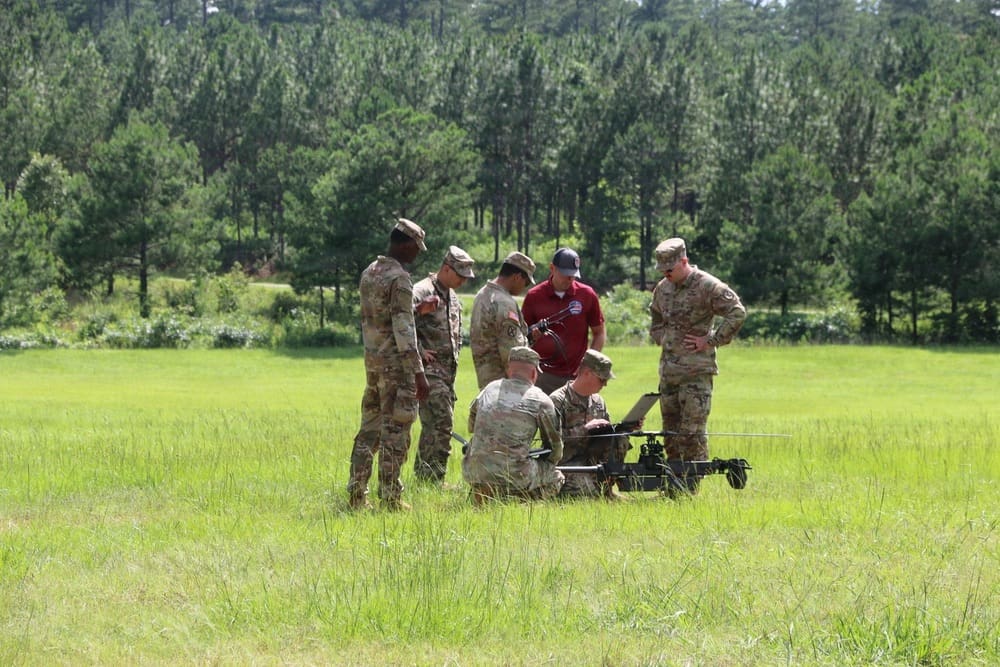
FORT CAMPBELL, Ky. — The 101st Airborne Division (Air Assault) tested their ability to integrate unmanned aircraft systems to support ground forces during a live-fire exercise on March 12.

“We are no strangers to innovation here on Fort Campbell,” said Brig. Gen. Travis McIntosh, deputy commanding general of operations for the 101st. “Drones are reshaping the geometry of the battlefield in real time and we must adjust. Distance and sanctuary no longer provide the protection they once did, and mass and speed of decision-making will increasingly be enabled by autonomy and AI. This event tested and proved these assumptions for us.”

Advancing Secretary of War Pete Hegseth’s directive for drone dominance, the division utilized UAS operators from its 1st Mobile Brigade Combat Team, 2nd Mobile Brigade Combat Team, and 101st Combat Aviation Brigade, to fly multiple UAS, alongside 5th Special Forces Group (Airborne). The sortie, that consisted of an MQ-1C Gray Eagle, C100 small UAS and Attritable Battlefield Enabler 1.01 systems, provided aerial clearance for 5th Special Forces Group Soldiers during the exercise.

“Drones are a great tool for over the hill reconnaissance,” said Spc. Basil Holland, an infantryman and C100 small UAS operator assigned to the 1st Battalion, 502nd Infantry Regiment. “They have a lot of ability to identify short and medium range targets and get eyes on whatever you need. It’s proven to be super useful.”

Representatives from the U.S. Army Reserve Command also attended the event. They were interested in learning how the 101st incorporates emerging technologies.

“We wanted to get a clear understanding of how the big Army is integrating UAS,” said Mr. Sammy Stevens, a counter UAS lead planner for USARC. “We want to try and replicate their efforts with the Reserve. During counterinsurgency operations everyone was used to looking down, to identify improvised explosive devices, now we have to look up in the air.”

Partnering with USARC highlights the division’s commitment to improving lethality for the entire Army.

“The 101st has been very gracious in supporting us,” said Master Sgt. Bryan Pettaway, USARC senior enlisted advisor for operations and logistics. “By showing us what has worked, and what hasn’t, they have helped us avoid those same mistakes.”

The exercise validated the division’s ability to operate UAS in a kinetic, multi-domain setting. This successful pairing of systems and Soldiers ensures the 101st Airborne Division (Air Assault) remains at the forefront of Army transformation efforts.

“Today’s demonstration was a direct answer to the Secretary of War’s directive,” said Chief Warrant Officer 2 Page Frazier, the exercise coordinator and member of the 101st Robotics and Autonomous Integration Directorate. “We did some unorthodox things and always made first contact with a machine. Before we sent a sapper to breach, we sent an [Attritable Battlefield Enabler]. Before we sent a tech to lase for laser guided munitions, we sent a Gray Eagle. Before we sent cavalry troops or light infantrymen to gather ground reconnaissance, we sent a UAS for medium-range reconnaissance and I don’t think any other exercise has done that. We leveraged modern technology to set conditions for a safe employment of a ground force.”

“I am superbly proud of the teamwork, from both the operational and institutional sides of the Army, as well as the conventional and Special Forces on Fort Campbell,” said McIntosh. “This exercise demonstrates one of the many ways we will dominate in tomorrow’s fight.”

By CPT Andrew Lightsey IV

Drones, Robots, Satellites: Rheinmetall Presents Itself at the XPONENTIAL Europe 2026

Monday, March 23rd, 2026

Rheinmetall AG will be participating in the specialised trade fair XPONENTIAL Europe 2026 in Düsseldorf from 24 to 26 March 2026. The event is one of the most recognized European trade fairs for autonomous systems, robotics and unmanned technologies. This year, for the first time, special attention is being paid to the topic of security and defence.

The Düsseldorf-based technology group is showcasing a wide range of unmanned solutions within the land, air, and space domains at the trade show. These include amongst others drones, satellites, robotic systems and applications for teleoperated driving via 5G mobile networks. Among the new products Rheinmetall is presenting at XPONENTIAL 2026 are:

Loitering Munition FV-014:
The FV-014 is a modern loitering munition system, specifically designed to meet the requirements of todays and tomorrow’s battlefield. As a portable reconnaissance and strike-drone, it combines reconnaissance capabilities with accurate impact strikes in a flexible solution, giving armed forces significant operational advantages from a distance. In the field, the FV-014 can first observe and analyse targets in order to strike precisely at the right moment. The operator remains involved in the decision-making process at all times. In this way, the system helps to minimize collateral damage, protect own forces, and engage at critical targets quickly, in a controlled manner, and effectively. The FV-014 is also a key component of Rheinmetall’s Reconnaissance and Strike Network (AWV). This network encompasses all necessary systems for reconnaissance and combat missions and combines coordinated strike capabilities with rapid responsiveness.

c-UAS Interceptor drone: Rheinmetall’s c-UAS Interceptor drone (RV-005) is a specialized “hard-kill” effector, designed to counter small unmanned aerial vehicles and is part of the company’s comprehensive drone defence toolbox. The system neutralizes enemy drones through a targeted physical collision or by means of a warhead, with modern AI technology enabling a precise approach even under the influence of radio jamming. The RV-005 can be integrated as an effector into any command-and-control system for drone defence. Threats can therefore be detected reliably, characterized and hence, physically neutralized at low cost, even within the framework of a “multi-layer defence.” Thanks to these capabilities, the drone is ideally suited for protecting critical infrastructure and sensitive airspace, such as airports or during major events.

SAR-Satellites (Synthetic Aperture Radar):
SAR (Synthetic Aperture Radar) satellites are modern reconnaissance systems that provide high-resolution radar images of the Earth’s surface regardless of the time of day or weather conditions. Using active radar signals, they gather detailed information even in dense clouds, fog, smoke, or complete darkness. For modern armed forces, this data forms an essential basis for real-time operational assessment, target detection and surveillance. Through the joint venture, Rheinmetall ICEYE Space Solutions, a sovereign German satellite constellation is being established in Neuss on the Lower Rhine region, ensuring a secure and controlled flow of information. Space-based reconnaissance is considered a central component of the digital transformation of defence and national security.

Collaborative robot YARO Cobot:
The YARO Cobot was designed for environments where other robots fail. With advanced AI, a robust design, and customizable options, it is the ideal tool for complex tasks in the harshest conditions. The hard-coated aluminium frame ensures resistance to salt, fog and corrosion in harsh outdoor environments. IP67- and IP69-certified, it is fully dustproof and waterproof for reliable operation in wet, dusty environments. “Force Control” enables precise handling for difficult tasks, even under extreme conditions. Vibration absorption and corresponding sensors ensure precision in environments with strong vibrations. Custom sensor heads adapt the YARO Cobot for tasks such as chemical detection or spatial measurements. The robot operates reliably at temperatures ranging from -20°C to 50°C.

Operator’s stand and control centre for remote operations:
With its exhibit, Rheinmetall subsidiary MIRA GmbH showcases key elements of its teleoperation solution for use in public road traffic. The focus is on the driver’s console, from which a vehicle can be teleoperated and guided in real time. The workstation is designed so that all vehicle functions relevant to driving can be operated and controlled remotely. Via the screens, the “remote driver” receives high-resolution video streams from the vehicle cameras to continuously monitor traffic conditions and safely perform driving tasks. In addition, MIRA is presenting the Control Centre at the trade show as the central control and command unit of the entire system. This is where all information relevant to operations converges; where driving missions are monitored and coordinated; and where driving tasks are relayed to the respective Control Station. The interaction between the Control Centre and the driver’s console demonstrates how teleoperated vehicles can be controlled efficiently, safely, and in a scalable manner.

Rheinmetall – driver of the digital transformation of the armed forces
At XPONENTIAL, Rheinmetall is positioning itself as a leading international systems provider driving the digital transformation of armed forces and delivering innovative mobility solutions for civilian applications. In doing so, the company underscores its commitment to establishing unmanned technologies as a central element of modern defence and ensuring information superiority on the battlefield. As a global player, the Group is presenting ahead-looking solutions for networked operations in the coming decade during the trade show. In doing so, Rheinmetall is making a decisive contribution to national and international security in an ever-changing world. Visitors to XPONENTIAL Europe 2026 can learn about Rheinmetall’s extensive portfolio at booth C25 in hall 1.

US Army Places $52+ Million Order for Skydio X10D, the Largest Single-Vendor Tactical sUAS Order in Army History

Sunday, March 22nd, 2026

Skydio, the largest U.S. drone manufacturer and world leader in flying robots, today announced an order exceeding $52 million for over 2,500 X10D drones from the U.S. Army. The order is the largest small unmanned aircraft system (sUAS) procurement from a single manufacturer in the Army’s history and moved from bid to award in less than 72 hours.

This order reflects the decisive role small autonomous systems now play in modern conflict and the Army’s commitment to putting those capabilities in soldiers’ hands. It also shows that the United States can deliver world-class drone capability at the scale and speed required by today’s operational environment.

Mark Valentine, Global Head of National Security Strategy

The Skydio X10D system delivers world-leading intelligence, reconnaissance, and surveillance (ISR) capability at the platoon level, with technologies tested under the most severe conditions, including those found on the modern battlefield. Designed for survivability and resiliency in contested environments, it is capable of flying autonomously, without GPS, using onboard navigation cameras to map terrain in real time and maintain flight in contested environments. Its multiband radio provides seamless connectivity by optimizing frequency use in high-interference areas. With high-resolution visual and radiometric thermal cameras, X10D gives operators persistent situational awareness in day and night conditions from a position of cover.

Skydio is trusted by every branch of the U.S. military and by 29 allied nations. The Army selected Skydio for the SRR Program of Record in both 2022 and 2025, making it the only manufacturer to span both tranches. This order, placed through Atlantic Diving Supply (ADS), reflects sustained operational confidence as the Army rapidly scales autonomous reconnaissance capabilities beyond the constraints of traditional acquisition timelines.

Every X10D is manufactured at Skydio’s facility in Hayward, California, where production workers assemble and test each unit across 550 individual checkpoints before delivery. The Hayward facility has scaled output to support orders of this size while maintaining the reliability standards the most demanding customers require.