Shaw Concepts Sends…


Shaw Concepts Sends…
The Unmanned Advanced Lethality Course at Fort Rucker, Alabama, is pushing forward with a series of updates aimed at strengthening tactical proficiency and meeting student expectations, said Army Staff Sgt. Mario Rostran, the course’s noncommissioned officer in charge, and Army Chief Warrant Officer 3 Robert Gatta, the course manager.
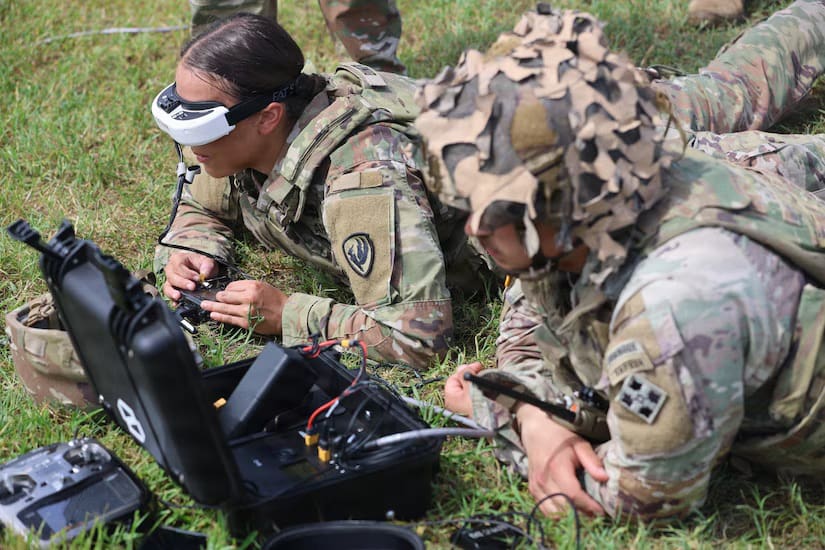
Rostran said the leadership team is focused on refining instruction in response to student feedback to ensure the course delivers the advanced-level rigor it promises.
“We’re continuing to improve the course,” he said. “We’re taking comments as we go and making sure [that] we’re meeting the standards students expect. The goal is to make this the advanced course it claims to be.”
Working alongside the team, Gatta is helping expand hands-on training and strengthen tactical application throughout the program.
“The most significant update is increasing the amount of physical, kinetic engagements from five to 12,” he said. “We have been working to refine the overall course to run smoother and provide the most up-to-date data.”
To meet the demand for advanced instruction, the course is shifting to a more tactical framework. Gatta noted the class will complete a culminating exercise this week at the drone training facility in Daleville, Alabama, marking a new experience for the students.
“This exercise will demonstrate a more real-world tactical environment and incorporate a close-quarters battle level of training, whereas previous emphasis has been heavily placed on outdoor live flights,” he said. “Our current goal is to make the training more tactical in nature. I believe we have several solid plans to build on moving forward.”
During this iteration of the course, students conducted live-engagement training using a purpose-built attributable system, the Shank 1.0, and C-4, a versatile plastic explosive. The event allowed students to apply lessons learned by flying the system, coordinating altitude and executing tactical employment against a designated target.
Army Sgt. 1st Class Riley Watts, assigned to Company A, 1st Battalion, 14th Aviation Regiment, spent months trying to enroll in the course. He said attending has given him a clearer view of how unmanned aircraft systems fit into the future of Army aviation.
“This is a great course to keep you relevant in today’s force,” Watts said. “Seeing how UAS is being implemented and utilized in today’s Army is eye-opening, and it shows you how important it is to understand these systems.”
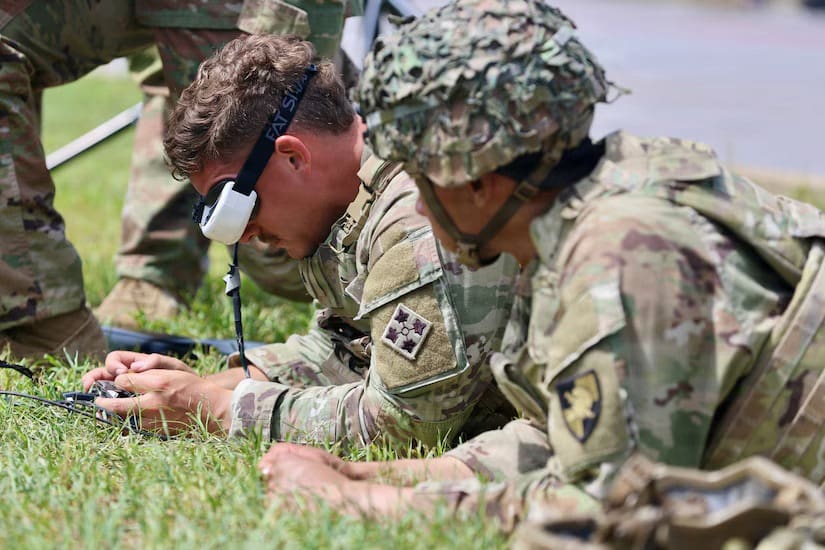
Matthew Baldwin, a civil engineering major at the U.S. Military Academy, is attending to take tactical drone employment strategies back to the academy’s future applied systems and tactics team. His leaders pushed to send two cadets to the course to expand their understanding of drone employment and to share that knowledge when they return.
Baldwin, who hopes to commission into the air defense artillery branch, said the course offers a perspective that will be important to future Army operations.
“One of the big questions is how to counter drones effectively,” he said. “You’re talking about sending a very expensive rocket to take out a cheap drone. Understanding drones from the operator’s side, how they fly, what they look for, helps you understand how to counter them.”
Although he arrived with limited tactical flying experience, he said the hands-on instruction has significantly boosted his confidence.
“I didn’t know how to tactically fly. It’s a completely different flying style,” Baldwin said. “I feel better flying them, and now we’re trying to develop a training program to help build other pilots on our team.”
Beyond flying, Baldwin highlighted the value of the course’s mission-planning segments.
“I’ve really appreciated the planning side, [the military decision-making process], troop-leading procedures, what goes into reconnaissance,” he said. “I hadn’t learned a lot of that yet. Going into my [fundamentals of small-unit operations] class and eventually into the Army, my knowledge base is definitely better now.”
The Unmanned Advanced Lethality Course runs six times per fiscal year, providing recurring opportunities for soldiers seeking advanced UAS training. Upcoming course dates are Sept. 14-Oct. 2, and Nov. 2-20.
By Leslie Herlick, Aviation Center of Excellence

The United States Department of War’s Office of Strategic Capital announced today a conditional loan commitment of up to $820 million to Performance Drone Works to establish high-volume domestic manufacturing capacity for critical drone components.
Together, the OSC financing and additional private capital committed alongside it will support a new high-volume source of domestically manufactured components for use across the broader U.S. drone industrial base. The project is intended to supply components to multiple manufacturers and platforms, representing a significant expansion of domestic production capacity for drone components. These components are intended to support a range of Group 1 and Group 2 unmanned aircraft produced by PDW and other domestic manufacturers. With this strategic financing, OSC will enable the development of production capacity to address critical component bottlenecks facing the broader U.S. unmanned-systems ecosystem.
“PDW will be one of several domestic component producers receiving OSC loan commitments in support of President Trump’s Executive Order 14307, ‘Unleashing American Drone Dominance.’ Expanding domestic component production will benefit manufacturers throughout the ecosystem and improve supply-chain resilience,” said David A. Lorch, Director of the Office of Strategic Capital and Senior Advisor to Deputy Secretary of War Steve Feinberg.
James R. Shanahan, Senior Managing Director at OSC, added, “We are squarely focused on identifying and addressing bottlenecks in critical supply chains, including drones and autonomous systems. OSC’s transaction with PDW, along with private capital crowded in alongside it, will support the construction of significant new manufacturing capacity to address vulnerabilities across the drone supply chain.”
The conditional loan commitment between OSC and PDW specifies customary additional steps the company must take to proceed toward financial close, including satisfying financial, legal, technical, and other due diligence requirements.
“Achieving Secretary Hegseth’s mandate for drone dominance requires a secure and resilient industrial base here at home. The Office of Strategic Capital is strengthening the domestic supply chain for critical drone components to ensure American manufacturers can deliver the lethal capabilities that our warfighters need,” said Emil Michael, Under Secretary of War for Research and Engineering.
– DoW
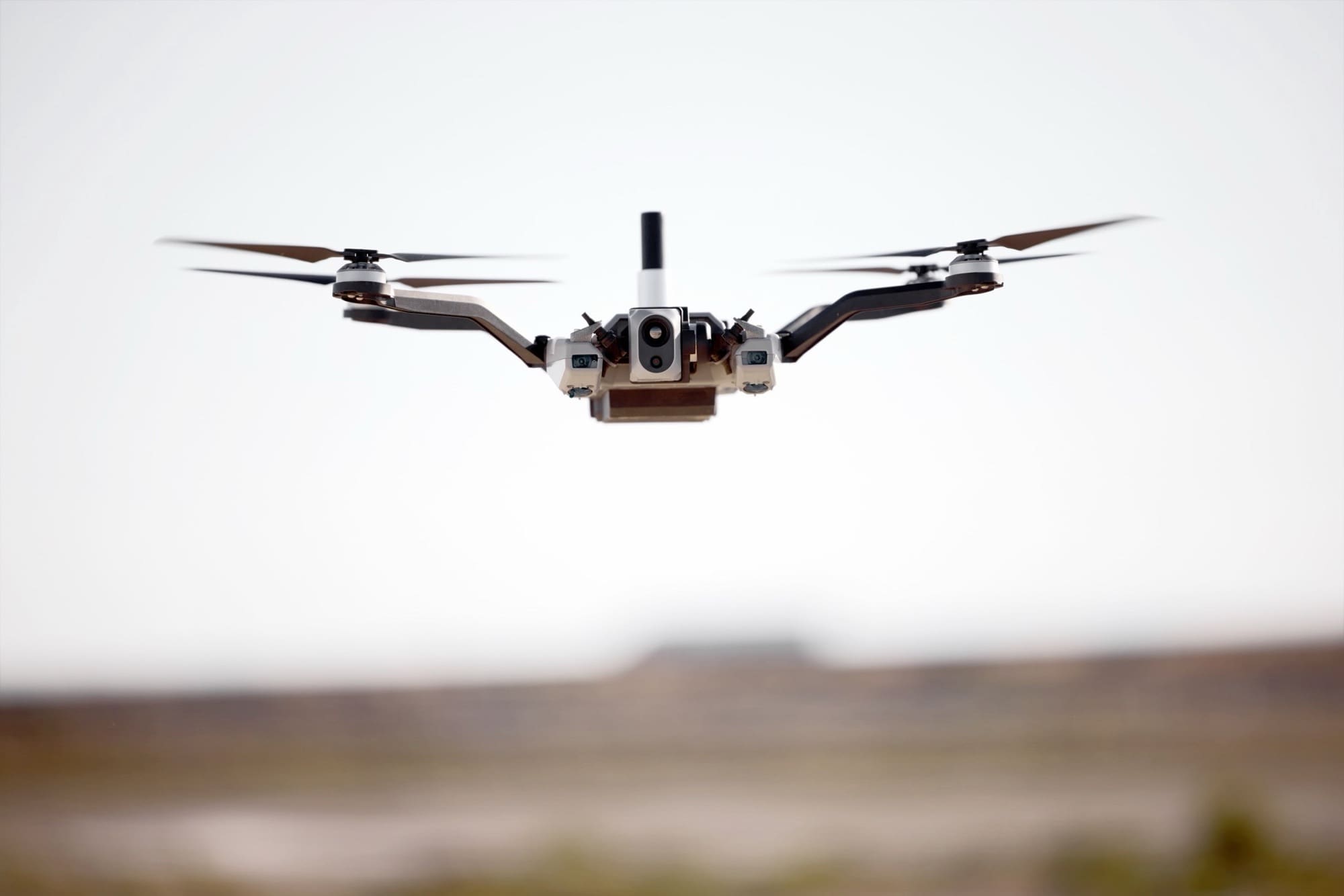
The award includes Black Widow systems, train-the-trainer support, batteries, spares and shipping. According to the contract, the equipment will be used to conduct a technical and operational assessment of Black Widow as a potential successor to the Air Force Security Forces’ current Teal 2 fleet.
The customer organization is the U.S. Air Force Security Forces Center (AFSFC), which trains, equips, and managed program execution for the Air Force Security Forces enterprise worldwide. This encompasses active-duty, Air National Guard, and Air Force Reserve Defenders. This technical and operational assessment positions Black Widow as a potential successor across the total AFSFC’s Teal 2 fleet, building on Red Cat’s momentum as the U.S. Army’s selected Short Range Reconnaissance platform.
“We are proud to support the U.S. Air Force across active-duty, Air National Guard, and reservists, as the AFSFC evaluates Black Widow for missions at the tactical edge,” said Jeff Thompson, CEO of Red Cat. “This assessment of the Black Widow reflects growing recognition across the Department of War that secure, American-made systems are essential for the operations our national defense and security organizations carry out every day.”
Black Widow is Red Cat’s flagship short-range reconnaissance system and the U.S. Army’s selected platform for its Short Range Reconnaissance Program. The system is designed to provide warfighters with rapidly deployable intelligence, surveillance and reconnaissance capabilities.
The contract calls for delivery by August 24, 2026.
Earlier this week the Government of Canada launched the Defence Drone Initiative (DDI) to accelerate the development, testing, adaptation, and production of uncrewed and autonomous systems for the Canadian Armed Forces (CAF) and the Canadian Coast Guard (CCG). Led collaboratively by the Department of National Defence and the Defence Investment Agency (DIA), the initiative will establish a competitive supply arrangement that connects operational requirements with Canadian innovation and creates a more agile pathway to develop, acquire and integrate these technologies.
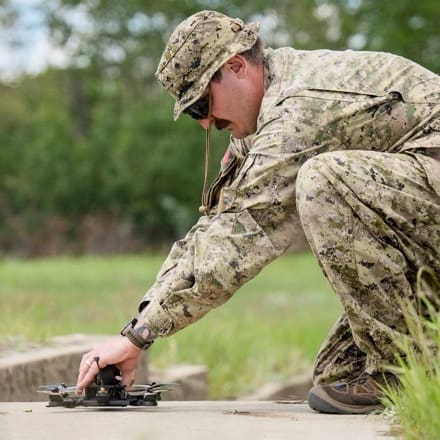
Recent conflicts have shown that drone technology evolves rapidly. Canada has world-class expertise across aerospace, robotics, artificial intelligence, advanced manufacturing, sensors, secure communications, propulsion and advanced materials but these capabilities are distributed across industry, academia and government. The DDI will help build a more responsive and scalable Canadian ecosystem and it reflects the Government of Canada’s commitment to provide the CAF and CCG with access to Canadian-developed technologies that enhance operational readiness while supporting Canadian innovation, skilled jobs and long-term economic growth.
Initial priority areas
Six initial use cases have been identified to provide focus for industry engagement and capability development.
Low-cost tactical intelligence, surveillance and reconnaissance drones
Small, affordable uncrewed aircraft could provide tactical units with local intelligence, surveillance and reconnaissance capabilities.
The objective is to identify secure and affordable systems that can be made widely available to operators, tested in the field and adapted based on user feedback.
Uncrewed ground vehicles for logistics and complex terrain
Ground-based robotic systems could help carry equipment, batteries, water and other supplies across difficult or dangerous terrain.
Potential applications could also include casualty support, communications relay and operations in environments where sending personnel may present additional risk.
Uncrewed maritime surface and underwater systems
Maritime systems could support route surveys, the detection and classification of mine-like objects, maritime awareness and operations in constrained waters.
These technologies may also help support Arctic and coastal surveillance, port security and the protection of critical maritime routes.
Standardized drone munitions and explosive payloads
The initiative will examine options for standardized and properly certified payloads, interfaces and safety systems for military uncrewed platforms.
A common approach could reduce duplication, improve interoperability and support safer integration across different systems.
Low-cost, low collateral counter-drone interceptors
The initiative will explore affordable systems that could detect, track or defeat hostile drones.
This includes potential non-explosive interceptors and other low-collateral options that could contribute to the protection of military personnel, installations and infrastructure.
Deep precision strike systems
The initiative will examine technologies that could contribute to a sovereign Canadian long-range precision capability.
This is a more complex area that will require additional technical, operational, policy, legal, safety and security work. No acquisition decision is being announced at this stage.
Competitive supplier process
A Request for Supply Arrangement (RFSA) will establish a pool of Canadian qualified suppliers across multiple areas of uncrewed and autonomous systems. Applicants will be assessed against the requirements set out in the RFSA. Qualification will not guarantee a contract but may allow successful suppliers to compete for future work, including research, prototyping, testing, demonstrations, limited acquisitions and potential production opportunities.
The RFSA is open until August 14, 2026. To support interested suppliers, the DIA will host a virtual information session on July 30, 2026, to provide additional information on the RFSA and the submission process. Representatives from the Canadian Joint Forces Command will be present to answer any questions on capability requirements.
Participation in earlier outreach activities is not required to apply.
All formal procurement requirements and deadlines will be made available through CanadaBuys, the Government of Canada’s official electronic tendering service
INTEGRATION SUPPORTS BLACK WIDOW’S ROLE AS A FORWARD ISR SENSOR WITHIN TACTICAL FIRES ARCHITECTURES
SALT LAKE CITY, July 23, 2026 — Red Cat Holdings, Inc.?(Nasdaq: RCAT) (“Red Cat” or the “Company”), a U.S.-based provider of advanced all-domain drone and robotic solutions for defense and national security, today announced that it has completed integration work with C3A Solutions (“C3A”) to connect Red Cat’s Black Widow™ small unmanned aircraft system with OBERON-enabled tactical fires networks.
C3A is a tactical systems integration company specializing in digital fires, tactical communications, and operational network integration for Army units at the tactical edge. Through the integration, Black Widow can serve as a forward ISR sensor within connected fires architectures, helping move sensor data, including video and targeting information, into tactical fires workflows.
“Modern battlefield advantage depends on how quickly intelligence can move from detection to decision,” said Jason Gunter, Vice President of Technology and Innovation at Red Cat. “Our work with C3A supports Red Cat’s broader vision of moving beyond standalone platforms toward integrated capabilities that connect sensors, systems and operators at the tactical edge. This is where small unmanned systems are headed, and where we believe Red Cat can play a critical role for the warfighter.”
C3A’s tactical integration portfolio includes support for fire control systems, operational targeting systems, precision fires platforms, tactical radios, laser designators, positioning, navigation and timing devices, and unmanned aerial vehicles. The company’s materials identify Black Widow and OBERON integration across fires and tactical networks as part of its unmanned aerial vehicle integration capabilities.
“C3A’s strength is translating emerging technology into field-ready capability,” said Dan Morgan, Founder and Chief Executive Officer of C3A Solutions. “Our work with Red Cat helps ensure Black Widow can integrate into the digital fires environment in a way that is practical for soldiers and useful to commanders. By connecting sensors, radios and fires systems in the field, we can help units reduce friction, move information with greater confidence, and keep pace with the speed of modern operations.”
The collaboration reflects Red Cat’s continued focus on interoperability and mission-driven integration across its Family of Systems. By working with field-focused integration partners like C3A, Red Cat is helping ensure its systems can connect into existing and emerging tactical architectures used by military customers.
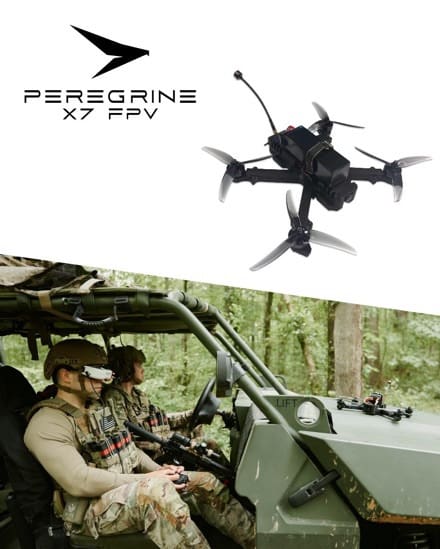
The PEREGRINE X7 FPV from Litefighter Tactical is a 7″ drone with a max speed up to 120 mph, payloads up to 6 lbs, and a high-clarity, low-latency FPV camera for superior situational awareness.
litefighter-tactical.com/product/peregrine-x7-fpv