Atrius Development Group

Archive for the ‘Training’ Category

Draganfly Selected to Provide Draganfly Flex FPV Drones and Training to US Air Force Special Operations Command Units in Partnership with DelMar Aerospace

Monday, February 2nd, 2026

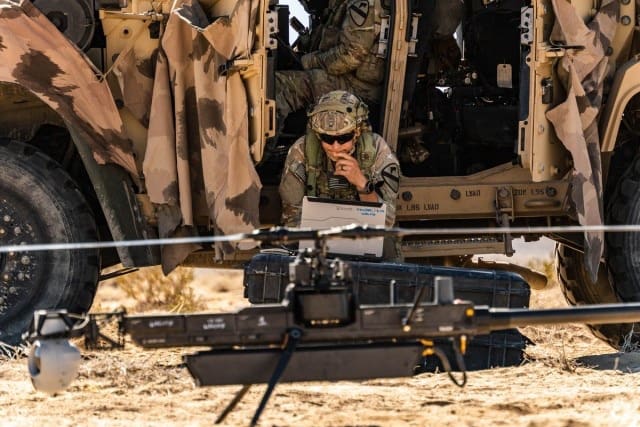
Tampa, Fla. —  February 2, 2026 — Draganfly Inc. (NASDAQ: DPRO; CSE: DPRO; FSE: 3U8A) (“Draganfly” or the “Company”), an award-winning developer of drone solutions, software, and robotics, today announced an award to provide Flex FPV Drones and Training to U.S. Air Force Special Operations Command units with partner DelMar Aerospace Corporation, a leading provider of advanced uncrewed aircraft systems (UAS) training, tactics, techniques, and procedures (TTPs), for U.S. Government customers. 

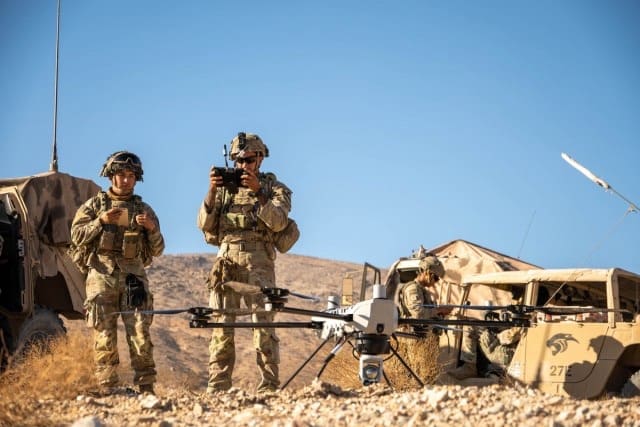
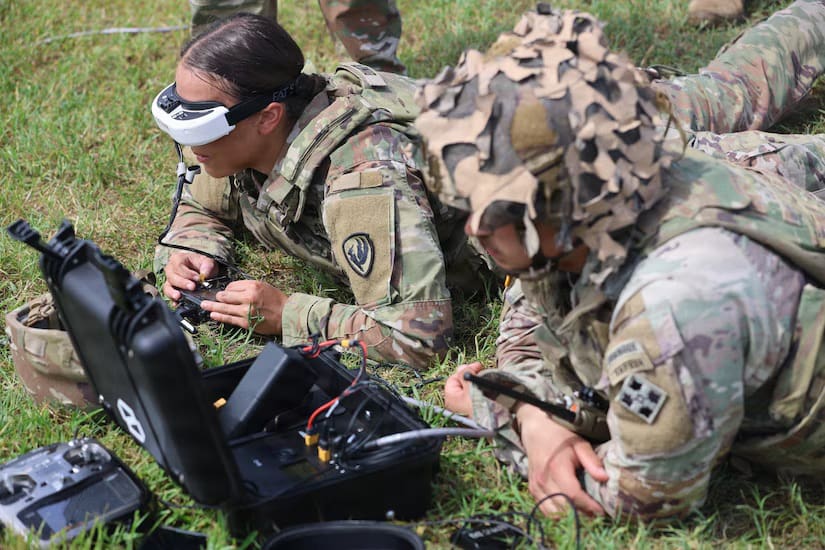
The partnership with DelMar brings together Draganfly’s operationally proven uncrewed platforms with DelMar Aerospace’s expertise in delivering cutting-edge, mission-relevant UAS instruction to Government operators. Initial training activities include First Person View (FPV) UAS instruction, with a comprehensive curriculum covering FPV assembly, repair, flight operations, advanced mission planning and execution. 

The award is to provide foundational FPV training with Draganfly Flex FPV Drones to U.S. Air Force Special Operations Command units. Training will take place at DelMar Aerospace’s Camp Pendleton UAS range training facility, a controlled environment purpose-built to support advanced instruction that replicates a range of battlefield scenarios. The first training cohort is scheduled to begin in mid-February. 

Draganfly’s Flex FPV serves as the modular backbone for future small UAS configurations, uniquely capable of meeting evolving Department of War operational requirements. The Flex FPV’s innovative design enables rapid transition across operating profiles, allowing a variety of flight characteristics and payload capacities to be deployed with a single unit. This adaptability enables widespread adoption via a common training and sustainment baseline while providing a unique and compelling value proposition to any tactical drone program.

 “Our shared focus is on readiness and combat capability,” said Cameron Chell, CEO of Draganfly. “Partnering with DelMar Aerospace helps ensure operators are training on systems and tactics designed for real-world conditions, with the Flex’s modularity and reliability required to adapt as missions and threats evolve.” 

DelMar Aerospace will lead instruction delivery, curriculum development, and standards alignment, ensuring training remains tactically relevant while compliant with U.S. Government contracting and security requirements. 

“This collaboration is about developing operators who are prepared to employ uncrewed systems effectively in demanding environments,” said Stanley Springer, DelMar Aerospace’s Chief Operating Officer. “Our focus is disciplined training grounded in combat-proven TTPs and operational realism.” 

This announcement reflects ongoing work in support of U.S. Government programs. Specific operational details are not being disclosed.

USAMU Builds Lethality During M7 Fielding with 25th Infantry Division

Monday, February 2nd, 2026

Soldiers assigned to the 25th Infantry Division are training on the Army’s newest service rifle as part of the ongoing fielding of the M7, with instructors from the U.S. Army Marksmanship Unit providing hands-on support focused on marksmanship fundamentals.

USAMU instructors are working alongside Soldiers to reinforce proven shooting techniques that apply across weapon systems. While the M7 introduces new capabilities, instructors emphasized that effective marksmanship still depends on mastering the basics.

“We’re not here to reinvent the wheel,” said Sgt. 1st Class Alexander Deal, team chief for the U.S. Army Marksmanship Unit Service Rifle Team. “The fundamentals of marksmanship don’t change, even when the weapon system does.”

Deal said the training focuses on consistency and efficiency behind the rifle, especially as Soldiers transition to a new platform.

“When Soldiers pick up a new weapon, it’s easy to focus on the equipment,” Deal said. “What we’re reinforcing is that grip, trigger control, and follow-through still matter. If you have solid fundamentals, the weapon becomes easier to run.”

According to Deal, the techniques taught by USAMU instructors are rooted in competition shooting, where performance is measured under pressure.

“Competition shooting forces you to balance speed and accuracy,” Deal said. “Those same principles translate directly to combat. You have to be accountable for every shot, and you have to be consistent.”

Throughout the fielding, instructors observed Soldiers adapting quickly as they applied those principles during live-fire training.

“We’ve seen Soldiers gain confidence fast once they trust the fundamentals,” Deal said. “When they understand what right looks like, their performance improves.”

Deal said the intent of the training is to give units tools they can continue to use long after the fielding event ends.

“Our goal is to leave units better than we found them,” Deal said. “If leaders and Soldiers walk away with a stronger foundation in marksmanship, that training continues long after we leave.”

Training like this supports the Army’s broader effort to increase lethality across the force by pairing modern equipment with disciplined marksmanship.

SFC Timothy Hamlin

Fort Buchanan Advances Army Transformation Through Innovative Training Capability

Sunday, February 1st, 2026

FORT BUCHANAN, Puerto Rico —The Army’s home in the Caribbean is supporting the service’s transformation into a leaner, more lethal, and more agile force by modernizing how Soldiers train and generate readiness across the region.

Central to this effort is theMobile Marksmanship Training Simulator (MMTS), a deployable capability operated by Fort Buchanan’sTraining Support Center (TSC). The MMTS enhances marksmanship and engagement-skills training while reducing logistical demands and costs, directly supporting the goals of theArmy Transformation Initiative (ATI).

“Combined with the full range of capabilities available at the TSC, the MMTS has enabled Fort Buchanan to adapt how we support the warfighter. It has strengthened our training support and helped develop combat-ready formations across the region,” saidLuis Reyes, TSC manager.

The MMTS features full mobility, CO?-powered weapons that generate realistic recoil, and immersive, interactive scenarios that replicate operational environments. These capabilities allow units to train consistently regardless of range of availability or geographic constraints.

“The fact that we can take this system directly to Soldiers is a game-changer. It saves time and resources, allowing troops to focus on warfighter tasks instead of traveling long distances to training sites,” Reyes added.

Fiscal year 2025 marked the first year the MMTS was employed in Puerto Rico, and its impact was immediate. During the year, the system delivered more than800 hours of training to approximately 1,600 Soldiers, significantly expanding access to high-quality training while conserving time and resources.

According to Reyes, the MMTS does not replace Fort Buchanan’s fixedEngagement Skills Trainer (EST) 2000. Instead, it complements existing capabilities by extending training beyond fixed facilities. Together, EST 2000 and MMTS provide a layered, flexible approach that increases training frequency and efficiency while maintaining established standards.

“What the team at the Fort Buchanan TSC is doing—especially with the MMTS—is a clear indicator of the installation’s role as a warfighter readiness enabler. This capability strengthens readiness across the region and supports the Department of the Army enterprise,” saidBerenisse Rodriguez, chief of the Directorate of Plans, Training, Mobilization and Security.

By expanding access to modern training and delivering measurable results, Fort Buchanan’s Training Support Center continues to implement Army transformation concepts—ensuring forces remain ready, lethal, and responsive to mission requirements across the Western Hemisphere.

“Whether preparing units for contingency response, disaster relief, homeland defense, or overseas deployments, the TSC ensures leaders and Soldiers have access to the tools and resources they need to succeed,” saidRodriguez.

With an annual budget exceeding$500 million, Fort Buchanan supports a military community of approximately15,000 personnel, including Active Duty, Reserve, Puerto Rico National Guard, Marine Corps Reserve, and Navy Reserve members. The installation’s mission is to enhance readiness and facilitate the deployment of military personnel to any location, at any time.

Story by Carlos Cuebas 

U.S. Army Garrison Fort Buchanan

DryStick Launches Practical, Reusable Dryfire Targets

Friday, January 23rd, 2026

DryStick™ Targets announces the release of a new line of reusable adhesive dryfire targets built for shooters who value simplicity, consistency, and foundational skill development.

Designed without unnecessary features or tech, DryStick™ gives firearm owners a clean, reliable way to practice sight alignment, transitions, and trigger control in any environment.

Each DryStick™ target uses a repositionable adhesive that sticks to most smooth surfaces and removes cleanly without residue. Shooters can build a functional training setup in seconds using doors, cabinets, walls, garages, or other flat surfaces, making meaningful dryfire practice accessible regardless of space or experience level.

“The mission of DryStick™ is to promote safety and proficiency for all firearm users,” said Joe Thomson, founder of DryStick™.

“Dry fire has played a huge role in my own development as a shooter, and I created DryStick™ so others can get the same effective reps without needing complicated equipment or a tedious set up process.”

As DryStick™ continues to grow, the company plans to offer custom target options including high-resolution photo targets, wholesale programs for organizations, agencies, and retailers, and full-size shoot-house targets that function just like the current dryfire line.

Key Features:

  • Repositionable & reusable — adheres cleanly and removes cleanly
  • Scaled silhouettes for realistic visual processing
  • Fast, no-hardware setup on almost any smooth surface
  • Indoor or outdoor use
  • Purpose-built for foundational dryfire principles

DryStick™ Targets are available now at DryStickTargets.com.

SHOT Show 2026: Eyeviation Brings the World’s First Cognitive-Aware Firearms Training System to Civilian Ranges and Sport Shooters

Friday, January 16th, 2026

The AI-powered VCAT system, already proven in elite military and law enforcement units, expands into the civilian market as the first platform designed to train the cognitive and visual-mechanics of shooters.

Shot Show, Jan 20-23, 2026, Las Vegas, Booth #13201

January 14 2026 -Eyeviation, a developer of Human-Aware Artificial Intelligence training systems, will present its VCAT™ Virtual Cognitive-Aware Training system at SHOT Show, marking the introduction of the world’s first cognitive-aware firearms training system to the civilian shooting range and sport shooting markets.

Already operational and validated within elite military and law enforcement units in Israel and the United States, VCAT applies training methodologies developed in high-pressure operational environments to civilian firearms training. The system enables shooters to train without live fire, ammunition, or dedicated lanes, while addressing a layer of performance data that until now could not be measured or systematically trained.

Unlike conventional firearms trainers that assess performance after the shot, VCAT is the first system designed specifically to train the cognitive and visual processes across the full shot cycle. These processes govern shooting performance from target acquisition, through engagement and shot sequencing, and into post-shot recovery, including vision management, attentional control, and decision timing under pressure.

By making these processes visible and measurable, VCAT allows shooters and instructors to identify performance limitations earlier, shorten time to proficiency, and reduce training plateaus. The approach reflects how elite units accelerate skill acquisition and maintain readiness, now adapted for commercial ranges and sport shooters.

“VCAT represents a fundamental shift in how firearms training is structured,” said Or Landwer, CEO of Eyeviation. “As the first system to train the cognitive layer of shooting, it brings elite-level methodologies into civilian environments and allows shooters to focus on what truly drives improvement eminently and immediately.”

Designed for high-frequency, ammunition-free micro-training, VCAT enables a single operator to oversee multiple trainees simultaneously, significantly reducing training costs while increasing availability and safety. Live fire becomes a validation phase rather than the primary learning environment.

www.eyeviation.com

JMRC Trains World-Class OC/Ts

Tuesday, January 13th, 2026

HOHENFELS TRAINING AREA, Germany – The Joint Multinational Readiness Center (JMRC) has been training its Observer, Controller/Trainers (OC/T) in new technologies to keep its world-class training ready for the future fight.

The OC/Ts from the nine “critter” teams are being trained in evolving tasks and technologies such as Maven, electronic warfare (EW), unmanned aircraft systems (UAS), and integrated tactical network (ITN).

“This OC/T recertification training is an opportunity for the OC/Ts to become proficient on some tasks that are constantly changing and new,” said Maj. Dustin Allen, deputy operations for JMRC. “It’s to meet higher headquarters’ intents of knowing new technologies so that we can better facilitate the rotational units as they come through ‘the Box’.”

One of the systems that the OC/Ts are training on is the Maven Smart System. The Maven Smart System is the Department of Defense’s most prominent artificial intelligence capability. Designed to process drone imagery and full-motion video, Maven integrates sensors with artificial intelligence and machine learning to enhance battlefield awareness and support operations such as targeting, logistics planning and predicting supply requirements for deployed Soldiers.

“Maven is something that is near and dear to (U.S. Army Europe and Africa’s) heart,” said Allen. “We are trying to incorporate it into our daily battle rhythms, so that the critter teams are well versed in it. We also want to be able to teach the rotational units that come through that aren’t familiar with the system and get them better with it.”

OC/Ts have also been working with UAS. UAS training develops Soldiers’ abilities to operate and employ aerial systems in support of reconnaissance, intelligence collection, and mission planning, helping to facilitate the combined arms fight on the ground.

“UAS is a big push, especially in past rotations where we have seen a massive increase in UAS capabilities on the battlefield,” said Allen. “OC/Ts are going to have their own UAS so that they can send a drone up and inject it there, and watch the rotational units’ UAS.”

Another system that has been seen on the battlefield that OC/Ts are being trained on is EW. EW enhances commanders’ abilities to detect, disrupt and protect against enemy electromagnetic capabilities, enabling freedom-of-action across the battlefield.

“Big in current warfare is the introduction of electronic warfare,” said Allen. “During this time, we are giving the OC/Ts the opportunity to see and become familiar with the vastly growing EW capabilities.”

The last system that the OC/Ts are being trained on is the ITN. ITN delivers secure, resilient and expeditionary communications that connect Soldiers, platforms and command posts across the battlefield. ITN is designed to operate in contested and degraded environments, and enable timely data sharing and mission command to support multi-domain operations.

“You can interconnect the radios that we use for our communications network across Hohenfels and JMRC, so we can communicate more clearly across the box,” said Allen.

“Our OC/Ts are already world-class,” said Allen. “This training can help make them even better and have more systems that they are proficient in. We’re really going to see all this hard work they are putting in, be used in the next Combine Resolve we host, and I’m excited to see them use all these new systems we have.”

Story by SGT Collin Mackall 

7th Army Training Command

Rheinmetall to Supply Nine State-of-the-Art Puma Training Simulators to the Bundeswehr – Order Value €118.5 Million

Monday, January 12th, 2026

Germany’s armoured infantry will soon receive nine training systems for firing and combat training (AGSP in German) for the Puma Infantry Fighting Vehicle (IFV). The Federal Office of Bundeswehr Equipment, Information Technology and In-Service Support (BAAINBw) has awarded a corresponding delivery contract to Projekt System & Management GmbH (PSM), a joint venture between KNDS Germany and Rheinmetall, on 19 December 2025. The total gross volume of the procurement is €119.5 million, of which €118.5 million are assigned to Rheinmetall. Rheinmetall Electronics GmbH is playing a key role as subcontractor in the project. The first firing and combat training devices are scheduled for delivery in mid-2027. Additionally, the existing AGSP development model will be upgraded to the new series standard, and transportion containers will be provided for all systems.

Rheinmetall developed the AGSP as a completely new training system for mechanised infantry forces. In September of 2025, the Office for Army Development declared its readiness to take-over the new AGSP training system.

The AGSP is a highly realistic simulator that recreates the battlefield experience for armoured infantry platoons. Its precise replication of key elements, such as vehicle logic, ballistics, haptics and aiming behaviour, enables highly realistic training in line with the ‘train as you fight’ concept.

Each system consists of a control, evaluation and monitoring station (LAKS in German) as well as of four authentically replicated vehicle cabins, which are housed in twelve 20ft containers. The facility is fully relocatable. Its modular architecture allows for maximum flexibility: all central components, such as server racks and driver cabins, are mounted on rail systems and can be easily replaced or updated as required. Maintenance and repair work have also been greatly simplified, as central systems are now accessible from the outside. This eliminates the need for costly return to the plant as well as downtime and logistical effort.

The AGSP provides comprehensive tactical training for armoured infantry troops without having to move an IFV, thereby making a significant contribution to the training of additional armoured infantry soldiers in less time and with less effort on the PUMA IFV. The AGSP has been designed to enable networking with another AGSP. This allows armoured infantry troops to train simultaneously with two AGSPs, i.e. two platoons of PUMA IFVs, or even to incorporate a compatible simulator for main battle tanks into their training. This allows armoured infantry troops to exercise mutually with main battle tanks at company level.

US Army Standardizes Drill Sergeant Campaign Hats

Wednesday, January 7th, 2026

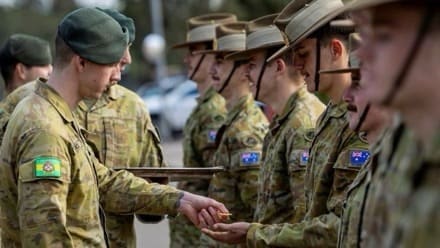
JOINT BASE LANGLEY-EUSTIS, Va. – Beginning in Calendar Year 2026 (CY26), all brave volunteers will be greeted by the iconic campaign hat, as the U.S. Army has canceled all future procurement of the women’s bush hat and authorized the campaign hat to be worn by all current, and future, drill sergeants.

“There’s a single standard when screening and certifying Noncommissioned Officers (NCOs) for service as a drill sergeant, a single standard that we hold all serving drill sergeants to, and moving forward, there will be a single standard drill sergeant uniform” said Command Sgt. Maj. Michael McMurdy, Senior Enlisted Advisor to the Commanding General of the U.S. Army Center for Initial Military Training. “Drill sergeants are the standard bearers for the Initial Military Training environment, and we solicited, consolidated, and incorporated their feedback to improve the Drill Sergeant Program moving forward”.

Drill sergeants are non-commissioned officers (NCOs) within the U.S. Army who are tasked with building the next generation of warfighters every day. These NCOs epitomize the Army Values, live the Warrior Ethos, and instill discipline in the individuals who volunteer to serve within the world’s greatest fighting force.

These NCOs are authorized to wear the campaign hat and the Drill Sergeant Badge to identify themselves as masters of all Skill Level 1 Tasks and some of the nations most qualified Soldiers placed in positions of responsibility tasked with transforming volunteers into U.S. Army Soldiers.

The campaign hat’s origin dates to 1872, when American Soldiers wore the hat to protect themselves against sun, wind, and rain. In 1964, the U.S. Army established the Drill Sergeant Program and authorized the campaign hat as the official headgear of currently serving Drill Sergeants. In 1971, the Chief of Staff of the Army approved the expansion of the Drill Sergeant Program to include female soldiers. In February 1972, six Women’s Auxiliary Corps NCOs were enrolled in the Drill Sergeant School (now known as the Drill Sergeant Academy) located at the Army Training Center, Fort Jackson. Upon their graduation from the Drill Sergeant School, these six NCOs were authorized to wear the “women’s drill sergeant hat” designed to model the Australian bush hat.

Since 1964, over 142,000 NCOs have proudly served as drill sergeants, with over 38,000 of those donning the bush hat.

Sgt. 1st Class Sarah Escarcega, 2023 Maneuver Center of Excellence at Fort Benning, Georgia Drill Sergeant of the Year (DSOY) is glad to see the standardization occurring. “When I was the Maneuver DSOY, the bush hat distinguished female drill sergeants who were held to the same standard as their male counterparts yet had a separate uniform”, said Escarcega. “Standardizing the headgear for all drill sergeants is directly aligned with every other standard that NCOs are held to when they serve as drill sergeants. I’m glad that Army Senior Leaders decided to listen to current and past drill sergeants to move away from the bush hat and continue putting our people first”.

Annually, the U.S. Army Center for Initial Military Training conducts multiple surveys of currently serving drill sergeants and drill sergeant candidates on ways to improve the Drill Sergeant Program.

Consolidated data since Fiscal Year 2023 (FY23)

-Roughly 70% of the drill sergeants surveyed expressed a desire to switch from the bush hat to the campaign hat.

-Over 60% of drill sergeants surveyed believed that the campaign hat had a more professional appearance compared to the bush hat.

In recent years, manufacturers have struggled to provide a quality product of bush hats that meet the U.S. Army standard and to date no industry partner has been willing to accept the contract to produce more. This problem has been plaguing the female drill sergeant population for nearly a decade, forcing the Army to solicit feedback from the force on ways to improve.

As the 2010 U.S. Army Reserve DSOY Sgt. Maj. Melissa Solomon is glad to see the standardization occurring. “When I served as the DSOY, the bush hat distinguished female drill sergeants that successfully completed the course and served honorably with their male counterparts. With deep respect to the bush hat history, I believe a change is necessary to mitigate product quality issues I witnessed first-hand as the Drill Sergent Academy Deputy Commandant and reinforce uniformity during the critical transformation of a civilian into a Soldier”.

Consolidated data beginning in 2023 informed U.S. Army Transformation and Training Command (T2COM), who, with support from the Program Executive Office (PEO) Soldier, presented a solution to the Army Uniform Board (AUB). The 158th AUB convened in 2025 and decided to recommend the unified drill sergeant campaign hat. The AUB’s annual process ensures issued uniforms align total force requirements.


Female drill sergeants currently serving on the trail are authorized to draw two campaign hats to wear with a single effective date of 2 Jan 2026. This change eliminates trainee confusion and enables an efficient and effective transition from civilian to U.S. Army warfighter.

“Every member of society understands the importance of the U.S. Army drill sergeant and the iconic headgear associated with the time-honored position as a symbol of excellence.”, said 2024 U.S. Army DSOY Samuel Matlock. “This single standard will eliminate any confusion among the training population, the American public, and cadre regarding all standards for serving as a drill sergeant”.

By Hunter Rhoades, U.S. Army Center for Initial Military Training