TYR Tactical

Archive for the ‘Training’ Category

Landmark Upgrade to Copehill Down Village Underway

Tuesday, September 9th, 2025

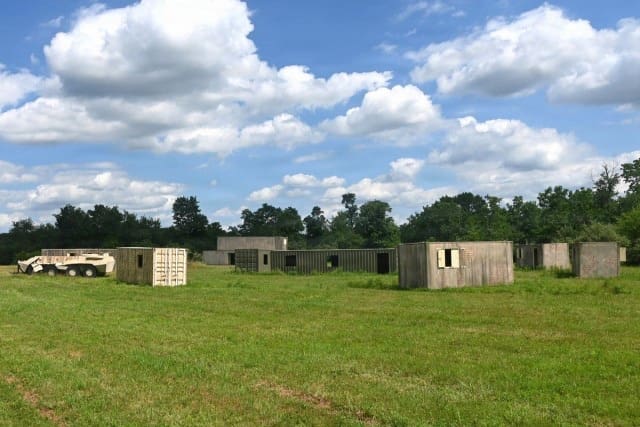
London, 9th September, 2025 – Defence technology specialists, 4GD, have begun work on a significant upgrade to the military training environment at Copehill Down Village on Salisbury Plain. Copehill Down, a purpose-built “village”, is used to train for urban operations in built-up areas. The Urban Training facilities are being fitted with an Audio and Visual Closed Circuit Television capability and incorporated After Action Review (AAR) system.

Once complete, the modernised facility will support urban training serials. 4GD is delivering these improvements on behalf of the Defence Infrastructure Organisation (DIO), together with Landmarc Support Services (Landmarc) and the Land Warfare Centre.

The village upgrades will provide a much more realistic, high-fidelity training environment which will enhance the war fighting ability of military personnel and help prepare troops for future potential operational deployments. . The utilisation of 4GD’s flagship products will elevate the quality of urban training on the site. Included in this upgrade is 4GD’s 4GAV After Action Review (AAR) system, which provides unrivalled visibility of all training exercises. These works will also deliver special effects to simulate both battlefield effects as well as pattern of life.

The expansion of 4GD products across the UK’s military training estate continues at pace. The news of the Copehill Down delivery adds further credibility to the quality of 4GD’s technology, which is now in use at Merville Barracks in Colchester, Catterick Training Area in North Yorkshire and Rollestone Camp on Salisbury Training Area. This represents a geographic reach covering the South West, East and North of England. The expansion presents an opportunity for an increasing number of soldiers across the country to be booked into 4GD facilities, to hone their urban fighting skills, close to their garrison base.

At over 94,000 acres, Salisbury Plain Training Area (SPTA) is the UK’s largest training area. It offers live firing and other facilities for armoured vehicles, artillery, engineers, infantry and aircraft. The regular Army, Army reserves and cadets use the training area, as do NATO allies.

Rob Taylor, 4GD Founder and Director, said:

“4GD is at the forefront of delivering technology updates to the military training estate. Starting this work to Copehill Down Village is another major contract for the business and proves the suitability of 4GD’s products for modern defence training. This all serves to enhance training for the warfighter and help prepare the British Army for urban combat.”

DIO’s Colonel Richard Gibb, Deputy Head UK Defence Training Estate, said:

“We are delighted to see this project taking shape.

“DIO supports our Armed Forces by providing what they need to live, work and train. Current operational requirements identified that there was a need for further investment and development in the urban training infrastructure.

“This upgrade in technological systems is a significant milestone in evolving the British Army’s urban warfare capability. It offers a highly realistic space and the ability for immediate after-action reviews which will better prepare military personnel for operations around the world.”

Canadian Army Selects Bohemia Interactive Simulations to Deliver Next-Generation Digital Training

Thursday, August 28th, 2025

Immersive virtual environments enable complex mission planning and training

Bohemia Interactive Simulations (BISim), a wholly owned subsidiary of BAE Systems, Inc., has been awarded a five-year enterprise license contract to deliver the Digital Virtual Trainer (DVT) for the Canadian Department of National Defence (DND), with three additional option years of maintenance support. The DVT program will provide immersive, flexible, and highly scalable synthetic training to support mission readiness across the Canadian Army.

Built around BISim’s ecosystem of simulation products, the DVT solution empowers Canadian Army personnel to plan, rehearse, execute, and review complex missions in immersive virtual environments across the globe through realistic first-person training experiences and large-scale collective training exercises. 

“We’re proud to support the Canadian Army’s vision for modern, flexible training with a proven, battle-tested virtual platform,” said Pete Morrison, chief product officer at BISim. “Whether rehearsing for rural maneuvers or complex urban operations, the Canadian Army can train with confidence on highly authentic virtual terrains.”

At the heart of the DVT solution is Virtual Battlespace 4 (VBS4), paired with the Blue IG image generator to deliver immersive visual realism and seamless integration with legacy systems. The DVT solution is designed for interoperability and ease of use with advanced tools for exercise control, after-action review (AAR), and more.

To maximize flexibility and give the Canadian Army the ability to replicate a global range of training scenarios with remarkable fidelity, DVT also includes TerraTools Platinum. BISim’s advanced terrain generation software enables the rapid creation of geo-specific, mission-tailored environments using real-world Geographic Information System data. 

The DVT contract award follows a competitive evaluation process and reflects BISim’s strong track record of delivering mission-critical simulation solutions to allied defense forces worldwide.

US Army Aviation Center of Excellence Launches Unmanned Advanced Lethality Course to Equip Soldiers for Future Warfare

Thursday, August 21st, 2025

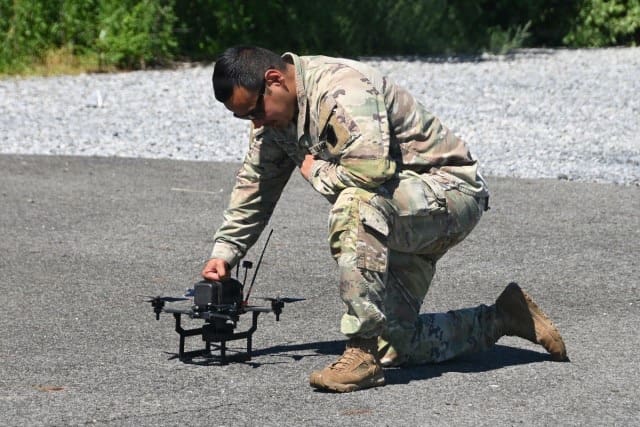
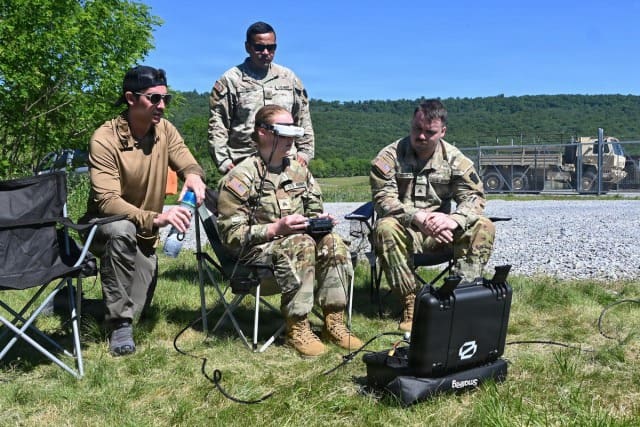
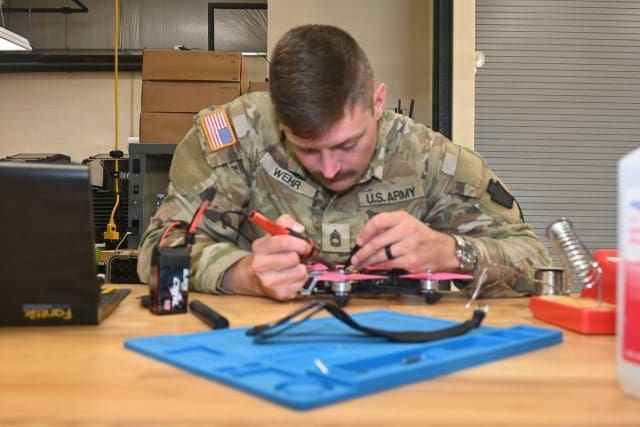
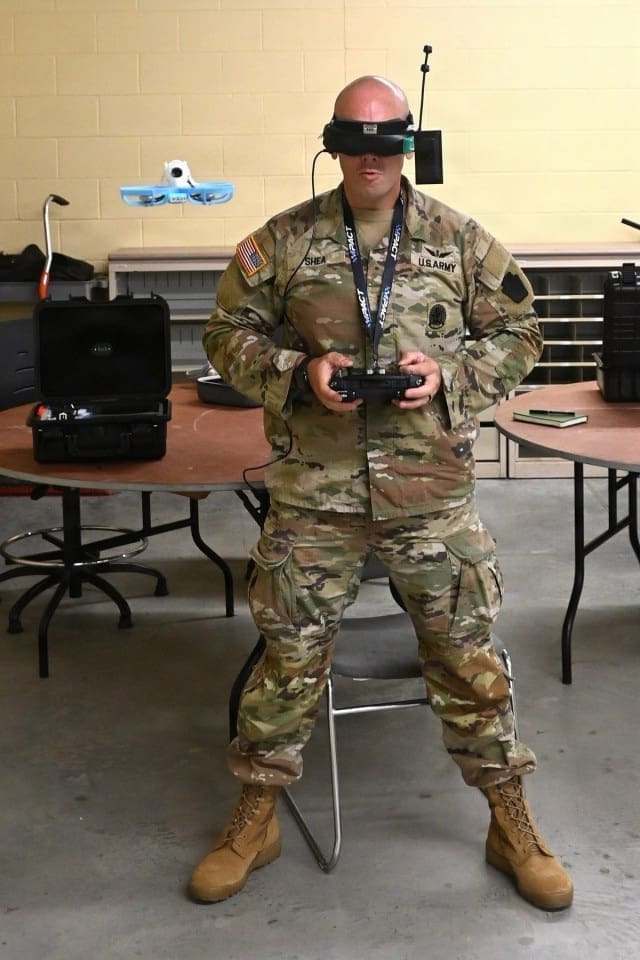
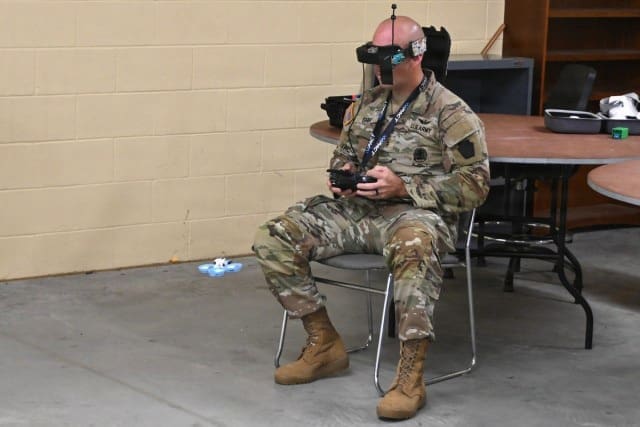
FORT RUCKER, Ala. — In a bold move to modernize battlefield capabilities and close critical training gaps, the U.S. Army Aviation Center of Excellence (AVCOE) has launched its inaugural Unmanned Advanced Lethality Course (UALC) at Fort Rucker. Designed to rapidly train soldiers on the lethal employment of small UAS (SUAS), including First Person View (FPV) drone operations. The course lays the foundation for standardized UAS employment across warfighting functions, redefining how small UAS platforms are used in reconnaissance, fires, and maneuver operations.

Maj. Wolf Amacker, the chief of the AVCOE Directorate of Training and Doctrine UAS and Tactics Branch, is one of many personnel at AVCOE who played a key role in developing the course.

“This is the first time the Army has done this in a TRADOC setting, coordinating between three difference COEs,” Amacker said. “We’re helping to train the most people, the quickest, on FPV systems that are having a real impact on the battlefield.

Capt. Rachel Martin, the course director, was tasked with building the program from scratch just 90 days ago. With a background as an intelligence officer in an attack helicopter battalion and an air cavalry squadron, air cavalry troop commander, and Gray Eagle company commander during a 2023 deployment, Martin brought deep operational experience to the challenge.

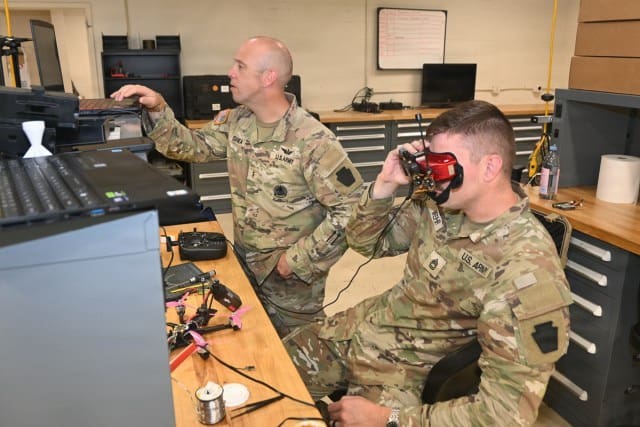
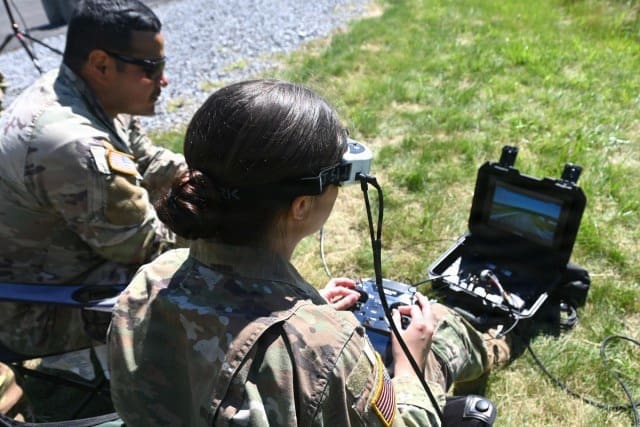
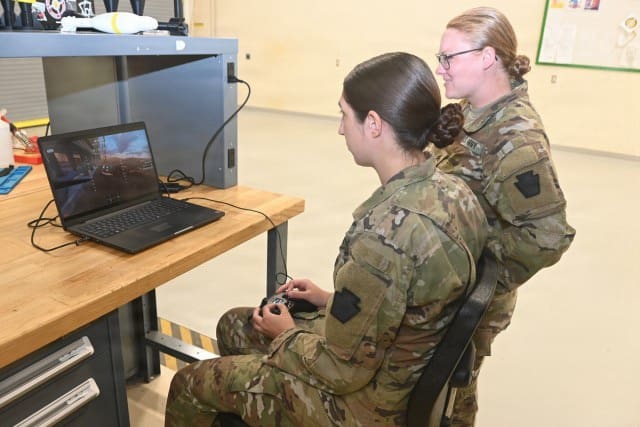
The three-week course begins in the classroom, where students use commercial off-the-shelf drones and simulation software to develop FPV flight skills. After 20 to 25 hours of simulator time, identified as the proficiency threshold through interviews with allied forces, students transition to live flight exercises at the Military Operations on Urban Terrain (MOUT) site.

Instruction also includes fire support integration, with Fires Center personnel teaching students how to adjust fire using drone video feeds in the Call for Fire Trainer.

“An 11B [infantryman], 13F [fire support specialist] out there with a SUAS calling for fire and adjusting based on drone video is a relevant skill for the current and future battlefield,” Amacker said. “This may be the first time our students are introduced and trained to do that.”
This training not only enhances lethality but also demonstrates how small UAS platforms can support traditional fire missions in dynamic environments.

The course currently hosts 28 students from across the Army, including infantry soldiers, cavalry scouts, 15W and 15E aviation personnel, and warrant officers from the 150U career field. Participants were selected based on rank and certification as SUAS master trainers, and Transformation in Contact Units. Cadre from the 2-13th and 1-145th Aviation Regiments at Fort Rucker, along with additional aviation personnel, are supporting instruction.

Observers from the Maneuver and Fires Centers of Excellence are evaluating the course for potential adaptation, providing feedback and implementation. The goal is to empower operational units to create their own basic qualification programs while Fort Rucker evolves into the hub for advanced UAS training.

“Aviation becomes that central integrator,” Amacker said. “We’re helping all the warfighting functions and branches get into this space. Maneuver and Fires care about how SUAS helps them engage targets and keep their operators alive, while we also care about how sustainment and MI use small UAS to fulfill their responsibilities.”

The course is designed as both a resident program and eventually a mobile training package (MTP). The accompanying Training Support Package (TSP) will allow units a way to conduct basic FPV training independently, while Fort Rucker will host advanced iterations focused on munitions, diverse UAS platforms, and tactical employment.

“Right now, we’re doing basic things,” Amacker said, highlighting that this is the pilot course, emphasizing the tasks and academics being taught are what units out in the force are struggling with right now.

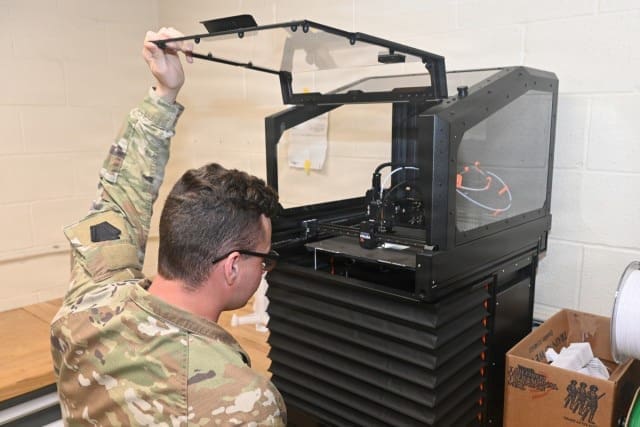
Students also learn to manufacture and repair drone components using 3D printing. Instruction covers resin, filament, and carbon fiber printers, CAD software, and STL files. The course aims to build a centralized repository of print files for students to take back to their units.

“Eventually, we want students to build and test their own FPV bodies,” Amacker said. “We’re teaching and learning from the force on what’s possible and how to sustain these systems in the field.

The long-term vision for the course aligns with Fort Rucker’s broader innovation goals. Martin hopes to integrate the program with the post’s emerging innovation lab, creating a collaborative hub for data sharing and tactical experimentation.

“This course is a catch-up,” Martin said. “We’re behind globally, and this is our aggressive attempt to close that gap.”

The course also collects performance data on five different drone systems, tracking variables such as crash rates, environmental resilience, and operational effectiveness. This data will inform future procurement and training decisions across the Army.

Designed to evolve with battlefield needs, the UALC will adapt its curriculum as new technologies and tactics emerge, ensuring soldiers remain at the forefront of unmanned systems employment.
“This is constantly changing,” Amacker said. “We’re building something that can grow with the force.”

Martin emphasized the challenges of launching a drone training program from scratch.

“Most of my peers, including myself until 90 days ago, didn’t know how to do this,” she said. “Now we know what it takes, how many people, how much equipment, how much money, and we are sharing this information already with our partners out in the force.”

The pilot iteration is already producing results. Soldiers are eager to learn, and many report a lack of resources and expertise at their home units. The hope is that graduates will return to their formations equipped to train others and establish sustainable programs.

Ultimately, the course aims to empower soldiers to return to their units as trainers and innovators. Many participants are self-taught hobbyists or informal experts. This program, however, provides structure, certification, and a pathway to build unit-level drone programs.

Future iterations will expand into advanced tactics, including one-way attacks using purpose-built FPV drones. By February, Martin envisions students employing low-cost systems to prosecute targets with precision, an ambitious leap toward integrating UAS as a lethal, scalable weapon system.

“We’re creating operators who are not only lethal but also survivable. sUAS operators are the most sought-after high pay-off target on the battlefield right now,” Martin said. “I am very aware that my team has been entrusted with developing solutions for a critical need in emerging Army tactics.”

SFC Jeremy Charm, a 15W UAS Operator with the AVCOE Directorate of Evaluations and Standardization and primary flight instructor for the UALC said, “Teaching our students to know under what circumstance to use these systems to achieve commander’s intent and how to tactically employ them and survive post engagement is our ultimate goal.”

As the Army continues to modernize its approach to warfare, the UAS Lethality Course at Fort Rucker stands as a bold step toward integrating unmanned systems across all domains, and empowering soldiers with the tools and training to dominate the modern battlefield

Story by Leslie Herlick 

Aviation Center of Excellence

Achilles Heel Tactical One-Day Firearms Training Delivers Measurable Results That Last

Wednesday, August 20th, 2025

Achilles Heel Tactical’s one-day firearms training courses continue to set a new standard for shooters who want more than just range time. Designed to break through plateaus and replace outdated habits, these eight-hour training blocks focus on measurable performance gains that students can replicate long after class ends.

Unlike traditional “stand in a line and shoot” courses, Achilles Heel Tactical compresses years of bad habits into one day of corrections. Students walk away with hard data on their shooting performance, real-time feedback from seasoned instructors, and skills that hold up under pressure.

“It doesn’t take weeks or months to see change,” said Rick Crawley, founder of Achilles Heel Tactical. “One day of structured training, with the right feedback and accountability, can completely reset how someone approaches shooting.”

What Makes Achilles Heel Tactical Different

Immediate Performance Data – Drills like the Dope Drill provide objective metrics instead of guesswork.

Accountability Under Pressure – Students are pushed beyond comfort speed while maintaining accuracy.

Real-World Training – Movement, transitions, and decision-making are built into every block of instruction.

Measurable Progress – Each class starts with a baseline assessment and ends with visible improvement.

Whether pistol or carbine, students consistently leave the range shooting faster, cleaner, and more confidently than they thought possible. Even experienced shooters discover that time behind the gun doesn’t always equal skill; measured feedback does.

Enrollment Ongoing
Achilles Heel Tactical offers both Baseline Pistol and Baseline Carbine one-day courses, open to civilians, law enforcement, and military personnel. Class sizes remain limited to ensure each shooter gets individualized coaching.

For schedules and registration, check out the Training Course Catalog.

Cubic Awarded Indefinite Delivery Indefinite Quantity (IDIQ) Contract from the United States Air Force (USAF) and Foreign Military Sales (FMS) Programs Through 2032

Monday, August 18th, 2025

Providing high-fidelity, live mission training capabilities for advanced weapons and tactics training

SAN DIEGO – August 14, 2025 – Cubic Defense, the world’s leading provider of advanced air combat training, announces the IDIQ contract award by theUSAF for activities relating to the procurement, integration, deployment and sustainment of the entire P5 Combat Training Systems (P5CTS) inventory.

“Our P5CTS is designed to provide users with live mission training capabilities for advanced weapons and tactics training,” stated Russ Marsh, President, Cubic Defense. “The system features real-time air-to-air and air-to-ground weapons simulations and live monitoring capabilities. With the recent addition of the P5 Security Subsystem Upgrade (P5 SSU) to enable fully interoperable encrypted Time Space Position Information with Coalition 5th Generation aircraft, Cubic and its partners are continuing to invest and deliver upgrades to the P5 CTS infrastructure to preserve customer investments in authentic training.” 

QATAR. 11.28.2023. Photo by Staff Sgt. Daniel Hernandez, USAF. DVIDS – Images – Qatar Emiri Air Force F-15E Strike Eagles participate in Exercise Sky Shield. Cubic’s P5 Combat Training System (P5CTS) seen under the wing.

Cubic, along with its principal subcontractor, Leonardo DRS, will be supporting all contractor activities relating to the procurement, integration, deployment, and sustainment. The P5CTS improves U.S. and coalition training used by the USAF, US Marine Corps, US Navy and coalition partners. The system permits the user to continuously relay time, space, position information (TSPI) of the aircraft during training exercises, allowing the warfighter to train as they fight on a common platform with coalition partners.

Law Enforcement Training for Force-On-Force Readiness with Laser Ammo’s Shot Body System

Monday, August 18th, 2025

GREAT NECK, N.Y. – August 13, 2025 – Laser Ammo USA Inc. is proud to offer its Shot Body System (SBS), a wearable sensor system specifically designed for force-on-force scenarios, active shooter simulations and decision-making shooting exercises. Individuals or teams can utilize the system to strengthen problem-solving skills in realistic situations, providing opportunities to practice advanced gun handling skills, communication and tactical movement under stress. As the only wearable tactical solution that enables professionals to train against live adversaries, Laser Ammo’s SBS provides superior law enforcement training by replicating real-world scenarios.

Laser Ammo took the traditional military MILES system and made it more affordable, user-friendly, and easier to operate for law enforcement and security teams who are simulating force-on-force scenarios. The wearable system consists of six sensors for placement anywhere the user wants to target (back, front, head, limbs, etc). Programmable lasers allow users to color-code sensor hits with up to five different colors to reveal shooter identification and shot placement. When the laser interacts with a body sensor, it detects up to three hits and visually identifies each one by the shooter’s assigned color. This immediate visual feedback allows users to assess and refine techniques, such as entry, choice of cover or injury severity in real time.



“Laser Ammo is proud to offer the Shot Body System to law enforcement agencies, military units and security contractors,” said Colin Gallagher, Laser Ammo’s Lead Law Enforcement & Military Specialist. “The system is engineered to allow professionals to experience complex, high-stress scenarios in a safe and controlled environment. This technology gives them the opportunity to receive feedback that will further refine and strengthen their skills in the field.”

With the SBS, Laser Ammo continues to lead the way in providing advanced training solutions that elevate law enforcement safety, performance and readiness. This innovative system transforms tactical training by helping officers build muscle memory, sharpen tactical coordination and effectively prepare for real-world scenarios.

Laser Ammo recommends pairing the Shot Body System with Laser Ammo’s recoil enabled training firearms for a more comprehensive threat response experience. There are a variety of laser configurations designed to allow multiple weapon combinations. To learn more about Laser Ammo’s law enforcement training or to speak with a member of its law enforcement team, visit LaserAmmo.com/professional-groups/law-enforcement.

The Shot Body System is available to purchase for an MSRP of $1,500.00.

For more information on Laser Ammo, visit LaserAmmo.com or find Laser Ammo on Instagram, Facebook, LinkedIn, Twitter/X or YouTube.

Bracer Forge Builds Warrior Mindset for 81st Training Group Airmen

Monday, August 18th, 2025

KEESLER AIR FORCE BASE, Miss. (AFNS) —  

More than 2,000 Airmen from the 81st Training Group traded classrooms and technical equipment for rucksacks and tactical gear during the first iteration of Bracer Forge at Keesler Air Force Base, Aug. 1, 2025.

Bracer Forge is a Second Air Force initiative to align technical training with operational purpose to defend, operate, generate and sustain an air base in today’s evolving security environment. Through scenario-based, hands-on exercises, Airmen from all career fields apply their technical skills in realistic, contested conditions. Whether defending networks, operating mission-essential systems, generating trained cyber warriors or sustaining continuity of operations, the exercise ensures participants are prepared to meet mission demands.

This year’s event also highlighted Total Force integration. The 403rd Wing, Air Force Reserve Command, provided essential support, giving students first-hand experience working alongside the reserve component in an expeditionary setting. The collaboration added realism and demonstrated how active duty and reserve forces operate as one team.

Airmen rotated through stations that included high-crawl rushes, pushing disabled vehicles, providing Tactical Combat Casualty Care and conducting field-based mission planning drills. The physically demanding scenarios required teams to communicate under stress, make time-critical decisions and adapt to shifting situations.

“Bracer Forge is designed to reinforce lethal, resilient and problem-solving Airmen who are physically fit, can operate in the field and adapt to changes,” said Tech. Sgt. Michael Dubin, 336th Training Squadron instructor.

In addition to physical and technical challenges, the exercise fostered camaraderie and resilience across the 81st TRG. Working with Airmen from different career fields exposed participants to diverse problem-solving approaches, mirroring the environments they may face in future operations.

“Airmen were able to foster an expeditionary mindset, mission over function and get prepared to meet the Air Force’s demands,” said Tech. Sgt. Codie Linendoll, 336th Training Squadron instructor.

By the end of the exercise, participants left with a stronger sense of teamwork, a deeper understanding of their role in the mission and the confidence to operate in uncertain environments.

As the Air Force continues to focus on readiness and developing air-minded warfighters, Bracer Forge provides a vital link between classroom instruction and operational execution. For the Airmen of the 81st Training Group, the lessons learned will carry forward to every base, mission and deployed location they serve.

By Senior Airman Kurstyn Canida

81st Training Wing Public Affairs

Law Enforcement Readiness in Active Shooter Training with Laser Ammo’s CQB in a Box

Friday, August 15th, 2025

GREAT NECK, N.Y. – August 1, 2025 – Laser Ammo USA Inc. is proud to highlight its CQB in a Box, a cutting-edge system designed for tactical entry, dynamic room clearing and active shooter simulation training. Featuring three adjustable humanoid-sized reactive targets that are portable and easy to set up, the CQB in a Box provides instant feedback to both the shooter and evaluator. This tactical training system can be adjusted to fit a wide range of training needs, offering versatile and realistic drills. As a beneficial training tool for first responders, law enforcement, military and security companies, the CQB enhances officer readiness, safety and preparation of real-life scenarios.

The CQB in a Box is an innovative wireless training system that includes three life-sized, yet lightweight, reactive targets that can be easily configured to different heights and angles to meet diverse training needs. Each target includes three reactive hit zones (head, torso and pelvis), which can be adjusted using the provided shoot zone cards to easily scale difficulty. Additionally, the CQB is equipped with a wireless controller, allowing remote start and stop of drills. The targets wirelessly connect to a Windows computer, so each target can be easily programmed with different light colors to indicate shoot/ no shoot targets, which is ideal for unlimited force-on-force drills. The Windows software allows for drill analytics, which include shot timing and hits.

Whether it is configured to create a basic drill or a complex tactical simulation, the CQB offers the versatility and efficiency needed for modern training environments. The highly responsive system is compatible with both Laser Ammo’s red and infrared lasers. Packaged in a purpose-built carrying case, this training system can easily be transported and used across multiple training locations. As the only life-sized, portable reactive target system on the market, the CQB sets a new standard in tactical training.

“The CQB in a Box is engineered to sharpen precision, accuracy and overall readiness without sacrificing safety or realism.” said Colin Gallagher, Laser Ammo’s Law Enforcement & Military Sales Lead. “It’s a great tool for law enforcement training and gives officers hands-on experience that translates directly to real-world situations. We are proud to support those who serve by providing top-tier training systems.”

Laser Ammo recommends pairing the CQB with Laser Ammo’s recoil enabled firearms, gunSHOTBOX and Shot Body System for a full immersive active shooter simulation training.

Trusted by agencies and used by the United States Deputy Sheriff’s Association in its national training program, the CQB has become a premier training resource for law enforcement. This system provides officers with efficient force-on-force training with laser firearms, refining decision-making skills and tactical responses under pressure. With its unmatched versatility, the CQB is built to develop critical shooting skills proven to boost officer readiness. For agencies seeking to elevate their training programs, Laser Ammo delivers realistic solutions that support critical officer preparation. To learn more about Laser Ammo’s law enforcement training or to speak with a member of its law enforcement team, visit LaserAmmo.com/professional-groups/law-enforcement.

The CQB in a Box is available to purchase for an MSRP of $2,400.00, with single CQB targets available to purchase for an MSRP of $899.00.

For more information on Laser Ammo, visit LaserAmmo.com