SIG SAUER - Never Settle

Archive for the ‘SOF Week’ Category

Galvion Cortex EVO Update

Tuesday, July 7th, 2026

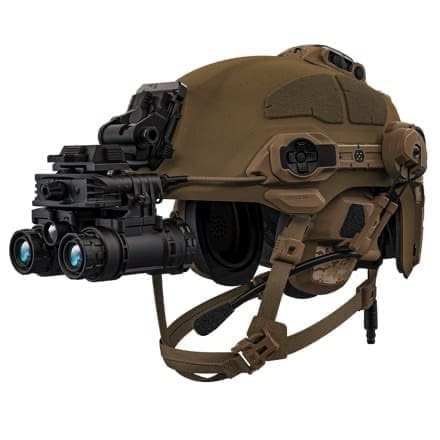
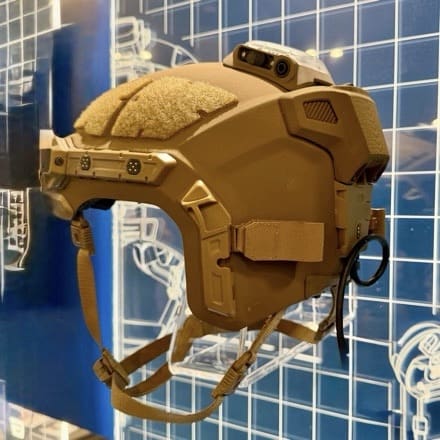
Fourteen years ago, Galvion was awarded its first helmet contract with NATO. Since then they have worked to improve the fit and function of their helmets as well as integrate communications and computing capabilities. The result is the second release in the Cortex ecosystem, EVO.

A year ago we showed you Galvion’s Cortex system, promising that eventually, it would move beyond an appliqué to become fully integrated into the helmet. With EVO, Galvion has delivered on that promise. 

Right up front it’s important to acknowledge that Galvion made it very clear to us, Cortex EVO isn’t a helmet, it’s a platform.

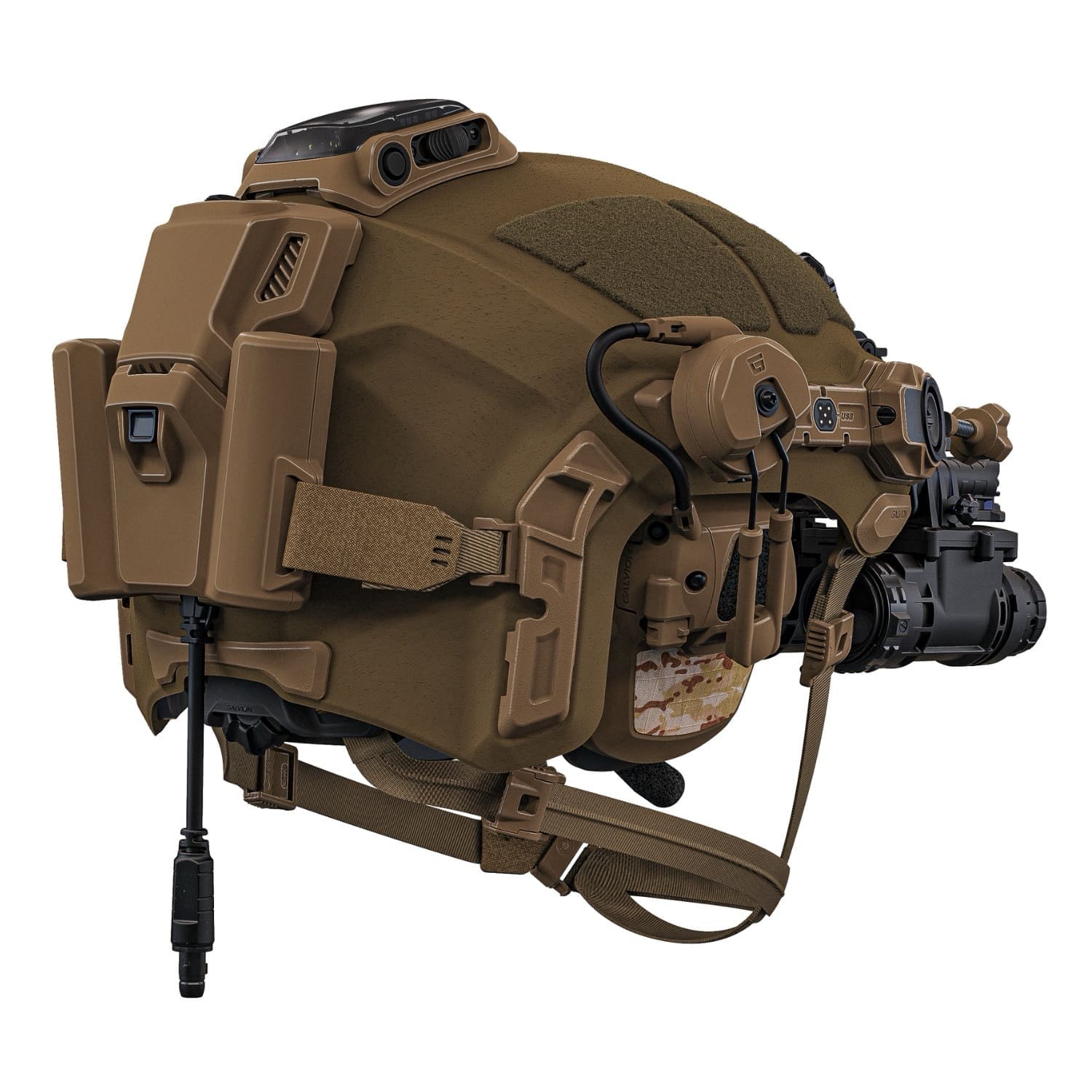
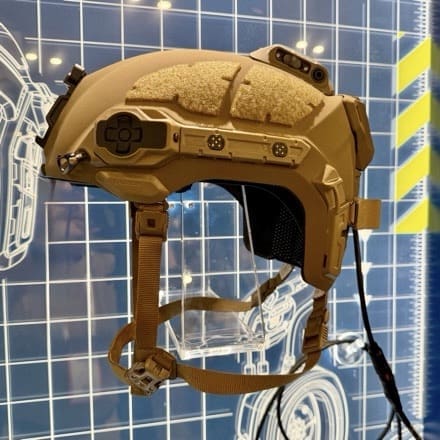
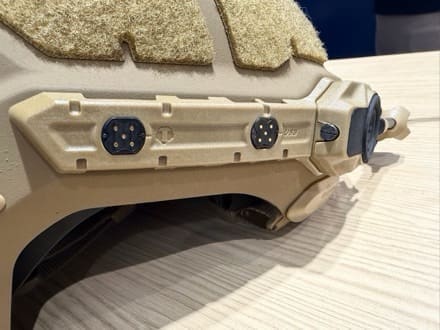
EVO offers full integration of enablers and is lightweight with a small form factor. Ultimately it could be described as “slick.” You don’t encounter a helmet covered in cables. Starting with a ballistic core and building outward, Cortex EVO integrates embedded power/data pathways and features an outer lightweight composite shell.

During the development of Cortex EVO, Galvion started with what most of us would consider the inside out. Essentially, Galvion embedded the capabilities developed for Cortex within the helmet. They refined their electro-optical / communications platform and then sandwiched it between the  ballistic inner and outer composite shell. This approach was based on operator feedback who were satisfied with each of the individual capabilities provided by modern headborne systems but were dissatisfied with the integration of them into a single platform.

Technically, they have taken Cortex to the next level. Not only is EVO the nexus of information for the operator but it also serves as a node in a larger network, connecting the eyes and ears to the system but also offerering onboard processing. Likewise it can share computational demands with the operator’s End User Device with the connection accomplished through a single cable lead.

As part of a “get your head out of your TAK” effort, Galvion has also rolled out AlertCentr, which interfaces with Tactical Awareness Kit and features configurable visual and audio cues so operators can react to alerts.

One interesting feature that the full headborne hemlet integration of EVO has afforded is that the computational module incorporates thermal signature management. The platform is also programmable and upgradable as additional capabilities are developed with plug and play capabilities for new enablers as they roll out.

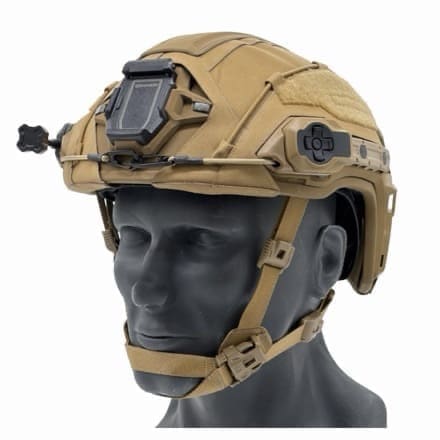
The Galvion team also showed me how the same technology can be applied to a standard helmet, like their Caiman. This EVO HALO configuration has all the same technology and capabilities delivered in a system that can be added to an existing helmet with minimal retrofitting. This slick and lightweight. And while a little heavier than the fully embedded system, it offers a great upgrade path for existing Users

Another important feature for EVO is that it is fully manufacturable at this point and can be maintained at the unit with minimal training. This is not a science project and is ready for unconstrained trials. In fact, Galvion representatives told me that they want to see the platform out there in full operational use.

www.galvion.com

Heaviside MOTH Ruggedized Tactical Spectrum Analyzer

Wednesday, July 1st, 2026

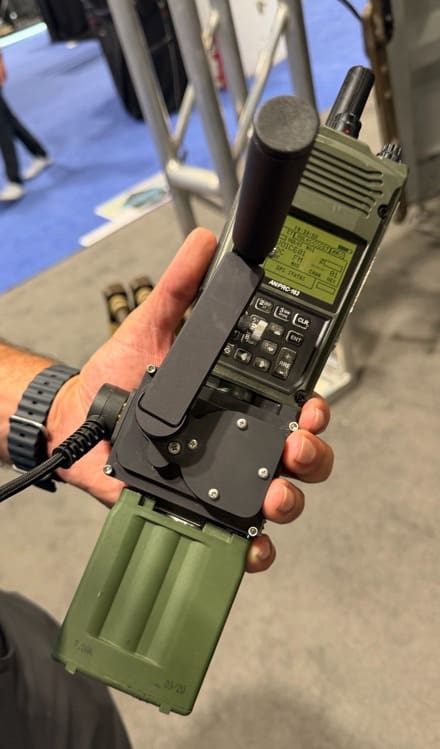
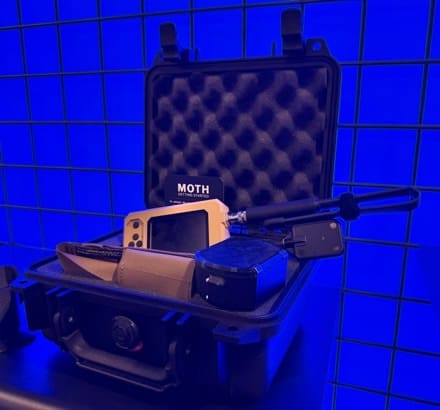
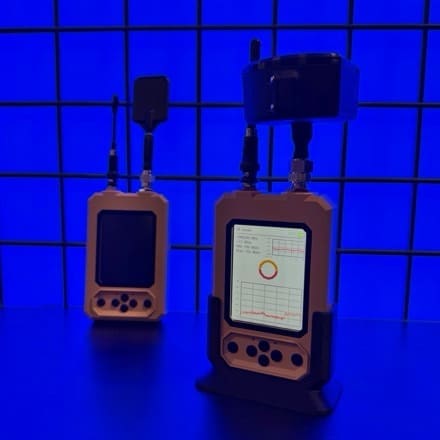
I ran across the MOTH Ruggedized Tactical Spectrum Analyzer in the ADS booth of all places. I was slacking along and I saw a small, hand-sized spectrum analyzer out of the corner of my eye and the EW nerd part of my brain took over.

It incorporates Direction Finding Mode, Real-Time Signal Oscillation, vibration notifications, and built-in GPS.

Features:

  • 5 MHz–6 GHz detection range
  • Low Size, Weight, and Power (SWaP): Weighs just 0.99 lbs with the battery and measures 5.78″ x 3.3″ x 1.8″
  • Rugged handheld + vest-portable design
  • ATAK integration
  • Rated IP67 for water and dust resistance, operating effectively between 14ºF and 131ºF

The MOTH Ruggedized Tactical Spectrum Analyzer is a simple, easy to use spectrum analyzer that can be used by Cyber ElectroMagnetic Activities professionals for tip and cue but it can also be used by anyone who may require frequency use and line of bearing information on signals of interest such as counter drone.

Priced under $5000 it’s practically disposable when you compare it in price to other systems out there.

Manufactured by Heaviside, it’s available from Lumenier.

SIG SAUER Advanced Concepts Update

Monday, June 29th, 2026

I caught up with SIG SAUER Advanced Concepts at SOF Week where they were showing some new developments.

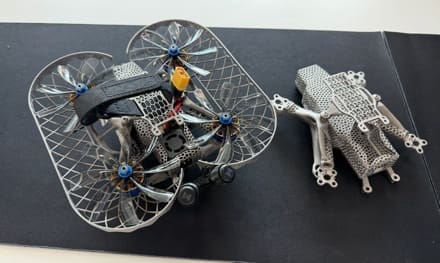
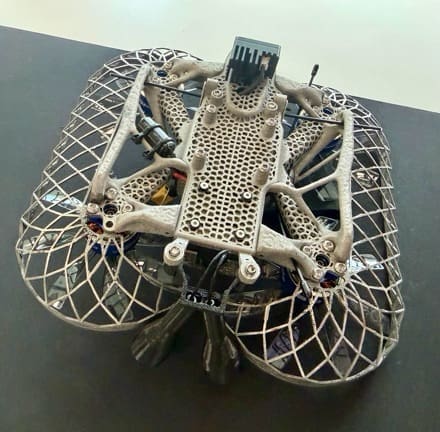
Up until recently they had been concentrating on Elite Training for drones and capability integration with existing systems. However, behind the scenes they were prototyping both new payloads as well as complete drones. They currently have a quad copter design called the R3 Saber with 3.5 propellers as well as the fixed wing Scythe.

As you ca. see, the body is 3D printed and the Saber offers a 1300 gram payload capacity.

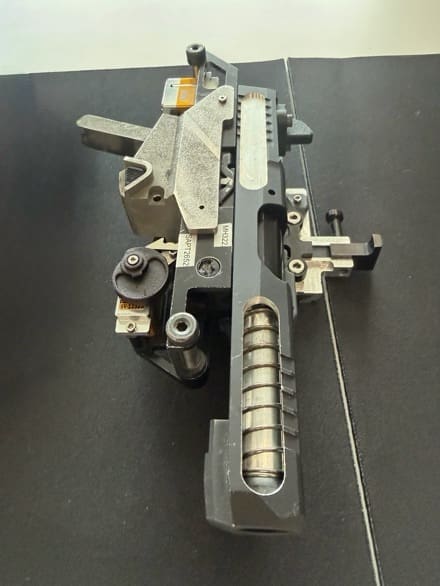
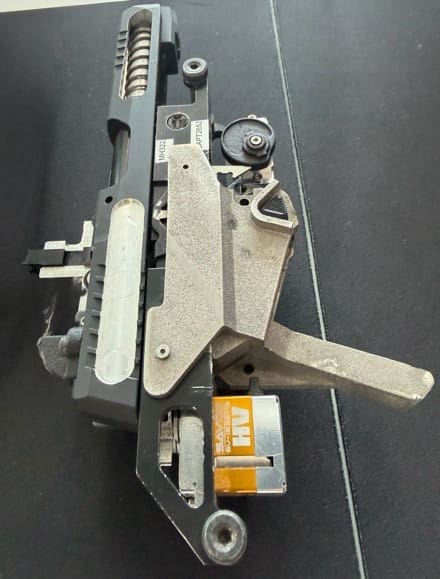
As for payloads, they have developed the MH322, MH365, MHTASER, P320 SimFX/UTM and P365 airsoft end effectors which feature SIG’s SENTRY electronic and safety board, for control and reliability. Calibers include .22, .380, and 9mm as well as Taser and UTM capabilities.

Seen here is the MH322 which weighs in under 600 grams. It offers a 25-round payload, precision laser targeting, and advanced tracking via remote operations.

www.sigsauer.com/defense-products

Envision Technology – PROTEUS

Wednesday, June 24th, 2026

In what may be the coolest thing I saw at SOF Week, Envision Technology made the public debut of their PROTEUS.

Portable Reconfigurable Observation And Targeting Expeditionary Uncrewed System or PROTEUS for short was designed in response to USSOCOM’s drone-in-a-box requirement which envisioned a multi-mode drone system, rapidly transitioning from air to ground use.

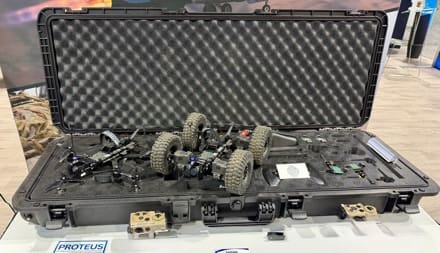
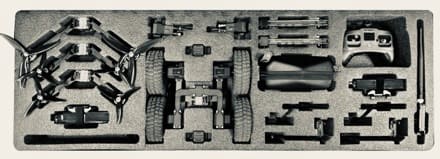
Ultimately, PROTEUS DK40 was selected as a system for the US Army’s PBAS (Purpose-Built Attritable Systems) program. As you can see, it comes in a single deployment case, ready for use.

Relying on Modular Open Systems
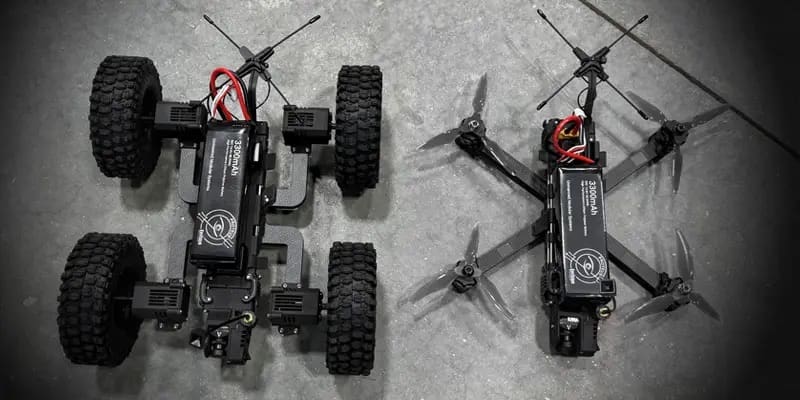
Architecture (MOSA), PROTEUS is mission configurable in under 30 seconds to quadcopter, hexacopter, octocopter, or crawler configurations thanks to its snap-on modular arms, wheels, radios, FPV systems, and accessories.

As fielded PROTEUS can be configured as a 5″ or 7″ done or as a crawler. However, Envision also provdes 3D interface files allowing units and developers to design custom mounts, payload integrations, and mission-specific accessories.

What I like about PROTEUS is that it is available now and offers the ability to configure the system as needed for the mission ahead. I know I’m going to date myself here but this is a modern day Erector set for Soldiers, but more plug and play. I’m always amazed at what troops will do with something like this. They will come up with ideas the designers never thought of.

As it has one foot in air and the other in ground robotics, the services can use it as a means to envision what future multi-mode unmanned systems (UXS) may look like and how imperative it is that they share commonalities such as power, comms, command and control, and end effector interfaces.

This will become even more evident as we begin to use larger UXS to serve as motherships to smaller systems.

www.envision-tek.com/unmanned-modular-systems

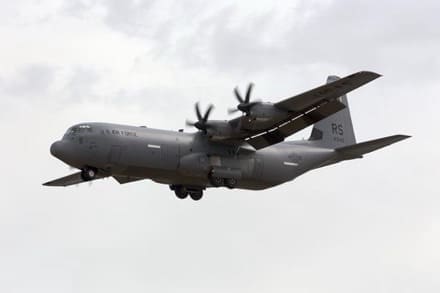
Merlin Successfully Completes Critical Design Review for C-130J Autonomy Program with USSOCOM

Friday, June 5th, 2026

CDR approval marks the completion of the final design configuration for the C-130J, advancing the program to the aircraft integration phase

BOSTON, June 04, 2026 — Merlin, Inc. (NASDAQ: MRLN), an aerospace and defense technology company building the operating system of record for autonomous flight, today announced the successful completion of the Critical Design Review (CDR) for its C-130J autonomy program with the U.S. Special Operations Command (USSOCOM). Completion of the CDR is a milestone in the program’s maturation, validating the system’s design readiness and advancing Merlin from design development into aircraft integration activities.

This milestone positions the program to enter a structured formal test campaign, including aircraft-level testing, reflecting a disciplined systems engineering progression from design through verification.

The CDR is part of Merlin’s previously awarded IDIQ contract under its C-130J autonomy program with USSOCOM. The milestone supports a demonstration of Merlin’s C-130 autonomous capability development, showcasing the potential reduction in crew workload through all phases of flight. Under this contract, Merlin is rapidly advancing its AI-powered autonomy stack onboard the C-130J, with potential pathways for expansion across other Department of War or commercial aviation platforms.

“Completing the Critical Design Review validates the architecture we’ve built for safe, scalable autonomy on large aircraft like the C-130J,” said Matt George, CEO and founder of Merlin. “We are grateful for USSOCOM’s partnership and guidance in this effort as CDR is another important step in demonstrating that our system meets the rigorous standards required for our USG customers’ real-world deployment. As we move into integration, ground testing, and eventually flight demonstrations, we’re focused on proving autonomy from takeoff to touchdown is one of the most effective ways to improve operations and safety for US warfighters.”

UF PRO and Lindnerhof Conclude Successful Participation at SOF Week 2026

Monday, June 1st, 2026

LENGGRIES, GERMANY AND KOMENDA, SLOVENIA (29 May 2026)

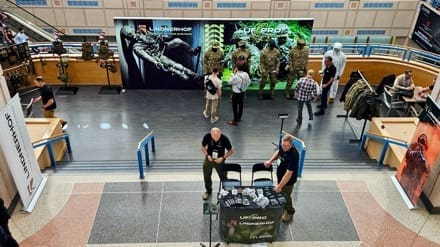
UF PRO and Lindnerhof, both part of Mehler Systems, have concluded a successful participation at SOF Week 2026, held from 19 to 21 May in Tampa, Florida.

As one of the key annual gatherings for the global special operations community, SOF Week brought together military professionals, industry partners, and solution providers for direct exchange around current operational requirements and future capability development.

Following last year’s successful participation, UF PRO and Lindnerhof returned to SOF Week 2026, welcoming visitors to their presentation area in the West Mezzanine Lounge.

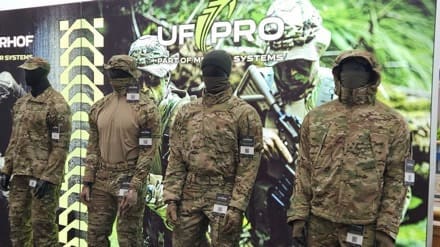
UF PRO presented a selection of tactical clothing designed for use across different climates and mission profiles.

Visitors explored hot-weather systems such as the Striker TT Combat Shirt and Combat Pants, all-terrain solutions including the P-40 Gen.3 All-Terrain Pants and Striker X Gen.2 Combat Pants, as well as rain and cold-weather protection systems including the Monsoon XT Gen.2 Jacket, Delta OL 4.0 Winter Jacket and Pants, and AcE Gen.2 Winter Combat Shirt.

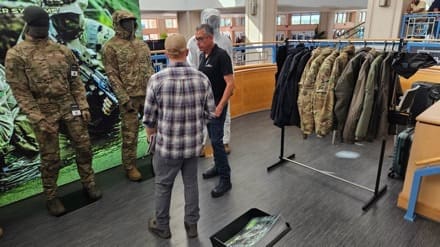
Several systems were available for hands-on evaluation and try-on, allowing visitors to experience the fit, functionality, and material performance firsthand. Selected pre-release products, including the upcoming Striker Field Shirt, were also presented during the event.

Lindnerhof showcased a range of modular load-carrying solutions focused on adaptability and mission-specific configuration.

The display included airborne and abseiling setups featuring the Shikari system combined with a Quick Drop belt, belt-based load-carrying configurations, solutions for transporting heavier equipment, landing packs, and weapon retention systems.

By presenting complete configurations alongside individual components, Lindnerhof demonstrated how systems can be tailored to specific operational requirements and user preferences.

SOF Week remains an important opportunity for UF PRO and Lindnerhof to maintain close contact with the special operations community and better understand evolving operational demands.

Learn more about upcoming events: mehler-systems.com/events

AFSOC Unveils OA-1K Skyraider II Rapid Deployment Capability at SOF Week

Wednesday, May 20th, 2026

TAMPA, Fla. —  

During the annual Special Operations Forces Week conference, Air Force Special Operations Command unveiled a unique capability of its OA-1K Skyraider II.  
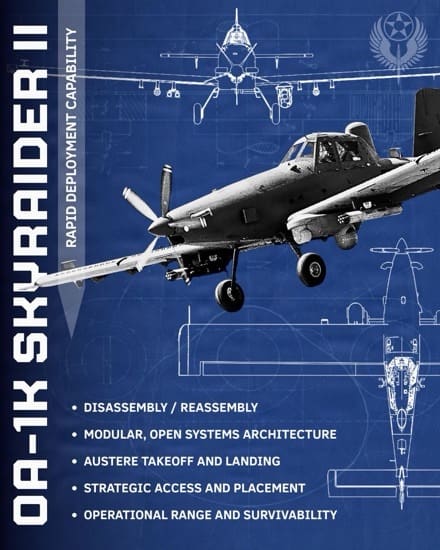
To fulfill rapid deployment requirements and further provide expeditionary agility, AFSOC’s newest platform, the Skyraider II, is capable of rapid break-down disassembly and reassembly. In this broken-down state, one or several Skyraider IIs can be loaded onto a larger aircraft and moved during strategic airlift to a new location, overcoming the tyranny of distance. Upon arrival at its destination, crews can quickly configure the aircraft to a flyable operational condition.   

“This capability is right in line with our vision of the versatility the OA-1K and its crews will provide to our teammates,” said Lt. Gen. Mike Conley, AFSOC commander. “The OA-1K offers a unique and modular solution for a wide range of operations, including armed overwatch, at a fraction of a cost of other platforms.” 
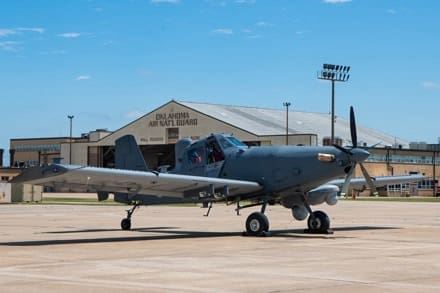
The OA-1K was designed to be adaptable across mission requirements, whether it be close air support, precision strike, or armed intelligence, surveillance, and reconnaissance.  

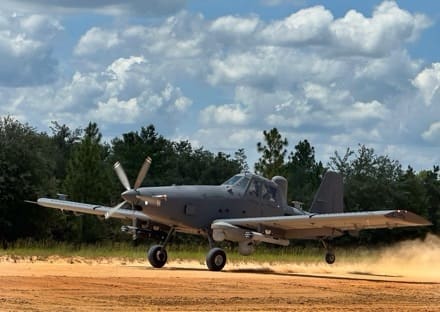
“SOF teams will value the Skyraider II’s ability to operate alongside them in austere environments,” said Conley. “Whether you need an OA-1K to find, fix, target, or engage directly, it will adapt to the requirements of the mission at hand.” 
AFSOC will have an OA-1K static present at this year’s SOF Week conference. SOF Week is an annual, week-long conference that brings together the international SOF community, industry partners and leaders across U.S. Special Operations Command.  

While at SOF Week, AFSOC leaders will engage with key stakeholders that will utilize the Skyraider II in the future, while strengthening strategic partnerships across the SOF enterprise to accelerate collective modernization.  
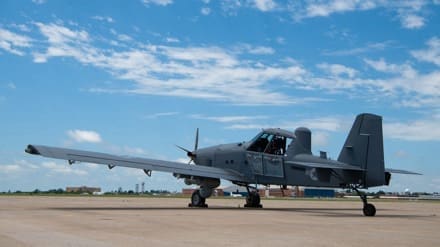
The first missionized OA-1K was delivered to AFSOC on April 3, 2025. Since then, formal training has been anchored at Will Rogers Air National Guard Base in Oklahoma, where operators are refining the platform’s specialized capabilities, including its rapid deployment advantage.   

“The rapid disassembly and reassembly means, in a matter of hours, the aircraft can be loaded into mobility aircraft like a C-5 or C-17 for worldwide deployment,” said Lt. Col. Robert Wilson, AFSOC’s Armed Overwatch requirements branch chief. “With the OA-1K ‘any place, any time, anywhere’ is not just a motto, but an actual capability.” 
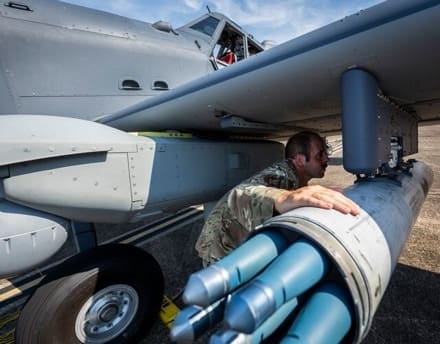
ASFOC will continue to validate this capability in upcoming operational tests and during regularly scheduled exercises. The flexibility offered to the commanders employing the OA-1K ensures they always have dedicated overwatch while operating in non-permissive environments.  

Air Force Special Operations Command

Anduril Introduces Voyager Gateway 1: Rugged Edge Compute for the Dismounted Operator

Wednesday, May 20th, 2026

Voyager Gateway 1 puts a full mission server on the operator, turning every soldier into a connected node at the forward edge.

Dismounted operators carry heavy loads of radios, batteries, sensors, and other mission equipment. At the same time, many mission applications still rely on bulky servers at the command post, forcing operators to carry additional communications gear and power sources just to stay connected. That setup, compute in the rear, operators tethered forward, doesn’t hold up in a fight where command posts are targeted, networks are jammed, and squads operate dispersed.



Anduril is addressing this problem with Voyager Gateway 1 (G1), a rugged, body-worn compute and communications system designed to fit within an operator’s kit. About the size of a radio, waterproof, and built to run on very little power, Voyager G1 combines compute, networking, and communications in a single wearable device. The system allows mission applications and edge AI workloads to run directly at the tactical edge instead of relying on servers in the rear.





Voyager G1 turns every dismounted operator into a node on the Lattice Mesh, Anduril’s software platform for connecting sensors, systems, and operators across the battlespace. The device supports data sharing, voice communications, and live video across dispersed teams, allowing units to continue operating even when disconnected from higher headquarters or traditional infrastructure.

Voyager G1 is built to live on the operator’s kit without adding to their cognitive or physical burden:

Warfighter First: Voyager G1’s innovative body-worn design minimizes the weight and heat experienced when carrying a computer, allowing the warfighter to travel faster and go further.

Ready for any Mission: The rugged, ultra-low power, and waterproof module allows for hours of extended command-and-control and intelligence, surveillance, and reconnaissance operations—even in the harshest and wettest of conditions.

Versatile Connectivity: With both wired and wireless interfaces, special operations forces can easily adapt to any situation in denied, degraded, intermittent, and limited (DDIL) environments to communicate over a greater range of comms paths.

Voyager G1 has already been tested in operational exercises alongside Anduril’s Mission Autonomy software.

During a recent INDOPACOM exercise, the system supported autonomous sensing and target-sharing workflows at the tactical edge, enabling operators to identify and share information in environments where conventional networking infrastructure was limited or degraded. The exercise demonstrated how rugged,FOR IMMEDIATE RELEASE MAY 19, 2026 body-worn compute can help small teams maintain connectivity and operate more effectively in contested environments.

Voyager G1 extends the Voyager product line with a body-worn form factor, delivering rugged, low-power compute and resilient connectivity directly to the dismounted operator. Like the rest of the Voyager line, it is built rugged first for employment in harsh environments—designed to handle shock, vibration, water, and contested electromagnetic conditions without compromising performance.

For more information about Voyager and the Voyager product line, visit www.anduril.com/voyager.