TYR Tactical

Archive for the ‘Training’ Category

SOMA – FDL Group

Sunday, December 16th, 2012

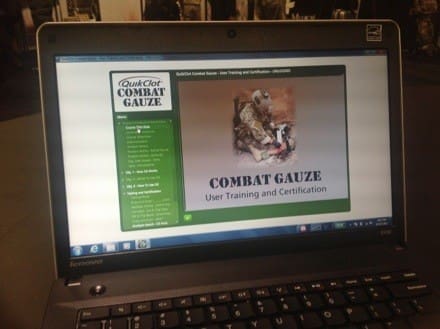
FDL Group has developed a Pre-hands on training, web-based course for Z-medica that prepares a student for taking hands on training with the QuickClot Combat Gauze product. This allows for maximized hands on time in formal training courses.

20121215-165032.jpg

It covers How CG works, When to use CG, How to use CG along with multiple section quizzes. Once you complete the web-based training you complete a test that provides instant feedback if you miss a question. When you pass the test it provides a completion certificate as well as notifying your training manager.

FDL Group is also developing similar web-based training tools for other manufacturers.

Gunfighter Moment – John McPhee

Saturday, December 15th, 2012

Non-Verbal Communication

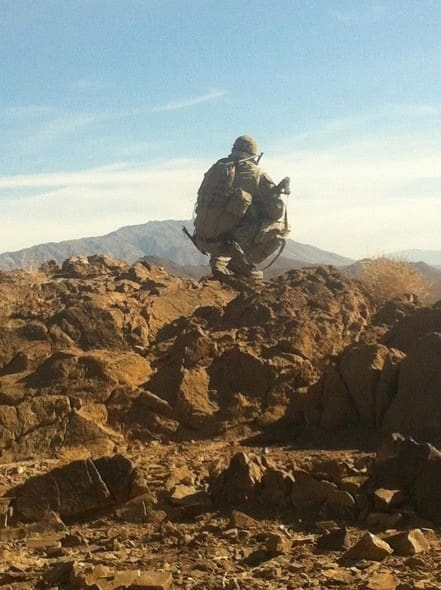
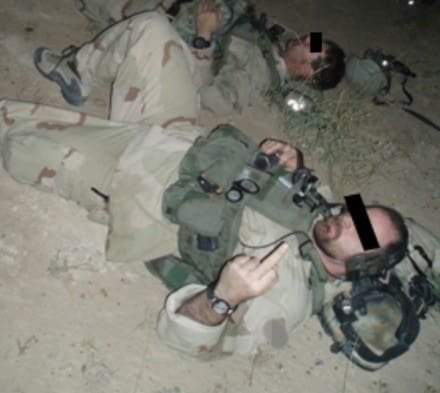
Non-verbal communication is the most over looked and misunderstood tool that Warriors have. In today’s world, you say what you want and you get it. It begins at a young age but everyone realizes that when asked what he wants to eat, a child will respond verbally. However, as you grow, you begin to take non-verbal cues. For example, as a Warrior in battle, you’ll see the Warrior to your left shooting. What does that tell you? It says “he is engaged with the enemy.” You look to your right and you see a Warrior on his back with another kneeling over him? Possibly wounded or worse. It gives a mental snap shot of what is going on around you and what you should do, or need to do, next. No words need to be exchanged nor would there be time but even if there was time, you wouldn’t hear it due to distance or the sounds of battle. This non-verbal communication, through good training, can be, hands down, better than verbal communication. However, we generally train and use verbal communication because of lack of knowledge, understanding, and experience. Besides, it’s just easy to do. Yep, finger drill training, talk me through it, and I’ll call you trained. Sad but true, so weak and lazy leaders beware! I’m watching you!
20121214-213737.jpg

Train using non-verbal comms because in gun fights you won’t have the time to bullshit. Guns are loud so you won’t be able to hear anyway, and if you’re listening for someone to say something, you’re not focused on the fight. This lack of focus puts your life, my life, and the lives of the Warriors around you at risk. Not cool hammy hands, so listen up. Remember, you need to wear ear protection at all times. Otherwise, it’s, “In a gun fight today as a warrior and def tomorrow because of it.” If you’re deaf, how will you tell your stories over beer to score chicks? So, wear your ear pro. All leaders train with ear pro, that way it takes the “talk me through it” out of your training.

As a young Ranger I was in the Sniper section which as you know, is in the same platoon as the Anti-Tank gunners. Those guys shot the 90mm Recoilless everyday and later switched to the 84mm Carl Gustav. These hand cannons are LOUD, HEAR ME? So these AT gunners couldn’t uses verbal comms for two distinct reasons. 1. Both the Recoilless and ‘Goose’ are too LOUD to hear anything. 2. The gunners were all deaf due to reason number one. That’s right, deaf. It was so bad that before any mandatory hearing tests those boys would wear ear plugs all weekend or longer just to pass. THEY KNEW NON-VERBAL COMMUNICATION. CAN YOU HEAR ME?!
20121214-235118.jpg

Train using non-verbal comms. Start today. It’s easy, and it ain’t rocket surgery*. If you see a possible enemy or a threat, point your rifle at it. If all the Warriors on your team, patrol, or whatever see this, they know you see a possible enemy. When you lower your rifle, the threat is gone. Simple, right? Makes total sense. Rifle “up” threat, rifle “down”, no threat. Yeah, I said it again for the not so bright guys in the back row (best guys in a gun fight, the backrowers). So we’re out patrolling, I bring my rifle up and start shooting. This means, “shit’s on sucker.” Then I stop shooting and lower my weapon and wait…………. Wait for it……. “Shits off.” That’s right. So you’re still with me? Good.

So now we’re in a gun fight, and you’re bounding. Yeah, that’s a 3 to 5 second rush, remember that? I’m up, bad guy sees me, I’m down. When you’re down, as your buddy, I’m moving. When I’m down, I’m covering your movement. This can be done in any size element. The old standby, conventional method is to use verbal comms to say shit like “cover me, moving, ready, clear, roger, balls, bullshit” or what ever the F your using. Look, if I move, you see me run, then I’m down. How long will it take for me to cover you? Two seconds after I drop from your view. So wait two seconds and move. And, once again, if there is shooting, you won’t hear all this bullshit anyway. In and around buildings, cars, urban areas, even without shooting, you won’t hear it. So why try use it? Again, we are a buddy team and you don’t hear me say “move”, do you wait 10 minutes? or forever? No, you look around, realize I am covering you and rush. Then it all starts over again. Except, you’ve probably been victim to standing around waiting for the new guy that is lying in wait to be told to move for 10 minutes. This is an indicator that your methods and training sucks! Just try it you’ll see. If you have any combat experience at all you’ll realize you can’t hear that shit anyway. Plus, this also affords you speed (oh yeah bonus). Ok Rangers, I was taught speed is not security but when bringing steel to bear on your enemy, the quicker the better…Amen.

I feel like you’re starting to get my drift, so I will give one more example. Clearing rooms and buildings, close quarters battle (CQB), that sort of stuff. When you enter and clear a room guys say, “clear, red zone, you suck, dick” or whatever, right? Yeah this shit is hitting close to home, huh? Well hear me out. You come into the room rifle up and clear your sector of fire. Rifle down meaning my sector is clear and I’m ready to move. So four guys in a room, rifles down, means room “clear” without saying a word. Best of all, you will lower your rifle to move anyway, true? So this makes it all that much easier. Think about this scenario. You’re taking a room off a street to get out of a worse situation. There’s still shooting going on outside this room because war is loud suckers. That’s why you wear ear protection. But, ear pro and talking don’t mix. Am I right? So YOU WON’T HEAR the four clears you need to move on, so do not waste the time your going to do it anyway no verbs style. So train for that easy (yes easy). Do it, and start today! Start doing this now, it’s easier than you think if you train for it, and most of all, stop making excuses. Don’t be a weak ass leader!

-Shrek
SGM (ret) John McPhee served a distinguished career in U.S. Army Special Operations for over 20 years, retiring in 2011.

John has spent his adult life in Special Operations and Special Mission Units. He is a Master Instructor in all aspects of special activities, missions and operations. He has over 6 years of private special activities consulting and is a Subject Matter Expert (SME) in: Special Activities, Operational Preparations, Limited Signature Operations, Reconnaissance, Singleton Operations, High Threat Dignitary Protective Services, Extreme Long Range, Designated Marksman, Advanced Precision Rifle Marksmanship, Combat Marksmanship, Live Fire CQB/CQC, Advanced Pistol Marksmanship, Advanced Carbine Marksmanship, Aeriel Gunnery (Rifles, Shotguns, Ariel Personnel and Vehicle Interdictions, Mechanical, Ballistic and Explosive Breaching, Freefall Instructor Programs, Infiltration/ Exfiltration Techniques, Ground Mobility, Unit Pre-Deployment Training, and Research and Development of; Soldier Systems, Weapons, Ammunition, Thermal and Night Optics.

Qualifications;
Special Forces Target Interdiction Course
US Army Sniper School
NRA Rifle, Pistol and Shotgun, Instructor
NRA Range Safety Officer
Advanced Mountain Sniper Course, Instructor
Advanced Freefall, Instructor (Ratings Current)
Freefall Coach (Ratings Current)
California Personal/ Executive Body Guard Certification (Rating Current)
2005 Budweiser World Cup Super Heavyweight Jiu-Jitsu Champion
2004 Presidential Security Detail (Ariel Heavy) Cartagena, Colombia

He has trained countless U.S. Special Operations forces, thousands of International Tier 1 Operators and Special Forces around the world. He is one of the handful of operators with over a decade of combat having served in multiple theaters from Bosnia and South America to recent war efforts in Iraq and Afghanistan.

Gunfighter Moment is a weekly feature brought to you by Alias Training & Security Services. Each week Alias brings us a different Trainer and in turn they offer some words of wisdom.

*”Rocket surgery” is a Shrekism created by combining the best elements of rocket science and brain surgery into a new field of study which Shrek mastered as a young Ranger. Today, many aspire to learn the secrets of this arcane form of martial science under the tutelage of Shrek.


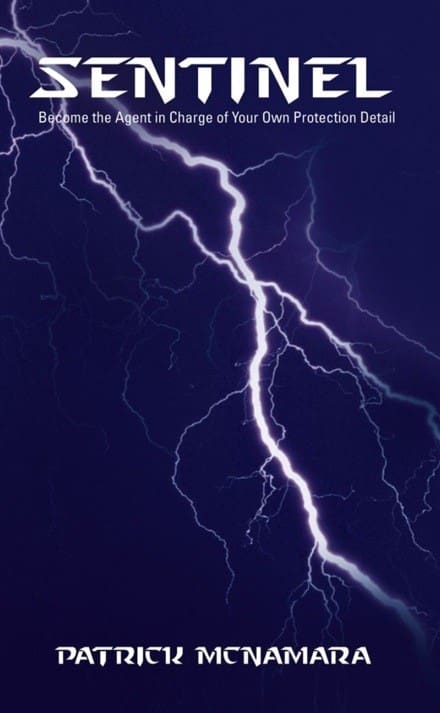
Sentinel: Become the Agent in Charge of Your Own Protection Detail

Friday, December 14th, 2012

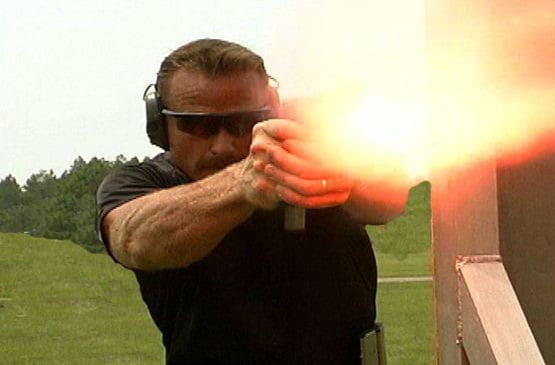
Pat McNamara retired after 22 years of Army service from the Army’s premier hostage rescue unit as a Sergeant Major and is also the author of T.A.P.S. (Tactical Application of Practical Shooting). He is a renowned tactical trainer, leading TMACS, Inc. His services are available through Alias Training & Security Services.


20121213-163601.jpg

Anything can happen to anyone, anywhere, at any time. Wouldn’t you rather know that you had done everything in your power to have prepared yourself for that moment when something goes wrong? None of us plan to fail, but we may fail to plan.

In Sentinel, author Patrick McNamara provides an instructional guide filled with survival techniques for the family. Drawing from his background as a special-operations agent for twenty-two years, McNamara discusses the importance of being the protector of the family and provides a host of techniques, strategies, and procedures to ensure safety. He offers simple steps for being better prepared for power blackouts, home invasions, and attacks on the street and more. From your home to your vehicle and beyond, McNamara discusses how to plan for contingencies.

Sentinel provides the information necessary to help you take charge of your own domain and be able to count on yourself to protect your own life and the lives of those close to you.

Available in Kindle or Paperback editions from www.amazon.com

Take Note

Thursday, December 13th, 2012

20121213-140326.jpg

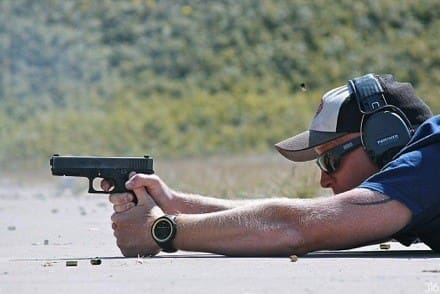
Kyle Defoor shooting his GLOCK from the prone supported position.

Canipe Correspondence – Perishable Skills

Sunday, December 9th, 2012

Recently, I decided to get back into shooting my long guns. They’re just sitting in the vault, I’m not gonna get rid of them, and they cost too damn much to let them sit there. When I didn’t have to keep data on three guns at a time any more, I was a little burned out on the ass-pain of long range shooting. I loved it, but to do it right was a huge commitment. Your sniper rifles are like kids, they require constant attention or they’re not gonna turn out right. I was a little rusty to say the least, I had forgotten some steps in terms of maintaining the system as well as developing firing solutions to record for future use. Just a few short years ago, all of that stuff was second nature. Not so much any more, as I’m learning. A lot has happened since I stopped being behind the gun every day, and there are a couple of things I’ve lost that aren’t an easy thing to catch back up on.

The first one is re-learning the basics. When you let a skill go unattended for too long, the foundation all your hard work was built on has crumbled. It comes back, sure enough, but I never would have though I’d have to break out the SOTIC manual to remember some of the basic firing formulas and ballistics information. When I rebuilt my guns, I had to reference the torque values for all the screws that I used to know by heart. It’s pretty annoying to have to re-learn old stuff instead of learning the new stuff (more on that later). This isn’t exclusive to long-range shooting, although that is an exceptionally technical skill set. Maintenance of those skills is something I’m really wishing I had kept up right about now, and it wouldn’t have been that hard to put a little time into retaining those skills. Fortunately factory loaded ammo is pretty good today or the big Dillon press would have to be re-assembled. At least I haven’t had to fight that fight again yet…

Secondly, I have found out how far behind I am in new technology and employment techniques. The advances in reticles, night vision systems, new optimized calibers and bullet designs, suppressors, and operating systems are keeping me pretty busy right now. So, not only had I lost the base I did have, I got left behind on all the new stuff over the last few years…and there has been a lot of it. In terms of buying new equipment I’m trying to sort through all the new stuff and I’m fortunate enough to work with a true expert on this stuff so I can call him for advice. Still, walking around the USASOC Sniper Comp vendor tent last week, I was a little intimidated by how far state-of-the-art has progressed. Apart from the equipment, the skills and techniques have made a lot of progress in the last couple of years. As I reach out to buddies who are still active snipers, I’ve lost a lot of relevance by not staying current with TTPs used in current operations. So as I am taking the time to re-learn the stuff I knew, I am also trying to play catch-up on all the stuff that’s happened since my priorities shifted. That’s what your constant attention to your skills buys you, a degree of relevance that you won’t have to play catch-up on later.

My situation is kind of specific, but I think the concept applies to everything we might need and let go for some reason. We all see the fat guy in the gym who “really let himself go”. Right now, I’m that guy, but with a sniper rifle, and I really wish I hadn’t let myself go this much. The moral of the story is, all of our skills are perishable. They take the time and effort to maintain and further develop, and they’re never as good as they used to be once you pick them back up and knock the dust off without significant effort.

Gunfighter Moment – Larry Vickers

Saturday, December 8th, 2012

“How accurate should my weapon be?” is a question I get on a regular basis. Of course, the answer depends on the weapon and the application. For both pistol and a carbine it should be accurate enough to make a headshot at the furthest distance that you can realistically hope to make in the real world. In my opinion that is 25 yds for a pistol and 100 yds for a carbine .

Since my rule of thumb is shooters can only hope to be able to shoot to within 50% of the inherent accuracy of the weapon under conditions of stress then that means both the pistol and carbine need to be capable of 2.5 inch groups. This equates to the ability to hit a 5 inch circle, or the head of a small framed adult hostile at those distances.”

-Larry Vickers
Vickers Tactical Inc.
Host of TacTV

Larry Vickers of Vickers Tactical in a retired US Army 1st SFOD- Delta combat veteran with years of experience in the firearms industry as a combat marksmanship instructor and industry consultant. In recent years he has hosted tactical firearms related TV shows on the Sportsman Channel with the latest being TacTV of which Bravo Company is a presenting sponsor.Larry Vickers special operations background is one of the most unique in the industry today; he has been directly or indirectly involved in the some of the most significant special operations missions of the last quarter century. During Operation Just Cause he participated in Operation Acid Gambit – the rescue of Kurt Muse from Modelo Prison in Panama City, Panama. As a tactics and marksmanship instructor on active duty he helped train special operations personnel that later captured Saddam Hussein and eliminated his sons Uday and Qusay Hussein. In addition he was directly involved in the design and development of the HK416 for Tier One SOF use which was used by Naval Special Warfare personnel to kill Osama Bin Laden. Larry Vickers has developed various small arms accessories with the most notable being his signature sling manufactured by Blue Force Gear and Glock accessories made by Tangodown. In addition he has maintained strong relationships with premium companies within the tactical firearms industry such as BCM, Aimpoint, Black Hills Ammunition, Wilson Combat, Schmidt & Bender and Daniel Defense.

Larry Vickers travels the country conducting combat marksmanship classes for law abiding civilians, law enforcement and military and has partnered with Alias Training to coordinate classes to best meet the needs of the students attending the class.

www.VickersTactical.com

Gunfighter Moment is a weekly feature brought to you by Alias Training & Security Services. Each week Alias brings us a different Trainer and in turn they offer some words of wisdom.

New Paul Howe DVD from Panteao

Tuesday, December 4th, 2012

Paul Howe is a Mogadishu Vet and has seen combat from a perspective shared by few. As is the case with most of the men from his Unit, when he talks, I listen. Now, Panteao Productions has released a new video with Paul that concentrates specifically on Combat Mindset, an issue that is difficult to incorporate into traditional range-based training.

Preparing yourself mentally for the fight is critical. Your success against an aggressor will depend on not just your skill-set but also your mindset. In this video Paul Howe reviews important topics like motivation to survive, fear and negative thoughts, mental programming, how to handle stress, tactical confidence, medical self-aid, and more.

www.panteaoproductions.com

Gunfighter Moment – Pat McNamara

Saturday, December 1st, 2012

We sometimes neglect working on the fundamentals. These are the core skills around which everything rotates. It is sometimes necessary to lie flat on your belly and work basic rifle marksmanship (BRM). Refresh on the importance of building a position to achieve a natural point of aim. Understand that without a natural point of aim, there is muscular input and where there is muscular input there will be movement in the weapon when fired. This will have an adverse effect on the desired impact of the round fired.

When you work BRM, you appreciate external ballistics and the effects that wind, temperature, humidity, and angle have on desired impact.

You develop an understanding that this differs from one round to another depending on the make, grain, caliber, and type of round.

“Single shots should be practiced one round at a time. BRM forces us to concentrate on the fundamentals. These fundamentals should be engraved into our hard drives because as tactical gun handlers we must be able to perform certain skills intuitively.

There are facets that must be felt and performed at a subconscious level. i.e., loading, pre-combat check, safety manipulation, building a position, achieving a natural point of aim, sight alignment, trigger control, feeling the metal on metal imperfections in the trigger group, calling your shot, seeing how far the sight rises, seeing where the sight settles, following through, realigning the sights, and resetting the trigger. These must be practiced in near slow motion.

You must have a firm understanding of minute of angle and the accuracy of your rifle. You must know how your sights adjust. You should have a basic understanding of external ballistics to understand the possible adverse effects caused by winds, temperature, humidity, and angle.

BRM allows the shooter to establish a tempo or demeanor.”

Patrick McNamara
SGM, US Army (Ret)


Patrick McNamara spent twenty-two years in the United States Army in a myriad of special operations units. When he worked in the premier special missions unit, he became an impeccable marksman, shooting with accurate, lethal results and tactical effectiveness. McNamara has trained tactical applications of shooting to people of all levels of marksmanship, from varsity level soldiers, and police officers who work the streets to civilians with little to no time behind the trigger.

His military experience quickly taught him that there is more to tactical marksmanship than merely squeezing the trigger. Utilizing his years of experience, McNamara developed a training methodology that is safe, effective and combat relevant and encourages a continuous thought process. This methodology teaches how to maintain safety at all times and choose targets that force accountability, as well as provides courses covering several categories, including individual, collective, on line and standards.

While serving as his Unit’s Marksmanship NCO, he developed his own marksmanship club with NRA, CMP, and USPSA affiliations. Mac ran monthly IPSC matches and ran semi annual military marksmanship championships to encourage marksmanship fundamentals and competitiveness throughout the Army.

He retired from the Army’s premier hostage rescue unit as a Sergeant Major and is the author of T.A.P.S. (Tactical Application of Practical Shooting).

tmacsinc.com

Gunfighter Moment is a weekly feature brought to you by Alias Training & Security Services. Each week Alias brings us a different Trainer and in turn they offer some words of wisdom.