

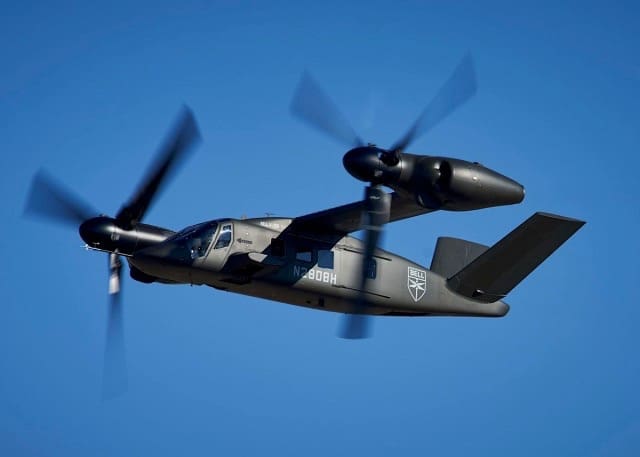
NASHVILLE, Tenn. – The U.S. Army announced today that its next-generation multi-role vertical lift aircraft, the MV-75 Future Long Range Assault Aircraft, will carry the Native American name “Cheyenne II”.
The announcement was made during the Army Aviation Association of America’s annual conference on April 15, 2026, where the MV-75 Mission Design Series was unveiled. The new platform represents a leap forward in technology and capability, combining speed, payload, and survivability in ways never before achieved in a single aircraft.
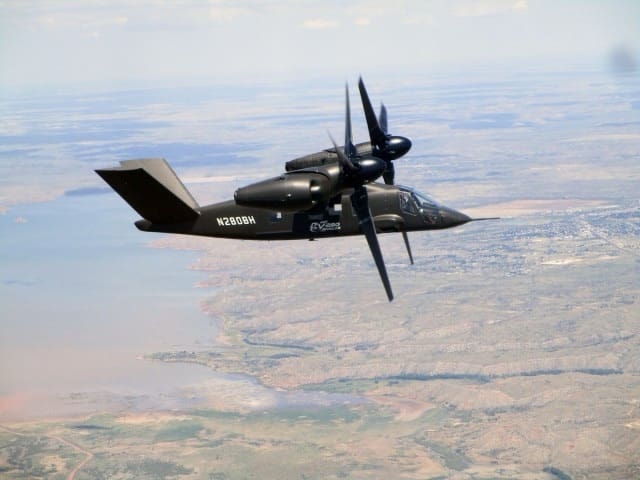
Developed as FLRAA, the MV-75 Cheyenne II delivers pivotal aviation capabilities to the Joint Force, flying twice as far and twice as fast as the current rotary aviation fleet. This medium-sized, multi-role aircraft combines the versatility of a helicopter with the speed and range of an airplane, making it a game changer for Army aviation.
“The Cheyenne people represent a resilient warrior culture and embody the key attributes of the MV-75 – speed, reach, lethality, and adaptability,” said the HON Brent Ingraham, Army Acquisition Executive. “I am honored to be part of this historic occasion as we officially name our multi-mission tiltrotor aircraft.”
The Cheyenne tribes, known for their adaptability, resilience, and strong warrior culture, inhabited the Great Plains for over 400 years. They were proficient hunters and gatherers, thriving in harsh environments and developing a social structure that allowed them to relocate quickly and efficiently. Today, the Cheyenne are divided into two federally recognized tribes: the Cheyenne and Arapahoe tribes in Oklahoma and the Northern Cheyenne tribe in Montana.
“Representing the future of Army aviation, the MV-75 embodies the strength and versatility of the Cheyenne tribes,” said MG Clair Gill, Portfolio Acquisition Executive and commanding general at Fort Rucker, Ala. “This aircraft will revolutionize how the Army fights and wins, delivering unmatched capabilities to the Joint Force and ensuring we maintain a decisive advantage on the battlefield.”
The Army followed a deliberate and disciplined process in evaluating nominations of more than 500 tribes, Native American figures, and terms before selecting the name “Cheyenne II”. The name was previously used in the late 1960s for the AH-56 Cheyenne, which was developed to be an advanced, high-speed attack helicopter. While the AH-56 program did not move forward, its legacy of innovation and speed lives on in the new tiltrotor platform.
“This is a historic day for our MV-75 Cheyenne II team and the Army,” said Rodney Davis, Capability Program Executive, Aviation. “Stakeholders across the Army aviation enterprise were deeply involved in the research and analysis during the naming process. We are proud to honor the Cheyenne tribes and their legacy.”
The MV-75 Cheyenne II will dramatically expand the Army’s operational reach, enabling long-range air assault missions from safer distances. Built with a Modular Open Systems Approach and a plug-and-play digital backbone, the aircraft is “engineered to evolve,” allowing for seamless integration of advanced technologies throughout its lifecycle. With fly-by-wire technologies and advanced autonomy, the Cheyenne II is designed to meet the challenges of future battlefields.
“The MV-75 is a transformational aircraft that will provide our Joint Force with unparalleled versatility to dominate a wide array of mission sets,” said Col. Jeffrey Poquette, Project Manager for the MV-75 Cheyenne II. “We are honored to have the Cheyenne tribes’ approval to use their name, which embodies the power of this aircraft.”
As the Army modernizes for the future, the MV-75 Cheyenne II is a key component in ensuring the Army of the future maintains a decisive advantage on an evolving battlefield.
By U.S. Army Public Affairs
Ironic the AH56 was built by Lockheed. Now its namesake is a Bell Textron product that beats a (Sikorsky) Lockheed Martin aircraft.
It’ll be referred to as “the deuce.”