Phantom Lights

Archive for the ‘Arctic’ Category

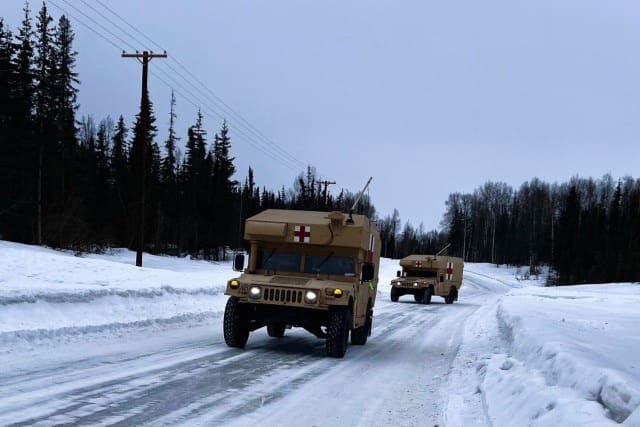
Army Medical Developers Put Tech, Treatments to Test During Arctic Edge 24

Saturday, March 23rd, 2024

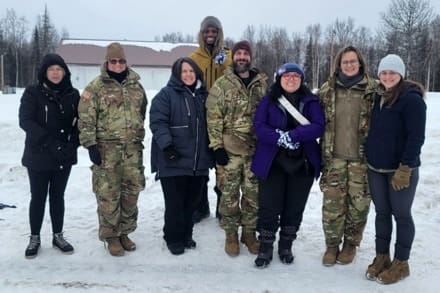
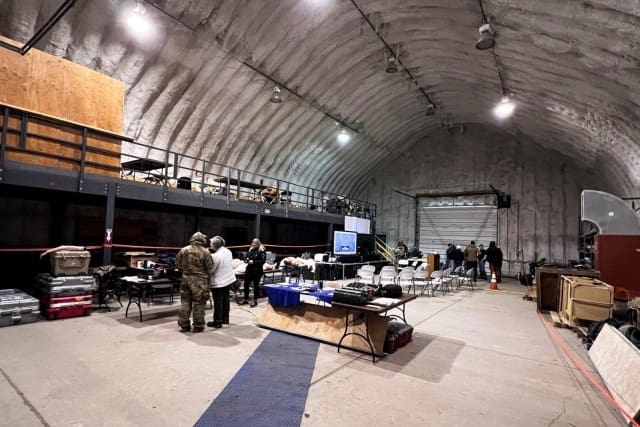
JOINT BASE ELMENDORF-RICHARDSON, Alaska — Team members with the U.S. Army Medical Materiel Development Activity joined a multinational military and government contingent to test developing medical technologies and treatments at Joint Base Elmendorf-Richardson, March 4-6, 2024.


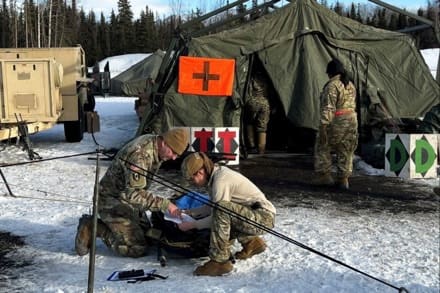
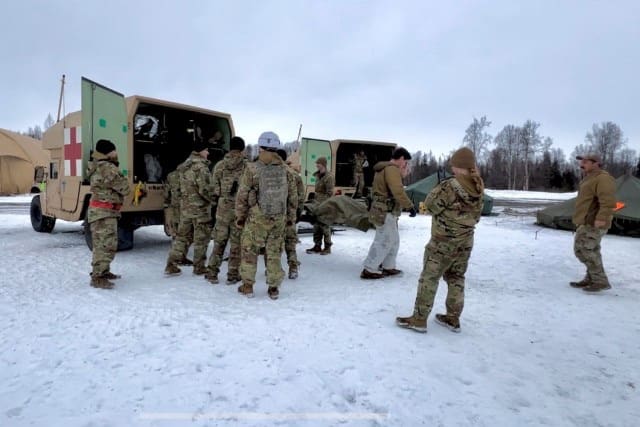
As part of the U.S. Northern Command’s Arctic Edge 24 exercise, USAMMDA developers partnered with frontline military medical providers to conduct below zero medicine exercises and experiments and assess the progress of the U.S. Army’s freeze-dried plasma and extreme cold weather shelter programs.

Arctic Edge 24 is a premier venue to demonstrate how USAMMDA’s programs fit into the Army and Department of Defense’s future operating concepts, including a focus on the Arctic regions of the globe, according to U.S. Army Col. Andy Nuce, commander of USAMMDA.

“Exercises like Arctic Edge 24 are a great touchpoint for USAMMDA’s development teams because they give us a chance to interface with potential end users of devices and treatments during the development process,” said Nuce, who has helmed the activity since June 2022. “This is important for two reasons. One, it gives our teams a chance to see devices in real-world environments that we cannot fully replicate at Fort Detrick. Two, the Soldiers who are using the devices during these types of training give us incredible insight into where products are in development within the acquisition pipeline, and how we can improve the process going forward to deliver the best possible products for eventual fielding.

“In short, the Soldiers in the field are critical to our understanding of what is needed and how we can improve the development process going forward to meet their future needs in order to save lives.”

Exercises like Arctic Edge 24 align with the wider Army preparedness doctrines outlined in the forthcoming Army publication “Arctic and Extreme Cold Weather Operations” and showcase how Army medical development commands are refining their focus to meet the challenges of Arctic warfighting, including medical readiness.

The first of two USAMMDA teams attending the exercise, the freeze-dried plasma — known as FDP — developers, are working with combat medics and medical officers to continue the years-long adaptation of blood plasma in freeze-dried form for far-forward use. The lightweight and expeditionary FDP under development by USAMMDA’s Warfighter Protection and Acute Care Project Management Office is a critical advancement in blood replacement capabilities for frontline troops, according to Michelle Mason, a logistics specialist with the WPAC PMO who attended the exercise.

“The FDP program is a significant step forward to equip military medical personnel to provide urgent care at and near the front lines,” said Mason. “When Warfighters are injured, every moment is critical to improving their chances of survival.”

Blood plasma is a lifesaving tool that helps boost a patient’s blood volume to help prevent shock and aid with blood clotting, according to the American Red Cross. WPAC is developing both human and canine FDP to give future military medical providers another option when treating critically injured servicemembers and military working dogs.

For the past several years, the U.S. Army has been focusing on modernizing its forces to meet the challenges of 2030, 2040 and beyond. A main component of this wider strategy is improving lifesaving care for wounded and injured Warfighters at and near the front lines. The U.S. Department of Defense’s focus on dispersed operations, with logistics lines crossing thousands of miles of open ocean and barren tundra, makes building frontline care capacities imperative to joint force readiness, according to Mason.

“During previous conflicts, like in Iraq and Afghanistan, U.S. forces had unparalleled abilities to treat and evacuate the wounded to higher echelons of care, due to wide accessibility of medevac aircraft and relative proximity of secured bases with advanced medical treatment facilities and devices,” said Mason. “Those advances greatly improved survivability compared to previous U.S. wars. Today’s warfighters are preparing to fight in areas of the world that are much more austere and rugged, where the ‘front line’ will be geographically isolated, dispersed and harder to reach by air and seacraft to evacuate the critically wounded.

“This is why developing treatments like FDP is so important to the DoD’s modernization efforts,” she added. “The advantages of longer shelf life, reduced logistical burden, safety and efficacy that are built into these types of materiel solutions will be vital during future conflicts to enable medical personnel to sustain life until medevac transportation can be arranged to higher levels of care.”

The second USAMMDA contingent participating in Arctic Edge 24 works with commercial partners to assess the development of rugged, extreme cold weather treatment shelters for use in Arctic environments. When a servicemember is wounded or injured, a complex series of actions begins. Frontline medical personnel initially work to stabilize the patient by keeping airways open, applying pressure to limit blood loss and treating for shock. Next, triage priorities determine the order for movement to higher echelons of care, with the most severely wounded or injured given highest priority.

During dispersed operations in extreme climates, when medevac transportation could be limited, the need to shelter casualties in a safe, dry, and warm environment while waiting for further care is imperative to ensure the patient remains stable. The Warfighter Readiness, Performance, and Brain Health PMO team attended Arctic Edge 24 to assess the worthiness of their shelter program in the most extreme climate imaginable, according to Emily Krohn, an assistant product manager with the team.

“Extreme cold weather is a different sort of enemy to our Warfighters when they are injured or wounded,” said Krohn, who attends a dozen Army and joint force exercises each year in her role as a product manager. “The climate can be a huge challenge during combat operations because it not only limits evacuation options, but it can compound and worsen the effects of serious wounds and injuries.”

USAMMDA relies on many partners to accomplish its mission, according to Krohn. Its development experts work with others across the Army, special forces community and medical industry to conceive, research, develop and test the technologies and treatments that future Warfighters will rely on to fight and win. Exercises like Arctic Edge 24 are a perfect platform to measure the effectiveness of USAMMDA’s development programs, including extreme cold weather shelters that are rugged, expeditionary and designed to meet the needs of warfighters during future conflicts.

“The shelters we are developing with the U.S. Army Combat Capabilities Development Command Soldier Center and our commercial partners are designed to enable frontline medics to safely evacuate casualties and provide tactical combat casualty care in a temperature-controlled environment while arranging for movement to higher echelons of care,” said Krohn. “These types of technologies are being developed to answer the challenges servicemembers and frontline providers may face in extreme cold weather.”

By T. T. Parish

Soldiers Prepare for Combat Operations in the Arctic

Friday, March 8th, 2024

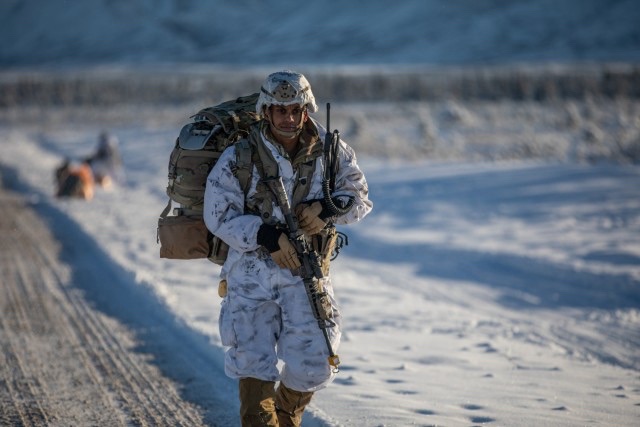
WASHINGTON — Braving subzero temperatures, about 9,000 Soldiers clad in white camouflage gathered in Alaska for a joint, multinational exercise.

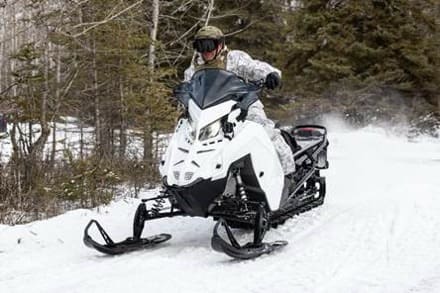
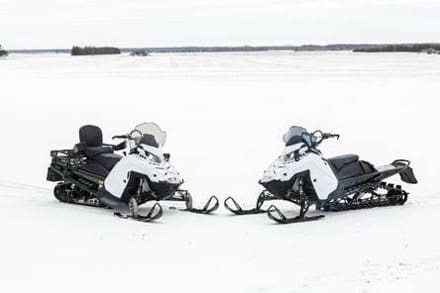
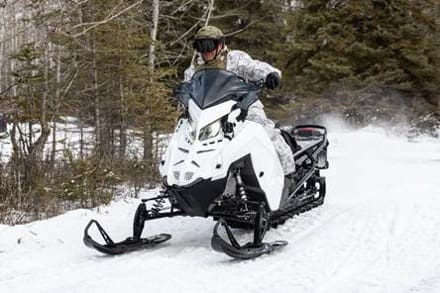
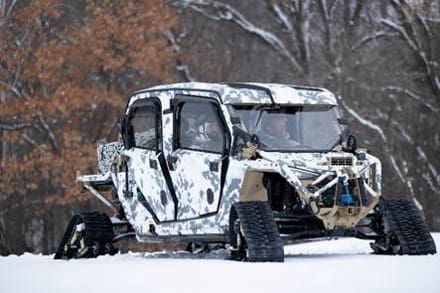
Soldiers engaged in 40 training events over two weeks to prepare for combat operations in the northernmost region on Earth. During the largest multinational training exercise in the Arctic to date, called Joint Pacific Multinational Readiness Center 24-02, the Army simulated large-scale training operations in cold weather conditions for the first time. They tested next-generation weapons and operated cold weather, all-terrain vehicles or CATV, snow mobiles to traverse the terrain.

“What we’ve learned in this exercise is you’ve got to be ready for the full spectrum,” said Maj. Gen. Brian Eifler, 11th Airborne Division commander.

Five countries participated in training from Feb. 8 to Feb. 22 including a Canadian battalion and elements from Mongolia, Australia, Finland and Sweden. Exercises which align with the Army’s Arctic Strategy, stretched from Anchorage in the south to Utqiagvik, Alaska, the northernmost city in the U.S.

Climate change has made the Arctic more navigable, and as part of the Army’s Arctic Strategy, service must be ready to deter and defend against potential adversaries in the region, Eifler said. The guidance details how the service will train, organize and equip forces and partner nations.

The Army deployed an entire division during one joint exercise, which had U.S. Soldiers playing roles on both sides. Two battalions simulated enemy forces, equipped with artillery and rockets, Eifler said.

During that exercise, U.S. Soldiers learned to fight without air superiority and support. The friendly forces embarked on a 150-mile simulated, deep attack to train Army pilots to weave in and out of air defenses.

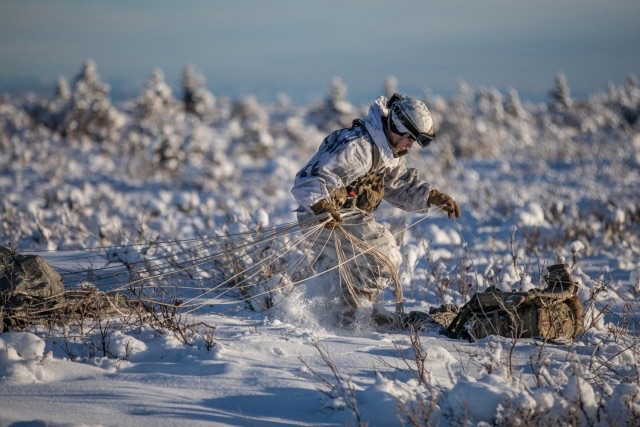
Soldiers, Airmen and Marines took part in a joint multi-battalion, joint force entry exercise into the Donnelly Training Center drop zone, north of Fort Greely. Soldiers also faced the challenge of disguising equipment in a snowy environment.

“In this battlefield, it’s very hard to be camouflaged like we used to,” Eifler said. “In some spectrums, you’re observed, whether it’s electronics, whether it’s physical, informational … across the cyber space … so we had to create windows to do a deep attack.”

Finally, troops engaged in an air assault simulation with American and Canadian Chinook helicopters, UH-60 Black Hawks and two battalions.

“That distance and scope and scale hasn’t been done before,” he said.

Soldiers also tested how the Next Generation Squad Weapon, the XM7 rifle, fared in frigid conditions and found parts of the weapon caused frostbite. Soldiers also had to adjust their survival measures. In addition to carrying more water, troops melted ice blocks and purified snow to help themselves hydrate.

“In this environment, if you stop, you freeze, and you get hypothermia,” Eifler said. “But at the same time you’re sweating, and you need more water. So that really challenged our sustainment.”

“All Soldiers require grit,” he added. “But Arctic grit … is a little bit more.”

They also had to keep electronic and digital equipment, including monitors and keyboards at a consistent temperature while sometimes operating them amid hurricane-strength winds.

Eifler said the 11th Airborne’s reactivation in 2022 gave Soldiers of that unit a greater purpose and reinvigorated Soldiers assigned to the unit. The Army also reassigned the 4th Infantry Brigade Combat Team and 1st Stryker Brigade Combat Team under the 11th Airborne.

“The forces up here had no real unity, purpose and identity,” Eifler said. “Being aligned as a division now — as warfighting capable force has increased readiness in the Indo-Pacific and for the Arctic. The [realignment] was extremely strategic. When you don’t have an identity, it’s really tough, no matter what line of work you’re in. And that was transformational up here.”

Eifler said that Soldiers who took part in the exercise can earn an Arctic skill identifier certifying that they served in a cold weather environment. Some troops even requested extensions to continue serving in the remote location.

In the past the Army has faced challenges with Soldiers experiencing depression and feelings of isolation. Eifler said that more new recruits have requested assignments in Alaska.

“Having that mentality and having that mindset that winter’s here and summer is short, and winter’s coming tomorrow; having that attitude has really changed the culture up here,” he added. “And we’re actually retaining people that have that expertise.”

Soldiers have also leaned on the Alaskan Inuit population who have taught Soldiers how to survive in Arctic conditions. For example, Soldiers learned to use ice drills to stake tents on the frozen tundra. Soldiers flew 500 miles north to Utqiagvik to perform a rapid infiltration test of the M142 High Mobility Artillery Rocket System or HIMARS. They tested HIMARS on a C-130 in -20 degree weather.

Pilots had to take extra steps to start Apache engines in cold weather conditions. They tackled a wide range of temperature changes from wind chills 40 degrees below to temperatures 40 degrees above. They studied the differences between light snow, heavier snow and wet snowfall, Eifler said.

“The temperature wasn’t consistent, which made it just a great testing environment to go full gamut on everything we needed to do,” Eifler said. “And then it really tested the grit of the Soldiers.”

The Soldiers treaded into new territory during the exercises. Eifler said that warrant officer pilots submitted white papers for Army manuals on how to operate Apaches in extreme cold. About 18 multinational observers took part including representatives from France, Japan, Nepal and Chile.

Next month, during Exercise Arctic Shock in Bardufoss, Norway, Army paratroopers will fly over the North Pole and perform an air entry operation. About 150 Soldiers from the 11th Airborne and 100 members of the Norwegian Army will take part in the exercise from March 18 to March 22.

“We’ll continue to push ourselves up here,” Eifler said. “And increase the scale and scope of these exercises. Because we’ve got to be better; we’ve got to be challenged. And we’ve got to help the Army resource us and structure us properly so we can meet those threats tomorrow.”

By Joe Lacdan, Army News Service