SIG SAUER - Never Settle

Archive for the ‘Arctic’ Category

Polaris Government and Defense Boosts Power in Its Military Snowmobile Lineup

Thursday, April 3rd, 2025

Minneapolis – April 2, 2025 – The military snowmobile lineup from Polaris Government and Defense takes arctic mobility to the next level with the introduction of the 2026 Military 850 TITAN 155. Powered by the 850 Patriot engine, this option provides commonality with the Military 850 RMK 155 as well as more than 25 percent more torque and power than the 650 TITAN for applications that need it, as well as responsive performance and increased acceleration. Warfighters worldwide rely on Polaris Government and Defense to provide off-road, light tactical vehicles for the most austere conditions. Polaris militarized snowmobiles, or over-snow reconnaissance vehicles (OSRVs), are a critical component of the off-road arsenal for winter warfare. And the all-new 850 TITAN builds on Polaris’ legacy of delivering unmatched durability and mobility in extreme winter conditions.

“Arctic mobility is demanding, and no one knows this terrain better than Polaris, having produced snowmobiles for more than 70 years, and driving innovation in these capable platforms ever since,” said Nick Francis, vice president, Polaris Government and Defense. “Polaris military snowmobiles and tactical vehicles allow operators to move further and faster in critical arctic and mountainous snow-covered environments and execute critical missions with confidence and efficiency.”
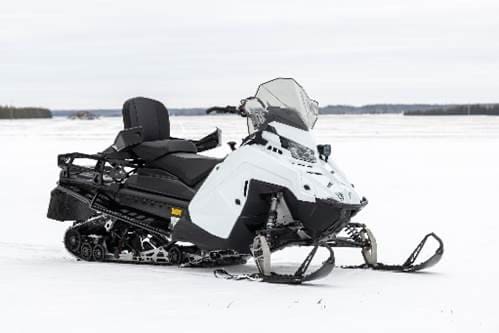
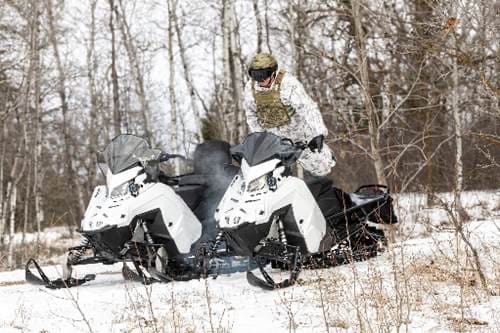
The 2026 Military 850 TITAN 155 and 2026 Military 850 RMK 155

The 850 Patriot engine serves as the proven foundation for durability, toughness and control for the entire Patriot family of engines. The all-new Military 850 TITAN is a workhorse capable of managing heavy-duty winter tasks on- or off-trail, with the engine providing more than 25 percent more torque and power than the 650 TITAN for rapid acceleration, improved towing capabilities and reliable performance in sub-zero conditions. The two-person utility snowmobile is designed to handle heavy payloads and is equipped with a reinforced cargo system to accommodate a passenger plus another 125 lbs of added cargo, as well as a hitch to tow a sled and an additional 1200 lbs of mission-critical supplies. An optional winch provides 1500 lbs of capacity for vehicle recovery or to move obstacles.

Featuring the patented BackTrak20 rear suspension, high-clearance independent front suspension, 20” wide Cobra track and Trailbreaker skis, the TITAN provides flotation and performance in varying snow conditions and can climb on top of snow better than any previous model – in forward or reverse. The TITAN also has an articulating rail, allowing the extra-long track to hinge upwards at the back, and a removeable rear snowflap for even greater mobility backing up. The transmission has high and low gearing for controlled power distribution and added initial engine torque for heavy loads. A cooling system with a radiator keeps the TITAN’s engine temp optimized during slow speed operation, while towing heavy loads and in marginal snow conditions for more reliable operation and dependability.New accessories also include a large, 30-gallon capacity utility box to contain and protect equipment.

The military snowmobile lineup from Polaris also includes the 2026 Military 850 RMK 155, which is a nimble, lightweight snowmobile engineered for unmatched precision in technical terrain for patrol and reconnaissance. The extended track and tapered tunnel increase the snowmobile’s performance in deep snow while a full-length cooler provides better cooling and greater reliability in marginal snow conditions. High elevation clutch calibration provides optimal operation at increased altitudes for this model, while Walker Evans Racing Velocity shocks provide adjustability for varying rider and kit weight and size for greater control and precise handling.

Polaris Government and Defense provides key modifications to its military snowmobiles, based on operator feedback and mission profiles:

Blackout Mode – a single switch instantly turns off all lights for discreet operation

IR Light – infrared lighting provides visibility to operators while in blackout mode

White Body Panels – additional white on military snowmobiles provides camouflage

12V outlets – power or charge hand-held electronics and other mission essentials

Power Boosting Regulator – automatically provides maximum electrical power at idle and low RPMs to support the 12V outlet as well as any added accessories

Handlebar with Mountain Hoop – the added hoop provides better operator ride angle and control

Operations in snowy, Arctic conditions demand reliability, agility and stealth. Polaris military snowmobiles are built with that in mind: durable two-stroke engines and electric start ensure dependable operation, even in extreme cold, while a manual pull-start provides backup when needed. To increase stealth, these two military snowmobiles are designed to blend in tosnowy, arctic environmental conditions. A keyless ignition also comes standard on military models to simplify fleet operation and provide quick deployment in demanding environments.

Military snowmobiles from Polaris Government and Defense are delivered mission-ready to military customers with confidence that all modifications have been validated by Polaris engineers. The dedicated team delivers training courses to maximize operator effectiveness and ability for these specialty platforms.

Polaris Government and Defense also provides arctic mobility through its MRZR Alpha light tactical all-terrain vehicle. The MRZR Alpha transitions to cold-weather environments and terrain with the addition of an Arctic Mobility Kit. A fully enclosed cab helps protect occupants from weather conditions and environmental elements while a track conversion kit replaces each wheel with a separate track assembly providing off-road, all-terrain maneuver capability over snow, soft soil and mixed terrain. The full cab and tracks expand the environments the MRZR Alpha can operate in and increase an already wide range of terrain for which it is well-suited.

Polaris’ commercially modified platforms are air transportable, highly capable and a force multiplier for every service in the United States military and more than 60 allied countries. In addition to military snowmobiles, Polaris Government and Defense provides tactical wheeled vehicles like the MRZR, DAGOR and MV850.

military.polaris.com/en-us

Arctic Mobility Sustainment System Tested at US Army Arctic Regions Test Center

Monday, March 31st, 2025

FORT GREELY, Alaska — Deployed Soldiers are constantly loaded with gear, but are particularly encumbered when operating in a cold weather environment.

In addition to their conventional weapons, Soldiers need to utilize heavy equipment like space heaters, cooking stoves, fuel and heavy-duty thermal tents to survive operations in arctic climates.

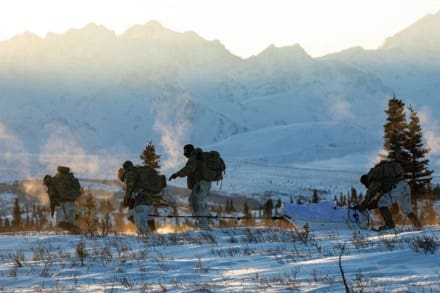
The Army’s Arctic Mobility Sustainment System, or AMSS, all-regions tactical clothing with updated cold weather clothing, snowshoes and ski poles underwent rigorous testing at U.S. Army Arctic Regions Test Center — known as ARTC — this winter with the help of Soldiers from the Army’s 11th Airborne stationed at Joint Base Elmendorf-Richardson.


“We’re traveling longer distances to get the snow that we need,” Hannah Henry, ARTC test officer. “We’re getting a lot more data this year.”

The AMSS items under test will replace the legacy Ahkio sled and 10-person tent the Army currently uses. Testers expected extreme cold for the multi-week test, and the interior Alaska winter delivered a wide span of Arctic conditions, from brutal temperatures below 0 degrees Fahrenheit to rapid, but short-lived swings to relatively mild winter temperatures only slightly below freezing.

“We’re testing some different base layers,” said Steven Prewitt, ARTC test officer. “Our unusually warm winter here has been very good for observing insulating and moisture management factors with the clothing.”

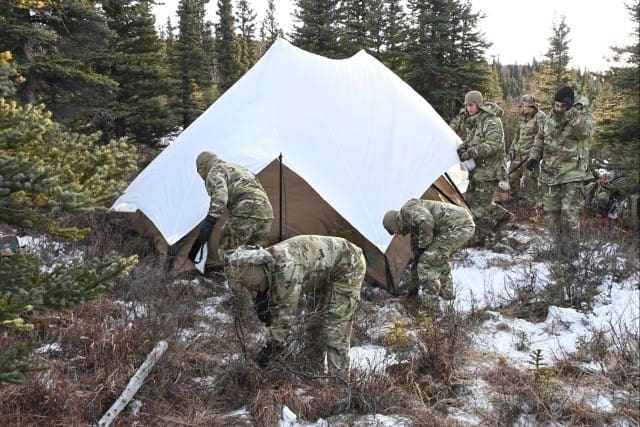
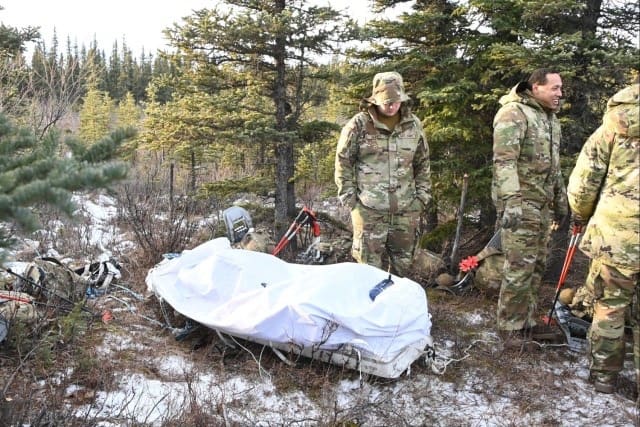
On a typical day, Soldiers would pack an AMSS sled under test with the tent, a heater, and their basic standard issue items for arctic infantry operations, then pull the sleds in either nine-Soldier squads or four to five Soldier teams as ARTC’s test personnel led the way. Moving the heavy sleds across CRTC’s hilly tundra, thickly forested areas and the dense, frozen boggy vegetation called muskeg is challenging in any conditions, but particularly so in extreme cold and deep snow.

“Our snow is so dry and powdery,” said Isaac Howell, Chief of ARTC’s Test Operations Division. “You don’t stand on it at all, whether you are on skis or in snowshoes — you don’t go across the top of it, you go through it. You are plowing snow the entire day regardless of whether you are wearing snowshoes or not.”

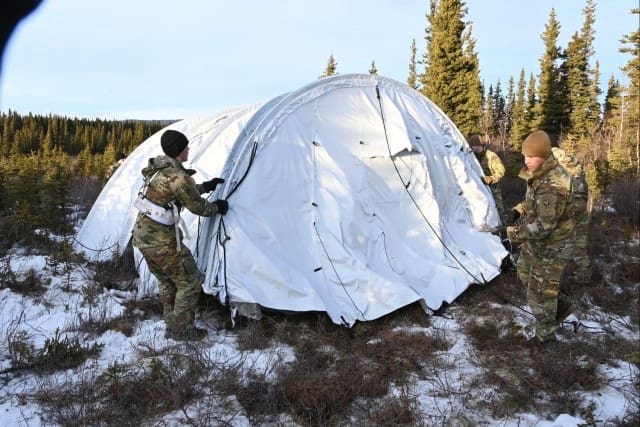
After a two-and-a-half-hour movement, testers kept track of how long it took the soldiers to emplace and erect each tent and get the space heaters operating. Following a cold weather MRE for lunch, the Soldiers disassembled the tent and heater and returned to their day’s starting point following a different route. Following a sensing survey on their opinion of the items and hot meal, the Soldiers reassembled the tents and heaters and prepared to sleep in the long, cold Arctic night.

Through it all, telemetry on the Soldiers measured their body core and extremity temperature for both feedback on the clothing and for safety. They also participated in a comprehensive feedback focus group every week that will be used when assessing the effectiveness of the tested gear.

By Mark Schauer

New Arctic & Extreme Cold Weather Ops Pub ATP 3-90.96 MCTP 12-10E

Friday, March 21st, 2025

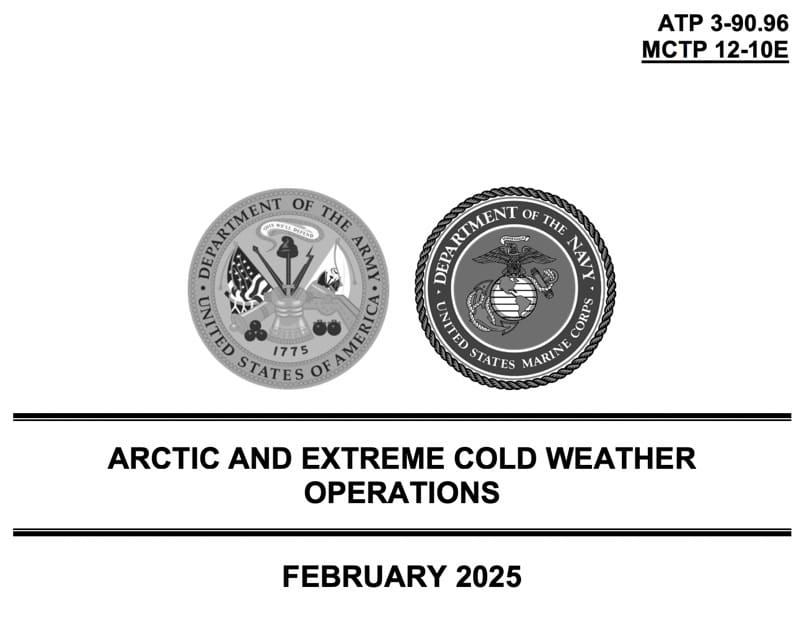
The Army and Marine Corps have released a new Arctic & Extreme Cold Weather Ops publication.

The Arctic is simultaneously an arena of competition, a line of attack in conflict, a vital area holding many natural resources, and key terrain for global power projection. As such, a ready and capable land force in arctic operations serves to deter threats to the U.S. homeland, its allies, and interests in the Arctic.

As an expeditionary force, the U.S. military stays prepared to meet the challenges of the Arctic and to fight and win in any environment, regardless of home station. Leaders and individuals must understand the effects of the Arctic and extreme cold weather environments and must have the training, stamina, and willpower to take the proper actions.

This manual provides the doctrinal foundation for Soldiers/Marines to understand the Arctic’s operational environment and conduct arctic and extreme cold weather operations. The fundamentals of this manual are also applicable to all cold weather environments. This manual also informs DOTMLPF-P (doctrine, organization, training, materiel, leadership and education, personnel, facilities, and policy) improvements as the Army/Marine Corps regains arctic dominance.

armypubs.army.mil/epubs/DR_pubs/DR_a/ARN43089-ATP_3-90.96-000-WEB-2

CANSEC 24 – Millbrook Tactical

Wednesday, May 29th, 2024

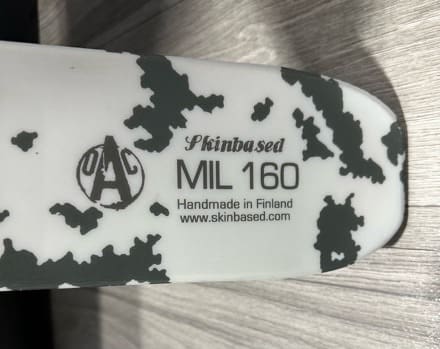
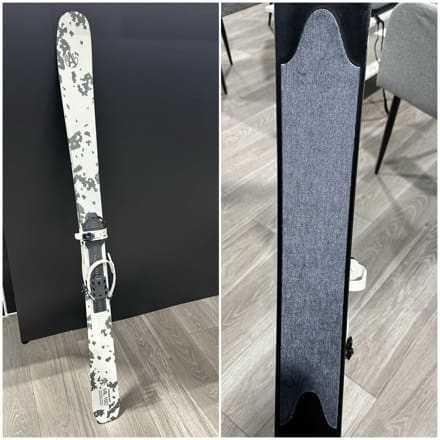
Millbrook Tactical represents OAC Skinbased for the tactical market in Canada and they have released a 160 cm version of their popular military ski.

The extra length helps it to float better over the snow. Additionally, AOC Skinbased skis feature an integrated skin to facilitate uphill movements.

Rampart Range Day 24 – StalkLand Camouflage by Sniper Dynamics

Tuesday, May 28th, 2024

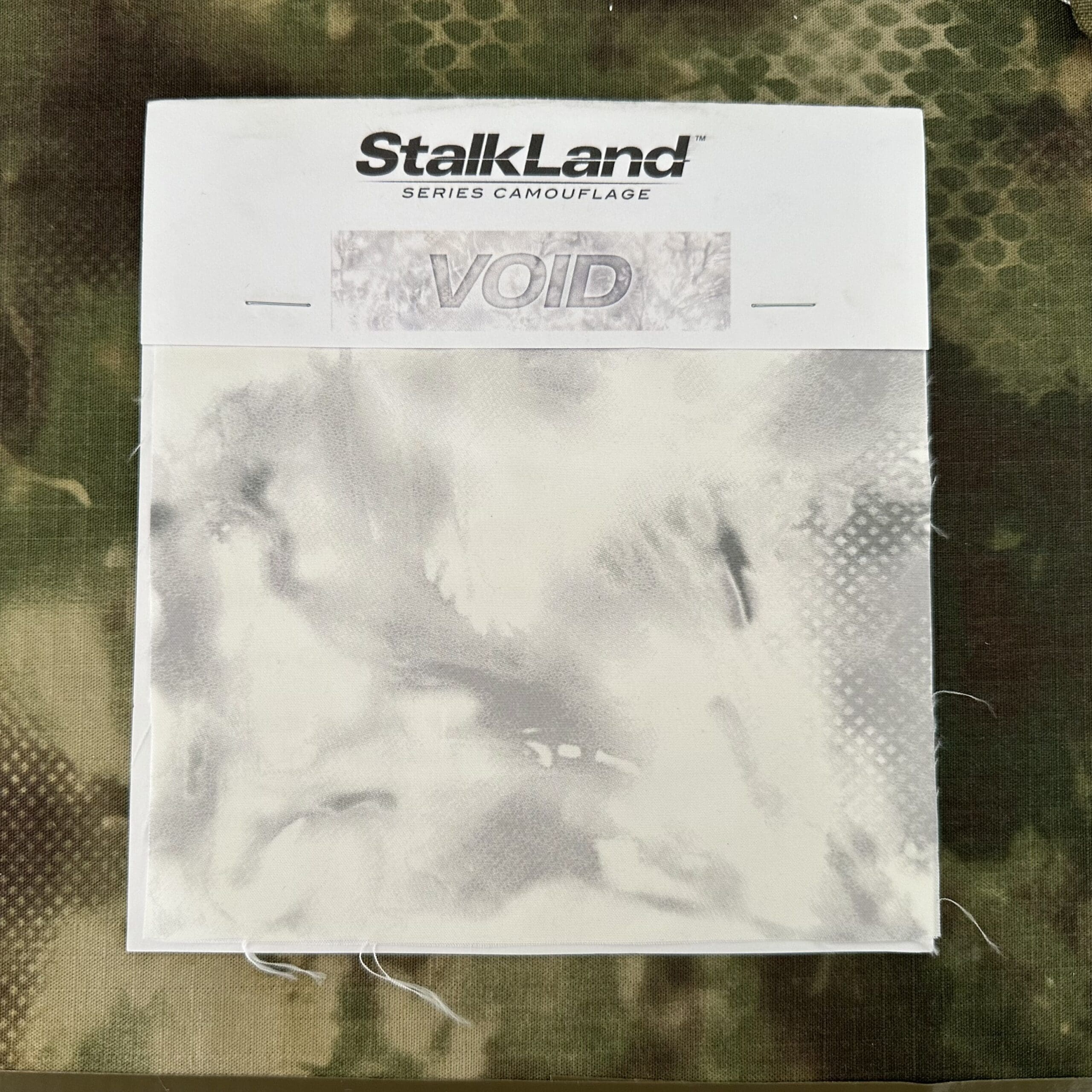
Sniper Dynamics has increased their range of StalkLand camouflage with the printing of the Void pattern for alpine and arctic environments.

This and other products shown at Rampart Range Day are available for unit and agency orders in Canada and the US through Rampart.

Arctic Mobility Sustainment System Tested at Army’s Cold Regions Test Center

Monday, April 29th, 2024

FORT GREELY, Alaska — Deployed Soldiers are constantly loaded down with gear, but nowhere more so than when operating in a cold weather environment.

In addition to their conventional weapons, Soldiers need to utilize heavy equipment like space heaters, cooking stoves, fuel and heavy-duty thermal tents to survive operations in the Arctic.

Candidates to serve as the Army’s Arctic Mobility Sustainment System underwent rigorous testing at U.S. Army Cold Regions Test Center, or CRTC, this winter with the help of Soldiers from the Army’s 11th Airborne stationed at Joint Base Elmendorf-Richardson, Washington.

“When they go out in zone seven operations, this is the new stuff they will be pulling out there with them to set up shelters,” said Danielle Schmidt, assistant test officer. “We went through a lot of changes since the test started up here all based on learning what works and what doesn’t in the cold.”

The system selected as a result of this testing will eventually replace the legacy Ahkio sled and 10-person tent the Army currently uses. Testers expected and coveted extreme cold for the multi-week test, with the interior Alaska winter delivered more than they expected.

“The whole time the test was going it didn’t get above minus 20 Fahrenheit,” said Isaac Howell, senior test officer. “It was good test conditions for what we were doing, but it was difficult on the Soldiers. Sustained movement in the Arctic day in and day out at those temperatures is not easy.”

On a typical day Soldiers would pack the Arctic Mobility Sustainment System sled under test with the tent, a heater and their basic standard issue items for Arctic infantry operations. The Soldiers would then pull the sleds in either nine-Soldier squads or four to five Soldier teams with CRTC’s test personnel led the way. Moving the heavy sleds across CRTC’s hilly tundra and thickly forested areas is challenging in any conditions, but particularly so in the extreme cold and deep snow of winter.

“Our snow is so dry and powdery,” said Howell. “You don’t stand on it at all, whether you are in skis or snowshoes — you don’t go across the top of it, you go through it. You are plowing snow the entire day regardless of whether you are wearing snowshoes or not.”

After a two-and-a-half-hour movement, testers kept track of how long it took the Soldiers to emplace and erect each tent and get the space heaters operating. Following a cold weather Meal Ready to Eat for lunch, the Soldiers disassembled the tent and heater and returned to their day’s starting point following a different route. Following a survey and hot meal, the Soldiers reassembled the tents and heaters and prepared to sleep in the long, cold Arctic nights, which sometimes approached minus 50 degrees Fahrenheit.

“The Soldiers were instrumented for safety purposes to make sure they didn’t get too cold or hypothermic,” said Schmidt. “If they did get too cold, they could pull themselves. We had noxious gas sensors in the tents where the heaters were operating as another safety precaution.”

Despite the hardships, the participating Soldiers gave high marks to CRTC’s test crew.

“It was pretty cool being able to experience that and see what all the new equipment is like,” said Pvt. 1st Class Tyler Worrell.

By Mark Schauer

Assignment Incentive Pay to be Authorized for Airmen, Guardians Stationed at Extremely Cold Locations

Wednesday, April 10th, 2024

ARLINGTON, Va. (AFNS) —  

Effective April 1, the Department of the Air Force approved a new incentive pay for Airmen and Guardians assigned to qualifying bases in the U.S. where the temperature is expected to drop below minus 20 degrees Fahrenheit. 

Cold Weather Assignment Incentive Pay is a single lump sum payment given to Airmen and Guardians after signing an agreement to serve a prescribed tour length of at least 12 months, depending on qualifying location.  

Locations that meet this threshold include Minot and Grand Forks Air Force Bases and Cavalier Space Force Station in North Dakota, Clear Space Force Station, Eielson Air Force Base and Joint Base Elmendorf-Richardson in Alaska, as well as Malmstrom AFB, Montana.  

“Airmen and Guardians living in extremely cold conditions faced unique out-of-pocket costs,” said Alex Wagner, Assistant Secretary of the Air Force for Manpower and Reserve Affairs. “In addition to the assignment and retention benefits of the pay, it also comes down to making sure we do our best to take care of our service members and their families stationed at these critical installations.”  

This payment intends to ease the financial burden of purchasing certain cold weather essentials, such as extreme cold weather gear, all-season and/or snow tires, tire mounts and alignments, engine block heaters and emergency winter car kits, as well as further incentivizing assignments. 

Although AIP-CW is effective April 1, the first pay date is anticipated for July 1, 2024, meaning Airmen and Guardians who move to a qualifying location between April 1 and June 30 will receive payment retroactively.  

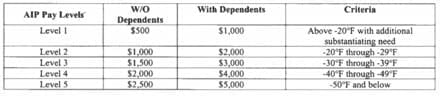
The amount of AIP-CW Airmen and Guardians are eligible to receive is based on criteria in the five pay levels outlined in the table below and is subject to change. 

This change follows the Department of Defenseimplementation of the Fiscal Year 2023 National Defense Authorization Act, which included language authorizing special duty pay for members based in cold-weather climate conditions and the FY24 NDAA, which clarifies the temperature parameters that qualify an area as a cold-weather location. 

“We want to ensure Airmen, Guardians and their families have the resources needed to safely live and work in an extreme cold-weather environment,” Wagner added.  

The official guidance memorandum can be found here

Secretary of the Air Force Public Affairs

New Military Snowmobiles Launch from Polaris Government and Defense

Tuesday, March 26th, 2024

Minneapolis – March, 2024 – Two new military snowmobiles are launching from Polaris Government and Defense: the 2025 Military 650 TITAN 155 and 2025 Military 850 PRO RMK 155, built off the industry-leading technology and ride-enhancing upgrades of the 2025 Polaris Snowmobile lineup. Warfighters worldwide rely on Polaris Government and Defense to provide off-road, light tactical vehicles for the most austere conditions. Polaris militarized snowmobiles, or over-snow reconnaissance vehicles (OSRVs), are a critical component of the off-road arsenal for winter warfare.

“Many expeditionary forces turn to Polaris for arctic mobility, and we are committed to providing vehicles that continue to meet the ever-changing needs of their missions,” said Nick Francis, vice president, Polaris Government and Defense. “The all-new 2025 Military 650 TITAN 155 and 2025 Military 850 PRO RMK 155 snowmobiles are engineered with the input of our longstanding snowmobile customers. Working closely with the operators that specialize in arctic operations helps ensure these next-gen OSRVs meet the standards and requirements of today’s militaries while continuing to provide exceptional maneuver capability, utility and reliable operation during harsh winter operations.”

The 2025 Military 650 TITAN 155 and 2025 Military 850 PRO RMK 155 have several modifications for the military mission:

–        Blackout Mode – a single switch instantly turns off all lights for discreet operation

–        IR Light – infrared lighting provides visibility to operators while in blackout mode

–        White Body Panels – additional white on military snowmobiles provides camouflage

–        12V outlets – power or charge hand-held electronics and other mission essentials

–        Power Boosting Regulator – automatically provides maximum electrical power at idle and low RPMs to support the 12V outlet as well as any added accessories

–        Handlebar with Mountain Hoop – the added hoop provides better operator ride angle and control

Built on the proven Matryx platform with the quick accelerating 650 Patriot engine, the 2025 Military 650 TITAN 155 is the most capable widetrack in Polaris history. The two-person workhorse accommodates a passenger and another 125 lbs in the cargo area, as well as a hitch to tow a trailer and an additional 1200 lbs of mission-critical supplies. A powerful winch provides 1500 lbs of capacity for vehicle recovery or to move obstacles. With an all-new, patented BackTrak20 rear suspension, high-clearance independent front suspension and Trailbreaker skis, the TITAN can climb on top of the snow better than any previous model – in forward or reverse. This model also has an articulating rail, allowing the extra-long track to hinge upwards at the back, and a removeable rear snowflap for even greater mobility in reverse. The transmission has high and low gearing for controlled power distribution and added initial engine torque for heavy loads. A cooling system with radiator keeps the TITAN’s engine temp optimized during slow speed operation, while towing heavy loads and in low-snow conditions for more reliable operation and dependability.

The new 2025 Military 850 PRO RMK 155 is a nimble, lightweight snowmobile engineered for superior maneuverability for patrol and reconnaissance. The extended track and tapered tunnel increase the snowmobile’s performance in deep snow while a full-length cooler provides better cooling and greater reliability in marginal snow conditions. High elevation clutch calibration provides optimal operation at increased altitudes for this model, while Velocity shocks provide adjustability for varying rider and kit weight and size for greater control and precise handling.

Both snowmobiles are also equipped with durable, Polaris two-stroke engines and electric start, while also supporting manual, pull-start in extreme cold. Weight reduction and ergonomic upgrades provide added control while the advanced suspension improves handling, enhanced capability and agility. Calibrated shocks and a proven suspension architecture absorb bumps in shifting terrain to add a level of comfort to the ride while a narrow cockpit provides greater control, stability and precise navigation. To increase stealth, these two military snowmobiles are designed to blend in to snowy, arctic environmental conditions. A keyless ignition also comes standard on military models to simplify fleet operation. Orders for these military snowmobiles are open now directly through Polaris Government and Defense with production and deliveries also scheduled for this year.

Providing 70 Years of Winter Mobility

In arctic and mountainous snow-covered environments, Polaris military snowmobiles and tactical vehicles allow operators to move further and faster. The experts in winter mobility, Polaris has been making innovative snowmobiles for seven decades. Today’s snowmobiles are delivered mission-ready to military customers with confidence that all modifications have been validated by Polaris engineers. The dedicated team at Polaris Government and Defense also provides training courses to maximize operator effectiveness and ability for these specialty platforms.

Polaris Government and Defense also provides arctic mobility through its MRZR Alpha light tactical all-terrain vehicle. The MRZR Alpha transitions to cold-weather environments and terrain with the addition of an Arctic Mobility Kit. A fully enclosed cab helps protect occupants from weather conditions and environmental elements while a track conversion kit replaces each wheel with a separate track assembly providing off-road, all-terrain maneuver capability over snow, soft soil and mixed terrain. The full cab and tracks expand the environments the MRZR Alpha can operate in and increase an already wide range of terrain for which it is well-suited.

Polaris’ commercially modified platforms are air transportable, highly capable and a force multiplier for every service in the United States military and more than 60 allied countries. In addition to military snowmobiles, Polaris Government and Defense provides tactical wheeled vehicles like the MRZR, DAGOR and MV850.