XC3 Weaponlight

Archive for the ‘Power’ Category

Army Reaches Agreement with Private Industry for Nuclear Micro-Reactors

Monday, August 31st, 2026

WASHINGTON — The Department of the Army is announcing today that the Janus Program has selected five nuclear energy vendors, and five initial locations.

In partnership with the Department of War Innovation Unit (DIU), the Army is awarding up to a combined $2.2 billion to own, construct, and operate nuclear microreactors on military installations.  These vendors will deliver safe, secure, and reliable nuclear power, strengthening the Army’s ability to project power globally, while supporting the revitalization of American industrial capacity and technological leadership. With the private sector funding expected along with these government dollars, the Army expects more than 20 total nuclear microreactors will be built and operated across Department of War installations.

The five selected vendors and installations are as follows:

Antares Nuclear, Inc. – Fort Bragg, North Carolina

BWXT Advanced Technologies, LLC – Fort Campbell, Kentucky

General Atomics Electromagnetic Systems – Fort Hood, Texas

Radiant Industries, Inc. – Fort Benning, Georgia

Westinghouse Government Services – Fort Drum, New York

“Since launching the Janus Program, our mandate from President Trump and Secretary Hegseth has been clear: secure the power our warfighters need to train, deploy and win,” said Dan Driscoll, Secretary of the Army. “Awarding these contracts accelerates our ability to deliver safe, reliable baseload power directly to our installations. We are building the energy resilience necessary to project combat power globally, without relying on potentially vulnerable external grids.”

“The Janus Program is grabbing the baton from Project Pele and the [Department of Energy’s] Reactor Pilot Program,” said Dr. Jeff Waksman, principal deputy assistant secretary of the Army for Installations, Energy and Environment. “We are seeking not just reactors capable of turning on for a brief demonstration, but rather systems able to deliver power with high-capacity factors for years of operation. The Janus Program will be a complete success when and only when we have assisted multiple nuclear companies in developing truly reliable and affordable nuclear microreactors which they can sell to other buyers beyond just the military.”

After gathering technical and operational information from industry via an Area of Interest released by DIU, the Army down-selected potential industry awardees for negotiation of Other Transactions Authority-based agreements. A decision board and panel of top nuclear and technical experts from the Department of Energy, national laboratories and representatives across the services provided deeply rigorous input on the technical risks, financial situation, and management capabilities of the solutions. The close collaboration with technical experts and service representatives ensured selected vendors would provide solutions to enhance energy resilience for specific operational needs at military installations.




“When DOE created an authorization pathway for the demonstration of advanced reactor designs, we quickly began to realize how valuable these technologies could be for fortifying our national defense infrastructure,” said Assistant Secretary of Nuclear Energy Ted Garrish. “We are honored to work in lockstep with the Army to leverage nuclear energy innovation in support of our country’s military operations at home and abroad.”

The alignment of these vendors with Army installations represents the culmination of a year-long effort to evaluate and prioritize installations based on a multitude of factors from energy needs to seismic and hydrological considerations, all with a primary focus on safety. As the Janus Program moves forward, it is intended that these vendors will also site nuclear technologies on other service installations for continued energy resilience across the entire DOW. Additional Army and other Service sites will be announced at a later date. The Army continues to drive towards the September 2028 target outlined in President Trump’s Executive Order 14299 for operation of a first reactor, regulated by the Army, on a military installation.

“The Army is leading the nation in its return to nuclear preeminence via the Janus Program,” said Jason Craft, Janus Program manager. “Our selected industry awardees represent the most viable technologies to achieve this capability, setting conditions for both installation energy resilience and operational energy solutions.”

Using a milestone-based payment model, vendors will receive government funding only after successfully hitting specific technical goals. This investment model brings together approximately $2.2 billion across FY2027-2031 along with significant capital investment from each vendor. This technology development model will speed up the delivery of next-generation energy solutions to the warfighter and promote innovation while ensuring accountability. The prototype reactors will be contractor-owned and operated.

“We need more power. We need it delivered faster and cheaper, and we need it to be more reliable,” said Owen West, director, DIU. “With Janus, DIU is assisting the Army’s micro reactor build — speeding military energy production to protect the nation.”

Collaboration with utility providers is essential to the success of Army’s nuclear power strategy and the Janus Program. The Army will work closely with serving utilities and privatized utility providers on the Janus Program to ensure the best possible outcomes. The Army also invites continued collaboration with utilities both now and in the future on utility-scale, grid-facing power generation opportunities sited on Army installations.

“The Army’s Janus Program has my full support, said Emil Michael, the War Department’s Chief Technology Officer. “The War Department is acting swiftly to implement President Trump’s Executive Order, Deploying Advanced Nuclear Reactor Technologies for National Security, to deploy a nuclear reactor on a military installation by September 2028. We are unleashing America’s domestic nuclear industrial base to ensure a more resilient and secure energy supply for the joint force.”

Reliable energy underpins national defense. The down-selection to these five vendors represents a critical step forward in securing the operational readiness of our forces. The Army is committed to fortifying the defense and strength of the nation now and for future generations.

U.S. Army Communication and Outreach Office

USSOCOM Seeks Battery Bottles

Wednesday, August 26th, 2026

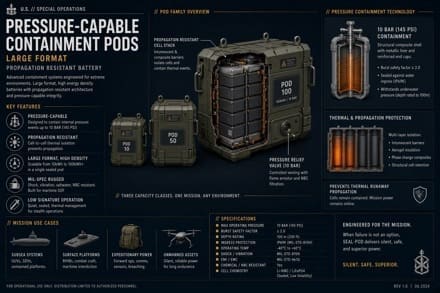
SOFWERX, in collaboration with USSOCOM Program Executive Office Maritime, Undersea (PEO-M-U), will host a virtual Assessment Event on 30 September 2026.

The PEO-M-U Program Office is engaging industry to determine the readiness of the manufacturing base to evaluate, fabricate, provide Objective Quality Evidence (OQE), and deliver an initial quantity of pressure-capable containment pods for the command’s Large Format, Propagation Resistant battery design.

The PEO-M-U develops and supports a family of manned submersibles that support the operation of our Warfighters. These manned submersibles are powered by large-format, propagation-resistant battery systems.  The Battery Systems require a watertight, pressure-resistant,and shock-resistant design to transport and protect the integrity and function of the batteries.

The Government is seeking cost and schedule estimates and technical (primarily manufacturability) review of several designs (to be provided as part of this solicitation).  The objective is to accumulate input from industry and select one or more vendors to manufacture and deliver one or more of the government-provided designs. The vendor will be responsible for reviewing the design(s) for manufacturability, assuming the Government will maintain Design Authority and perform applicable testing of the delivered pods.

U.S. Citizens Only

Submit NLT 08 September 2026 11:59 PM ET. Learn more at events.sofwerx.org/peo-m-battery-bottle.

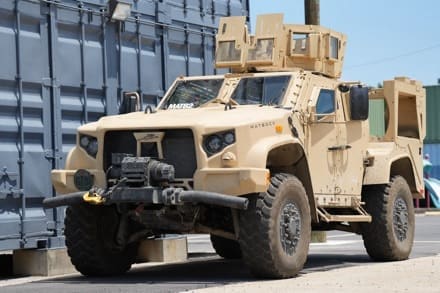
MATBOCK Announces Immediate Availability of JLTV Hybrid-Electric Conversion Kits Following Major Contract Milestone

Monday, August 24th, 2026

Virginia Beach, VA — MATBOCK, an industry leader in bringing paradigm-shifting technologies to the defense market, is proud to announce the immediate availability of its Joint Light Tactical Vehicle (JLTV) Series Hybrid-Electric Powertrain Conversion Kits. This milestone follows the successful development advances made during the $17.3 million Phase 4 contract modification in partnership with the U.S. Army Rapid Capabilities and Critical Technologies Office (RCCTO).



MATBOCK was founded on the principles to bring innovative products to the market, and while most of our products are in the soft-goods space, we have always been on the cutting edge of tech development. That drive has led us to develop some of the most innovative soft-goods, digital direct and indirect weapons sights, a medical device, and most recently, a Series Hybrid-Electric powertrain system. Zach Steinbock initiated this concept nearly 6 years ago, and after multiple iterations, the MATBOCK JLTV HEV conversion kit is officially here.

The journey to full production required adaptability and vision. With less than a year remaining before completing the contract, MATBOCK made a hard strategic pivot to ensure the program remained on schedule and achieved total success by investing in a ground up build of the range extender with a commercial partner. This strategic decision was paramount to mission success, delivering the uncompromising reliability and durability that military customers demand.

“Without a doubt, overcoming the challenges of this project required true resilience from our entire engineering team,” said Zach Steinbock, Co-Founder and President of MATBOCK. “By making a calculated pivot to leverage a commercially proven powerplant for our range extender and countless hours of integration by our engineering teams, we not only kept the program on track but delivered a product that redefines what tactical vehicles can achieve. Providing immense power on the edge directly translates to increased mission capabilities, and we are thrilled to offer this modernization to fleets today.”

Modernizing the Fleet: Plug-and-Play Power on the Edge

The MATBOCK JLTV Conversion Kits are available now as bolt-on upgrades designed to help any customer with JLTVs in their inventory to rapidly modernize their fleet. Designed to Modular Open Systems Approach (MOSA) principles (DoDI 5000.87), the integration is completely reversible, requiring no permanent OEM vehicle modifications. This preserves existing vehicle warranties and fleet commonality while utilizing single-soldier connectors that require no specialized training. Using standard military tool sets, the kit can be installed at the depot or field level in under 24 hours.

Once integrated, it transforms the base platform into a Series Hybrid-Electric Vehicle capable of extraordinary performance:

  • Massive Performance Gains: The kit delivers a 130% improvement in range and a 200% improvement in acceleration, all with zero weight impact to the vehicle’s curb weight.
  • Tactical Stealth: A 125-mile Silent Mobility Range reduces acoustic and thermal signatures by over 80%, enabling extended silent watch and long-range reconnaissance operations without the use of combustion engines.
  • Exportable Power: True to MATBOCK’s promise of “Power and Propulsion on the Edge,” the system acts as a portable microgrid. It provides up to 250 kW of HVDC export power, 42 kW of AC export power, and 17.5 kW of LVDC power, easily supporting directed energy weapons, advanced communications, and off-platform microgrid operations.

The MATBOCK JLTV HEV Conversion Kit is ready to deploy today, ensuring warfighters have the mobility, stealth, and power generation they need to maintain an unfair advantage on the battlefield.

For more information, technical specifications, or to request a quote, please visit matbock.com or contact us at sales@matbock.com.

BC Customs Selected for US Army ISV-H Prototype Agreement

Saturday, August 1st, 2026

Honeyville Utah – July 30th 2026BC Customs (BCC) in association with Raglan, has been selected for the U.S. Army Other Transaction Agreement (OTA) [W912CH-26-9-A061] to build prototypes for the Infantry Squad Vehicle-Heavy (ISV-H). The program has an approved Army Acquisition Objective of 606 platforms and is intended to provide critical operational capabilities, including exportable power to support tactical operations and onboard power to enable mission command while maneuvering.

Army Contracting Command-Detroit Arsenal selected the BCC-Raglan team as one of the participants in the competitive, multi-phase Commercial Solutions Opening [W912CH-26-S-C005]. Under the solicitation, the Government anticipated the award of up to three OTA agreements and/or FAR-based contracts. As part of the agreement, BCC will manufacture and deliver three (3) ISV-H vehicles’ utilizing Raglan electronic control and export power systems for Government evaluation as the competition advances toward a potential follow-on production award.

“BC Customs was built around one simple idea: build vehicles that perform when the mission demands it. Our success has come from understanding the operator, investing in our capabilities, and never compromising on the quality of the vehicle we deliver. We look forward to working with Raglan to deliver the best vehicle solution possible to the Warfighter” said Brandon Johnson, CEO at BC Customs.

Combat Power Solutions – Primary, Alternate, Contingency and Emergency Power Generation Device

Thursday, July 23rd, 2026

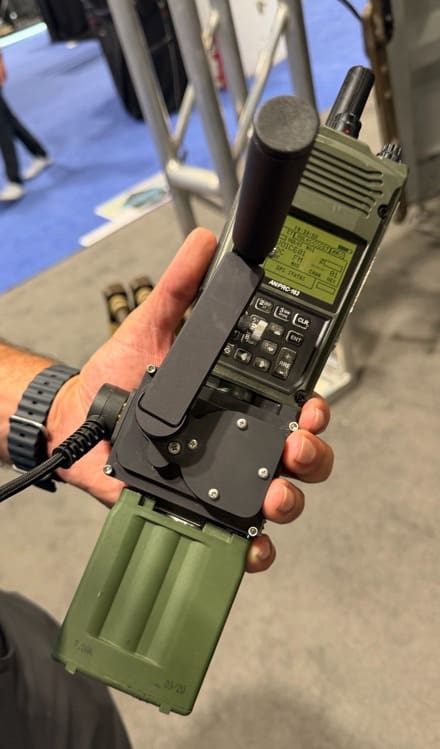
At every trade show I visit I run across a product that I take one look at and get it. During SOF Week it was the Primary, Alternate, Contingency and Emergency Power Generation Device from Combat Power Solutions.

Many of the lessons learned from the war in Ukraine are contested logistics focused, including the need to scavenge power.

Hand-cranked generators for radios were common from World War Two up until the 90s but our battlefield dominance over the last 25 years has allowed us to become complacent regarding power access; we’ve always been able to supply batteries. Those days are over.

Aptly named, PACE fits between the radio and battery on PRC-163, 148, 152, 161, TR-E, SIR, SC-4200, MPU-4, and MPU-5 systems, allowing you to top the battery off with a little muscle power when needed. The design also allows for hot swapping of batteries without disrupting the radio’s load or comms.

This 12V charger weighs 1.09 lbs, is IP67 (waterproof at >10m for 3 hours) and will also accept AC (110–240V), 12VDC vehicle/cigarette adapter, BA-2390/2590/5590, M-PACE Dual Twist Lock, 9–32VDC battery scavenge, and solar power inputs.

combatpowersolutions.com

Nishati Power Technologies (NPT) Awarded US Patent for Hybrid Power Generation Technology

Monday, July 20th, 2026

GILBERT, Ariz., July 15, 2026 — Nishati Power Technologies (NPT), a leader in tactical hybrid power solutions, today announced that the United States Patent and Trademark Office issued U.S. Patent No. 12,671,257, covering its proprietary hybrid power generation technology. The technology addresses two critical problems for powering operations at the tactical edge: it optimizes rapid and efficient charging of large-format lithium batteries from a low state of charge, and it does so with a single control system, consolidating what traditionally required additional bulky equipment.

As Next-Generation Command and Control (NGC2) systems, unmanned platforms, and battery-powered technologies expand, power demand at the small-unit level is increasing rapidly. Many other small generators currently fielded across the military struggle to manage the high inrush current generated during the initial phase of charging depleted large-format lithium batteries – often requiring additional external electronics or causing generators to stall during the charge cycle.

NPT’s patented technology was specifically engineered to solve that challenge.

Integrated directly into NPT’s Outpost™ Hybrid Generators (OHG), the patented technology enables the generators to manage high amp loads during the start of the lithium battery charging cycle without requiring additional external cables or equipment. The result is a scalable, portable hybrid power solution capable of directly charging large-format lithium batteries while reducing equipment burden on the warfighter.

“Our newly patented technology was built around today’s operational reality – warfighters need less equipment, not more,” said Robert Charette, NPT Chief Executive Officer. “As battery-powered capabilities continue to expand across the battlefield, we created a solution that simplifies how units generate and manage power in the field while remaining portable, scalable, and ready to support next-generation systems.”

At just 127 pounds, NPT’s OHG 2000-DC delivers superior power density versus other similar tactical power generation options, in a reliable, expeditionary package.

Designed for plug-and-play integration with existing battery and DC power architectures, NPT’s DC systems provide standalone, exportable hybrid tactical power. This provides reliable power at the point of need without requiring additional heavy transport equipment or turning tactical vehicles into stationary charging stations, preserving maneuverability.

The OHG’s modular, building-block approach enables warfighters to operate systems individually or in parallel, scaling power generation as operational requirements evolve.

“Our team approached this challenge from both an operational and engineering perspective,” said Rick Schilke, NPT Chief Operating Officer. “We understood the growing power demands facing small units and designed a solution that could move with the warfighter, integrate with next-generation systems, and reliably perform in harsh environments – addressing a challenge that has historically been difficult or impossible for generators of similar size and output.”

The patent builds on NPT’s continued momentum in tactical power modernization, including the selection of the OHG 2000-DC as the Lightweight DC Generator (LDCG) under the Marine Corps’ Small Unit Power (SUP) Program of Record and the early completion of Outpost™ Solar Generator 600 (OSG 600) deliveries. Together, they demonstrate NPT’s commitment to delivering reliable, fielded technologies into the hands of our nation’s ground forces.

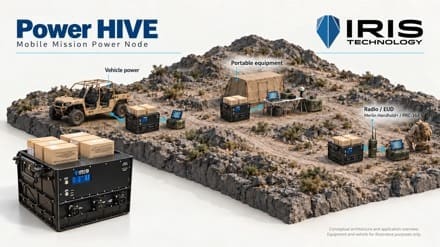
Iris Technology and Ultralife Pair Power HIVE Mission Power Node with High-Capacity UBI-2590 Battery to Address Tactical Edge Energy Demands

Friday, May 15th, 2026

Power HIVE is optimized around Ultralife’s UBI-2590 UBBL13-01 battery while maintaining compatibility with the broader BB-2590 battery family — delivering regulated, field-usable mission power at the tactical edge.

IRVINE, CA, May 6, 2026 — Dismounted and expeditionary teams are being asked to power more from the same limited battery pool. Radios, UAV controllers, counter-UAS systems, sensors, compute, and networking gear are all adding demand at the tactical edge. The problem is no longer just battery capacity. It is how units manage, regulate, recharge, and distribute that energy in the field without adding unnecessary hardware, complexity, or manual power management to already overburdened teams.

THE PARTNERSHIP

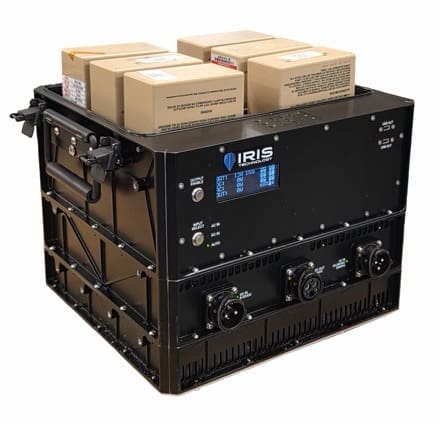
Iris Technology is developing its Power HIVE — Hub for Integrated Versatile Energy — mission power node to help close that gap and is optimizing the platform around Ultralife’s high-capacity UBI-2590 UBBL13-01 battery while maintaining compatibility with the broader BB-2590 battery family.

The pairing is straightforward: Ultralife’s UBI-2590 delivers 288Wh of energy, flexible 15V/30V operation, SMBus communication, rugged military construction, and integrated state-of-charge visibility. Power HIVE extends the operational utility of that battery platform by combining multiple BB-2590 class batteries into a regulated, field-usable mission power node — providing reliable 28V distribution, simultaneous load support and charging, hot-swap capability, and real-time telemetry across the full battery stack.

The result is a BB-2590 class power architecture purpose-built for the distributed equipment demands of the tactical edge.

LEADERSHIP PERSPECTIVES

“Power HIVE is built around a simple idea: the BB-2590 should become more than a battery carried in a box. By optimizing Power HIVE around Ultralife’s high-capacity UBI-2590 while maintaining compatibility with other BB-2590 class batteries, we can give military users a smarter, regulated mission power node using a battery format they already understand and trust.”

Mike Stein, Vice President, Tactical  •  Iris Technology

“Ultralife’s UBI-2590 battery was designed for rugged military applications where energy density, flexible voltage, and reliable battery communication matter. Power HIVE gives us a practical way to show how high-capacity BB-2590 batteries can support broader tactical power architectures.”

Mike Manna, President and CEO, Ultralife Corporation

DEVELOPMENT STATUS & SOF WEEK 2026

The initial effort is focused on customer demonstrations and field feedback around BB-2590 class mission power applications. Prototype units are already in test and evaluation, with additional configurations planned as part of Iris Technology’s broader power management roadmap.

Power HIVE will be on display at SOF Week 2026, Booth 755, as part of Iris Technology’s broader portfolio of tactical power management solutions.

ABOUT IRIS TECHNOLOGY

Iris Technology is a 40-year precision engineering firm delivering mission-critical power, data, and control systems for the U.S. military, SOCOM, and DoD prime contractors. CMMC Level 2 certified and AS9100D registered, Iris Tactical products are fielded across Army, SOF, and NATO programs. From 1W dismounted to 10kW vehicle-mounted, Iris builds the power architecture that keeps missions running when the environment is trying to stop them. Power HIVE is optimized around Ultralife’s UBI-2590 UBBL13-01 battery platform.

Galvion Expands ‘Charge on the Move’ Capability with Vehicle and Dismounted Integration Solutions

Monday, January 19th, 2026

Galvion, a global leader in the design and manufacture of innovative head systems, power and data management solutions, and integrated soldier systems, has expanded its Charge on the Move capability with the introduction of new vehicle-mounted and dismounted integration accessories designed to support real-world operational use. This announcement coincides with SHOT Show, taking place in Las Vegas, 20-23 January 2026, where Galvion is exhibiting the Charge on the Move system alongside their wider product offering on booth #32003.

Building on the field-proven Squad Power Manager™ (SPM), these new accessories transition Charge on the Move from a demonstrated capability into a scalable, mission-ready solution that enables power generation, distribution, and battery charging while on the move—whether mounted in vehicles or carried by dismounted operators. The expanded offering includes a vehicle mounting solution for the SPM, developed in collaboration with Juggernaut.Case™, and a Mobile Power Pack, created with Haley Strategic™, providing a fully integrated, modular option for dismounted power and radio management.

The SPM Vehicle Mount securely installs the Squad Power Manager across a wide range of vehicle platforms, supporting rapid installation, clean cable routing, vibration protection, and tool-free removal for dismounted operations. Designed to accommodate varied vehicle interiors and mission needs, the mount offers multiple attachment options, allowing units to position the SPM where it is most accessible. Tested to relevant MIL-STD environmental requirements, the mount supports reliable power access while vehicles are in motion, allowing soldiers to arrive at the point of dismount with charged batteries and powered equipment.

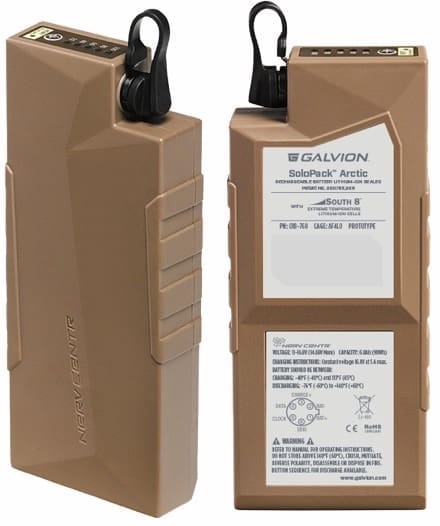
Complementing the vehicle configuration, the Mobile Power Pack offers a complete, ready-to- deploy backpack-based solution designed to carry the SPM, SoloPack™ batteries, radios, cabling, and associated accessories in a single optimized loadout. Developed with Haley Strategic, the pack integrates modular organization panels, cable routing, and ergonomic load distribution to support communications-heavy roles and extended operations

Todd Stirtzinger, CEO at Galvion, said: “Charge on the Move was always envisioned as more than a single configuration—it’s about giving units flexible options to manage power across platforms and phases of a mission. These integrations reflect how operators actually work, and how partners can help accelerate deployable capability rather than one-off prototypes.” He added: “By working with established industry partners, Galvion continues to expand our power and data ecosystem beyond standalone hardware, offering validated configurations that can be adopted as accessories or tailored into program-specific kits.”

The Charge on the Move vehicle mount and mobile pack are available as accessories for existing Squad Power Manager systems and can be incorporated into customized power and communications kits based on mission and user requirements.