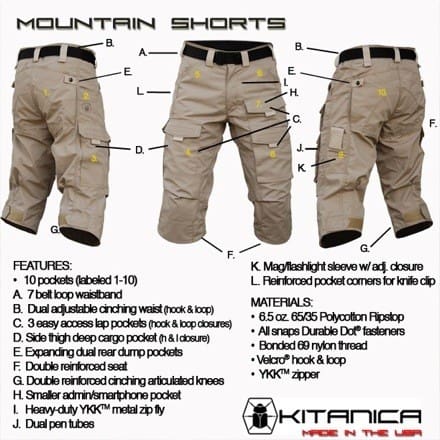
Get your Mountain Shorts while they last. Black or Khaki, even sizes 32 – 42.


Get your Mountain Shorts while they last. Black or Khaki, even sizes 32 – 42.
Hypothermia can kill just as effectively as heat-stroke, so it is very important to choose the right clothing and know how to use it effectively in any climate in order to make sure you keep your body temperature at the optimum 99.5°F which it prefers.
Most fatalities from hypothermia which are afterwards recovered by mountain rescue teams are found with spare warm clothing in their backpack, which if they had bothered to get it out & wear it could have saved their lives, so it is not just a question of having the best kit, but of knowing how and when to use it. In a series on this subject, David Leaning will first explore the outer layers and how to keep dry.
The first thing that will make a difference in the cold is being wet, this will suck the energy right out of you and in cold weather this is potentially very dangerous. Insulating layers become less efficient when they are wet, not to mention heavier, so part of every outdoor wardrobe should be a decent waterproof outer-shell.
The second purpose that an outer layer should fulfill is as a windproof; even with several insulating layers, a cold wind can suck the body-heat right out of you, forcing you to burn valuable calories to replace it. Gore-tex™ fulfills this role well, however in very cold temperatures it becomes less breathable – meaning that you can find a layer of frost on the inside when you take it off.
I know that there are some great new materials out there and that water resistant soft-shell tops are quite popular but I have always been of the opinion that a waterproof top and an insulating layer should be kept separate –perhaps it’s old fashioned but I’d rather have one, thin waterproof layer that I can take on and off as the conditions demand and then have subsequent insulating layers beneath that can also be removed if it gets warmer – rather than the 2-in-1 approach provided by waterproof soft-shell garments.
For a waterproof top I think that Gore-tex™ has to set the standard, I have tried others but always come back to it. Pac-lite™ is also an excellent derivative of Gore-tex™ and I have always gone for the lightest kit that will do the job – however when choosing a waterproof top you have to make sure that it has a few essential features: Principal amongst these is a hood, try a few jackets on, do the hood all the way up and adjust it with the elasticated internal drawstrings to see how it fits – what your field of vision is like and how effective it will be at keeping out driven rain or snow – then try rotating your head from side to side, up and down and see whether your head turns inside it or if it turns with your head – this is a good indication of a well-designed hood. Try a couple of different designs to see what you like best and get a comparison. While hoods are great in a non-tactical environment they do diminish the hearing and vision of the wearer, an important consideration when on patrol or sentry.
The arms of an outer jacket must be long enough so that there is no gap between a glove and the sleeve when they are held out at any angle – when trying on a jacket, bring a pair of gloves and try reaching for the ceiling, stretching your arms out in front, touching your toes etc. To see if you can create a gap into which wind, driven snow or cold air could be forced – if there is any gap then try a larger size or a different cut. This is really important as without a good seal you can get frostbite on your wrists in the cold, or the blood can become cooled on its way to the finger tips and contribute to frostbite there.
Every waterproof top should have and elasticated draw-string at the waist. This is very important to keep the warm air inside, without this you can get cold spots on your kidneys & waist. The cut of the jacket should be such that its hem does not rise above your waistline even when you raise your arms to touch the ceiling. Likewise it should not be so low as to come down to reach your knees or restrict your leg movements. However with a drawstring at the waist a jacket which is too long can be bloused up under itself, but one that is too short will always be too short.
A nice-to-have feature is the under-arm vents that some models have, these allow you to regulate your temperature by opening and closing them as required, to provide ventilation. Some jackets have lots of pockets inside and outside, or a mesh layer inside the Gore-tex™ for insulation or sweat wicking or whatever. I prefer the lightest and simplest design there is, with just two hip pockets to keep hands warm when stationary and maybe one chest pocket for a compass or something. When you’re not wearing your outer-layer you want to be able to stow it away as small and light as possible, hence why I love the Pac-lite™ models. Velcro cuffs are recommended – just make sure that they do-up OK over your wrist size, another nice feature is a panel of soft material on the inside of the collar so that your chin doesn’t touch a cold metal zip – or freeze to it.
Finally, every waterproof jacket should have a Velcro storm flap which covers the zips, this helps prevent ingress from water and driven snow. Believe it or not I was once in a blizzard so violent that afterwards I found several zipped pockets full of fine snow – the wind had driven it in between the teeth of the zip.
Waterproof trousers are not worn so often, however if you are going somewhere that may become cold and wet then it is recommended that you take a pair. Features like an elasticated waist and zips up the sides are desirable. Zips up the sides can be full-length or half-length so that they run only from the ankle to the knee – this feature is designed to make it easier to put them on without taking boots off – often a discouraging factor which leads people to get unnecessarily wet because they can’t be bothered to do this.
For the head and hands there are options available, many outdoor brands have caps to protect the head and ears which are made from breathable fabric and fleece lined – all well and good, but I am a die-hard fan of wool, so in the cold and wet the only thing you will find on my head is a wool-knit beanie, under a hood. In the cold a hood is far more effective than the warmest headwear or balaclava as it channels the warm air that escapes from your collar, up and over your head, re-using that energy to keep you warm – sort of like a turbocharger for a combustion engine.
For gloves there are some very effective breathable Gore-tex™ options out there and everyone going somewhere that could become cold and wet should have a pair of decent hand protection (several pairs if it’s the Arctic) – but before you go and spend $400 on the latest and greatest offering that has been made using laser-cut unicorn hide and insulated with dodo feathers – remember that its far easier and cheaper just to put your hands in your pockets, and just this once the military should let you get away with it (SNCOs please take note).
If you’re going somewhere that is really wet or where there is deep snow then part of the outer layer should be a pair of gaiters – I know they look nerdy, but so’s the limp you could end up with if you get frostbitten toes from wet socks. There are two different types of gaiter: Those that attach to the ankle of your boot, and those that have a thick rubber rand which stretches around the sole of the boot. The choice depends on how much jumping in and out of bogs or snow drifts you want to do. Obviously the all-enveloping full gaiter is for heavy-duty use whereas the tighter & lighter ankle length type would be more than adequate for normal walking use. Both sorts should have a zip up the front, a Velcro storm flap to cover it and an elasticated draw string at the top.
This sounds obvious but I still see plenty of people doing it; when it rains then make sure your g-tex trousers go over your gaiters – otherwise the water will just run-off them and down the inside to your feet.
And if anyone in outdoor R&D happens to read this I’m still waiting for what I would regard as the holy grail of skiing footwear to be designed; the cross-country ski boot which has a built-in non-breathable gaiter. And if they happened to need someone to test it on an expenses-paid trip to the Swedish mountains around about late March then I could just be persuaded.
So – please take what you have read here, incorporate it into your own experience and hopefully it will help you to make the best choices for your own outer-layers. This has been written as a generic article for all theaters – some principles apply to both hot & cold, but if I’d been writing about cold climates or hot climates then I would have been far more specific about the choices I’d have made there. Don’t regard anything I’ve written here as gospel or definitive, everyone has different systems that work for them and what works for me might not work for you. However there is one constant that applies to everyone – water is wet and wind blows, so bear that in mind when making your choices.
Stay safe – and if you can’t do that then stay warm & dry.
Dave
David Leaning is a consultant for Magnetic North Travel a tour operator which specializes in trips to show you Scandinavia at its best, including experiences to see the northern lights and find out what it feels like to drive a team of sled dogs for a week in the Arctic.
David has walked across Australia, (2,300 km) and skied the length of Norway (2,600 km) on solo expeditions, in 2001 led a team to ski across the Arctic island of Svalbard (600 km). His experience includes several years’ service with the Royal Marines Commandos including deployments to jungles, deserts and the Arctic.
To learn more about Magnetic North Travel and the trips they offer check out their page on Facebook or follow them on Twitter.
The Tropical Combat Uniform or as more popularly known, the Jungle Fatigue is the greatest uniform ever fielded by the US Army. The cut of the uniform was derived from the 1942 Parachutist Uniform with its angled chest and lower cargo pockets on the coat paired with seven pocket trousers. The OG-107 color blended well into the environment of Southeast Asia and the combination of light and shadow on the olive base of the uniform as the Soldier moved through vegetated areas provided good camouflage. Additionally, the jungle fatigue was made from one of two very comfortable cotton fabrics. Maybe not great for cold-wet environments but well suited to jungle and desert environ. Finally, they were inexpensive. As late as the mid-80s you could till purchase the uniform for around $8 a set at Clothing Sales Stores that still carried them. At that price, they were practically disposable but everyone who wore them wanted to hold onto them as long as possible.
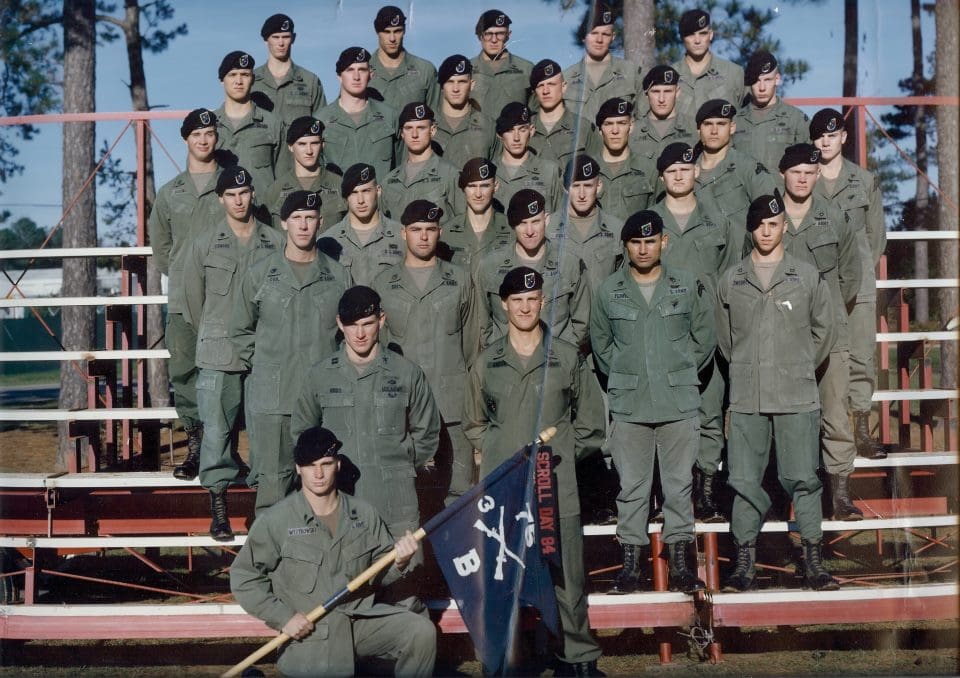
We honor that uniform and some great Americans wearing it in this first official photo of 1st Platoon, B Company, 3rd Battalion, 75th Ranger Regiment, taken in 1984. Taken from the 75th Ranger Regiment Facebook Page.
What’s your favorite uniform?
I attended the HSP Winter Problem Solver course in Telluride, Colorado from March 31st through April 4th. This was my first time attending a mountaineering/survival course.
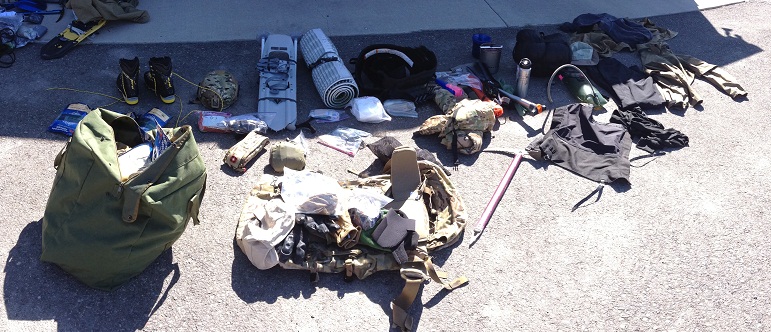
Like any course, the Winter Problem Solver had its required equipment list:
-Winter appropriate clothing
-Winter hiking boots
-Cold weather hat, shade hat with brim
-Practical knife or multitool
-Sun screen
-Sun eye pro
-Water hydrating device
-Individual first aid/trauma kit or IFAK
-Quality headlamp + batteries
-Snowshoes
-Retractable ski poles
-Quality lightweight sleeping bag rated to 0*F
-Lightweight durable air mattress
-2 aluminum climbing rated locking carabiners
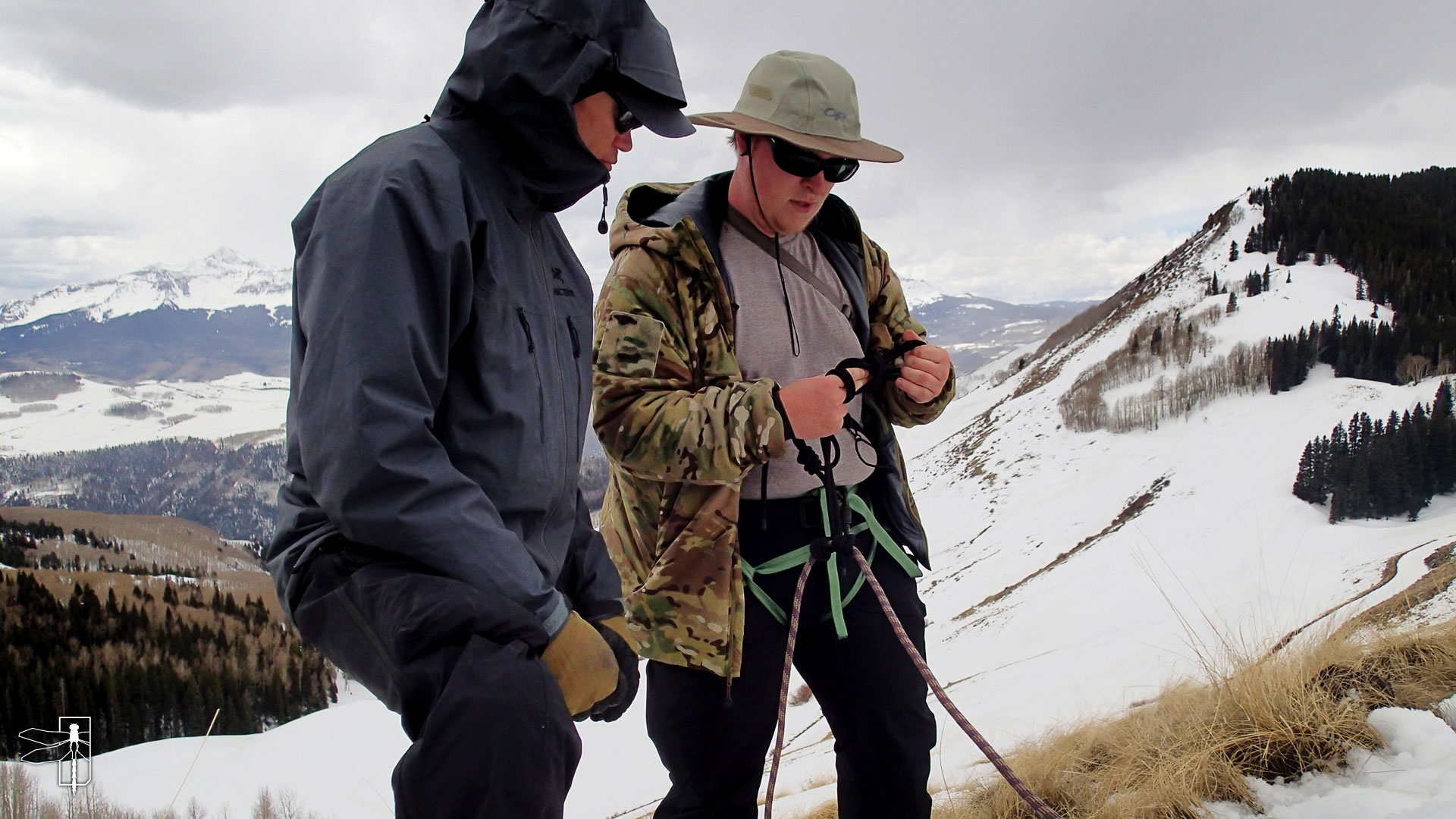
To meet these requirements, the entire time I wore the Helly Hansen Dry Fly Pant, Arc’teryx LEAF Combat Pants, and an Arc’teryx Envoy SS shirt; the socks I used were the Darn Tough Vermont Extreme Cold Weather/Mountaineering Sock. The weather, surprisingly, wasn’t that cold with some days reaching highs up to the mid 50s. The addition of an extra layer or two, mostly a Crye Precision WindLiner and/or an Arc’teryx Atom SV Hoodie in MultiCam, proved more than enough clothing wise. The boots I wore were the Salewa Pro Guide Insulated Mountaineering boot, which I supplemented with a pair of OR Crocodile gaiters. Throughout the course, I wore an OR Seattle Sombrero because of its waterproof properties in addition to the wide brim which kept the sunlight out of my eyes, although I did have several other options for head covers, including an Outdoor Research Radiant Beanie, Outdoor Research Novo Watch Cap, Under Armor ColdGear Tactical Hood, The North Face Windstopper High Point Hat, and a black neoprene half-face mask. I also carried a pair of OR PS150 gloves and a pair of Arc’teryx Alpha SV gloves.
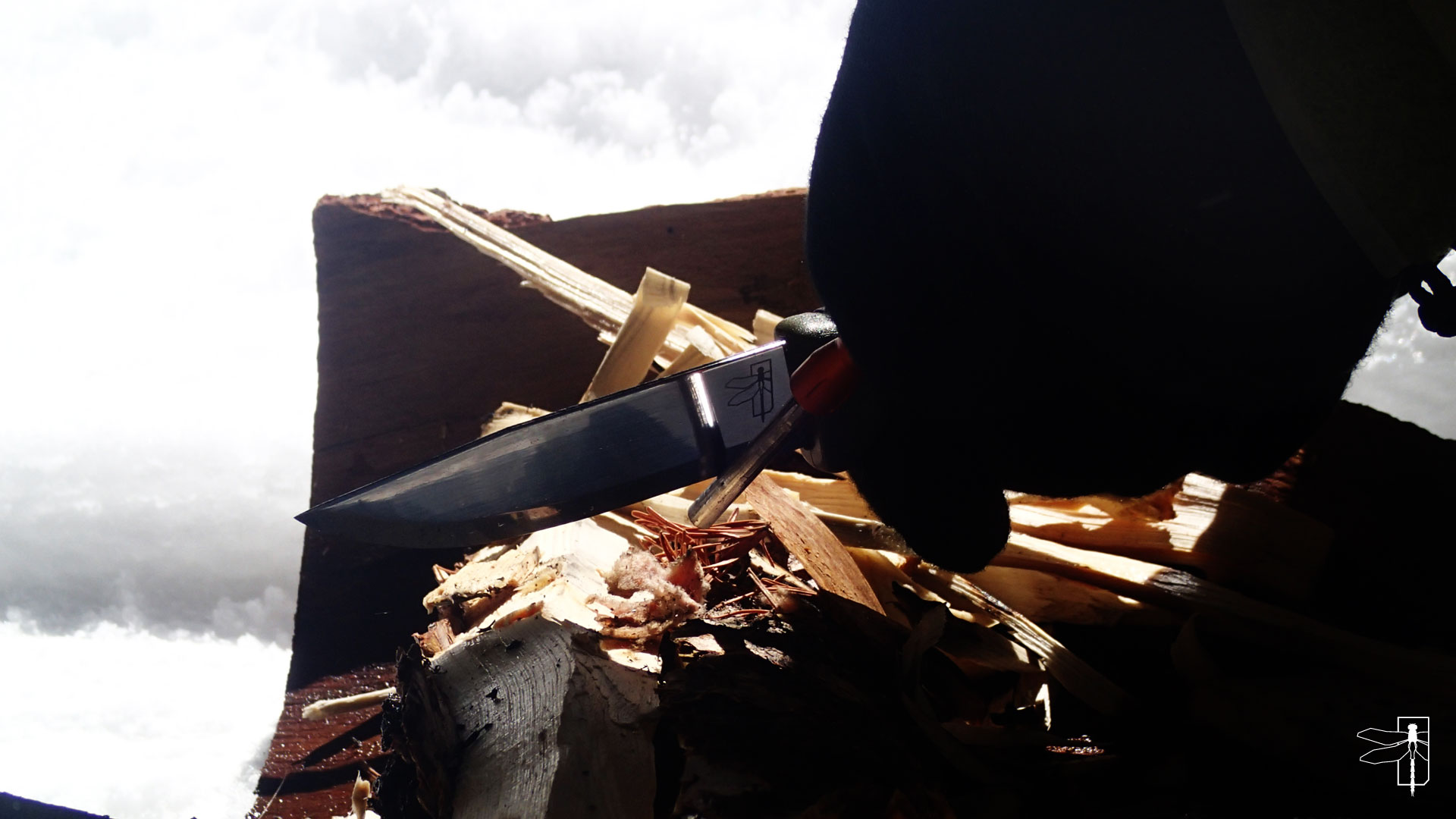
Each member of the class was issued an HSP-branded Mora knife and Klean Kanteen before going out in the field, so although I brought my own knife, multitool, and hydration bladder, these items were ultimately unused and only added weight to my pack. We were issued, if needed, a climbing harness, helmet, shovel*, and ice axe. Mountain meals, rope and tubular nylon, beacons*, probes*, and other class materials were also provided by HSP. I had my own cooking stove, an MSR Reactor, and helmet, a Team Wendy Exfil Tactical Bump Helmet. My snowshoes and poles were both MSR Denali. The sleeping bag was a The North Face 0 degree Dark Star which I used with an REI Minimalist bivy sack. I paired this with a Therm-a-Rest RidgeRest SOLite; being a closed-cell foam pad, it didn’t suffer from deflation or potential puncture damage like an inflatable pad would. I also brought sunscreen, two carabiners, a Tikka 2 headlamp, an ITS Tallboy trauma kit and pouch, and a pair of Smith Cascade Classic Snow Goggles in addition to my personal sunglasses; I ended up not needing the goggles.
One thing that wasn’t mentioned on the list but ended up being required was a pair of camp shoes, slippers or other lightweight shoes for moving around a cabin. I just used my socks and changed out to a new pair just before sleeping, although this isn’t suggested. Other miscellaneous items I brought that weren’t on the list included a fire starting kit, snacks, a GSI Fairshare Mug, and toilet paper.
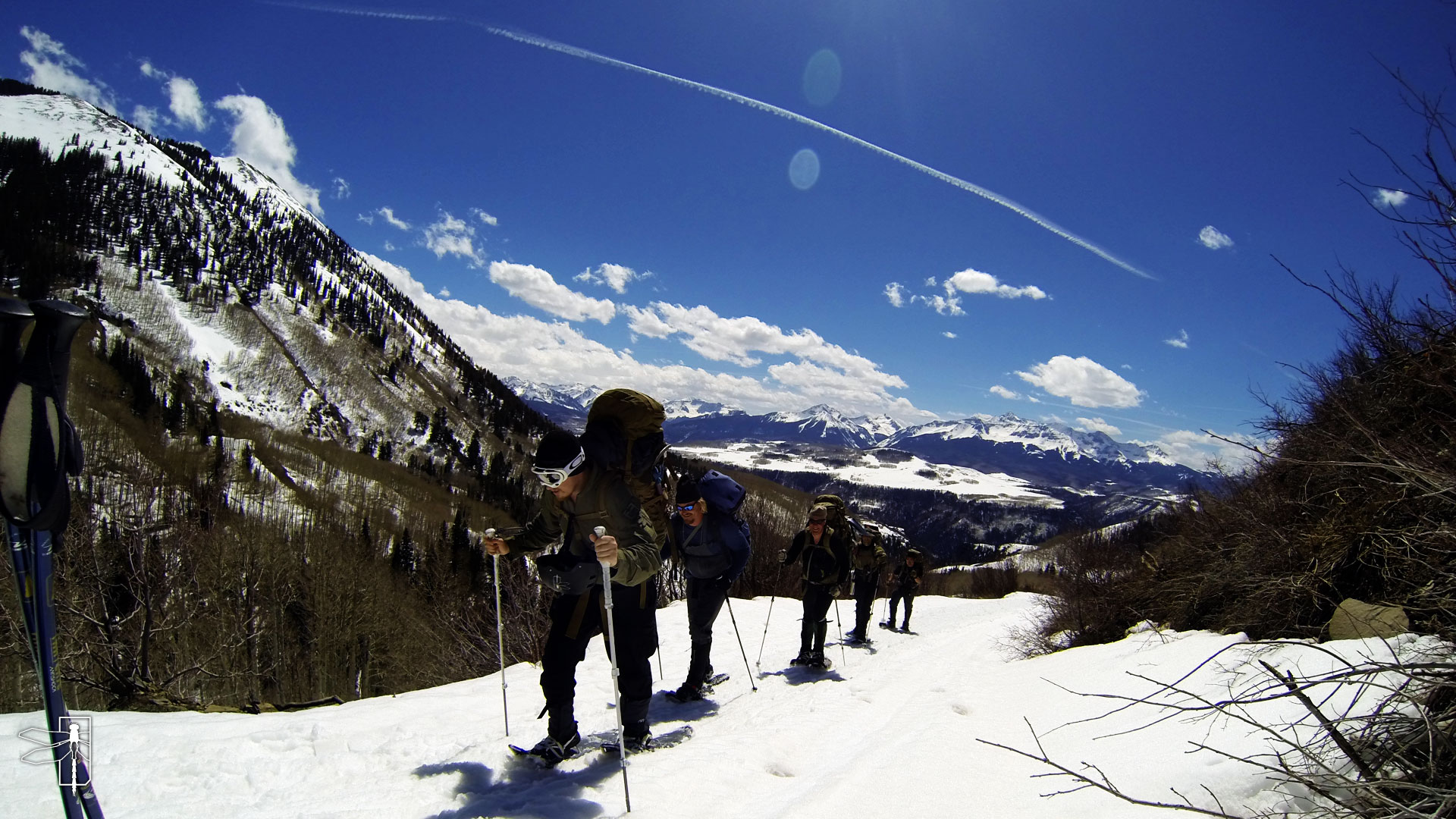
All together, my fully-loaded pack, an Arc’teryx Khyber 80 in MultiCam, weighed in at just under 50 lbs, quite a bit heavier than what would be suggested. Unnecessary items included the aforementioned knife, multitool, hydration bladder, and goggles, along with additional hard shell layers, heavyweight base layer, trauma kit w/ pouch, and (arguably) my sleeping pad. Ultimately, given the planned environment, it was better to have these items and not need them than suffer without.
It’s also worth mentioning that I didn’t feel at all under prepared with the equipment I brought with me. I did, however, manage to snap my Light My Fire Spork Extra-Medium in half while I was cleaning it; going in with an extra spork, or possibly one made of metal would have been a solid decision.
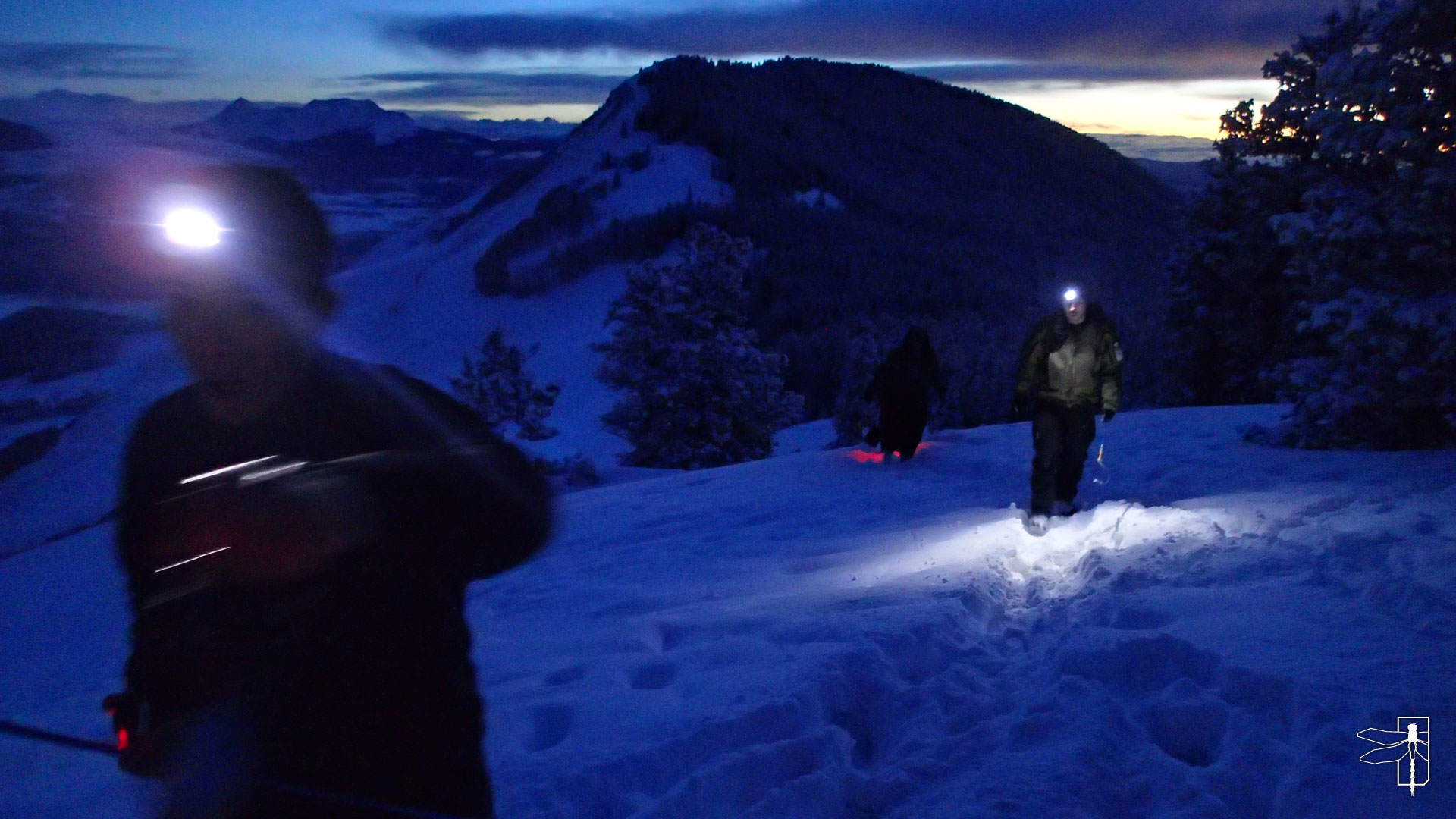
*The beacons, probes, and shovels were graciously provided by Backcountry Access.
Stay tuned for more information on the HSP Winter Problem Solver, including a full report on the course proper.
This article was originally posted on Tactical Fanboy.

That’s right, IA is offering a 1″ Lightweight Combat Belt that incorporates a Austrialpin Cobra buckle for the low, low price of £19.80!! According to IS, these are made in Gloucestershire from full military specification materials in MultiCam, Black, Foliage Green, Olive Drab Green and Coyote Tan.
www.body-armour-protection.co.uk
The Tactical Duty Kilt started out as an April Fool’s prank last year perpetrated by 5.11 Tactical. What they didn’t expect was that were was actually a demand for a MultiCam kilt so they opened the product for ordering and manufactured a limited run.
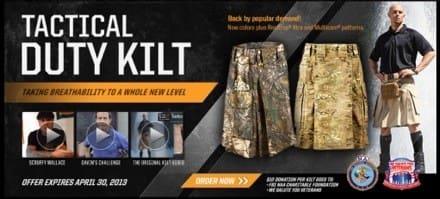
A year has come and gone and just based on email we have received there seems to be a multitude of those who missed out on last year’s run of kilts. Now, 5.11 Tactical has heard your pleas and is once again offering the TDK for order until 30 April, 2013.
In addition to getting a kilt, $10 of every Tactical Kilt purchased will be donated to The FBINAA Charitable Foundation and We Salute You Veterans.
Available in even waist sizes 28-54 in a multitude of colors and camouflage patterns.
www.511tactical.com/All-Products/Shorts/Tactical-Shorts/Tactical-Duty-Kilt
This is Drifire’s Combat Hoodie, a component of their Ardennes Cold Weather System. I tried one on during last week’s Darley Defense GRF Expo in Fayetteville and I didn’t want to give it back.

The Combat Hoodie can be worn in conjunction with other layers as well as next-to-skin and features mechanical stretch as well as integrated cuffs with thumb loops. Additionally, the four-piece hood offers a cross-over front and an innovative built-in balaclava/neck gaiter with tuck away option. The fabrics used are top notch. The drirelease technology dries four times faster than cotton and controls odor causing bacteria. And to top it off, it’s not just comfortable, the Combat Hoodie is also FR. The Combat Hoodie is paired with their Lightweight Fleece Pants as Layer 3 in their Ardennes Cold Weather System.