Colt

Archive for the ‘History’ Category

Operations Red Wings Through The Eyes Of Lalo

Thursday, March 27th, 2014

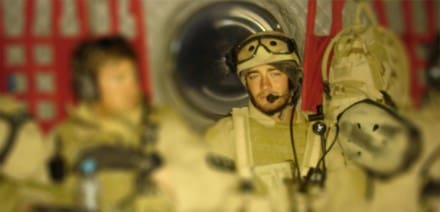
Navy SEAL Nathanael Roberti, AKA “Lalo,” graduated BUD/S Class 247 at Coronado, attended SQT (SEAL Qualified Training) and Army Airborne School and was then assigned to SEAL Team 10 in Little Creek, Virginia. Since leaving active service he’s held a few jobs but his work on the new Lalo Tactical footwear line is quite interesting.

He participated in Operation Red Wings and this is his recollection, and only his, of events that occurred starting on June 28th, 2005 and the days that followed.
lalo-story-01-01

FEBRUARY 15TH, 2014
Each one of us has moments in life that define who we are, helps shape our existence, and in most cases, gives us a purpose in life.

I have amazing parents. They supported my three brothers and I in whatever we chose to do. They instilled strong values in us and still guide us to this day. Two of us decided to enter the Navy, specifically going into the Special Warfare group after completing SEAL preparatory training. I was 18 years old at the
time.

By the time I was 20, the United States was involved in a war in Iraq and Afghanistan, I had graduated BUD/s Class 247 and was completing my last phase of Seal Qualified Training – SQT. When we were given the opportunity to deploy, about twenty of us volunteered to join the fight.

SEAL Team 10 became my new family of brothers, and little did I know at the time my assignment to Team 10 and the relationship with my teammates would shape the rest of my life. My experiences give me motivation every day to honor my fallen brothers, to live a life they would be proud of seeing me live.

I am a 30-year old Combat Veteran.
I suffer from combat PTSD.
I am beating it, everyday.

This brings me to Operation Red Wings. It is only in the last few months that I have been able to tell my version of this mission to kill or capture Ahmad Shah and my role within the Quick Reaction Force.

This is my recollection, and only mine, of events that occurred starting on June 28th, 2005 and the days that followed. I was 21 at the time. I was young, tough, and a warrior. I tell this story respecting the families of my fallen brothers.
lalo-story-01-02

JUNE 28, 2005 · MORNING
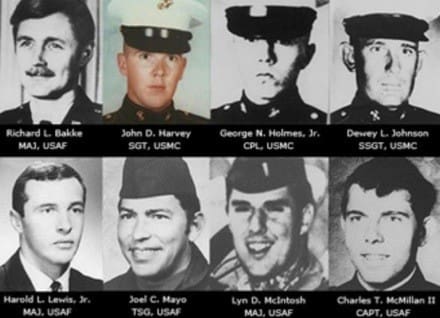
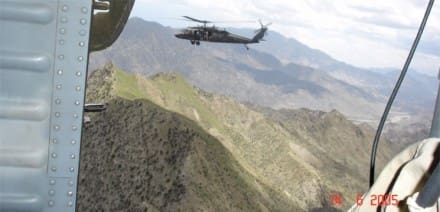
Camp Ouellette – Mike Murphy has made contact with the TOC (Tactical Operations Command), at Bagram Airbase, where he has requested assistance and immediate support for his team, which includes Matt Axelson, Danny Dietz and Marcus Luttrell.

I woke up the morning of June 28, 2005 with my game face on. I knew we had boys out in the field and we were slated to assault the target and capture or kill Ahmad Shah, the leader of the guerilla group, “Mountain Tigers.” Shah was a terrorist who aligned himself with the Taliban.

I remember our LPO (Lead Petty Officer), JT coming into the birthing[sic] area, where we slept and saying, “Get it on boys – our guys are in contact. Be ready in 30 min.” He then walked over to me and said, “Brady, you’re humping pig.” The boys called me Brady. I guess they thought I had a certain likeness to Greg in “The Brady Bunch.” People still call me Brady.

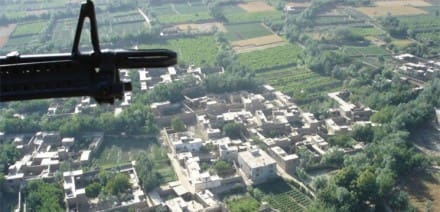
The “pig” is the MK-48; a 25lb belt-fed automatic weapon, the heaviest weapon we SEALs carry on foot. We had 30 minutes from the time we got the call to be on the truck at Steel Beach, the landing pad for the helicopters. We all got kitted up and the boys and I hopped on the flatbed on our way to the chopper.

Right then and there, my friend and comrade “Super Seal,” said he knew something was going down. As I looked around at the troops, I noticed everyone was eerily quiet. This was unusual because our platoon was known for being somewhat cocky, yet squared away. The general consensus among us was that we were about to get into some serious shit.

Super Seal approached the priest on base, which was odd because he wasn’t religious and had never spoken to the priest before. He told Father that he had done many bad things in his life and it had been a long time since he had been to confession, but that he’d like to confess his sins. I remember looking at him, looking at the ground, and thinking, “Oh, shit. This is not good.”

We loaded up and as we headed out, Father splashed holy water on the trucks, blessing the platoon and our mission. I knew this was one of those moments in life where I would need to soak up as much of what was going on around me as possible because I might not live through it.

To be continued….
lalo-story-01-03

To read the rest of his serialized account visit lalotactical.com/lalo-orw-story-1

Tactical-Life.com – Operation Red Wings Tribute

Thursday, March 27th, 2014

Operation-Red-Wings-_-Navy-SEALs-Army-Special-Forces-2

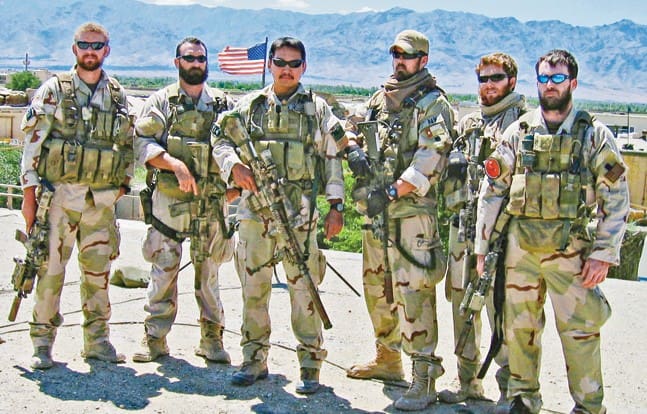
This week’s post from Tactical-life.com is a tribute to the SEALs and Army Special Forces who fought in the mountains of Afghanistan during Operation Red Wings.

For the full story, visit www.tactical-life.com/magazines/tactical-weapons/operation-red-wings-navy-seals-army-special-forces.

Historical List of Operational Parachute Jumps

Tuesday, March 18th, 2014

Although there are a few missing, the History of Operational Parachute Jumps hosted by the Special Forces Association is a great read. Its international scope goes back to 1939 and is updated with many of the most recent jumps. The list not only categorizes the date, location and type of airborne operation but also mentions the forces involved.

20140317-210936.jpg

(Click on image to view PDF)

Ever Hear of the Trojan Parachute Club?

Saturday, March 15th, 2014

LAV, who is a former 10th Group guy, sent this “History of the 10th SFG(A) HALO and ODA-8” to me and seeing how I am a huge history buff, I thought I’d share it with all of you.

History of the 10th SFGA HALO and ODA-8

(Click image to read PDF)

AG? What’s That?

Tuesday, February 25th, 2014

This photo is for those Big Green guys who’ve never heard of an Assistant Gunner. Apparently, the Rangers have figured it out.

The guy on the left is called an AG

Rangers from the 2nd Battalion, 75th Ranger Regiment lay suppressive fire during a live fire exercise at Fort Hunter Liggett, CA Jan. 31, 2014. (U.S. Army photo by Staff Sgt. Steve Cortez/ Released)

THE Rifle

Monday, February 24th, 2014

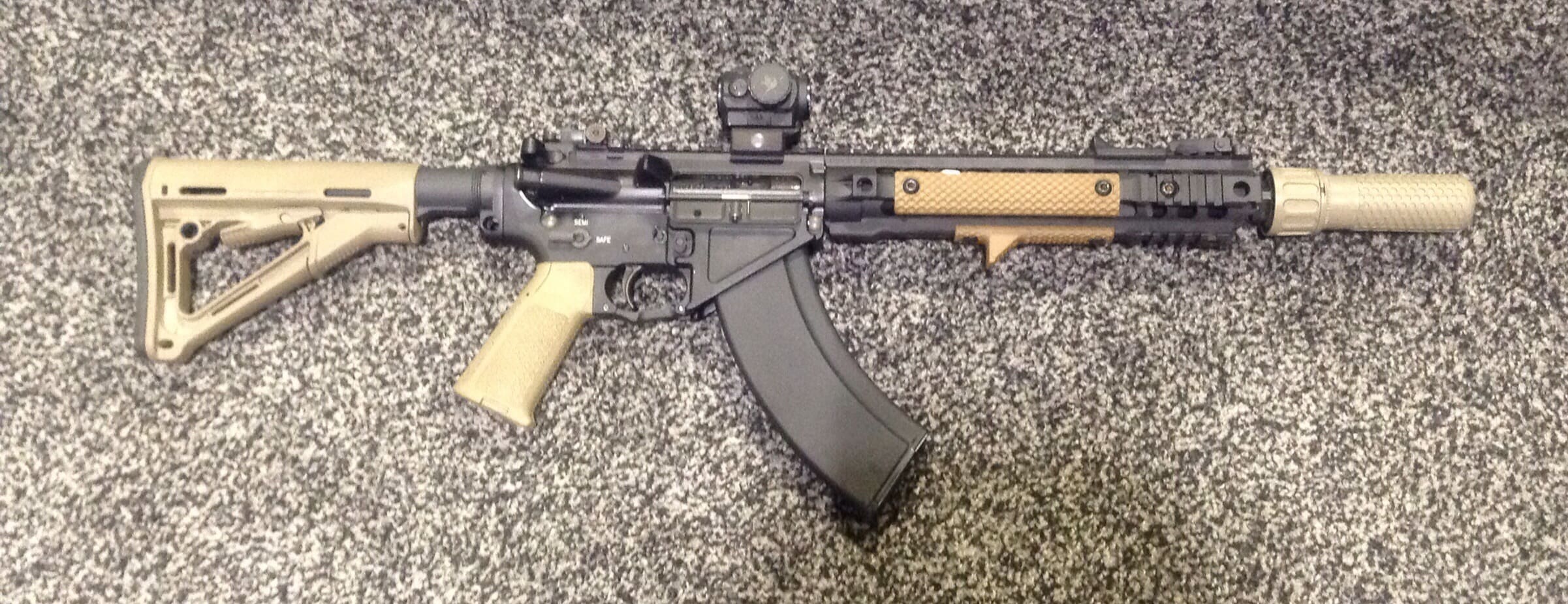
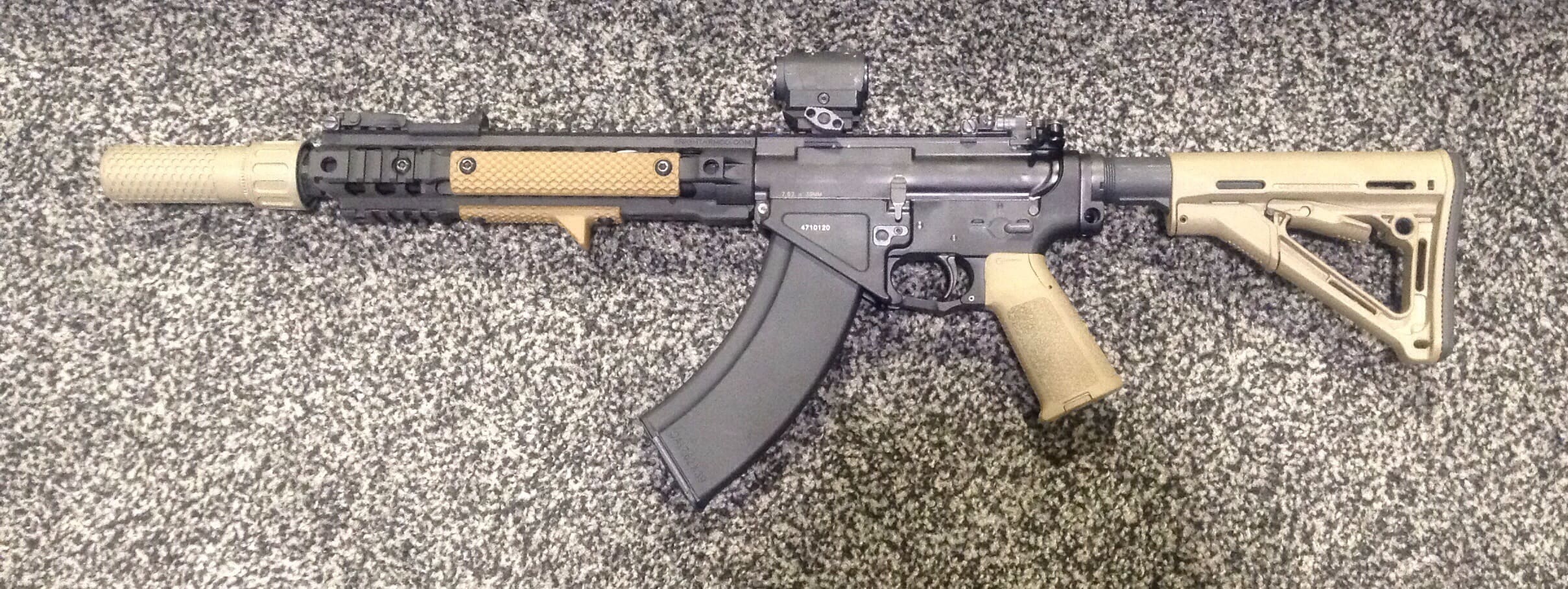
This may well be the most significant individual weapon in US Small Arms History.

THE Rifle

While THE rifle no longer exists exactly as it did on that day on that target, more of it is present in this photograph than anywhere else. You’re looking at history here ladies and gentlemen. Thanks to LAV for sharing it with us.

Dale Comstock Introduces Ranger Hall of Fame Member Gary O’Neill

Wednesday, February 19th, 2014

American Badass” author and US Army SOF Veteran Dale Comstock (MSG, USA Ret) introduces Gary O’Neil (CWO4, USA Ret), Ranger Hall of Fame member. Gary O’Neil is an author himself having penned “American Warrior“. Both books are worth picking up.

HASC Releases Interim Report on Benghazi

Friday, February 14th, 2014

I’ve essentially remained quiet on the events that transpired on Banghazi, Libya on September 11th, 2012. This is based on two issues. First, very soon after the event, I was privy to information that has just recently come to light. Second, I didn’t have all of the information regarding this tragedy and I still don’t. On one hand, I didn’t want to disclose who may or may not have been on the battlespace that night and on the other, there’s nothing that will make you look more like a fool than making declarative statements about situations you don’t have the facts on. However, I now have the House Armed Services Committee report entitled, “Majority Interim Report: Benghazi Investigation Update.” I’d say that’s a good point to start talking, armed with, you know, “facts”. Having said that, two caveats with this report. From the summary, “This report should be considered one component of continuing comprehensive Benghazi-related oversight underway in the U.S. House of Representatives. In keeping with the committee’s jurisdiction, however, this document addresses only the activities and actions of personnel in DOD.” By no means is the info the final word, but it does begin to allow us to peer deeper into what happened from DoD’s perspective.

It was a sad day for America and we lost some great folks. Many want to lay blame, but blame isn’t going to bring those men back. Generally, it isn’t one thing that goes wrong, but a whole chain of events with several issues coalescing into disaster. As far as I can tell, I’m the only guy who wants to take a serious look at what happened, for the sake of making sure it doesn’t happen again. It seems that everyone else talking about this has some agenda.

Since that day, the event has been politicized and I have watched countless armchair generals talk about things they don’t understand; Internet experts fueled by propaganda and spin doctors. I hate to lay it on most of you, but your sister-in-law’s nephew’s best friend who is a Spec-4 truck driver stationed at Fort Polk is not an authoritative source on US force projection. I could spend hours and hours talking about the subject but sufficed to say, when attempting to project force to the location of Benghazi, Libya, the United States is a victim of the tyranny of distance. You’ll see this issue come up over and over in this report. What’s more, while it does happen on a case-by-case basis, QRFs do not sit on strip alert just waiting for a crisis, despite what you might see in the movies. Even if they had, they would have been quite some distance from Benghazi (see ‘tyranny of distance’), as you will see in the report. You’ll read about three different groups dispatched to the region in the wake of the attacks and some of the challenges they faced to get there. Additionally, we don’t commit forces to ‘suicide’ missions and rarely, if ever attempt forced entry without a clear operational picture of the situation. As you will find in the report, this was not the case. DoD did not enjoy a clear operational picture. This hindered the military’s ability to respond.

Despite this, they did take action. Several, in fact.

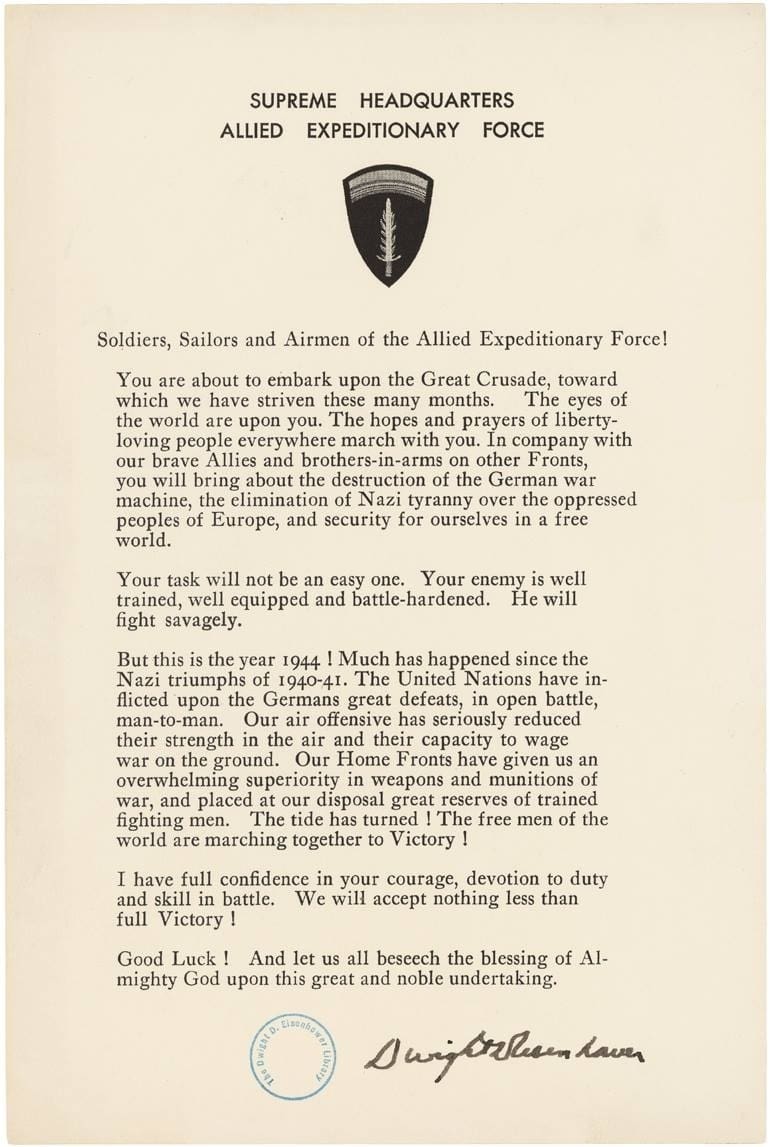
The first step DOD took upon learning of the attack involved a U.S. drone that was overflying Darnah, a city in northeastern Libya. AFRICOM’s operations officer immediately redirected the unarmed Predator to Benghazi, which was about an hour’s flight time away. Separately, following the meeting in the White House, Secretary Panetta (in consultation with General Ham, General Dempsey, and others) verbally authorized three specific actions. First, two Marine FAST platoons in Rota, Spain were ordered to prepare to deploy; one bound for Benghazi and one destined for Tripoli. Second, a special operations unit assigned to the European Command, known as a Commander’s In-Extremis Force (CIF), which was training in Croatia was ordered to move to a U.S. Naval Air Station in Sigonella, Italy and await further instructions. Third, a special operations unit in the United States was also dispatched to the region. These orders were issued approximately two to four hours after the initial attack on the Special Mission Compound.

Of particular interest to me is that there is no indication of a cabal within DoD set to destroy America from within or a decision by senior leaders to ‘let Americans die’. Rather, we see the same problems we constantly face; the fog of war and interagency stovepipes. We may have gone a long way to mitigate those issues within the CENTCOM AOR but in the other theaters they remain.

The findings are the most significant issue at hand. While not exhaustive, and omitting certain operational factors such as the units of assignment for those personnel actually on the ground, it is clear about DoD issues at hand that day and during the immediate aftermath. It also indicates which issues are the responsibility of both State and the White House. In fact, it discusses State’s request to reduce the Tripoli-based DoD Security Support Team from 16 to 4. However, please remember that Tripoli is over 600 miles by land from Benghazi (see tyranny of distance). It remains unclear if a larger force would have changed the outcome of the attack.

Findings

I. In assessing military posture in anticipation of the September 11 anniversary, White House officials failed to comprehend or ignored the dramatically deteriorating security situation in Libya and the growing threat to U.S. interests in the region. Official public statements seem to have exaggerated the extent and rigor of the security assessment conducted at the time.

II. U.S. personnel in Benghazi were woefully vulnerable in September 2012 because
a.) the administration did not direct a change in military force posture,
b.) there was no intelligence of a specific “imminent” threat in Libya, and
c.) the Department of State, which has primary responsibility for diplomatic security, favored a reduction of Department of Defense security personnel in Libya before the attack.

III. Defense Department officials believed nearly from the outset of violence in Benghazi that it was a terrorist attack rather than a protest gone awry, and the President subsequently permitted the military to respond with minimal direction.

IV. The U.S. military’s response to the Benghazi attack was severely degraded because of the location and readiness posture of U.S. forces, and because of lack of clarity about how the terrorist action was unfolding. However, given the uncertainty about the prospective length and scope of the attack, military commanders did not take all possible steps to prepare for a more extended operation.

V. There was no “stand down” order issued to U.S. military personnel in Tripoli who sought to join the fight in Benghazi. However, because official reviews after the attack were not sufficiently comprehensive, there was confusion about the roles and responsibilities of these individuals.

VI. The Department of Defense is working to correct many weaknesses revealed by the Benghazi attack, but the global security situation is still deteriorating and military resources continue to decline.

I know, I know, this is Soldier Systems Daily and I rarely comment on operational issues but this has been something I have been following for some time. As the old adage goes, “Amateurs talk about tactics, but professionals study logistics.” It is my assertion that the events in Beghazi are just as much a function of logistics as they are bad, pre-crisis decision making. While Nathan Bedford Forrest (Lt Gen, CSA) was misquoted with “Git thar fustest with the most mostest,” the sentiment is apropos. That is certainly what transpired in this case. The bad guys got there first and were gone before we could project any serious combat power to the area.

Feel free to read the whole thing and then comment. All I ask is this, keep it on point. There are loads of websites out there where inappropriate and off topic comments are the norm. If you feel the need to express yourself that way, please go there.

HASC Report

(Click cover to view report)