FirstSpear

Archive for the ‘Training’ Category

Canipe Correspondence – Broaden Your Horizons

Saturday, November 3rd, 2012

In the last few weeks, I’ve talked about shooting, methods to track performance, physical fitness, and other skills necessary to becoming a well-rounded knuckle-dragger. At the suggestion of the editor, today’s topic is a little outside of what many people today spend their time and effort to learn but is absolutely as important. We’re talking fieldcraft. Fieldcraft to me is the ability to operate efficiently and securely in your environment, and as such is a necessary task. Without it, the chances of you getting to an objective, completing a mission, and moving back to an exfil aren’t so good. It’s the ability to operate unencumbered by the enemy using skills such as camouflage, land navigation, hide sites, tactical movement, and survival skills among others. While this suits my purposes, it might not suit yours. Fieldcraft traditionally refers to “woods skills” but I think for modern purposes we can expand that a bit to fit the collective tasks used to survive today, from routine and mundane to rare and extreme.

These skills differ from job to job. The fieldcraft necessary for a Ranger to conduct an ambush patrol is going to be different than that of a SWAT cop in a large metro area, or that of a civilian who winds up stranded in the woods after their car breaks down. The only way to make sure your fieldcraft is up to par is to anticipate your needs as best as possible prior to needing them, train on them, and practice them. Many of the skills we take for granted in the conduct of our everyday lives are perishable, but we perform them so often that we stay proficient. The skills we require less often sometimes get taken for granted as well. Can you change a tire? Recover a stuck vehicle? Can you build a fire (an especially challenging task…because whenever you NEED a fire that’s when its the hardest to make them)? Build a shelter or insulated cover when stranded? Can you conduct dismounted navigation without a map and compass? These aren’t skills exclusive to a sniper, reconnaissance patrol, or downed aviator, these are skills necessary if your car breaks down out in the country a few miles in the winter, or when your neighborhood gets crushed by a hurricane in a part of the US that is unaccustomed to that type of storm.

A little prep goes a long way. Think about the social and environmental factors that can affect your everyday life, and then learn the skills necessary to mitigate them. Get a battery charger and tool kit for the car. Carry something to make a spark. Learn to determine cardinal directions and relate the ground you see with your eyes to the ground you see on a map. Hell, have a map in the first place. Buy a poncho and liner for the trunk. know where the local civil service infrastructure is located (hospitals, fire stations, police dept.) and how to get there. Carry a gun everywhere it’s legal. I see a lot of people stockpiling everything needed to live unsupported these days (and kindly telling us where it’s at on YouTube) but I wonder how many have the will and skill to ride it out like that? Shooting, fighting, flying, riding, all those skills are great to have. The skills needed to get you to that point cannot be overlooked however. A lot of them aren’t fun by the traditional definition of the word but a little suffering now will save a lot later, maybe even your life.

Kyle Defoor Takes on Hurricane Sandy and We All Win

Friday, November 2nd, 2012

Kyle Defoor took advantage of Hurricane Sandy to try out some gear and work on firearms and optics use in extreme weather. Make sure you read his report.

kyledefoor.tumblr.com/post/34739173583/shooting-and-working-in-severe-weather

The Best Instructor on the Planet

Wednesday, October 31st, 2012

www.GetOffTheX.com

www.facebook.com/JamesYeagerofTacticalResponse

www.TacticalResponse.com

Canipe Correspondence – Buying Gear versus Buying Skills

Saturday, October 27th, 2012

Last night at a Halloween party with my kid, I ran into a good buddy who had just returned from a carbine training course with his brother. He has had a career in Special Operations that is measured in decades, and has seen more than his fair share of gunfire, on the range and in the field. We got on the subject of a couple of fellow participants who fit what I like to call the “tactical tuxedo” mold. The Tac Tux is not an endearing term, and came from my old job where the guy that spent more time on gear than skills usually couldn’t exploit it to it’s full advantage. All show, no go. Anyways, the topic at hand ran around a couple of fellows who showed up in full ninja kit, the best of everything as professed by internet forums. They had seen all the most ninja youtube videos, had all the BTDT stickers, and bought the finest hardware money could buy. Everything possible to make a gun cycle faster, make a trigger lighter and shorter, to negate the negligible recoil as much as possible. They only forgot one thing: the skills required to use it and the effort to gain them. This is not at all uncommon, unfortunately. While they were at a class, getting good training, it always strikes me as odd that they put the tens of thousands of dollars into equipment before seeking their first instruction on it’s usage. What if it sucked?



There is nothing at all wrong with buying nice gear, don’t mistake what I’m going for. I don’t use cheap shit. I don’t go without to prove I’m hard, or that I don’t need all the help I can get. Not taking advantage of something that allows you to perform better isn’t a badge of honor, it’s cheating yourself. The problem comes when folks buy into a mindset that this equipment will solve a deficiency in skill or knowledge. Frankly, getting trained before getting outfitted is the only way to make this happen. I had a guy in class last week shooting a bone stock Glock 19. Good choice. I asked him why he didn’t put some decent sights on it and ditch the plastic ones. He said he was going to, but he wanted to take some classes first, look at some different stuff, evaluate his needs, and then buy some. As opposed to wasting money on the latest fad and find it wanting or not applicable to his needs. Eureka! That young man was on to something.

The shame of it is, the ability to improve is free. Dry fire, weapons manipulations, exercise, etc. Buying $500 in 9mm ammo is likely to pay a much better dividend than buying another gun “that’s easier for you to shoot.” Being able to grip and drive a gun better is cheaper than a new upper that shoots softer. The equipment costs money. Once you have serviceable gear, learn proper fundamentals and employment to get better instead of spending another $150 on the newest compensator, $400 on the newest plate carrier you don’t wear outside of class, or $100 on that new scope that will only let you see how much you’re actually jerking that $250 trigger job. While it might embarrass you to be the hobo at the range, it can’t be as bad as being the guy who shows up looking like a storm trooper and failing to make hits at 7 yards. With almost boring regularity, the guy who dresses like he stepped out of Call of Duty is the guy who performs like all he does is play video games.

Run what you got, guys. Make your gear chase your skills, not the other way around. Don’t rebuild your gun today, build your trigger control. Don’t buy running shoes to help you run faster, go run to run faster. Perfect practice makes for perfect execution. That saying has been around forever for a reason.

Gunfighter Moment – Mike Pannone

Saturday, October 27th, 2012

“Change it up. Don’t practice circus tricks.”

Too often I see people take a YouTube video of a drill and do it 30 or 40 times. I saw this with a drill I created in 2009 while with VTAC that Kyle subsequently made into a video called the Triple Threat. I had some guys literally shoot it 30 times in a row. They did well but it became a “circus trick” at that point and not a true test of skill. It went from a great training tool to a waste of time and bullets. Vary drills, modify drills, and challenge yourself. If you don’t you’ll be great at a certain drill but not a great shooter.

-Mike Pannone

Mike Pannone retired from the Army’s premier assault force (1st SFOD-D) after an explosive breaching injury. A year after his retirement America was attacked on 9/11 and he returned to help serve his country as the head marksmanship instructor at the Federal Air Marshals training course and then moved to help stand up the FAMS Seattle field office. In 2003 he left the FAMS to serve as a PSD detail member and then a detail leader for the State Department during 2003 and 2004 in Baghdad and Tikrit.

In 2005 he served as a ground combat advisor of the Joint Counter IED Task Force and participated on combat operations with various units in Al Anbar province. Upon returning he gave IED awareness briefings to departing units and helped stand up a pre-Iraq surge rifle course with the Asymmetric Warfare Group as a lead instructor. With that experience as well as a career of special operations service in Marine Reconnaissance, Army Special Forces and JSOC to draw from he moved to the private sector teaching planning, leadership, marksmanship and tactics as well as authoring and co-authoring several books such as The M4 Handbook, AK Handbook and Tactical Pistol shooting. Mike also consults for several major rifle and accessory manufacturers to help them field the best possible equipment to the warfighter, law enforcement officer and upstanding civilian end user. He is considered a subject matter expert on the AR based Stoner platform in all its derivatives.

www.ctt-solutions.com

Gunfighter Moment is a weekly feature brought to you by Alias Training & Security Services. Each week Alias brings us a different Trainer and in turn they offer some words of wisdom.

AUSA – Cyalume Technologies

Tuesday, October 23rd, 2012

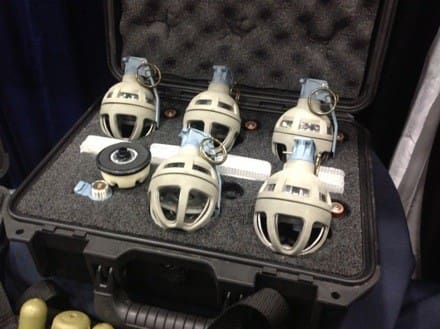
Developed by the Combat Training Solutions division of Cyalume Technologies, the HG1 is a programmable hand grenade simulator. It gives immediate feedback through direct impact training.

20121023-091131.jpg

After programming the HG1 for 3 second, 5 second or random detonation, it is configured with a charge that provides both audible (140db @5 ft) and visible (smoke) signatures.

Additionally, it can be used over and over and is easily recovered from the training area thanks to a light and sound report.

They also now have a MILES compatible version that talks directly to your harness to signify both near miss and kill.

The HG1 is already in use with NSW and USMC elements.

www.cyalume.com

Corps Strength – The Marine Mammal

Sunday, October 21st, 2012

20121021-130121.jpg

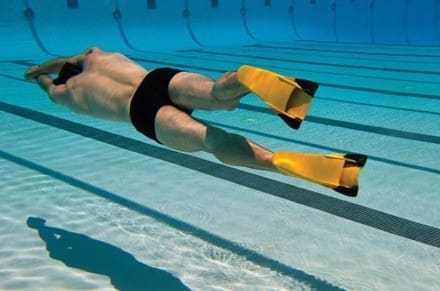
As a career Marine, a fitness nut (with ADHD) and now a PT instructor for international military students, I couldn’t tell you how many miles I’ve run. I’ve been running as part of a workout, or sports program since I was about 10 years old, so that’s over 40 years of running, and I don’t think there are many stretches in there when I wasn’t running. The point is that while I still enjoy running, and feel its probably the single best aerobic conditioner out there is, I don’t run everyday, at least not anymore. I find that I now run better (and faster) if I substitute some other type of aerobic training at least 2 or 3 times a week. Bike riding, hiking, stair climbing, etc. I do all of these and think that they’re all great workouts. Another thing that I’ve used on and off over the years is swimming. Now plenty of people swim for exercise, and you can go to almost any local pool and you’ll see lots of people training for triathlons and master swim meets. You can always spot these jokers. They swim more like dolphins than people. Swimming along at an impossible speeds, flip turns, and it all looks easy. Well take fit it from me, swimming fast isn’t easy. I’ve competed in dozens of triathlons and the swim was always my worst event. I had old ladies and kids go by me like I was threading water. It takes training, skill, and frankly; talent to do well. However, swimming to improve your fitness doesn’t require an Olympic level of effort or skills. I have seen great results from just a few hours a week in the pool. Having tried many different swimming workouts, my favorite one is a simple no brainer that will quickly improve your aerobic conditioning. You get in the pool and just swim back and forth underwater. Come up when you need to and go back down, and try to get in as many laps as you can in an hour. I like to swim as fast as I can underwater the 25 yard length of the pool, then come up take a short rest (30 seconds or so) and then go back. This isn’t easy, trust me. Just getting to be able swim the pool length on one breath will be a hard enough goal at first. But I am convinced this is a great conditioner. I know that when I’ve got a few weeks doing this workout 2-3 times a week, my runs are better. Wear fins like as a variation, I do. This workout won’t make you swim like Michael Phelps (nothing will, sorry) but you will get a great workout. Try It. Good luck and be safe

MGunz
www.corpsstrength.com

Snipers Hide Mil-RAD Target

Sunday, October 21st, 2012

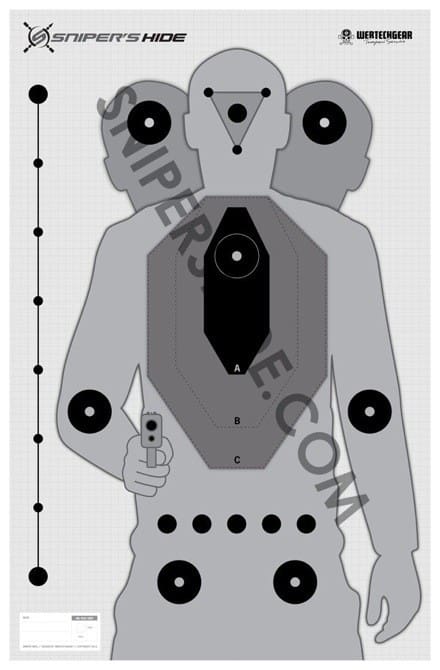
Designed by Webtechgear for Snipers Hide this target is meant to help sight in and give the shooter many target areas. It is the Mil-RAD target and the grid is set up to help with Mil-RAD adjustments.

20121021-095502.jpg

www.shop.milehighshooting.com/Snipers-Hide-Mil-RAD-Target-SHMRAD