Non-Verbal Communication
Non-verbal communication is the most over looked and misunderstood tool that Warriors have. In today’s world, you say what you want and you get it. It begins at a young age but everyone realizes that when asked what he wants to eat, a child will respond verbally. However, as you grow, you begin to take non-verbal cues. For example, as a Warrior in battle, you’ll see the Warrior to your left shooting. What does that tell you? It says “he is engaged with the enemy.” You look to your right and you see a Warrior on his back with another kneeling over him? Possibly wounded or worse. It gives a mental snap shot of what is going on around you and what you should do, or need to do, next. No words need to be exchanged nor would there be time but even if there was time, you wouldn’t hear it due to distance or the sounds of battle. This non-verbal communication, through good training, can be, hands down, better than verbal communication. However, we generally train and use verbal communication because of lack of knowledge, understanding, and experience. Besides, it’s just easy to do. Yep, finger drill training, talk me through it, and I’ll call you trained. Sad but true, so weak and lazy leaders beware! I’m watching you!
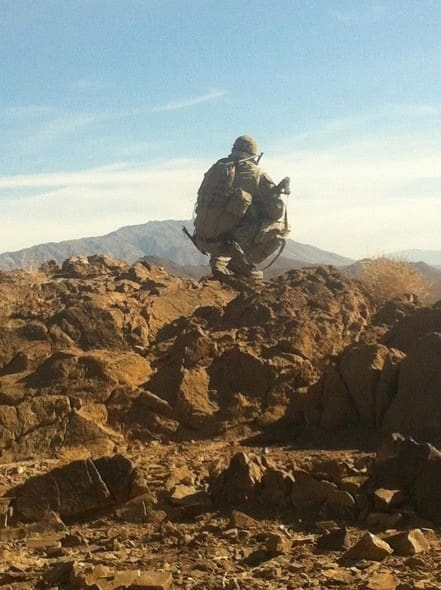
Train using non-verbal comms because in gun fights you won’t have the time to bullshit. Guns are loud so you won’t be able to hear anyway, and if you’re listening for someone to say something, you’re not focused on the fight. This lack of focus puts your life, my life, and the lives of the Warriors around you at risk. Not cool hammy hands, so listen up. Remember, you need to wear ear protection at all times. Otherwise, it’s, “In a gun fight today as a warrior and def tomorrow because of it.” If you’re deaf, how will you tell your stories over beer to score chicks? So, wear your ear pro. All leaders train with ear pro, that way it takes the “talk me through it” out of your training.
As a young Ranger I was in the Sniper section which as you know, is in the same platoon as the Anti-Tank gunners. Those guys shot the 90mm Recoilless everyday and later switched to the 84mm Carl Gustav. These hand cannons are LOUD, HEAR ME? So these AT gunners couldn’t uses verbal comms for two distinct reasons. 1. Both the Recoilless and ‘Goose’ are too LOUD to hear anything. 2. The gunners were all deaf due to reason number one. That’s right, deaf. It was so bad that before any mandatory hearing tests those boys would wear ear plugs all weekend or longer just to pass. THEY KNEW NON-VERBAL COMMUNICATION. CAN YOU HEAR ME?!
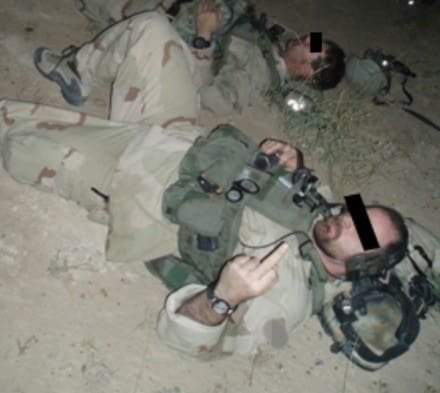
Train using non-verbal comms. Start today. It’s easy, and it ain’t rocket surgery*. If you see a possible enemy or a threat, point your rifle at it. If all the Warriors on your team, patrol, or whatever see this, they know you see a possible enemy. When you lower your rifle, the threat is gone. Simple, right? Makes total sense. Rifle “up” threat, rifle “down”, no threat. Yeah, I said it again for the not so bright guys in the back row (best guys in a gun fight, the backrowers). So we’re out patrolling, I bring my rifle up and start shooting. This means, “shit’s on sucker.” Then I stop shooting and lower my weapon and wait…………. Wait for it……. “Shits off.” That’s right. So you’re still with me? Good.
So now we’re in a gun fight, and you’re bounding. Yeah, that’s a 3 to 5 second rush, remember that? I’m up, bad guy sees me, I’m down. When you’re down, as your buddy, I’m moving. When I’m down, I’m covering your movement. This can be done in any size element. The old standby, conventional method is to use verbal comms to say shit like “cover me, moving, ready, clear, roger, balls, bullshit” or what ever the F your using. Look, if I move, you see me run, then I’m down. How long will it take for me to cover you? Two seconds after I drop from your view. So wait two seconds and move. And, once again, if there is shooting, you won’t hear all this bullshit anyway. In and around buildings, cars, urban areas, even without shooting, you won’t hear it. So why try use it? Again, we are a buddy team and you don’t hear me say “move”, do you wait 10 minutes? or forever? No, you look around, realize I am covering you and rush. Then it all starts over again. Except, you’ve probably been victim to standing around waiting for the new guy that is lying in wait to be told to move for 10 minutes. This is an indicator that your methods and training sucks! Just try it you’ll see. If you have any combat experience at all you’ll realize you can’t hear that shit anyway. Plus, this also affords you speed (oh yeah bonus). Ok Rangers, I was taught speed is not security but when bringing steel to bear on your enemy, the quicker the better…Amen.
I feel like you’re starting to get my drift, so I will give one more example. Clearing rooms and buildings, close quarters battle (CQB), that sort of stuff. When you enter and clear a room guys say, “clear, red zone, you suck, dick” or whatever, right? Yeah this shit is hitting close to home, huh? Well hear me out. You come into the room rifle up and clear your sector of fire. Rifle down meaning my sector is clear and I’m ready to move. So four guys in a room, rifles down, means room “clear” without saying a word. Best of all, you will lower your rifle to move anyway, true? So this makes it all that much easier. Think about this scenario. You’re taking a room off a street to get out of a worse situation. There’s still shooting going on outside this room because war is loud suckers. That’s why you wear ear protection. But, ear pro and talking don’t mix. Am I right? So YOU WON’T HEAR the four clears you need to move on, so do not waste the time your going to do it anyway no verbs style. So train for that easy (yes easy). Do it, and start today! Start doing this now, it’s easier than you think if you train for it, and most of all, stop making excuses. Don’t be a weak ass leader!
-Shrek
 SGM (ret) John McPhee served a distinguished career in U.S. Army Special Operations for over 20 years, retiring in 2011.
John has spent his adult life in Special Operations and Special Mission Units. He is a Master Instructor in all aspects of special activities, missions and operations. He has over 6 years of private special activities consulting and is a Subject Matter Expert (SME) in: Special Activities, Operational Preparations, Limited Signature Operations, Reconnaissance, Singleton Operations, High Threat Dignitary Protective Services, Extreme Long Range, Designated Marksman, Advanced Precision Rifle Marksmanship, Combat Marksmanship, Live Fire CQB/CQC, Advanced Pistol Marksmanship, Advanced Carbine Marksmanship, Aeriel Gunnery (Rifles, Shotguns, Ariel Personnel and Vehicle Interdictions, Mechanical, Ballistic and Explosive Breaching, Freefall Instructor Programs, Infiltration/ Exfiltration Techniques, Ground Mobility, Unit Pre-Deployment Training, and Research and Development of; Soldier Systems, Weapons, Ammunition, Thermal and Night Optics.
Qualifications;
Special Forces Target Interdiction Course
US Army Sniper School
NRA Rifle, Pistol and Shotgun, Instructor
NRA Range Safety Officer
Advanced Mountain Sniper Course, Instructor
Advanced Freefall, Instructor (Ratings Current)
Freefall Coach (Ratings Current)
California Personal/ Executive Body Guard Certification (Rating Current)
2005 Budweiser World Cup Super Heavyweight Jiu-Jitsu Champion
2004 Presidential Security Detail (Ariel Heavy) Cartagena, Colombia
He has trained countless U.S. Special Operations forces, thousands of International Tier 1 Operators and Special Forces around the world. He is one of the handful of operators with over a decade of combat having served in multiple theaters from Bosnia and South America to recent war efforts in Iraq and Afghanistan.
Gunfighter Moment is a weekly feature brought to you by Alias Training & Security Services. Each week Alias brings us a different Trainer and in turn they offer some words of wisdom.
*”Rocket surgery” is a Shrekism created by combining the best elements of rocket science and brain surgery into a new field of study which Shrek mastered as a young Ranger. Today, many aspire to learn the secrets of this arcane form of martial science under the tutelage of Shrek.