Phantom Lights

Archive for the ‘Army’ Category

82nd Airborne, 3rd SF Troops Test New Parachutist Life Preserver at Ft Bragg

Tuesday, August 3rd, 2021

FORT BRAGG, North Carolina – Some of the nation’s elite Soldiers with the 82nd Airborne Division and 3rd Special Forces Group have finalized testing the Army’s new Parachutist Flotation Device (PFD).

Preparation for the PFD test started in mid-April 2021 with the Airborne and Special Operations Test Directorate performing intentional water landings in Jordan Lake, North Carolina, according to Maj. Camden S. Jordan, ABNSOTD’s executive officer.

“Planners synchronized early with local emergency management, law enforcement and state wildlife agencies to help support the Army’s water operations on Jordan Lake,” said Jordan said.

Jordan went on to say rehearsals took place for the multi-tiered and complex infiltration technique before final testing in June.

“Located just West of Raleigh, North Carolina, Jordan Lake is one of North Carolina’s most pristine waterways, so these agencies provided swift water rescue teams, emergency medical technicians, small boat support and assisted in routing boaters away from the water drop zone while airborne operations are underway,” he said.

“We relied heavily upon the support of the community to execute this test. Local emergency services were the lynchpin to this entire test and could not have been executed without their outstanding support,” said Sgt. 1st Class John Reed, ABNSOTD’s Operations NCOIC.

According to Dan Shedd, Senior Mechanical Engineer Developmental Command at Natick, Massachusetts, military planners try real hard to keep airborne operations away from bodies of water.

He said on occasion, though, paratroopers can engage high value targets near large bodies of water so they must be equipped accordingly for safety.

With flotation bladders that can be inflated using an internal carbon dioxide (CO2) gas cylinder or an oral inflation tube, once employed in the water, the PFD becomes critical in saving lives.

Shedd explained how the PFD must suspend a combat-equipped jumper in a “lifesaving” posture for an extended period following an airborne infiltration.

“In real-world scenarios,” he said, “this critical time allows recovery teams time to locate and extract jumpers in the event of a water landing.”

Reed said operational testing with Soldiers during early June saw participating paratroopers undergoing intensive training cycles geared toward preparing for deliberate water operations.

That training began with new equipment training (NET) so the Soldiers could practice the proper rigging techniques and activation procedures required using the PFD.

“Anytime two lifesaving devices are being employed by one Soldier, intense attention to detail is required for both proper fit and wear as well as how these systems interact during airborne infiltration,” said Staff Sgt. Jonathan R. Copley an ABNSOTD Military Freefall Master Jumpmaster.

The rigorous NET training test jumps required the test Soldiers of 82nd Airborne Division and 3rd Special Forces Group to complete a full combat water survival test (CWST) conducted in Fort Bragg’s Mott Lake.

Sgt. 1st Class Steven Branch, a platoon Sergeant and Jumpmaster assigned to C Company 2nd Battalion 501st Parachute Infantry Regiment, gave the PFD a thumbs-up.

“The PFD is much easier to rig for static line operations,” he said. “We barely noticed having it on, and it can easily suspend a Soldier with combat equipment for a long time if needed.



“Overall I was very impressed with every aspect of the PFD.”

ABNSOTD used the PFD test to train parachute riggers from across the airborne and special operations community in the proper maintenance and care of the new life-saving apparatus once they return to home station.

This “maintainer” training included system maintenance, repacking, repair, proper storage, handling, as well as rigging and employment during water landings.

Sgt. Issa Yi, a parachute rigger with the 151st Quarter Master Company said, “The PFD was easy to pack and required no special tools or materials to maintain.”

Story by Mr. Mike Shelton, Airborne and Special Operations Test Directorate, U.S. Army Operational Test Command

Photos by Mr. James L. Finney, Mr. Barry W. Fisher, and Mr. Chris O’Leary, U.S. Army Operational Test Command, and SFC Timothy D. Nephew, Airborne and Special Operations Video Flyer

Expert Soldier Badge: Increasing Soldier Lethality

Monday, August 2nd, 2021

FORT EUSTIS, Va. – The Expert Soldier Badge tests a Soldier’s performance in physical fitness and warfighting tasks, similar to the Expert Infantry Badge and Expert Field Medical Badge. Since the announcement of the ESB, on the Army’s 244th Birthday, nearly 5,000 Soldiers have attempted to attain the badge.

The ESB measures a Soldier’s proficiency in physical fitness, marksmanship, land navigation, and other warrior tasks to demonstrate a high level of lethality on the battlefield.

Testing and training for the ESB should take place under realistic conditions, where Soldiers will have to demonstrate the tactics learned and successfully apply them under extreme stress.

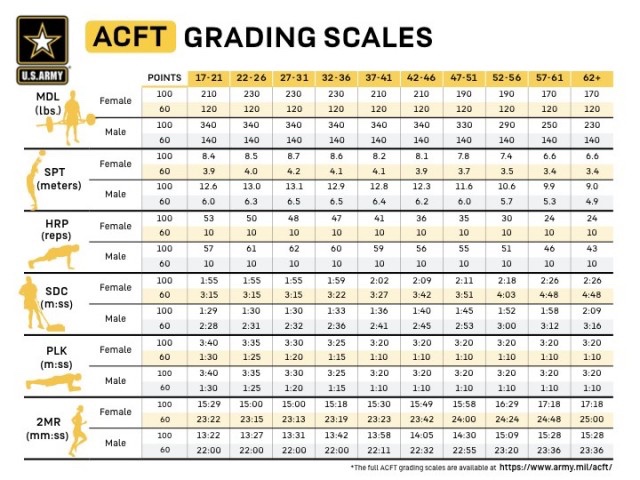
Prior to testing, a Soldier must have passed an Army Physical Fitness Test or Army Combat Fitness Test within the last six months, qualify as expert on the M4/M16 rifle, and be recommended by their chain of command.

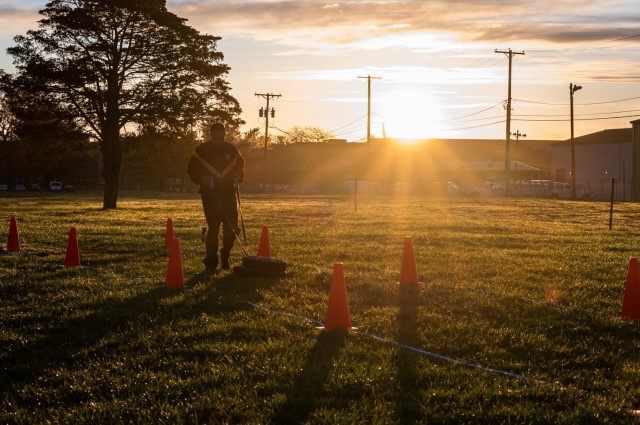
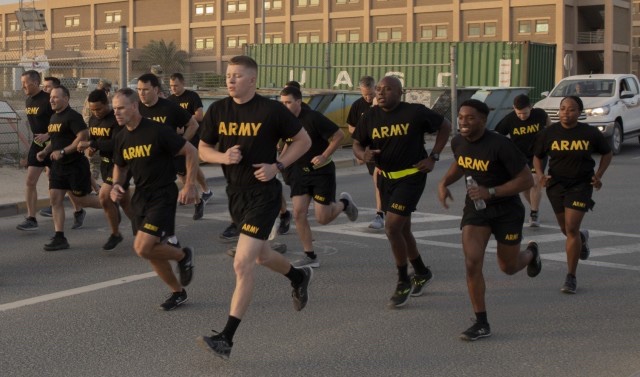
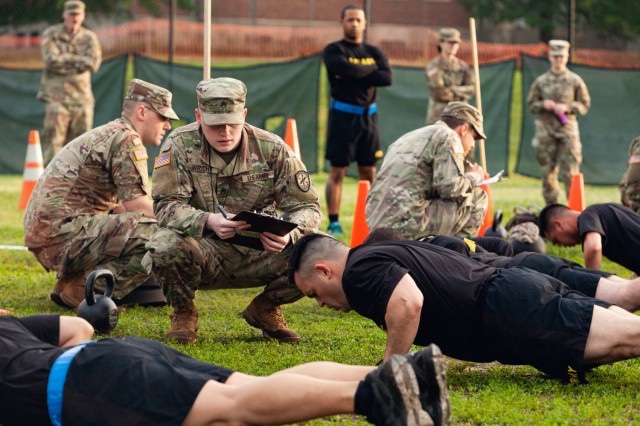
The test itself includes a physical fitness assessment, consisting of the Hand Release Push-Up, a Sprint-Drag-Carry, and a 2-mile run. Soldiers also complete a day and night land navigation course, individual testing stations such as providing care under fire and moving a casualty, 12-mile foot march, and disassembling and re-assembling the M4.

ESB test stations include events from the Weapons, Medical, and Patrol Lanes with an additional set of tasks selected by the brigade commander from the unit’s mission essential task list, such as reacting to an improvised explosive device attack or constructing individual fighting positions.

Command Sgt. Maj. Scott Beeson, Center for Initial Military Training, stated the goal of the badge is to make Soldiers an expert at everything that applies to an individual Soldier skills.

Beeson stated the most common reason for Soldiers failing is a lack of preparation.

“Put your hands on the weapons,” he said. “The most failed portion of the testing is the weapons lane. Prior to arriving, Soldiers should have weeks of training where they’ve prepared for success.”

Maj. Gen. Lonnie G. Hibbard, commanding general, CIMT, echoed this conclusion.

“The reason Soldiers fail is a lack of preparation,” he said. “Many commands and Soldiers believe the week prior is enough to master the tasks. There has to be preparatory training.

“The importance of the ESB in the Army is building the war fighting skills of what a Soldier is expected to do,” Hibbard said. “The ESB tests on common war fighting tasks that all Soldiers should be proficient at.”

Of those 5,000 Soldiers that have tested for the badge, only 19% have been awarded. At a command level, the testing of the ESB is essential in measuring the efficiency of how Soldiers are actively trained.

The ESB aims to increase the lethality among the force, outside of infantry and medical. Appropriate training and preparation are critical to a Soldier successfully passing the test.

More information on the planning and executing for the ESB is available here. (CAC enabled)

By Hunter Rhoades, TRADOC Communication Directorate

Task Force Phoenix in the Fight Against RCIEDs

Thursday, July 29th, 2021

CAMP BUEHRING, Kuwait — Improvised Explosive Devices (IEDs) were a deadly threat during Operation Iraqi Freedom and Operation Enduring Freedom, causing the majority of casualties in both conflicts. IEDs remain a threat today for coalition forces in Iraq and Syria during Operation Inherent Resolve.

The U.S. military developed several countermeasures to protect both mounted and dismounted service members from this threat.

Counter Radio-Controlled Improvised Explosive Device Warfare (CREW) systems provide protection by jamming signals that detonate radio-controlled IEDs (RCIEDs). The Duke Version 3 and CREW Vehicle Receiver Jammer (CVRJ) vehicle-mounted systems, and the Thor III and MODI II dismounted systems, have been effective in protecting service members from the RCIED threat.

Since 2010, an Electronic Warfare Operations (EWO)/CREW system course had been taught by contractors at Camp Buehring, Kuwait. The class was offered to service members from newly arrived units that employ CREW systems in convoys and on patrols. However, due to the COVID-19 pandemic, the class has not been taught for the past 10 months.

“Due to travel restrictions, we were unable to offer the same level of training,” said Capt. Jefferson Wilkes, Officer-in-Charge (OIC) for the U.S. Army Central Command Readiness Training Center (ARTC). ARTC is responsible for providing training support to coalition tenant units in Kuwait.

“The EWO/CREW Specialist Course allows Soldiers who rely on CREW systems, as they come in theater, to stay proficient in the operation and maintenance of the systems to increase survivability of their units across the AOR (Area of Responsibility),” Wilkes said.

Illinois National Guard Soldier Chief Warrant Officer 2 Anthony Meneely and Florida National Guard Soldier Chief Warrant Officer 4 Douglas Montgomery are Electronic Warfare Technicians who arrived in theater in April 2021 with Task Force Phoenix—a combat aviation brigade responsible for full-spectrum aviation operations for Operation Spartan Shield and Operation Inherent Resolve.

Meneely, Montgomery, Electronic Warfare NCO Sgt. Ismael Pulido and OIC Maj. Jeremy Tennent are Task Force Phoenix’s Cyberspace Electromagnetic Activities (CEMA) cell. They are responsible for ensuring that friendly radio-wave emitting equipment is safe and secure, and they advise the Task Force’s command staff on adversary electromagnetic jamming.

After they arrived in theater, they soon learned that the EWO/CREW class was not being taught.

“This equipment is vital on a contested battlefield where RCIEDs are a threat,” Meneely said. “Soldiers were not getting proper training for the CREW devices for their vehicles that were headed north.”

Meneely and Montgomery had the skills and expertise to teach the class. They contacted Capt. Wilkes and Lt. Col. Willard Lund, director of the Directorate of Plans, Training, Mobilization and Security (DPTMS). DPTMS is responsible for all training in Kuwait. Meneely, Montgomery and Tennent made an offer to Wilkes and Lund to restart the class, update it and teach it.

“They were fully supportive,” Meneely said of Wilkes and Lund. “They’ve been helping us insurmountably with materials, equipment and general support.”

“Chief Meneely, Chief Montgomery and Maj. Tennent identified a training gap along with a resourcing gap,” Wilkes said. “They worked with us to make connections across the AOR to stand up a new program. As a result, they were able to update all of the systems and offer training for them.”

Meneely, Montgomery and Pulido, a California National Guard Soldier, welcomed their first class at Camp Buehring on July 12. Tennessee National Guard members Spc. Curtis Hicks and Staff Sgt. Thomas Daniel, from the 1-181st Field Artillery Battalion, and Virginia National Guard Soldier Staff Sgt. Richard Recupero, from the 29th Infantry Division, were the first graduates of the four-day course.

“We taught them the fundamentals of electronic warfare and the 10-level maintainer tasks for CREW systems,” Meneely said. “Upon completion of the school, the CREW maintainers can load, operate, troubleshoot and fix deficiencies in the systems. They will go back to their units responsible for ensuring all their CREW systems will be mission capable.”

Staff Sgt. Daniel said the course gave him vital training on the CREW systems that his battalion employs. “Our security force rolls out with these systems,” he said. “We’ll be in charge of doing the testing and reporting for the systems for the battalion.”

“I think the class went well,” Montgomery said. “We’re going to continually adjust the course and update it based on assessments, feedback and emerging threats.”

Meneely and Montgomery said they will be hosting additional classes as needed for incoming units. They also plan to establish a counter unmanned aerial system (CUAS) academy at Camp Buehring.

Story by MAJ Jason Sweeney, 40th Combat Aviation Brigade

Bird’s-eye View Could be Key to Navigating Without GPS

Wednesday, July 28th, 2021

RESEARCH TRIANGLE PARK, N.C. — A bird’s-eye view may take on new meaning thanks to Army-funded research. Scientists found that a protein in bird’s retinas is sensitive to the Earth’s magnetic field thus guiding its migratory patterns. That finding could be key to Army navigation of both autonomous and manned vehicles where GPS is unavailable.

For decades, scientists have been investigating how animals such as birds, sea turtles, fish and insects sense the Earth’s magnetic field and use it to find their way.

Researchers at the Universities of Oxford and Oldenburg, supported through a co-funded effort of the U.S. Army Combat Capabilities Development Command, known as DEVCOM, Army Research Laboratory and the Office of Naval Research Global, and Air Force Office of Scientific Research were the first to demonstrate that a protein in birds’ retinas is sensitive to magnetic fields and may be a long-sought sensor for biological navigation.

The team discovered that the magnetic sense of migratory birds such as European robins is based on a specific light-sensitive protein in the eye. The research, published in Nature, identified the protein that the scientists believe allows these songbirds to detect the direction of the Earth’s magnetic field and navigate their migration.

“This research not only demonstrated that cryptochrome 4 is sensitive to magnetic fields, but importantly also identified the molecular mechanism underlying this sensitivity,” Dr. Stephanie McElhinny, a program manager at the laboratory. “This fundamental knowledge is critical for informing future technology development efforts aimed at exploiting this mechanism for highly sensitive magnetic field sensors that could enable Army navigation where GPS is unavailable, compromised or denied.”

The researchers extracted the genetic code for the potentially magnetically sensitive cryptochrome 4 and produced the photoactive protein in large quantities using bacterial cell cultures. The team then used a wide range of magnetic resonance and novel optical spectroscopy techniques to study the protein and demonstrate its pronounced sensitivity to magnetic fields.

The team showed that the protein is sensitive to magnetic fields due to electron transfer reactions triggered by absorption of blue light. They believe that these highly-specialized chemical reactions give the birds information about the direction of the Earth’s magnetic field, which acts like a magnetic compass.

“While more research needs to be done to fully understand how cryptochrome 4 senses the weak magnetic field of Earth and how this is ultimately translated into signals that are understood by the migrating bird, this new knowledge is an exciting first step toward potential navigation systems that would rely only on the magnetic field of Earth, unaffected by weather or light levels,” McElhinny said.

Because the magnetic field modifies the cryptochrome protein in a measurable way, cryptochrome proteins or synthetic molecules that mimic the mechanism of cryptochrome’s magnetic sensing could be used in a future navigation device.

Detectable changes in the protein would be decoded to indicate the strength and direction of the magnetic field, and thus the navigational position on Earth.

Proteins like cryptochrome consist of chains of amino acids. Cyrptochrome 4 contains four tryptophan amino acids that are organized in series. According to the research team’s calculations, electrons hop from one tryptophan to the next through the series, generating so-called radical pairs which are magnetically sensitive.

To prove this experimentally, the team from Oldenburg University produced slightly modified versions of the robin cryptochrome, in which each of the tryptophans in turn was replaced by a different amino acid to block the movement of electrons.

Using these modified proteins, the Oxford University chemistry groups experimentally demonstrated that electrons move within the cryptochrome as predicted in the calculations and that the generated radical pairs are essential to explain the observed magnetic field effects.

The team also expressed cryptochrome 4 from chickens and pigeons, which do not migrate. The researchers found that the protein is more magnetically sensitive in the migratory birds than either the chickens or pigeons.

“We think these results are very important because they show for the first time that a molecule from the visual apparatus of a migratory bird is sensitive to magnetic fields,” said Professor Henrik Mouritsen, Institute of Biology and Environmental Sciences at Oldenburg University.

But, he adds, this is not definitive proof that cryptochrome 4 is the magnetic sensor the team is looking for. In all experiments, the researchers examined isolated proteins in the laboratory and the magnetic fields used were also stronger than the Earth’s magnetic field.

“It therefore still needs to be shown that this is happening in the eyes of birds,” Mouritsen said.

Such studies are not yet technically possible; however, the authors think the proteins involved could be significantly more sensitive in their native environment.

In cells in the retina, the proteins are probably fixed and aligned, increasing their sensitivity to the direction of the magnetic field. Moreover, they are also likely to be associated with other proteins that could amplify the sensory signals. The team is currently searching for these as yet unknown interaction partners.

“If we can prove that cryptochrome 4 is the magnetic sensor we will have demonstrated a fundamentally quantum mechanism that makes animals sensitive to environmental stimuli a million times weaker than previously thought possible,” said Peter Hore, professor of Chemistry at the University of Oxford.

Operation in a GPS-denied environment is a U.S. Army goal.

The Army has to be prepared to operate in environments where the technology has been degraded or denied by enemy action, officials said.

In additional to the Army, Navy, and Air Force, the European Research Council also supported this research. The collaboration is also a key part of a Collaborative Research Center funded by the German Research Foundation.

United States Army Contracting Command, Detroit Arsenal has awarded Point Blank Enterprises, Inc. Contract for Concept Design for the U.S. Army’s Optionally Manned Fighting Vehicle (OMFV) Program

Tuesday, July 27th, 2021

MIAMI LAKES, Fla., July 27, 2021 (GLOBE NEWSWIRE) — Army Contracting Command, Detroit Arsenal has awarded Point Blank Enterprises, Inc. (PBE) business unit, The Protective Group (TPG) a $60.6M Firm Fixed Price Contract for Phase 2, Concept Design for the U.S. Army’s Optionally Manned Fighting Vehicle (OMFV) Program. The OMFV is planned to be an important weapon system platform in the Army’s Armored Brigade Combat Teams (ABCTs) and is part of the larger Next Generation Combat Vehicle Family of Combat Vehicles. The OMFV concept is envisioned to encompass future capabilities and basic operational requirements including: scalable survivability and protection, remotely controllable, preplanned growth to easily integrate future capabilities, embedded platform training, and decisive battlefield lethality. The Army plans for the first OMFV delivery in the fourth quarter of FY2028 for final testing with a final Full Rate Production (FRP) decision in the third quarter of FY2029.

Mark Edwards, Executive Vice President for Point Blank Enterprises said, “We are honored to be selected to participate in this essential Army combat vehicle program. We have assembled a diverse industry team that, like Point Blank, is fully committed to providing the most advanced and reliable products to our men and women in uniform. This award reaffirms our ability to assemble and manage diverse technical teams performing complex and innovative collaborative design engineering programs. Our OMFV design concept will not be constrained or limited by previous design engineering approaches or technologies that produced the last generation of combat vehicles. Innovative engineering solutions and continuously integrating improvements into our product designs are in our DNA, both of which are key to this phase of the OMFV program.”

For nearly 50 years, Point Blank Enterprises, Inc. has been a leading provider of threat protection products engineered to maximize user survivability.

US Army Soldiers Experience The Great Escape Tour

Thursday, July 22nd, 2021

?AGAN, POLAND — U.S. Army Soldiers with the 1st Armored Brigade Combat Team, 1st Cavalry Division participated in a guided tour at the Great Escape museum in ?agan, Poland, July 5, 2021.

The Great Escape was a massive escape attempt from Stalag Luft III, a prisoner of war (POW) camp in ?agan, Poland, controlled by Nazi Germany during WWII.

The Troopers walked approximately three miles through the woods to get the chance to learn about an essential piece of military history. Upon arrival, the Troopers were provided with a guided tour from the curator around the remains of Stalag Luft III.

The curator began the tour by leading the troopers to the memorial near the entrance of the museum. He explained the history behind the monument and the dedication to the Soviet prisoners that perished at Stalag Luft III. Outside, Troopers were able to see a replica of an old wooden watchtower and an exit to one of the three underground tunnels.

Once inside, the Troopers saw a miniature model of the camp and where the three tunnels — known as Tom, Dick, and Harry — were dug. This miniature model gave the Troopers a visual of the camp’s diversity. The museum displayed multiple flight suits from different countries.

The curator explained all the planning that went into the escape attempt and mentioned a few facts that aren’t commonly known. The camp was nearly impossible to escape from because of the elevated prisoner housing, loose, collapsible soil, and seismograph microphones in the ground around the perimeter of the camp. The prisoners had to be extremely cautious while preparing to escape under the guards’ watch.

The Troopers were able to explore a barracks replica outside the museum that would have housed prisoners of war. To their surprise, the living conditions in the barracks were much better than expected. There’s a common misconception that Stalag Luft III had living conditions similar to those of a concentration camp.

Although it was a prison camp, the Germans had to follow the rules set by the Geneva Convention according to the curator of the museum, so there was a standard of living that the prison had to uphold.

Staff Sgt. Noah Hill, a brigade religious affairs noncommissioned officer with 1st Armored Brigade Combat Team, 1st Cavalry Division, set up the guided tour. He said he enjoys seeing the Troopers get off base and learn more about the Polish culture near their area of operation.

“We went through our training rotation,” Hill said. “However, I also wanted them to be able to talk about the good that’s in Poland and build that trust with the Polish people who we’re working with.”

Troopers of 1st Cavalry have had the opportunity to partake in a few military history tours like this one. They have also toured Auschwitz concentration camp and been given a Polish military history presentation to understand Poland’s culture better. The 1st ABCT is currently undergoing redeployment operations before heading back to its home station in Ft. Hood, Texas.

By PFC Michael Baumberger

New Material Could Mean Lightweight Armor, Protective Coatings

Wednesday, July 21st, 2021

RESEARCH TRIANGLE PARK, N.C. — Army-funded research identified a new material that may lead to lightweight armor, protective coatings, blast shields and other impact-resistant structures.

Researchers at the U.S. Army’s Institute for Soldier Nanotechnologies at the Massachusetts Institute of TechnologyCaltech and ETH Zürich found that materials formed from precisely patterned nanoscale trusses are tougher than Kevlar and steel.

In experiments, the ultralight structures, called nanoarchitectured materials, absorbed the impact of microscopic projectiles accelerated to supersonic speeds.

“Increasing protection while simultaneously decreasing the weight that soldiers carry is an overreaching theme in our research,” said Dr. James Burgess, ISN program manager for the U.S. Army Combat Capabilities Development Command, known as DEVCOM, Army Research Laboratory. “This project is a really good example of such efforts where projectile energy absorption is nanostructured mechanism based.”

The research, published in Nature Materials, found that the material prevented the projectiles from tearing through it.

“The same amount of mass of our material would be much more efficient at stopping a projectile than the same amount of mass of Kevlar,” said Dr. Carlos Portela, assistant professor of mechanical engineering at MIT, the study’s lead author.

The researchers calculate that the new material absorbs impacts more efficiently than steel, Kevlar, aluminum and other impact-resistant materials of comparable weight.

“The knowledge from this work…could provide design principles for ultra-lightweight impact resistant materials [for use in] efficient armor materials, protective coatings, and blast-resistant shields desirable in defense and space applications,” said co-author Dr. Julia R. Greer, a professor of materials science, mechanics, and medical engineering at Caltech, whose lab fabricated the material.

Nanoarchitected materials are known to feature impressive properties like exceptional lightness and resilience; however, until now, the potential for additional applications has largely been untested.

“We only know about its response in a slow-deformation regime, whereas a lot of their practical use is hypothesized to be in real-world applications where nothing deforms slowly,” Portela said.

To help fill this vital knowledge gap, the research team set out to study nanoarchitected materials undergoing fast deformation, such as that caused by high-velocity impacts. At Caltech, researchers first fabricated a repeating pattern known as a tetrakaidecahedron—a lattice configuration composed of microscopic struts—using two-photo lithography, a technique that uses a high-powered laser to solidify microscopic structures in photosensitive resin.

To test the tetrakaidecahedron’s resilience to extreme, rapid deformation, the team performed experiments at MIT using the ISN-developed laser-induced particle impact array. This device aims an ultrafast laser through a glass slide.. As the laser passes through the slide, it generates a plasma, an immediate expansion of gas that launches the particles toward the target.

By adjusting the laser’s power to control the speed of the microparticle projectiles, the researchers tested microparticle velocities within the supersonic range.

“Some experiments achieved twice the speed of sound, easily,” Portela said.

Using a high-speed camera, the researchers captured videos of the microparticles impacting the nanoarchitected material. They had fabricated material of two different densities. A comparison of the two materials’ impact response, found the denser one to be more resilient, and microparticles tended to embed in the material rather than tear through it.

To get a closer look, the researchers carefully sliced through the embedded microparticles and nanarchitectured target. They found that the struts below the embedded particle had crumpled and compacted in response to the impact, but the surrounding struts remained intact.

“We show the material can absorb a lot of energy because of this shock compaction mechanism of struts at the nanoscale, versus something that’s fully dense and monolithic, not nanoarchitected,” Portela said.

Going forward, Portela plans to explore various nanostructured configurations other than carbon, and ways to scale up the production of these nanostructures, all with the goal of designing tougher, lighter materials.

“Nanoarchitected materials truly are promising as impact-mitigating materials,” Portela said. “There’s a lot we don’t know about them yet, and we’re starting this path to answering these questions and opening the door to their widespread applications.”

The U.S. Army established the MIT Institute for Nanotechnologies in 2002 as an interdisciplinary research center to dramatically improve the protection, survivability and mission capabilities of the Soldier and of Soldier-supporting platforms and systems.

In addition to Army funding through the institute, the U.S. Office of Naval Research and the Vannevar Bush Faculty Fellowship supported the research.

By U.S. Army DEVCOM Army Research Laboratory Public Affairs

Soldiers, Marines Test New Chemical, Biological Systems at Dugway APG

Saturday, July 17th, 2021

DUGWAY PROVING GROUND, Utah — Soldiers from Fort Drum and Joint Base Lewis-McChord teamed with Marines from Camp Pendleton to test new tactical biological detection and chemical contamination indicator systems here.

Soldiers with the 59th Hazard Response Company and 13th Combat Sustainment Support Battalion along with Marines from the 3rd Marine Air Wing went hands-on with the Joint Biological Tactical Detection System (JBTDS) and the Contamination Indication Disclosure Assurance System (CIDAS), which indicates on chemical agent contaminants so decontamination can take place.

“These two operational tests have given my company the opportunity to focus on our critical war-time collective tasks of site assessment and decontamination and refine our tactics, techniques, and procedures,” said Capt. Ryan Oatman, company commander of 59th Chemical, Biological, Radiological and Nuclear (CBRN) Hazard Response Company.

“The training benefit while conducting these operational tests to my unit’s operational readiness makes this tasking to support new materiel development a win-win.”

According to Test Officer Mr. Josh Smith of the U.S. Army Operational Test Command’s Maneuver Support and Sustainment Test Directorate, test data collected will be used to inform senior Army and Joint Service leaders on how effective, suitable, and reliable the JBTDS and CIDAS systems will be during real-world operations.

“Working with a test unit that is excited about and embraces the opportunity to train its Soldiers while providing valuable feedback on potentially new CBRN materiel solutions with considerations for its employment makes the hard work of operational testing worth it,” Smith said.

Smith explained the units will have employed the JBTDS and CIDAS systems during replicated security and sustainment operations through multiple days of tough, realistic training in the harsh Dugway Proving Ground environment.

“Since operational testing is about Soldiers and unit missions,” he said, “this test event is about making sure the systems developed are — and remain effective — in a Soldier’s hands and suitable for the environments in which Soldiers and units train and fight.”

By Mr. Edward M. Jagodzinski, Test Officer, Maneuver Support and Sustainment Test Directorate, U.S. Army Operational Test Command