FORT BRAGG, N.C., – Today marks the 55th anniversary of the activation of the Military Assistance Command, Vietnam, Studies and Observations Group (MACV-SOG) in the Republic of Vietnam.
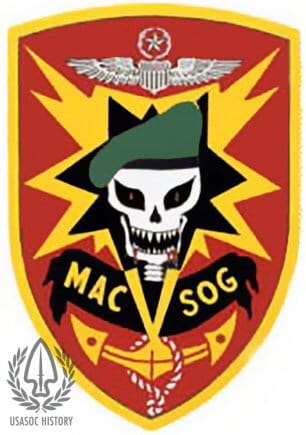
The Military Assistance Command, Vietnam, Studies and Observations Group (MACV-SOG) was activated, January 24, 1964, to function as a joint special operations task force. Commanded by a U.S. Army Special Forces colonel, MACV-SOG was a subcomponent of MACV. Born from a need to conduct more effective special operations against North Vietnam, many Central Intelligence Agency programs were transferred to SOG, which eventually consisted of personnel from U.S. Army Special Forces, U.S. Navy Sea-Air-Land (SEALs), U.S. Air Force, U.S. Marine Corps, Force Reconnaissance and CIA personnel. Special operations were conducted in North Vietnam, Laos, Cambodia, and South Vietnam.
MACV-SOG grew in size and scope over the next eight years. Missions evolved over time, and included strategic reconnaissance, direct action, sabotage, personnel recovery, Psychological Operations (PSYOP), counter-intelligence, and bomb damage assessments. Maritime operations covered the coastal areas of North Vietnam. PSYOP missions included ‘Voice of Freedom’ radio broadcasts into North Vietnam, to publicize the advantages of life in South Vietnam.
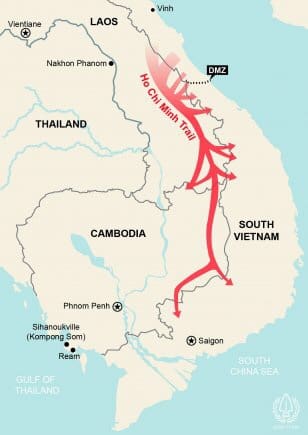
The so-called ‘Ho Chi Minh Trail,’ a vital enemy logistical system named for the North Vietnamese communist leader, was a target of many operations. The trail was a well-developed ‘highway’ that ran from North Vietnam through Laos and Cambodia. The communist insurgency was sustained by the trail, as troops, trucks, tanks, weapons and ammunition flowed south into South Vietnam. Aerial reconnaissance of the trail was difficult; SOG teams provided the most reliable ‘boots on the ground’ intelligence.
SOG headquarters remained in Saigon, with subordinate commands and units located in various forward operational bases over the years, with command and control camps, launch sites, training centers, and radio relay sites in all four U.S. Corps Tactical Zones. By late 1967, MACV-SOG had matured and split into three subordinate geographical commands: Command and Control North, Command and Control Central, and Command and Control South. CCN, at Da Nang, was the largest in size and conducted operations in southern Laos and northern Cambodia. CCC, at Kontum, also operated in southern Laos and northern Cambodia. CCS, at Ban Me Thout, was the smallest, and operated in southern Cambodia.
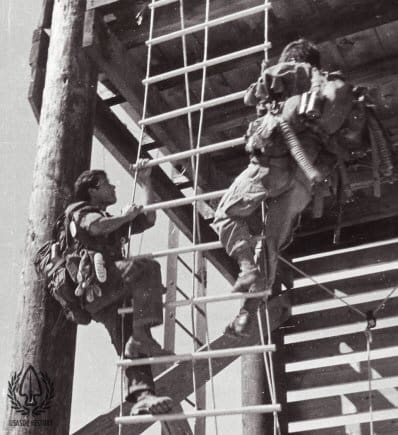
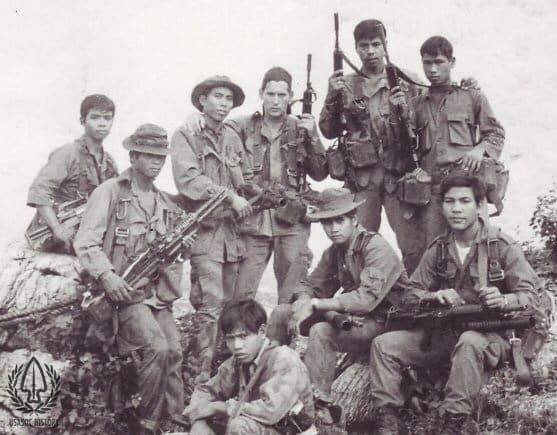
SOG command and control sites operated independently. Each was organized based on the ground tactical situation, but all three had reconnaissance, reaction or exploitation, and company-sized security forces. Each site was about the size of a modern SF battalion. Reaction or exploitation forces were used to extract reconnaissance teams or conduct raids or other assault missions. Reconnaissance teams (RT) consisted of two-to-three Americans and six-to-nine indigenous personnel, normally Vietnamese, Montagnards, Cambodians, or ethnic Chinese. Teams were given a variety of code names (U.S. states, poisonous snakes, weapons, tools, or weather effects). Support troops on site provided logistics, signal, medical, and military intelligence support.
Each mission was unique, but most followed a similar tactical profile: after being alerted of a mission, the reconnaissance team was briefed and conducted detailed planning, rehearsals, inspections, and training, time permitting. Teams were inserted by helicopter into the target area. Team leaders were Americans and designated as One-Zeros (10), with American assistant team leaders, and radio operators serving as One-Ones (11) or One-Twos (12). Indigenous troops were Zero-Ones (01), Zero-Twos (02), and so forth. Teams were given considerable latitude regarding tactics, uniforms and weapons. Captured enemy equipment was often used. Vital communications were maintained with a Forward Air Control fixed-wing aircraft. Such airplanes coordinated for close air support for immediate extraction if a team was compromised, or upon completion of the mission. A mission lasted from three-to-five days. SOG was all-volunteer, and personnel could leave without prejudice.
After 1970, the scope and intensity of SOG operations were affected by the ‘Vietnamization’ of the war, and steady withdrawal of U.S. forces from Southeast Asia. In March 1971, 5th Special Forces Group, the largest source of volunteers for the unit, returned to Fort Bragg, North Carolina. Congressional restrictions prevented U.S. personnel from accompanying operations into Cambodia and Laos. On April 30, 1972, the unit was deactivated. Colonels Clyde R. Russell, Donald D. Blackburn, John K. Singlaub, Stephen E. Cavanaugh, and John F. Sadler served as SOG commanders.
The first true JSOTF organization formed to support a theater campaign, SOG ‘blazed a trail’ for current Army and joint special operations task forces in the war against transnational terrorism. The teams conducted special operations missions, often across international borders, to support the commander’s mission in Vietnam. Nine ARSOF SOG soldiers received the Medal of Honor and the unit was awarded a Presidential Unit Citation. Some sources credit the organization with providing upwards of seventy-five percent of intelligence on the Ho Chi Minh Trail. SOG innovative tactics, personal equipment, and lessons learned influence SOF to this day.
By Robert Seals, USASOC History Office
Editor’s note: This article was originally published on 24 January, 2019.