Aquaterro

Archive for the ‘Robotics’ Category

A New Member in the Family: Rheinmetall Mission Master XT, an Extreme Terrain Autonomous UGV

Saturday, June 19th, 2021

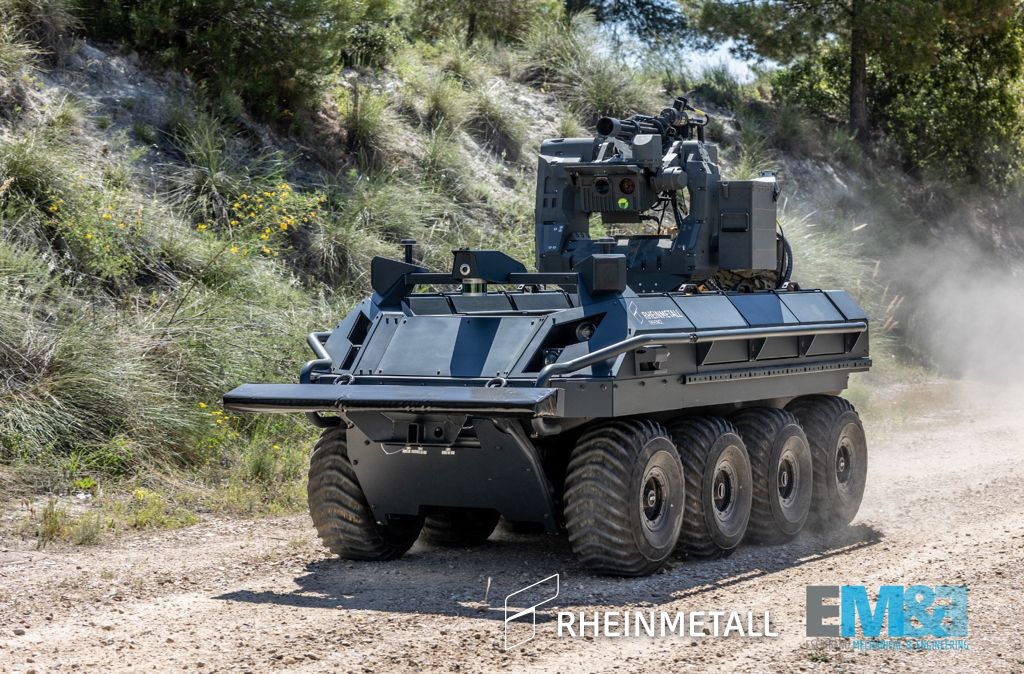
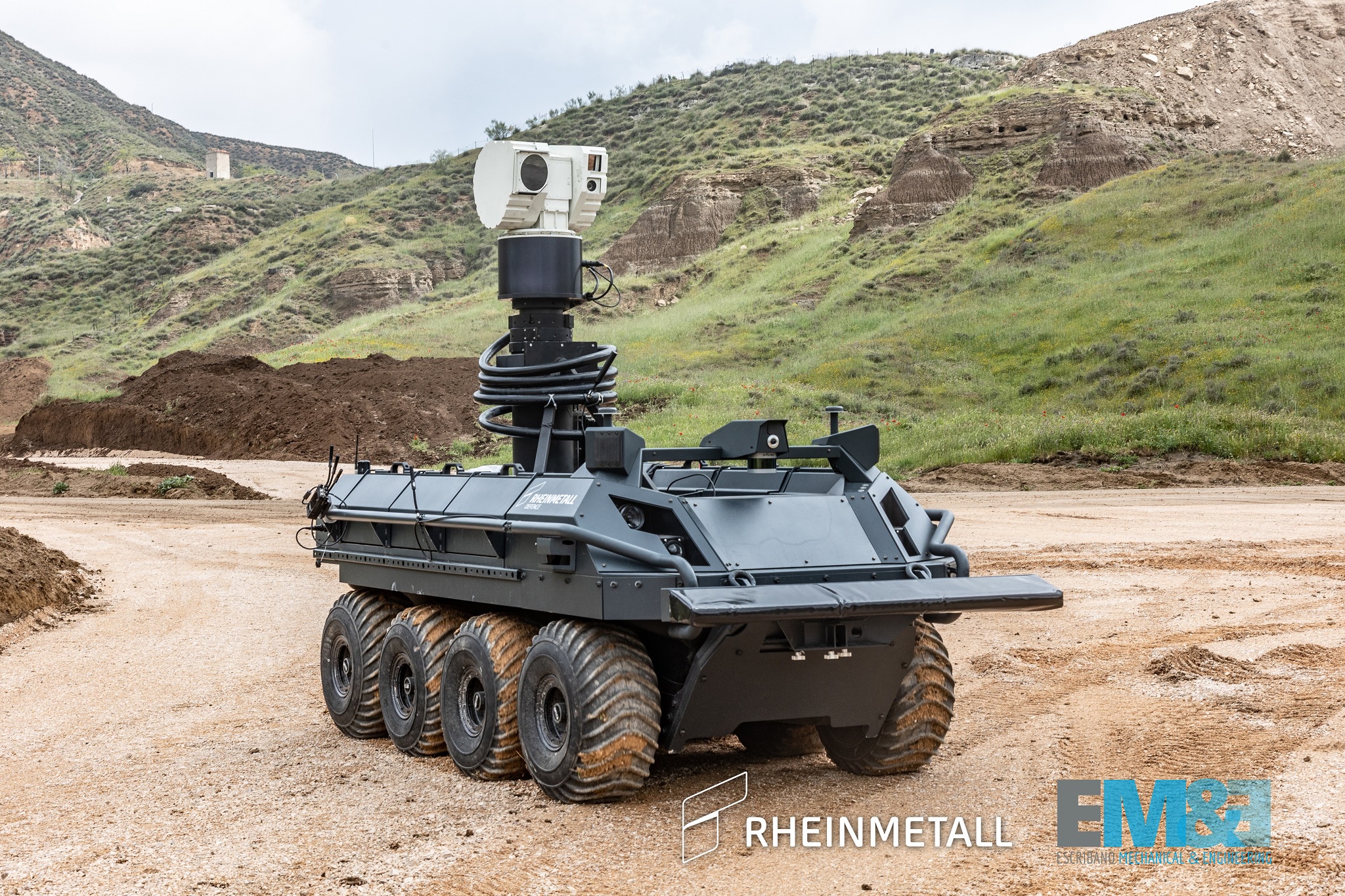
Rheinmetall proudly announces the release of the Mission Master XT, the latest member of its successful Mission Master family of Autonomous Unmanned Ground Vehicles (A-UGVs). Unlike the Mission Master SP platform, which is already introduced to the market, the Mission Master XT has a diesel-powered engine. Responding to a new set of needs, the Rheinmetall Mission Master XT is highly mobile even in the toughest terrain and capable of carrying impressive payloads. The Mission Master XT was developed by Rheinmetall Canada.

A true companion when the going gets tough
The Rheinmetall Mission Master XT thrives in extreme terrain. It easily tackles ice, snow, and sub-zero weather conditions, as well as sandy, rocky and mountainous topography. Its advanced amphibious capabilities allow it to float and swim while maintaining its full payload capacity. Weighing in at 2217 kg, this powerful A-UGV can carry a 1000 kg payload in all scenarios, allowing troops to transport special equipment to hard-to-reach locations. The diesel-powered engine allows it to travel 750 km without refuelling, while lithium-ion batteries enable up to 6 hours of silent watch operations.

Another remarkable feature of the Rheinmetall Mission Master XT is its continuous tire inflation system, which adjusts the tire pressure as needed based on the terrain. Featuring high endurance and survivability, the A-UGV keeps moving on even with 2 cm-holes in the tires.

Autonomous, intelligent and easy to control
Like the other platforms in the Rheinmetall Mission Master family, the Mission Master XT is optimized to take on dull, dirty and dangerous tasks, allowing soldiers to focus on their core missions more effectively and in greater safety. It is driven by Rheinmetall PATH, a proven autonomy kit (A-kit) that enables a wide range of autonomous driving and navigation capabilities.

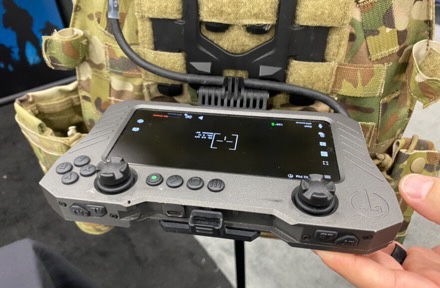
The Mission Master family is fully compatible with NATO-standard battle management systems and can be controlled through a variety of teleoperation options. “The most multifunctional of these is a smart tablet developed by Rheinmetall, which allows the operator to control any Mission Master platform and payload through a single interface, a first for the market”, explains Alain Tremblay, Vice-President of Business Development and Innovation at Rheinmetall Canada. “For instance, users can monitor camera feeds or direct a weapon station, then quickly program the platform to navigate itself autonomously to a desired location, all from the same device”, adds Mr Tremblay.

If necessary, this robust, tried-and-tested mechanical platform can operate in manned configuration, with an integrated joystick and emergency seat.


Multi-mission capabilities
Thanks to its modularity, the Rheinmetall Mission Master XT can take on multiple missions in any situation. The scope of activities the A-UGV can conduct includes logistic transport, surveillance, fire support, rescue, medical evacuation, CBRN detection, communication relay and a multitude of other client-specific requirements. Rheinmetall is committed to maximum operational safety at all times, keeping a human in the loop in all kinetic operations.

A powerful component of Joint All Domain Operations
As enemy capabilities become increasingly advanced, the ability to quickly leverage large amounts of data in order to make informed decisions in the field is more critical than ever. Foreseeable force deployments are likely to take the form of multinational Joint All Domain Operations (JADO) that encompass every dimension of the modern battlefield: land, air, sea, cyber and information space as well as outer space.

Just like the other members of Rheinmetall’s Mission Master family the new Mission Master XT features a unique NATO standard battle management system (BMS) integrated into every platform. This allows each system to process large amount of tactical data. The Mission Master XT thus becomes an integral member of the tactical combat team able to share and exchange information from its vehicle and module sensors to improve the team’s common operating picture. The BMS also uses information in the network from other contributors to improve its own situational awareness with regard to terrain as well as the location of friendly and enemy forces. The built-in BMS allows many Mission Master platforms to operate as an UGV team when carrying out standard military missions in direct support of troops on the ground.

Finally, the Mission Master XT will also benefit from the systematic integration of new artificial intelligence applications, allowing it to evolve and continue contributing to successful outcomes in the complex JADO battlespace of tomorrow.

Renaming of the existing Mission Master
To make room for the newcomers in the Mission Master family, the existing Mission Master platform now becomes the Rheinmetall Mission Master SP. Named for its role as “silent partner”, the Mission Master SP remains an invaluable asset for dismounted troops in a wide range of missions, including high-risk situations.

www.rheinmetall.com

Krauss-Maffei Wegmann Acquires Stake in Milrem Robotics

Sunday, June 6th, 2021

The participation is an important step towards the formation of a “European Center of Excellence for Military Robotics”.

Tallinn, May 31, 2021 – The leading developer and manufacturer of military robotic land systems in Europe, Milrem Robotics, and the German systems house for main battle tanks and combat systems Krauss-Maffei Wegmann (KMW) have signed a strategic cooperation agreement. The contract provides for KMW to acquire a minority stake of 24.9% in Milrem Robotics.

Milrem Robotics will remain as an independent company.

Both companies announced they will work closely together in development of the European Center of Excellence for Military Robotics in Estonia.

The objective is to combine the know-how and expertise of both companies to develop innovative solutions to meet the requirements of future military missions involving the interaction of manned and unmanned systems.

“We intend to become the European centre of excellence for unmanned technology and robotics innovations. The partnership with KMW facilitates further innovations for future products and services, especially in the area of the teaming of manned and unmanned systems and sensor-to- shooter solutions,” emphasised Kuldar Väärsi, CEO of Milrem Robotics.

“KMW as the European market leader for land systems and Milrem Robotics as the European market leader for unmanned land systems are an excellent fit. Our collaboration gives us the opportunity to work on innovative and new solutions that will impact the future of the defence industry. In addition, further synergies are also expected from this cooperation in the context of KNDS,” says Horst Rieder, CFO of KMW.

The objective of the cooperation on the part of KMW is the integration of modern leading robotics systems into KMW’s technology systems.

AEC Skyline and Milrem Robotics Join Forces

Thursday, June 3rd, 2021

Dutch defence company AEC Skyline and Europe’s leading robotics and autonomous systems developer Milrem Robotics signed a Memorandum of Understanding last week to cooperate in the development of unmanned systems.

The MoU that was signed by Stef Have, director of AEC Skyline Holding and Kuldar Väärsi, CEO of Milrem Robotics paves the way for joint development, testing and validation of products and software in the fields of activity of both parties.  

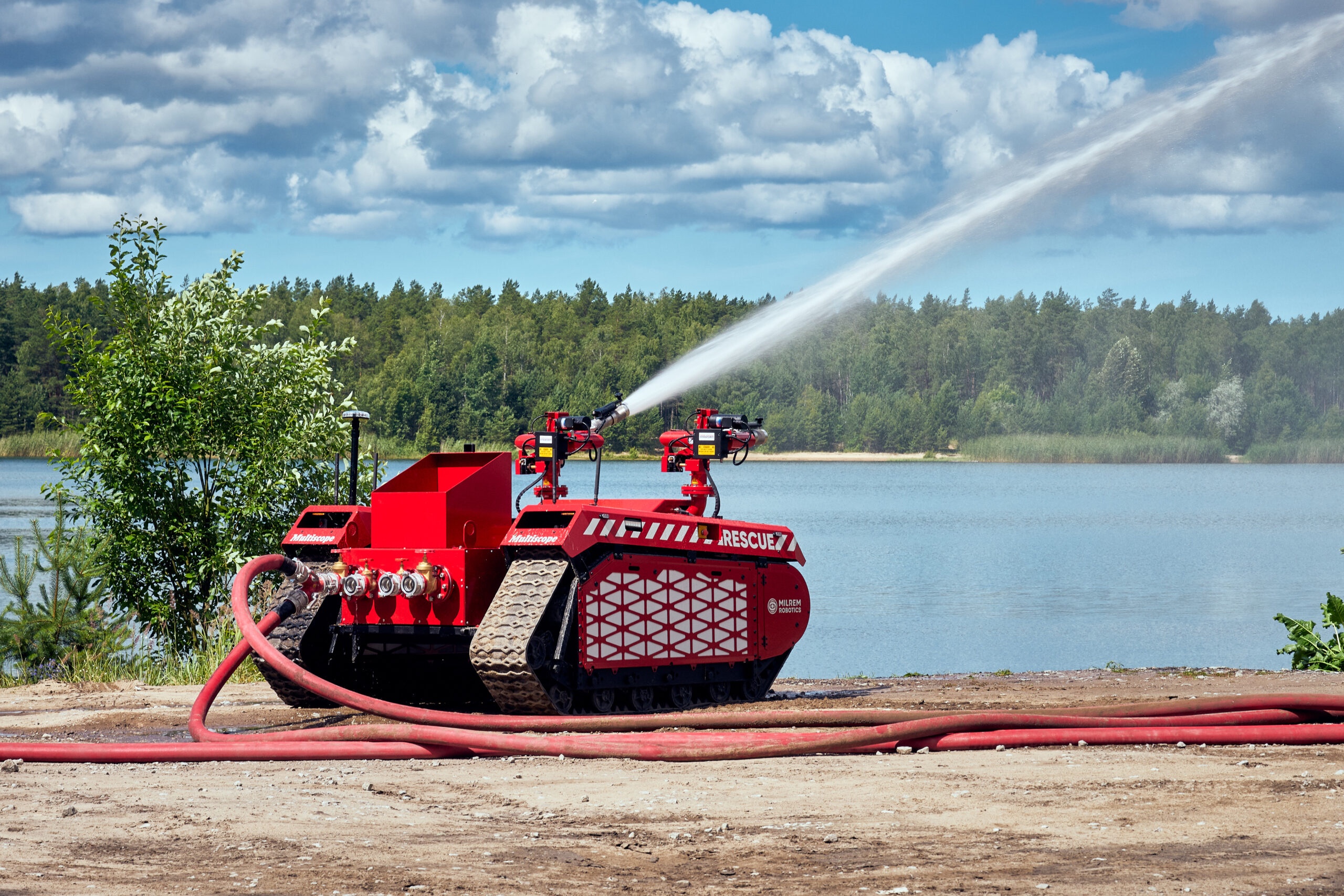
Under the teaming agreement AEC Skyline will act as an integration partner of Milrem Robotics products including the THeMIS and Multiscope unmanned ground vehicles as well as the Type-X Robotic Combat Vehicle. AEC will also engage with the Dutch Ministry of Defence as well as with potential civilian customers, primarily in the Netherlands.

With six THeMIS UGVs already being operated by the Royal Netherlands Army’s Robotics & Autonomous Systems unit under a concept development & experimentation (CD&E) scheme, both parties now aim to position Milrem Robotics’ solutions for future requirements of the Dutch MoD including the use of manned-unmanned teaming.

The parties are looking into requirements that might lead to the integration of new technologies and payloads including (tethered) UAS, sensors and armaments into UGVs. The companies are also analysing how UAS data can enhance AI and autonomous navigation solutions developed by Milrem Robotics and enhance their Intelligent Functions.

“AEC’s tethered drone technology is a welcome addition to the list of capabilities required in the development of the European Unmanned Ground System during the iMUGS project, which is why Milrem has invited AEC to contribute with their technology,” said Kuldar Väärsi, CEO of Milrem Robotics.

AEC Skyline’s director Stef Have added: “we look forward to contributing to Milrem Robotics’ range of products, adding significant systems integration expertise to the partnership while engaging with the end-user, both military and civilian.”

The companies have already identified counter-UAS technology and the development of a new integrated user interface as specific areas of cooperation.

Similarity of Legs, Wheels, Tracks Suggests Target for Energy-Efficient Robots

Saturday, May 29th, 2021

ABERDEEN PROVING GROUND, Md. – A new formula from Army scientists is leading to new insights on how to build an energy-efficient legged teammate for dismounted warfighters.

In a recent peer-reviewed PLOSE One paper, the U.S. Army Combat Capabilities Development Command, known as DEVCOM, Army Research Laboratory’s Drs. Alexander Kott, Sean Gart and Jason Pusey offer new insights on building autonomous military robotic legged platforms to operate as efficiently as any other ground mobile systems.

Its use could lead to potentially important changes to Army vehicle development. Scientists said they may not know exactly why legged, wheeled and tracked systems fit the same curve yet, but they are convinced their findings drive further inquiry.

“If vehicle developers find a certain design would require more power than is currently possible given a variety of real-world constraints, the new formula could point to specific needs for improved power transmission and generation, or to rethink the mass and speed requirements of the vehicle,” Gart said.

Inspired by a 1980s formula that shows relationships between the mass, speed and power expenditure of animals, the team developed a new formula that applied to a very broad range of legged, wheeled and tracked systems – such as motor vehicles and ground robots.

Although much of the data has been available for 30 years, this team believes they are the first to actually assemble it and study the relationships that emerge from this data. Their findings show that legged systems are as efficient as wheeled and tracked platforms.

“In the world of unmanned combat aerial vehicle and intelligent munitions, there is a growing role for dismounted infantry that can advance, often for multiple days, and attack in the most cluttered terrain such as mountains, dense forests and urban environments,” said Kott who serves as the laboratory’s chief scientist. “That’s because such terrain provides the greatest cover and concealment against the unmanned aerial vehicles. That, in turn, demands that dismounted infantry should be assisted by vehicles capable of moving easily in such a broken terrain. Legged vehicles – possibly autonomous–would be very helpful.”

One of the problems with legged robots, Kott said, is they seem to have poor energy efficiency, which limits teaming with Soldiers in austere battlefields.

“For the past 30 years, U.S. military scientists have addressed a number of challenges in developing autonomous vehicles,” said Kott. “Ground vehicles that maneuver on wheels or tracks, and air vehicles that resemble small airplanes which we call fixed wing and small helicopters, which are rotary wing, are now quieter and easier to integrate in troop formations. But for legged platforms, many hurdles remain elusive, and a huge one is making them energy efficient.”

Soldiers cannot afford to carry fuel or batteries for “energy-thirsty legged robots,” he said.

The paper explores whether artificial ground-mobile systems exhibit a consistent trend among mass, power, and speed.

As a starting point, the team investigated a scaling formula proposed in the 1980s for estimating the mechanical power expended by an animal of a given mass to move at a given speed, and compared this to a range of artificial mechanical systems varying in size, weight and power that are autonomous or driven by humans.

The team found the answer to their research question: a similar, consistent relationship does in fact apply also to ground-mobile systems including vehicles of different types over a broad range of their masses.

Kott said this relationship surprisingly turned out to be essentially the same for legged, wheeled and tracked systems. These findings suggest that human-made legged platforms should be as efficient as wheeled and tracked platforms, he said.

To conduct this study, the team collected diverse ground mobile system data from a literature review of previous studies and published data sets.

They studied wide ranges of sizes and morphologies within a data set that combined systems that included for example a 17th century British canon, the Ford Model T, the M1 Abrams tank and an ACELA train.

Gart said their research is relevant to designing ground mobile systems because it helps designers determine tradeoffs among power, speed and mass for future terrestrial robots for defense applications.

One Army goal is to develop new types of autonomous, or partly autonomous, ground vehicle to deliver supplies to Soldiers in challenging terrains, he said.

“To haul supplies, it must be able to carry a certain weight, or mass, at a certain time, or speed,” Gart said.

The formula can approximate the amount of power that vehicle will need, researchers said.

“The Army must develop feasible yet ambitious targets for tradeoffs among the power, speed, and mass of future terrestrial robots,” Kott said. “It is undesirable to base such targets on current experience, because military hardware is often developed and used for multiple years and even decades; therefore, the specifiers and designers of such hardware must base their targets–competitive yet achievable–on future technological opportunities not necessarily fully understood at the time of design.”

The formula developed in this paper gives such a target and could enable the Army to make predictions of future performance of ground platforms such as legged robots given design constraints like vehicle and motor weight and desired speed, he said.

Milrem Robotics’ THeMIS UGVs Used in a Live-Fire Manned-Unmanned Teaming Exercise

Wednesday, May 26th, 2021

The Estonian Defence Forces Artillery Battalion used Milrem Robotics’ THeMIS UGVs in a live-fire exercise to provide advanced situational awareness, conduct casualty evacuation (CASEVAC) and to support units manoeuvre while providing direct fire support from various positions.

During the exercise held in April, two THeMIS UGVs were used by the Artillery Battalion: the THeMIS Combat Support integrated with FN Herstal’s deFNder® Light Remote Weapon System (RWS) with a 7,62 mm machine gun and the THeMIS Observe with Acecore’s tethered drone.

The THeMIS Combat was tasked with supporting an advance force that consisted of an antitank weapons team and a forward observer’s team. The main task of the UGV was to provide covering fire and support the retreat of the two teams to main positions as well as transporting their anti-tank weapons. At the main battle position the UGV was used for casualty evacuation.

The THeMIS Observe provided overwatch and enhanced the battalion’s situational awareness. The use of a tethered attachment to the THeMIS UGV provides tactical units with 24 hours of constant observation of the operational area that is essential in the situational awareness prospective as well as peace time live-fire safety perspective.   

“Taking part in the live-fire exercise of the Artillery Battalion was a great opportunity for us to validate our new infantry support UGV with end users in an actual combat scenario,” said Jüri Pajuste, Director of Defence Research at Milrem Robotics. “The THeMIS Combat Support as well as other unmanned ground systems will enhance various combat capabilities and help reduce loss of life during combat operations,” Pajuste added.

“We found several benefits in including UGVs into our battle scenario,” said Lt Mari-Li Kapp, Commander of operations and training section (S3) in the Artillery Battalion. “Having UGVs as a part of the reconnaissance force that prepares the arrival of the main unit, the UGVs could secure the indirect fire and anti-tank teams by providing direct fire support during an engagement and whilst some units are withdrawing. UGVs could also act as front guards all by themselves since they can provide situational awareness and act as forward observers for indirect fire,” she added.

Travis AFB Partnership Springs Air Force Forward with New Aerial Porter Exoskeleton

Wednesday, May 26th, 2021

TRAVIS AIR FORCE BASE, Calif. (AFNS) —

The Air Force Life Cycle Management Center and Air Mobility Command partnered with Arizona State University to develop the Aerial Port Exoskeleton, a new piece of equipment set to be used in an official capacity at Travis Air Force Base, May 17.

The Aerial Port Exoskeleton helps aerial porters perform their duties with less strain.

“Aerial ports have a high injury rate in the Air Force,” said Tech. Sgt. Landon Jensen, Air Mobility Command innovations, systems and future command manager. “That’s why we are looking into this kind of solution to help porters perform their duties more safely while also helping reduce the risk of injuries, so they are not suffering later in life.”

Travis AFB is currently serving as the test base for the new exoskeleton equipment. If the equipment proves to be beneficial, it will be utilized throughout the Air Force.

“We began looking into this equipment because of the outcome of the 2019 Volpe study,” Jensen said. “The Volpe study was a Department of Transportation study that focused on why retired aerial porters alone were costing upwards of $31 million a year on disability benefits.”

Following the results of the 2019 study, the 60th Aerial Port Squadron leadership looked into working with external parties to develop a solution reducing the number of Airmen leaving service in such a rough state.

“This project would have been impossible without the help of Arizona State University,” said 2nd Lt. Aaron Cox, Air Force Life Cycle Management Center program manager. “They focused on the development and manufacturing of the exoskeleton, and without their partnership we wouldn’t have been able to develop this technology.”

After a month-long testing period, the Airmen expressed the suits are a good investment and significantly reduces load bearing.

“This suit’s core function is to help us lift, but can also be used in other ways,” said Airman 1st Class Kyle Sunderman, 60th APS ramp serviceman. “During a load, fatigue can be a real issue and these exoskeletons really take a lot of the strain away.”

However, as with any new piece of equipment, it is not without fault, but the Airmen say they still feel safe.

“There are small things here and there where the suits can be improved to make them more user friendly,” said Airman 1st Class Xaviar Archangel, 60th APS aerial porter. “But there is no danger and these suits don’t have the strength to overpower the user, so I feel completely safe in it.

“These suits are pretty light,” Archangel said. “You hardly notice you are wearing them aside from the bulk around the waist. “But other than that, I could honestly wear these for an extended period with no problems if necessary.”

The Aerial Porter Exoskeleton is still in its prototype stage and will continue to be updated as data is recorded.

By SrA Cameron Otte, 60th Air Mobility Wing Public Affairs

Fresh Success for the Rheinmetall Mission Master: Her Majesty’s Armed Forces Order Four More Robotic Vehicles

Wednesday, May 19th, 2021

Rheinmetall has achieved another sales success in the United Kingdom. The British have ordered four more Mission Masters under the second phase (Spiral 2) of their Robotic Platoon Vehicle programme. Rheinmetall had already succeeded in placing its robotic vehicle in the Spiral 1 subproject of the UK’s RPV programme, which tests how unmanned vehicles can boost the firepower and capabilities of dismounted combat troops at platoon level.


Having already procured four Mission Master vehicles with cargo modules in the spring of 2020, the British military will now be acquiring four more Mission Masters, equipped this time with a fire support module to explore potential future capabilities.

The contract was awarded at the end of February. Delivery of the four Mission Master – Fire Support vehicles will take place between May and August 2021. The order, which will be handled by Rheinmetall Canada, also encompasses training and support activities as well as spare parts. Based in the UK, the joint venture company Rheinmetall BAE Systems Land will also be supporting the project.

Boasting a whole host of innovative features, the Mission Master’s nerve centre is the Rheinmetall PATH autonomy kit. It comprises a suite of advanced sensors and perception algorithms that assure rich situational awareness, enabling the vehicle to find the safest route through the surrounding environment. This ensures that the vehicle can navigate challenging terrain safely and complete its mission successfully, without collisions.


Featuring a built-in security circuit board, a tablet computer running Rheinmetall command and control software lets the operator steer the platform and control the weapon station in a safe wireless way.
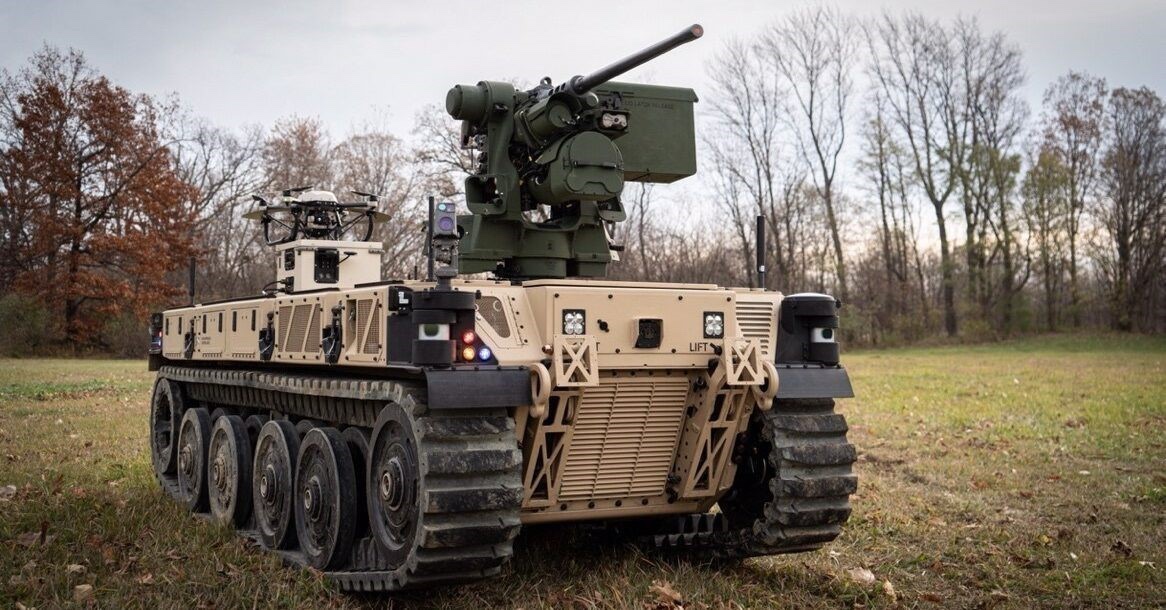
The Mission Master – Fire Support is armed with the Rheinmetall Fieldranger Multi, a remotely controlled weapon station. Targets are never engaged autonomously: there is always a human in the loop. Fully stabilized, the 7.62mm cal. Fieldranger Multi features a wide vertical and horizontal slewing range, thus assuring high accuracy and effectiveness even at long distances.

Rheinmetall Mission Master – Focusing on the future with robotics and autonomy

Robotics is already changing the modern battlefield. The Rheinmetall Mission Master is a modular, autonomous, unmanned ground vehicle designed to enhance the operational effectiveness of troops tasked with carrying out a wide array of activities. Thanks to the Mission Master vehicle, soldiers can count on artificial intelligence and robotic muscle when performing dull, dirty, and dangerous tasks – the three Ds – and, more importantly, they can carry out their missions in greater safety.
Ready for deployment, the Mission Master can serve either as an autonomous or semiautonomous element of a combat team.

Designed for maximum flexibility, the Mission Master can be outfitted for a multitude of different operations thanks to modular, quickly mountable build-ons. Besides logistic tasks, it can perform in a variety of other roles, including surveillance, security, casualty evacuation and CBRN detection. The Mission Master can also serve as a mobile radio relay station.

Leader–Follower Vehicles to Offer Army Increased Operational Capability

Wednesday, April 14th, 2021

DETROIT ARSENAL, Mich — Modernization is the buzz word floating around the Army currently and with good reason. To keep ahead of our near-peer adversaries, we must develop better technologies faster to dominate the battle space.

“We’ve done a good job at keeping up with developing current technologies,” said Maj. Gen. Darren Werner, Commanding General U.S. Army Tank-automotive and Armaments Command. “However, we need to get it to the Soldiers in the field for it to matter.”

Werner, along with other officers and civilian leaders attended a Leader–Follower demonstration on Apr. 5 at the Detroit Arsenal. The event was led by the Ground Vehicle Systems Center on the arsenal to highlight the effectiveness of semi-autonomous robotic Tactical Wheeled Vehicles.

Bernard Theisen, Division Chief Combat Support Robotics and Safety for GVSC, briefed the capabilities of the Leader-Follower vehicles and stated that they had some similar on-road capabilities to some current high end luxury vehicles and other off-road capabilities unique to the military.

“The vehicles have the capability to be driven independently, remotely, or in this instance, made to follow a lead vehicle,” said Theisen.

The Leader–Follower vehicles offers field commanders better options when operating in a combat zone by providing manned and unmanned capabilities.

According to Alfred Grein, Acting Director GVSC, by installing robotic kits to vehicles, a lead “manned” vehicle can lead a convoy of one or more follower “unmanned” vehicles accurately and safely.

Outside of Leader–Follower option, the Program Executive Officer Combat Support and Combat Service Support is looking at fielding the technology as GVSC continues developing further ways to leverage and improve the capabilities at a later time.

“Now that the hardware is in place, we can look at ways to enhance the remote and semi-autonomous capabilities in the future,” said Grein. “All we have to do is update the software.”

There are currently 60 Leader–Follower systems issued to the 41st Transportation Company at Fort Polk, Louisiana with their next software upgrade currently undergoing safety testing at Aberdeen Proving Grounds, Maryland. GVSC Agile Development, Security, and Operations approach through the Software Foundry allows for Soldier to provide constant feedback to the developers and to deliver better products to the user faster while supporting both PEO Ground Combat Systems and PEO CS &CSS operational needs.

By Scott Wakefield