TYR Tactical

Archive for the ‘Training’ Category

CTOMS and Kili-Climbing Collaborating to Provide Unique Training Opportunities

Tuesday, November 20th, 2012

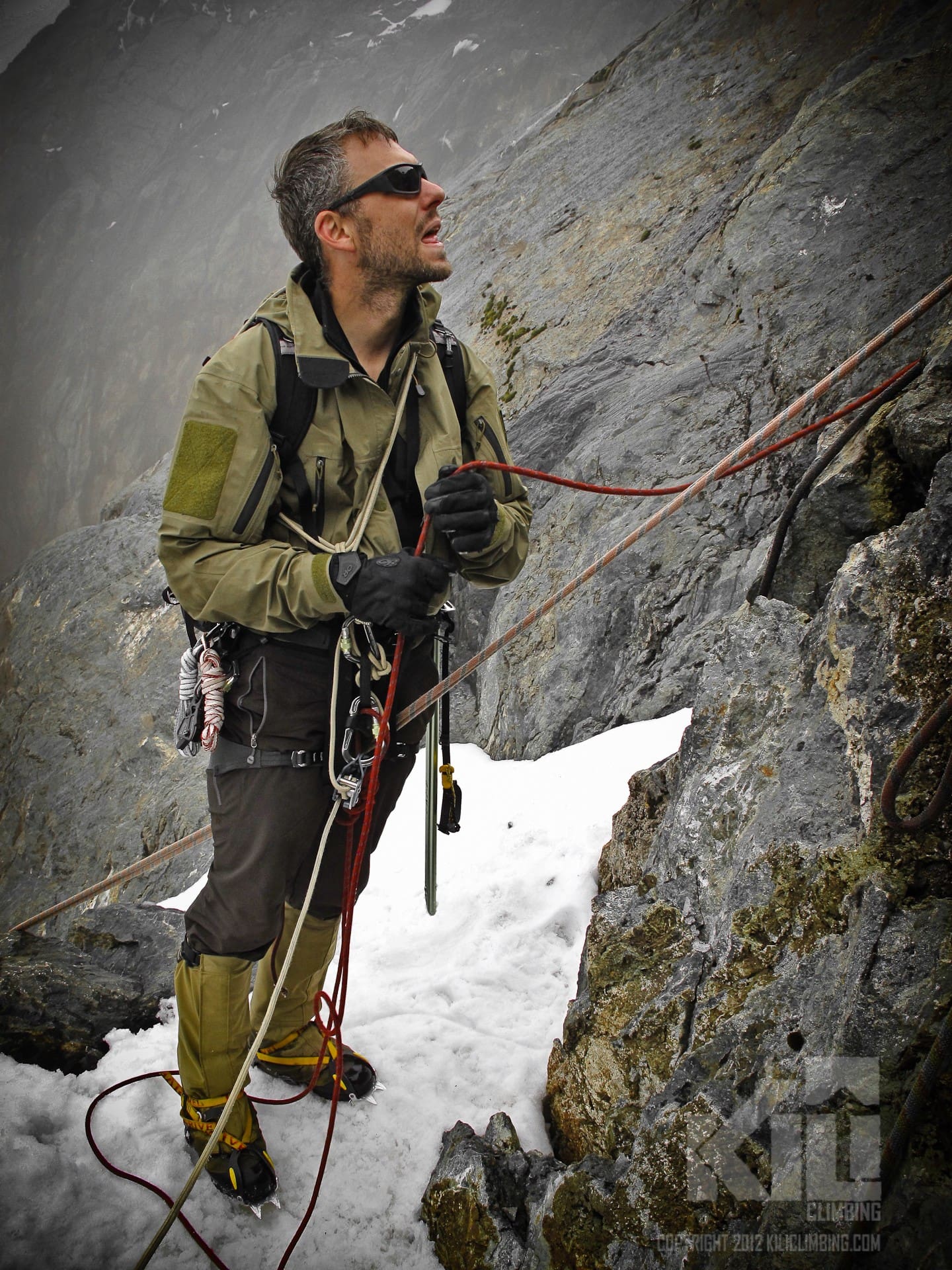
It was inevitable. Canadian companies CTOMS and Kili-Climbing are collaborating. When Chris Kopp of CTOMS started developing the TRACE Systems (micro rope systems) unveiled last year, he realized it could be used in more and more diverse applications. Then, he and his business partner used it as an ultra-light weight system climbing in Uganda for glacier travel and rappelling. This past summer they did their first lead climbs on it. Along with CTOMS’ Tactical Assault Climbers Course (TAC-C) that they’ve been running for two years now, the natural evolution was to take the CTOMS rope access and complex terrain programs to the next level. Kili-Climbing has been that enabler.

CTOMS is now partnering with Kili-Climbing, which provides logistical planning and support in Africa to their Complex-terrain & High Altitude Seminars (CHAOS, as in their slogan, “Control the Chaos”), it enables them to provide experience based training at high altitude and in foreign countries. The diversity of location options provides a broad spectrum of terrain, latitude and altitude options, beyond what is available in the continental US. The client’s specific capability requirements/desires will determine the venue. Current venues include Mt. Kilimanjaro in Tanzania, Mt. Stanley and Speke in Uganda, Mt. Kenya in Kenya and Mt. Logan in Canada. While the African locations provide milder equatorial high altitude options with very diverse terrain and foreign travel experience, Mt. Logan in Canada provides a significantly lower traffic option than Mt. McKinley in Alaska, and provides a great Arctic, high latitude, high altitude, extreme cold weather training environment.

The difference between training with the CTOMS/Kili-Climbing team and hiring another African tour provider or civilian guide company is that the CTOMS/Kili-Climbing team understands and caters specifically to the military, and in particular SOF applications. They speak your language. These aren’t tourist vacations and they aren’t going to put their clients on busy, standard tourist routes, and most of all, they aren’t going to teach them civilian practices that contradict or conflict with tactical requirements. Instead, they cater the instruction, routes, objectives and activities specifically to the tactical training objectives. These are customized training programs built specifically to military SOF personnel and taught by instructors with military backgrounds and certified guides with experience instructing SOF.

For US units that require a contract with a US company, they work with The Peak out of Butte, Montana. CTOMS can also be contracted directly. For personal trips in Africa, contact Kili-Climbing directly.


www.ctoms.ca/high_altitude_operations

kili-climbing.com

Shrek Sighting

Sunday, November 18th, 2012

20121118-091739.jpg

Just be happy you aren’t seeing this from the opposite point of view.

‘Like’ him on Facebook at www.facebook.com/TmGrom

Engage his services at aliastraining.com

Canipe Correspondence – Being Hard Enough to Be Lazy

Sunday, November 18th, 2012

Laziness is pretty much the scourge of America these days. People want all the benefits of hard work without, well, the hard work. There’s one circumstance I can think of that laziness pays dividends though, and in fact improves the gains of the hard work you just did. The rest day, which is often overlooked. I took a quote from the Gym Jones website a few years ago that stuck with me. I had been training with a partner for an upcoming multi-week event. I was in most likely the best shape I had ever been, knocking out a 1400+ UBRR score and a sub-2 hour 12 mile ruck time. Religious adherence to a great diet, never slacking on workouts. Unfortunately I fell into a trap of being overtraining and a week before the event I tore a tendon in the arch of my left foot on a Saturday morning, which pretty much sidelined me for nearly 6 months. That one stupid rest day I decided to cram a little extra work into caused career implications that haunt me to this day. One damned Saturday morning on Fort Bragg that I wasn’t smart enough to take a break. Like the song says, “If you’re gonna be dumb, you gotta be tough.” I promise you, you’re better off being smart and tough. Afterwards I found this:

Commenting on a disappointing performance at the 2010 World Championships Mark Cavendish said, “It takes balls to rest and do nothing and I didn’t have the balls.” The hard work is easy, but it takes courage to rest. In an era when everyone thinks that more and harder is better few are brave enough to step back, to tell friends, “I’m taking it easy today.” I can hear the jibes from here. But one of my maxims is, “when in doubt, rest” and I admonish with it frequently.

The T-Shirt Gym Jones sells sums it up with “don’t do the work if you don’t have the balls to rest.” Recovery is a wonderful thing, it allows you to actually take full benefit of your hard work, mentally and physically. A lot of the high-stress activities we engage in are fatiguing. The body needs time to rest, rebuild, and prepare for another round of punishment. If not, it cannot grow to accommodate your workload. We plateau. We get complacent and lazy. We lose motivation. Exercise is a common example to relate to. You need to rest to build! Your body needs to heal to get stronger! When you break yourself off every day, you’re damaging yourself to a degree. Your body builds it’s capabilities to compensate for your workload. It needs the time to do that or not only will your results slow to stop, you’ll fall prey to injuries. Nobody wants to work that hard to flush it down the toilet on a strained muscle or torn tendon. One day of rest to save 6 months of cumulative work, or one more day of work for 6 months of rest…the choice is yours.

Plan rest into your activities. If possible, I like a 3/1 ratio of work/rest days on my training schedule. I use that for shooting, workouts, and other activities requiring a lot of physical activity or concentration. I know some animals that do 2/1 and still get by better than the rest of us. Get some sleep too. If you’re the guy that hits the bar or eats bad food “cause I worked out extra hard” today, it was all for nothing. A good night’s sleep is a rest day all its own for every day you’re on the job. Not only will a lack of rest and recovery stop muscle growth, but it will decrease your energy levels, and possibly testosterone production, and convinces your body to decrease muscle and store fat to feed itself. Don’t do the work and throw away the benefits.

Rest is important, arguably as important as the work you do to need it. Be man (or woman) enough to take that rest day when you need it. Plan on it! Don’t worry about your friends calling you a pussy. You’ll get to mock their “weak genes” when they’re on crutches or at the gym twice a day every day and can’t get any stronger.

Take it easy folks.

Gunfighter Moment – Mike Pannone

Saturday, November 17th, 2012

I have met a number of instructors in the, for lack of a better term, “tactical” world. I have the benefits of being a constant shooter and several years’ experience teaching in classroom settings to form opinions of instruction and training for real-world firearms use. And I have had the opportunity to discuss the effectiveness of various instructional techniques with professional military and law enforcement individuals who were willing to speak frankly and did not hold anything back in their assessments.

All of this has led me to the conclusion that Mike Pannone is one of the most effective and well-rounded firearm instructors in the world. Why?

– He has an extremely impressive military background, one which has given him a level of experience found in only a few modern instructors;

– He has studied kinesiology (the scientific study of human movement) at the collegiate level;

– He has experience as an instructor for federal law enforcement, namely being the head range instructor at the Federal Air Marshals Service school;

– He is very low key – mostly because he does not feel the need to impress anyone;

– He is not a “stick-in-the-mud” – he is always looking to develop new and more effective shooting techniques.

So he knows what is and is not relevant to real-world applications, he can explain in a scientific manner why a certain technique is effective or ineffective, he has the ability to impart this experience and knowledge to students, he does not showboat during classes, and he keeps an open mind about how he does all of this.


Mike Pannone with a fancy handgun

When I have occasion to discuss the merits of Mike’s instruction with individuals who shoot guns for a living, they express universal praise and admiration. They have no time for BS and while they often receive training from Mike as well as other instructors through work, they also pay for Mike’s classes out of their own pockets.

His training is in constant demand from actual military and law enforcement units. We hear this so often from various instructors that it becomes background noise – Mike actually tries to make this part of his life background noise. He teaches high-speed military and law enforcement units but never, ever talks about it publicly.

It’s almost weird – it would be easy for him to cultivate a following based on personality, but he doesn’t bother with such things. He’s so self-effacing that I feel a constant need to write about him. Part of it is that I consider him to be a friend, sure. The other part is that he is an intellectual and a true badass. That is a rare combination indeed.

This article was first published at Vuurwapen Blog. Reposted at the request of Mike Pannone and with the permission of Vuurwapen Blog.

Mike Pannone retired from the Army’s premier assault force (1st SFOD-D) after an explosive breaching injury. A year after his retirement America was attacked on 9/11 and he returned to help serve his country as the head marksmanship instructor at the Federal Air Marshals training course and then moved to help stand up the FAMS Seattle field office. In 2003 he left the FAMS to serve as a PSD detail member and then a detail leader for the State Department during 2003 and 2004 in Baghdad and Tikrit.

In 2005 he served as a ground combat advisor of the Joint Counter IED Task Force and participated on combat operations with various units in Al Anbar province. Upon returning he gave IED awareness briefings to departing units and helped stand up a pre-Iraq surge rifle course with the Asymmetric Warfare Group as a lead instructor. With that experience as well as a career of special operations service in Marine Reconnaissance, Army Special Forces and JSOC to draw from he moved to the private sector teaching planning, leadership, marksmanship and tactics as well as authoring and co-authoring several books such as The M4 Handbook, AK Handbook and Tactical Pistol shooting. Mike also consults for several major rifle and accessory manufacturers to help them field the best possible equipment to the warfighter, law enforcement officer and upstanding civilian end user. He is considered a subject matter expert on the AR based Stoner platform in all its derivatives.

www.ctt-solutions.com

Gunfighter Moment is a weekly feature brought to you by Alias Training & Security Services. Each week Alias brings us a different Trainer and in turn they offer some words of wisdom.
Is He Doing it “Right” or Not?

Saturday, November 17th, 2012

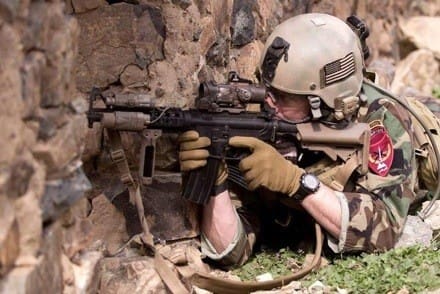
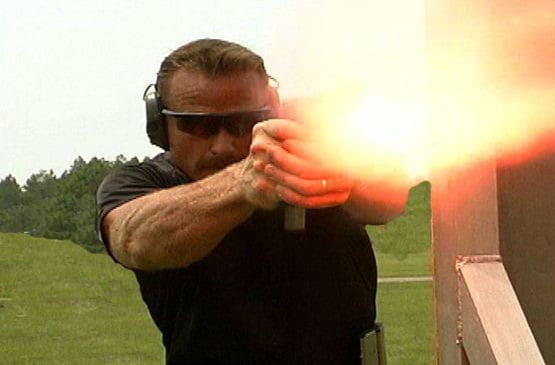
Some readers may look at this photo and say that he is doing it wrong. Sure, he’s got a grip on the magwell and his buttstock is off of his shoulder, but he may just be adapting to the cover.

20121116-223503.jpg

Weapon handling skills are very much up to the individual and should be looked at more from a TTP standpoint than dogmatic adherence to one school of thought over another. Sure, there are definitely ways not to do it, but there are also multiple ways to get rounds on target. Over time, you’ll find something’s work better than others for you.

Gain a wide variety of skills from multiple instructors and then learn how to adapt them to your situation. When I say instructor, I mean that in a rather broad sense. Many if you serve in the military or LE and gain instruction associated with your duty. However, I recommend everyone seek training from a professional instructor whether uniformed or not.

So what do you think? Is the guy in the photo doing it “right?”

Statement from the Range Owner Regarding the Recent Accidental Shooting

Wednesday, November 14th, 2012

Since a lot of readers have been inquiring about it, I am publishing this statement by range owner Len Baxley in its entirety as it provides a great deal of detail on the recent shoot house accidental shooting involving trainer Sonny Puzikas. If anyone has any additional amplification regarding the incident or factual conflicting information please feel free to share it.

Hello,

My name is Len Baxley, and I am the Founder of the Texas Defensive Shooting Academy (TDSA), not to be confused with other TDSA’s. I started the original TDSA in Texas in 1995. The other TDSA firearm training organizations are located in Tulsa, Missouri, Kentucky and Canada. I trained them how to shoot, then taught them how to teach, then allowed them to use the “TDSA” name in a hand-shake business arrangement. With the exception of Kentucky, none of them are associated with me any longer, even though they still use the TDSA designation.

I am also the owner of the TDSA gun range, founded in 1995, located just outside the city of Ferris, Texas.

As many of you have already heard there was a tragic (non-fatal) accidental shooting at my range on Sunday, Nov. 4th 2012.

I have intentionally not commented on this incident for several reasons. I do not know if that decision has been a mistake or commenting now is the mistake.

(more…)

Corrugated DLS Training Furniture

Monday, November 12th, 2012

The new Corrugated DLS Training Furniture is cool on several levels. For one thing, it’s a low cost solution for adding realism to shoot houses. Second, it can be “wrapped” in a variety of finishes to replicate virtually any environment. Finally, that same DLS Wrap has special properties embedded in the DLS Polymer Film that prevents the corrugated material from catching fire from a “ flash bang “ or a “ smoke grenade “ when clearing a room. It’s not only safer than other solutions, but the training furniture will last longer for the Soldier to train on.


www.dlsmilwraps.com

Corps Strength – PT Your Attitude

Monday, November 12th, 2012

In my present job as an instructor at the U.S. Navy’s International Training Center here in Pensacola, we have different levels of physical training for our different courses. Each is specifically designed for each course goals and student makeup. Some are very tough (Marine TBS, Dive school, EOD and BUDS Preparatory). While on the other end are easy entry level stuff, mostly to demonstrate how to set up and conduct basic unit PT, and give the students a chance to workout. As you might guess the physical condition of the students attending also has a wide variance. Some are in serious condition, while others are in very poor shape. While they may not have the high speed PT training programs that we sometimes take for granted in the U.S military, they often surprise me with their unfiltered take on things.

Recently I recently had a student from Antigua (now a Navy Ensign who started out first in their Army) had already been to OCS in the Coast Guard Academy, Army Ranger School, the U.S. Army’s Infantry Officer course and also attended a (brutal) six month Jungle Warfare training school in Guyana. Tall and thin he’s in pretty good shape, but not really the PT stud you would think. I’ve had many conversations with him about all different training he’s been through, and I was (of course) very curious to what he thought about the PT that he had to deal with at these different schools. Some of his answers surprised me. His overall opinion was that 99% of all this PT was mental. He’s observation was that if you have a basic level of fitness, the rest was mental. He witnessed many people in these schools that seemed to be in awesome physical shape, drop out after only a few weeks, or even days. They just didn’t have it attitude wise. I agree totally and this leads me back to where I always go with getting in shape, its all about the way you think about it. You have to get your head screwed on right, or all the special diets, workout routines and supplements won’t matter. I talk about this a lot in my book Corps Strength. If fact I’ve often been accused of harping on it TOO much? I don’t think so, as I think its importance cannot be over stressed, IMO much more important than any specific workout routine.

The bottom line is you’ve got come to terms with the simple fact that getting in good shape and maintaining a healthy bodyweight is work. Its not easy, never was and never will be. But get a grip, its not torture and its not impossible. It just requires some effort, a little discipline AND above all else the right thought process. Put the right thoughts in your “brain housing group” and your on your way, after that all you need is the PT and diet routine that work for your lifestyle and goals. Don’t get too fancy, don’t start out to fast, always think long term and you’ll get there. I’ve seen it hundreds, if not thousands of times. By the way my student thought that Coast Guard OCS was the toughest school. Huh?? Coast Guard OCS tougher than Ranger School, Why? Not because of the PT but because of the tough swim requirements, he isn’t a great swimmer. Again its all about the way you look at it. Good luck and be safe.

Semper Fi
MGunz