SIG SAUER - Never Settle

Archive for the ‘UAS’ Category

Zenith AeroTech, VIRTEX Form Strategic Partnership to Meet Increasing Customer Demand for Long-endurance, Heavy-lift, Tethered Drones

Friday, January 7th, 2022

This collaboration will allow Zenith AeroTech to meet larger production goals for its line of tethered aerial vehicles while being fully compliant with National Defense Authorization Act (NDAA) regulations

AFTON, Va.–(BUSINESS WIRE)–Zenith AeroTech, a leading developer of heavy-lift tethered aerial vehicles (TAVs), announced today that it has formed a strategic partnership with VIRTEX Enterprises (“VIRTEX”), an Austin-based electronics manufacturing service provider, to meet increasing customer demand for more TAVs in shorter timeframes and for these platforms to be NDAA compliant.

“Zenith brings years of custom-made TAV and free-flight drone design and manufacturing experience, while VIRTEX—an AS 9100 accredited organization—contributes its sought-after advanced electronics design, manufacturing, and testing capabilities.”

“This new partnership allows our two companies to leverage their individual areas of expertise,” said Kutlay Kaya, chairman of Zenith AeroTech. “Zenith brings years of custom-made TAV and free-flight drone design and manufacturing experience, while VIRTEX—an AS 9100 accredited organization—contributes its sought-after advanced electronics design, manufacturing, and testing capabilities.”

Zenith AeroTech offers industry, Federal government, first responder, telecommunications, and military customers the option of three different, highly customizable TAV platforms: Hexa, Quad 8, and Quadro. Thanks to Zenith’s Ground Power-Tether Management System, these TAVs can stay aloft for days at a time, delivering true persistent surveillance.

VIRTEX provides engineering services, design, system level integration, PCBA and full life cycle management services for the aerospace, military, and commercial market. These services are delivered in vertically integrated solutions with an aim towards long-term customer partnerships.

“VIRTEX’s U.S.-based manufacturing capability and its specialized aerospace experience will ensure that Zenith products are all American-made and fully NDAA compliant, unlike other drone suppliers,” said Kaya. “VIRTEX will also allow Zenith to scale up production to meet larger volume orders in a shorter timeframe.”

Meanwhile, Zenith will help VIRTEX enter the growing, technically sophisticated small unmanned aircraft systems (sUAS) market, with introductions to new defense and law enforcement customers.

Dana Pittman, Executive VP of VIRTEX, noted that the combination of the two companies brings with it a great deal of technical depth.

“The vertical capabilities of our two companies include full system design, manufacture and integrated test,” Pittman said. “We offer leading-edge custom solutions that support multiple channels, including defense. With this partnership, VIRTEX and Zenith will build complex systems to address diverse and complex problem sets.”

Competitors Show Off Innovative Thinking at HACKtheMACHINE Unmanned

Tuesday, December 14th, 2021

SAN DIEGO – This year’s HACKtheMACHINE Unmanned competition, held Nov. 16-19, virtually brought together nearly 1,000 competitors in the first of a series of public-facing technology challenges designed to accelerate the U.S. Navy’s Unmanned Task Force, forging valuable partnerships between the Navy, industry and academia to create new, high-end unmanned capabilities.

Sponsored by the Office of Naval Research (ONR), this technology competition encouraged creative “hackers” to help meet the needs of the Fleet by developing and integrating unmanned and autonomous systems at scale.

Chief of Naval Research, Rear Adm. Lorin Selby, helped kick off the event, speaking about innovating in the Navy, including the notion of “the small, the agile, the many.” The idea behind that is they look at small, attritable autonomous platforms and build them quickly and at scale, to complement the larger, expensive platforms that form the bulk of the Fleet and Force. For more information about their new vision, read their press release: ONR Chief Unveils New Vision to Reimagine Naval Power.

“The centerpiece of my strategy to reimagine naval power as Chief of Naval Research is built on a few key themes. First, we are living in a time of incredible technological change, and we must meet the moment with bold action. Second, we will introduce the idea of Strategic Hedge against an alternative future. Third, we have a plan to synthesize the most creative and potentially game changing ideas of the last three decades into a plan of action,” said Selby. “Finally, we conclude with a call to action, which all begins with exploring digital challenges at HACKtheMACHINE.” 

Although participants competed virtually, event organizers and Navy personnel were on-site in San Diego to oversee and facilitate the competition, which was streamed live via YouTube and StreamYard.

There were three tracks for participants to compete in: Hack the Pilot, Detective Bot and Top Model. Each challenge fell into a different focus area – maritime cyber, data science and digital engineering, respectively – to appeal to a broad range of talents and skill sets. The Navy’s Cybersecurity Office (PMW 130) sponsored and developed the challenges for the Detective Bot track, as a way to pursue artificial intelligence/machine learning (AL/ML) tools that can distinguish benign from malicious code.

PMW 130 provided a dataset with thousands of malicious and benign code samples to see who can take inefficient AI/ML techniques developed with unlimited resources ashore and adapt them to efficient and effective cyber solutions on smaller afloat and autonomous platforms.

“The competitors at this year’s HACKtheMACHINE had to solve some really tough challenges,” said Mike Karlbom, PMW 130 Technical Director of AI/ML. “We were excited to welcome so many different participants, who were able to show off their data science skills and creative thinking in these tracks. This event shows the importance of bringing together smart people, from a variety of backgrounds, to drive innovation and collaboration.”

In the Hack the Pilot track, participants were provided with an auto piloting system and challenged to test and identify all vulnerabilities in the code base.

In the Top Model track, participants were given a set of mission goals and asked to build a simulation scenario of a wide-area search. Then, they created model-based solutions for defined situations within the created model. Finally, they determined whether their created solutions could outperform a heterogeneous collection of objects combatting the scenario.

Also at the event, PMW 130 announced the winner of their third prize challenge in the Artificial Intelligence Applications to Autonomous Cybersecurity (AI ATAC) Challenge series. The winner of the challenge and the $750,000 prize was Splunk Inc. (NASDAQ: SPLK), a data platform leader. Their submission, Splunk® SOAR, had the best performance based on the criteria of the challenge, which focused on enhancing the Security Operations Center using AI and/or ML tools to automate the detection and prevention of advanced persistent threats and other cybersecurity campaign activity.

A technology competition run annually by the Navy since 2016, HACKtheMACHINE events have been previously held in five cities nationwide: San Francisco, Austin, Boston, Seattle and New York. This year’s Unmanned challenge took advantage of a virtual setting and focused on AI/ML and digital engineering to accelerate the process of reimagining naval power.

The next HACKtheMACHINE event is scheduled to be conducted live in Miami, Florida in April 2022.

From Lily Chen

DroneShield Releases A Virtual Demo Video

Tuesday, December 7th, 2021

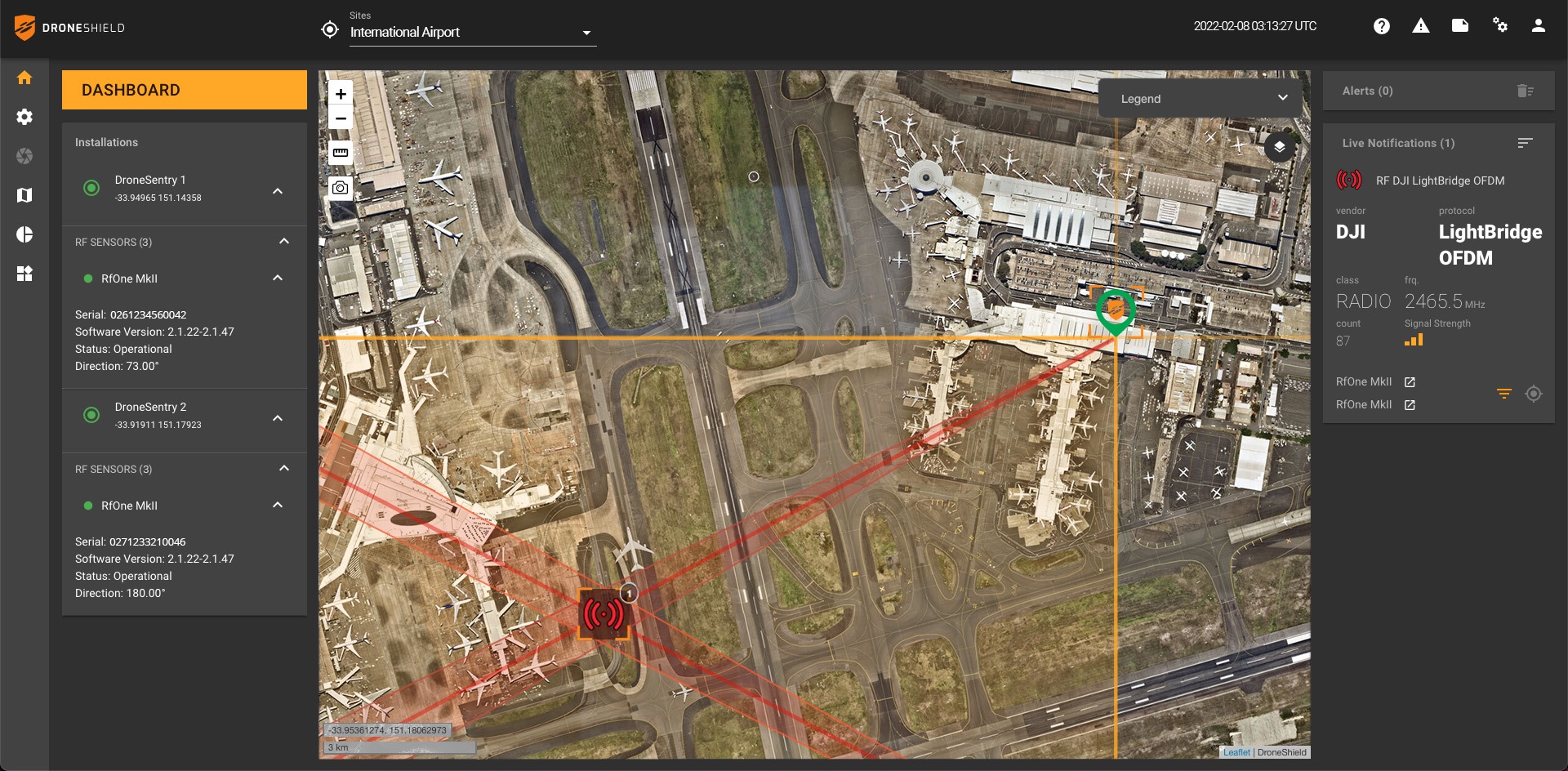
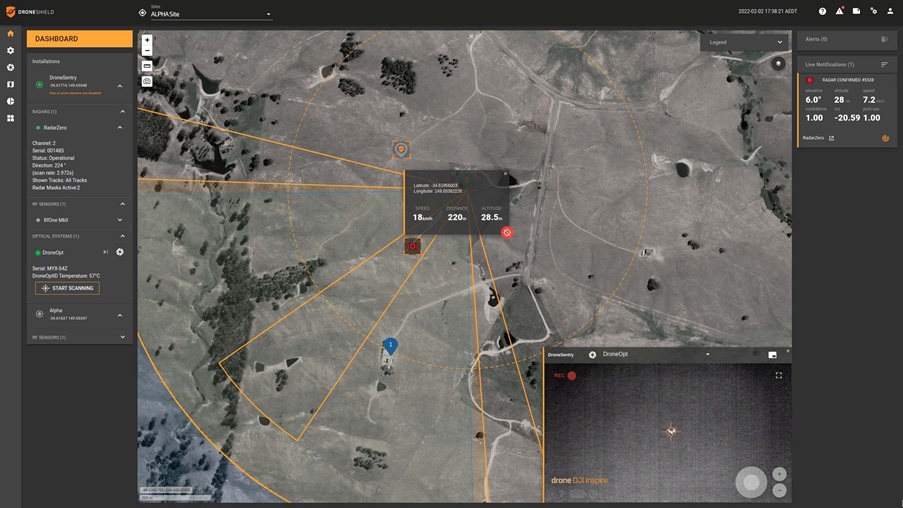
DroneShield is pleased to share a virtual demo video highlighting a select number of its C-UAS solutions. The video can be viewed here.

For additional details, please visit www.droneshield.com

USAF Orders 15 Silent Arrow Precision Guided Cargo Delivery Drones

Monday, December 6th, 2021

World’s First Production 1-Ton Cargo Delivery Drone to be Scaled Down and Flown to Address New Humanitarian and Tactical Markets

LOS ANGELES, Nov. 29, 2021 — Silent Arrow today announced the United States Air Force, through the Air Force Research Laboratory (AFRL), has awarded the company a contract entitled “Guided Bundle Derivative of Silent Arrow® for Side Door and Palletized Swarm Deployment at High Speeds and Altitudes” effective November 12, 2021.

Under this Small Business Innovation Research (“SBIR”) Phase II contract, the commercially successful Silent Arrow® GD-2000 (Glider, Disposable, 2000 pounds) platform will be scaled down and redesigned as a new product line called the Silent Arrow® Precision Guided Bundle (SA-PGB), which will initially be developed as an autonomous cargo delivery glider. The SA-PGB is specifically designed for side door and multi-unit (swarm) ramp deployment, compatible with a much-expanded fleet of delivery aircraft ranging from the civilian Cessna Caravan to the military C-17.

The SA-PGB will be designed and built at Silent Arrow’s headquarters in Irvine, California and 15 aircraft will be shipped to the company’s flight test center in Pendleton, Oregon for operational evaluations at the Pendleton UAS Test Range.  Initial specifications include 500-pound max weight, 350-pound cargo capacity, 39 inches long and deployable from high altitudes and airspeeds.

“We’d like to thank the U.S. Special Operations community, the U.S. Air Force, Navy, Army and various other organizations who signed on to support this award for a new life-saving cargo delivery drone,” said Chip Yates, Silent Arrow’s founder and CEO.  “We look forward to an exciting flight test program in 2022 and quickly getting this new capability into the hands of the warfighter and disaster relief organizations alike.”

Silent Arrow’s tightly integrated packaging with its patented spring-deployed wing system, industry-leading payload capacity, 40-mile standoff distance and low unit cost, has received enthusiastic reception from U.S. and foreign customers and is currently being delivered and operated to directly serve heavy-payload, autonomous cargo resupply needs throughout the world.

Liteye and Unmanned Experts Partner to Address Drone Swarms

Thursday, December 2nd, 2021

Unmanned Experts Inc. develops SWARM management systems, Liteye provides hardware

Centennial Colorado — Liteye Systems, based in Denver Colorado, has partnered with Unmanned Experts Inc. to provide the hardware components to ruggedize the new AIR COMMONS™ – SWARM, drone swarm asset planning, management, and control system.

AIR COMMONS™ SWARM technology enables command and control tasking, mission planning, and generation of a “Swarm Air Tasking Order” including resource allocation, asset-target matching, force management, and mission control.  These capabilities enable US swarm commanders and tacticians to deploy overwhelming autonomous airpower faster than the enemy’s decision-making cycle.  The system is designed to fully integrate Unmanned Traffic Management, Advanced Air Mobility, Air Traffic Management, and UAS utilization and provide Air Domain Awareness within a disaster response or deployed Area of Responsibility.

“Swarming autonomous systems are the next technology to be addressed to secure dominance and air superiority,” said Keven Gambold, CEO of Unmanned Experts, Inc.  “AIR COMMONS has demonstrated control of 55 drones and this number continues to increase.”

“Unmanned Experts’ technology is necessary for today’s battle,” said Kenneth Geyer, CEO of Liteye, “Swarms are increasing, and adding these capabilities to friendly UAS capabilities will be vital moving forward.”

AARDVARK Partner Sky-Hero Wins Innovation Award At Milipol Paris 2021 with LOKI Mk2

Tuesday, November 30th, 2021

Sky-Hero’s LOKI Mk2 tactical sUAS, distributed exclusively in North America by Aardvark Tactical, recently won an Innovation Award at Milipol Paris 2021. This award aims to reward the most innovative companies in terms of products, materials, services, solutions, or business models in the homeland security industry. The jury, composed of international experts in their respective fields, presented the winning title to the NATO-approved Beligan company, Sky-Hero, for its innovation in the category of drone & anti-drone systems and robotics.

The LOKI Mk2 is the second generation of the widely used LOKI Mk1, which was the first sUAS specifically built for tactical indoor use. Already adopted by more than 1,000 teams across six continents, 47 U.S. states, and all ten Canadian provinces, LOKI Mk2 is the world leader in tactical indoor sUAS.

Designed, tested, and produced in Europe and the United States in conjunction with the world’s top counterterrorism teams, LOKI Mk2 is a rugged, purpose-built sUAS that acts as a scout in close-quarter, indoor, and confined spaces. LOKI’s integrated flight stabilization system allows it to autonomously hover without user input in a completely denied environment. Its impact-resistant body can withstand the full-contact nature of indoor flight and allows LOKI to self-right in the event of a crash. Its forward-facing day/night camera and on-board HD microphone provide real-time, lag-free intelligence to the operator in any conditions, while front and bottom selectable and dimmable IR LEDs maximize visibility in changing light conditions and allow LOKI to operate in total darkness. LOKI features a custom-built Stand-Alone Ground Controller that can control up to four devices simultaneously and does not require GPS, WiFi, or cellular service to operate. LOKI is also designed to act as a platform for tactical payloads, including less-lethal diversionary devices, light and laser packages, alternative cameras, and breaching payloads.

The LOKI Mk2 is exclusively distributed in North America by Aardvark Tactical. AARDVARK finds, develops, and manufactures products that are purpose-built to protect tactical operators.

Learn more about the LOKI Mk2 Tactical sUAS at loki.aardvarktactical.com.

Schiebel Impresses at Search and Rescue Trials in Extreme Environmental Conditions in the Arctic

Monday, November 29th, 2021

Vienna, 25 November 2021 – Schiebel, together with Andøya Space Defence, successfully demonstrated the capabilities of the CAMCOPTER® S-100 on board the coastguard vessel KV Nordkapp in Norwegian waters.

The purpose of the trials was to demonstrate the embarked Search and Rescue (SAR) and maritime surveillance capabilities of the CAMCOPTER® S-100 in the environmental conditions of the Arctic in latitudes above 75 degrees north.

The week-long trial was made possible through “Arctic 2030”, a Norwegian Ministry of Foreign Affairs programme, which aims to sustain Norwegian interests in the far north. The aim was to demonstrate that Unmanned Air Systems (UAS) ideally supplement manned helicopters, greatly enhancing SAR efforts in this remote part of the world. The CAMCOPTER® S-100 proved that it can operate in adverse weather conditions, where manned helicopters can be at higher risk.

The UAS was equipped with a Trakka TC-300 EO/IR sensor, an Overwatch Imaging PT-8N Oceanwatch, a Radionor antenna as additional data link for video feed transmission as well as an Automatic Identification System (AIS) receiver.

Hans Georg Schiebel, Chairman of the Schiebel Group, said: “The CAMCOPTER® S-100 is perfect for maritime operations, including in the Arctic or Antarctic. It has proven several times that it can operate in temperatures down to -40 degrees Celsius and under harsh weather conditions. We’re proud to have been able to successfully demonstrate these remarkable capabilities to the Norwegian Coastguard and Navy.”

www.schiebel.net

Schübeler Technologies Supports Visionary Project of ETH Zurich

Friday, November 26th, 2021

Students realize bionic inspired morphing concept for the aircraft of tomorrow.
Rome, NY- A control concept inspired by nature and combined with morphing technology has now been realized by engineering students of ETH Zurich together with aviation experts. The eight-member student team is testing novel control concepts and construction methods in aviation. The aim is to reduce energy consumption and noise generation through reduced drag and to improve the maneuverability of the aircraft.

Schübeler Technologies actively supported this innovative project and provided both engines and technical expertise in an advisory capacity. “By participating in this project, we would like to contribute to the further development of aviation,” explains Daniel Schübeler, Managing Director of Schübeler Technologies. “The visionary approach of Bionic Flying Wing as well as the enthusiasm and creativity of the team excited us.”

The project aims to prove the feasibility of bionic inspired morphing concepts in the air. To this end, a deformable morphing wing structure with a three-meter wingspan was developed to be used in place of discrete flaps. A top speed of up to 100 km/h can be achieved with it. The wing structures are specifically deformed to replace conventional control surfaces. In this way, new design potential for the aircraft of tomorrow is opened up The main challenge of this approach is that the wing must be stiff – i.e., it must not flap – but still be able to be deflected. To achieve both, a healthy compromise had to be found. Because of its high strength and low weight, the team therefore opted for CFRP (carbon-fiber-reinforced polymer) as the construction material.

The requirements for the drive system used were also high. In the search for an efficient impeller that delivers the greatest possible thrust in combination with low power consumption, the team quickly came across EDF market leader Schübeler. On Schübeler’s recommendation, the team decided on the DS-51-AXI HDS model with an 1125kv motor and 12 lipo cells. This drive offers a thrust of 5.5 kg (about 55N) with a current consumption of 85 amps, which was perfectly suited for an aircraft of this speed, size and weight. Two fans are used and provide a total thrust of approximately 11kg (110N)

The HDS fan is a quality product designed for durability. The lightweight and highly shortened rotor assembly provides efficient operation through high smoothness. The blades are made of high-temperature, fiber-reinforced polymer, operate highly efficiently, broadband, and quietly. Strength is provided by the carbon shroud.


In a successful first test flight in June of this year, the team proved that bionic inspired morphing concepts can be used to safely control a flying wing aircraft. This was the product of countless hours of engineering and manufacturing, paired with the support of strong sponsors such as Schübeler Technologies.

To learn more about Schübeler Technologies, visit www.schuebeler-technologies.de.