SIG SAUER - Never Settle

Archive for 2014

Hot Shots Calendar 2015 – Behind the Scenes

Sunday, October 5th, 2014

Check out this behind the scenes video from the 2015 Hot Shots Calendar photo shoot. The 2015 photo shoot took place in Salt Lake City, Utah, and featured a mix of veteran Hot Shots girls and newcomers.

You can get your Hot Shots 2015 calendar at www.hotshotscalendar.com

TNVC – TM14 Mk2 Now Available

Saturday, October 4th, 2014

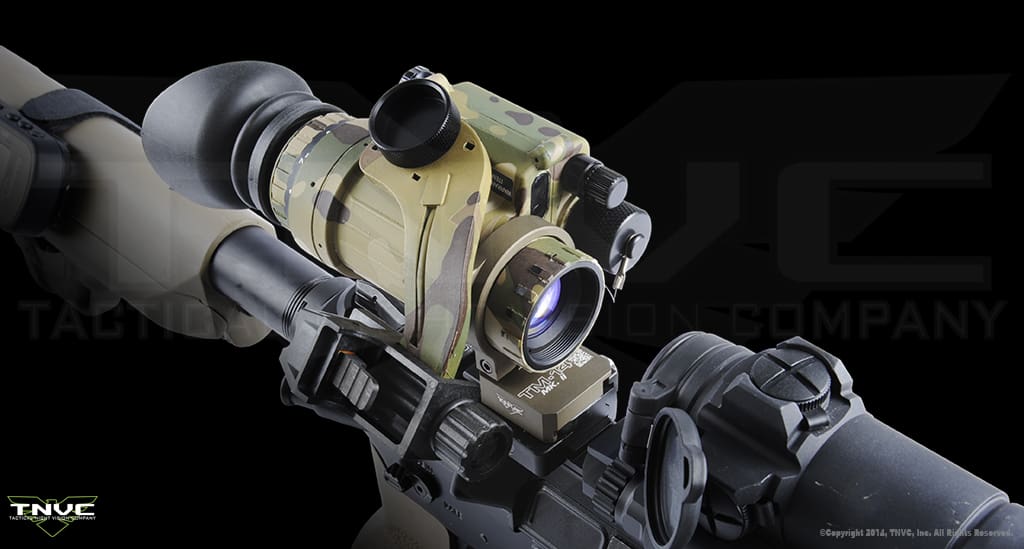
TM14_1

The TM14 Mk2 is a lightweight, low profile mount for the standard issue AN/PVS-14 Night Vision Monocular, designed to allow rapid attach and detach from the Aimpoint Twist Mount Base.

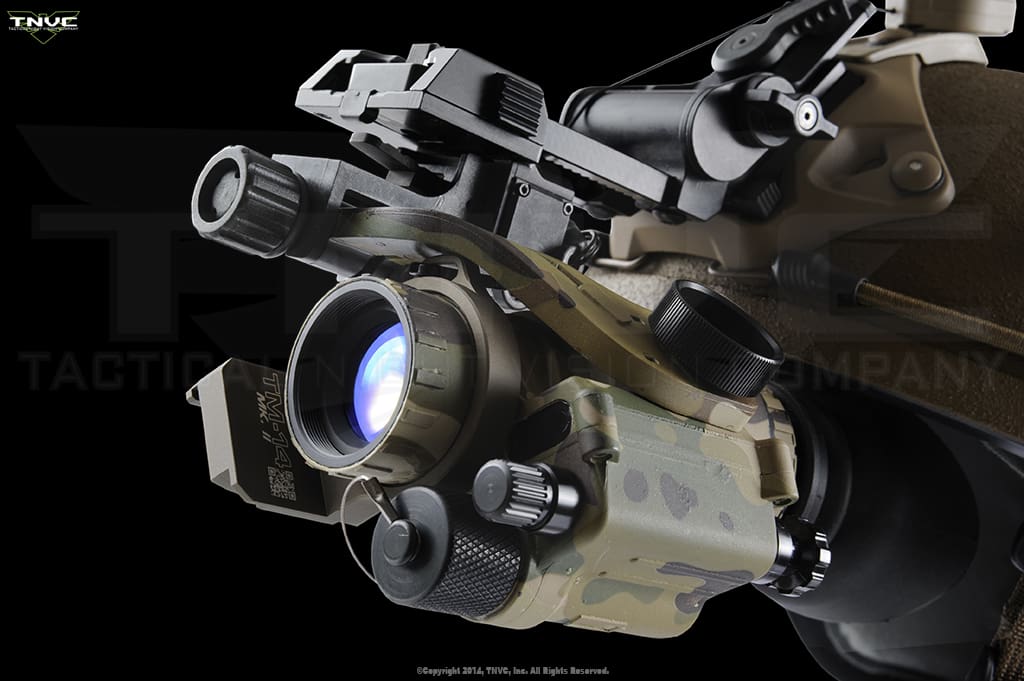
TM14mk2_2

The TM14 Mk2 boasts several new features when compared to the original TM14. An integrated low profile lanyard loop has been added to the Mk2, to allow the user to dummy cord their PVS-14 to their helmet or weapon system. The Mk2 also features an improved angle on the underside ramp which facilitates indexing it onto the Aimpoint Twist Mount Base. The overall weight of the Mk2 has also been decreased by removing material from the underside of the unit. Lastly, the edges around the ring have been reduced with a more pronounced chamfer to make them less sharp.

TM14mk2_gun1

Available in Black and FDE.

TM14mk2_helmet1

tnvc.com/shop/tnvc-tm14-mk2-pvs-14-weapon-mount

Gunfighter Moment – Mike Pannone

Saturday, October 4th, 2014

    Scan and Assess, Checking 6 and Other Gun-Foo Shenanigans

The following two definitions are crucial to an honest appreciation of this topic.

Webster’s-Merriam Dictionary

Look
Verb: to direct your eyes in a particular direction
See
Verb: to notice or become aware of (someone or something) by using your eyes
Aware
Adjective: knowing that something (such as a situation, condition, or problem) exists

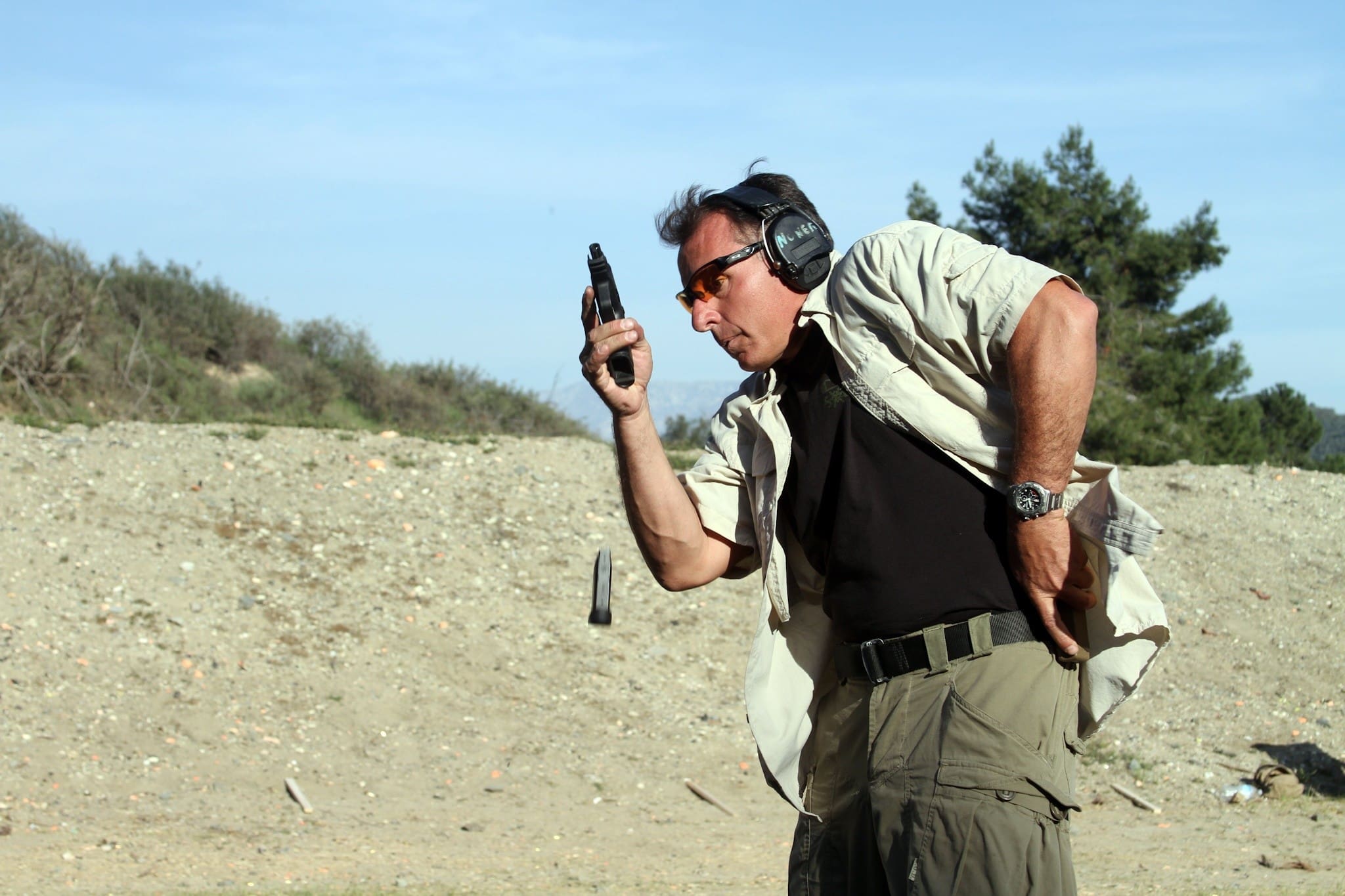
I see far too often folks that conduct all kinds of movement and posturing after a non-scenario course of fire that is called “tactical awareness” but is probably more precisely called “gun-fu” or a “tactical kata”. Now don’t get me wrong, I am all about tactical awareness and keeping your “head on a swivel” but what I am not about is looking like you are doing something but you’re really not. My big three are
1.) scan and assess
2.) checking 6
3.) looking at an AR ejection port after every string of fire

Scan and assess and checking 6 are both billed as giving you critical information and done correctly they actually do. The problem is that in the conduct of both, people overwhelmingly “look” in a direction but don’t “see” anything. They look at this as a way to condition themselves under stress to be aware but what they are actually doing is the exact opposite. By “looking” and not “seeing” they are conditioning themselves to move their head left and right and not properly process anything they did look at. By not processing your surrounding with specificity you are conditioning yourself to make the requisite amount of motion and movement and falsely convince yourself that you are “aware” of your surroundings when actually you are overwhelmingly not.

In the case of looking at an ejection port every time a string of fire is complete even though there is no specific stimulus, in doing so you are convincing yourself you saw more than you actually did. I see it as wasted motion that gives very minimal and incomplete information unless a physical stimulus was perceived. My issue is two-fold: it can’t be done at night with any legitimate effect in any reasonable amount of time and if you look and actually have enough light to see the bolt in battery the only thing you genuinely know is the bolt is in battery…nothing more! If the bolt locked to the rear then you would have felt the energy transfer to the rear but not back forward and that stimulus would have told your body through repetition and subsequent learned patterns of response (muscle memory) to reload your rifle. The input on the rifle gives you feedback so if I am getting the right feedback (the gun is running) why spend time and awareness getting minimal or incomplete information? If you are going to look then do a quick press-check (which can be done day or night) but if you don’t, the only thing you genuinely know is the bolt is in battery. If the magazine was bad and didn’t lock back or feed another round then a press-check is the only way to positively identify the status of your rifle.

Scanning and assessing, checking your 6 and knowing the status of your rifle or any weapons system for that matter is not done through the physical repetition alone but through mental repetition in conjunction with physical cues. Different levels of experience allow some to be vigilant when vigilance is required but not on a drill where it is unnecessary. Less experienced people cannot differentiate between when it is a necessity and when it is not so that makes them feel compelled to do the dance every time they complete a drill. One’s ability to differentiate between the requirements of a situation speaks to how they train. Rote memorization of a “tactical dance” does not make you genuinely tactically aware. In reality it will make you less aware because you are conditioning yourself to physically act out the right answer but not get the benefit cognitively of the information it provides.

If you want to scan and assess or check your 6 after every course of fire and ACTUALLY SEE WHAT YOU ARE LOOKING AT then you are good to go in my book. If you press-check after every course of fire (and I do if there is any gap in time available along with pulling the magazine out and assessing by experience and weight if I think I am prepared for the next task) then I’m your advocate as well. Where I part ways with many is when the “gun-foo” starts and people are moving all around and looking all around and seeing almost nothing.

Looking is directing your vision…seeing is processing what you looked at. Don’t just look, see what’s there! Done properly you will genuinely be tactically aware…not just dancing around the firing line.

-Mike Pannone

GFmomentpic

Mike Pannone retired from the Army’s premier assault force (1st SFOD-D) after an explosive breaching injury. A year after his retirement America was attacked on 9/11 and he returned to help serve his country as the head marksmanship instructor at the Federal Air Marshals training course and then moved to help stand up the FAMS Seattle field office. In 2003 he left the FAMS to serve as a PSD detail member and then a detail leader for the State Department during 2003 and 2004 in Baghdad and Tikrit.

In 2005 he served as a ground combat advisor of the Joint Counter IED Task Force and participated on combat operations with various units in Al Anbar province. Upon returning he gave IED awareness briefings to departing units and helped stand up a pre-Iraq surge rifle course with the Asymmetric Warfare Group as a lead instructor. With that experience as well as a career of special operations service in Marine Reconnaissance, Army Special Forces and JSOC to draw from he moved to the private sector teaching planning, leadership, marksmanship and tactics as well as authoring and co-authoring several books such as The M4 Handbook, AK Handbook and Tactical Pistol shooting. Mike also consults for several major rifle and accessory manufacturers to help them field the best possible equipment to the warfighter, law enforcement officer and upstanding civilian end user. He is considered a subject matter expert on the AR based Stoner platform in all its derivatives.


www.ctt-solutions.com

Gunfighter Moment is a weekly feature brought to you by Alias Training & Security Services. Each week Alias brings us a different Trainer and in turn they offer some words of wisdom.

Violent Little Machine Shop – Creasy Bear Blackout Patch

Saturday, October 4th, 2014

Creasy Bear Blackout Patches

Violent Little Machine Shop has just released a Blackout variant of their popular Creasy Bear patch. It uses two different shades of black to give it a subtle contrast, and comes packaged with an art card. PVC and Velcro backed.

Creasy Bear Blackout Patch 2

Additionally, Soldier Systems Daily readers receive free US shipping by using the coupon code soldiersystems at checkout.

www.violentlittle.com/products/creasy-bear-patch

US Army to Retain Rapid Equipping Force But Move Under TRADOC

Friday, October 3rd, 2014

The Army News Service released a story yesterday that details the retention of the Rapid Equipping Force but under TRADOC. The REF has fielded a variety of technologies crucial to the conduct of the war. Additionally, the REF has fed items into the Rapid Fielding Initiative which has provided Soldiers (and select sister service deployers) the protective clothing and equipment. The REF has long worked with PEO-Soldier at Ft Belvoir. Although PEO Soldier is their new milestone decision authority, the REF’s portfolio includes a wide variety of technologies.
IMG_7862.JPG

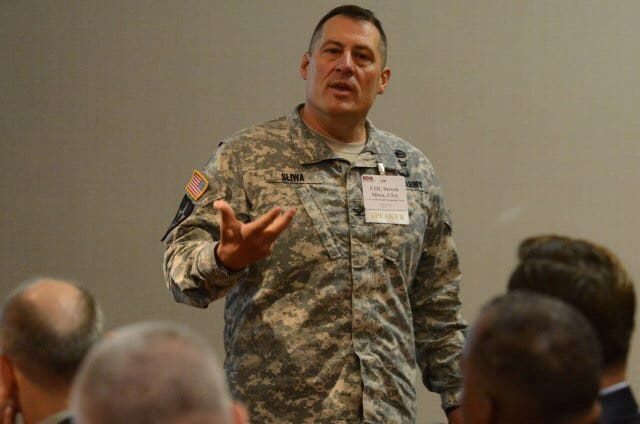
ARLINGTON, Va. (Army News Service, Oct. 2, 2014) — The Army has decided to retain the Rapid Equipping Force and move it under U.S. Army Training and Doctrine Command, despite the drawdown and pending sequestration, said Col. Steven A. Sliwa, REF director.

The move to TRADOC will be no later than the start of fiscal year 2016.

“However, that move could start as early as tomorrow,” said Sliwa, speaking at a National Defense Industrial Association breakfast here, today.

Rapid Equipping Force, or REF, has not been unaffected by the drawdown, he said. REF is being downsized to a core number of personnel, but the structure will remain, allowing it to expand, should the need arise.

Some of the lost billets didn’t simply go away — some were transferred to Program Executive Office Soldier, known as PEO Soldier, Sliwa explained, adding that REF will remain headquartered at Fort Belvoir, Virginia, close to where PEO Soldier is located.

Another change is that “PEO Soldier has been designated as REF’s milestone decision authority,” Sliwa said, adding that REF has formed a close partnership and has a great working relationship with that organization since they partner on a number of issues.

The authority for REF moving to TRADOC and becoming an enduring organization, he said, was a memo signed by the under secretary of the Army, Jan. 30. The delay between when the memo was signed and the actual move is to ensure “authorities and relationships are worked out.”

NOT IN IRAQ — YET

The other big news is that REF plans to open a small office in Kuwait, said Sliwa, who returned Oct. 1, from a 10-day requirements assessment trip to Iraq and Kuwait.

Although REF does not currently have a presence in Iraq, that could change, he added.

The Kuwait office could also assist in Afghanistan, even as the REF’s Afghanistan office becomes smaller, commensurate with the lower troop levels there.

The Afghanistan REF office will retain the useful expeditionary lab, he said, which is capable of rapid prototyping custom-designed equipment to the warfighter. The lab includes a 3-D printer.

An anticipated future change, Sliwa said, involves funding REF from the base budget instead of the overseas contingency operating budget, which is now the case.

“We’re working hard to get the budget into the base and I think we’ll be successful in the near future” he said.

The base budget does currently pay salaries and funds brick and mortar requirements such as “keeping the lights on,” he added.

GOOD MARRIAGE TO TRADOC

Since U.S. Army Training and Doctrine Command, known as TRADOC, anticipates the near-term needs of the Army, as well as the Army of 2025 and beyond, it’s a good organizational fit for REF, Sliwa said, since REF would also like to be able to better anticipate future needs so it’s better prepared to deliver, rather than just react.

As the Army moves to a regionally aligned force, TRADOC and REF need to be prepared to anticipate needs that are specific to that region. A Soldier in Africa or South America “could be on the edge of a future-named operation” and technology solutions need to be thought out in advance before that happens, he said.

The REF should always be anticipating things and asking questions like, “What if Korea went down tonight,” he said.

HOW REF WORKS

In a nutshell, when units downrange have an urgent requirement, they send a “10-liner” request to REF. That gets the ball rolling, he said.

First, a determination is made whether or not there’s other equipment already out there that could be re-purposed to fit the requirement, or perhaps a program manager, or PM, is working on something very similar that might accomplish the task.

If nothing in the inventory meets the need, then a determination of cost and priority is made. Also, the REF will check if there’s a commercial off-the-shelf, or COTS, product already available. If not, then industry and/or academia solutions might be sought, he said.

Although this sounds like a long, drawn-out process, it’s really fast, as the “rapid” in the REF name implies. If the item is purchased via COTS, it might just take a credit card swipe, but if the item is more complex and requires development, it might take weeks or even a few months. The goal is within 90 days, if not much sooner, Sliwa said.

Unlike a program of record, the REF approach accepts a certain amount of prudent risk, he said, since purchases are typically limited and need to be done quickly. Some items turn out to have only a one-time use, but others can sometimes turn into programs of record. The latter include IED-detection equipment, hybrid power and language translation devices.

Not all requests come in the form of 10-liners from the field, he said. The Army G-3/5/7 also has authority to approve requirements and delegate authority to the REF — and they sometimes do, as was the recent request for mobile Patriot missile radar.

One thing the REF does not do, Sliwa emphasized, is step on the toes of the PM and his or her program of record. REF “does its best work as a partner. When we partner with the PM, when we partner with industry, when we partner with academia, that’s when the REF magic really takes place.”

HINTS TO INDUSTRY

Since many, if not most in the audience were industry reps, Sliwa provided some suggestions on pitching products in these lean times when contractors are chasing fewer defense dollars.

Ideally, the product should be small, lightweight and use less energy. The direction that the Army is taking is being more mobile and expeditionary, he said. Green generators with solar panels and efficient computers were snapped up by the Army for those reasons. Also, the Army is always looking to lighten the Soldier’s load.

And, the system should work with other systems, as opposed to a stand-alone system, he said. Case in point might be communications and mission control gear working as a system of systems. Dual-use systems are even better, meaning the same system can also be used for something completely different.

The systems or products should ideally also be simple, easily maintained and not require a lot of training, he said.

Sliwa then checked off items the Army would be very interested in acquiring, including social media exploitation, improved optics and sensors, new positive ID tools along the lines of biometrics and facial recognition, remote surveillance capability, tunnel and underground facility detection devices and batteries with longer life.

A concluding comment from the director: Although changes are here and others are coming, the REF “will continue to support the warfighter, from the FOB (forward operating base) to the foxhole.”


OCP is OCP – Confused Yet?

Friday, October 3rd, 2014

Almost two months ago we posted this story under the title of “As far as the Army Is Concerned – It’s OCP.” Earlier today OCP had its coming out party as a garrison uniform when the Army authorized the 75th Ranger Regiment to don their RFI issued OCP FR ACUs during a ceremony to commemorate the unit’s 30th anniversary. This has confused many because up until just a few months ago there was only one flavor of OCP and that is Crye Precision’s MultiCam pattern. Everything that has been issued thus far is MultiCam OCP including the FAr ACUs worn by the Rangers. In the future this will change to Scorpion W2. Clothing bag items will be widely available by next Summer and TA-50 will be transitioned over the next eight years or so.

What is difficult for many to understand is that right now, it doesn’t matter which version you have. OCP is OCP. What’s good for the goose is good for the gander. The Army announced adoption of OCP and convinced Congress that MultiCam and Scorpion W2 are the same thing. The contracts, labels and descriptions will all say “OCP” regardless of whether the fabric is printed with MultiCam or Scorpion W2 meaning no changes to contracts or NSNs.

Considering the Army created the situation, at the Soldier level run with it.

Those MultiCam FR ACUs you were issued by RFI? OCP
That Level 9 MultiCam uniform you were issued in Group? OCP
That MultiCam day pack your unit issued you? OCP

See how this works?

Expect an announcement from the CSA during AUSA later this month regarding OCP.

It’s as simple as OCP

If you notice in the Army’s announcement last Thursday that they plan a transition in Summer 2015 to the Operational Camouflage Pattern, they never referred to that pattern’s developmental name; Scorpion W2. Some found the announcement cryptic. But the reason is simple. As far as the Army is concerned, it’s OCP. And, OCP is OCP, which may blow the minds of some CSMs as this rolls out, considering OCP has been synonymous with MultiCam for several years. There are going to be instances in the future where your OCPs aren’t an exact match.

20140802-183641-67001414.jpg

There are several advantages for the Army in transitioning to OCP. For one thing, they don’t have to make any drastic changes to existing contracts for OCIE. For another, it’s easier to continue to use the equipment previously purchased in OCP. In my opinion, the Army is looking at this as a supply chain solution.

Who’s Down With OCP? Yeah, you know me!

For Soldiers, this decision is a major boon. If you look at what’s available on the open market in OCP, there are currently a lot of options out there for equipment. In fact, chances are good, you’ve already got a whole bunch of kit in OCP. By the Army’s own admission, it will take years to fully field the new OCP. During the transition period, things will be very fluid. Use that to your advantage.

So, OCP, it is. Embrace it.

Revisiting The Magpul Ronin

Friday, October 3rd, 2014

013

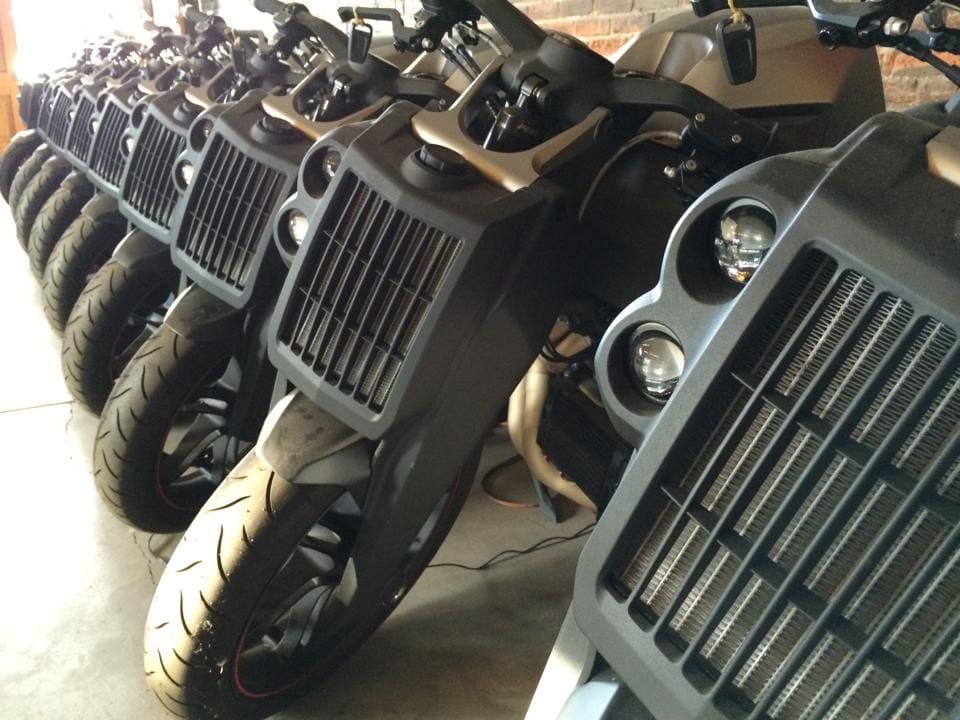
At SHOT Show 2010, Magpul unveiled the Ronin, a concept motorcycle built around the Buell 1125R. The name comes from the title for a samurai who lost his master, an appropriate name for the bike given the discontinuation of the Buell line by Harley Davidson. The unique design of the Ronin included a custom monoshock linkage suspension system, front-mounted radiator, unitized handlebar assembly, new ram air intake, cast aluminum tail section, and high-flow exhaust system, features which enhanced the bike’s ride and decreased the total weight by 54lbs from stock. This concept gained enough interest that Magpul decided to expand production to 47 bikes, paying tribute to ‘The 47 Ronin’ of Japanese folklore.

IMG_7853

Since the initial concept bike, the Ronin has understandably received some changes. The production Ronin is sharper and more distinct in appearance when compared to the concept bike. Additionally, on the production bike, many of the items have been unitized into a single part, such as the battery box and foot pegs having been integrated into a single cast unit. Perhaps most uniquely, the standard key ignition has been replaced with a hidden RFID chip, and the production model also features custom gauge and ECU.

Release 1

The Ronin will be released in sets, each release different from the last. The first 12 bikes are currently available (with 5 of them sold at the time of writing) and come in the Black & Silver color of the original Ronin concept bike, priced below production cost.

This will be followed by 10 All-Black bikes at an increased price, further followed by a release of 8; these releases, the second and third, will be available in the coming next few months.

Further releases will come in a set of 6, then 4, and then 2, all with different color schemes and features. The remaining 5 bikes will be one-off designs from the factory, each unique. Each bike will come with a bamboo toolbox.

We’ve been following the Ronin project since its debut in 2010. To finally see its release 4 years later is a welcome event.

For more information on the Ronin, including how to purchase the bike, visit www.the47.com.

Sehoy Tactical

Friday, October 3rd, 2014

Features
25,000 Acres of Unrestricted Land
440 Acre Deep Water Lake
1 Mile Airstrip with 2 Aircraft Hangars
Certified Drop and Landing Zones
2 Private and Accessible Cell Towers
Small Arms & Sniper Ranges
ATF Approved Storage
Explosives Courses (HME, Advanced EDD, etc.)
Demolitions Training Sites

We learned about Sehoy Tactical from tripwireops.org/explosives/sehoy-tactical.