TYR Tactical

Author Archive

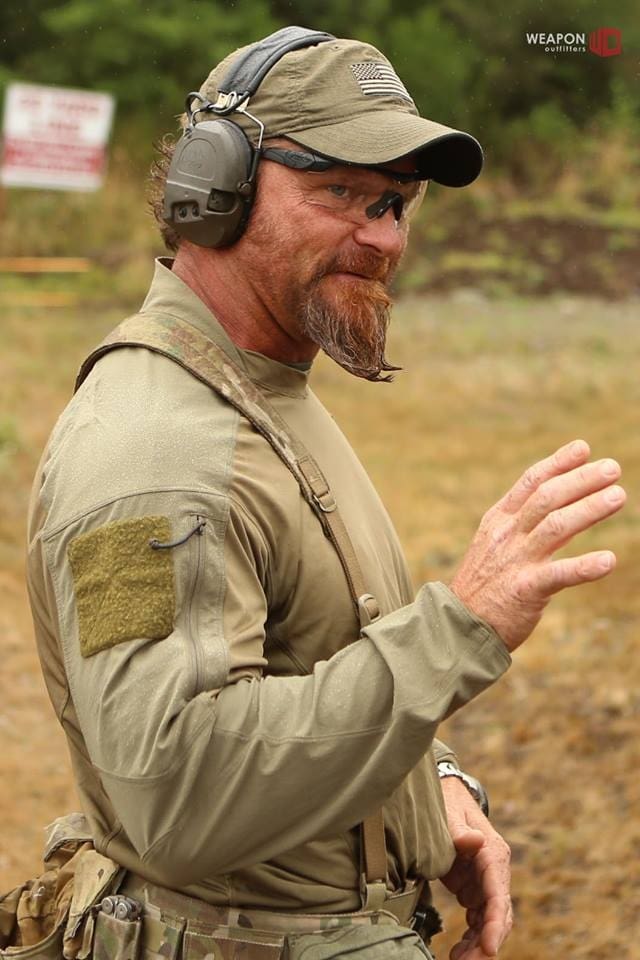
Gunfighter Moment – Kyle Defoor

Saturday, September 10th, 2016

In the last article I laid out my beliefs on the best optic for a mag fed carbine. Here, I’ll go over how we have gotten true one power scopes with daytime visible red dots to work as good as a traditional red dot up close with speed by mounting them the best way possible for your application. I’m going to break this down the three categories; height, type, and placement.

Height- how high you mount the scope off the top of the rail is important for a few reasons. First, if you are using a true one power scope with a daytime visible red dot you will need to make sure when you are on one power you don’t see anything in the bottom part of the reticle. This will adversely effect your short range shooting.

If you have a short barrel rifle out to about a 12 inch barrel you can generally get away with a 1.5 inch tall mount. If you have a 16 inch long barrel it’s very possible you will see part of your rail or flipped down front sight in the bottom part of the reticle on one power with a 1.5″ tall mount. There is a little bit of this that depends on the type of buttstock you are using and your overall face structure-whether you have a thin face or a more round face. The last factor would be where you like to position your butt stock, all the way out or somewhere in between?

Next, If you use any type of IR laser on the top rail this will also make a difference in whether the bottom part of your reticle has any image in it on one power. There are two solutions for this problem. One, is to use a higher mount. Typically somewhere around 1.9 to 2 inch height will give you a clear view over the top of any IR laser mounted on the top rail even with a 16″ barrel. The second option is to slide the IR laser closer to the objective lens of your scope. This may or may not work depending on the construction/type of the IR laser you have and barrel length. With my personal 11.5 inch barreled upper I can use a 1.5″ mount with a DBAL IR laser top mounted and have no issues with my USO 1-4 on one power. The second solution is to side mount your IR laser.

Mount types- I personally only use QD mounts simply because I never want to be in a position where I cannot use the gun because of some odd issue with the scope or my surroundings. I also always have zeroed irons on there ready to go. I’m a big fan of Bobro mounts because of the lever which takes away any movement in the rail slot. For non Q/D mounts I use Badger Ordnance. The type of mount you choose may depend on what mount height you need. As of this writing Larue is the only Q/D mount I’ve seen that will make a 1.9~2 inch tall mount. Do your research and make sure though.

Placement- The first thing you should know when mounting a scope to a rail is if there is any slack between the mount and the rail push as far forward toward the barrel before you lock down the mount. Recoil ends up forward and this will help in keeping your optics from shifting especially on higher calibers.

Secondly, and the real juice for this article is where to mount your LPV (low power varible). What I found to be the most beneficial it is to mount your scope a little bit forward of where it traditionally should be done. You can do this by moving the mount one, two or more slots forward in the rail or by moving the scope forward in the mount or a combo of both. I personally will put my scope on one power with the daytime visible red dot on and move it far enough forward that I do not have a traditional eye relief or sight picture that most people would call “good” for a scope. Another way to describe it is that my scope is mounted far enough forward that I actually do have a bit of scope shadow on one power. Although this may be counterintuitive to what most people have been taught or read this is the only possible way you can match the speed and target transition of a traditional RDS with an LPV. Keep in mind that when you are on one power with the red dot traditional fundamentals of scope shooting don’t apply. Also keep in mind how very little (.5-.75″) I am trying to describe with written word I push the scope forward to get the speed shooting benefit. Lastly, by doing this it will mean that when you are on max power (4,6 or 8) with your LPV you will need to slightly slide your face forward on the butt stock to get a fundamentally acceptable scoped sight picture for an accurate long range shot- but, because it is a long range shot you have time to do that.
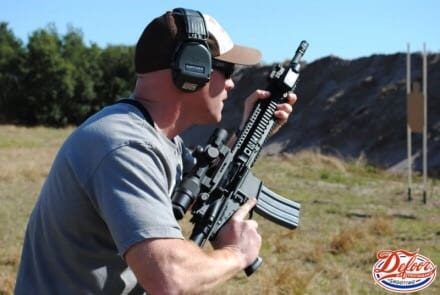
Kyle Defoor is one of the world’s most committed and passionate shooting instructors. Literally growing up with a gun in hand he took his talents into the military where he was combat decorated as a SEAL assaulter and sniper. Kyle helped to create and define modern training while along the way personally teaching thousands of military personal and civilians from around the globe. His shooting prowess led to appearances on multiple TV shows including Shooting Gallery, Tactical Arms, and Tactical Impact, and guest appearances on History Channel. Kyle’s outdoor athletic lifestyle includes shooting, ultra running, stand-up paddle surfing and climbing. He  is a sponsored athlete of MultiCam and runs his own company, Defoor Proformance Shooting, which offers tactical training, wilderness navigation, TV and film consulting, and motivational speaking.

Gunfighter Moment is a weekly feature brought to you by Bravo Company USA. Bravo Company is home of the Gunfighters, and each week they bring us a different trainer to offer some words of wisdom.

Introducing First Tactical Bundles

Friday, September 9th, 2016

facebook-banner-bundles

First Tactical is excited to announce that Product Bundles will now be featured on the website and available for up to 30% off. This promotion allows customers to receive three great products at a great price. Currently there are three bundles available with more to come in the future.

range-image-bundle

First Tactical’s Day At The Range Bundle is the ideal kit for a day of shooting. Featuring the Recoil Range Bag, Large Pistol Sleeve, and Tactix Eyewear Pouch you’ll have everything you need to safely transport your firearms and eye protection. All products purchased separately would run $135, the Day At The Range Bundle is available for $105.99.

edc-ig

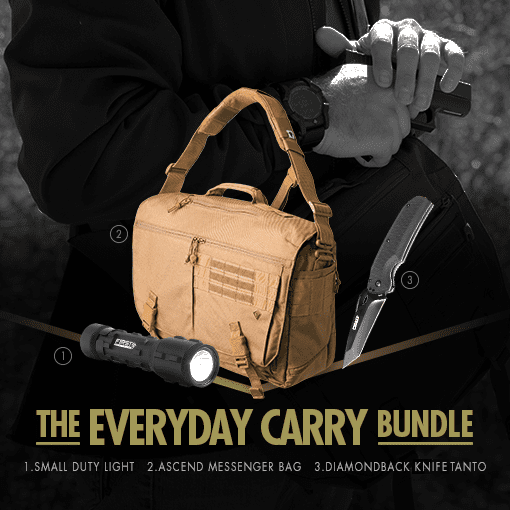
The Everyday Carry Bundle is perfect for general daily use. Included in this bundle is the Summit Side Satchel, Diamondback Knife Tanto, and Small Duty Light. Perfect for your CCW and EDC needs the Everyday Carry Bundle is available for $140.99. Purchased separately these products would cost $195.

breachbundle-ig

Finally the Breacher Bundle is perfect for members of specialized units who need reliable gear they can count on. The Specialist Three Day Backpack and the customer’s choice of a 36, 42, or 50 inch Rifle Sleeve allows users to carry their rifle safely and securely with First Tactical’s patented Hook and Hang Thru System™. The Diamondback Knife Spear completes this bundle, which is available for $190.99. Normal price for these products is $275.

www.firsttactical.com

FirstSpear Friday Focus – Tactical Patrolling Harness

Friday, September 9th, 2016

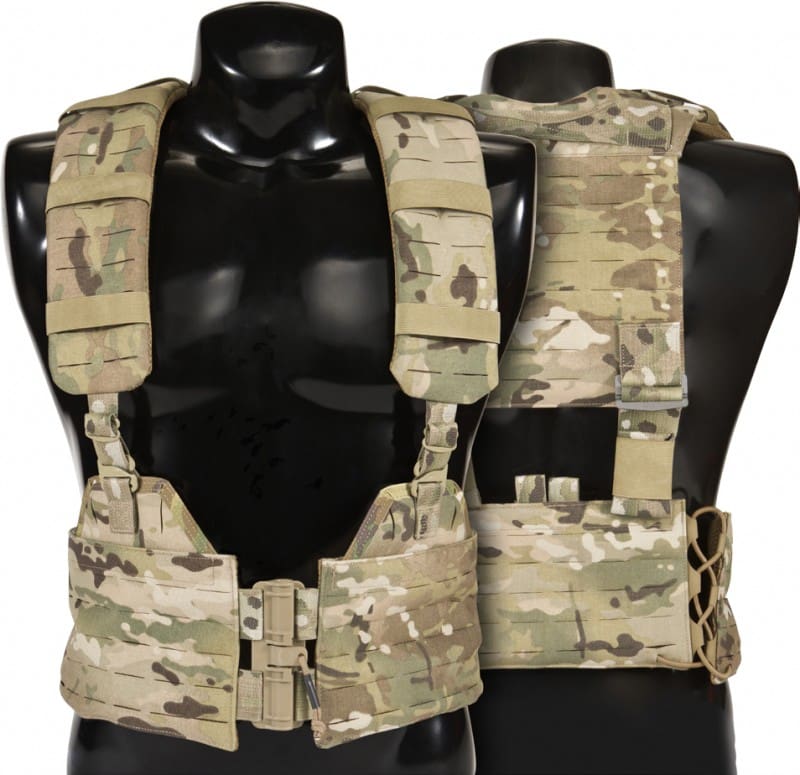
tacticalpatrollingharness

For this week’s Friday Focus, we’re taking a look at the Tactical Patrolling Harness. The Tactical Patrolling Harness is based on FirstSpear’s Patrolling Suspenders, and provides users with a lightweight load-carrying option as it utilizes the 6/12 pocket attachment system.

The Tactical patrolling Harness is available in the following colors: Black, Coyote, MultiCam, and Ranger Green. Sizes Small/Medium and Large/Extra Large.

www.first-spear.com – Tactical Patrolling Harness 6/12

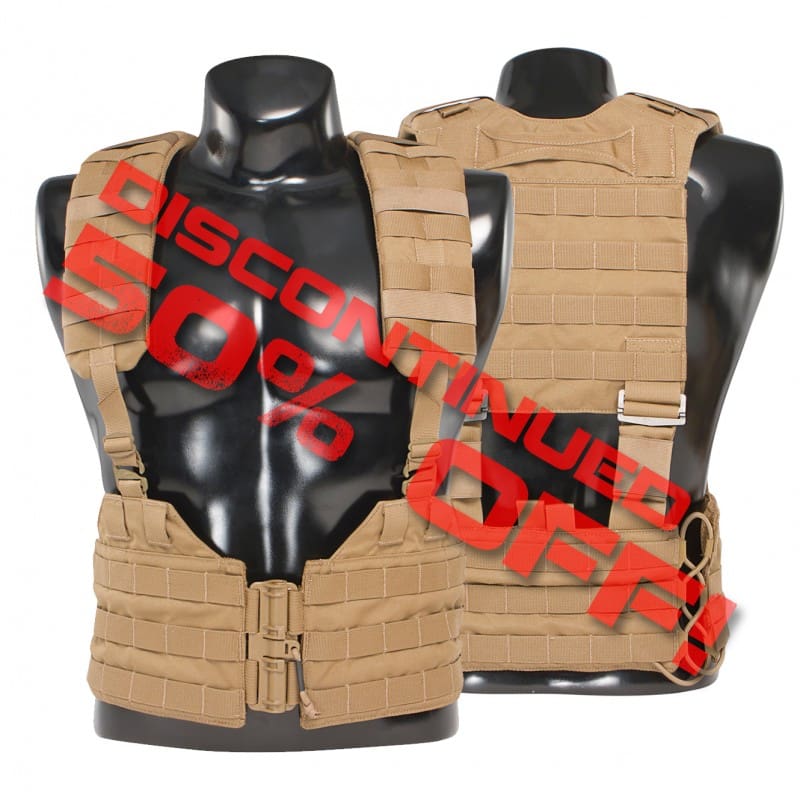
tacticalpatrollingharness_50off

Additionally, the MOLLE variant of the Tactical Patrolling Harness is a discontinued item, and all current stock is going for 50% off list price.

www.first-spear.com – Tactical Patrolling Harness MOLLE

SilencerCo Weapons Research – Radius Prairie Dog Hunt

Monday, September 5th, 2016

SilencerCo took out some Ruger Precision Rifles, Vortex scopes, and their own Omega suppressors as well as Radius rangefinders to pop some prairie dogs in the great state of Texas.

beyondhuman.com/radius

Vickers Guide: AR-15 – Teaser Image

Sunday, September 4th, 2016

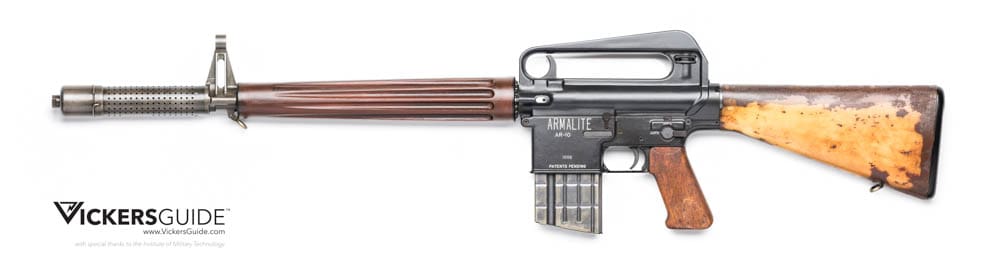
IMG_7750

In anticipation of the upcoming Vickers Guide: AR-15, the team behind the book has release an ‘ultra’ high-res teaser image of an earlier AR-10. The image is around 200 Megapixels, and shows off an amazing level of detail. Thankfully, we were provided with a much lower resolution image (seen above) to spare our bandwidth, so if you want to see the real deal image, check out the link below:

www.vickersguide.com/teaser

Gunfighter Moment – Pat McNamara

Saturday, September 3rd, 2016

As there are techniques, there are just as many gun related gizmos, gadgets, and gimmicks. Bolt and strap on. Theatrical movements and dance steps. Tales of woe or implausible performance enhancers. Some live long and become center of debate issues while others die off quickly.

One of the things I encourage on the range is discovery or tactile learning. In other words, learn by doing vice taking one’s word for it. One can now make the determination for himself on whether to shit-can or to maintain a technique or piece of gear for he sees that it will or will not offer positive development in a gunfight.

Battlefield multipliers are often the simplest in solutions versus high tech gear or high motor skill movements. My go to Battle Rifle is a 16” BCM KMR and it’s pretty much meat and potatoes. Full length 2-point sling, good optic, good BUIs, good light.

Patrick McNamara
SGM, US Army (Ret)

Pat McNamara

Patrick McNamara spent twenty-two years in the United States Army in a myriad of special operations units. When he worked in the premier Special Missions Unit, he became an impeccable marksman, shooting with accurate, lethal results and tactical effectiveness. McNamara has trained tactical applications of shooting to people of all levels of marksmanship, from varsity level soldiers, and police officers who work the streets to civilians with little to no time behind the trigger.

His military experience quickly taught him that there is more to tactical marksmanship than merely squeezing the trigger. Utilizing his years of experience, McNamara developed a training methodology that is safe, effective and combat relevant and encourages a continuous thought process. This methodology teaches how to maintain safety at all times and choose targets that force accountability, as well as provides courses covering several categories, including individual, collective, on line and standards.

While serving as his Unit’s Marksmanship NCO, he developed his own marksmanship club with NRA, CMP, and USPSA affiliations. Mac ran monthly IPSC matches and ran semi annual military marksmanship championships to encourage marksmanship fundamentals and competitiveness throughout the Army.He retired from the Army’s premier hostage rescue unit as a Sergeant Major and is the author of T.A.P.S. (Tactical Application of Practical Shooting). He also served as the Principle of TMACS Inc.

Gunfighter Moment is a weekly feature brought to you by Bravo Company USA. Bravo Company is home of the Gunfighters, and each week they bring us a different trainer to offer some words of wisdom.
GunfightersINC – Labor Day Sale

Friday, September 2nd, 2016

GunfightersINC is offering all product sold on their website at 15%. Hunting season is coming up, grab a Kenai Chest Holster while it’s on sale!

gunfightersinc.com/?post_type=product

MRAP program celebrates 10 years of protecting those who protect us

Friday, September 2nd, 2016

By Mathuel Browne, MCSC Office of Public Affairs and Communication

MARINE CORPS BASE QUANTICO, Va. – The Marine Corps is celebrating a decade of keeping Marines safer on the battlefield with the Mine Resistant Ambush Protected family of vehicles.

In 2006, combatant commanders identified the urgent operational need for an increased number of MRAP vehicles in theater to provide better protection against underbody mines, improvised explosive devices, rocket-propelled grenades and small arms fire. MRAP vehicles were already in use by the Army and Marine Corps, but in limited numbers and for specialized missions, such as explosive ordnance disposal and other route clearance work. In response, Marine Corps Systems Command established the MRAP Joint Program Office in 2006, to combine the efforts of Marine Corps, Army, Navy and special operations acquisition expertise. The JPO’s mission was to get the maximum number of vehicles to the operating forces in the shortest period of time.

“The object of the program office was to field vehicles to all the services, U.S. Special Operations Command and coalition partners to ensure the same level of troop protection was provided to the entire joint and combined forces,” said retired Marine Corps Brig. Gen. Michael Brogan, Joint Program Executive Officer for the MRAP vehicle program from 2007 to 2011 and a former commander of Marine Corps Systems Command. “The presence of the MRAP also challenged the enemy, since the insurgents had to increase the size of their explosive devices to have any effect on these more survivable vehicles. The larger devices, and longer time it took to implant them, increased the likelihood that our troops would detect an IED before it detonated.”

The MRAP family of vehicles consists of four vehicle categories that incorporate a “V-shaped” hull, armor plating and a raised chassis designed to provide protection against the three primary kill mechanisms of mines and IEDs: fragmentation, blast overpressure and acceleration.

The Category I MRAP Mine Resistant Utility Vehicle is the smallest version, weighing 7-15 tons, is primarily intended for operations in urban combat environments and can carry up to seven people.

The Category II MRAP Joint Explosive Ordnance Disposal Rapid Response Vehicle, weighing 15-25 tons, is a multi-mission platform used to lead convoys, transport troops, ambulances and utility vehicles. They carry up to 10 people.

The Category III MRAP is designed for mine/IED clearing operations and explosive ordnance disposal. It is the largest of the MRAP family, weighing 22.5 tons and is capable of carrying up to 13 people.

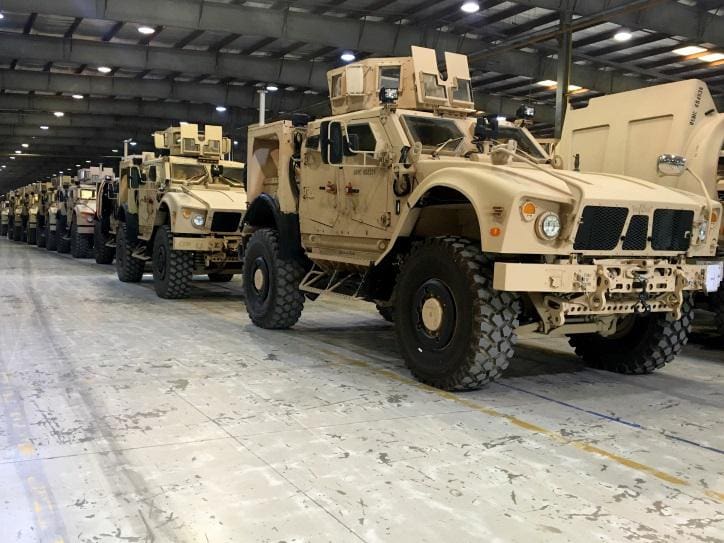
The MRAP-All Terrain Vehicle is the newest variant in the MRAP family. It offers the same level of armored protection as previous MRAPs, but with much better mobility. In Afghanistan, baseline MRAPs struggled with the rocky terrain, creating a need for a more mobile vehicle. The M-ATV is designed to operate in the most extreme conditions which allowed it to maneuver over rubble and rocks. It supports a crew of five, including a gunner and can travel at speeds up to 65 mph with a range of 320 miles.

In 2007, MCSC’s Command Senior Enlisted Leader Sgt. Maj. Gary Smith served as first sergeant for 1st Battalion, 10th Marines in Iraq’s Al Anbar province. He said he remembers his Marines’ excitement when the battalion received their first MRAPs.

“At the time, it was our responsibility to take numerous convoys—up to three to four hours— to various locations to deliver supplies,” Smith said. “Riding in MRAPs gave us the confidence that we did not have in our previous vehicles, that we were safe and able to do our jobs effectively. For our government to jump through so many hoops to get the vehicles to us so quickly improved morale throughout the organization, because the vehicles increased our troop’s survivability.”

The MRAP JPO was able to acquire and field the vehicles at an accelerated rate because then Secretary of Defense Robert Gates established the program as the highest priority Defense Department acquisition program. All options to accelerate the production and fielding of MRAPs were identified, assessed and applied where feasible.


“Originally, we did not know if we could create the vehicles in the numbers we needed,” said Paul Mann, joint program manager for the MRAP JPO from 2006 to 2010. “However, we had permission from Congress to take the risk and at least try.”

In 2006, MCSC was designated as DOD’s lead procuring agency for the MRAP. To fill the urgent need, the command awarded nine separate indefinite delivery, indefinite quantity contracts for 36 initial test vehicles.
“We had confidence that the automotive components were commercially available and functional, but we perceived significant risk in the survivability performance,” said Mann. “So we mitigated the risk by challenging manufacturers to develop and deliver their best MRAP prototype with a sense of urgency and we drove the vehicles and tested their survivability. If they met our requirements, we set out to buy as many as they could produce as fast as possible.”

The contracts required the initial vehicles to be produced within 60 days. In less than the two months given, five vendors produced vehicles that met the joint survivability requirements, production numbers and delivery timelines. Ultimately, seven of the nine companies received low rate initial production orders, and produced a total of 27,774 vehicles under the MRAP JPO.

In 2012, the DOD transitioned the JPO’s responsibilities to the military services and SOCOM. Each service now manages its own fleet of vehicles, with the Marines aligning the MRAP program under Program Executive Office Land Systems in 2013. Today, the DOD continues to use MRAPS for training and with some strategically positioned to meet future contingencies.

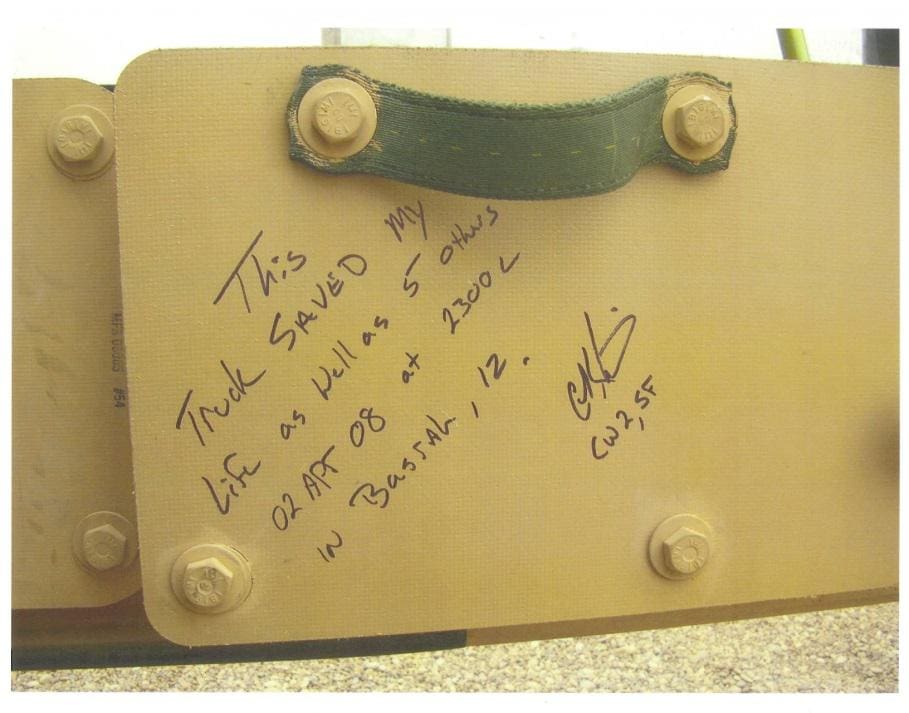
“No recent program has had the impact that MRAP had on the survivability of the force,” Brogan said. “Though we’ll never know exactly how many lives the program touched, we know it did. Acquisition programs come and go, but the contribution of the MRAP program will continue into the future.”

2

160620-M-IR546-786
The Marine Corps is celebrating a decade of keeping warfighters safer against explosive devices with the Mine Resistant Ambush Protected family of vehicles. MRAP vehicles are designed to provide protection against underbody mines, improvised explosive devices, rocket-propelled grenades and small arms fire. From 2006 to 2012, the MRAP Joint Program Office fielded a total of 27,774 to operating forces in Iraq and Afghanistan. (U.S. Marine Corps photo by Sgt. Lynn Kinney)

3

The Marine Corps is celebrating a decade of saving countless lives on the battlefield against underbody mines, improvised explosive devices, rocket-propelled grenades and small arms fire with Mine Resistant Ambush Protected family of vehicles. The MRAP Joint Program Office mission was to get the maximum number of vehicles to the operating forces in the shortest period of time. From 2006 to 2012, the JPO fielded a total of 27,774 to operating forces in Iraq and Afghanistan. (U.S. Army courtesy photo)