TYR Tactical

Archive for the ‘Armor’ Category

The Soldier Plate Carrier System – A Journey

Wednesday, December 16th, 2009

Usually, we want to focus on the on the destination when we speak of a journey but oftentimes, the story of the road traveled is much more interesting. So for me, it was much important that I find out about how the requirement for a Plate Carrier was developed than focus on the name brand that was eventually selected. Learning the facts of how decisions were made would tell me much more about why the solution was adopted. Ultimately, you may not agree with the system that was adopted, but after reading this article you will begin to understand why it was. On October 8th an $18.6 million contract for 57,000 plate carriers was awarded to KDH Defense Systems. An additional 1,000 Eagle MBAV carriers were also purchased on a REF contract vehicle to support PEO-Soldier Camouflage study in Afghanistan. These MBAVs were produced in MultiCam.

I was fortunate enough to have the opportunity to speak with COL William Cole, Project Manager Soldier Protection and Individual Equipment and LTC Jon Rickey, Product Manager Soldier Protective Equipment about the program as well as how it evolved.

It is best to go back to the beginning of the requirement. While SOF had been using plate carriers since 2002 and the Marine Corps had begun their program in early 2008, the Army had not received any requirements for the fielding of a plate carrier system. However, in December 2008, the 3rd Brigade, 1st Infantry Division requested 1,500 plate carriers. The time line was very short and the Rapid Equipping Force (REF) set about searching for a suitable item to fulfill the warfighter’s need. The Eagle Industries Modular Body Armor Vest (MBAV) in use with SOF was chosen and fielded to support this immediate need and also later used as a component of a Soldier’s Load Assessment conducted by the Asymmetric Warfare Group with contracting support from the REF.

Based on the requirement for a plate carrier, PEO-Soldier conducted Soldier Protection Demonstration – VII. An SPD is designed to allow the Soldier Survivability community to assess protection technologies offered by Government, industry, and academia to determine what the state of the art consists of and to shape realistic requirements. Sixteen companies met with PEO-Soldier during an industry day and the field was down selected to four commercial offerings. These were the KDH carrier, the TAG Rampage, Eagle Modular Plate Carrier System – Army (MPCS-A), as well as an offering from MSA-Paraclete. Additionally, for SPD-VII, PEO-Soldier included the US Marine Corps’ Scalable Plate Carrier, the Modular Body Armor Vest used by SOF, and an IOTV with no attachments as a baseline for comparison.

One important requirement of the SPD was that the system had to include 1″ of soft armor around the edge of the E-SAPI plate. This is to protect the wearer from spall that may be caused by edge shots on the plate. One of the test candidates did not include this feature and had to receive a waiver to be included in the demonstration. This same issue still plays heavily in post procurement decision debates over the validity of the Army’s selection of the KDH solution.
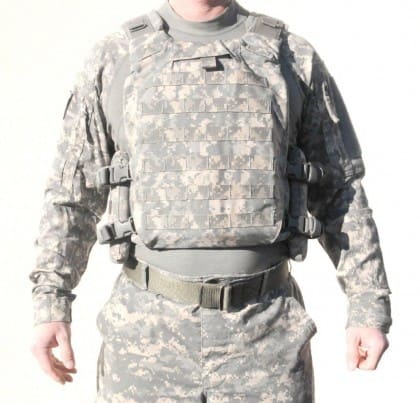
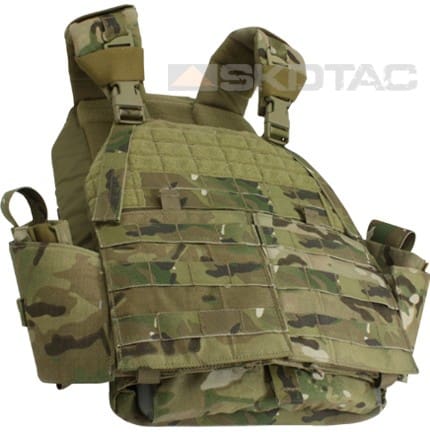
Soldier Plate Carrier System

Testing was conducted in conjunction with the Army Infantry Center representatives at Yuma Proving Grounds. Twenty-five Soldiers from the 82d Airborne Division and 173d Airborne Brigade participated as test subjects for two weeks of intense activity.

Evaluations included road marches, obstacle courses, close range marksmanship, Individual Movement Technique course negotiation, ingress/egress drills, buddy aid and wound access, don and doff drills, and room-clearing exercises.

Every scenario was evaluated on objective as well as subjective criteria. In addition to established performance-based criteria, Soldiers were asked for their opinion of each carrier for that iteration. For example, during SPD VII Soldiers were asked, “Would you be willing to wear this armor system on a dismounted combat mission in Afghanistan?” This is the question to which 88% of Soldiers in the SPD said yes for the KDH plate carrier as well as the TAG Rampage. These two carriers did in fact come in second to the Eagle MBAV. Interestingly, no system was universally liked or disliked with even the IOTV still garnered a 24% approval rating.
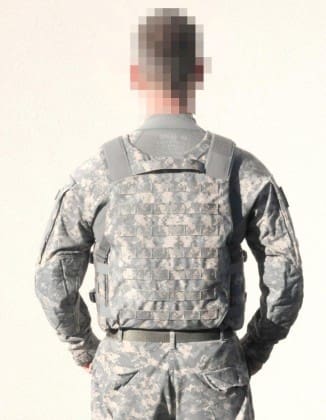
Soldier Plate Carrier System

There was no “winner” of SPD-VII. rather, information collected during the demonstration was used to refine the requirement. For instance, while a cutaway feature was mandatory for commercial items in SPD-VII, don and doff times and intended operational use revealed that a true cutaway was no required for the actual fielding of the system. Instead a rapid don and doff capability fit the bill.

There seemed to be a lull over the summer as the Infantry Center and Army Staff worked out the exact number of carriers to purchase. Ultimately, the decision was made to procure the plate carrier via GSA. GSA is a Government controlled procurement system that allows vendors to place products on offer to the Government at special rates. GSA was chosen in order to even further speed up the process of buying the carriers.

For this procurement, Technical (Protection and Weight) was the most important factor in determining which system the Army should procure. This was followed by Schedule as they were needed quickly on the battlefield. The final factor was cost. In the realm of Soldier Protection in particular, procurement cannot go to the lowest bidder based solely on cost.

COL Cole was emphatic that cost was not the driving factor in the selection of the KDH solution although it was in fact, at a good price. The technical and schedule elements of the proposals were evaluated at PEO-Soldier but the cost element was left to officials at the contracting office. Technical evaluators never saw the cost figures during the evaluation. In the GSA solicitation criteria, the Government reserved the right to award multiple vendors to fulfill the requirement. This is an indication of how urgent the need was and how important schedule was to the overall scheme.

Even I raised the question of whether KDH would be capable of meeting a very aggressive delivery schedule based on their bevy of recent armor contract wins. LTC Rickey related that they had similar concerns and discussed the issue with KDH. KDH walked PEO-Soldier through their plan to execute the contract at their new Eden, North Carolina plant and disclosed that they were planning on opening a dedicated line and hiring an additional 45 sewers to get the job done on time. This plan seems to have worked as PEO-Soldier informed me that they will begin fielding the SPCS in January. It will not only be fielded in theater but also here in CONUS prior to deployment to units identified as part of the surge.
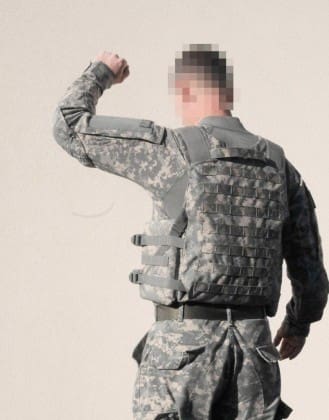
Soldier Plate Carrier System

Operationally, the SPCS will not be a replacement for the IOTV but rather issued in addition to. It will be up to the commander, based on METT-T whether or not to use it. Some education will be required so that a commander can weigh the risks of decreased soft armor against threats found in the AO. Specifically, the SPCS offers exactly the same amount of hard plate coverage as the IOTV. However, it offers significantly less soft armor which protects against frag. While there is less coverage, there is also less weight and bulk and this will prove to be a boon to those operating in mountainous areas. In fact, when initially adopted, the SPCS without armor plates weighed in at 6.47 lbs vice an IOTV 9.86 lbs without accessories. OEO-Soldier has already prompted a change to the design of the SPCS to make it lighterweight. The original design presented to the Government featured 1″ of soft armor around the edge of the side plates. The new design already implemented deletes this extra armor and lowers the weight to 5.77 lbs. Now a fully loaded SPCS weighs 21.8 lbs and an IOTV is 31.09 lbs.
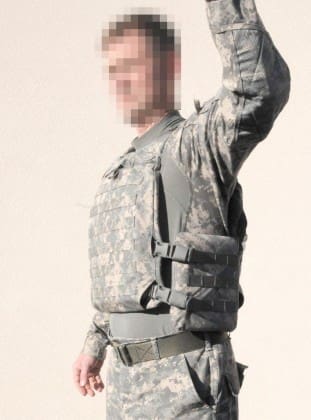
Soldier Plate Carrier System

The new SPCS is intended to be compatible with MOLLE equipment and will also accept the newly issued Tactical Assault Platform (TAP). Interestingly, the TAP is currently intended to replace the Fighting Load Carrier in the MOLLE system. Additionally, systems integration has already taken place to fit Land Warrior’s Ground Soldier Ensemble on to the carrier.

So is this story over? I think not. You must remember that the current system fulfills an Operational Needs Statement from theater rather than a larger, more encompassing requirements document. The President’s surge in Afghanistan means that there will be an even larger need for a plate carrier by the Army. Additionally, the Army may decide it wants the capability for other theaters as well. If this becomes the case, COL Cole related that the Army would most likely issue a solicitation based on requirements from the field and insist that the winning design become government owned to facilitate long-term sustainment.

Will the Army learn more about the use of a plate carrier once it is fielded? Absolutely. The Marines are essentially on the third version of their Plate Carrier. They worked with industry to develop a government owned design and tweaked it based on operational feedback. In fact, they just awarded an IDIQ contract partially to KDH to produce additional Plate Carriers in a Government owned design.

So is this a great leap forward for the American Soldier? Yes, if for no other reason than it is better than what he had previously; which was nothing. It will be interesting to see how the Army’s use of the SPCS evolves. Hopefully, this article will serve to dispel some of the misunderstandings associated with this procurement. I know for example, that after learning of the importance placed on weight and ballistic performance and seeing the weight of the KDH, I now understand why it was selected. If you take anything away from this article, remember that the Soldier Protection Demonstration and the GSA procurement were two separate events. The SPD defined and validated the requirement and the procurement satisfied it. Additionally, consider that this acquisition fulfills a new requirement and that over time the Army will learn more about how to further enhance this capability for the Soldier.


KDH Soldier Plate Carrier – A Closer Look

Saturday, November 21st, 2009

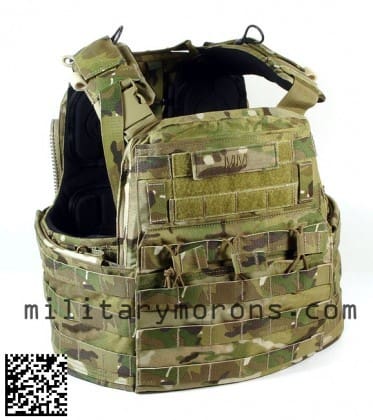
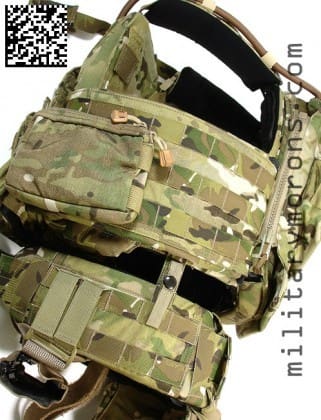
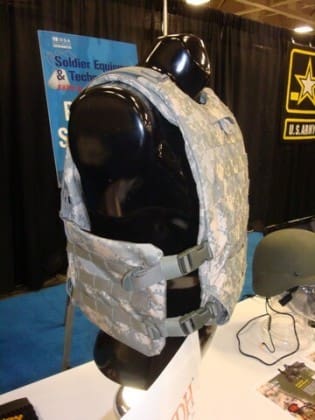
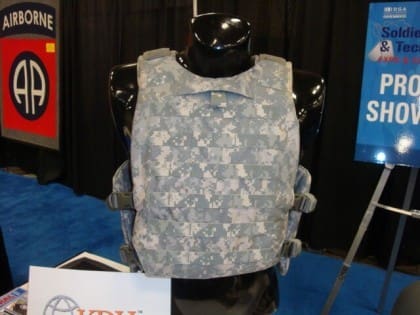
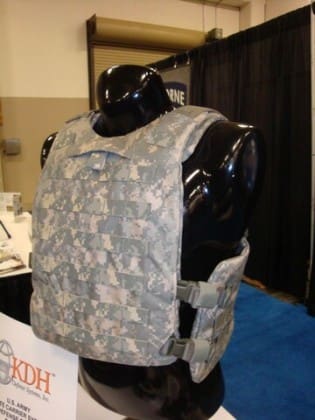
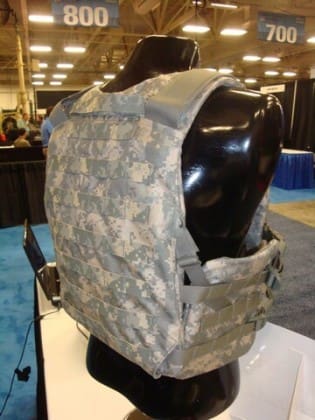
The contract award for the Army’s Plate Carrier is no longer under protest. We were able to take a few photos of the winner; the KDH Soldier Plate Carrier.

KDH Soldier Plate Carrier

KDH Soldier Plate Carrier

KDH Soldier Plate Carrier

KDH Soldier Plate Carrier

Tactical Tailor Introduces Armor

Friday, November 20th, 2009

Tactical Tailor Introduces Armor

Tactical Tailor has joined forces with Armor Express to introduce a new facet to their topnotch equipment. Now available for order directly from the Tactical Tailor website are a variety of hard plates and soft armor exclusively for law enforcement and military customers. Soft armor is cut specifically for the for their line of armor and plate carriers.

Visit www.tacticaltailor.com for more information.

Note: It is Tactical Tailor’s policy to only sell Armor Express armor and armor components to verified law enforcement and military personnel. You will be required to provide proof of identity when placing an order for items in this category.

SLEEK Knee and Elbow Protection System from Team Wendy

Monday, November 16th, 2009

I saw these at AUSA and was pretty impressed. They are unlike anything else currently on the market. Team Wendy’s new SLEEK™ Knee and Elbow Pad System (KEPS) have taken the technology developed for the military issue ZAP helmet pads and applied it to your knees and elbows. The low-profile SLEEK™ system has a non-slip, embossed cap with a distinctive flat center designed to provide grip and stability on any surface, wet or dry. In addition to being grippy, cap also has a digital design and embossed size information to help with purchase. The caps are also secured by continuous, durable stitching that prevents debris from lodging between the cap and the pad.

SLEEK KEPS from Team Wendy

Like all Team Wendy KEPS, the SLEEKâ„¢ system is made with resilient, waterproof, shock-resistant foam that quickly recovers to its original thickness after kneeling and impact. The pads are lined with high-friction Grippiumâ„¢ material, which prevents them from slipping down the arm or leg once strapped in place. SLEEKâ„¢ KEPS are available in Coyote Brown, UCP, Woodland Camo, and Black, and come in sizes Small through X-Large.

With Team Wendy’s SLEEK™ KEPS, you can focus on your mission, not your equipment.

Team Wendy will be exhibiting at the Soldier Equipment and Technology Expo and Conference November 17 – 18 near Fort Bragg, North Carolina. Be sure to visit booth #731 to learn more about SLEEKâ„¢ KEPS and the entire line of Team Wendy products including the issue ZAP helmet pads. Additional information is also available online at www.TeamWendy.com.

Camo and the 2010 Defense Authorization Bill

Tuesday, October 13th, 2009

A few months ago we broke the story on how Congress was inserting language into the 2010 Defense Authorization Bill to force the Services to develop joint combat uniforms. Well, almost three months later, here it is.

In Sec. 352. Policy on ground combat and camouflage utility uniforms, this is the language verbatim from the bill, except that we have deleted line numbers in order to improve the readability of the data.

“(a) ESTABLISHMENT OF POLICY.—It is the policy of the United States that the design and fielding of all future ground combat and camouflage utility uniforms of the Armed Forces may uniquely reflect the identity of the individual military services, as long as such ground combat nd camouflage utility uniforms, to the maximum extent practicable—

(1) provide members of every military service an equivalent level of performance, functionality, and protection commensurate with their respective as signed combat missions;

(2) minimize risk to the individual soldier, sailor, airman, or marine operating in the joint battlespace; and

(3) provide interoperability with other components of individual war fighter systems, including body armor and other individual protective systems.

(b) COMPTROLLER GENERAL ASSESSMENT.—The Comptroller General shall conduct an assessment of the ground combat uniforms and camouflage utility uniforms currently in use in the Department of Defense. The assessment shall examine, at a minimum, each of the following:

(1) The overall performance of each uniform in various anticipated combat environments and theaters of operations.

(2) Whether the uniform design of each uniform conforms adequately and is interoperable with currently issued personal protective gear and body armor.

(3) Costs associated with the design, development, production, procurement, and fielding of existing service-specific ground combat and camouflage utility uniforms.

(4) Challenges and risks associated with fielding members of the Armed Forces into combat theaters in unique or service-specific ground combat or camouflage utility uniforms, including the tactical risk to the individuals serving in individual augmentee, in-lieu of force, or joint duty assignments of use of different ground combat uniforms in a combat environment.

(5) Implications of the use of patents and other proprietary measures that may preclude sharing of technology, advanced uniform design, camouflage techniques, and fire retardence.

(6) Logistical requirements to field and support forces in varying combat or utility uniforms.

(c) REPORT REQUIRED.—Not later than 180 days after the date of the enactment of this Act, the Comptroller General shall submit to the congressional defense committees the results of the assessment conducted under subsection (b).

(d) REQUIREMENT FOR JOINT CRITERIA.—In support of the policy established in subsection (a), the Secretaries of the military departments, consistent with the authority set out in subtitles B, C, and D of title 10, United States Code, shall establish joint criteria for future ground combat uniforms by not later than 270 days after the Comptroller General submits the report required under subsection (c). The joint criteria shall take into account the findings and recommendations of such report and ensure that new technologies, advanced materials, and other advances in ground combat uniform design may be shared between the military services and are not precluded from being adapted for use by any military service due to military service-unique proprietary arrangements.”

So essentially, this gives the services a little over a year to figure out how they will go about establishing “joint criteria”. To me, the most important statement in all of this is the last bit about “service-unique proprietary arrangements”. This is an obvious shot at forcing the services to share.

On a side note, according to the conference report, the bill also “Requires DOD to establish specific budget line items within the procurement and research, development, test and evaluation (RDT&E) accounts for body armor. This will improve accountability and increase transparency into long-term investment strategies for body armor as well as facilitate the advancement of lighter-weight technologies.”

KDH Does It Again

Friday, October 9th, 2009

Like the little engine that could, KDH wins yet another armor contract. This time for 57,000 plate carriers. So this makes IOTV, IMTV/PC, and now the Army’s Plate Carrier all at the same time. Not bad for a small business. I wonder how they are getting it all done. They have opened a new factory in Eden, North Carolina that is according to recent visitors, only at half capacity. Unfortunately, the real issue with capacity these days isn’t floor space or number of machines but rather human capital. Finding qualified, experienced sewers and other textile workers even in areas where plants have closed in the past is extremely difficult.

Lots of conjecture on the web about how KDH continues to win contracts but quite honestly, it probably has a lot to do with price. Estimates indicate that KDH probably offered the plate carriers to the Army at just over $300 a pop with soft armor based on the number of vests and the amount of the award. That is about half what other companies were seeking.

KDH Plate Carrier

Interestingly, the Army handled this procurement through GSA and this is the first time that they have used GSA to purchase armor due to concerns over ballistic ratings. Additionally, the GSA solicitation was open for a fairly short window and in spite of a requirement during Soldier Protection Demonstration VII that the carriers be releasable, the GSA solicitation dropped it altogether yet they retained the 9 lbs weight threshold associated with a heavier cut-away system. Of course, neither SOCOM nor the Marines have a cut-away plate carrier system. But these oddball requirements meant that companies that did not meet the requirements for inclusion in SPD VII were able to bid on the plate carriers through GSA.

KDH lists their Soldier Plate Carrier with Quick Release System on their GSA website for $439.29 so we are unsure if they bid that at a discount via GSA or a non-releasable system. According to the description of their vest it “Includes OTV/IOTV Specification(FQ/PD 07-05 Latest Rev. CO/PD 00-02 Latest Rev.) Lvl IIIA Equivalent Soft Ballistc Inserts and Integrated Side Plate Pouches. Also available with NIJ Specifica”.

Tactical Tailor Low Profile Armor Carrier

Thursday, October 8th, 2009

The Tactical Tailor is revamping much of their line in addition to launching new items. The Low Profile Armor Carrier (L.P.A.C.) is just such a product. The slim and lightweight design of the LPAC was envisioned for those needing to don and remove their vest quickly or those needing the option of soft ballistic armor and hard plates without the extra weight of a larger tactical vest. The LPAC features Tactical Tailor’s safety features such as side entry system which ensures proper vest positioning for maximum protection as well as providing for quick vest removal in emergency situations.

tt_lpac

Constructed from 1000D Cordura, the LPAC features padded shoulder straps with integrated microphone epaulets and a heavy duty drag handle. Internal pockets accommodate standard size plates as well as soft armor from most ballistic vests up to 17″ x 24″ front and 18″ x 22″ rear for Large/X-Large and 14” x 21” front and 16” x 20” rear for Small/Medium. Modular webbing on all sides allows for nearly unlimited options for attachment of MOLLE/PALS style equipment to meet almost any mission requirement. What’s more, the LPAC weighs in at an astounding 1.25 pounds empty.

Berry Compliant and available in Available in Black, Coyote Brown, Olive Drab and MultiCam from Tactical Tailor and their network of dealers.

The Tactical Assault Panel

Monday, September 28th, 2009

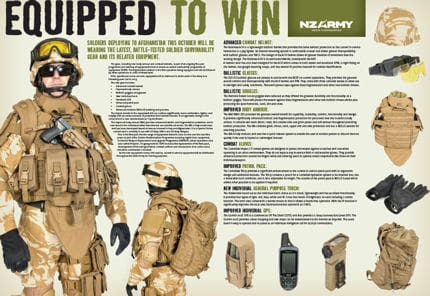
Many of you noticed a reference to the Tactical Assault Panel or TAP being issued to the Afghanistan camouflage test battalions.

Tactical Assault Panel

Here is a little bit of background on this developmental item.

The bib-like TAP is a product improvement that attaches to the Improved Outer Tactical Vest (IOTV) or Outer Tactical Vest (OTV) giving Soldiers the ability to attach Modular Lightweight Load-bearing Equipment (MOLLE) basic fighting load pouches to the TAP, as opposed to directly to the IOTV or OTV. It is easily donned and doffed allowing the Soldier to quickly reduce the girth of his load by removing the TAP from his armor.

The intent is to issue the TAP in addition to or in lieu of the Fighting Load Carrier once an assessment has been completed. An in-theater User Evaluation began in 4QFY09 and PEO-Soldier will be making adjustments to the TAP based on that feedback.